
建筑业

Search documents
7月中国PMI数据点评:从基本面看空债市者,可以稍息
Huaan Securities· 2025-08-01 11:24
Economic Indicators - July manufacturing PMI recorded at 49.3%, down from 49.7% in June, indicating a significant contraction and falling below market expectations of 49.6%[2] - Non-manufacturing PMI decreased to 50.1% from 50.5%, while the composite PMI output index fell to 50.2%[2] Demand and Supply Dynamics - New orders fell below the expansion threshold, with new export orders declining by 0.6 percentage points, marking a four-month low[5] - The production index showed a notable decline but remained in the expansion zone, indicating ongoing production activity despite weakening demand[3] Price and Cost Pressures - Major raw material purchase prices surged, leading to a significant increase in factory prices, although the increase in factory prices lagged behind raw material costs, creating a record price gap for the year[7] - The supply chain faced pressures as the supplier delivery time index slightly increased, indicating stable logistics efficiency amidst rising costs[3] Inventory and Procurement Trends - Finished goods inventory saw a substantial decrease, reflecting a shift from passive to active inventory reduction strategies by companies due to high costs and weak demand[8] - Procurement volumes dropped significantly, entering a contraction phase as companies adjusted their purchasing strategies in response to declining orders[5] Sector Performance - Equipment manufacturing PMI fell to 50.3%, while consumer goods PMI dropped to 49.5%, indicating a contraction in consumer demand[4] - Large enterprises experienced a decline in PMI, while medium-sized enterprises showed a slight recovery, highlighting a growing disparity among different business sizes[4] Future Outlook - The July PMI data reversed the optimistic expectations from June, indicating a retreat in demand, inventory cycles, and industry dynamics[10] - The bond market is expected to reflect these economic realities, with the ten-year government bond yield showing an upward trend despite the contraction in manufacturing PMI[12]
美国就业“塌方式”降温?特朗普移民政策副作用炸裂!
Jin Shi Shu Ju· 2025-08-01 11:13
Group 1 - The Trump administration's immigration policies are increasingly straining an already weakening labor market, with July non-farm payrolls expected to show only 110,000 new jobs, down from 147,000 in June and below the average of 130,000 for the year [2] - The demand for labor is decreasing due to uncertainty from Trump's tariff policies, particularly affecting industries reliant on foreign labor such as agriculture, construction, and food manufacturing [2][3] - The U.S. labor force decreased by 130,000 in June, with a total decline of 364,000 since the beginning of the year, and the labor force participation rate fell to 62.3%, the lowest since December 2022 [2] Group 2 - The number of immigrants detained by ICE has increased from an average of 15,000 per month in 2024 to nearly 40,000 by June this year, while deportations have risen from an annualized rate of 400,000 to about 600,000 [2] - The total number of foreign workers in the U.S. has decreased by over 1 million in the past four months, with a record 5.4 million people exiting the labor market in May alone [3][4] - The share of foreign workers in the U.S. labor force fell to 19.1% in June from 19.8% in March, indicating a significant impact on industries struggling to replace lost labor [5] Group 3 - The labor shortage related to immigration could reduce the potential annual economic growth rate in the U.S. from 2% to 1% [6] - The job market is experiencing a split, with labor shortages in construction, hospitality, and agriculture, while white-collar job recruitment is slowing due to economic uncertainty [6] - The stable unemployment rate, which slightly decreased from 4.2% to 4.1%, may lead the Federal Reserve to refrain from interest rate cuts despite a significant slowdown in job growth [6]
布米普特拉北京投资基金管理有限公司:美国7月私营就业超预期增长10.4万
Sou Hu Cai Jing· 2025-08-01 10:47
Core Insights - The ADP report indicates that the U.S. private sector added 104,000 jobs in July, significantly exceeding market expectations of 76,000, marking the largest month-over-month increase since April [1][3] - Despite the positive July data, overall hiring remains below last year's average, highlighting an uneven recovery in the U.S. labor market [3][5] - The report reflects cautious attitudes among businesses amid economic uncertainty, with mixed signals regarding the strength of the labor market [5][6] Employment Data - The leisure and hospitality sector saw the most significant job growth, adding 46,000 positions, followed by the financial sector with an increase of 28,000 jobs [3] - Conversely, the education and healthcare services sector experienced job losses for the fourth consecutive month, shedding 38,000 positions [3][5] - The manufacturing sector added only 7,000 jobs, while construction grew by 15,000, indicating varied recovery rates across different industries [5] Wage Growth - Wage growth remained stable in July, with salaries for job switchers increasing by 7% year-over-year, while those remaining in their positions saw a 4.4% increase [3] - This trend suggests that despite a slowdown in hiring, competition in the labor market is still supporting wage levels [3] Economic Outlook - Economists express that the labor market's performance reflects businesses' cautiousness in the face of economic uncertainty, with July's rebound not fully alleviating concerns about potential economic slowdown [5][6] - The upcoming non-farm payroll report is anticipated to show an increase of about 100,000 jobs, with the unemployment rate possibly rising to 4.2% [5] - The strong ADP report may reduce the likelihood of interest rate cuts in the near term, as sustained wage growth above inflation could lead the Federal Reserve to maintain a cautious stance [6]



7月份制造业PMI回落 经济总体产出保持扩张
Jing Ji Ri Bao· 2025-08-01 07:04
Group 1: Manufacturing Sector - In July, the Manufacturing Purchasing Managers' Index (PMI) dropped to 49.3%, a decrease of 0.4 percentage points from the previous month, indicating a contraction in manufacturing activity [1] - The new orders index for manufacturing was at 49.4%, down 0.8 percentage points from last month, reflecting weakened market demand [1] - Despite the short-term slowdown, the production index remained at 50.5%, indicating expansion for three consecutive months [1] Group 2: Non-Manufacturing Sector - The Non-Manufacturing Business Activity Index was at 50.1%, down 0.4 percentage points from the previous month, but still above the critical point [4] - The construction sector experienced a slowdown, with the business activity index at 50.6%, a decrease of 2.2 percentage points [4] - Service sector activity remained stable, with the business activity index at 50%, a slight decline of 0.1 percentage points [4] Group 3: Price Trends - The main raw materials purchasing price index rose to 51.5%, an increase of 3.1 percentage points, marking the first rise above the critical point since March [2] - The ex-factory price index was at 48.3%, up 2.1 percentage points, indicating an overall improvement in manufacturing market prices [2] Group 4: Business Expectations - Manufacturing enterprises showed optimism for future market conditions, with the production and business activity expectation index at 52.6%, an increase of 0.6 percentage points from last month [3] - Non-manufacturing enterprises maintained a stable optimistic outlook, with the business activity expectation index at 55.8%, up 0.2 percentage points [4]
固收事件点评:量减价升,反内卷影响初现
East Money Securities· 2025-08-01 06:36
Group 1 - The manufacturing PMI for July recorded at 49.3%, a decrease of 0.4 percentage points, indicating a continued contraction in the manufacturing sector [5][6][10] - The non-manufacturing PMI stood at 50.1%, also down by 0.4 percentage points, with the construction sector PMI declining significantly by 2.2 percentage points to 50.6% [5][17] - The overall PMI output index decreased to 50.2%, reflecting a 0.5 percentage point drop from the previous month [5][6] Group 2 - Both supply and demand sides of the manufacturing PMI showed marginal weakening, but prices improved significantly due to anti-involution policies, leading to a situation of reduced volume but increased prices [4][10][11] - New orders, production, and material inventory all contributed negatively to the PMI, with new orders dropping 0.8 percentage points to 49.4% [6][11][20] - The price index for factory output and major raw material purchases increased by 2.1 percentage points and 3.1 percentage points respectively, indicating substantial improvement [11][20] Group 3 - The construction sector's PMI was adversely affected by weather conditions and a weak real estate market, leading to a notable decline [17][20] - The service sector PMI remained relatively stable at 50.0%, supported by seasonal improvements in industries such as aviation and dining due to holiday travel [17][20] - The overall economic outlook remains weak, with both internal and external demand showing signs of fatigue, which continues to support long-term interest rates [20]
“反内卷”下的价格分化
Xinda Securities· 2025-08-01 05:41
Group 1: Manufacturing PMI Analysis - In July, the Manufacturing PMI dropped to 49.3%, a decrease of 0.4 percentage points from June, breaking the consecutive increase seen in Q2[5] - The decline in PMI is attributed to two main factors: the end of the overseas order recovery phase and disruptions caused by extreme weather[5] - The production index fell by 0.5 percentage points to 50.5%, with significant impacts on industries like non-metallic mineral products and chemical raw materials due to extreme weather events[5] Group 2: Price Dynamics in Manufacturing - The price indicators in manufacturing showed improvement, with the main raw material purchase price index rising to 51.5% and the factory price index at 48.3%, marking increases of 3.1 and 2.1 percentage points respectively from June[10] - Despite the rise in purchase prices, factory prices are contracting, indicating a widening gap that may weaken overall manufacturing profits in the short term[11] - The basic raw materials sector is the only one among four major categories to see an increase in PMI, with its purchase price index rising over 7 percentage points to 52%[11] Group 3: Non-Manufacturing Sector Insights - The Non-Manufacturing PMI fell by 0.4 percentage points to near the threshold line, with both construction and service sectors contributing to this decline[16] - The construction sector's PMI dropped to 50.6%, the largest decline since January, primarily due to extreme weather and ongoing real estate weaknesses[16] - In the non-manufacturing sector, a divergence in price trends was observed, with service sector prices declining while construction input and sales prices increased significantly[19] Group 4: Risk Factors - Consumer confidence recovery is slow, and the implementation of policies is not meeting expectations, posing risks to economic stability[22]
美国对部分铜产品加征50%关税扰乱市场预期 专家发出警告
Yang Shi Wang· 2025-08-01 05:37
Group 1 - The U.S. government has announced a 50% tariff on imported semi-finished copper products and copper-intensive derivatives starting August 1, which disrupts market expectations and affects the stability of the U.S. copper-intensive industry [1] - The new tariffs will not apply to copper ore, refined copper, and copper scrap, but will impact industries reliant on copper, such as construction, automotive, and electronics, potentially increasing their costs [3] - Approximately half of the copper consumed in the U.S. is imported, primarily from countries like Chile and Canada, indicating a significant reliance on foreign supply [3] Group 2 - Experts suggest that the 50% tariff will cause "medium-term damage" to Chile, but the country can mitigate "long-term damage" through market diversification strategies [5] - Canadian copper producers have received temporary exemptions from tariffs on copper concentrates and scrap, but manufacturers of copper wire and cables may face challenges if they cannot shift trade to other markets [7] - The tariffs may suppress overall U.S. economic growth, as the increased costs of copper products could be passed on to consumers, affecting various sectors [9]
固定收益点评报告:极端天气与反内卷致量价反向波动
Huaxin Securities· 2025-08-01 04:05
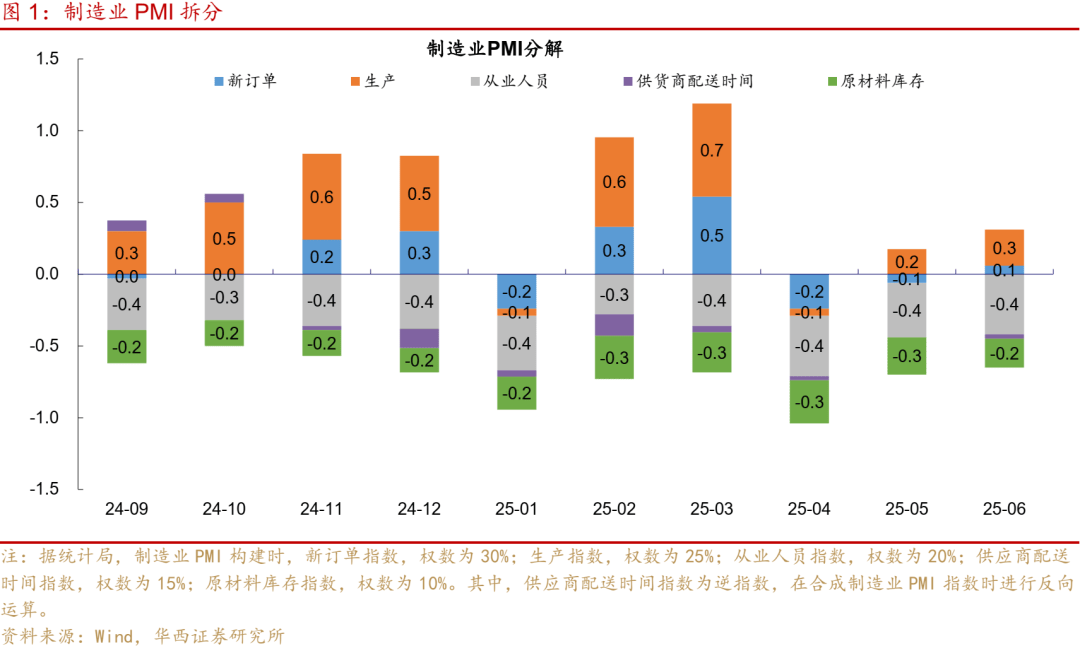
2025 年 08 月 01 日 极端天气与反内卷致量价反向波动 分析师:罗云峰 S1050524060001 luoyf2@cfsc.com.cn 分析师:杨斐然 S1050524070001 yangfr@cfsc.com.cn 事件 受制造业进入传统生产淡季,部分地区高温、暴雨洪涝灾害 等因素影响,7 月制造业 PMI 为 49.3,环比下降 0.4,连续 4 个月低于枯荣线,7 月为 4 个月以来最低;非制造业 PMI 为 50.1,环比下跌 0.4;综合 PMI 产出指数为 50.2,环比下降 0.5 个百分点。 7 月份中国战略性新兴产业 EPMI 为 46.8,比上月回落 1.1 个 百分点。服务业健康医疗服务业、新材料产业表现最好。 投资要点 ▌ 制造业:极端天气影响生产 极端天气与反内卷共同作用下,供需两端边际回调,生产指 数扩张幅度下降 0.5 至 50.5,新订单指数大幅下降 0.8,重 回荣枯线以下(49.4),其中新出口订单指数下降 0.6 至 47.1,一定程度受前期抢出口的影响,内需下滑或有 618 的 影响。企业生产经营活动更趋谨慎:进口指标保持 47.8;原 材料库存下降 0 ...
7月PMI ,淡季偏淡
Sou Hu Cai Jing· 2025-08-01 03:35
7月31日, 统计局发布7月PMI。制造业PMI 49.3%,预期49.7%,前值49.7%。非制造业PMI 50.1%,前值50.5%。关注以下几个方面: 第一,制造业生产和新订单均回落。7月制造业新订单环比下降0.8个百分点至49.4%,生产回落0.5个百分点至50.5%,分别拖累制造业PMI下滑0.24、0.13 个百分点,是7月制造业PMI下滑的主要拖累因素。对比往年同期降幅,2016-2024年(剔除2020/2022)新订单和生产的平均降幅分别为0.14、0.37个百分 点。由于PMI在数据处理过程中已剔除季节性,今年7月相对更弱的表现,指向制造业放缓可能受到常规季节性因素之外的影响,一方面是6月对美出口修 复带来的环比高基数,另一方面是部分地区高温、暴雨洪涝灾害的规模可能超出往年同期。 第二,外需也回落。7月制造业新出口订单回落0.4个百分点至47.1%(6月反弹0.2个百分点),略低于上半年平均值47.3。结合韩国出口旬度数据来看,7 月前20天出口同比-2.2%,这说明6月抢出口可能未在7月延续。7月9日是对等关税截止时点,尽管后来推迟到8月1日,但企业可能已经尽量安排在7月9日 之前出口。 ...
兼评国家生育补贴和7月PMI数据:PMI供需均放缓,“反内卷”提振价格
KAIYUAN SECURITIES· 2025-08-01 02:42
Group 1: National Fertility Subsidy - The national fertility subsidy covers a wider range, with a total subsidy of 10,800 CNY per newborn over three years, compared to a median of 6,600 CNY and an average of 8,700 CNY for local subsidies[3][16] - The first-year budget for the national fertility subsidy is approximately 100 billion CNY, expected to promote the birth of about 330,000 newborns[4][16] - The short-term leverage effect of the subsidy is estimated at 0.9 times, potentially increasing to about 1.4 times in the medium to long term, with a GDP increase of 926 billion CNY in 2025[4][19] Group 2: Manufacturing Sector - The manufacturing PMI for July is reported at 49.3%, down 0.4 percentage points from the previous month, indicating a decline in manufacturing activity[5][13] - The production PMI decreased by 0.5 percentage points to 50.5%, while new orders, new export orders, and imports fell to 49.4%, 47.1%, and 44.7% respectively[5][22] - The "anti-involution" trend is expected to boost commodity prices, with July PPI projected to improve slightly to -3.0% year-on-year[5][29] Group 3: Non-Manufacturing Sector - The construction PMI fell by 2.2 percentage points to 50.6%, indicating a potential continuation of the slowdown in infrastructure investment[6][35] - The service sector remains relatively stable, with a service PMI of 50.0%, down 0.1 percentage points, and new orders declining to 46.3%[6][42] - Infrastructure investment may be affected by high base effects in Q3 and Q4, requiring policy measures to mitigate the impact[6][35] Group 4: Risks and Economic Outlook - Risks include unexpected policy changes and a potential recession in the U.S. economy[7][45] - The overall economic impact of the fertility subsidy includes direct boosts to consumer spending and indirect effects on child-rearing and housing demand[4][18]