农业

Search documents
银河期货每日早盘观察-20251226
Yin He Qi Huo· 2025-12-26 01:46
Report Industry Investment Ratings No relevant information provided. Core Views of the Report The report provides a daily morning observation of various futures markets, including financial derivatives, agricultural products, black metals, non - ferrous metals, shipping, and energy chemicals. It analyzes the market trends, important news, and investment strategies for each sector based on the latest data and market conditions. Summary by Relevant Catalogs Financial Derivatives - **Stock Index Futures**: The market continued to rise on Thursday, with all stock index futures closing higher. The market sentiment is optimistic, and it is expected that the stock index will continue to rise in the future. The recommended trading strategy is to go long on a single - side basis and wait for the spread to widen for IM/IC futures - ETF arbitrage [21][22]. - **Treasury Bond Futures**: The main contracts of treasury bond futures closed lower on Thursday. The stock - bond seesaw effect is obvious, and it is recommended to short TS and TF contracts on a single - side basis [24]. Agricultural Products - **Protein Meal**: The supply is generally loose, and the price is under pressure. It is recommended to place a small number of long orders, narrow the MRM spread, and sell a wide - straddle option [27][28]. - **Sugar**: International sugar prices are rising, and domestic sugar prices are following. It is expected that the international sugar price will bottom - oscillate slightly stronger, and the domestic sugar price will rise in the short term. It is recommended to sell put options [30][32]. - **Oils and Fats**: There is a technical rebound in the oils and fats sector. It is recommended to go long on palm oil after it stabilizes, and the direction is to short after the rebound. The core issue of rapeseed oil lies in policy changes [34][35]. - **Corn/Corn Starch**: The spot price is stable, and the futures price is bottom - oscillating. It is recommended to go long on the 03 and 07 contracts on a single - side basis [36][37]. - **Hogs**: The supply is generally loose, and the spot price has slightly declined. It is recommended to take a short - selling approach on a single - side basis and sell a wide - straddle option [38][39]. - **Peanuts**: The spot price is stable, and the futures price is weakly oscillating. It is recommended to short the pk603 - C - 8200 option [41][42]. - **Eggs**: The demand is average, and the egg price has declined. It is recommended to go long on the far - month contracts on a single - side basis [44][46]. - **Apples**: The demand is average, and the fruit price is mainly stable. It is recommended to go long on the 1 - month contract and short the 10 - month contract [48][50]. - **Cotton - Cotton Yarn**: The sales of new cotton are good, and the cotton price is oscillating strongly. It is recommended to go long on a single - side basis [51][54]. Black Metals - **Steel**: The restocking expectation remains to be fulfilled, and the steel price is oscillating within a range. It is recommended to maintain an oscillating position on a single - side basis, short the coil - coal ratio, and hold the short position of the coil - screw spread [57][59]. - **Coking Coal and Coke**: The prices are oscillating widely. It is recommended to wait and see [60][62]. - **Iron Ore**: The market expectation is fluctuating, and the ore price is weakly operating. It is recommended to short on a single - side basis [64][65]. - **Ferroalloys**: Supported by cost and the anti - involution expectation, the prices are rebounding in the short term. It is recommended to sell a virtual - value straddle option [66][67]. Non - Ferrous Metals - **Gold and Silver**: Domestic silver is independently strengthening, and gold is moderately rising. It is recommended to hold long positions in Shanghai gold and silver based on the 5 - day moving average [69][70]. - **Platinum and Palladium**: The prices are in a wide - range oscillating period of capital game. It is recommended to go long on platinum and short on palladium for arbitrage and pay attention to position management [72][75]. - **Copper**: The short - term fluctuation is intensifying, and the long - term upward trend remains unchanged. It is recommended to go long on a single - side basis and pay attention to the inter - period positive arbitrage opportunity [76][77]. - **Alumina**: The price is oscillating. It is recommended to short on a single - side basis in the medium term [79][80]. - **Electrolytic Aluminum**: The overseas market is on holiday, and the Shanghai aluminum price is oscillating at a high level. It is recommended to go long on a single - side basis in the medium term [82][84]. - **Cast Aluminum Alloy**: The supply of scrap aluminum is still tight, and the alloy price is oscillating at a high level with the aluminum price. It is recommended to pay attention to the narrowing of the AL - AD spread when the aluminum price corrects [84][85]. - **Zinc**: The price is oscillating widely due to the interweaving of long and short factors. It is recommended to wait and see [87][88]. - **Lead**: The supply and demand are both weak, and the price is oscillating within a range. It is recommended to take partial profit on long positions and pay attention to the production of secondary lead smelters [89][90]. - **Nickel**: As a weak variety in the strong sector, it is experiencing a supplementary rise. It is recommended to pay attention to the sustainability of the rise [93]. - **Stainless Steel**: It is following the nickel price and operating strongly. It is recommended to pay attention to the sustainability of the nickel price rise [94]. - **Industrial Silicon**: It is rebounding in the short term and recommended to short on a single - side basis in the medium term [96][97]. - **Polysilicon**: It is expected to be strong in the long term, and it is recommended to go long on a single - side basis with risk control [98][100]. - **Lithium Carbonate**: The price is at a high level, and it is recommended to operate with caution [101][102]. - **Tin**: There is an expectation of marginal improvement in raw material shortage, and the price is adjusting at a high level. It is recommended to pay attention to the risk of price correction [104][106]. Shipping - **Container Shipping**: There is still a divergence on the January high point, and it is expected to oscillate in the short term. It is recommended to take profit on most of the long positions in the EC2602 contract and hold the rest lightly [107][111]. Energy Chemicals - **Crude Oil**: The year - end market is quiet, and geopolitical disturbances are frequent. It is recommended to expect a narrow - range oscillation [113][114]. - **Asphalt**: The supply - demand pattern is weak, and the raw material contradiction affects the rhythm. It is recommended to expect an oscillation [115][119]. - **Fuel Oil**: The fundamentals of high - and low - sulfur fuel oils are both weakly oscillating. It is recommended to short on a single - side basis [121][125]. - **Natural Gas**: LNG is oscillating at a low level, and HH has rebounded significantly. It is recommended to hold long positions in the HH2602 contract [126][127]. - **LPG**: The price is consolidating at a low level. It is recommended to short on a single - side basis for far - month contracts [129][130]. - **PX & PTA**: The polyester filament production cut is gradually implemented, and the upward price drive is weakening. It is recommended to expect a high - level oscillation and conduct positive arbitrage on the 3 - 5 contracts [131][133]. - **BZ & EB**: The pure benzene port inventory continues to rise, and the unexpected maintenance of styrene boosts sentiment. It is recommended to expect an interval oscillation and short pure benzene and long styrene for arbitrage [133][138]. - **Ethylene Glycol**: The Taiwanese plant has stopped production due to poor profitability, boosting market buying sentiment. It is recommended to expect a wide - range oscillation [139][141]. - **Short - Fiber**: The raw material price is rising, and the processing fee is under pressure. It is recommended to expect a price oscillation with a strong bias [142][143]. - **Bottle - Grade PET**: It follows the cost - end fluctuation, and the supply - demand pattern is relatively loose. It is recommended to expect a price oscillation with a strong bias [145][146]. - **Propylene**: The supply pressure is increasing. It is recommended to expect a wide - range oscillation [147][148]. - **Plastic PP**: PE and PP production has decreased month - on - month. It is recommended to wait and see for the L 2605 and PP 2605 contracts [149][152]. - **Caustic Soda**: The price is oscillating. It is recommended to expect an oscillation [153][157]. - **PVC**: The price is continuously rebounding. It is recommended to go long on a single - side basis [158][161]. - **Soda Ash**: The futures price is oscillating. It is recommended to expect a short - term oscillation and sell virtual - value call options on far - month contracts [160][163]. - **Glass**: The futures price is oscillating. It is recommended to expect a short - term oscillation [164][165]. - **Methanol**: It lacks upward momentum. It is recommended to go long on the 05 contract at a low price without chasing the rise [166][167]. - **Urea**: The price is oscillating at a high level. It is recommended to pay attention to the risk of price correction [169]. - **Pulp**: The pulp price is oscillating widely at a high level. It is recommended to short on a single - side basis [170][175]. - **Logs**: The spot market is stable, and attention should be paid to the warehouse receipt registration. It is recommended to wait and see or place a small number of long orders [177][180]. - **Offset Printing Paper**: The inventory is high, and the implementation of the price increase notice remains to be observed. It is recommended to sell the OP2602 - C - 4100 option [181][183]. - **Natural Rubber and 20 - Rubber**: The production and sales of natural rubber are expected to decline in November. It is recommended to go long on the RU 05 and NR 02 contracts on a single - side basis [184][187]. - **Butadiene Rubber**: The inventory accumulation rate of cis - butadiene rubber has slowed down. It is recommended to wait and see for the BR 02 contract and pay attention to the pressure at the recent high point [188][191].
以色列警告可能再次打击伊朗,央行开展1771亿元逆回购
Dong Zheng Qi Huo· 2025-12-26 01:18
1. Report Industry Investment Ratings - **Foreign Exchange Futures (US Dollar Index)**: Short - term shock [12] - **US Stock Index Futures**: Expected to run with a slight upward bias in a volatile manner [13] - **Stock Index Futures**: The Shanghai Composite Index is expected to hit 4000 points in the short term, and it is recommended to evenly allocate long positions in various stock indices [3][15] - **Treasury Bond Futures**: Long - term bonds are expected to turn from shock to rise, and it is recommended that allocation investors buy when interest rates rise, and trading investors buy on dips and exit quickly [17][18] - **Agricultural Products (Soybean Oil/Rapeseed Oil/Palm Oil)**: Palm oil has completed bottom - building, and it is recommended to consider going long after referring to December supply - demand data [19][20] - **Black Metals (Steam Coal)**: Coal prices are expected to continue to decline in the short term [21] - **Black Metals (Iron Ore)**: The short - term fundamentals are under pressure, and it is expected to be in a weak shock [22][23] - **Non - ferrous Metals (Lead)**: It is recommended to wait and see in the short term both for unilateral trading and arbitrage [24] - **Non - ferrous Metals (Zinc)**: In the medium term, it is recommended to pay attention to buying opportunities on pullbacks; for arbitrage, long - short spreads can continue to be held, and an internal - external reverse arbitrage strategy is appropriate [27] - **Non - ferrous Metals (Lithium Carbonate)**: The current fundamentals are weakening, pay attention to short - term correction pressure, and it is recommended to go long on corrections in the medium term [29][30] - **Non - ferrous Metals (Nickel)**: It is expected to return to a shock trend. If the RKAB quota is only 250 million tons, there will be significant upside potential [33] - **Non - ferrous Metals (Tin)**: The short - term supply tension has eased, and there is pressure on the unilateral upward movement of prices. Be wary of price drops when the capital boom fades [38] - **Energy Chemicals (Carbon Emissions)**: High short - term market risk [40] - **Energy Chemicals (Caustic Soda)**: The short - term supply - demand contradiction has eased, but there may be pressure to reduce prices to clear inventory in the future, and the rebound height is limited [44][45] - **Energy Chemicals (PVC)**: The supply - demand contradiction is difficult to be substantially resolved before the Spring Festival, and the short - term rebound pressure is high. In 2026, the supply - demand is expected to improve marginally [48] - **Energy Chemicals (Soda Ash)**: In the medium term, it is recommended to take a bearish view and go short on far - month contracts on rallies [50] - **Energy Chemicals (Float Glass)**: The glass fundamentals are still in surplus, and it is recommended to short on rallies in the medium term [51] 2. Core Views of the Report - Geopolitical risks are rising, with Israel warning of a possible strike on Iran, which may affect the short - term trend of the US dollar index [12] - The US plans to impose 301 tariffs on Chinese semiconductor products in 2027, but the macro environment is still favorable for US stocks in the short term [13] - The A - share market is rising, with the Shanghai Composite Index recording 7 consecutive positive days, and it is expected to hit 4000 points in the short term [3][15] - The central bank has carried out reverse repurchase operations, with loose funds in the short - term and short - term bonds strengthening. Long - term bonds are expected to turn from shock to rise [16][17] - The prices of some commodities are under pressure. For example, steam coal prices are expected to continue to fall, and iron ore prices are in a weak shock [21][22] - The supply - demand situation of some commodities is complex. For example, the supply - demand contradiction of PVC is difficult to be resolved before the Spring Festival, while the supply - demand of palm oil shows signs of improvement [19][48] 3. Summary by Relevant Catalogs 3.1 Financial News and Comments 3.1.1 Macro Strategy (Foreign Exchange Futures (US Dollar Index)) - **News**: Israel warns of a possible strike on Iran, and Ukraine uses British missiles to attack a Russian refinery [10][12] - **Comment**: The possibility of Israel attacking Iran has increased significantly, and geopolitical risks have risen. The US dollar index is expected to be in a short - term shock [12] 3.1.2 Macro Strategy (US Stock Index Futures) - **News**: The US plans to impose 301 tariffs on Chinese semiconductor products in 2027, and China has protested [13] - **Comment**: The market has digested key economic data, and the optimistic expectations for interest rate cuts and economic soft - landing are still strong. The macro environment is favorable for US stocks, which are expected to run with a slight upward bias in a volatile manner [13] 3.1.3 Macro Strategy (Stock Index Futures) - **News**: The new construction and renovation of old urban communities in the first 11 months have completed the annual plan [14] - **Comment**: The A - share market is rising, with the Shanghai Composite Index recording 7 consecutive positive days, and it is expected to hit 4000 points in the short term [3][15] 3.1.4 Macro Strategy (Treasury Bond Futures) - **News**: The central bank has carried out 177.1 billion yuan of 7 - day reverse repurchase operations [16] - **Comment**: The central bank's open - market operations have led to loose funds, short - term bonds have strengthened, and long - term bonds are expected to turn from shock to rise [16][17] 3.2 Commodity News and Comments 3.2.1 Agricultural Products (Soybean Oil/Rapeseed Oil/Palm Oil) - **News**: Malaysia's palm oil exports from December 1 - 25 increased by 1.6% month - on - month [19] - **Comment**: The palm oil market shows signs of supply pressure relief, and it is recommended to consider going long after referring to December supply - demand data [19][20] 3.2.2 Black Metals (Steam Coal) - **News**: The price of steam coal in the northern port market is running weakly [21] - **Comment**: Due to warm winter weather, demand is weak, inventory is high, and coal prices are expected to continue to fall in the short term [21] 3.2.3 Black Metals (Iron Ore) - **News**: The new construction and renovation of 2.58 million old urban communities have been started from January to November [22] - **Comment**: The short - term fundamentals of iron ore are under pressure, with expected decline in molten iron output and a weak shock trend [22][23] 3.2.4 Non - ferrous Metals (Lead) - **News**: The LME 0 - 3 lead is at a discount of $42.3 per ton, and the social inventory of lead ingots has decreased [23] - **Comment**: The supply and demand of lead are both weak, and it is recommended to wait and see in the short term [24] 3.2.5 Non - ferrous Metals (Zinc) - **News**: The LME 0 - 3 zinc is at a discount of $29.14 per ton, and the domestic inventory of zinc ingots has decreased [25] - **Comment**: In the short term, the fundamentals of zinc are less contradictory, and the price is mainly affected by the macro. In the medium term, zinc prices are likely to rise [26][27] 3.2.6 Non - ferrous Metals (Lithium Carbonate) - **News**: Some companies plan to carry out maintenance in January, which will affect the output of cathode materials [28][29] - **Comment**: The current fundamentals of lithium carbonate are weakening, pay attention to short - term correction pressure, and it is recommended to go long on corrections in the medium term [29][30] 3.2.7 Non - ferrous Metals (Nickel) - **News**: Zhefu Holding's nickel sulfate production line has been put into operation, and APNI plans to reduce nickel ore production in 2026 [31][32] - **Comment**: The market is skeptical about APNI's plan. The nickel price is expected to return to a shock trend, and there will be significant upside potential if the quota is only 250 million tons [32][33] 3.2.8 Non - ferrous Metals (Tin) - **News**: The US will not impose additional tariffs on Chinese chips in the next 18 months, and the LME 0 - 3 tin is at a premium [34][35] - **Comment**: The short - term supply tension of tin has eased, and there is pressure on the unilateral upward movement of prices. Be wary of price drops when the capital boom fades [36][38] 3.2.9 Energy Chemicals (Carbon Emissions) - **News**: The closing price of CEA on December 25 was 72.58 yuan per ton, up 5.36% [39] - **Comment**: The short - term market risk of carbon emissions is high [40] 3.2.10 Energy Chemicals (Caustic Soda) - **News**: The price of liquid caustic soda in Shandong is at a low level [41] - **Comment**: The short - term supply - demand contradiction of caustic soda has eased, but there may be pressure to reduce prices to clear inventory in the future, and the rebound height is limited [44][45] 3.2.11 Energy Chemicals (PVC) - **News**: The domestic PVC powder market price is in a range shock [46] - **Comment**: The supply - demand contradiction of PVC is difficult to be substantially resolved before the Spring Festival, and the short - term rebound pressure is high. In 2026, the supply - demand is expected to improve marginally [48] 3.2.12 Energy Chemicals (Soda Ash) - **News**: The inventory of soda ash manufacturers has decreased this week [49] - **Comment**: In the medium term, soda ash is recommended to be taken with a bearish view, and it is advisable to go short on far - month contracts on rallies [50] 3.2.13 Energy Chemicals (Float Glass) - **News**: The inventory of float glass manufacturers has changed little this week [51] - **Comment**: The glass fundamentals are still in surplus, and it is recommended to short on rallies in the medium term [51]
宏观金融类:文字早评2025/12/26星期五-20251226
Wu Kuang Qi Huo· 2025-12-26 01:11
文字早评 2025/12/26 星期五 宏观金融类 股指 【行情资讯】 1、商务部回应是否会放松对美稀土磁体出口的限制:积极促进、便利合规贸易; 2、据证券时报,四家头部硅片企业今日联合大幅上调报价,业内普遍反馈,本次硅片涨价主要是上游 硅料涨幅较大所致; 3、国家烟草专卖局:推动电子烟市场供需平衡 切实防范化解市场无序竞争风险; 4、芯片:美光财报会披露,洁净室已成解决 HBM 产能问题的核心,计划将 2026 年洁净室建厂资本支出 翻倍。 期指基差比例: IF 当月/下月/当季/隔季:-0.23%/-0.52%/-0.69%/-1.74%; IC 当月/下月/当季/隔季:-0.17%/-0.73%/-1.22%/-3.71%; IM 当月/下月/当季/隔季:-0.43%/-1.40%/-2.12%/-5.23%; IH 当月/下月/当季/隔季:0.00%/0.00%/0.04%/-0.16%。 【策略观点】 年底部分资金兑现收益,市场面临一定的不确定性。但从大方向看,政策支持资本市场的态度未变,中 长期仍是逢低做多的思路为主。 国债 【行情资讯】 行情方面:周四,TL 主力合约收于 112.510 ,环比 ...
人民币汇率重回“6”时代
吴晓波频道· 2025-12-26 00:29
Core Viewpoint - The article discusses the recent appreciation of the Chinese yuan against the US dollar, highlighting its implications for the economy and investment landscape, particularly in relation to A-shares and various industries [3][9][32]. Group 1: Yuan Appreciation Context - Goldman Sachs' analysis indicates that the yuan is undervalued by nearly 30% against the US dollar, suggesting a potential for appreciation [3][4]. - The yuan's recent rise has been attributed to seasonal demand from export companies needing to settle accounts before year-end, leading to a technical appreciation [14][16]. - China's trade surplus has exceeded $1 trillion for the first time in 2025, providing a strong foundation for the yuan's value [17][29]. Group 2: Economic Factors Influencing Yuan Strength - The Federal Reserve's interest rate cuts in 2025 have contributed to a weaker US dollar, indirectly causing the yuan to appreciate [20][22]. - The global economic landscape, including trade tensions and shifts in investment flows, has also played a role in the yuan's valuation [24][26]. - The World Bank and IMF have raised their GDP growth forecasts for China, reflecting confidence in the country's economic stability and growth potential [26][27]. Group 3: Impact on A-shares and Investment Strategies - Historical data shows a positive correlation between yuan appreciation and A-share performance, suggesting that the current trend may stimulate further growth in the stock market [33][34]. - The article notes that while yuan appreciation can benefit certain sectors, such as imports, it may negatively impact export-oriented industries due to increased pricing for foreign buyers [39][41]. - Investors are advised to consider the implications of yuan strength on their portfolios, particularly in terms of currency exposure and sector performance [42][44]. Group 4: Future Outlook and Trends - Analysts predict that the yuan's appreciation will be gradual and managed, with expectations of continued strength against the dollar in the coming years [48][50]. - The article emphasizes the importance of understanding broader trends rather than focusing solely on precise exchange rate predictions, encouraging investors to adapt to changing market conditions [50].


徐剑波:把握农业全链建设关键点
Jing Ji Ri Bao· 2025-12-26 00:03
Core Viewpoint - The development of the agricultural full industry chain in China has significantly improved agricultural comprehensive benefits and competitiveness, transitioning from production-focused to a more integrated approach that emphasizes the entire chain, industry, and system [1] Group 1: Agricultural Full Industry Chain Development - The agricultural full industry chain integrates production, processing, and sales, breaking the traditional segmentation of agricultural processes and achieving a transformation from "production-product-link" to "chain-industry-system" [1] - Major agricultural developed countries view the construction of efficient, high-value full industry chains as a core competitive advantage in modern agriculture [1] Group 2: Challenges and Solutions - China faces issues such as short, weak, and missing links in the agricultural industry chain, characterized by low added value, low technology transfer rates, and inadequate agricultural social service systems [2] - To address these challenges, the focus should be on extending, supplementing, and strengthening the agricultural industry chain, promoting integrated development across upstream and downstream sectors [2][3] Group 3: Key Strategies for Improvement - Extending the chain involves enhancing agricultural product processing technology, improving the integration of production, processing, and sales, and promoting new business models such as e-commerce and health agriculture [2] - Supplementing the chain requires strengthening agricultural technology innovation, improving market and logistics infrastructure, and fostering diverse service entities [3] - Strengthening the chain includes cultivating leading agricultural enterprises, innovating benefit-sharing mechanisms, and promoting orderly land management and financing [3] Group 4: Value Enhancement and Digital Transformation - Enhancing industry value involves establishing a high-quality development standard system for agriculture, promoting digital transformation through new technologies, and implementing brand enhancement strategies [4] - The goal is to create a traceable system from farm to table, improving product quality and competitiveness [4]
云南财政兑付1.96亿元专项资金助高原特色农业发展
Xin Lang Cai Jing· 2025-12-25 22:30
在政策落地环节,省财政厅创新举措提升资金兑付效能。在补贴发放方面,创新实施"三兑付"机制:设 立高标准农田建设资金国库子账户,成为全国率先发起设立子账户的16个省份之一;建立耕地地力保护 补贴集中调度兑付机制,提前半年完成中央98%兑付目标;将农机购置补贴提级至州(市)级兑付,全 年通过"一卡通"兑付补贴5.46亿元,较上年增长124.69%。 云南财政一方面制发《云南省政策性农业融资担保资金管理办法》,修订奖补测算方式、规范资金使用 范围,经公开征求意见和合法性审核,让政策红利精准惠及新型农业经营主体;另一方面出台《关于进 一步健全完善惠农补贴管理长效机制的实施意见》,构建到人到户的长效机制,切实保障农民利益、激 发生产活力。 本报讯 记者王琳报道 近日,记者从云南省财政厅获悉,今年,云南财政精准发力、规范施策,引导经 营主体积极通过"阳光云财一网通"平台进行项目资金申报,实施新增设施农业投资奖补和贷款贴息、农 作物品种推广后补助等奖补政策,足额兑付1.96亿元高原特色农业现代化发展专项资金。 ...
江西赣州:革命老区高质量发展迈出坚实步伐
Jing Ji Ri Bao· 2025-12-25 22:06
Core Viewpoint - The city of Ganzhou in Jiangxi Province has demonstrated significant development and progress over the past five years, achieving various national recognitions and advancing its economic and social infrastructure. Economic Development - Ganzhou's economic total is expected to exceed 500 billion yuan by 2025, with the establishment of a national high-quality development demonstration zone for revolutionary old areas [2] - The city has made strides in integrating with the Guangdong-Hong Kong-Macao Greater Bay Area and has seen a reduction in the gap between its per capita indicators and national and provincial averages, with per capita GDP surpassing 50,000 yuan [2] - Seven counties in the region have each achieved a production value exceeding 10 billion yuan [2] Industrial Growth - The city has attracted strategic technological institutions, including the Jiangxi Innovation Research Institute and the China Rare Earth Group, leading to the establishment of over 1,200 high-tech enterprises [3] - Ganzhou has developed four major industrial clusters, including non-ferrous metals and new materials, and has ranked 58th among the top 100 advanced manufacturing cities in China [3] Infrastructure and Reform - Ganzhou has implemented extensive reforms to improve its business environment, aligning 619 administrative service items with Shenzhen's standards [4] - The city has achieved significant infrastructure improvements, including the expansion of its railway and highway networks, and has been recognized as a "Chinese Investment Hotspot City" [4] Social and Environmental Improvements - The urban area of Ganzhou has expanded significantly, with a focus on improving public services and infrastructure, including water supply and sanitation [5] - The city has been recognized for its ecological advancements, maintaining the best PM2.5 concentration levels in the province and being selected as a national model for soil and water conservation [5]
破7 离岸人民币对美元汇率创新高
Xin Lang Cai Jing· 2025-12-25 17:24
Core Viewpoint - The recent appreciation of the Renminbi (RMB) against the US dollar has significant implications for both individual investors and the broader Chinese economy, with the RMB breaking the 7.0 mark for the first time since September 2024, indicating a shift in market dynamics and potential investment opportunities [1][4]. Group 1: Impact on Individuals - Individuals holding USD deposits are experiencing negative returns due to the RMB's appreciation, as seen in the case of a resident who lost approximately 1,033 RMB on a USD deposit despite earning interest [2]. - Families with children studying abroad benefit from the RMB's strength, as it reduces the cost of tuition and living expenses in foreign currencies, with one family saving around 17,000 RMB on exchange costs compared to earlier in the year [3]. Group 2: Market Dynamics - The RMB's appreciation is driven by a combination of external pressures easing, internal economic resilience, and market expectations shifting, particularly in light of anticipated interest rate cuts by the Federal Reserve [5][6]. - The recent trend of RMB appreciation is expected to positively influence the Chinese stock and bond markets, as it enhances the attractiveness of RMB-denominated assets to foreign investors [7]. Group 3: Economic Implications - A stronger RMB is likely to lower import costs for raw materials and advanced technology, supporting China's economic transition from price competition to brand and technology diversification [8]. - Industries reliant on imports, such as energy and agriculture, as well as sectors with significant USD liabilities, are expected to benefit from the RMB's appreciation [8]. Group 4: Capital Market Effects - The appreciation of the RMB is anticipated to attract capital inflows, benefiting various asset classes including stocks and bonds, through valuation enhancement, increased foreign investment, and improved market confidence [9]. - A 0.1 percentage point increase in the RMB's value could lead to a 3% to 5% increase in stock valuations, making RMB-denominated assets more appealing to foreign investors [9].
北京海淀获评国家级“两山”实践创新基地
Bei Jing Ri Bao Ke Hu Duan· 2025-12-25 14:37
Group 1 - Haidian District has been officially designated as a "Green Water and Green Mountain is Gold and Silver Mountain" practice innovation base by the Ministry of Ecology and Environment, becoming the first area in Beijing's central urban area to receive both national-level titles of "Ecological Civilization Construction Demonstration Zone" and "Two Mountains" practice innovation base [1] - The district is recognized for its complete ecological system of "mountains, waters, forests, fields, lakes, and grass," and is focused on integrating natural elements with urban development, aiming to accelerate the development of new productive forces and build a world-leading technology park [3] - The transformation of the old industrial base in the Xisanqi Innovation Development Zone has led to the relocation of over 10 "high-energy-consuming" enterprises, freeing up 56 hectares of land for the construction of a 265,000 square meter ecological park, which supports the development of the world's first AI innovation street [3] Group 2 - In 2024, the total number of tourists in Haidian District reached 91.438 million, representing a year-on-year growth of 17.3%, with tourism revenue increasing by 17.8%, leading the city of Beijing [5] - The "Ten Cross Green Chain" formed by the Qinghe Riverside Green Corridor and the Beijing-Zhangjiakou Railway Heritage Park has activated regional innovation resources and driven economic development and industrial upgrades in the surrounding areas [7] - The "Yudao Yuanshang" agricultural and cultural tourism brand has helped rural areas generate over 6.6 million yuan in income from 2023 to 2024, with the yield of Jingxi rice smart farms increasing by over 35% [9] Group 3 - The Daoxiang Lake Reclaimed Water Plant has innovatively transformed from an "environmental nuisance facility" to an "ecological check-in site," creating a new model of "water-saving pollution control—resource recycling—ecological integration—value spillover" [11] - The region has successfully accelerated the conversion of ecological value into economic and social value, demonstrating the innovative practice of the "Two Mountains" concept in Haidian District, with the total economic output exceeding 10 trillion yuan for three consecutive years [13]

中加基金固收周报|为春季躁动积极准备
Xin Lang Cai Jing· 2025-12-25 08:55
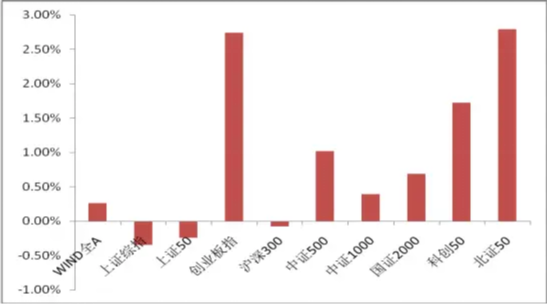
市场回顾 11月美国CPI通胀数据低于市场预期。CPI同比增速降至2.7%(市场预期3.1%),核心CPI同比增长2.6% (市场预期3.0%),为2021年3月以来的最低水平。商品通胀明显回落。4-9月商品CPI通胀上行2.1pct至 1.9%,10-11月回落0.1pct至1.8%。环比增速亦大幅放缓,10-11月合计仅涨0.1%,相比之下8-9月合计涨 幅达到1.0%。原因可能在于财富效应对消费的支撑边际回落和关税影响消退。四季度美股陷入震荡行 情,结束了三季度的单边上涨,财富效应开始拖累居民消费,10-11月商品价格合计仅增0.1%,企业部 门针对关税的调价应该在中美贸易新框架下已经结束。这份通胀数据参考意义实际上比较有限。在美国 政府停摆期间,数据收集停止,劳工局使用非调查数据源进行计算,这使得数据的可比性存疑。降息预 期在数字公布后有所提升,但明年1月不降息的概率仍然高达72.3%,明年3月降息的概率维持在50%以 下,美国政府对于降低国债付息压力的诉求等原因是决定降息节奏的主要因素。 股市策略展望 上周综述 上周A股主要指数涨跌不一,量能小幅提升。 A股主要指数周涨跌幅(%) 资料来源:wind ...