
能源金属

Search documents
如何把握当下市场机会?中欧瑞博吴伟志:看好五大硬资产主线
券商中国· 2026-01-25 09:31
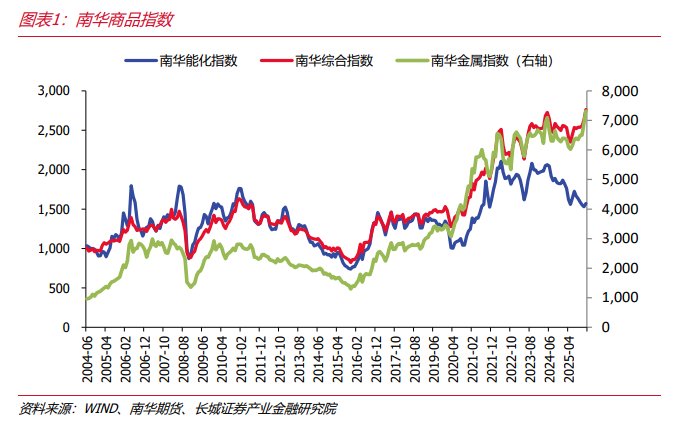
Core Viewpoint - The A-share market has entered a new upward cycle since October 2024, with the current phase described as "summer," indicating active trading and sector rotation, but not yet reaching a peak or bubble stage [1][2]. Market Characteristics - The market is currently characterized by high trading volume and broad participation, with the Shanghai Composite Index surpassing 4000 points, signaling the end of debates over bull and bear market transitions [2]. - The dynamic price-to-earnings ratio of the CSI 300 is approximately 14 times, significantly lower than the S&P 500 (about 29 times) and NASDAQ (about 42 times), indicating that the current market rebound is more of a "catch-up" rather than a bubble [2]. Product Cycle Observation - The representative products of the company have only seen a 16%-17% increase since reaching historical highs in June 2025, suggesting that there is still significant upward potential [3]. Economic Comparison - The current fundamental conditions in China are considered stronger than those in Japan during its economic transition, with a more stable financial system and lower policy learning costs [5][6]. - China's manufacturing sector remains globally competitive, with a record trade surplus in 2025, and new economic sectors like renewable energy and digital economy are driving growth [6][7]. Investment Focus for 2026 - The core investment themes for 2026 are shifting from heavy assets to hard assets, with sectors like rare earths, energy metals, and chemical materials gaining importance due to their pricing power in a concentrated global supply environment [8]. - The company emphasizes five structural investment directions: 1. Technological innovation, particularly in AI and commercial aerospace [9] 2. Biopharmaceuticals, with validated global competitiveness [10] 3. Gold and hard assets, which hold value amid global monetary expansion [11] 4. Revaluation of Chinese manufacturing leaders as key supports in a slow bull market [12] 5. High-dividend assets serving as defensive positions [13] Market Dynamics - The current market rally is driven by a combination of policy, valuation, and sentiment bottoms, alongside the early stages of industrial cycles in AI, energy transition, and biotechnology [14].


有色商品周期如何投射在A股?
Hua Er Jie Jian Wen· 2026-01-22 10:21
Group 1 - The current commodity market shows a significant divergence compared to previous cycles, with energy and non-ferrous metals exhibiting distinct trends [1][2] - The performance of non-ferrous metal stocks is influenced not only by commodity price movements but also by the overall market environment and style shifts in the A-share market [1][6] - Industrial metal stocks have shown greater elasticity in bull markets, outperforming commodity price increases, while precious metals stocks remain closely tied to commodity prices [1][6] Group 2 - The report outlines four typical commodity bull markets since 2004, highlighting the distinct phases of global demand expansion, liquidity easing, supply-side reforms, and pandemic recovery [2] - Post-2022, the commodity market has displayed notable differentiation, with energy and black metals stabilizing after volatility, while non-ferrous metals, particularly precious metals, have shown strong upward trends [2][4] - The correlation between commodity prices and stock performance varies, with industrial metals being more affected by A-share market performance, while precious metals exhibit a stronger independent trend [6][9] Group 3 - Recent data indicates that the valuation elasticity of the A-share non-ferrous metal sector has significantly surpassed that of commodity price elasticity, particularly for copper, aluminum, and energy metals [8] - The report concludes that sectors leaning towards "forward logic" (copper, aluminum, energy metals) contribute more to valuation, while those focused on "current profitability" (precious metals) tend to follow commodity price trends closely [8]
行情结束还是结构转向?
Huaan Securities· 2026-01-18 13:56
Market Insights - The report indicates that the increase in financing margin ratios is gradually being digested by the market, with the impact nearing its end. The central bank's structural interest rate cuts are expected to boost policy expectations, and additional policies may be introduced following the release of macroeconomic data for 2025, which could enhance market risk appetite [3][4] - The upcoming release of 2025 macroeconomic data on January 19 is anticipated to show a significant decline in GDP growth for Q4 compared to Q3. This, combined with various policy measures, suggests an increased probability of a "good start" for Q1, which is likely to uplift market risk appetite [4][11] Industry Allocation - The report asserts that the acceleration in market trends has not ended, but the structure of the upward trend is shifting towards computing power. The previous leading sectors, such as military and AI applications, have seen declines, raising investor concerns about the end of the current market phase. However, the report suggests that the current market phase may still extend with potential acceleration in sectors related to computing power [5][20] - As of January 12, 2026, the electric equipment sector has not yet reached new highs, indicating that the growth style and six major growth industries have not simultaneously achieved new highs. The report highlights that the electric equipment index has room for approximately 3% growth to meet this condition [20][23] - The report identifies that the communication and electronic sectors, which were previously strong, may experience a rapid rebound, with potential upward space of no less than 10%. The report emphasizes that the current market conditions do not satisfy the "stronger gets stronger" characteristic, as the leading sectors have not maintained their strength [20][24] - The report also notes that the turnover rates for the growth style and the communication sector are approaching their respective highs, but the communication sector still has a significant gap to close. This suggests that the current market phase has not yet concluded, and a rapid increase in turnover rates may accompany a rebound in the communication sector [27][31] Key Investment Themes - The report suggests two main investment themes: 1. The AI industry chain, particularly in computing power (CPO/PCB), supporting components (fiber optics/liquid cooling/power equipment), and applications (robots/games/software), is expected to continue its upward trend. The report anticipates that applications may experience high volatility, while computing power is likely to see accelerated growth [32][33] 2. Areas supported by favorable market conditions or significant events, such as storage and energy storage chains, military industry, and machinery, are also highlighted. The storage sector is expected to benefit from supply disruptions and increased AI demand, while the military sector may gain from commercial aerospace and geopolitical events [33]
13连阳下的新时代烙印
Shang Hai Zheng Quan Bao· 2026-01-06 17:56
Group 1 - The capital market is increasingly adapting to frontier fields, driving the rapid development of new technology sectors, with the Shanghai Stock Exchange set to expand its listing standards for commercial aerospace by the end of 2025 [1] - The resource sector is strengthening, reflecting a global demand for resource security amid significant geopolitical tensions, with the non-ferrous metals industry showing the best performance during a recent 13-day rally, with an overall increase of nearly 20% [1] - The current global geopolitical landscape and resource protectionism are creating challenges for the already fragile resource supply chain, accelerating the restructuring of commodity trade orders, a trend rarely seen in the past 20 years [1] Group 2 - Recent reforms in the capital market regarding medium- to long-term capital inflow, investor return optimization, and support systems for innovative enterprises have significantly altered the funding structure and trading logic of the A-share market [2] - The current market is characterized by greater stability, balanced styles, and a more mature ecosystem compared to previous years [2] Group 3 - The A-share market is expected to unfold new narratives following record-breaking performances [3]
永赢基金王乾:关注黄金、铜、能源金属与战略性矿产的配置价值
Zhong Zheng Wang· 2025-12-30 13:38
Core Viewpoint - In the context of a restructuring global monetary system and frequent geopolitical disturbances, tangible assets are seen as a viable option to hedge against uncertainties [1] Group 1: Macroeconomic Environment - The current macroeconomic landscape is characterized by "high inflation expectations, high deficits, and low inventories" [1] - The allocation value of resource products is highlighted by their "irreplaceable physical credit" and "anti-inflation properties" [1] Group 2: Investment Opportunities - Gold is identified as a core anchor in the restructuring of the global monetary system, with central banks continuing to increase the proportion of gold in their foreign exchange reserves [1] - Copper is noted for its role as an electrical metal, with a potential supply-demand gap expected to persist over the next 3-5 years due to the demand from AI data centers and power grid upgrades [1] - Energy metals and strategic minerals such as lithium, cobalt, and certain rare metals are emphasized, with the explosive growth in the downstream energy storage industry driving lithium demand beyond expectations [1]
天赢居:2025年12月26日直播
Jin Rong Jie· 2025-12-26 07:59
Core Viewpoint - The market is experiencing a strong upward trend with a series of gains, indicating a healthy momentum and potential for further growth, particularly in the technology hardware and non-ferrous metals sectors [1][2][4]. Market Performance - The main index has shown a stable recovery, crossing key moving averages, with a notable increase in the number of stocks hitting the daily limit, suggesting a broadening profit effect attracting outside capital [1][2]. - The trading volume has increased moderately, indicating that funds are not retreating but are actively participating in a "walking and switching" manner, maintaining a bullish trend [1][2]. Sector Rotation - The market structure reflects a characteristic of "strong main lines and rotating sub-lines," with technology hardware and non-ferrous metals taking turns leading the gains [2][5]. - After a two-day surge in technology hardware, there was a strategic shift to focus on non-ferrous metals, which proved to be a correct call as these sectors are interlinked in the supply chain [2][5]. Technical Analysis - The current market is in a typical "strong trend but short-term prone to fluctuations" state, with indicators showing overbought conditions, suggesting a need for consolidation through minor corrections [2][4]. - The recent upward movement is part of a larger bullish cycle, with the index expected to face resistance near the 4018 level, necessitating caution as it approaches this key point [1][6]. Investment Strategy - The strategy emphasizes "going with the trend and focusing on strong stocks," advising investors to reduce exposure to weaker or declining sectors while concentrating on those with stronger consensus and trends [3][4]. - The market's current phase is seen as an opportunity for disciplined buying during pullbacks, particularly in sectors that are showing resilience and potential for further gains [4][6]. Conclusion - The market is characterized by a healthy upward trajectory, with a focus on sector rotation between technology hardware and non-ferrous metals, supported by a solid technical foundation and strategic investment approaches [5][9].
A股指数小幅高开,创业板涨0.19%,有色、白银强势,商业航天走弱,港股中芯国际、华虹半导体涨超4%
Hua Er Jie Jian Wen· 2025-12-24 01:59
Market Performance - A-share indices showed mixed performance, with the Shanghai Composite Index down 0.01%, while the ChiNext Index rose 0.19% and the Shenzhen Component Index increased by 0.21% [1] - The Hang Seng Index opened higher, gaining 0.02%, and the Hang Seng Tech Index rose by 0.07%, with notable increases in stocks like SMIC and Hua Hong Semiconductor, both up over 4% [1] Sector Performance - Strong sectors included photovoltaic glass, energy metals, memory chips, gold, and fluorine chemical stocks, while weak sectors included Hainan Free Trade Zone, commercial aerospace, nuclear fusion, and dairy themes [1] - The semiconductor sector continued to strengthen, with companies like Shenghui Integrated and Chuangyuan Technology achieving three consecutive trading days of gains, and SMIC implementing a price increase of approximately 10% on some production capacities [2] Bond and Commodity Markets - In the domestic bond market, the 30-year main contract fell by 0.09%, while the 10-year main contract remained flat, and the 5-year and 2-year contracts decreased by 0.02% and 0.01%, respectively [1] - The domestic commodity futures market opened mostly higher, with platinum futures hitting the daily limit, and significant increases in silver, palladium, lithium carbonate, and nickel [1][9] Index Openings - The Shanghai Composite Index opened at 3920.35 points, up 0.01% [3] - The Shenzhen Component Index opened at 13378.48 points, up 0.07% [4] - The ChiNext Index opened at 3207.41 points, up 0.07% [5] - The CSI 300 opened at 4623.68 points, up 0.06% [6] - The Sci-Tech 50 opened at 1342.13 points, up 0.16% [7] Currency Exchange - The RMB against the USD appreciated by 52 points to 7.0471, marking a new high since September 30, 2024 [8]

滚动更新丨A股三大指数集体高开,有色金属板块持续走强
Di Yi Cai Jing· 2025-12-24 01:35
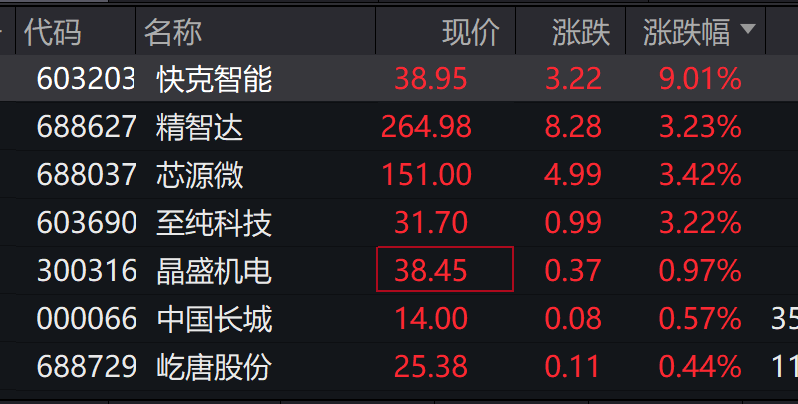
Group 1 - The photovoltaic glass, energy metals, memory storage, gold, and fluorochemical concept stocks are performing strongly [1][3] - The non-ferrous metal sector has been rising for several consecutive days, with silver and non-ferrous metals increasing over 4%, and individual stocks such as Shengda Resources and Northern Copper Industries also seeing gains [1] - SMIC's A-shares and H-shares have both risen over 2%, with reports indicating a price increase of approximately 10% on some of its production capacity [1][4] Group 2 - The A-shares opened with all three major indices rising slightly, with the Shanghai Composite Index up 0.01%, the Shenzhen Component Index up 0.07%, and the ChiNext Index also up 0.07% [2][3] - The Hong Kong stock market opened with the Hang Seng Index up 0.02% and the Hang Seng Tech Index up 0.07%, with notable gains in stocks like SMIC and Huahong Semiconductor [4][5] - The People's Bank of China conducted a 260 billion yuan reverse repurchase operation with a rate of 1.40%, while 468 billion yuan of reverse repos are set to mature today [3]

A股2026年“春季躁动”提前启动?投资者布局攻略来了
2 1 Shi Ji Jing Ji Bao Dao· 2025-12-01 13:37
Core Viewpoint - The anticipation for the "spring market rally" in A-shares for 2026 is growing, with December seen as a crucial window for early positioning [2][5][6]. Group 1: Market Outlook - Multiple sell-side institutions express optimism about the upcoming "spring market rally," suggesting that December may be an important time for positioning [2][5][6]. - The A-share market in November showed a trend of capital shifting from high-valuation growth stocks to low-valuation cyclical stocks and dividend assets [4]. - Analysts believe that the "spring market rally" could potentially start earlier than usual, with key meetings in December serving as catalysts for market movements [8][12]. Group 2: Investment Strategies - Institutions recommend focusing on high-probability directions, technology, and cyclical sectors for investment strategies [2][14]. - Specific sectors highlighted for investment include aviation equipment, AI-related energy storage, and power equipment in the growth category, as well as chemicals and energy metals in the cyclical category [15]. - The focus on traditional manufacturing and resource sectors is emphasized, with a recommendation to consider leading companies in industries where China has a competitive advantage [17]. Group 3: Key Events and Indicators - Important upcoming meetings in December are expected to clarify policy directions for 2026, particularly in technology innovation, domestic demand expansion, and real estate stability [13]. - Economic data releases, Federal Reserve statements, and various industry conferences in December are critical for market sentiment and potential investment decisions [8][12].




股市面面观丨10月物价指数回升 大消费板块集体反弹但AI主题分歧加大
Xin Hua Cai Jing· 2025-11-10 13:47
Group 1: Market Performance - The A-share consumer sector experienced a collective rebound, with leading companies such as China Duty Free Group hitting the daily limit, and other major players like Jinlongyu, Yili, and Kweichow Moutai also showing significant gains [2] - The rebound in the consumer sector is attributed to the improved October price data released over the weekend, indicating a potential stabilization of domestic prices [2][3] Group 2: Economic Indicators - In October, the Consumer Price Index (CPI) rose by 0.2% month-on-month and year-on-year, marking a shift from negative to positive growth [3] - The core CPI, excluding food and energy, increased by 1.2% year-on-year, continuing its upward trend for six consecutive months [3] - The Producer Price Index (PPI) saw a month-on-month increase of 0.1%, the first rise this year, while the year-on-year decline narrowed to 2.1% [3] Group 3: Future Outlook - Analysts expect the CPI to continue rebounding in November and December due to a lower base for pork prices, suggesting a positive trend for consumer prices [4] - Investment opportunities are highlighted in sectors such as coal, cement, photovoltaic equipment, and lithium batteries, which showed significant improvement in October data [4] - The ongoing "anti-involution" policies are anticipated to further stabilize prices in the domestic market [4] Group 4: AI Market Dynamics - The A-share market is showing signs of a "high-low cut" phenomenon, with consumer stocks rebounding while AI-related sectors like optical modules and PCBs are experiencing corrections [5] - Discussions around AI market bubbles are intensifying, particularly in the U.S., affecting related stocks in the A-share market [5][6] - Concerns about the sustainability of AI infrastructure investments are growing, with credit default swap spreads for major North American tech companies increasing significantly [7]
