铝合金期货

Search documents
悲观情绪缓解,基本金属震荡回升
Zhong Xin Qi Huo· 2026-03-27 00:38
1. Report Industry Investment Rating The report does not provide an overall industry investment rating. 2. Core View of the Report - The pessimistic sentiment in the base metal market has eased, and prices are expected to oscillate and recover. The supply side has potential support, and the demand side is gradually shifting to the traditional peak season, with consumption improving [1]. - Different metal varieties have different price trends and influencing factors, but generally show an oscillating trend. 3. Summary by Relevant Catalogs 3.1行情观点 3.1.1 Copper - **Current situation**: On March 26, the spot price of Shanghai 1 electrolytic copper was at a discount of -110 yuan/ton, with a month-on-month decrease of -15 yuan/ton; the TC of 25% copper concentrate was -67.2 dollars/dry ton, with a month-on-month decrease of -1.7 dollars/dry ton [6]. - **Main logic**: As the Middle East conflict eases, market risk aversion cools down, and copper prices stop falling and stabilize. The supply of copper ore is increasingly disturbed, the spot TC of copper concentrate is at a low level and still falling, and the supply of scrap copper is also tight. The supply of refined copper is expected to shrink, and overseas smelters have cut production. On the demand side, as the peak season approaches, the inventory of refined copper has started to decline [6]. - **Outlook**: The macro uncertainty exerts pressure on copper prices, but supply and demand are gradually improving. Copper prices are expected to show an oscillating trend [6]. 3.1.2 Alumina - **Current situation**: On March 26, the national weighted average price of alumina spot was 2788 yuan/ton, with a month-on-month increase of 0.3 yuan/ton; the alumina warehouse receipt was 415,268 tons, with a month-on-month increase of 3,599 tons [7]. - **Main logic**: The macro sentiment amplifies the market fluctuations. The operating capacity of alumina has little change, and the balance between upstream and downstream has improved, but there is still a slight surplus. The warehouse receipt level is increasing, and the spot price is rising slightly. The Middle East issue has affected the production of electrolytic aluminum, putting pressure on the demand for alumina, but the increase in freight and auxiliary material prices has also raised the cost support. In addition, the disturbance at the ore end has intensified the market's concern about resource stability, and the market price is running strongly in the short term [7]. - **Outlook**: The reduction of electrolytic aluminum production puts pressure on demand, but the policy of Guinea's ore provides support. Alumina is expected to maintain a wide - range oscillating trend [7]. 3.1.3 Aluminum - **Current situation**: On March 26, the average spot price of domestic electrolytic aluminum was 23,541 yuan/ton, with a month-on-month decrease of -250 yuan/ton; the spot discount was -110 yuan/ton, with a month-on-month increase of 15 yuan/ton; the inventory of aluminum ingots in the main domestic consumption areas was 1.371 million tons, with a month-on-month increase of 20,000 tons; the inventory of aluminum rods in the main domestic consumption areas was 339,500 tons, with a month-on-month decrease of 10,000 tons; the warehouse receipt of electrolytic aluminum on the Shanghai Futures Exchange was 404,742 tons, with a month-on-month decrease of 69 tons [8][9]. - **Main logic**: In the macro aspect, the US economic data shows structural differentiation, and the Middle East geopolitical conflict has strong uncertainty. On the supply side, the domestic production capacity remains stable, and the smelting profit is high; the Middle East conflict increases the supply disturbance of overseas aluminum, and the medium - term supply increase in Indonesia is still restricted by electricity and other factors. On the demand side, the weekly initial operating rate has slightly recovered, but the high price still restricts demand, and the spot remains at a discount. In terms of inventory, the weekly social inventory has decreased, and the proportion of molten aluminum is low. The support on the supply side has initially appeared [9]. - **Outlook**: In the short term, due to the repeated capital sentiment, aluminum prices are expected to maintain a high - level oscillation. In the medium term, the new domestic production capacity is limited, the overseas production is restricted by electricity and other rigid factors, the demand maintains a resilient growth, the supply - demand is expected to tighten, and the center of aluminum prices is expected to continue to rise [10]. 3.1.4 Aluminum Alloy - **Current situation**: On March 26, the price of ADC12 was 23,700 yuan/ton, with a month-on-month decrease of -100 yuan/ton; the average spot price of domestic electrolytic aluminum was 23,541 yuan/ton, with a month-on-month decrease of -250 yuan/ton [11]. - **Main logic**: On the cost side, the price of scrap aluminum follows the price of aluminum ingots, the supply is tight, and the cost support is strong. On the supply side, the operating rate remains low, and the tax return policy and tax transfer may still restrict supply in the medium term. On the demand side, the policy of replacing old cars with new ones continues, but the subsidy intensity has decreased. The high price restricts downstream demand in the short term, and the demand is mainly for rigid replenishment at low prices. In terms of inventory, the weekly social inventory has decreased. In general, the cost support still exists in the short term, and the supply - demand is stable. The price is expected to continue to oscillate strongly [11]. - **Outlook**: In the short term, the cost support is strong, and the price is expected to maintain an oscillating and strong trend. In the medium term, the cost support logic is strengthened, the supply side may have the risk of production reduction due to the cancellation of policies, the supply - demand maintains a tight balance, and the price is expected to maintain an oscillating and strong trend [11]. 3.1.5 Zinc - **Current situation**: On March 26, the discount of Shanghai 0 zinc to the main contract was -15 yuan/ton, Guangdong 0 zinc to the main contract was -20 yuan/ton, and Tianjin 0 zinc to the main contract was -60 yuan/ton; as of March 26, the total inventory of zinc ingots in six places was 214,400 tons, with a month-on-month decrease of -5,100 tons [11][12]. - **Main logic**: In the macro aspect, Trump released information that the military conflict between the US and Iran was easing, the macroeconomic expectation changed, and the pessimistic sentiment eased. On the supply side, the decline of zinc ore processing fees has slowed down, the smelter's profit has not improved significantly, but the import volume of zinc ore has increased marginally, and the output of zinc ingots has continued to rise. The previously locked - price zinc ingots have completed export, and the domestic supply pressure of zinc ingots has increased. On the demand side, the domestic consumption is gradually entering the peak season, but the new terminal orders are limited, and the overall demand expectation is average. In general, the short - term supply pressure of zinc ingots has increased, but there is still an expectation of inventory reduction during the consumption peak season, and zinc prices may oscillate and stabilize in the short term [12]. - **Outlook**: The domestic supply of zinc ingots has increased month - on - month. Although the downstream demand has entered the peak season, the terminal demand is weak, showing a pattern of weak supply and demand. The social inventory has not decreased for a long time. However, the military conflict between the US and Iran has affected the supply of zinc ingots and zinc concentrates, and the rising energy price has increased the pressure on European zinc smelters. At the same time, the export window of domestic zinc ingots has closed. Before the overseas smelters significantly increase production, the LME inventory is difficult to continuously accumulate. Currently, the processing fees of domestic zinc smelters are low, and the recent decline in zinc prices will further compress the smelter's profit and stimulate downstream procurement demand. Zinc prices are expected to show an oscillating trend [12]. 3.1.6 Lead - **Current situation**: On March 26, the price of waste electric vehicle batteries was 9,850 yuan/ton; the price of 1 lead ingots was 16,250 - 16,350 yuan/ton, with an average price of 16,300 yuan/ton, a month-on-month decrease of -25 yuan/ton, and the spot premium of Henan lead ingots was -65 yuan/ton, a month-on-month decrease of -25 yuan/ton; on March 23, the social inventory of lead ingots in the main domestic markets was 63,100 tons, a month-on-month decrease of -9,500 tons; the latest warehouse receipt of Shanghai lead was 52,867 tons, with no change month - on - month [13]. - **Main logic**: In the spot market, the spot discount has increased, the price difference between primary and recycled lead has slightly decreased, and the futures warehouse receipt has remained stable. On the supply side, the price of waste batteries has remained stable, the lead price has slightly decreased, the loss of recycled lead smelting is still large, the smelters have gradually resumed production, and the weekly output of lead ingots has increased. On the demand side, at the initial stage of the implementation of the new national standard for electric bicycles, consumers are more wait - and - see, and the orders for electric bicycles have slightly decreased. However, as it gradually enters the traditional consumption peak season, the operating rate of lead - acid battery enterprises will gradually recover [16]. - **Outlook**: The operating rates of primary and recycled lead smelters are still high, and the output of lead ingots remains high. After the Spring Festival, the operating rate of lead - acid battery enterprises has gradually recovered, but the terminal demand is still weak. However, the cost of waste batteries remains high. Lead prices are expected to show an oscillating trend [16]. 3.1.7 Nickel - **Current situation**: On March 26, the Shanghai nickel warehouse receipt was 57,593 tons, with a month-on-month decrease of -12 tons; the LME nickel inventory was 282,240 tons, with a month-on-month decrease of -216 tons; the price of high - nickel iron in the Chinese market was 1,080 - 1,100 yuan/nickel (including tax at the factory), which was the same as on the 25th; the Indonesian Minister of Finance said that if approved by the government, the windfall tax on nickel and coal may be implemented as early as April 1 [16]. - **Main logic**: On the supply side, the domestic production of electrolytic nickel decreased month - on - month in February, and the production of MIHP and ferronickel in Indonesia also decreased to some extent. The overall supply pressure of nickel has slightly decreased, but the overall visible inventory remains at a high level. The key is to focus on the realization of peak - season demand in the future. In terms of policy, according to the news from Mysteel, Indonesia has revised down the nickel ore quota for 2026, which has significantly adjusted the market's expectation of nickel balance. The changes in Indonesia's policy need to be continuously tracked [16]. - **Outlook**: The current fundamentals of nickel have not shown obvious marginal improvement. The overall supply - demand in February is still loose, and the LME inventory remains at a high level, which exerts certain pressure on prices. It is necessary to observe the realization strength of peak - season demand. At the same time, the revision of Indonesia's nickel ore quota has adjusted the market's expectation of nickel balance, which provides certain support for nickel prices. Nickel prices are expected to show an oscillating and strong trend, and the progress of relevant policies in Indonesia needs to be continuously concerned [16]. 3.1.8 Stainless Steel - **Current situation**: On March 26, the inventory of stainless steel futures warehouse receipts was 45,736 tons, with a month-on-month increase of 2,139 tons; the spot price of Foshan Hongwang 304 was at a premium of 110 yuan/ton to the main stainless steel contract; the price of high - nickel iron in the Chinese market was 1,080 - 1,100 yuan/nickel (including tax at the factory), which was the same as on the 25th [18]. - **Main logic**: The prices of raw materials remain stable, and there is still certain cost support for stainless steel. Due to the Spring Festival holiday in February, the production is expected to decrease significantly month - on - month, but the production in March is expected to increase both year - on - year and month - on - month. The terminal demand remains relatively cautious. The key is to focus on the realization of the peak season in the future. In terms of inventory, the current social inventory has slightly decreased, and the warehouse receipt is running at a low level [18]. - **Outlook**: Due to the Spring Festival holiday in February, the production is expected to decrease significantly month - on - month, but the production in March is expected to increase both year - on - year and month - on - month. The terminal demand is relatively cautious, and it is necessary to observe the realization strength of the peak season in the future. The current fundamentals exert certain pressure on prices. However, considering that the industrial chain profit has been suppressed for a long time and there is also support from the ore end, stainless steel is expected to show an oscillating and strong trend. The progress of relevant policies in Indonesia needs to be continuously concerned [18]. 3.1.9 Tin - **Current situation**: On March 26, the LME tin warehouse receipt inventory decreased by -25 tons to 8,780 tons; the Shanghai tin warehouse receipt inventory decreased by -387 tons to 7,757 tons; the Shanghai tin position decreased by -1,550 lots to 73,214 lots; the average price of Yangtze River Non - Ferrous 1 tin ingots was 352,900 yuan/ton, with a month-on-month decrease of -4,900 yuan/ton [19]. - **Main logic**: The supply problem of tin has been alleviated to some extent. Wa State is accelerating the resumption of production in high - grade tin mining areas in low - elevation areas, and the ore output in Wa State is expected to gradually increase. In Indonesia, according to the Indonesian Mining Association, the Indonesian Mineral and Coal General Administration has set the tin production target for 2026 at 65,860 tons, higher than the previously expected quota of 60,000 tons, and the supply expectation has become looser. The situation in the Democratic Republic of the Congo is still severe, and the supply risk remains high. In the future, although the supply problem of tin has been alleviated compared with before, the supply in the main producing areas is still fragile. On the demand side, the rapid development of AI has driven the high growth of the semiconductor industry, but the new global photovoltaic installed capacity may not increase this year, and the growth rate of new energy vehicle sales may decline. However, other traditional fields such as tin - plated sheets and tin chemicals remain basically stable. Considering the inventory reconstruction in the industrial chain, the demand for tin ingots is expected to continue to grow. Overall, the supply risk still exists, and with the resilience of downstream demand, the bottom support for tin prices still exists. However, in the short term, due to the weak macro sentiment and the expectation of supply recovery, the price will maintain an oscillating trend [19]. - **Outlook**: The supply risk is high, and the bottom support for tin prices still exists. However, there is no obvious driving force in the short term, and with the macro - level pressure, tin prices are expected to oscillate [20]. 3.2行情监测 - **Comprehensive Index**: The commodity index was 2,515.25, up 0.37%; the commodity 20 index was 2,811.87, up 0.44%; the industrial product index was 2,545.38, up 0.15% [147]. - **Plate Index**: The non - ferrous metal index on March 26 was 2,599.38, with a daily increase of 0.19%, a 5 - day increase of 0.86%, a 1 - month decrease of -4.40%, and a year - to - date decrease of -3.22% [149].
中信建投期货:2月26日工业品早报
Xin Lang Cai Jing· 2026-02-26 01:36
Group 1: Copper Market - The main copper futures in Shanghai closed at 103,040 yuan, while London copper was around 13,350 USD [4][18] - The macroeconomic environment is neutral, with Trump's State of the Union address providing weak guidance and a slight improvement in market risk appetite, leading to a mild depreciation of the dollar which supports copper prices [5][19] - On the fundamental side, copper warehouse receipts increased by 10,717 tons to 287,000 tons, and domestic spot copper prices fell to around -200 yuan due to pressure [6][20] - Overall, domestic downstream recovery and policy expectations are expected to support copper prices, but geopolitical tensions and tariff frictions remain, leading to expectations of high volatility in copper prices in the short term [6][20] - The reference range for today's main copper futures is set between 102,000 and 104,000 yuan per ton, with a strategy of buying on dips for long-term positions [6][20] Group 2: Aluminum Market - Overnight, alumina futures saw a slight increase, with recent bids for 10,000 tons of spot alumina from Xinjiang aluminum plants at around 2,970 yuan per ton, up 40 yuan from before the holiday [21][22] - The supply of alumina is expected to be tight in the short term due to production cuts and repairs at alumina production facilities, along with delayed new capacity in Guangxi [21][22] - The operational range for the 05 alumina contract is set between 2,750 and 2,950 yuan per ton, with a short-term bullish outlook [22] - The main aluminum futures in Shanghai are expected to trade between 23,500 and 24,500 yuan per ton, with a strategy of buying on dips [23][22] Group 3: Zinc Market - The zinc market in Shanghai showed a strong oscillation, supported by a decent performance in the US equity market, which boosted overall non-ferrous metal performance [24] - According to statistics, the weekly finished product inventory at smelters increased by 130% to 76,200 tons, indicating supply-side disturbances supporting prices [24] - The operational range for the main zinc futures is set between 24,000 and 25,500 yuan per ton, with a strategy of buying on dips [24] Group 4: Lead Market - The lead market in Shanghai showed a strong oscillation, with tight supply of lead concentrate and reduced production at smelters [25] - The operational range for the main lead futures is set between 16,500 and 17,500 yuan per ton, with a strategy of range trading [25] Group 5: Precious Metals Market - Precious metals experienced a slight pullback after a rise, influenced by Trump's State of the Union address and cautious hawkish statements from Federal Reserve officials [27] - The operational ranges for precious metals are as follows: gold at 1,110-1,190 yuan per gram, silver at 21,000-23,500 yuan per kilogram, platinum at 550-600 yuan per gram, and palladium at 430-480 yuan per gram [27]



中信建投期货:2月25日工业品早报
Xin Lang Cai Jing· 2026-02-25 01:21
Group 1: Copper Market - The main copper futures in Shanghai closed at 102,220 yuan, while London copper was around 13,200 USD [4][15] - The macroeconomic outlook is neutral to bearish due to the U.S. imposing a 10% global tariff and preparing to increase it to 15%, leading to uncertainty in global trade policies [4][15] - The fundamentals are also neutral to bearish, with an increase in copper warehouse receipts by 80,000 tons to 277,000 tons on the Shanghai Futures Exchange and a rise in LME copper inventory by 1,350 tons to 243,000 tons [4][15] - China's social copper inventory increased by approximately 155,000 tons during the Spring Festival to 508,000 tons [4][15] - Overall, copper prices are expected to remain under pressure in the short term due to tariff policies and geopolitical conflicts, but there is some resilience supported by downstream recovery and domestic policy expectations [4][15] Group 2: Aluminum Market - The overnight aluminum oxide futures saw a slight decline, with spot prices in Shandong quoted at or slightly above institutional prices [16][17] - The decline in production and increased maintenance of aluminum oxide production facilities, along with unexpected policy-driven production cuts in northern regions, have tightened short-term supply [16][17] - The operating capacity of aluminum oxide has decreased to approximately 93.5 million tons, with expectations of continued low operation levels [16][17] - The aluminum market is experiencing a slight improvement in dynamic supply-demand balance, but static balance remains in surplus, leading to a short-term focus on price fluctuations [16][17] Group 3: Zinc Market - The overnight zinc market showed weak fluctuations, with macroeconomic factors including China's response to U.S. tariffs and pressure on the Japanese yen creating mixed signals [18][19] - There is a slight expectation of increased processing fees in February and March, but the recovery pace of smelters and downstream die-casting plants remains slow, leading to subdued spot transactions [18][19] - Zinc ingot inventory increased by 49,000 tons during the Spring Festival, aligning with market expectations, and is at the second-highest level since 2022 [18][19] - Overall, supply-side disturbances are providing price support, but weak short-term spot performance suggests a bottoming out of zinc prices [18][19] Group 4: Lead Market - The lead market showed a strong upward trend overnight, with tight supply of lead concentrate and reduced production at smelters due to pre-holiday shutdowns [19] - The price of recycled lead is under pressure, leading to increased selling by holders, while smelters are also reducing production [19] - The overall supply-demand balance remains weak due to the extended holiday period, leading to low price fluctuations in lead [19] Group 5: Precious Metals Market - Precious metals exhibited mixed trends, with gold, silver, and platinum experiencing slight pullbacks after initial gains, while palladium saw a small increase [21] - The easing of geopolitical risks between the U.S. and Iran and reduced expectations for interest rate cuts have influenced precious metal prices [21] - The Federal Reserve's comments on maintaining current interest rates and better-than-expected consumer confidence index have added pressure on precious metals [21] - Overall, precious metals are expected to remain in a wide fluctuation state, with a focus on short-term volatility risks [21]
国内金属期货夜盘多数收涨,沪锡涨逾2%
Jin Rong Jie· 2026-02-24 17:09
Group 1 - The domestic metal futures market saw most contracts closing higher during the night session, indicating a positive trend in the sector [1] - Tin futures on the Shanghai exchange rose by 2.02%, while nickel increased by 1.65% and stainless steel by 1.03%, reflecting strong demand and market confidence [1] - International copper prices increased by 0.32%, and Shanghai copper rose by 0.25%, suggesting a stable outlook for copper-related investments [1] Group 2 - Lead futures on the Shanghai exchange experienced a slight increase of 0.12%, indicating a relatively stable market condition [1] - In contrast, aluminum oxide fell by 0.39%, aluminum alloy decreased by 0.42%, and Shanghai aluminum dropped by 0.55%, signaling potential challenges in these segments [1] - Zinc futures on the Shanghai exchange declined by 0.67%, which may reflect oversupply or weakening demand in the market [1]
中信建投期货:2月24日工业品早报
Xin Lang Cai Jing· 2026-02-24 01:13
Group 1: Copper Market - Copper prices are fluctuating at high levels, with a focus on the resumption of operations post-holiday [18] - During the holiday, LME copper inventory increased by approximately 30,000 tons to 240,000 tons, while COMEX copper inventory rose by 800 tons to 544,600 tons [18] - The domestic processing enterprises' operating rate significantly declined before the holiday, and there is anticipation for recovery post-holiday, which may support copper prices [18] Group 2: Nickel and Stainless Steel - The macroeconomic environment remains uncertain due to U.S. tariff policies and geopolitical risks, impacting market sentiment [19] - Nickel spot transactions are sluggish, while demand for Indonesian nickel ore remains strong, leading to increased prices for Philippine ore [19] - The stainless steel market is experiencing weak sentiment, with increased social inventory [19] Group 3: Aluminum Market - Pre-holiday maintenance of alumina production has led to a noticeable decline in operational capacity, estimated to drop to around 93.5 million tons [21] - Despite a historical high in social inventory, the dynamic supply-demand balance has marginally improved, limiting the downside for alumina prices [21] - The operational range for alumina contracts is projected between 2,800 and 3,000 yuan/ton, with a short-term bullish outlook [22] Group 4: Zinc Market - Zinc prices experienced a slight increase during the holiday, supported by supply-side disruptions and a generally positive macroeconomic sentiment [24] - There is an expectation of a slight increase in processing fees in February, while smelters are reducing production, indicating potential support for prices [24] - The operational range for zinc contracts is anticipated to be between 24,000 and 25,000 yuan/ton [24] Group 5: Lead Market - Lead prices saw a slight decline during the holiday, with tight supply conditions for lead concentrate persisting [25] - The recycling sector is facing pressure, leading to reduced production among smelters [25] - The operational range for lead contracts is projected between 16,500 and 17,500 yuan/ton [25] Group 6: Precious Metals - Precious metals showed strong performance during the holiday, driven by geopolitical tensions and uncertainties surrounding U.S. tariff policies [27] - The market is expected to experience volatility, with gold long positions recommended for holding, while silver, platinum, and palladium should be observed [27] - The operational ranges for gold, silver, platinum, and palladium contracts are specified, indicating potential trading strategies [27]
节前废铝回收活动减少 铝合金价格震荡调整
Jin Tou Wang· 2026-02-14 15:52
Group 1 - The main contract for aluminum alloy futures closed at 22,040 yuan/ton, with a decline of 0.85%, reaching a high of 22,385 yuan/ton and a low of 21,875 yuan/ton during the session [1] - The inventory of recycled aluminum alloy ingots in major consumption areas decreased by 95 tons compared to the previous day, and by 837 tons compared to the previous Wednesday, indicating a continued destocking trend [2] - The weighted average total cost of the casting aluminum alloy (ADC12) industry in China increased by 1,502 yuan/ton to 22,534 yuan/ton from December 2025 to January 2026 [2] Group 2 - The waste aluminum market is experiencing a "price without market" situation due to high waste aluminum prices and reduced recycling activities ahead of the holiday, with expectations of price increases post-holiday [3] - Most recycled aluminum plants plan to suspend production from February 5 to 13, with a resumption mainly after the Lantern Festival, leading to an average shutdown period extended by about 2 days compared to last year [3] - Short-term demand is expected to weaken due to the holiday shutdown, while the new energy vehicle market shows a noticeable decline in consumption due to the transition period of subsidy policies, although long-term demand remains supported by long-term contracts in the new energy vehicle sector [3]
中信建投期货:2月12日工业品早报
Xin Lang Cai Jing· 2026-02-12 01:25
Group 1: Copper Market - The main copper futures in Shanghai opened higher but closed lower, ending at 102,190 CNY, while London copper peaked at 13,500 USD before retreating to around 13,222 USD [4][14] - The U.S. January non-farm payroll data exceeded market expectations, with 130,000 new jobs added and the unemployment rate dropping to 4.3%, leading to a slight cooling of interest rate cut expectations [4][14] - The increase in copper warehouse receipts by 12,958 tons to 178,900 tons on the Shanghai Futures Exchange and a rise of 3,000 tons in LME copper stocks to 192,100 tons indicate a bearish sentiment in the market [4][14] Group 2: Nickel and Stainless Steel - The U.S. non-farm employment data significantly exceeded expectations, slightly reducing the Fed's interest rate cut outlook, although concerns about data quality limit the impact [5][15] - The demand for Indonesian nickel ore remains strong, while domestic market conditions are constrained by negative feedback in the supply chain, leading to stagnant nickel ore procurement [5][15] - Stainless steel transactions have been relatively weak, with social inventory increasing month-on-month due to pessimistic sentiment in the futures market [5][15] Group 3: Polysilicon - In January, domestic polysilicon production was reported at 102,000 tons, a decrease of 8.3% quarter-on-quarter, with expectations for further reductions to 85,000 tons in February [6][16] - The cancellation of export tax rebates has limited support for downstream sectors, while high costs of auxiliary materials continue to restrict acceptance of silicon materials [6][16] - The current market is low in activity, with future prices expected to be influenced mainly by industry governance and regulatory dynamics [6][16] Group 4: Aluminum - Domestic alumina prices remained stable, with a northern alumina producer halting part of its roasting and leaching capacity, affecting around 4 million tons of normal operating capacity [7][17] - The market is expected to experience a temporary supply-demand mismatch post-holiday, with attention needed on the actual progress of new capacity in Guangxi [7][17] - The aluminum futures market is anticipated to remain in a narrow range, with the 05 contract expected to operate between 2,600 and 2,950 CNY per ton [7][17] Group 5: Zinc and Lead - Zinc futures in Shanghai opened high but closed lower, with the macro environment affected by strong U.S. non-farm data, leading to mixed market sentiment [20] - The supply of lead concentrate remains tight, with some smelters entering production cuts ahead of the holiday, while downstream purchasing has slowed [20][21] - Overall, both zinc and lead markets are expected to experience weak supply-demand dynamics, with lead prices anticipated to fluctuate within a range of 16,500 to 17,500 CNY per ton [20][21] Group 6: Precious Metals - Precious metals initially strengthened but later retraced gains due to strong U.S. employment data, which has pressured interest rate cut expectations [23] - The geopolitical situation in Greenland, with NATO's military actions, has added some support to precious metals due to increased risks [23] - Gold is recommended for long-term holding, while silver, platinum, and palladium require a more cautious approach [23]
中信建投期货:2月10日工业品早报
Xin Lang Cai Jing· 2026-02-10 01:08
Group 1: Copper Market - The main copper futures in Shanghai rose to 102,450 yuan, while London copper closed around 13,200 USD [4][16] - Macroeconomic outlook is neutral to slightly bullish, with expectations of slowing job growth and improved interest rate cut forecasts, contributing to a weaker dollar that supports copper prices [5][17] - The Shanghai copper warehouse receipts decreased by 3,044 tons to 157,000 tons, while LME copper inventories increased by 1,025 tons to 184,300 tons [5][17] - The Capstone Chile Mantoverde copper mine union approved a new labor contract, ending strike activities [5][17] - Short-term copper prices are expected to remain volatile, with a trading range of 101,500 to 103,500 yuan per ton [5][17] Group 2: Aluminum Market - Overnight aluminum futures experienced narrow fluctuations, with spot prices stabilizing slightly [6][18] - A northern alumina production company has temporarily suspended part of its roasting and leaching capacity, but the overall supply-demand balance remains tight [6][18] - Social inventory of electrolytic aluminum increased to 875,000 tons, indicating a rise in supply amid declining demand [19] - The operating range for aluminum futures is projected between 23,000 and 24,000 yuan per ton, with a cautious outlook [19] Group 3: Zinc Market - Shanghai zinc showed weak fluctuations, with the macro environment under pressure from the dollar index [20] - The market is awaiting non-farm payroll and inflation data, with expectations of slight increases in processing fees for February [20] - Zinc ingot inventories increased by over 10,000 tons, indicating weak supply and demand ahead of the holiday [20] Group 4: Lead Market - Shanghai lead showed a strong fluctuation, with tight supply of lead concentrate and reduced production from smelters [21] - The market is experiencing a buildup in inventory as downstream purchasing activity slows down [21] - The expected trading range for lead futures is between 16,500 and 17,500 yuan per ton [21] Group 5: Precious Metals - The dollar's rapid decline supported a rebound in precious metals, with significant gains in gold and silver [23] - The U.S. Treasury Secretary indicated that the Fed may not quickly reduce its balance sheet, alleviating hawkish concerns [23] - The trading ranges for gold and silver futures are set at 1,100-1,180 yuan per gram and 19,500-22,500 yuan per kilogram, respectively [23]
中信建投期货:2月5日工业品早报
Xin Lang Cai Jing· 2026-02-05 01:16
Group 1: Copper Market - The main copper futures in Shanghai fell over 2% to 102,590 yuan, while London copper hovered around $13,000 [4] - The macroeconomic outlook is neutral to bearish, with a cooling U.S. employment market and support for a strong dollar impacting copper prices [5][19] - The fundamental outlook is neutral to bullish, with a fixed investment target of 180 billion yuan for the Southern Power Grid by 2026, and a planned investment of over 24 billion yuan in Q1, a 20% year-on-year increase [6][19] - Short-term price fluctuations are expected to remain resilient due to global strategic reserves intensifying supply-demand tensions [6][19] - Today's trading range for Shanghai copper is suggested to be between 101,000 and 105,000 yuan per ton, with strategies recommending reducing positions before the holiday [6][19] Group 2: Nickel and Stainless Steel - The macro sentiment is showing marginal recovery, leading to an overall rebound in the non-ferrous sector [20] - Nickel supply is tight due to weather-related shipping disruptions in the Philippines and rainfall affecting Indonesian supply [20] - The stainless steel market faces oversupply pressures, with limited terminal demand, although suppliers are showing a strong willingness to maintain prices due to low arrivals and strong cost support [20][21] Group 3: Aluminum Market - The aluminum market experienced a general decline, with alumina futures prices slightly dropping while spot prices stabilized [22] - The China Nonferrous Metals Industry Association indicated that a "reverse involution" policy for alumina will be introduced, but its impact will take time to materialize [22] - In January, 64.9% of the alumina industry was operating at a loss, with 23.8% of production facing cash cost losses [22] - The trading range for alumina futures is suggested to be between 2,600 and 2,900 yuan per ton, with a strategy of high selling and low buying within this range [23][22] Group 4: Zinc Market - Zinc prices showed weak fluctuations, influenced by mixed macroeconomic data from the U.S. [24] - February is expected to see a slight increase in processing fees, with a reduction in supply exceeding 50,000 tons due to production days and maintenance [24] - The demand side is affected by environmental controls in the north and reduced operations in galvanizing, leading to a return to a quiet market ahead of the holiday [24] Group 5: Lead Market - Lead prices showed a strong fluctuation, with tight supply from primary lead and a relatively loose supply from recycled lead due to transportation costs [25] - The market is entering a traditional off-season, with downstream purchasing primarily driven by essential needs, leading to an increase in inventory [25] - The trading range for lead futures is suggested to be between 16,500 and 17,500 yuan per ton [25] Group 6: Precious Metals - Precious metals experienced a slight rebound, although some gains were given back due to neutral to hawkish statements from Federal Reserve officials [27] - The market is influenced by mixed economic data, with the ADP employment change significantly below expectations, while the ISM non-manufacturing PMI was slightly above expectations [27] - The long-term bullish logic for precious metals remains intact despite short-term volatility risks, with gold long positions recommended to be held [27]
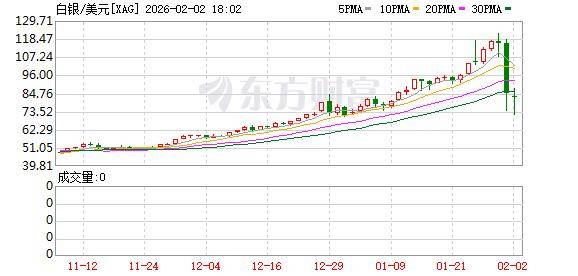
现货黄金盘中跌破4500美元!白银1个月涨幅 2天跌没了
Sou Hu Cai Jing· 2026-02-02 10:33
Group 1 - Gold prices have fallen below $4500 per ounce, with a daily decline of 7.5% [2] - Silver prices have experienced a daily drop of over 14%, erasing gains made in the past month [2] - The main contract for aluminum futures has hit the daily limit down, reporting a price of 23035 yuan per ton, with a decline of 9.01% [4] Group 2 - The main contracts for platinum and palladium have also reached the daily limit down [5] - Copper futures have seen significant declines, with the main contract hitting the daily limit down at 98580 yuan per ton, a drop of 9.01% [7] - International copper futures have also reached the daily limit down at 87250 yuan per ton, with a decline of 9% [7] Group 3 - This week, global markets are facing several major events, including the release of U.S. non-farm payroll data and interest rate decisions from the European and British central banks [9] - The probability of a 25 basis point rate cut by the Federal Reserve by March is 15.3%, while the probability of maintaining the current rate is 84.7% [9] - Major companies, including Google, Amazon, Eli Lilly, and Novo Nordisk, are set to release earnings reports this week, which will impact market perceptions of various sectors [9]