
Hua Er Jie Jian Wen

Search documents
仅用半小时!Claude Code“终结”英伟达“最强护城河”?
Hua Er Jie Jian Wen· 2026-01-23 03:59
Core Insights - The AI code platform Claude Code has successfully migrated NVIDIA's CUDA code to AMD's ROCm platform within half an hour, showcasing the potential of generative AI in breaking down computational ecosystem barriers [1] - This case has raised market concerns that it may weaken NVIDIA's long-standing technological moat built around CUDA [3] Group 1: Migration Process - A user reported that the only issue encountered during the migration was the "data layout" difference [4] - Claude Code operates using an intelligent agent framework that can smartly replace CUDA keywords with their ROCm counterparts while maintaining the underlying logic of specific kernels [4] - The tool simplifies the migration process, allowing developers to complete the work directly through a command-line interface without needing to configure complex conversion environments like Hipify [4] Group 2: Limitations and Challenges - The user did not specify the exact type of codebase processed, but the design of ROCm mimics several aspects of NVIDIA's CUDA platform, making simple code migration relatively easy for AI tools [5] - Industry experts believe that the real challenge lies in migrating complex, interrelated codebases, which require the intelligent agent system to understand a significant amount of contextual information for effective conversion to ROCm [5] - There are concerns that Claude Code may struggle with deep hardware optimizations, particularly regarding specific cache hierarchies, limiting its practicality in high-performance computing scenarios [6]



闪迪暴涨背后:三大催化共振,NAND成“必需品”,AI 重估存储价值
Hua Er Jie Jian Wen· 2026-01-23 03:41
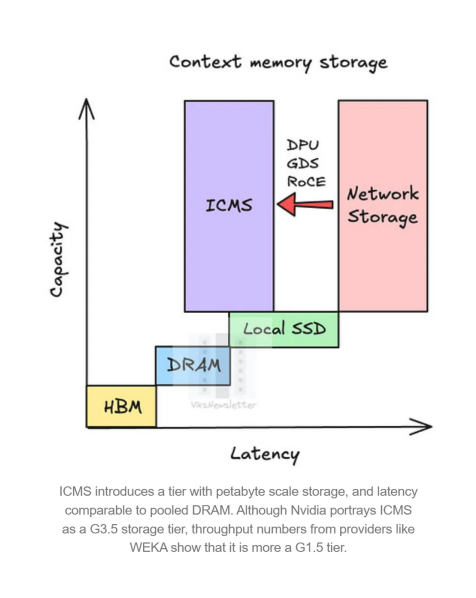
Core Insights - The storage sector is experiencing a "perfect storm," with SanDisk's stock price increasing over 100%, driven by a value reassessment triggered by advancements in AI architecture [1][11] - Storage is transitioning from a cost item to a core production element for AI, as evidenced by developments from NVIDIA and DeepSeek [1][10] Group 1: Technological Developments - NVIDIA's CEO Jensen Huang introduced the concept of Inference Context Memory Storage (ICMS) at CES 2026, highlighting that context is becoming a new bottleneck for AI rather than computing power [2][3] - The new DGX Vera Rubin NVL72 SuperPOD architecture includes dedicated storage racks for inference context, significantly increasing NAND requirements [2][3] - DeepSeek's Engram model allows NAND to be used as slow memory, enabling deterministic memory access and reducing latency issues compared to HBM [4][5][8] Group 2: Market Implications - The global NAND market, with an annual demand of approximately 1.1–1.2 ZB, is expected to see nearly 10% structural growth driven by AI infrastructure rather than traditional consumer electronics [3][11] - NAND's role is evolving from merely cold data storage to being integrated into a tiered memory system, acting as "slow RAM" for AI applications [8][9] - The combination of BlueField DPU and NAND offers a cost-effective solution for long-term memory needs in AI agents, decoupling storage demand from traditional computing resources [9][10] Group 3: Strategic Value of NAND - The strategic value of NAND is being re-evaluated as it becomes indispensable in AI architectures, leading to a potential shift in pricing logic [11] - Analysts suggest that the developments in NAND technology represent a path to achieving more efficient storage-computing collaboration, which may be more cost-effective than merely expanding computing power [8][9][11]
资金轮动推动美元走软,亚太股市普涨,黄金直逼5000大关,白银触及99关口
Hua Er Jie Jian Wen· 2026-01-23 03:40
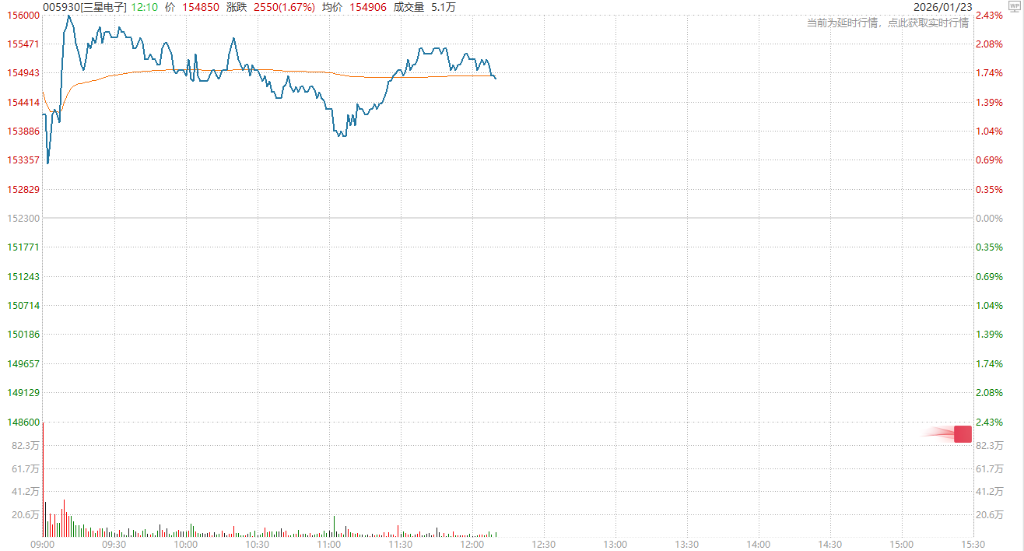
(韩国综指保持强势涨0.9%) 分析认为欧美贸易战警报的暂时解除,显著提振了全球投资者的风险偏好,并加速了一场潜在的、更深层次的资产轮动。 由于对美国政策不可预测性的担忧,资金正逐步从估值高企的美国资产中流出,转向估值更具吸引力且地缘政治风险相对较远的亚洲市场。这一 轮动直接导致美元走弱,并为亚太股市和贵金属等资产提供了强劲的上行动能。 Natixis IM Solutions全球市场策略主管Mabrouk Chetouane表示: (三星电子上涨1.7%) 日经225指数上涨0.34%,澳大利亚S&P/ASX 200指数一度上涨0.45%。值得注意的是,前一日刚刚历史性突破5000点大关的韩国综合股指继续保 持强势,盘中一度涨至1.4%。 亚洲地区远离美国、欧盟和拉丁美洲等地缘政治中心,这种距离就像一道屏障,使投资者能够分散对风险资产的敞口。 值得注意的是,亚洲市场的焦点将集中在日本央行的利率决议上,预计日本央行将维持政策利率在0.75%不变。此前,首相高市早苗提出的扩大 支出计划曾引发金融市场动荡,因此日本央行的政策表态将受到密切关注。 全球资金正加速拥抱估值更具吸引力且有增长韧性的亚洲市场。亚太地区股市 ...
嘉实成长派姚志鹏的“投资抉择”:提示科技“交易拥挤”,组合转向均衡
Hua Er Jie Jian Wen· 2026-01-23 03:17
Core Viewpoint - The market is experiencing significant differentiation as of Q4 2025, with a focus on the balance between returns, cycles, and risks rather than just the correctness of investment directions [1] Group 1: Fund Manager Insights - Fund manager Yao Zhipeng has been with Harvest Fund since 2011, focusing on growth and industry directions, and has extensive experience managing various product types [1][2] - The total scale of products managed by Yao Zhipeng is approximately 20 billion yuan, with Harvest Power Pioneer being a representative product [2] Group 2: Portfolio Composition - The top ten holdings of Harvest Power Pioneer include Ningde Times, Xinda Bio, Hunan Youneng, WuXi AppTec, O-film Tech, Zhongkuang Resources, Putailai, Nongfu Spring, Tianqi Lithium, and Xiaopeng Motors, indicating a multi-line structure [2][3] - The portfolio is built on three clear lines: 1. New energy, lithium battery, and new energy vehicle industry chain [3] 2. Pharmaceutical and innovative assets, reflecting ongoing attention to the innovative drug industry chain [3] 3. Consumer goods, with Nongfu Spring being one of the few hundred billion-level products in the food and beverage sector [4] Group 3: Market Environment Analysis - The overall market in Q4 2025 is characterized by a steady rise, with good returns in commercial aerospace, copper and aluminum commodities, chemicals, communications, and insurance, while cyclical assets have adjusted [4][5] - Yao Zhipeng expresses a cautious and neutral stance on the technology sector, highlighting the crowded nature of tech investments and the reevaluation of risks associated with AI [5][6] Group 4: Economic Outlook and Investment Strategy - The primary task for the Chinese economy in 2026 is to expand domestic demand, which will likely influence investment directions [6][7] - Long-term favored directions include new energy, new technology, new consumption, and innovative drugs, focusing on lithium batteries, embodied intelligent applications, and consumer assets that align with improving consumption [7] - Attention is also drawn to the potential for foreign capital inflow due to the appreciation of the RMB and the attractiveness of leading companies in various industries [8][9] Group 5: Portfolio Adjustment Strategy - Yao Zhipeng plans to gradually increase allocations to domestic demand and cyclical leading assets, enhancing the balance of the portfolio while dynamically adjusting based on macro and mid-level environmental changes [8][9]
南京银行破3万亿:资产狂飙16%、利息净收入大增三成
Hua Er Jie Jian Wen· 2026-01-23 03:14
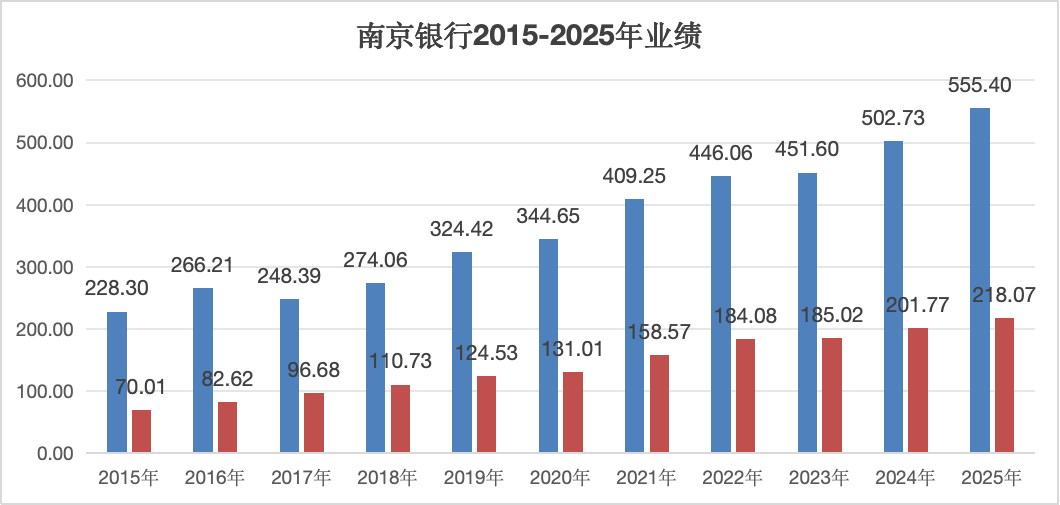
Core Viewpoint - Nanjing Bank has reported aggressive growth in its 2025 performance, with total assets surpassing 3 trillion yuan, reflecting a strategy of "scale for growth" despite challenges in capital efficiency and earnings per share dilution [1][9]. Financial Performance - The bank achieved an operating income of 55.54 billion yuan, a year-on-year increase of 10.48%, and a net profit attributable to shareholders of 21.81 billion yuan, up 8.08% year-on-year [1]. - However, earnings per share declined by 3.83% to 1.76 yuan due to rapid expansion of ordinary shares, which increased from 11.068 billion shares to 12.364 billion shares, an increase of 11.71% [3][4]. Asset Growth - By the end of 2025, Nanjing Bank's total assets reached 3.022424 trillion yuan, marking a significant growth of 16.63%, which is notably aggressive among listed banks [4]. - Total deposits and loans grew by 11.67% and 13.37%, respectively, with both corporate deposits and loans exceeding 1 trillion yuan [4]. Income Structure - The bank's net interest income surged by 31.08% to 34.902 billion yuan, driven by a double-digit expansion in interest-earning assets and a structural tilt in credit allocation [5]. - Growth rates for specific loan categories included 19.49% for technology finance, 30.08% for green finance, and 17.46% for inclusive small and micro loans, all significantly outpacing overall loan growth [5]. Capital and Risk Management - Despite completing a capital increase, the core Tier 1 capital adequacy ratio slightly decreased by 0.05 percentage points to 9.31%, indicating that the rapid asset expansion is nearing the limits of internal capital accumulation [6]. - The non-performing loan ratio remained stable at a low level of 0.83%, but the provision coverage ratio fell significantly by 21.96 percentage points to 313.31%, suggesting a trade-off between profit release and risk coverage [6]. Retail Business Development - Retail customer assets under management (AUM) surpassed 1 trillion yuan for the first time, reaching 100.25 billion yuan, a year-on-year growth of 21.23%, with private banking AUM growing nearly 23% [7]. - The number of mobile banking users surged by nearly 30% following the launch of version 8.0 [7]. Market Position - Nanjing Bank maintained its position as a leader in the issuance of non-financial corporate debt financing tools, with an underwriting scale exceeding 270 billion yuan, ranking first in Jiangsu Province for eight consecutive years [7]. Future Expectations - Moving forward, the market anticipates Nanjing Bank to transition from a focus on "expanding scale" to "enhancing efficiency" at this new asset milestone of 3 trillion yuan [10].

日本央行维持政策利率在0.75%不变,符合预期
Hua Er Jie Jian Wen· 2026-01-23 03:07
日本央行维持政策利率在0.75%不变,符合预期。 风险提示及免责条款 市场有风险,投资需谨慎。本文不构成个人投资建议,也未考虑到个别用户特殊的投资目标、财务状况或需要。用户应考虑本文中的任何 意见、观点或结论是否符合其特定状况。据此投资,责任自负。 ...
AH股震荡走高,光伏爆发掀起涨停潮,贵金属再度大涨,阿里巴巴涨超3%,金属期货全线拉升
Hua Er Jie Jian Wen· 2026-01-23 02:37
Group 1: Market Overview - International gold and silver prices reached new highs, with gold approaching $5000 and silver surpassing $99, leading to significant gains in precious metal stocks in A-shares and Hong Kong stocks [1][10] - A-shares experienced a collective rise on January 23, with major indices showing positive movements, particularly in the photovoltaic and precious metals sectors [1] - The Hang Seng Index rose by 0.66%, while the Hang Seng Technology Index increased by 0.46% [2][3] Group 2: Precious Metals Sector - The precious metals sector saw substantial gains, with platinum rising over 9% and silver increasing by 8% in domestic commodity futures [4][19] - Specific stocks such as Hunan Silver and Sichuan Gold experienced significant price increases, contributing to the overall strength of the precious metals sector [1][10] - Silver-related stocks, including Baiyin Youse and Zhongjin Gold, achieved multiple consecutive trading limits, indicating strong market interest [10][16] Group 3: Photovoltaic Sector - The photovoltaic sector surged, driven by news of SpaceX's plans for solar energy initiatives and China's submission of a large satellite constellation application [6][13] - Stocks in the photovoltaic industry, such as Maiwei and Jiejia Weichuang, saw substantial price increases, with some reaching their daily limit [11][12] - The market is optimistic about the future of space-based solar energy, with expectations of technological advancements in photovoltaic materials [13]



商用车电动化迈入奇点时刻
Hua Er Jie Jian Wen· 2026-01-23 02:31
Core Viewpoint - CATL is expanding its presence in the commercial vehicle sector with the launch of the Tianxing II light commercial vehicle solution, aiming to redefine its role from a hardware supplier to a smart manufacturing platform [1][2]. Group 1: Market Overview - The commercial vehicle market in China is projected to reach 4.25 million units in sales this year, with a penetration rate of new energy vehicles exceeding 35% [1]. - By the end of 2024, the penetration rate is expected to be only 10% [1]. Group 2: Product Launch and Features - CATL has launched the Tianxing II light commercial series, collaborating with 46 automakers and producing 678 new models, with a cumulative shipment of over 210,000 units [2]. - The Tianxing II features a long-range version with a 253 kWh battery, achieving a real-world range of 800 kilometers, targeting the intercity freight market [2][3]. Group 3: Cost Savings and Warranty - Utilizing off-peak electricity for charging, a single light truck can save up to 150,000 yuan in fuel costs annually [3]. - CATL offers a warranty of "10 years or 1 million kilometers" with a promise of no degradation in the first year, addressing concerns of long-distance drivers [3]. Group 4: Technological Innovations - The Tianxing II introduces the industry's first mass-produced sodium battery, which performs well in extreme cold, retaining over 92% usable capacity at -20 degrees Celsius [3]. - The supercharging version can charge to 80% in 30 minutes at -15 degrees Celsius, while the high-temperature version maintains a cycle life of 5,000 times at 45 degrees Celsius [3]. Group 5: Digital Solutions and Asset Management - CATL has launched the "Battery Manager" app, which generates health scores for batteries and addresses trust issues in second-hand vehicle transactions [4]. - The app is part of a broader strategy to improve the residual value of vehicles equipped with CATL batteries, potentially exceeding 10,000 yuan compared to competitors [4]. Group 6: Future Plans and Market Strategy - CATL plans to establish 3,000 battery swap stations by 2026, aiming to reduce vehicle purchase costs by 10% through a "separation of vehicle and battery" model [5]. - The company emphasizes that future competition will focus on systematic victories based on real operational scenarios rather than just battery specifications [5]. - The upcoming "trade-in" policy in 2026 is expected to enhance subsidies for new energy commercial vehicles, further accelerating user adoption [5].

复刻汤姆克鲁斯“壮志凌云”?装强硬吸引特朗普?马克龙的墨镜成为达沃斯焦点
Hua Er Jie Jian Wen· 2026-01-23 02:31
据华尔街日报,马克龙的墨镜在达沃斯论坛上制造了一场非预期的政治剧场。分析人士指出,这副墨镜 为一个渴望领导人展现更多强硬姿态的欧洲大陆,提供了恰到好处的视觉象征。 社交媒体上迅速涌现大量由生成式AI制作的表情包。马克龙被描绘成战斗机飞行员,在《壮志凌云》 主题曲中追踪空军一号上的特朗普并竖起中指。 他还被塑造成1986年动作片《眼镜蛇》中手持机关枪的西尔维斯特·史泰龙。社交平台上有网友给他起 了"法国独行侠"的绰号。 法国总统马克龙在达沃斯论坛戴着反光飞行员墨镜登台的一幕,意外成为全球政治舞台上最受关注的视 觉符号。这副蓝色镜片的墨镜不仅登上各国报纸头版,还引发市场波动——生产该墨镜品牌的意大利公 司股价在米兰证交所应声上涨。 1月22日,据《华尔街日报》报道,许多人认为马克龙此举是在向特朗普总统发出强硬信号,尤其是在 特朗普要求控制格陵兰岛的背景下。这副墨镜让人联想到汤姆·克鲁斯在《壮志凌云》中饰演的桀骜飞 行员"独行侠",也有人认为他在模仿前总统拜登标志性的飞行员墨镜造型。英国《每日电讯报》甚至 打出标题:"马克龙的墨镜能拯救西方吗?" 报道称,法国官员则透露,马克龙戴墨镜的真实原因是为了遮挡眼部血管破裂 ...
被忽视的机会?高盛:市场严重低估欧洲数据中心的爆发力
Hua Er Jie Jian Wen· 2026-01-23 02:21
Core Insights - Europe is emerging as a significantly undervalued region in the next wave of global data center construction, driven by AI computing demand, localization of cloud computing, and improved policy environment [1][5] Group 1: Data Center Capacity and Growth - According to the European Data Center Association (EUDCA), Europe's data center capacity is expected to increase from approximately 15 gigawatts (GW) to around 40 GW by 2031, nearly tripling the current market size [1] - Goldman Sachs indicates that the construction pace of data centers in Europe is advancing significantly, with many projects already in the construction phase and higher visibility for projects in the 3-5 year timeframe [2] Group 2: Impact on Electricity Demand - Data centers are projected to drive an average annual growth of nearly 1.5% in overall electricity consumption in Europe from 2027 to 2031, not accounting for additional demand from electric vehicles, electrification, and GDP growth [3] - The increase in electricity demand is driven by three main factors: ongoing electrification of transportation and industry, clean energy transition, and data center loads centered around AI and cloud computing [3] Group 3: Geographical Distribution of Data Centers - Unlike the concentration of data centers in the U.S., Europe's expansion is characterized by geographical dispersion, with significant new capacity expected across major economies such as Germany and the UK, each around 4 GW, followed by several countries with 2 GW or more [4] - This distributed layout presents investment opportunities across multiple countries and raises requirements for cross-regional transmission capacity and grid coordination [4] Group 4: Policy Environment - The EU is expected to release the "Cloud and AI Development Act" by the end of March, which will provide clear and actionable policy signals for investments in local data centers and AI infrastructure [5] - Additionally, the "Grid Package Plan" aims to accelerate grid connection approvals and promote cross-border transmission network construction to alleviate power bottlenecks caused by concentrated data center operations [6] Group 5: Benefits to Power Sector - The rising electricity demand from data centers is likely to tighten the power market in Europe, enhancing the profitability of traditional gas power plants during the construction period of renewable energy projects [7] - Higher electricity price expectations may improve the pricing and return levels of ongoing renewable energy projects, benefiting companies like RWE and Solaria [7] - The data center construction boom is also expected to positively impact upstream equipment sectors, with demand potentially outpacing supply, leading to a buy rating for Siemens Energy [7]