Hua Er Jie Jian Wen

Search documents
美国总统特朗普就“去银行化”问题起诉摩根大通及其CEO戴蒙
Hua Er Jie Jian Wen· 2026-01-22 17:25
市场有风险,投资需谨慎。本文不构成个人投资建议,也未考虑到个别用户特殊的投资目标、财务状况或需要。用户应考虑本文中的任何 意见、观点或结论是否符合其特定状况。据此投资,责任自负。 风险提示及免责条款 美国总统特朗普就"去银行化"问题起诉摩根大通及其CEO戴蒙。 ...

“美联储独立性”是伪命题?特朗普真正的目标:“金融压抑”与债务稀释
Hua Er Jie Jian Wen· 2026-01-22 16:13
Group 1: Core Insights - The conflict between the White House and Federal Reserve Chairman Powell is fundamentally a power struggle over policy control rather than merely a debate about central bank independence [1] - The Trump administration aims to lower interest rates to 1% to mask the growing sovereign debt risk and maintain asset bubbles, facilitating a hidden transfer of wealth through financial repression [1] - The Federal Reserve has become a key institution that can still check presidential power, especially as the influence of Congress and public institutions has weakened [1] Group 2: Historical Context of Central Bank Independence - Central bank independence became a widely accepted concept only recently, with New Zealand's 1990 legislation establishing an inflation-targeting framework being a significant milestone [2] - The historical context of central bank independence is rooted in the high inflation periods of the 1970s and 1980s, where governments delegated tough policy decisions to central banks to avoid political backlash [2] - There are ongoing debates about the theoretical basis and practical effectiveness of central bank independence, particularly regarding conflicting policy goals and limited control over key economic variables [2] Group 3: Limitations and Critiques of Central Banks - Central banks' reliance on core analytical models like NAIRU and the Phillips curve has faced criticism for their predictive effectiveness in real-world scenarios [3] - The decision-making bodies of central banks often consist of economists with similar academic backgrounds, which may limit the diversity and effectiveness of policy-making [3] - Historical performance of central banks has been questioned, particularly regarding their responses to economic crises and the long-term effects of their policies on asset bubbles and social inequality [4] Group 4: Political Motivations and Wealth Transfer - Trump's strategy involves appointing Federal Reserve governors who support his interest rate policies, aiming to obscure sovereign debt pressures and sustain market bubbles [6] - Lowering interest rates allows the government to continue expansionary fiscal policies, benefiting political and business supporters while diluting debt burdens through negative real interest rates [6] - This approach mirrors Trump's previous business strategies, characterized by high leverage and risk-taking, suggesting a continuity in his operational mindset [6] Group 5: Power Balance and Democratic Accountability - The debate over central bank independence reflects a restructuring of power balance within the U.S. political system, with the Federal Reserve serving as a critical check on executive power [7] - There is a growing populist sentiment favoring low interest rates and high growth, alongside increasing skepticism towards technocratic elites and their decision-making processes [7] - The surface-level discussion about central bank independence masks deeper issues of power distribution, democratic accountability, and institutional checks within the political economy [7]
美国11月个人收入环比 0.3%,预期 0.4%。美国11月个人消费支出(PCE)环比 0.5%,预期 0.5%。美国11月PCE物价指数同比 2.8%,预期 2.8%。美国11月PCE物价指数环比 0.2%,预期 0.2%。美国11月核心PCE物价指数环比 0.2%,预期 0.2%。
Hua Er Jie Jian Wen· 2026-01-22 15:01
Group 1 - The core point of the article highlights the economic indicators for the United States in November, including personal income, personal consumption expenditures (PCE), and PCE price indices, which align with market expectations [1] Group 2 - In November, personal income increased by 0.3%, slightly below the expected 0.4% [1] - Personal consumption expenditures (PCE) rose by 0.5%, matching the market expectation [1] - The year-on-year PCE price index stood at 2.8%, in line with expectations [1] - The month-on-month PCE price index increased by 0.2%, consistent with forecasts [1] - The core PCE price index, which excludes food and energy, also rose by 0.2%, meeting expectations [1]
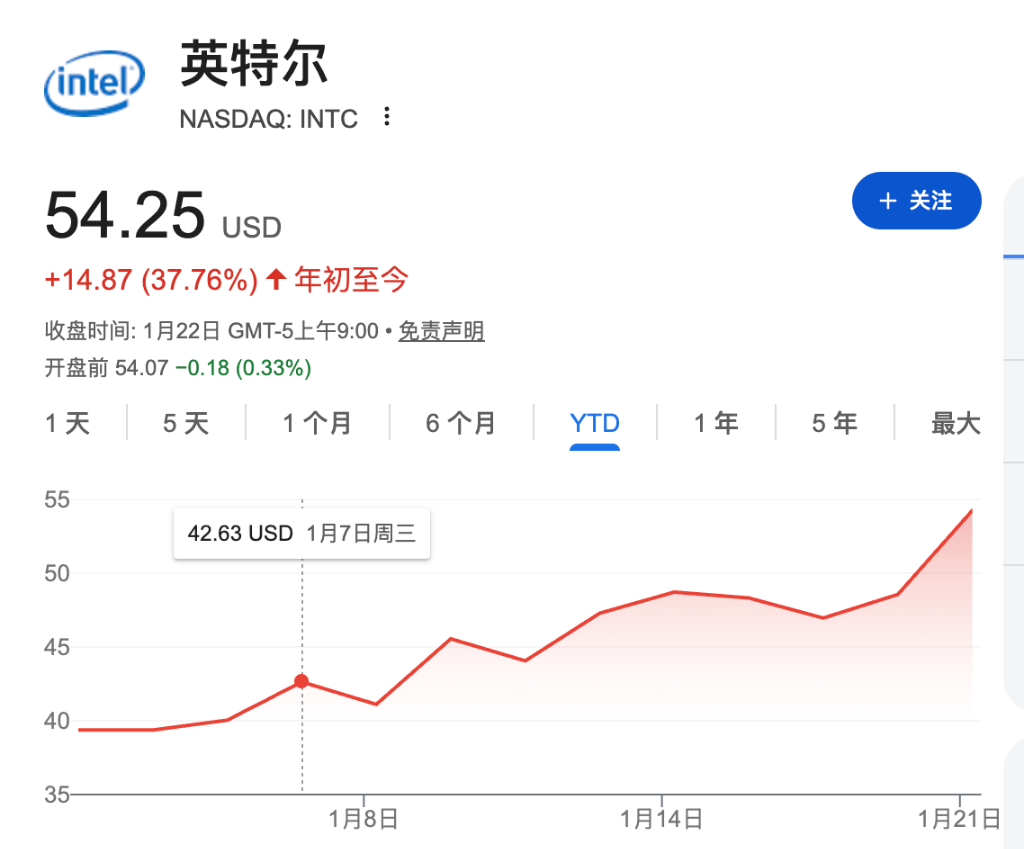
年内已经上涨37%,明早的英特尔财报看什么?
Hua Er Jie Jian Wen· 2026-01-22 14:35
Core Viewpoint - Intel's stock has risen 37% this year, closing at $54.25 on January 21, marking a new high since January 2022. The upcoming quarterly earnings report is anticipated to focus on three core growth drivers: AI Agent-driven CPU demand, advancements in the 18A process technology, and breakthroughs in the foundry business [1]. Group 1: AI Agent and Server CPU Demand - The market views AI Agents as a key growth driver for Intel's server business, with KeyBanc reporting that Intel's server CPU capacity for 2026 is nearly sold out. HSBC predicts that demand for server CPUs driven by Agentic AI could grow by 30%-40%, significantly exceeding the market's expected growth of 4%-6% [3]. - The earnings report will focus on two key indicators: revenue growth in the Data Center and AI (DCAI) business, which Morgan Stanley expects to grow by 11.5% quarter-over-quarter, and the average selling price (ASP) of server CPUs, which has reportedly increased by 10%-15% [4][5]. Group 2: 18A Process and Panther Lake Progress - The 18A process is critical for Intel's return to process leadership, with the Panther Lake processor being the first product to utilize this technology. The earnings report will look for signals regarding DCAI revenue and ASP increases, which could validate the demand from AI Agents [4][5]. - The yield and production pace of the 18A process will directly impact Intel's gross margin recovery and cost competitiveness. Positive early orders or collaboration intentions from PC manufacturers regarding the Panther Lake processor would demonstrate the commercial viability of the 18A process [5]. Group 3: Foundry Business Developments - Intel's foundry business (IFS) is seen as a key growth curve for valuation reformation, but market skepticism remains regarding its ability to attract external customers. Reports indicate a lack of visibility in potential collaborations with major companies like Apple and NVIDIA [6]. - Any progress reported during the earnings call regarding external customer acquisition or actual orders for advanced packaging technologies would significantly boost market expectations. This will be crucial for validating Intel's transition from an IDM 2.0 strategy to a market-oriented foundry business [6].

当财政部与美联储决定让经济“过热”,黄金剑指6000美元?
Hua Er Jie Jian Wen· 2026-01-22 13:55
Core Viewpoint - The shift in U.S. economic policy towards aggressive stimulus strategies may drive gold prices to a historic high of $6,000 per ounce by 2026, as predicted by financial analyst Craig Hemke [1][2]. Group 1: Policy Shift - The U.S. economic policy is undergoing a fundamental reversal from fiscal tightening to a strategy aimed at "overheating" the economy to alleviate debt burdens [3]. - The current administration has abandoned previous plans for budget balancing and fiscal restraint, opting instead for rapid GDP growth to dilute debt pressure [3]. - A new Federal Reserve chair, expected to be appointed by Trump in May, is anticipated to align closely with the Treasury to stimulate short-term growth through interest rate cuts [1][3]. Group 2: Potential Tools - The aggressive growth strategy may lead to rising inflation and long-term interest rates, prompting the Federal Reserve to consider implementing yield curve control [4]. - Yield curve control would involve setting a cap on long-term interest rates, such as 4% for 10-year Treasury bonds, to maintain low nominal rates while inflation rises [4]. - This scenario could result in negative real interest rates, historically favorable for gold prices [4]. Group 3: Central Bank Demand - Global central bank demand for gold has reached record levels, driven by concerns over the safety of dollar assets, particularly following geopolitical tensions [5][6]. - The Polish central bank's recent announcement to purchase an additional 150 tons of gold highlights ongoing strong demand, which is expected to continue supporting gold prices [6]. - The combination of robust central bank buying and strong industrial demand for silver positions the precious metals market for a long-term bull market starting in 2024 [6].
美国三季度实际GDP年化季环比终值4.4%,预期 4.3%,前值 4.3%
Hua Er Jie Jian Wen· 2026-01-22 13:34
Core Insights - The core personal consumption expenditures (PCE) price index for the third quarter in the U.S. stands at 2.9%, matching both the expectations and the previous value of 2.9% [1] Summary by Category - **Economic Indicator**: The PCE price index is a key measure of inflation, indicating stable inflation levels in the third quarter [1] - **Market Expectations**: The actual PCE figure aligns with market expectations, suggesting no surprises in inflation trends for this period [1] - **Historical Context**: The consistency of the PCE index at 2.9% reflects a steady economic environment without significant fluctuations in consumer prices [1]
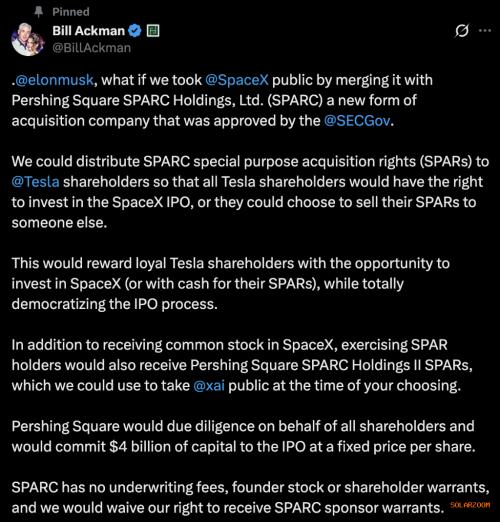
Ackman抛出SpaceX上市新方案: 不走传统IPO,没有承销费,特斯拉股东可先上车
Hua Er Jie Jian Wen· 2026-01-22 13:25
Core Viewpoint - Billionaire Bill Ackman proposes a unique structure through a Special Purpose Acquisition Rights tool (SPARC) to take SpaceX public, bypassing traditional IPO processes and granting Tesla shareholders priority investment rights [1] Group 1: SPARC Structure - Ackman's proposal allocates 0.5 SPARs per Tesla share, totaling approximately 1.723 billion SPARs, which can be converted into 3.446 billion shares of SpaceX [2] - The structure eliminates underwriting fees, founder shares, and shareholder warrants while maintaining a 100% common stock capital structure [2] - The proposal aims to complete due diligence and finalize agreements within 45 days, targeting an announcement in mid-February [2] Group 2: Financing Flexibility - If the SPAR exercise price is set at $11.03, SpaceX could raise about $42 billion, with approximately $38 billion from SPAR exercises and $4 billion from Pershing Square [3] - Increasing the exercise price to $42 could significantly boost total proceeds to around $148.7 billion [3] - The structure allows for flexible arrangements between primary and secondary shares, aligning with SpaceX's market expectations for a potential $1.5 trillion IPO [3] Group 3: Additional Incentives - Ackman includes additional incentive clauses, where investors exercising SPAR rights will receive SPARs from Pershing Square SPARC Holdings II, providing future investment opportunities in Musk's AI company, xAI [3]

欧央行12月会议纪要:货币政策“处于良好状态”,未来将继续保持高度灵活
Hua Er Jie Jian Wen· 2026-01-22 13:14
欧洲央行管理委员会在12月17-18日会议上决定维持利率不变。周四发布的会议纪要显示,决策层认为 当前货币政策立场"处于良好状态",能够在支持经济与抑制通胀之间保持平衡,但同时强调政策并非一 成不变。 纪要指出,欧洲央行将继续保持高度灵活性,对利率向上或向下调整都保留充分选择权,以便在经济与 通胀前景发生变化时及时作出应对。 据彭博Citigroup经济意外指数,2025年欧元区宏观经济数据多数向上意外,2025年数据意外的范围是过 去二十年中最小的,尽管地缘政治不确定性处于高位。这凸显了欧元区的韧性。 12月央行预测显示,欧元区2025年GDP增长率为1.4%,比4月美国宣布提高关税前的3月预测高出0.5个 百分点。未来几年,经济预计将以接近或略高于潜在水平的速度稳定增长。国内需求预计将是增长的主 要引擎,实际收入将进一步上升,储蓄率应从高位逐步下降,支持消费。企业投资和政府在基础设施和 国防方面的大量支出应在未来几年内日益支撑经济。 劳动力市场保持强劲。10月失业率为6.4%,接近历史低位。第三季度就业增长0.2%,高于第二季度的 0.1%。与此同时,劳动力需求进一步降温,第三季度职位空缺率降至疫情以来最 ...
美国银行业正迎来史上最疯狂“抱团取暖”,谁能挑战摩根大通与美银?
Hua Er Jie Jian Wen· 2026-01-22 13:03
Core Insights - The U.S. banking industry is undergoing a historic wave of consolidation driven by a loose financial environment and relaxed regulatory policies, with regional banks aggressively pursuing mergers and acquisitions to expand their scale and enhance financial system stability [1][3] Group 1: Mergers and Acquisitions - PNC Financial Services Group has completed a $4.1 billion acquisition of FirstBank, while Fifth Third Bancorp is set to finalize a $10.9 billion acquisition of Dallas-based LegacyTexas [1] - The mergers are concentrated in fast-growing regions like Texas and Colorado, indicating a strategic intent by banks to capture high-growth markets [1] - Analysts from Jefferies highlight that regional lenders such as M&T Bank, Citizens Financial Group, and KeyCorp are seen as "ripe for acquisition" [2] Group 2: Regulatory Environment - The relaxation of regulatory scrutiny under the Trump administration has facilitated these mergers, with agencies like the OCC and FDIC easing restrictions on transactions [1][3] - The current financial environment, characterized by high interest rates and low credit losses, has left many U.S. banks with excess capital, making stock-based acquisitions more attractive [1][3] Group 3: Market Dynamics - The U.S. banking landscape is highly imbalanced, with JPMorgan Chase, Bank of America, and Wells Fargo controlling over 30% of household deposits, while many smaller banks hold only single-digit market shares [3] - Mergers are becoming essential for smaller banks to survive due to high technology investment and compliance costs, as larger banks can outspend them significantly [3] Group 4: Importance of Physical Branches - Acquiring deposits is a core challenge for banks, and significant market share growth from retail customers is nearly impossible without mergers [4] - The merger of BB&T and SunTrust to form Truist Financial exemplifies how combining resources can lead to a substantial increase in market share [4] - Physical branches remain crucial, as evidenced by JPMorgan Chase's expansion of 1,000 branches since 2018, which significantly boosts product sales per customer [4] Group 5: Financial Stability - The consolidation of banks into "super regional banks" may enhance financial stability by diversifying the banking landscape, reducing reliance on a few large institutions [6] - These super regional banks maintain simpler and more focused business models compared to global giants, potentially providing more stability in times of crisis [6] Group 6: Future Acquisition Targets - The market is focused on potential acquirers and targets, with PNC and Fifth Third leading recent transactions [7] - Wells Fargo, having recently lifted asset cap restrictions, may be a key player in future mergers, as its market share has declined to 7.7%, creating opportunities for strategic acquisitions [7]


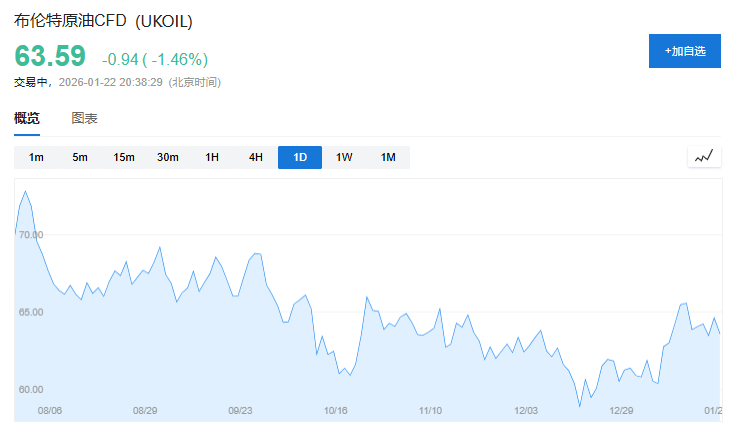
布油跌破65美元大关!IEA刚警告“大过剩”,美能源部长又喊“增产翻倍”
Hua Er Jie Jian Wen· 2026-01-22 12:50
Core Viewpoint - International oil prices are under pressure, with Brent crude falling below the critical $65 mark due to negative supply-side factors dominating market sentiment [1][3]. Group 1: Supply Factors - The U.S. Energy Secretary has called for a doubling of global oil production, raising concerns among traders about supply growth prospects [1]. - The American Petroleum Institute reported a 3 million barrel increase in U.S. crude oil inventories last week [3][4]. - Kazakhstan's Black Sea loading facility repairs are nearing completion, which will soon lift export restrictions [4]. - Venezuela's oil is returning to the global market, and Indian refiners are again purchasing Russian oil [4]. Group 2: Demand and Supply Outlook - The International Energy Agency (IEA) has slightly raised its oil demand growth forecast but maintains its warning of a significant supply surplus this year [5]. - Geopolitical risks have eased, with U.S. President Trump announcing a delay in imposing tariffs on Europe, which may influence market dynamics [7]. Group 3: Market Reactions - WTI crude oil fell by 2% to $59.59 per barrel, while Brent crude dropped by 1.5% to $63.6 per barrel [1]. - Despite the easing of geopolitical tensions, analysts suggest that unresolved supply threats and cold weather may keep oil prices relatively firm [7].