Hua Er Jie Jian Wen

Search documents
手机业务如何应对内存风险、AIot、电车、研发布局.....一文读懂小米高管在高盛电话会发言
Hua Er Jie Jian Wen· 2026-01-07 08:54
Core Viewpoint - Xiaomi is focusing on increasing the average selling price of smartphones as a primary operational goal for 2026, while significantly boosting investments in artificial intelligence to transform its entire business line and setting an annual delivery target of 550,000 electric vehicles [1][2]. Group 1: Smartphone Business - Xiaomi's strategy to counter the rising costs of storage chips involves increasing the average selling price (ASP) of smartphones, with a clear focus on high-end models [3][4]. - The upcoming Xiaomi 17 Ultra will be priced 500-700 RMB higher than the Xiaomi 15 Ultra, reflecting this strategy [3]. - The company aims to increase its market share in China by 1 percentage point annually, emphasizing the strategic importance of the Chinese market for its high-end strategy [4]. Group 2: AIoT Business - The AIoT segment is positioned as a profit stabilizer for Xiaomi, with expectations of approximately 20% year-on-year revenue growth in 2025 and a margin expansion of 2-2.5 percentage points [5]. - Xiaomi plans to increase the number of its retail stores from about 500 in 2025 to over 1,000 in 2026, while expanding product categories and exploring partnerships with cross-border e-commerce platforms [5]. - Currently, overseas AIoT revenue accounts for about 30%, with overseas smartphone revenue at 60%, indicating potential for future growth in AIoT [5]. Group 3: Electric Vehicle Business - Xiaomi has raised its delivery target for electric vehicles to 550,000 units for 2026, significantly up from the previous target of 410,000 units for 2025 [6][7]. - The growth is driven by increased manufacturing capacity and consumer confidence in new models, including the SU7 facelift and a third model set for release in the second half of 2026 [6]. - The company aims for a healthy gross margin of over 20% in the electric vehicle segment, although margins may be lower in 2026 due to tax incentives and changes in product mix [6][7]. Group 4: R&D Investments - Xiaomi plans to invest 200 billion RMB in R&D from 2026 to 2030, focusing on AI, autonomous driving, and chip development [8][9]. - AI investments are expected to account for 25% of the 320-330 billion RMB R&D budget in 2025, with a commitment to maintaining reasonable levels of investment [9]. - The company has a strong focus on developing its own chips, with significant investments already made in the XRING O1 chip, which is expected to enhance its capabilities in the electric vehicle sector [11].

美国将“代销”委内瑞拉石油,并要求委切断与中国、俄罗斯的经济联系!外交部:典型的霸凌行径
Hua Er Jie Jian Wen· 2026-01-07 08:49
1月7日,外交部发言人毛宁主持例行记者会。 英国《金融时报》记者提问,美国总统特朗普表示,美国将从委内瑞拉获得5000万桶此前受制裁的石 油,这些石油将由美国代表委内瑞拉进行销售。其中部分原油原本是可能会被直接售予中国的。中方对 此有何评论? 毛宁表示,委内瑞拉是主权国家,对本国的自然资源和一切经济活动拥有充分的永久主权。美国悍然对 委内瑞拉动武,并要求委内瑞拉处置自身石油资源时"美国优先",是典型的霸凌行径,严重违反国际 法,严重侵犯委内瑞拉主权,严重损害委内瑞拉人民的权利。中方对此强烈谴责。 "我要强调的是,中国和其他国家在委内瑞拉的合法权益必须得到保护。"毛宁说。 本文来源:上观新闻 风险提示及免责条款 市场有风险,投资需谨慎。本文不构成个人投资建议,也未考虑到个别用户特殊的投资目标、财务状况或需要。用户应考虑本文中的任何 意见、观点或结论是否符合其特定状况。据此投资,责任自负。 毛宁表示,委内瑞拉是一个主权国家,对本国自然资源和经济活动拥有充分的永久主权。美国的有关要 求违反国际法,侵犯委内瑞拉的主权,损害委内瑞拉人民的权利。中国和委内瑞拉之间的合作是两个主 权国家的合作受到国际法和有关法律的保护,中 ...
技术性超买引发回调,全球股市涨势暂歇,纳指期货跌0.2%,贵金属全线重挫,油价承压
Hua Er Jie Jian Wen· 2026-01-07 08:37
Core Market Trends - Asian stock markets have entered a "technically overbought" zone, leading to a pause in the upward trend driven by the AI boom and expectations of Federal Reserve rate cuts [1] - U.S. stock index futures showed mixed results, while European markets opened with varied performance [2] - Precious metals experienced significant declines, with gold, silver, and palladium all dropping, and oil prices also under pressure [1][2] Commodity Market Adjustments - The Bloomberg Commodity Index (BCOM) is set for annual weight rebalancing from January 8 to 14, which is expected to trigger substantial passive fund reallocations [1][4] - The anticipated sell-off due to this rebalancing is projected to account for 9% of total silver holdings and 3% of total gold holdings, creating significant downward pressure on prices [1][4] Precious Metals Impact - The adjustment is causing notable selling pressure in the precious metals sector, particularly for silver, which faces a sell-off equivalent to 9% of its total holdings [4] - This "non-fundamental" selling triggered by index rules is forcing speculative funds to exit before the event, exacerbating short-term price volatility [4] Oil Market Developments - The announcement by the Venezuelan government to deliver 30 to 50 million barrels of oil to the U.S. has raised concerns about increased supply, contributing to a decline in WTI crude oil prices [9] - Goldman Sachs analysts noted that while short-term supply prospects are uncertain, a potential recovery in Venezuelan oil production could exert significant downward pressure on global oil prices in the long term [9]

GLP-1外溢、AI赋能……生物医药会是2026年科技股的“平替”吗?
Hua Er Jie Jian Wen· 2026-01-07 08:29
Core Viewpoint - The biopharmaceutical sector is showing strong growth potential in 2026 due to attractive valuations, a rebound in business development and IPO activities, and numerous core catalysts, despite slightly lower revenue and profit growth expectations compared to the market average [1][4]. Group 1: Market Performance and Trends - The biopharmaceutical sector in the U.S. is expected to perform well in 2025, breaking a two-year slump, with the Nasdaq Biotechnology Index (NBI) rising by 32% and the S&P Pharmaceutical Index (DRG) increasing by 20%, both outperforming the S&P 500 Index's 17% gain [1]. - The current forecasted P/E ratio for large pharmaceutical stocks remains below that of the S&P 500, indicating potential for valuation recovery [4]. - The regulatory environment is expected to become more favorable entering 2026, with significant policy uncertainties largely resolved [6]. Group 2: Growth Drivers - The growth logic of the biopharmaceutical industry is undergoing profound changes, with GLP-1 drugs expanding from diabetes and obesity into cardiovascular and neurological fields, and AI applications in drug development and clinical trial design entering a phase of tangible returns [4][9]. - The market for GLP-1 receptor agonists is experiencing significant transformation, with expanded indications and anticipated coverage by Medicare Part D, potentially increasing sales for major players like Eli Lilly and Novo Nordisk [7]. Group 3: Key Catalysts - Eli Lilly's oral GLP-1 drug orforglipron is expected to receive approval and launch in Q2 2026, with projected first-year sales reaching $1.8 billion, surpassing Wall Street consensus [8]. - AI is transitioning from a conceptual phase to generating measurable returns, with companies like Bristol Myers Squibb and Novartis demonstrating substantial cost savings and efficiency improvements through AI applications [9]. Group 4: Investment Strategy - The focus for large-cap stocks remains on growth-oriented companies, with Eli Lilly identified as a top pick driven by GLP-1 penetration and orforglipron's launch, while Vertex and Gilead are also highlighted for their promising pipelines [10]. - In the small-cap biotech space, companies with significant de-risking events, such as Apogee, Arcellx, and NewAmsterdam, are under close observation [12].
无视短期波动?大摩看多金价:今年将冲刺4800美元,避险与降息仍是主线
Hua Er Jie Jian Wen· 2026-01-07 08:29
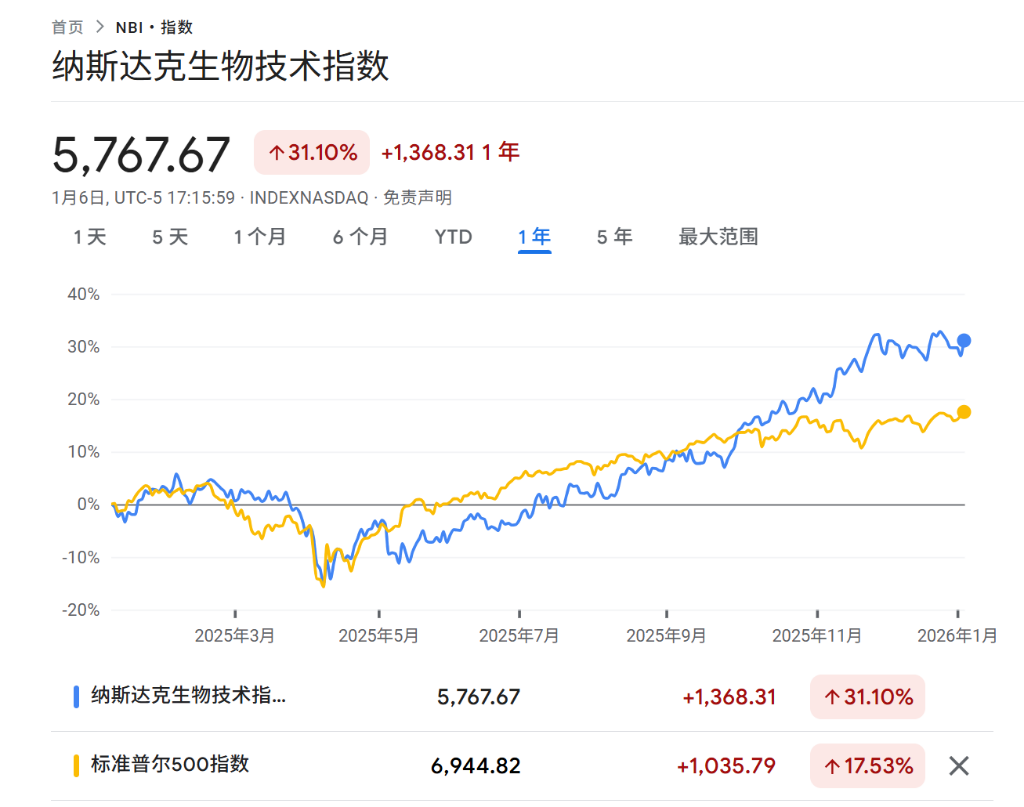
在美联储货币政策转向宽松、全球地缘政治风险加剧以及央行持续购金的多重驱动下,摩根士丹利大幅上调金价预期,预计这一传统避险资产将 在2026年继续刷新历史高点,直至冲刺每盎司4800美元大关。 摩根士丹利在1月5日发布的研究报告中指出,黄金价格正受到宏观经济和政策转变的强力支撑。这些因素包括美联储预期的宽松周期、美联储领 导层的变动,以及各国央行和投资基金持续买入。此前,现货黄金已在2025年创下历史性涨幅,年终收涨64%,创下自1979年以来的最强年度表 现。 但在1月7日,贵金属市场遭遇重挫,现货黄金一度失守4450美元/盎司关口。据华尔街见闻,彭博商品指数(BCOM)即将于1月8日至14日启动年 度权重再平衡,市场正面临被动基金"技术性抛售"带来的流动性冲击压力,黄金面临短期看跌反转风险。 长期方面,地缘政治的不确定性进一步点燃了市场对避险资产的需求。据央视新闻报道,当地时间1月3日中午(北京时间1月4日凌晨),美国总 统特朗普、国防部长赫格塞思在佛罗里达州海湖庄园就美军对委内瑞拉动武、将委内瑞拉总统马杜罗控制并移送出境举行记者会。 随着委内瑞拉局势升级,包括美国军事力量介入及该国领导人被捕的消息传出,不 ...
台积电担忧芯片过剩?马斯克:他们是对的,电力液冷都跟不上
Hua Er Jie Jian Wen· 2026-01-07 08:29
Core Insights - Elon Musk agrees with TSMC's concerns about chip oversupply, predicting that the limiting factor for the AI industry will shift from chip manufacturing to the ability to power and operate these chips, with key bottlenecks in power supply, transformer configuration, and cooling system deployment [1][3] Group 1: AI Infrastructure Challenges - Musk emphasizes that deploying AI chips involves more than just transporting GPUs to power plants; it requires addressing three core issues: gigawatt-level power supply, high-voltage power conversion, and efficient cooling systems [2] - The data center industry is undergoing a critical transition from air cooling to liquid cooling, which carries significant risks, such as potential losses of up to $1 billion if cooling systems fail [2] Group 2: Power Supply vs. Chip Production - Musk predicts that by Q3 2026, the core bottleneck will transition from chip manufacturing to the capability to operate these chips, as AI chip production is expanding exponentially while the supporting power infrastructure is only growing linearly [3] - The disparity between the rapid increase in chip output and the slow growth of power supply means that many high-performance AI chips may remain unused due to inadequate power conversion and cooling systems [3]
工信部:探索依托工业互联网平台打造“模型池”的路径,培育上线一批工业模型产品
Hua Er Jie Jian Wen· 2026-01-07 07:42
风险提示及免责条款 市场有风险,投资需谨慎。本文不构成个人投资建议,也未考虑到个别用户特殊的投资目标、财务状况或需要。用户应考虑本文中的任何 意见、观点或结论是否符合其特定状况。据此投资,责任自负。 工信部印发《工业互联网和人工智能融合赋能行动方案》。其中提出,提高工业互联网平台智能化水 平。基于深度学习、大模型等技术,强化工业互联网平台的要素连接、智能分析、资源配置等能力。鼓 励工业互联网平台企业加快基于人工智能的低代码、无代码技术创新,提升工业APP开发效率和系统集 成能力。探索依托工业互联网平台打造"模型池"的路径,培育上线一批工业模型产品。推动平台底层架 构、数据协议与人工智能适配兼容,深化国产智能体标准协议创新应用,发展"工业互联网平台+智能 体"等创新模式,打造一批面向生产网络优化、人机交互、智能设备健康管理、产业链优化等典型场景 的工业智能体应用。 ...
太空光伏:地外可靠能源,剑指万亿市场
Hua Er Jie Jian Wen· 2026-01-07 07:22
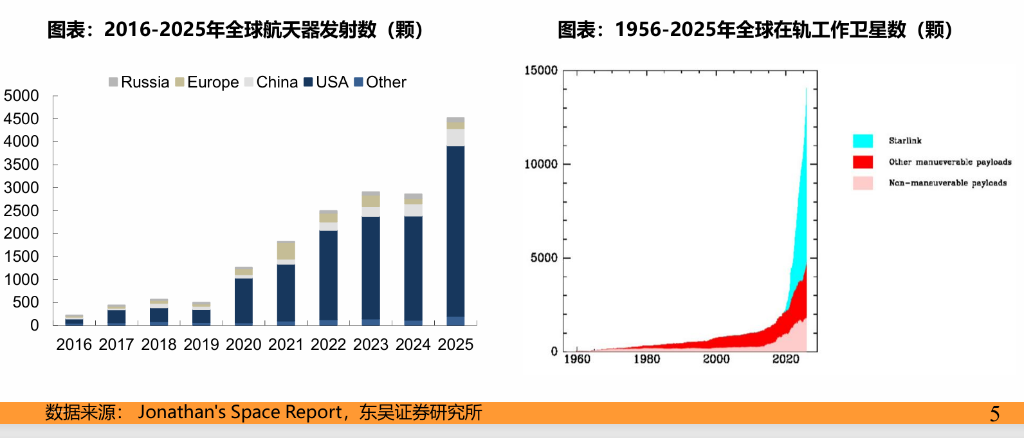
Core Insights - The maturity of reusable rocket technology is driving a significant decrease in launch costs, leading to a "Moore's Law" moment in commercial space, which is creating a massive demand for space photovoltaic systems [1] - By 2025, the number of global satellite launches is expected to exceed 4,300, representing a year-on-year growth of over 50% and a compound annual growth rate of 34% over the past decade [1][5] - The deployment of large satellite constellations will create a rigid demand for high-performance photovoltaic cells, potentially generating a market space of nearly 200 billion yuan for solar wings if 10,000 satellites are launched annually [5] Launch Cost and Frequency - The rapid rise of commercial space is primarily driven by the exponential decrease in launch costs, with SpaceX's Falcon 9 launch cost dropping to approximately $1,400-$1,800 per kilogram, significantly lower than traditional launch costs [6] - Global satellite launches are projected to exceed 300 by 2025, doubling from 2021 levels [6] Strategic Resource Competition - The scarcity of near-Earth orbital frequency bands and positions is accelerating deployment efforts by various countries, as these resources are non-renewable [9] - The U.S. currently leads in launch numbers and in-orbit satellites, while China is rapidly catching up with its "Thousand Sails" and "GW" constellation plans [9] Photovoltaic Systems in Satellites - The power system is crucial in satellite manufacturing, accounting for approximately 20%-30% of total costs, with solar wings representing 60%-80% of the power system's value [10] - As satellite payloads evolve, particularly in communication and computing, power demands are increasing, driving the development of larger and higher-power solar wings [10] Technological Pathways - The current technological landscape for space photovoltaics is characterized by diverse competition, focusing on balancing cost and performance [11] Space Computing and Future Potential - The demand for AI computing is pushing the space economy towards computing and data centers, with space offering ideal conditions for high-performance computing nodes [13] - If a 10 GW space computing system is realized, the solar wing market could reach several trillion yuan [13] Photovoltaic Technologies - Gallium Arsenide (GaAs) is the current mainstream choice in China, known for high efficiency and strong radiation resistance, but its high cost limits scalability [15] - Silicon solar cells are used by SpaceX for their Starlink satellites due to lower costs, despite lower efficiency [15] - Perovskite and tandem technologies are seen as potential disruptors, offering high energy-to-weight ratios and low manufacturing costs, although their stability in extreme space conditions needs further validation [15]
既要又要?印度一边进口俄油,一边寻求美国“减关税”
Hua Er Jie Jian Wen· 2026-01-07 07:22
Core Viewpoint - India is navigating a complex geopolitical economic situation, attempting to persuade the U.S. to lift tariffs imposed due to its imports of Russian oil while state-owned refiners continue to procure Russian crude to meet domestic demand despite risks of sanctions [1][2]. Group 1: U.S. Tariffs and India's Response - U.S. President Trump signed an executive order imposing an additional 25% tariff on Indian products due to India's "direct or indirect imports of Russian oil" [1]. - India has expressed that the U.S. tariff imposition is "unfair, unjust, and unreasonable," and it will take necessary actions to protect its national interests [1]. - Indian Ambassador to the U.S. requested Senator Lindsay Graham to lobby for the removal of tariffs, citing a reduction in Russian oil purchases [2]. Group 2: State-Owned Refiners' Activity - Despite a decline in overall Russian oil demand in December, state-owned refiners like Indian Oil Corporation (IOC) and Bharat Petroleum Corporation (BPCL) remain active in purchasing Russian crude through non-sanctioned suppliers [3]. - The resilience of state-owned refiners indicates a redistribution of demand rather than a market collapse, driven by domestic fuel needs and economic pricing [3]. - India's Energy Minister stated that India will source oil from any location as long as the terms are favorable [3]. Group 3: Private Sector Withdrawal Impact - The decline in India's Russian oil imports is primarily attributed to the withdrawal of private refiners, particularly Reliance Industries, which reduced its purchases significantly before U.S. sanctions were formally imposed [4]. - Data shows that India's Russian oil imports fell by 595,000 barrels per day in December, reaching a low of 1.24 million barrels per day, the lowest since December 2022 [4]. - Market forecasts suggest a potential rebound in Russian oil imports, with Rystad Energy predicting a "moderate recovery" to 1.8 million barrels per day in January [4].
“易中天”持续狂飙背后的算力革命:硅光不再是替补,而是新王当立
Hua Er Jie Jian Wen· 2026-01-07 07:17
Core Viewpoint - The optical communication industry is undergoing a transformation from "quantitative change" to "qualitative change," with Silicon Photonics emerging as the key solution for computing interconnects in the AI era [1] Group 1: Market Dynamics - The Silicon Photonics market revenue is projected to surge from $1.4 billion in 2023 to $10.3 billion by 2029, with a CAGR of 45% [4] - Traditional optical modules face challenges such as the "power wall" and "size wall" when reaching 1.6T rates, while Silicon Photonics can reduce component size by approximately 30% and power consumption by about 40% [6] Group 2: Value Chain Restructuring - The value chain in the optical module industry is being violently restructured, with core profits shifting from upstream optoelectronic chips to midstream PIC design [1][7] - Companies with independent PIC design capabilities will transition from mere "assembly factories" to technology firms with core chip design capabilities, significantly enhancing their profit levels and influence in the global supply chain [11] Group 3: Key Players and Beneficiaries - Leading companies in the Silicon Photonics chip and module sector include Zhongji Xuchuang and Xinyi Sheng, which have established strong barriers in PIC design and packaging capabilities [14] - Supporting components and solutions, such as those from Tianfu Communication, are crucial in the Silicon Photonics supply chain, benefiting from increased integration levels [15] - CW light sources are essential for Silicon Photonics, with companies like Yuanjie Technology and Shijia Photonics positioned to gain from the demand for external light sources [15]