Hua Er Jie Jian Wen

Search documents
2025年,基金赢家的三大特点
Hua Er Jie Jian Wen· 2026-01-09 08:10
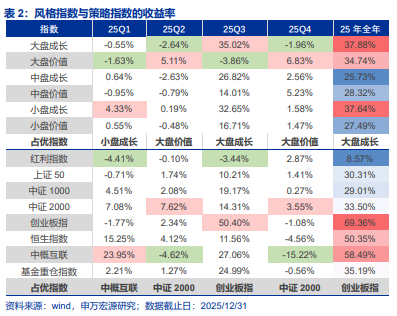
Core Insights - The year 2025 marked a significant "ability repricing" in China's active equity fund market, with over 90% of products achieving positive returns and a median return close to 30%, while top products exceeded 200% [1] - The differentiation in performance was more critical than the returns themselves, emphasizing the importance of timing and method in capturing structural gains [1][2] Fund Performance and Market Dynamics - The report from Shenwan Hongyuan highlighted three core changes in fund evaluation for 2025: track selection dominated annual rankings, adjustment rhythm was more crucial than long-term style, and high turnover, actively managed funds regained superiority [1][3] - The A-share market exhibited a typical "N-shaped structural market," with significant sector performance variations, particularly in metals, communications, and electronics, which saw annual gains of 94.73%, 84.75%, and 47.88% respectively [1][5] - The disparity in industry returns reached a record high, with the food and beverage sector declining by 9.69%, resulting in a 104.43% difference between the best and worst-performing sectors [1][5] Fund Manager Insights - The value of active management was validated in 2025, highlighting the importance of track timing, as 31% of top-performing products in the first half fell to the bottom 20% in the second half [2] - Fund managers who effectively adjusted their portfolios demonstrated superior performance, indicating that flexibility in trading is essential for success [2][10] Company Performance - Among companies with active equity assets exceeding 10 billion, Yongying Fund, AVIC Fund, and Caitong Fund stood out, with average performances exceeding 50%, and Yongying Fund achieving an average return of 56.76% [4] - The top-performing funds were predominantly technology-themed, leveraging industry allocation to generate substantial excess returns [8][19] Market Structure and New Fund Launches - The market's recovery was reflected in the new fund launches, with 334 new active equity funds totaling 161.9 billion yuan, marking a significant rebound from previous years [16][18] - The top new products included those with substantial initial offerings, such as the 4.955 billion yuan launch of the Zhaoshang Balanced Selection Fund [16] Key Themes and Strategies - Five major thematic opportunities emerged in 2025, with precious metals providing consistent returns, and the precious metals index rising over 111% [11] - The performance of innovative pharmaceuticals and new consumption sectors was notable, with significant gains in the first half of the year, although they faced declines later [11][14] - The ability to switch between multiple tracks and manage drawdowns effectively became a critical factor for fund success in 2025 [15][19]

韩国汇市大松绑:7月开启24小时交易,9月放宽离岸限制
Hua Er Jie Jian Wen· 2026-01-09 07:55
Core Viewpoint - South Korea is set to implement a 24-hour foreign exchange trading system and relax offshore trading restrictions as part of its strategy to achieve MSCI developed market status, aiming to enhance market accessibility for global investors and promote the internationalization of the Korean won [1][4]. Group 1: Economic Growth Strategy - The introduction of all-day foreign exchange trading is expected to eliminate the current trading gap caused by the market closure at 2 AM Seoul time, potentially boosting trading volumes [1]. - The government plans to gradually introduce an offshore won settlement system and ease requirements for foreign institutions regarding trading and sales [1][2]. - Achieving developed market status could attract billions of dollars in passive fund inflows, enhancing South Korea's position as a regional financial hub [1]. Group 2: Offshore Settlement System and Liquidity Support - To ensure sufficient market liquidity during extended trading hours, the Ministry of Finance will introduce an offshore won settlement system, allowing foreign investors to trade through intermediary institutions [2]. - Initially, only registered foreign institutions with high market participation will be eligible to act as intermediaries, with plans to gradually expand the participant base [2]. Group 3: Registration and Account Management Simplification - The South Korean government is lowering the entry barriers for foreign institutions, allowing new registered foreign institutions to start trading this month with a three-month exemption from reporting requirements [3]. - A comprehensive account system will be introduced for institutional investors to streamline settlement account management, significantly reducing paperwork and setup time [3]. Group 4: Market Reform and MSCI Upgrade - The recent measures are part of a broader effort to deepen market reforms following the extension of trading hours in July 2024 [4]. - The government emphasizes that these steps are not one-time actions but part of a long-term strategy for the internationalization of the won, with a roadmap for further measures to be released in the first half of this year [4]. - South Korea's aspiration for developed market status dates back to 2008, and the current efforts aim to overcome historical restrictions stemming from past currency crises [4].
跨境电商打响“新战事”
Hua Er Jie Jian Wen· 2026-01-09 07:45
Core Insights - The cross-border e-commerce industry has faced significant challenges over the past year, characterized by changing tariff policies, increased overseas regulations, and the rapid integration of generative AI, leading to a reevaluation of sustainable business models [2] - The industry is transitioning from a focus on efficiency to compliance, localization, and branding, marking a shift in competitive dynamics [2] Group 1: Strategic Shifts - AliExpress, one of the "Four Little Dragons" of Chinese cross-border e-commerce, has prioritized "brand going global" as its key strategy, launching a large-scale recruitment campaign for brand merchants [2][4] - TEMU has also emphasized the importance of brand expansion, with plans to focus on high-quality, branded products from the Chinese supply chain [5] - The major platforms are collectively adjusting their strategies, moving from a "full management myth" to a "semi-management return," indicating a shift from price wars to value competition [2] Group 2: Operational Changes - The cancellation of small parcel tax exemptions in various countries has significantly impacted cross-border e-commerce platforms, which previously relied on direct mail small packages for rapid expansion [6][8] - Platforms are diversifying their operational strategies, including adopting semi-management models and increasing the use of overseas warehouses to enhance risk resilience [6][8] - AliExpress has launched a semi-management model and is expanding its overseas management services, which are crucial for localized operations [8][9] Group 3: Market Dynamics - The competitive landscape is evolving, with platforms like AliExpress and TEMU actively recruiting local merchants in key markets, intensifying competition against giants like Amazon [10][11] - Analysts suggest that localization is essential for e-commerce platforms aiming to become leading players in local markets [11] - Despite regulatory challenges, major cross-border e-commerce platforms are expected to show growth resilience, with projections indicating a 12% year-on-year increase in GMV for Chinese outbound e-commerce by 2025 [12] Group 4: Future Outlook - The industry is transitioning from a "selling goods era" to a "branding era," focusing on profitability and high-value strategies rather than just low-cost exports [15][16] - The year 2025 is anticipated to be pivotal for the long-term landscape of cross-border e-commerce, as companies adapt to a more complex market environment [16]

又到非农夜!就业或“温和回升”,1月降息还有戏吗?
Hua Er Jie Jian Wen· 2026-01-09 07:45
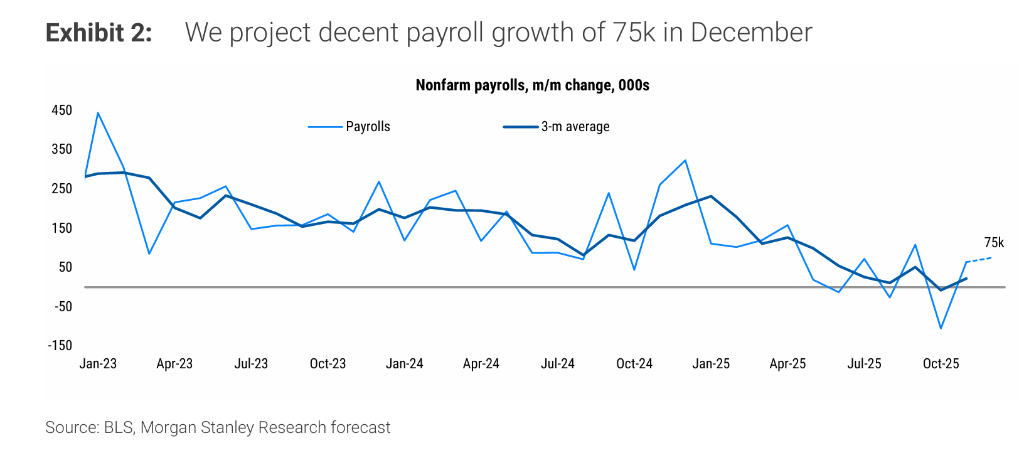
Core Viewpoint - The U.S. non-farm payroll report for December is highly anticipated, with expectations of a moderate recovery in the job market that could influence the Federal Reserve's decision on interest rates in January [1][4]. Employment Data Expectations - The consensus forecast for December non-farm employment is an increase of 70,000 to 75,000 jobs, a slight rise from November's 64,000 [1][5]. - Predictions for private sector job growth range from 23,000 to 155,000, with no institution forecasting negative growth [5]. - Factors influencing job growth include a potential boost from holiday retail hiring and a decrease in government employment due to hiring freezes [5]. Unemployment Rate Insights - The unemployment rate is expected to drop from 4.6% to 4.5%, which could support the Fed's decision to maintain interest rates [4][7]. - Some analysts predict a rise in the unemployment rate to 4.7%, which could prompt a 25 basis point rate cut [7]. - Broader labor market issues are emerging, with new graduates facing difficulties in job hunting, potentially underestimating the true unemployment situation [7][8]. Policy Implications - The upcoming non-farm report is crucial for the Fed's January policy meeting, with mixed opinions among decision-makers regarding rate cuts [9]. - Market pricing currently favors a pause in rate cuts, but strong employment data could shift this outlook [9]. Market Reactions and Strategies - Wall Street is preparing for potential volatility, with the S&P 500 index expected to fluctuate around 1.2% on the data release day [10]. - Scenarios for employment data suggest that job growth between 0 to 105,000 could positively impact the stock market, while stronger data might lead to declines due to rising bond yields [12]. - Defensive sectors like healthcare and consumer staples may attract investment as safe havens amid high stock valuations [10].


过山车一夜?全球市场今晚“好戏连场”
Hua Er Jie Jian Wen· 2026-01-09 06:48
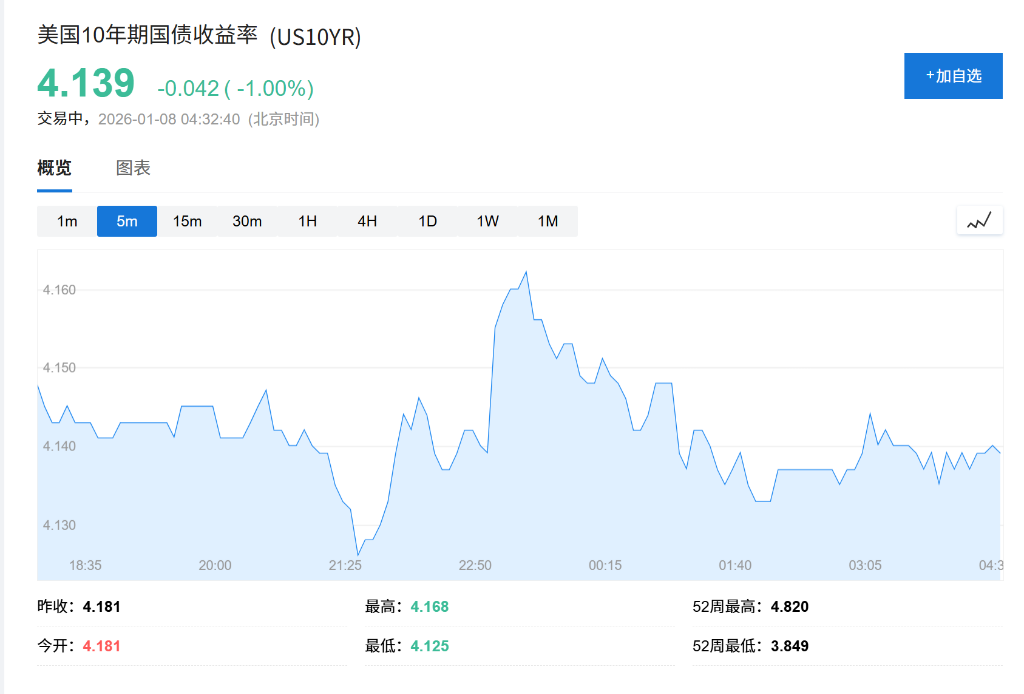
Core Viewpoint - Global investors are preparing for a highly volatile "Super Friday," with significant events that could reshape short-term pricing logic in the bond, stock, and commodity markets [1]. Economic Data - The U.S. non-farm payroll report for December will be released at 21:30 Beijing time, serving as a crucial reference for assessing economic health and influencing the Federal Reserve's interest rate decisions [1][3]. - Economists predict a job increase of 70,000 in December, with the unemployment rate expected to drop from 4.6% to 4.5% [6]. Federal Reserve Policy - The non-farm payroll data is viewed as a "deciding hammer" for the Fed's policy, with a weak report potentially increasing the likelihood of a rate cut in January to 50% [6]. - Current market pricing indicates only a 10% chance of a rate cut this month, with the next expected in June [6]. Supreme Court Ruling - The market is closely watching the Supreme Court's decision on the legality of Trump’s tariffs, which could have a binary effect on the stock and bond markets [7]. - If tariffs are overturned, the S&P 500 could rise by 0.75%-1%, while maintaining tariffs could lead to a decline of 30-50 basis points [7][8]. Commodity Market Dynamics - The commodity market is facing a "double storm" with the upcoming results of the "232 clause" tariff investigation and significant index rebalancing trades [2][10]. - The annual rebalancing of the Bloomberg Commodity Index has begun, with an expected influx of approximately $7.7 billion in silver sell orders, equating to 13% of total COMEX silver open interest [12]. Market Reactions - Analysts warn that the combination of tariff rulings and commodity market adjustments could lead to extreme volatility, particularly in precious metals like palladium and silver [10][12]. - The potential for a liquidity vacuum could trigger severe repricing in the market, with differing views on whether prices will continue to rise or face significant downward risks once liquidity improves [12][13].


据报道,日本央行可能鉴于刺激措施上调经济增长预测,同时计划本月维持利率不变
Hua Er Jie Jian Wen· 2026-01-09 06:35
Core Viewpoint - The Bank of Japan is likely to raise its economic growth forecast due to stimulus measures while planning to maintain interest rates unchanged this month [1] Group 1 - The Bank of Japan is expected to adjust its economic growth predictions upwards [1] - The decision to keep interest rates steady indicates a cautious approach amidst economic recovery [1]
台积电12月销售额3,350亿元台币,同比增长20.4%
Hua Er Jie Jian Wen· 2026-01-09 05:36
台积电12月销售额3,350亿元台币,同比增长20.4%。 市场有风险,投资需谨慎。本文不构成个人投资建议,也未考虑到个别用户特殊的投资目标、财务状况或需要。用户应考虑本文中的任何 意见、观点或结论是否符合其特定状况。据此投资,责任自负。 风险提示及免责条款 ...

美国CPI,要开始报复性反弹了?
Hua Er Jie Jian Wen· 2026-01-09 04:19
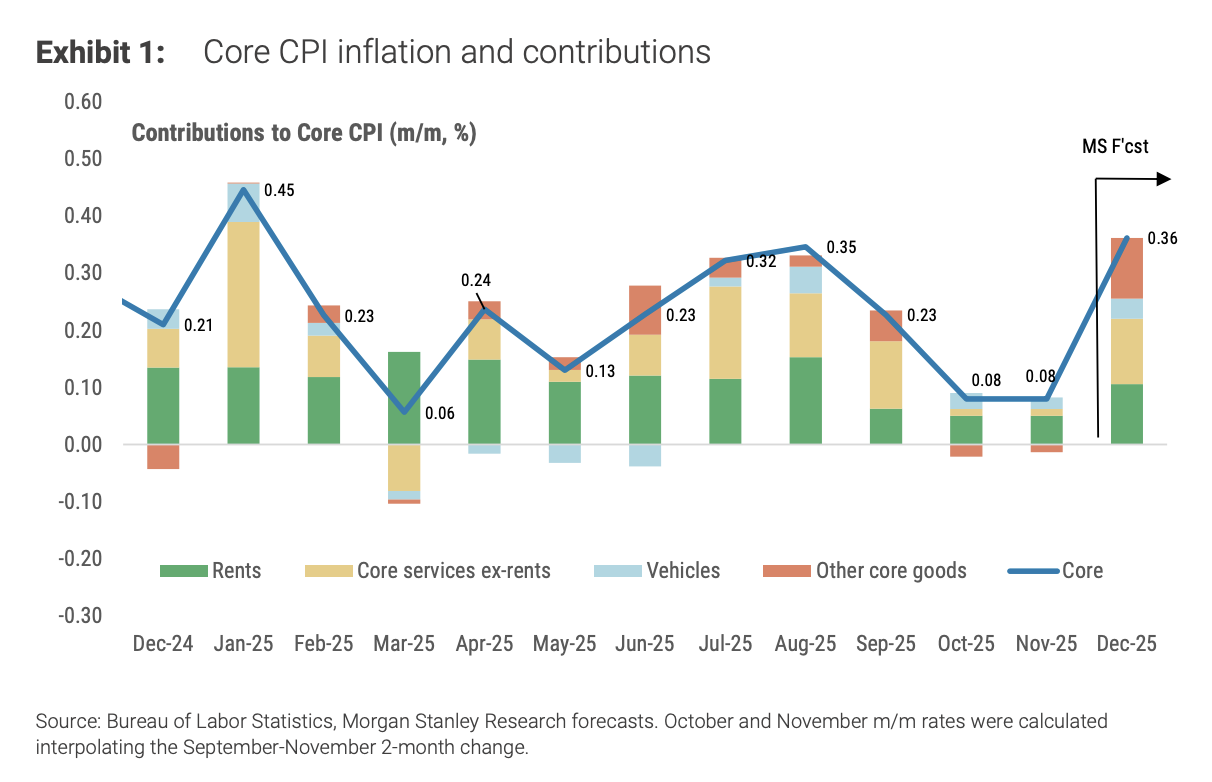
Core Viewpoint - The December CPI data in the U.S. is expected to show a significant rebound due to statistical distortions from the government shutdown, rather than genuine inflationary pressures [1][4]. Group 1: CPI Predictions - Morgan Stanley forecasts a notable increase in the core CPI for December, with a month-on-month growth of 0.36%, significantly higher than the average of 0.08% in October and November [1][3]. - The likelihood of the core CPI rounding to 0.3% or 0.4% is considered equal, but the risk of reaching 0.5% is higher than 0.2% [3][8]. - The December data will provide clearer insights into the transmission of tariffs to consumer prices, which had been absent in the October and November data [3][10]. Group 2: Statistical Distortions - Two main statistical biases due to the government shutdown are expected to affect the December CPI data: - The dual-month sampling bias, which has led to an underestimation of inflation in October, is projected to contribute approximately 8 basis points to the December core CPI [4]. - The holiday discount bias, resulting from delayed price collection in November, is expected to add an additional 3 basis points to the core CPI prediction [4]. Group 3: Inflation Trends - Core goods inflation is anticipated to reach a new high for the year, with a projected month-on-month increase of 0.59% in December, driven by rising prices in new and used cars, clothing, and other core goods [5]. - Rent inflation is expected to normalize, with the owner's equivalent rent (OER) projected to grow by 0.27% month-on-month in December [5]. - Overall CPI is expected to rebound with a month-on-month growth of 0.37% and a year-on-year increase of 2.7% [5]. Group 4: Key Focus Areas - The uncertainty surrounding the magnitude of the rebound is acknowledged, with the potential for actual data to exceed the forecasted growth [8]. - The sustainability of the slowdown in housing inflation will be assessed with December serving as a clean observation point following significant declines in September [9]. - The timing of tariff transmission effects is crucial, as December data will be a key verification window for the impact of tariffs on core inflation, which is expected to contribute an additional 45 basis points [10]. Group 5: Market Reactions - Strong data may be dismissed by the market as statistical noise, while weak data could signal a significant cooling of inflation [11]. - The asymmetry in market reactions suggests that if December CPI falls below expectations, it could significantly boost interest rate-sensitive assets, whereas data that meets or slightly exceeds expectations may not provoke strong market responses [11][14].
德银深度:美国盯上委内瑞拉,不只是为了油,更是为了“拯救美元“
Hua Er Jie Jian Wen· 2026-01-09 03:59
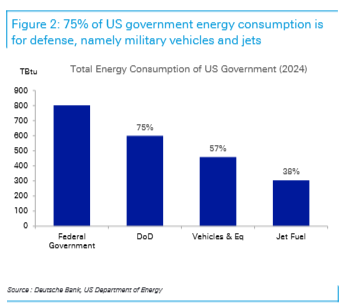
Core Viewpoint - The involvement of the United States in Venezuela's oil sector is not merely about energy but is fundamentally a covert war for maintaining the dollar's hegemony in the global financial system [1][2]. Group 1: U.S. Strategic Interests - Controlling Venezuela's vast oil reserves, which are six times larger than those of the U.S., is seen as a strategic move to enhance U.S. influence over global oil prices and maintain the dollar's status as the world's reserve currency [2][6]. - The U.S. aims to transition from being the largest oil importer to a dominant oil supplier, thereby ensuring that oil continues to be priced in dollars [1][6]. Group 2: Historical Context of Energy Dominance - Historical analysis indicates that nations controlling key energy resources gain significant economic, industrial, and military advantages, which solidify their global dominance [2]. - The U.S. has relied heavily on oil and gas, with over 70% of its energy consumption coming from these sources, making access to low-cost oil essential for maintaining global competitiveness [2]. Group 3: Military and Economic Interdependence - The military's reliance on oil underscores its critical role in maintaining the dollar's status; the U.S. Department of Defense is the largest consumer of oil, with 75% of government energy consumption attributed to military use [3][5]. - Historical precedents show that control over oil supplies has been pivotal in military conflicts, influencing the stability and value of currencies [5]. Group 4: Shift in Pricing Power - The traditional leverage of the U.S. as the largest oil buyer to enforce dollar-denominated transactions is diminishing, necessitating a shift to controlling oil supply to maintain pricing power [6][8]. - By controlling Venezuela's oil sales, the U.S. could ensure that transactions remain dollar-based, even if the oil does not flow directly to the U.S., thereby reinforcing the dollar's position in global trade [8].

股价已涨到位!同日对两大锂电产业链巨头出手,大摩下调天赐材料、星源材质评级
Hua Er Jie Jian Wen· 2026-01-09 03:23
Group 1 - Morgan Stanley downgraded the ratings of Tianqi Lithium and Xingyuan Material from "overweight" to "market weight" due to current valuations being fully priced in for profit recovery expectations from the industry reversal [1][2] - For Tianqi Lithium, the target price was raised to 49 yuan, with the current stock price at 44 yuan per share. The projected average price for lithium hexafluorophosphate (LiPF6) in Q4 2025 is over 100,000 yuan/ton, and the net profit per ton of electrolyte is expected to reach 4,000 yuan, indicating a payback period of less than one year [1][2] - Xingyuan Material's target price remains at 16 yuan, but the stock is considered "at target" due to its sales growth guidance of approximately 30%, which lags behind the industry average expected growth of 35%-40% for 2026 [1][3] Group 2 - The report indicates a shift in valuation methodology from a growth-oriented P/B approach to a cycle-oriented P/E approach, reflecting concerns over potential supply expansion and competition due to short payback periods [4][5] - The report highlights that the top three LiPF6 producers in China, including Tianqi, have significant production capacity that can be released, with an expected addition of 80,000 tons of capacity by the second half of 2026, representing about 20% of total industry capacity [2][5] - The report emphasizes that while high profits are being realized, the industry may be at a cyclical peak, with concerns that any demand weakness or capacity expansion could lead to a return to mid-cycle pricing levels [5][7]