
Zhong Guo Qi Che Bao Wang

Search documents
探索中国特色传统经典车行业发展之路——破局“四不能”困境,激活文化消费新动能
Zhong Guo Qi Che Bao Wang· 2025-11-24 06:55
Core Insights - The traditional classic car industry in China, defined as vehicles over 30 years old with historical and technical value, faces significant challenges due to regulatory constraints, yet shows immense potential for growth as cultural consumption demands rise [2][3][12] Industry Challenges - The industry is hindered by the "four cannot" dilemma: inability to import legally, trade publicly, register for license plates, and operate on roads [3][4] - Approximately 20,000 to 30,000 classic cars exist in China, with a potential market value exceeding 10 billion yuan, indicating a growing cultural consumption demand [3] Policy Developments - Since 2022, the Chinese government has introduced a series of supportive policies aimed at clarifying the management and recognition of classic cars, including the establishment of a national standard for classic vehicles set to be released in 2024 [5][6] - The introduction of the national standard GB/T 45194-2024 will provide a framework for customs identification, vehicle registration, and road management [6] Market Potential - The global classic car market is projected to exceed $30 billion by 2024, with the domestic industry expected to surpass 10 billion yuan in the coming years [7] - The classic car sector is anticipated to drive growth in related industries such as import/export, exhibitions, tourism, restoration, and financial services [7] International Experience - Successful international models, such as Italy's MilleMiglia and Germany's classic car exhibitions, provide valuable insights for developing China's classic car industry, emphasizing the integration of cultural and tourism resources [8][9] Strategic Recommendations - A phased approach to policy implementation is recommended, focusing on pilot programs in economically developed regions to test and refine regulations before nationwide rollout [10] - The integration of classic cars with cultural and tourism sectors is essential to create diverse consumer experiences and enhance public engagement [10][11] Future Outlook - The classic car industry is positioned as a "sunshine industry" with significant growth potential, contributing to the preservation of automotive culture and enhancing China's automotive industry's global influence [12]


柳州:前三季度,全市整车销量126.5万辆
Zhong Guo Qi Che Bao Wang· 2025-11-24 06:55
Group 1 - The core viewpoint of the article highlights the transformation and upgrading of automotive companies in Liuzhou, focusing on high-end, intelligent, and green development [1] Group 2 - In the first three quarters of the year, the total vehicle sales in Liuzhou reached 1.265 million units, representing a year-on-year increase of 33.7% [1] - The production and sales of new energy vehicles (NEVs) reached 732,000 units and 706,000 units respectively, with year-on-year growth of 68.8% and 67.8% [1] - New energy vehicles accounted for 55.8% of the total new vehicle sales in Liuzhou [1]
从“四轮”到“双翼”与“双腿”,车企创新狂飙新赛道
Zhong Guo Qi Che Bao Wang· 2025-11-24 06:47
Core Insights - The emergence of humanoid robots, flying cars, and the integration of these technologies into the automotive industry is a significant trend, with companies like XPeng and Tesla leading the charge [2][4][10] - XPeng's new humanoid robot, IRON, has garnered attention for its advanced capabilities, including a lifelike appearance and improved interaction systems, reflecting the company's commitment to innovation [3][8] - The automotive industry is witnessing a shift towards a multi-dimensional business model that includes robotics and aerial vehicles, indicating a broader transformation in transportation [2][11] Group 1: XPeng's Developments - XPeng's IRON robot features upgrades in bionic structure, intelligent systems, and energy architecture, making it more human-like [3] - The company has successfully trialed its flying car production line, marking a milestone in the mass production of flying vehicles [3][8] - XPeng plans to launch three Robotaxi models by 2026, utilizing a vision-based system for navigation without relying on Lidar [3][12] Group 2: Industry Trends - Tesla has been a pioneer in the integration of automotive and robotics, launching its Cybercab Robotaxi and expanding its humanoid robot production [4][10] - Other automakers, such as GAC and Chery, are also advancing in the fields of autonomous driving and flying vehicles, indicating a competitive landscape [5][6] - The collaboration between companies and research institutions is becoming a common strategy to enhance capabilities in these emerging sectors [9][10] Group 3: Market Dynamics - The integration of automotive, robotics, and flying vehicles is seen as a necessary evolution in response to changing transportation needs and technological advancements [11][12] - Experts suggest that while the current focus is on innovation, traditional automotive manufacturing remains crucial for sustaining competitive advantages [15] - The development of a cohesive ecosystem for these technologies is still in its early stages, with challenges in achieving a self-sustaining business model [14][15]


品牌“旧爱”失宠,产业链“新欢”受捧,汽车消费脱虚向实
Zhong Guo Qi Che Bao Wang· 2025-11-24 06:47
Core Insights - The automotive consumption landscape is shifting from brand-centric to a focus on core components like electric motors and batteries, reflecting a fundamental change in consumer logic [1][5][10] - The rise of the internet has empowered consumers to access extensive information about vehicle specifications and industry supply chains, leading to more informed purchasing decisions [2][4][11] - The transition towards rational consumption is reshaping the automotive market, with consumers prioritizing safety, reliability, and long-term value over brand prestige [10][11][12] Changing Consumer Logic - Consumers are increasingly evaluating electric vehicles based on technical specifications rather than brand reputation, emphasizing the importance of understanding the supply chain [2][5][10] - The younger generation, particularly those from the "Z generation," is leveraging the internet to gather information, leading to a shift in purchasing behavior that values personal satisfaction over brand identity [4][5][11] - The focus on core technologies such as battery types and charging capabilities is becoming more pronounced, as consumers seek to avoid being misled by marketing [2][5][10] Industry Transformation - The automotive industry is undergoing a restructuring of its value system, moving from a traditional focus on mechanical performance to a broader understanding of vehicles as complex, intelligent systems [6][7][13] - The integration of advanced technologies like AI and big data is accelerating the shift towards smart, connected vehicles, which are perceived as mobile intelligent terminals rather than mere transportation tools [7][8][13] - The emergence of a new value system based on "hardware embedded + software defined" models is attracting consumers and enhancing the appeal of smart vehicles [8][9][16] Rational Consumption Trends - The trend of rational consumption is characterized by consumers' increased scrutiny of vehicle performance and technology, leading to a decline in brand loyalty [10][11][12] - Economic factors and the availability of alternative transportation options, such as ride-sharing services, are contributing to a more cautious approach to vehicle purchases [12][14] - Consumers are now more likely to consider the total cost of ownership, including maintenance and depreciation, when making purchasing decisions [11][12] Implications for the Automotive Industry - The shift towards a technology-driven market is prompting automotive companies to focus on core technology development and user value creation, moving away from reliance on subsidies and traditional marketing [14][15] - Companies are increasingly adopting a "user operation" strategy, emphasizing customer experience and satisfaction to build brand loyalty [14][15] - The automotive industry is experiencing a historical transition from scale expansion to value creation, necessitating a focus on technological innovation and a deep understanding of consumer needs [15][16]

预售的双刃剑
Zhong Guo Qi Che Bao Wang· 2025-11-24 06:40
Core Insights - The pre-sale model is becoming a standard practice in the automotive industry, serving as a crucial strategy for companies to achieve annual sales targets as new car launches surge towards the end of the year [2] - While the pre-sale model offers significant advantages, it also poses risks that can disrupt market order and damage brand reputation, highlighting its "double-edged sword" effect in an increasingly competitive environment [2][6] Group 1: Advantages of Pre-sale Model - The pre-sale model empowers both companies and consumers, acting as a bridge between market demand and production supply, allowing for more precise production planning based on locked-in order data [3] - Marketing strategies such as limited-time discounts and priority delivery during the pre-sale phase can rapidly increase market attention and brand awareness, as demonstrated by NIO's Firefly brand, which saw a 20% price reduction leading to a surge in orders [3][4] - Pre-sale data provides critical insights for product strategy adjustments, enabling companies to optimize pricing and configurations based on market feedback before official delivery [4] Group 2: Risks Associated with Pre-sale Model - The industry has seen issues such as data inflation, where companies misrepresent refundable deposits as actual orders, leading to a significant discrepancy between order totals and actual sales [6] - Delivery delays and discrepancies between advertised and actual vehicle specifications have become major consumer complaints, exacerbated by supply chain issues and production capacity constraints [6][7] - Over-marketing and price wars have intensified irrational competition, with companies focusing on short-term gains rather than product quality, which can harm brand image and long-term sustainability [7] Group 3: Regulatory and Strategic Recommendations - The industry needs to establish a robust regulatory framework to enhance transparency and accountability in pre-sale activities, including penalties for misleading practices [9] - Companies should adopt differentiated pre-sale strategies that emphasize unique features and customer satisfaction rather than solely competing on price, as seen with NIO's focus on safety and personalized services [9] - Improving fulfillment capabilities and service quality is essential for the long-term success of the pre-sale model, requiring companies to assess production and supply chain risks adequately [9][10]


商用车产业生态正在全方位革新
Zhong Guo Qi Che Bao Wang· 2025-11-24 06:25
Group 1 - The commercial vehicle industry is undergoing three significant transformations: green transition, intelligent upgrade, and supply chain restructuring, leading to a new ecosystem focused on intelligence, sustainability, and globalization [3] - Commercial vehicles are evolving from traditional transport tools to intelligent mobile platforms, with widespread applications of intelligent scheduling and advanced driver-assistance systems significantly enhancing operational efficiency and safety [3] - The industry faces challenges such as reliance on critical components like automotive-grade chips and high-precision sensors, as well as data and functional safety issues that must be addressed [3] Group 2 - The battery swapping model is emerging as a preferred path for new energy commercial vehicles due to its efficient energy replenishment and cost reduction benefits, although issues like inconsistent battery standards and underdeveloped swapping station networks hinder further adoption [3] - The traditional hardware sales model is being replaced by a lifecycle operation model that integrates products, services, and data, supported by favorable policy environments including standard formulation and infrastructure development [3] - Chinese intelligent commercial vehicles are accelerating their international expansion, particularly in Southeast Asia and Europe, creating new opportunities for industry growth [4] Group 3 - Huainan is actively integrating into the national new energy vehicle supply chain, leveraging its rich coal and electricity resources, robust manufacturing foundation, and convenient transportation conditions [5] - The city is transitioning from coal mining machinery to core components for new energy commercial vehicles, establishing a supply chain that includes battery materials, components, and complete vehicle manufacturing [5] - Huainan's advantages in green electricity supply and energy storage technology support the low-carbon development of commercial vehicles, while its logistics capabilities enhance supply chain efficiency [5]

无人物流车驶入“快车道” 但仍需突破三道坎
Zhong Guo Qi Che Bao Wang· 2025-11-24 06:25
Core Viewpoint - The logistics industry is rapidly evolving towards the commercialization of autonomous delivery vehicles, with 2024 expected to be a pivotal year for large-scale applications, driven by industry collaboration, regulatory advancements, and AI technology improvements [1][5]. Group 1: Industry Evolution - The autonomous logistics vehicle sector is transitioning from "experimental products" to "standardized vehicles," with major manufacturers planning to mass-produce these vehicles by 2026 [1][3]. - The logistics industry background supports the operation of autonomous vehicles primarily in urban delivery scenarios, such as same-city freight and express delivery [3][4]. - The initial phase of autonomous delivery vehicles began in 2016 with Nuro in the U.S., while China saw the emergence of startups in 2018-2019, including the company mentioned [3][4]. Group 2: Challenges and Developments - The industry faces significant challenges, including the need for continuous AI technology upgrades, adherence to vehicle standards, and overcoming regulatory bottlenecks [5][6]. - Approximately 1,900 counties in China have initiated pilot programs for autonomous vehicles, but inconsistent regulations and tightening policies remain issues [6][7]. - The commercial viability of autonomous vehicles is expected to improve significantly starting in 2024, with major procurement initiatives, such as China Post's recent tender for 7,000 autonomous vehicles [7][8]. Group 3: Key Issues for Large-Scale Application - Continuous evolution of AI technology is crucial for ensuring safety and operational efficiency in autonomous logistics [8]. - Vehicle development must adhere to automotive industry standards, with the company planning to launch its first fully compliant autonomous vehicle by the end of this year [8][9]. - A robust operational ecosystem is essential for the successful deployment of autonomous vehicles, necessitating collaboration with traditional logistics operators to standardize processes [8][9].

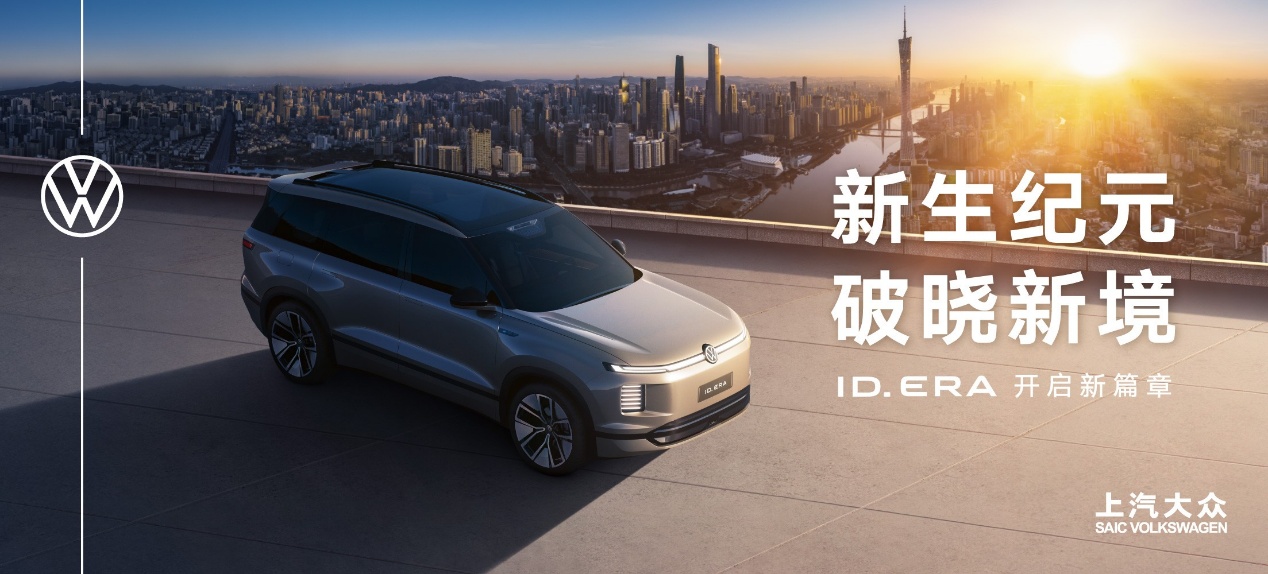
首款“9系旗舰”将率先登场,上汽大众广州车展发布ID. ERA全新产品序列
Zhong Guo Qi Che Bao Wang· 2025-11-24 06:19
Core Insights - The 23rd Guangzhou International Auto Show highlights the historic shift of the Chinese automotive market towards "new energy" vehicles, featuring 1,085 vehicles and 629 new energy models [1] - SAIC Volkswagen's launch of the ID. ERA product series marks a significant strategic move in the competitive landscape, emphasizing the brand's commitment to both fuel and electric vehicles [1][2] Strategic Breakthrough - The ID. ERA series is positioned to address the supply gap in the high-end intelligent electric vehicle market, where the growth rate is projected at 45% in 2024, yet joint venture brands hold less than 15% market share [4] - SAIC Volkswagen's strategy of "oil-electric integration" is a response to the increasing penetration of new energy vehicles, with a sales target of 1.2 million units in 2024, including over 143,000 new energy vehicles [2][4] Product Innovation - The ID. ERA series introduces the first "9 Series flagship" full-size range-extended SUV concept, designed to alleviate range anxiety while meeting the high space comfort demands of Chinese families [5][9] - The vehicle is expected to feature advanced technology, including a Qualcomm Snapdragon 8295 chip and an optimized driver assistance system for Chinese road conditions, enhancing the user experience [7][9] Market Dynamics - The launch of the ID. ERA series coincides with a critical period of "stock competition" and "new energy dominance" in the Chinese automotive market, where SAIC Volkswagen maintains a strong presence in the fuel vehicle segment [10] - The 9 Series flagship faces competition from both domestic high-end brands and luxury brands accelerating their electric vehicle strategies, yet SAIC Volkswagen's brand legacy and practical technology provide a competitive edge [10][11] Long-term Outlook - The success of the ID. ERA series could serve as a model for joint venture brands transitioning to new energy, with SAIC Volkswagen demonstrating a more stable transformation pace compared to the average growth of 18% for joint venture brands [11][12] - The comprehensive launch of the ID. ERA series signifies SAIC Volkswagen's entry into the "Joint Venture 2.0 Era," showcasing its capability as a resilient player in the new energy transition [12]

双能并进 智领豪华,上汽奥迪携全系车型亮相2025广州车展
Zhong Guo Qi Che Bao Wang· 2025-11-24 06:10
Core Insights - SAIC Audi is showcasing its strategic ambitions at the 23rd Guangzhou International Auto Show, highlighting the launch of the Audi E5 Sportback and the upcoming delivery of the A5L Sportback, alongside the global debut of the AUDI E SUV concept car, emphasizing a dual-track strategy of "fuel + electric" [1][20] Group 1: Product Launches and Features - The Audi E5 Sportback, priced at 279,900 yuan, is positioned as a strategic model in China, featuring advanced technology and performance enhancements, including a quattro version that offers significant upgrades for an additional 10,000 yuan [3][5] - The A5L Sportback is set to redefine luxury fuel vehicles with its high-performance fifth-generation EA888 engine, achieving a maximum power of 200 kW and a peak torque of 400 N·m, with a 0-100 km/h acceleration time of just 5.6 seconds [7][14] - The E5 Sportback boasts a dual-motor system with a maximum output of 579 kW and a range of up to 773 km, addressing user concerns about range anxiety [5][9] Group 2: Technological Innovations - SAIC Audi is integrating advanced technologies in both electric and fuel vehicles, with the E5 Sportback featuring an innovative smart cockpit and a comprehensive driver assistance system tailored for Chinese road conditions [11][12] - The A5L Sportback incorporates Huawei's advanced driving technology, enabling high-level assistance features and OTA upgrade capabilities, ensuring continuous improvement of vehicle functions [8][14] - The company emphasizes a commitment to quality, with a production capacity of 360,000 units per year and rigorous testing standards that exceed national benchmarks [15] Group 3: User Experience and Service Network - SAIC Audi is expanding its service network significantly, with nearly 160 customer service centers and plans to enhance user experience through digital innovations and flexible purchasing options [18][20] - The introduction of diverse user benefits and flexible financing options aims to lower the barriers to luxury vehicle ownership, with the E5 Sportback starting at 235,900 yuan and various promotional offers available [19][20] - The company is enhancing digital engagement through the SAIC Audi app, which integrates various services and supports OTA updates for both the E5 and A5L models, fostering a closer connection with users [20] Group 4: Strategic Vision and Market Position - SAIC Audi's dual-brand strategy aims to solidify its position in the luxury fuel vehicle market while simultaneously expanding into the electric vehicle segment, reflecting a commitment to innovation and user-centric design [20][21] - The company is poised for future growth with plans for the mass production of the AUDI E SUV by 2026 and the introduction of more fuel and electric models, enhancing its product matrix [21]

从技术赋能到联合共创,阿维塔与华为战略合作进入新阶段
Zhong Guo Qi Che Bao Wang· 2025-11-24 06:10
Core Insights - The strategic partnership between Avatr and Huawei has evolved from the HI model to the HI PLUS co-creation model, marking a significant upgrade in their collaboration and setting a new path for cooperation in the automotive industry [1][17] - This partnership emphasizes a comprehensive approach covering user insights, product definition, R&D, marketing, and service, aiming to reshape the luxury smart electric vehicle market and support the high-end branding of Chinese manufacturers [1][17] Technology Collaboration - The core of the Avatr and Huawei partnership is technological collaboration, transitioning from single component empowerment to full-stack joint R&D under the HI PLUS model [3] - Avatr's vehicles are equipped with Huawei's advanced technologies, creating a positive feedback loop between technology upgrades and product iterations [3] Smart Driving Innovations - The Huawei Dry Kun ADS 4 system has been integrated across all Avatr models, making it the first brand to fully deploy advanced driving assistance features [5] - The Avatr 12 model showcases advanced sensing capabilities with a four-laser radar system, enhancing performance in complex driving conditions [5] Smart Cabin Features - The HarmonySpace 5 smart cabin provides seamless integration with mobile devices, enhancing user experience with fast voice recognition and interactive features [6] - The Avatr 06 model is designed with advanced detection capabilities, catering to younger users with its innovative design and technology [6] Powertrain Technology - The Avatr 12 offers both pure electric and range-extended power options, with impressive performance metrics such as a 356 km electric range and a 3.8-second acceleration time for the all-wheel-drive version [7] - The collaboration aims to launch 17 new models by 2030, covering various segments including sedans, SUVs, and MPVs [7] Ecosystem Collaboration - The HI PLUS model focuses on channel integration, service upgrades, and capital binding to create a closed-loop ecosystem [8] - Avatr has entered the Huawei ecosystem, allowing users to browse and purchase vehicles through the Huawei Dry Kun app, enhancing market reach [11] Capital Binding - Avatr's investment of 11.5 billion yuan in Huawei has established a strong capital relationship, ensuring long-term stability and coherence in decision-making [12] - The partnership has resulted in significant sales growth, with Avatr achieving a record high of 13,506 units sold in October 2025, a 34% year-on-year increase [12] User Co-Creation - The partnership emphasizes user co-creation, allowing customers to participate in product development and fostering emotional connections with the brand [13] - Initiatives like the Avatr × Huawei Dry Kun Smart Driving City Open Competition engage users in real-world scenarios, enhancing product relevance [15] Brand Recognition - Positive user experiences and endorsements from Huawei employees have strengthened brand recognition and loyalty, creating a virtuous cycle of internal approval and market promotion [16] - The collaboration is positioned as a model for how Chinese brands can leverage technology and user engagement to compete in the global high-end automotive market [17]
