Qi Huo Ri Bao Wang

Search documents
商务部:全球供应链安全稳定需要世界各国共同维护
Qi Huo Ri Bao Wang· 2025-10-16 17:42
Core Viewpoint - The Chinese government has expressed strong dissatisfaction with the recent unilateral trade measures imposed by the United States, particularly the "301" investigation and related restrictions, which are seen as detrimental to both Chinese industries and global supply chain stability [1][2]. Group 1: Trade Relations and Measures - The Chinese side has actively engaged in discussions with the U.S. regarding the "301" investigation, maintaining a constructive stance and proposing cooperation suggestions, but the U.S. has remained uncooperative [1]. - The U.S. has implemented 20 measures against China in a short span of 20 days, severely harming Chinese interests and disrupting the atmosphere of economic talks [2]. - The U.S. has extended its export control entity list to include thousands of Chinese companies, which has further escalated tensions [2]. Group 2: Impact on Industries - The U.S. claims that China's recent measures will broadly affect multiple industries, including semiconductors, AI, smartphones, and defense [3]. - China's export control measures on rare earths are aimed at preventing illegal use in weapons and maintaining national security, rather than targeting specific countries [4]. Group 3: Response and Future Actions - China emphasizes that its export control measures are lawful and necessary for national security, and it is willing to facilitate compliant trade through optimized licensing processes [4]. - The Chinese government has communicated its policy objectives to various countries to reduce misunderstandings and is open to dialogue to address mutual concerns [2][3].
保障金融权益 助力美好生活——南华期货联合南华基金举办视障群体金融宣传教育暨健康陪跑公益活动
Qi Huo Ri Bao Wang· 2025-10-16 15:26
Core Viewpoint - The event organized by Nanhua Futures and Nanhua Fund on International Blind Day aims to enhance financial literacy and security awareness among the visually impaired community, demonstrating corporate social responsibility and humanistic care for special groups [2][4]. Group 1: Event Overview - The event titled "Safeguarding Financial Rights · Supporting a Better Life" included financial education and a health running activity in collaboration with the Hangzhou Blind Association [2]. - A financial education session was held at Nanhua Futures' investor education base prior to the running event [2]. Group 2: Financial Education - Qian Jun, the chairman of the Hangzhou Blind Association, emphasized the vulnerability of the visually impaired to scams due to limited access to information, highlighting the importance of financial knowledge and fraud awareness [4]. - Zhou Yufeng, chief economist of Nanhua Fund, conducted a training session on fund investment, covering types of public funds, asset allocation strategies, and key points for selecting funds, stressing the need for appropriate product matching based on risk tolerance [6]. Group 3: Employee Engagement and Social Responsibility - Nanhua Fund's assistant general manager, Song Changwei, expressed the company's commitment to corporate social responsibility, aiming to deeply disseminate financial knowledge to special groups and help them avoid scams while safeguarding their retirement funds [11]. - Employees of Nanhua participated in the event, experiencing the challenges faced by visually impaired individuals and fostering empathy and understanding through shared activities [8][11]. Group 4: Call to Action - The company encourages everyone to contribute to the inclusion of disabled individuals in society, ensuring they share in the benefits of economic development and financial rights protection [13].


材料创新与工艺升级双轮驱动 铸造铝合金为铝产业高质量发展“强链固基”
Qi Huo Ri Bao Wang· 2025-10-16 11:28
Core Insights - The conference focused on the innovation and development of the aluminum industry chain, emphasizing the role of casting aluminum alloys in achieving high-quality growth [1] Industry Overview - The aluminum casting alloy industry in China is facing a "three high" demand: high performance, high efficiency, and high environmental standards, particularly in sectors like new energy vehicles, 5G communication, and rail transportation [1] - In 2024, China's aluminum casting alloy production is expected to reach 10.05 million tons, with recycled aluminum accounting for over 70%, highlighting the industry's shift towards green recycling and material upgrades [1] Material Innovation - Key advancements in material innovation include the development of high-strength and high-toughness die-casting aluminum alloys, high thermal conductivity die-casting aluminum alloys, anodizable die-casting aluminum alloys, and ultra-high-strength casting aluminum alloys [1] - The ZL-HT3 high thermal conductivity alloy, developed by China Aluminum, has a thermal conductivity of 173 W/m·K, an 8% improvement over conventional alloys, making it suitable for applications like 5G base station heat dissipation [1] Process Upgrades - Advanced processes such as integrated vacuum die-casting, semi-solid forming, low-pressure casting, and extrusion casting are analyzed for their technical advantages and application scenarios [2] - Integrated die-casting technology can reduce the production time of traditional vehicle body components from 1-2 hours to 2-3 minutes, significantly enhancing production efficiency and integration, which is crucial for lightweighting in new energy vehicles [2] Collaborative Innovation - The synergy between process and material innovation is identified as the core driver for high-quality development in the industry [2] - Digital simulation, intelligent transformation, and remote monitoring are methods that enable companies to transition from "experience-based casting" to "precise intelligent manufacturing," improving product consistency, qualification rates, and energy utilization efficiency [2] Green Transition - The accelerated transition of the aluminum industry towards green and low-carbon practices has brought attention to the efficient use of recycled aluminum and iron impurity control technologies [2] - New iron removal technologies and alloy design concepts are gradually addressing the quality bottlenecks of recycled aluminum, supporting the establishment of a comprehensive green recycling system from bauxite to alumina, electrolytic aluminum, and recycled aluminum [2]

期货期权双轮驱动 铸造铝合金成为铝产业风险管理与绿色升级新引擎
Qi Huo Ri Bao Wang· 2025-10-16 11:19
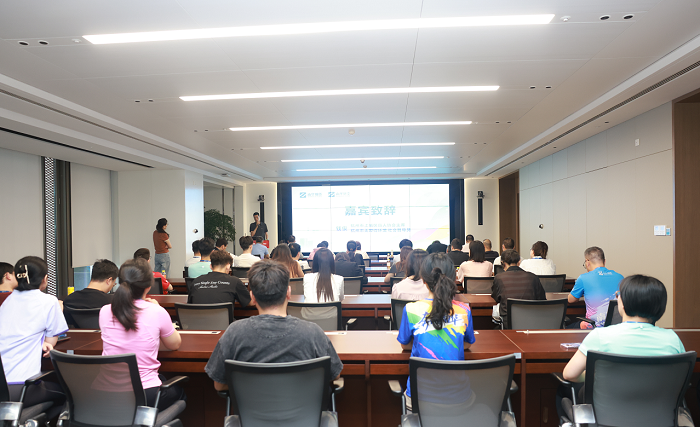
Core Insights - The conference focused on the innovative development of the aluminum industry chain and the role of futures and options in driving high-quality growth [1][2] - The current challenges faced by the Chinese aluminum industry include tightening resource, energy, and environmental constraints, increased cost volatility, differentiated downstream demand, structural contradictions, and a severe international trade environment [1] - The introduction of casting aluminum alloy futures fills a gap in risk management for the downstream aluminum industry, enabling companies to transition from rough management to precise management [1] Group 1 - The speaker emphasized the need for companies to enhance their risk resistance through financial derivatives in response to multiple pressures [1] - The standardized delivery mechanism of futures contracts has led to the establishment of a quality pricing system based on ADC12, promoting resource concentration towards efficient and green enterprises [1] - The conference attracted nearly a hundred representatives from upstream and downstream aluminum industry companies, financial institutions, and industry associations, fostering active discussions and providing new ideas for high-quality development in the Central Plains region [2] Group 2 - The speaker detailed the practical applications of options, including call options, put options, and spread strategies, in cost locking, profit protection, and risk avoidance [2] - Futures and options are described as complementary risk management tools that together create a comprehensive risk management system across the entire aluminum chain [2] - The speaker called for industry chain enterprises to actively learn and utilize derivative tools to enhance competitiveness and shape a new global aluminum trade pattern centered around "Chinese pricing" [2]
善用衍生品工具,构建铝企全链条风控体系
Qi Huo Ri Bao Wang· 2025-10-16 11:13
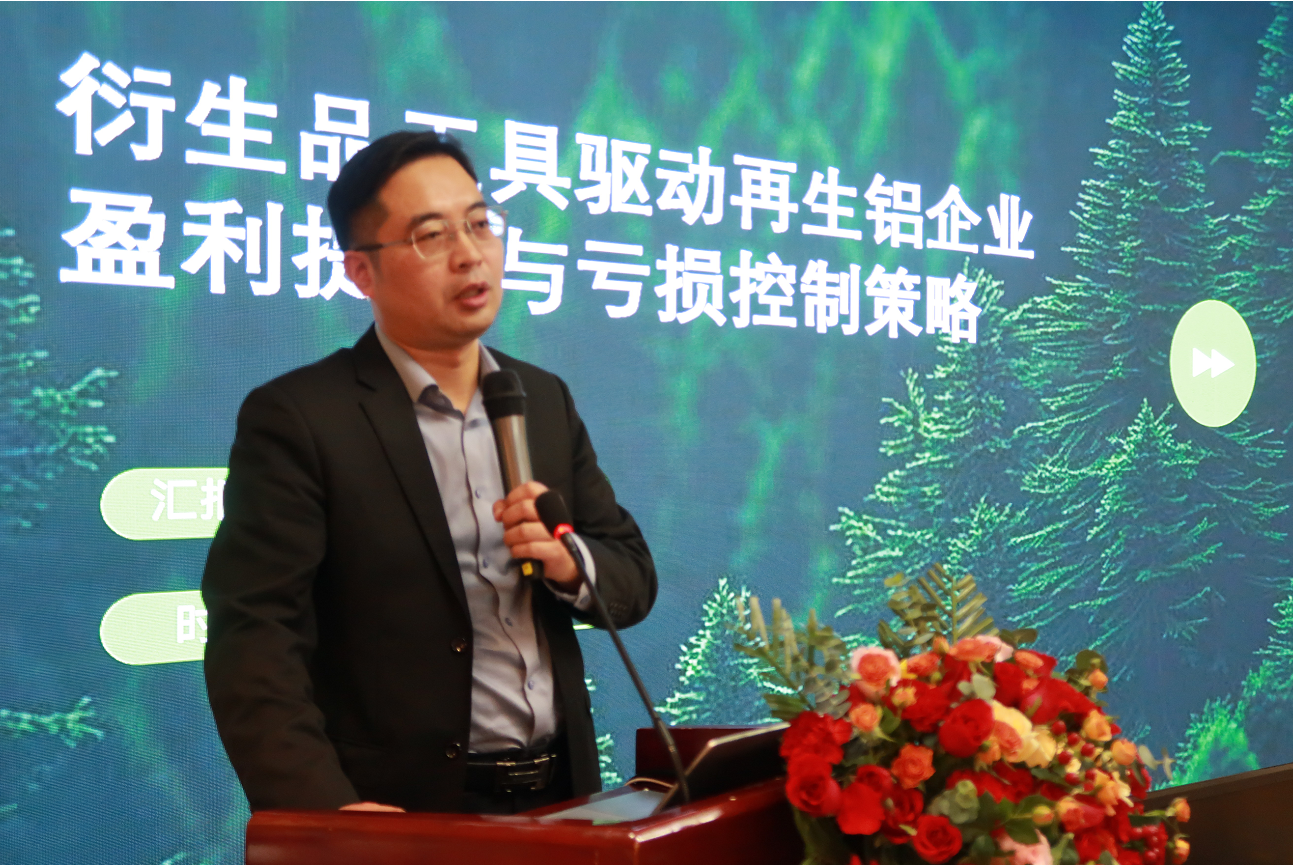
Core Insights - The Chinese recycled aluminum industry is entering a rapid development phase, with production expected to exceed 10 million tons in 2024, accounting for 19.3% of total aluminum supply, and projected to reach 11.5 million tons by 2025 and over 18 million tons by 2030 [1][2] - The introduction of casting aluminum alloy futures and options on June 10 has filled a gap in the recycled metal derivatives market, providing a transparent and authoritative pricing and hedging platform for enterprises [1] - Companies are encouraged to adopt a comprehensive risk control system through four key strategies: locking in raw material costs, product sales hedging, optimizing inventory financing, and enhancing quality and brand [2] Industry Developments - The demand for recycled aluminum is expected to grow due to emerging sectors such as new energy vehicles, photovoltaics, and energy storage, while challenges include tight scrap aluminum supply and price volatility [1] - The trading volume of the newly launched futures reached 205,700 contracts by July 9, equivalent to 102,000 tons of spot aluminum, representing approximately 27% of domestic monthly consumption, indicating increasing market activity [1] Practical Applications - Various derivative tools such as futures-options combinations, basis trading, cross-commodity hedging, and rights-inclusive trading are being utilized in procurement, sales, inventory, and financial management by companies [2] - Differentiated tool matching suggestions are provided for companies of different sizes, with large enterprises advised to use futures-options combinations or cross-commodity hedging, while medium and small enterprises should consider futures hedging and single-direction hedging respectively [2] Strategic Recommendations - Companies are advised to maintain a focus on hedging, distinguish between hedging and speculation, dynamically track market changes, and establish delivery brands and data systems early to gain future pricing and financing advantages [2]
证监会最新发声!坚定不移支持引导上市公司做好高质量的可持续披露
Qi Huo Ri Bao Wang· 2025-10-16 10:46
Core Viewpoint - The China Securities Regulatory Commission (CSRC) is enhancing the sustainable disclosure system for listed companies, focusing on quality and relevance rather than merely increasing the number of disclosures [1][2]. Group 1: Sustainable Disclosure System - The CSRC is guiding the Shanghai, Shenzhen, and Beijing stock exchanges to develop mandatory guidelines for sustainable disclosure, marking the first systematic regulations in this area in China [1][2]. - The revised "Management Measures for Information Disclosure of Listed Companies" mandates that companies publish sustainable development reports according to exchange regulations, establishing a dual system of mandatory and reference guidelines [2][3]. Group 2: Disclosure Rate and Quality - In 2024, 1,869 listed companies disclosed sustainable reports, achieving an overall disclosure rate of 34.7%, an increase of approximately 10 percentage points from the previous two years [2][3]. - 99.3% of companies included quantitative indicators in their reports, with over 80% disclosing more than 25 indicators, indicating a trend towards more detailed and objective reporting [2][3]. Group 3: Governance and Focus Areas - 67.3% of companies have established governance structures for sustainability, and 63.9% disclosed strategic information, reflecting a shift from mere reporting to proactive governance [3]. - The introduction of guidelines has clarified the focus areas for companies, leading to increased attention on issues such as climate change and fair treatment of small and medium enterprises [3][4]. Group 4: ESG Ratings and Future Directions - By the end of last year, one-third of companies in the Shanghai and Shenzhen markets saw improvements in their MSCI ESG ratings, with the proportion of companies rated AAA or AA rising from 0% five years ago to 7.2% [3][4]. - The CSRC plans to continue supporting high-quality sustainable disclosures, emphasizing the importance of practical guidance and training for companies to enhance their sustainability awareness [4][5].
东北:总产量同比稳中有增
Qi Huo Ri Bao Wang· 2025-10-15 22:49
Core Insights - The corn market in China is transitioning as the new harvest season begins, with key focus on production estimates, farmer selling sentiment, and downstream inventory building [2] Production and Yield - Corn yield in Heilongjiang is expected to increase year-on-year despite a slight decrease in planting area due to favorable weather conditions, with yields ranging from 12 to 13 tons per hectare, and some areas achieving up to 20 tons per hectare [3] - The quality of the new corn crop is reported to be better than last year, with specific gravity levels between 710-750 g/L [3] Cost of Production - The cost of corn production in Heilongjiang has decreased, primarily due to lower land rental costs, with average land rent around 12,000 RMB per hectare compared to 13,000 RMB last year [4] - Total planting costs are estimated between 17,000 to 21,000 RMB per hectare, with a calculated cost of approximately 1,500 RMB per ton for 30% moisture corn [4] Market Sentiment - Market sentiment is cautious, with new corn prices starting high but declining due to strong harvest expectations and limited inventory building by processing companies [6][5] - Farmers are willing to hold onto their corn if prices fall below 0.8 RMB per jin, indicating a focus on price support levels [6] Market Outlook - The corn market is expected to remain stable with limited price fluctuations, influenced by planting costs, farmer selling sentiment, and inventory building by downstream enterprises [8] - The price range for corn at Jinzhou Port has been between 2,000 to 2,400 RMB per ton, with a recent price of 2,310 RMB per ton [7] Derivatives Market Participation - Participation in the corn futures market has increased, with industry players recognizing the importance of futures for price discovery and risk management [9] - The use of basis pricing and hedging strategies is becoming more common among traders and processing companies, with basis pricing accounting for 30% to 50% of transactions [9][10] - The "Silver Futures" project has provided financial support to farmers, enhancing their ability to manage risks and secure sales post-harvest [10]

内地:持续降雨带来新变化
Qi Huo Ri Bao Wang· 2025-10-15 22:49
Core Insights - The recent weather conditions, including drought followed by heavy rainfall, have significantly impacted the corn production in major summer planting regions such as Henan, Shandong, and Hebei, leading to concerns over both yield and quality [1][2][3][4]. Group 1: Weather Impact on Corn Production - From June to early September, regions like Henan experienced severe drought, with average temperatures reaching 30.5°C, 3.2°C higher than the historical average, resulting in over 55% of monitoring stations reporting severe drought conditions [2]. - The transition to heavy rainfall in September has further complicated the situation, causing damage to crops that had survived the drought, with reports of corn being waterlogged and spoiled [3][4]. - The ongoing wet conditions have delayed the harvesting of corn and other crops, affecting the quality and yield, with predictions of a significant decline in both [5][6]. Group 2: Market Implications - The adverse weather conditions are expected to lead to a market split, where low-quality corn may see a price drop while high-quality corn could experience price increases due to reduced availability [5][6]. - The total corn planting area in Henan exceeds 60 million acres, and the combined production from Henan, Hebei, and Shandong is around 85 million tons, indicating a substantial potential impact on the domestic corn market if production declines [5][6]. - The Northeast region, with high-quality corn and lower prices, is anticipated to become a key supplier to fill the gap in the domestic market, especially as imports and alternative grains have decreased [6][7]. Group 3: Future Outlook - The market is currently cautious, with stakeholders uncertain about the extent of the damage and the subsequent market dynamics, particularly regarding the high moisture corn that needs drying and storage [7][8]. - Long-term projections suggest that the Northeast corn will become increasingly sought after due to the expected supply shortages in the inland markets, driven by strong demand for high-quality corn [7][8].
美股暂未到泡沫破灭时
Qi Huo Ri Bao Wang· 2025-10-15 22:49
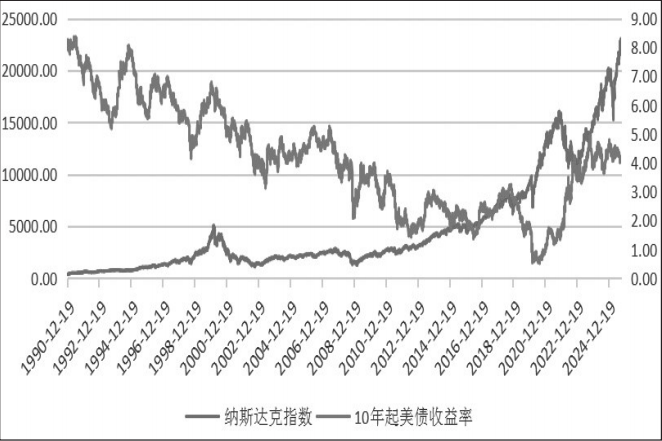
Group 1: Trade Tensions and Market Impact - The recent escalation of trade tensions, particularly the U.S. imposing 100% tariffs on certain Chinese exports, has led to significant market volatility, with U.S. stocks, especially the Nasdaq, experiencing a drop of over 3.5% [1][2] - The market's panic, reflected in the VIX index reaching 21.66, indicates heightened risk aversion among investors [1] - The current valuation of U.S. stocks, particularly the Nasdaq, is notably high, with the "Seven Sisters" trading at 31.3 times earnings, up from 26.8 times before the tariff announcements [1] Group 2: Economic Conditions and Federal Reserve Actions - The U.S. economy is not currently in recession, and the Federal Reserve's recent decision to restart interest rate cuts suggests that any market adjustments may be short-term rather than indicative of a systemic collapse [1][7] - The government shutdown is expected to impact consumer spending, with an estimated 750,000 federal employees affected, leading to a daily reduction of approximately $400 million in wages [5] - Historical trends indicate that even with economic slowdowns, U.S. stocks tend to maintain upward momentum if the Federal Reserve continues to implement loose monetary policies [6] Group 3: Technological Investments and Market Support - The rapid development of technology, particularly in AI, is a significant driver of stock market performance, with major firms like JPMorgan and Google announcing substantial investments to bolster the U.S. industrial base and cloud computing capabilities [8] - The focus on core industries, including advanced manufacturing and defense, is expected to support long-term economic growth and stock market stability [8] - Despite concerns over stock valuations, as long as the Federal Reserve does not tighten monetary policy or trigger a liquidity crisis, the potential for a market bubble burst remains low [9]
资金动态20251016
Qi Huo Ri Bao Wang· 2025-10-15 22:42
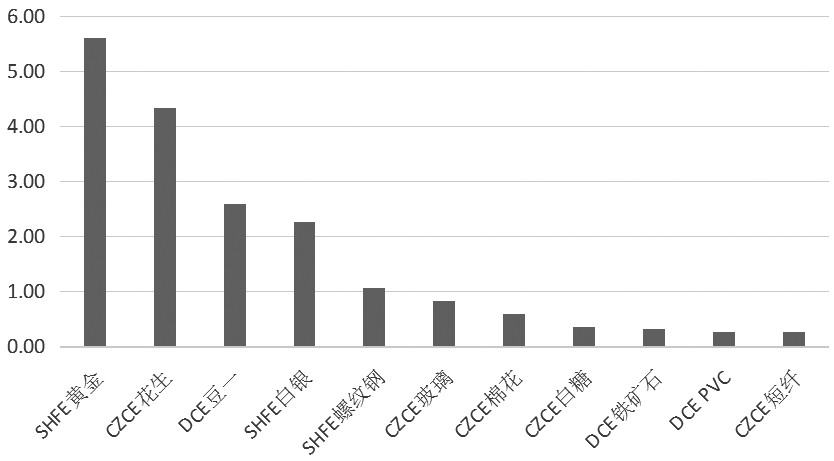
Core Insights - The article highlights significant capital inflows and outflows in various commodity futures, indicating a mixed market sentiment across different sectors [1] Group 1: Capital Inflows - Major inflows were observed in gold (¥560 million), peanuts (¥434 million), soybean (¥259 million), silver (¥226 million), and rebar (¥106 million) [1] - The agricultural and black metal sectors showed a net inflow, particularly in peanuts, soybean, and rebar [1] Group 2: Capital Outflows - Significant outflows were noted in lithium carbonate (¥1.553 billion), polysilicon (¥1.322 billion), industrial silicon (¥698 million), copper (¥566 million), and nickel (¥231 million) [1] - The chemical, non-ferrous metals, and financial sectors experienced notable capital outflows, with a focus on lithium carbonate, polysilicon, copper, rubber, and crude oil [1] Group 3: Sector Analysis - Overall, the commodity futures market experienced a substantial outflow, particularly in the non-ferrous metals and chemical sectors [1] - The financial sector's capital flow is highlighted, with attention on the CSI 1000 index futures and 30-year treasury futures [1]