
Jin Shi Shu Ju

Search documents
金十数据全球财经早餐 | 2025年12月10日
Jin Shi Shu Ju· 2025-12-09 23:07
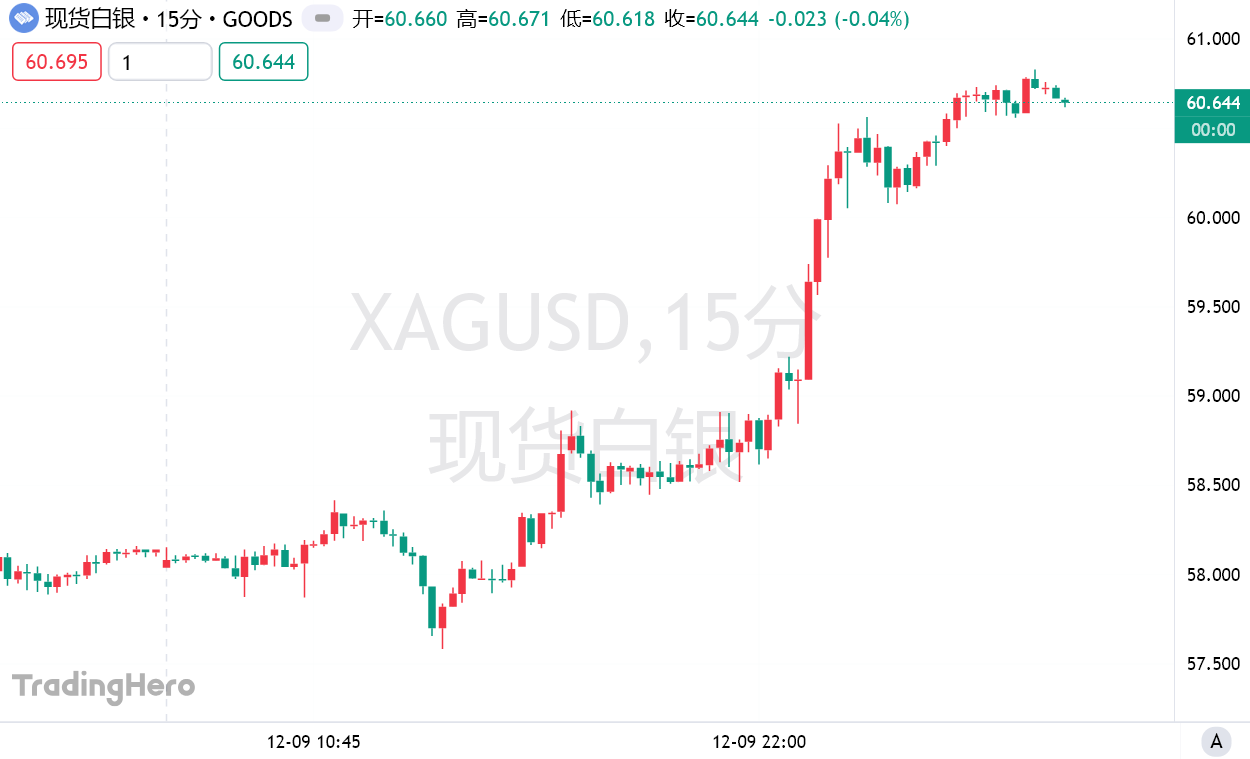
神舟二十一号航天员乘组圆满完成第一次出舱活动 男生普通话版 下载mp3 女声普通话版 下载mp3 粤语版 下载mp3 西南方言版 下载mp3 东北话版 下载mp3 上海话版 下载mp3 今日优选 特朗普:可能降低部分价格过高的商品关税 英媒:特朗普本周启动美联储主席人选的最后一轮面试 英媒:特朗普"施压"泽连斯基几日内回应和平提议 泽连斯基首次松口愿意选举 据悉SpaceX拟以1.5万亿美元估值进行IPO 李强分别会见世界银行、国际货币基金组织、联合国贸易和发展会议负责人 摩尔线程:即将发布新一代GPU架构 市场盘点 周二,美国就业市场数据好于预期,美元指数走高,最终收涨0.14%,报99.24;基准的10年期美债收益率最终收报4.1900%,对美联储政策利率敏感的2年期 美债收益率收报3.6250%。 交易员对美联储降息保持乐观,现货黄金震荡上行,最终收涨0.39%,报4206.59美元/盎司;现货白银在供应紧张的情况下首次达到60美元的里程碑,最终 大涨4.34%,报60.67美元/盎司。 受伊拉克生产恢复的影响,国际油价连续两日走低,WTI原油最终收跌0.78%,报58.28美元/桶;布伦特原油最终收跌 ...


白银狂飙突破每盎司60美元创历史新高!渣打预警短期波动风险
Jin Shi Shu Ju· 2025-12-09 22:52
Core Viewpoint - Silver prices have reached a historic high of over $60 per ounce, driven by trader bets on further easing of monetary policy by the Federal Reserve and ongoing supply tightness, with a year-to-date increase of over $31 or 108% [1] Group 1: Market Dynamics - Despite the strong upward trend in silver prices, short-term volatility may be expected due to normalization of traditional market dynamics [3] - The gold-silver ratio has dropped to 69, the lowest level since July 2021, indicating silver's performance has significantly outpaced that of gold [3] - The London Bullion Market Association (LBMA) inventory has increased by 1,447 tons year-to-date, while the New York Mercantile Exchange (Comex) inventory has risen by 4,311 tons, with most inventory still held in London [4] Group 2: Supply and Demand Factors - The recent surge in silver prices has been driven by multiple factors, including global supply chain issues, strong industrial consumption, and renewed investor interest [3] - Although supply chain issues have eased, market uncertainty remains, with a slight decrease in U.S. inventory adding liquidity to the global market [3] - The demand for silver-backed exchange-traded products (ETPs) has seen significant inflows, with 487 tons added in November and another 475 tons in December [5] Group 3: Future Outlook - While silver prices are expected to remain positive, a short-term correction may occur due to the current high gold-silver ratio, which suggests silver may be overbought [5] - The market is closely watching the S232 critical minerals report, which could exacerbate regional market tensions [5]
华尔街严阵以待年底“钱荒”,美联储本周或暗示重启“印钞”?
Jin Shi Shu Ju· 2025-12-09 15:04
Core Viewpoint - Wall Street banks are preparing to address rising pressures in the money market as the year-end approaches, which may prompt the Federal Reserve to consider measures to rebuild liquidity buffers in a $12.6 trillion market [2] Group 1: Federal Reserve Actions - The Federal Reserve will hold a meeting this week, marking its first since halting the reduction of its balance sheet, with indications that bank reserves are no longer ample [2] - Analysts suggest that the Fed may need to take specific actions to alleviate market tensions, such as resuming direct purchases of securities to replenish reserves [2] - Fed Chair Jerome Powell may provide clues about the next steps following the monetary policy meeting, with expectations that he will indicate a closer watch on front-end rates and the necessity to increase reserves [2][3] Group 2: Market Conditions - The overnight general collateral repo rate is trading around 4.25%, which is 60 basis points higher than the Fed's interest on reserves balance rate, assuming a 25 basis point rate cut is made [2] - The increase in Treasury issuance since summer has drained cash from the short-term market, leading to reduced funds in the banking system and higher rates [3] - The current level of reserves stands at $2.88 trillion, with differing opinions among Wall Street strategists on when the Fed will need to begin reserve management purchases [3] Group 3: Liquidity Support Tools - The usage of the Standing Repo Facility (SRF) reached a record $50.4 billion, indicating difficulties in finding counterparties for cash lending [3][4] - Despite the rise in SRF usage, a series of repo rates still exceed the rates offered by this tool, suggesting ongoing liquidity challenges [4] - Strategists from Bank of America and JPMorgan see this as a sign that the Fed may need to provide short-term liquidity to ease year-end constraints [5] Group 4: Market Operations - JPMorgan's short-term interest rate strategist suggested that the Fed could conduct regular temporary open market operations to address year-end balance sheet demands [5] - The benefits of regular repos include certainty in financing and the ability to lock in year-end funds, which can provide additional confidence to market participants [6]
每日投行/机构观点梳理(2025-12-09)
Jin Shi Shu Ju· 2025-12-09 13:47
Group 1: Federal Reserve Interest Rate Predictions - Goldman Sachs anticipates the Federal Reserve will lower interest rates this week while keeping its language open for future adjustments based on employment data [1] - Barclays expects a 25 basis point rate cut to a range of 3.5% to 3.75% this week, with further cuts predicted in March and June of next year [1] - Deutsche Bank predicts a 25 basis point cut this week, with Powell likely emphasizing a high threshold for future cuts in early 2026 [7] Group 2: Market Reactions and Predictions - Morgan Stanley suggests that the stock market's upward momentum may stall post-Fed rate cut as investors lock in profits [3] - Nomura has reversed its previous stance, now predicting a 25 basis point cut in December, citing sufficient dovish signals for a "risk management" rate cut [4] - Fitch Ratings forecasts the Fed will maintain rates in December but will cut three times by mid-2026 as economic conditions stabilize [5] Group 3: Gold Price Forecasts - State Street Global Advisors predicts that gold prices may stabilize between $4,000 and $4,500 per ounce in 2026 after a significant rise in 2025 [2] - The ongoing structural trends supporting gold prices are expected to remain intact, making gold an attractive hedge against rising debt and inflation [2] Group 4: Stock Market Predictions - Oppenheimer forecasts an 18% increase in the S&P 500 index, reaching 8,100 points by 2026, driven by strong earnings growth [7] - Russell Investments anticipates a "hawkish" 25 basis point cut from the Fed, with a terminal rate projected between 3.25% and 3.5% [9] Group 5: European Central Bank Insights - The European Central Bank's Schnabel hinted at a potential rate hike rather than a cut, which has strengthened the euro [8]
华尔街紧盯鲍威尔,这一关键表述或揭露明年政策倾向!
Jin Shi Shu Ju· 2025-12-09 13:02
杰富瑞分析师托马斯·西蒙斯(Thomas Simons)与迈克尔·巴科拉斯(Michael Bacolas)将重点关注鲍威尔是否会说出一个关键短语:"处于良好状态(In a good place)"。若他提及该表述,可能意味着其不倾向于明年1月进一步降息;若未使用,则可能为本月后更多降息留有空间。 相反,他们将密切关注美联储在为期两天的会议结束后的官方声明,以及美联储主席鲍威尔在新闻发布会答问时的措辞与语气变化。 "美联储本周沟通的核心,在于鲍威尔会将政策描述为'处于良好状态'(正如2025年初美联储按兵不动时那样),还是重复'适度限制性'或'略高于中性水 平'的表述。若为后者,2026年初进一步降息的大门将持续敞开,"他们在《财富》杂志看到的一份客户报告中表示,"我们预计他不会称政策利率'处于良好 状态',但这仍是需重点关注的短语。" 根据芝商所美联储观察工具(CME FedWatch Tool)的数据,30天联邦基金利率期货显示,美联储本周再次降息的概率达90%。但华尔街早已消化这一预期 ——标普500指数接近历史高点。事实上,交易员已不再关注降息决策本身(他们视其为既定事实),尽管联邦公开市场委员会(F ...
植田和男暗示无惧关税冲击,日本央行下周加息已成定局?
Jin Shi Shu Ju· 2025-12-09 12:28
日本央行行长表示,该国经济已经顶住了美国关税的冲击,这支持了市场对于日本央行在下周关键会议 上加息的预期。 日本国债收益率近几个月稳步上升,自11月中旬以来攀升得更为剧烈,当时首相高市早苗公布了通过增 加政府支出来刺激经济的计划。这些计划将包括发行750亿美元的新债券。 周一,10年期日本国债收益率达到了自2008年全球金融危机爆发前以来的最高水平,而30年期和40年期 国债收益率今年均创下历史新高。植田表示,实现中长期财政可持续性是政府的工作。 自上周以来,日元兑美元汇率有所走强。投资者押注,日本央行的利率举措部分旨在防止日元进一步贬 值。自4月以来,日元兑美元汇率已下跌超过10%。 今年早些时候,对美国关税将重创日本经济的担忧曾让日本央行在加息问题上持谨慎态度,但植田表 示,征税的影响比预期的要小。"到目前为止,美国企业已经自行消化了关税负担,没有完全转嫁给消 费者价格,"他说。 在日本方面,植田表示,汽车出口商已通过降价来消化关税,这"稳住了汽车出口量"并避免了日本国内 的失业问题。 日本财务大臣片山皋月周二在对记者表示,她正在"非常密切地"关注市场趋势,因为基准10年期日本国 债收益率正逼近2%。 在 ...
“美联储传声筒”:半数同僚反对降息,鲍威尔迎来背水一战!
Jin Shi Shu Ju· 2025-12-09 12:21
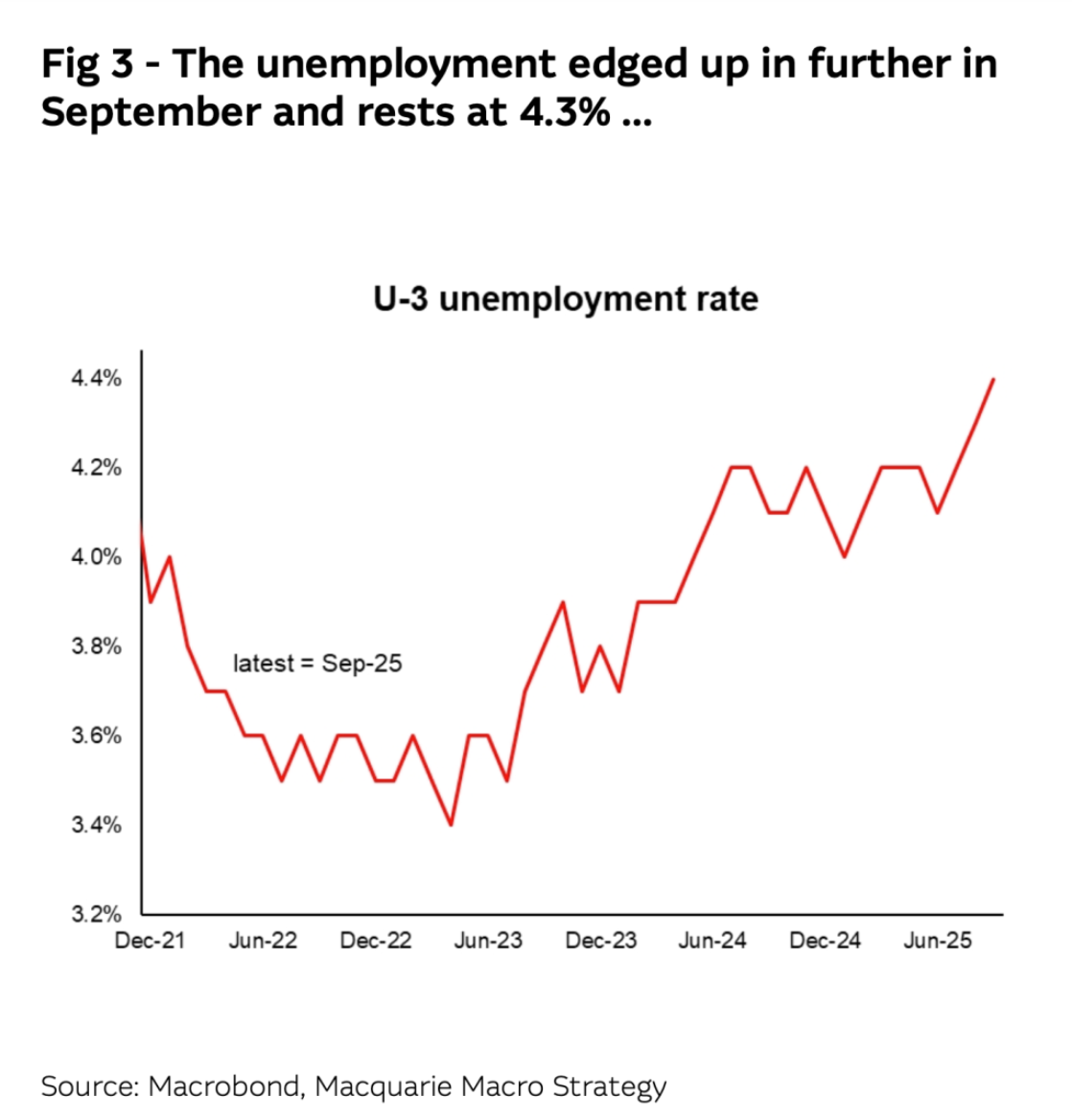
Group 1 - The Federal Reserve is set to hold its final two-day meeting of the year, with a significant portion of members potentially opposing a rate cut [2] - Chairman Jerome Powell appears prepared to push for a rate cut, aiming to reduce dissent among committee members by signaling a cautious approach to future easing [3] - The decision to cut rates may hinge on recent assessments of the labor market and inflation, with Powell noting signs of labor market loosening and a lack of significant inflationary pressures [3] Group 2 - There is a growing divide among policymakers regarding the appropriateness of a rate cut, with some expressing concerns about persistent inflation and the adequacy of current rates to drive it down [4] - The upcoming release of employment and inflation data post-meeting could significantly reshape economic outlooks, as recent job growth has been strong but accompanied by rising unemployment [4] - The debate centers on whether slowing job growth reflects weak labor demand, supporting a rate cut, or is due to a contraction in labor supply, opposing a cut [4] Group 3 - Citigroup's chief economist Nathan Sheets leans towards not cutting rates, indicating a close call with no catastrophic outcomes expected from either decision [5] - The challenge for Powell will be to set policy thresholds for January based on more comprehensive data available at that time, complicating the decision-making process [5] - The proximity of current rates to the "neutral level" raises questions about the rationale for maintaining stability unless inflation declines or the labor market weakens significantly [6] Group 4 - The Federal Reserve is expected to release new economic forecasts, which may reveal members' expectations for rate cuts through 2026, amidst political pressures from President Trump [6] - Trump's attempts to influence the Fed's composition could lead to a more politically driven approach to rate cuts, raising concerns about the independence of the institution [7] - Analysts suggest that a more politicized Fed may pursue aggressive rate cuts, potentially leading to conflicts with committee members' tolerance levels [7]
特朗普为马斯克撑腰:1.2亿欧元罚单太“恶劣”,欧盟“该小心了”!
Jin Shi Shu Ju· 2025-12-09 11:15
Group 1 - The European Union's tech regulatory body imposed a fine of €120 million (approximately $140 million) on Elon Musk's social media company X for violating online content rules [3] - U.S. President Trump criticized the EU's decision, calling it a "harsh penalty" and expressed confusion over the justification for such action [2][3] - Musk dismissed the fine, referring to the EU's announcement as "nonsense" and shared criticisms of the decision on social media [4] Group 2 - U.S. officials, including Secretary of State Marco Rubio and FCC Chairman Brendan Carr, condemned the EU's actions as an attack on American businesses [5] - The EU's regulatory body stated that X violated transparency obligations, including refusal to grant public data access to researchers and incomplete advertising library information [5] - EU Digital Affairs Chief Henna Virkkunen defended the fine as appropriate, asserting that the Digital Services Act (DSA) is not related to censorship [5][6]
黄金明年如何演绎?小摩高喊5300高价,世界黄金协会给出“三种剧本”
Jin Shi Shu Ju· 2025-12-09 09:58
Core Viewpoint - Gold prices surged over 60% in 2025, driven by geopolitical risks, interest rate cuts, and central bank demand, with expectations for further increases in 2026 as gold maintains its status as a safe-haven asset [1] Group 1: Market Performance and Drivers - Gold has outperformed major asset classes year-to-date and is on track for its best annual performance since 1979, despite existing risks [1] - Multiple factors, including ongoing central bank purchases, geopolitical tensions, high trade uncertainty, low interest rates, and a weakening dollar, have collectively boosted demand for gold as a safe-haven asset [1] - Geopolitical tensions contributed approximately 12 percentage points to gold's performance year-to-date, while a weak dollar and lower interest rates contributed 10 percentage points each, with momentum and investor positioning adding 9 percentage points, and economic expansion contributing another 10 percentage points [1] Group 2: Future Price Predictions - The World Gold Council anticipates that many of the forces driving gold's remarkable rebound in 2025 will continue to play a role in 2026, although the starting point has fundamentally changed [2] - In its baseline scenario, the World Gold Council expects gold prices to trade within a narrow range, potentially limited to a decline of 5% to an increase of 5% [3] - Alternative scenarios suggest that in a mild economic downturn, gold prices could rise by 5% to 15%, while in a deeper economic recession, prices could rebound by 15% to 30% [3] - Conversely, if policies under the Trump administration successfully reignite growth, inflation could push yields and the dollar higher, potentially leading to a decline in gold prices by 5% to 20% [3] Group 3: Institutional Predictions - JPMorgan Private Bank predicts gold prices could reach between $5,200 and $5,300 per ounce, citing strong and sustained demand as a key driver [4] - Goldman Sachs forecasts gold prices to be around $4,900 per ounce by the end of next year, supported by continued central bank purchases [4] - Deutsche Bank provides a broad range of $3,950 to $4,950, with a baseline scenario close to $4,450, while Morgan Stanley anticipates prices near $4,500, though it warns of potential volatility [4] Group 4: Underlying Factors and Risks - Optimism is supported by ongoing accumulation of gold by central banks, particularly in emerging markets, and the view that many institutional investors remain under-allocated to gold [5] - The potential for declining real yields, combined with global macro risks, continues to make gold an attractive hedging tool for investment portfolios [5] - Risks that may limit further price increases include stronger-than-expected U.S. recovery or inflation rebound, which could lead the Federal Reserve to delay or reverse rate cuts, thereby raising real yields and the dollar [5] - A slowdown in ETF inflows or central bank purchases could suppress demand, while increased recycling, especially in India, may raise supply and exert downward pressure on prices [5]
贝莱德高管:AI烧钱大战远未见顶,真正的机会在“卖铲人”?
Jin Shi Shu Ju· 2025-12-09 09:12
Core Insights - The capital influx into AI infrastructure is far from peaking, with major tech giants competing aggressively, benefiting "picks and shovels" suppliers like chip manufacturers and energy producers [2][3] - AI-related capital expenditures are surging without signs of slowing down, driving significant market rebounds despite investor skepticism about sustainability [2][3] - Nvidia's GPU chips are central to the AI revolution, briefly making it the first company to surpass a market capitalization of $5 trillion, sparking discussions about an AI bubble [2] - Major companies like Amazon and Meta are allocating budgets of hundreds of billions annually for AI-related investments, indicating a long-term procurement trend across the tech industry [3] Industry Trends - The demand for electricity from data centers is expected to double by 2030, driven by large-scale, enterprise-level, and cryptocurrency mining facilities [3] - Leading tech companies are just beginning to tap into capital markets for the next phase of AI expansion, suggesting more capital is on the way [3] - The competitive mindset among major tech firms drives accelerated spending, even at the risk of over-investment, as they strive to avoid being outpaced in the market [3] Investment Opportunities - Companies involved in chip manufacturing, energy production, and copper wire manufacturing are expected to see positive surprises that could drive stock prices up in the coming year [4]
