
Tai Mei Ti A P P

Search documents
“网红教父”赴港闯关,AI是解药还是迷魂阵?
Tai Mei Ti A P P· 2026-01-13 03:15
Core Viewpoint - The company Tianxiaxiu, known as the "first stock of internet celebrities" in A-shares, has submitted its listing application to the Hong Kong Stock Exchange, aiming to leverage AI and international expansion to revitalize its business amidst declining profits and market value [1][19]. Group 1: Company Background - Tianxiaxiu was founded by Li Meng, who is recognized for his innovative approach to monetizing personal online traffic, which was initially met with skepticism [2][3]. - The company received a significant investment from Sina in 2010, which helped it recover from financial difficulties and later provided over 350 times returns to its investors [3][10]. Group 2: Business Model and Operations - Tianxiaxiu operates as a "super matchmaking platform," connecting advertisers (B-end) with influencers (C-end) [4]. - The company has developed several key platforms, including WEIQ marketing cloud, SMART full-service, TOPKLOUT rating system, and IMsocial influencer accelerator, to streamline its operations and enhance service offerings [5][6][7][8]. Group 3: Financial Performance - In the first three quarters of 2024, Tianxiaxiu reported revenues of 3.045 billion yuan, but its net profit was only 65 million yuan, indicating a significant profit margin issue [10]. - The company faces challenges such as high accounts receivable, which reached 2.121 billion yuan by the end of Q3 2025, and substantial R&D costs associated with its AI transformation [11]. Group 4: Strategic Initiatives - Li Meng is focusing on AI and international expansion as key strategies for revitalization, introducing the "Linggan Island" AI marketing tool to enhance efficiency and competitiveness [13][14][15]. - The company is also exploring overseas markets, establishing subsidiaries in Japan and targeting Southeast Asia to replicate its successful business model [16][17]. Group 5: Future Outlook - The upcoming IPO in Hong Kong is seen as a critical step for Tianxiaxiu to prove the sustainability of the influencer economy as a high-tech industry rather than a fleeting trend [19][20]. - Li Meng's vision emphasizes that companies not engaging in the influencer economy may face dire consequences, positioning Tianxiaxiu as a pivotal player in this evolving landscape [20].
2025Q4线下零售速报
Tai Mei Ti A P P· 2026-01-13 03:13
Overall Summary - The offline retail situation for Q4 2025 shows a narrowing decline in sales, order numbers, and average order spending compared to the previous year, indicating a potential stabilization in the retail sector [4][5][8] - The overall sales decline for Q4 2025 is 4.84%, marking the best performance of the year, with order numbers and average spending also showing declines of less than 3% [4][5] - Consumer confidence has shown a recovery trend since mid-2025, with the index surpassing 90 for the first time in nearly two years, suggesting positive future expectations [8] Retail Performance Overview - The analysis covers four major categories: food, beverages, alcohol, and daily chemicals, using a continuous store model to assess quarterly performance [2] - Q4 2025's performance is significantly better than previous quarters, providing some optimism for 2026 [5] Price Levels - The WPI (Wholesale Price Index) for food, beverages, and daily chemicals remains below 100, indicating ongoing price pressure [9][11] - In Q4 2025, the price indices for these categories are between 98 and 99, reflecting a downward trend in price levels compared to the previous year [11] Key Category Insights - In the food category, the top three segments with increased market share are hot pot ingredients, pure milk, and frozen sausages, while snacks like puffed foods and candies have seen declines [14][17] - The beverage category shows a decline in dairy drinks but growth in ready-to-drink juices and functional beverages, driven by health trends [20][23] Order and Spending Analysis - In Q4 2025, the food category saw growth in sales and order numbers for frozen sausages, hot pot ingredients, and frozen prepared foods, with frozen sausages experiencing nearly 30% growth [27][28] - Conversely, self-heating foods and several snack categories continue to decline significantly, with instant noodles also showing a notable drop of 7% to 10% [28][29] SKU and New Product Trends - The top SKUs in the food category for Q4 2025 include frozen sausages and various nut products, indicating a shift towards healthier and premium offerings [52] - In the beverage category, ready-to-drink coffee and plant-based drinks are gaining traction, with new product launches reflecting market trends towards health and functionality [55][56]


热炒20 万颗卫星终成“泡沫盛宴”,做强商业航天不能只靠 “数量狂欢”
Tai Mei Ti A P P· 2026-01-13 02:50
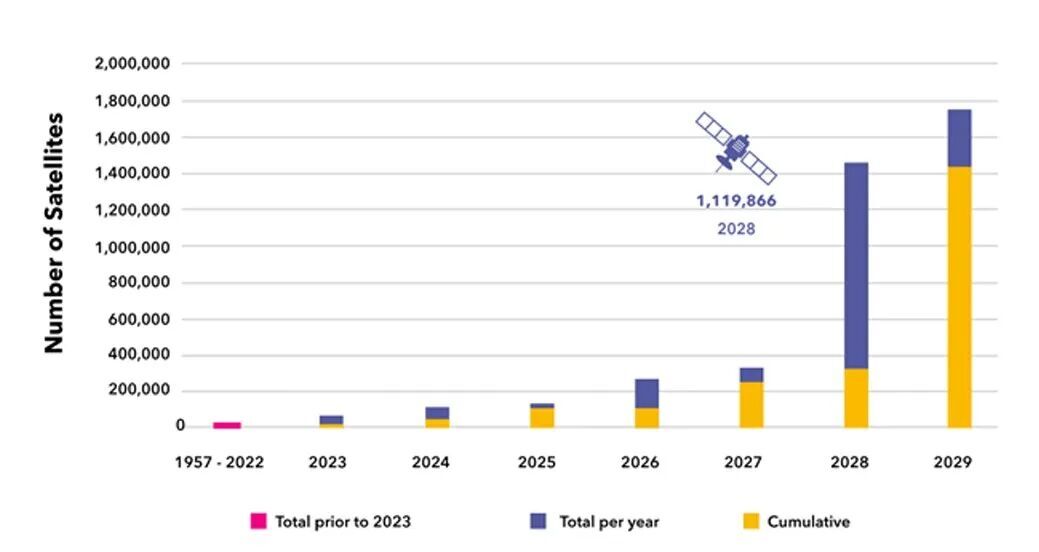
一、全球卫星发射热潮:繁荣下的供需失衡与轨道危机 国际电信联盟(ITU)下属的宽带促进可持续发展委员会,于2025年8月发布的《2025年全球卫星宽带状况报告》指出,自2018年起,全球卫星发射 正式步入爆发期。尤其是低轨卫星星座计划的密集推进,推动卫星发射数量呈现指数级增长态势,预计到2030年,全球活跃卫星数量或将达到5万 颗,且绝大多数位于近地轨道(LEO)。 但热潮背后,行业潜藏的供需失衡风险正逐步凸显。从实际供需匹配情况来看,近年来发射的卫星中,近70%为低轨通信卫星,然而与之配套的地 面终端部署、频段协调等设施建设进展却明显滞后,导致大量卫星陷入"在轨闲置"的尴尬局面,资源浪费问题十分突出。 文 | ICT解读者—老解 当我国向国际电信联盟(ITU)申报超20万颗卫星频轨资源的消息一经传出,A股市场中已热炒数周的商业航天板块,仿佛再度注入一剂强心针:卫 星ETF在不足三个月内实现翻倍涨幅,中国卫通、中国卫星等相关企业股价更是创下历史新高,市场热情持续攀升。 然而,在这股狂热浪潮之下,投资者更需保持清醒理性。结合国际权威报告数据与国内龙头企业实际业绩来看,这场看似盛大的20万颗卫星"饕餮 盛宴",实 ...


Starlink降轨与20万颗申报:中国低轨竞争的下一回合
Tai Mei Ti A P P· 2026-01-13 02:27
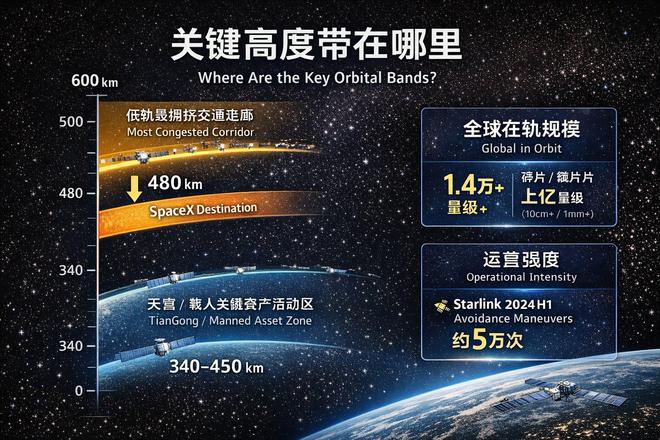
文 | 我们可能想错了 为什么星链降轨引发担忧 1月上旬,SpaceX宣布计划把约4400颗第一代Starlink卫星从550公里降到480公里轨道,理由是优化空间 安全与碎片管理。几乎同时,我国向国际电信联盟(ITU)集中申报了总数超过20万颗的低轨卫星网 络,涵盖14个星座。这两条消息一前一后,引发了中文舆论的强烈反应:从太空抢地盘到星链降轨威胁 我国空间站的解读迅速扩散。 同时需要澄清一个常见误读:Starlink不是单一高度的一层壳,它存在多壳层、多轨道面与不同任务阶 段的高度差异。舆论里常把它说成整个系统整体下移,会夸大影响范围;更准确的表达是:这次讨论的 重点是其中一批在550km附近运行的卫星向480km的迁移,以及这种迁移对低轨交通密度、衰减处置与 协同规则提出的更高要求。 降轨带来的三重影响 动机可以争论很久,但机制后果最终都会落在实际运营与管理层面。无论SpaceX的降轨是否出于善 意,它都意味着轨道环境、过程安全与资源结构的重新分布。这些后果并非假设,而是能在数据与物理 层面被验证的。 这样的情绪并不难理解。它背后不是阴谋叙事的想象力,而是两条可被验证的现实逻辑叠加出来的:轨 道资源的稀 ...
收购不能停!海外收购梦碎,电解铜箔龙头被迫“降级”国内产能并购 | 并购一线
Tai Mei Ti A P P· 2026-01-13 02:19
Core Viewpoint - Defu Technology has shifted its acquisition strategy from "high-end breakthrough" to "scale expansion" following the termination of its acquisition of Luxembourg-based CircuitFoil due to regulatory restrictions [1][2]. Group 1: Acquisition Strategy - The initial acquisition target was CircuitFoil, a leading high-end IT copper foil manufacturer with an annual production capacity of 16,800 tons, which aligns with Defu Technology's high-end strategy [2]. - The acquisition agreement was signed on July 29, 2025, with a total enterprise value of €215 million and a share purchase price of €174 million [2]. - The acquisition was supported by a fundraising plan of up to 1.93 billion yuan, aimed at financing the overseas acquisition and other projects [3]. Group 2: Regulatory Challenges - The Luxembourg Ministry of Economy imposed strict conditions on the investment approval, limiting Defu Technology's voting rights and decision-making power, which led to the abandonment of the acquisition [3][4]. Group 3: Domestic Acquisition Focus - Following the termination of the Luxembourg acquisition, Defu Technology quickly announced plans to acquire Anhui Huiru Technology through cash purchase and capital increase to gain at least 51% control [4]. - The acquisition of Huiru Technology, which has an existing production capacity of 20,000 tons per year, aims to address the company's near-saturation production capacity and meet the growing demand in the lithium battery and energy storage sectors [5]. - Despite the strategic shift, investor sentiment was negative, resulting in a 9.10% drop in Defu Technology's stock price on January 12, despite a broader market rally [1][5].
谷歌闯入4万亿俱乐部,苹果给了AI神助攻
Tai Mei Ti A P P· 2026-01-13 02:10
Core Insights - Alphabet, the parent company of Google, has officially reached a market capitalization of $4 trillion, becoming the fourth company in history to achieve this milestone, following Nvidia, Apple, and Microsoft [2] - A significant factor contributing to this valuation is a new multi-year partnership with Apple, where Google's Gemini model and cloud technology will support Apple's AI initiatives, including the upcoming version of Siri [2][4] Group 1: Alphabet's Market Position - Alphabet is now one of only two companies with a market cap of $4 trillion, second only to Nvidia [2] - The company's stock price has seen a year-to-date increase of 6.03%, with a current share price of $332.73 [6] Group 2: Partnership with Apple - Apple has selected Google's Gemini model as the foundational support for its AI services, committing to pay Google $1 billion annually for this collaboration [2][3] - The partnership is expected to enhance Apple's AI capabilities while maintaining user privacy, as Google has a history of complying with Apple's stringent privacy requirements [3][4] Group 3: AI Developments and Market Trends - Google's Gemini 3 model has shown strong performance, with a 28.4% month-over-month increase in traffic, outperforming competitors like ChatGPT [5] - The collaboration with Apple is seen as a validation of Google's AI capabilities and is anticipated to accelerate Apple's AI strategy [4] Group 4: Future Prospects and Investments - Google is expected to significantly increase its capital expenditures, projected to exceed $140 billion by 2026, marking a growth rate of over 60% [6] - The company is also planning to launch new AI products, including a partnership with Samsung for AI smart glasses, indicating a strong focus on innovation in the AI space [6]



Suplay冲刺上市、杰森娱乐融资,卡圈资本故事不眠
Tai Mei Ti A P P· 2026-01-13 02:09
Core Viewpoint - The capitalized process of the card game industry is accelerating, with companies like Suplay leading the charge towards public listings, despite challenges faced by top enterprises in the sector [1][4]. Group 1: Suplay's Market Position - Suplay submitted its IPO application to the Hong Kong Stock Exchange on January 1, 2026, ranking first in China's collectible non-combat card market and being the only Chinese brand among the top five globally [2]. - Suplay initially focused on trendy toys before transitioning to card production, securing significant investments and partnerships with major IPs like miHoYo and G-bits [7][9]. - The company emphasizes a strong collection logic, with single card prices exceeding 10 yuan and packs priced between 59.9 yuan and 89.9 yuan, targeting adult consumers, particularly women [9]. Group 2: Financial Performance and Growth - Suplay's revenue is projected to reach 1.4 billion yuan in 2023, 2.8 billion yuan in 2024, and 2.83 billion yuan in the first nine months of 2025, with a gross margin of 54.5% driven primarily by card sales [11]. - The company has established a brand barrier by focusing on collectible cards, avoiding direct competition with card games, and maintaining a unique market position [11]. Group 3: Challenges and Strategic Focus - Suplay faces challenges in scaling its operations while maintaining the value of its collectibles, as its revenue is significantly lower than that of card games, which are projected to grow by 270% in 2024 [13]. - The company relies heavily on external IP licensing, with the top five IPs contributing 47.8% to 77.7% of its revenue over the years, raising concerns about sustainability if key licenses expire [14]. - Suplay plans to use IPO proceeds to expand its core business and strengthen its collectible card capabilities while reducing reliance on its own IPs [14]. Group 4: Industry Trends and Competitor Landscape - Other companies in the card industry, such as Hitcard and Jason Entertainment, are also pursuing IPOs and have secured significant funding, indicating a competitive landscape [16][18]. - The industry is witnessing a diversification in business models, with some companies focusing on expanding their ecosystems and others enhancing their brand value through high-end product lines [19][20]. - Global experiences suggest that pure card companies face challenges in the public market, emphasizing the need for broader narratives that incorporate IP and entertainment development [22][23].
年销售超过4亿元的店王,证明永辉没有“忘本”
Tai Mei Ti A P P· 2026-01-13 02:05
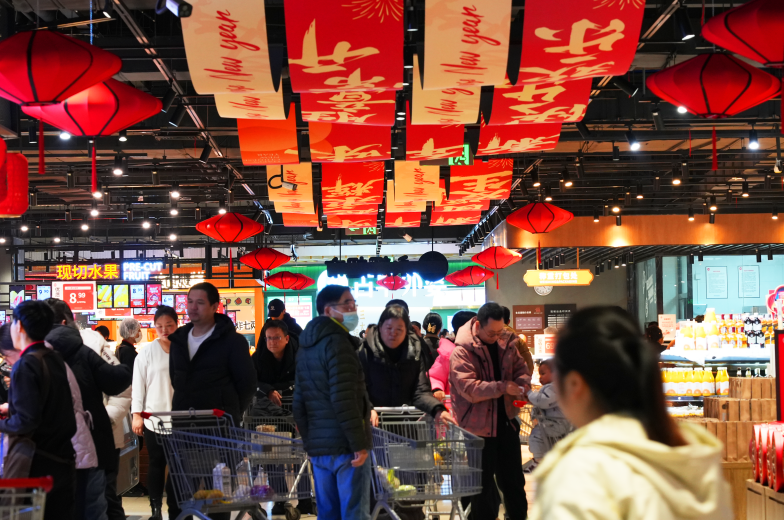
Core Viewpoint - Yonghui Supermarket has launched its 2026 New Year goods festival strategy at the SM Plaza store, which is significant as this store has achieved annual sales exceeding 400 million yuan and is considered the "store king" among Yonghui's over 300 remodeled stores [2][10]. Group 1: Store Features and Consumer Experience - The SM Plaza store has a complete property layout with an area of approximately 3,500-4,000 square meters, allowing for a compact display of various product categories, enhancing consumer navigation [3][9]. - The store features a high proportion of "3R" products (Ready to Cook, Ready to Heat, Ready to Eat), which account for 45% of top-selling items, and overall, food-related products make up over 60% of the offerings [3][6]. - The store emphasizes consumer experience with ample tasting services in the bakery, fruit, and prepared food sections, ensuring a positive shopping atmosphere [6][14]. Group 2: Product Offerings and Pricing Strategy - Yonghui offers a wide range of seafood products, from affordable options like live grass carp at 9.8 yuan per jin to high-end items like Boston lobsters priced at 399 yuan and king crabs at 998 yuan, ensuring a good price-quality ratio [6][8]. - The supermarket has partnered with major brands like Yili and Mengniu to provide high-quality, cost-effective products, such as yogurt at 9.9 yuan per kg and premium milk at 4.0 yuan [8][12]. - The New Year goods festival will feature a core offering of "30 million-level quality explosive products" and "120 major New Year items" to cater to various consumer segments [8][10]. Group 3: Strategic Focus and Employee Engagement - The launch of the New Year goods festival marks Yonghui's entry into a new phase of self-operation focused on "product strength + scene strength," aiming to enhance consumer experience through systematic integration of product upgrades and service improvements [8][10]. - The SM Plaza store has implemented a profit-sharing model for employees, distributing over 3 million yuan in bonuses, and has trained nearly 100 certified skilled workers to enhance service quality [14][12]. - Yonghui's strategy emphasizes creating a rich "eating and drinking scene," which requires more employee involvement and skill enhancement, moving away from merely reducing operational complexity [14][12].

调入中证1000指数,明月镜片仍需努力
Tai Mei Ti A P P· 2026-01-13 01:32
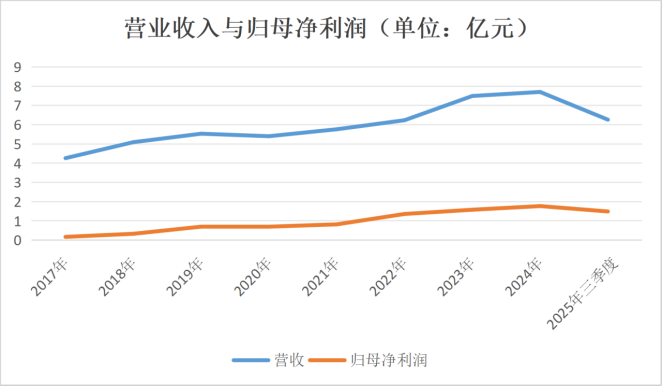
Core Viewpoint - The story of Mingyue Lens reflects a growing trend in the lens supply industry, even as retail optical stores face challenges. The company's revenue and profit have shown consistent growth, indicating resilience in a competitive market [1][3]. Financial Performance - From 2017 to 2024, the company's revenue increased from 426 million yuan to 770 million yuan, while net profit rose from 17 million yuan to 177 million yuan [1]. - In the first three quarters of 2025, the company achieved revenue of 626 million yuan, a year-on-year increase of 7.39%, and net profit of 149 million yuan, up 8.83% year-on-year [1]. Market Position and Index Inclusion - Mingyue Lens was included in the CSI 1000 Index effective January 9, 2026, highlighting its visibility in the capital market [3]. - Despite this recognition, the company's stock price experienced a decline in 2025, raising questions about the sustainability of its growth amid retail challenges [3]. Business Model and Sales Strategy - The company operates without physical retail stores, relying on partnerships with various sales channels, including direct sales, distribution, and e-commerce [8][9]. - As of June 2025, Mingyue had 2,214 direct sales customers and 69 brand distributors, indicating a broad distribution network [8]. Product and Profitability - The lens market is characterized by high margins, with the company's unit lens cost around 6 yuan and retail prices ranging from tens to hundreds of yuan [5]. - The company has seen a continuous increase in gross margin, outperforming competitors like Kangnait Optical [8]. Brand Strategy and Market Positioning - Mingyue Lens is focusing on brand building to differentiate itself from competitors, moving away from price competition to a high-end branding strategy [12][13]. - The company has invested in marketing and brand awareness, which has positively impacted its pricing power and profitability [13]. Research and Development - The company has made strides in R&D, particularly in proprietary lens materials, but still lags behind international competitors in terms of patent numbers [17][18]. - The R&D expense ratio has been increasing, indicating a commitment to enhancing product capabilities [18]. AI Glasses and Future Prospects - The company has ventured into AI glasses, generating 6.51 million yuan in revenue from collaborations with Xiaomi, with a gross margin of 78.6% [18]. - The acceptance and sustainable growth of AI glasses among consumers remain uncertain, but the company’s marketing efforts need to be supported by strong product capabilities [18].
错过Manus后,字节AnyGen追求的是“大象无形”
Tai Mei Ti A P P· 2026-01-13 00:30
Core Insights - The article discusses the contrasting paths of two AI startups, Butterfly Effect and its product Manus, and ByteDance's AnyGen, highlighting their different approaches to AI in productivity tools [1][2][4]. Group 1: Company Developments - Butterfly Effect, after rejecting a $30 million acquisition offer from ByteDance, successfully launched Manus, which gained significant attention for its autonomous planning and execution capabilities [1][2]. - AnyGen, developed by ByteDance, quietly launched a workflow platform that integrates various functionalities and aims to disrupt established office ecosystems like Microsoft 365 and Google Workspace [2][3][12]. Group 2: Product Features and Innovations - Manus operates on a multi-agent collaboration architecture, allowing it to decompose tasks and manage hundreds of agents simultaneously, while AnyGen focuses on integrating voice interaction and real-time collaboration into a seamless workflow [3][4]. - AnyGen's design emphasizes stability and accuracy in task execution, addressing the common issue of "rework" in office tasks by ensuring that AI-generated outputs are structured and ready for immediate use [8][10]. Group 3: Market Positioning and Strategy - AnyGen aims to fill the gaps in the fragmented productivity tool market by offering an all-in-one workspace solution, contrasting with the existing tools that often require users to navigate multiple platforms [11][12]. - The article suggests that AnyGen's strategy of providing a free version aims to build a user base and gather valuable feedback for model training, positioning it favorably against competitors [17][18]. Group 4: Competitive Landscape - The competition for AnyGen includes established office suites like WPS and Microsoft Office, which have the advantage of being integrated into existing workflows, and lightweight tools like Quark that offer easy access to presentation creation [11][12]. - The article highlights the importance of context in AI applications, noting that while Manus seeks to automate tasks fully, AnyGen focuses on enhancing human capabilities through collaboration [16][20].