Tai Mei Ti A P P

Search documents
白酒“上车”即时零售,千亿风口下的狂欢与隐忧
Tai Mei Ti A P P· 2025-10-11 02:12
Core Insights - The article highlights the contrasting performance of the Chinese liquor market, with offline sales remaining sluggish while online sales, particularly through instant retail platforms, are booming. For instance, the price of Feitian Moutai on Meituan's flash purchase platform sold out quickly at 1499 yuan, with sales increasing eightfold before the holidays [1][2]. Group 1: Current Market Dynamics - Instant retail is reshaping the retail landscape with its rapid delivery capabilities, leading to a competitive environment where various models coexist, including platform-based and integrated warehouse-store models [2]. - Major players in the instant retail market include comprehensive e-commerce platforms like Meituan and JD, which have significantly increased their market presence and sales volume [3]. - Meituan's flash purchase service saw a phenomenal increase in sales, with a 90-fold growth in liquor sales during a promotional event, indicating a strong demand for instant delivery [2][3]. Group 2: White Liquor Companies' Involvement - White liquor companies are increasingly taking an active role in the instant retail space, with 34.9% of them prioritizing the expansion of this channel [4]. - Leading brands like Guizhou Moutai are forming strategic partnerships with platforms like Taobao Flash Purchase to enhance their distribution capabilities and offer rapid delivery services [4][5]. Group 3: Consumer Behavior and Market Trends - The shift towards instant retail reflects changing consumer behavior, where the demand for immediate gratification is replacing traditional planned purchases, particularly for gift and banquet wines [6]. - Younger consumers, who are accustomed to instant delivery services, represent a key demographic for white liquor brands looking to expand their market reach [6]. Group 4: Challenges and Concerns - The rise of instant retail poses risks to the pricing structure of the liquor industry, with potential price wars threatening the profitability of distributors and smaller brands [7][8]. - Concerns about the role of traditional distributors evolving into mere delivery agents for platforms are prevalent, as many distributors express caution regarding the sustainability of instant retail [8]. - Trust and experience remain significant challenges for online liquor sales, especially for high-end products, as consumers value the in-person experience and assurance of authenticity [9].

稀土出口管制升级:技术主权再强化
Tai Mei Ti A P P· 2025-10-11 00:30
Group 1 - The core viewpoint of the articles highlights China's recent upgrade in rare earth export controls, emphasizing the reinforcement of technological sovereignty through stricter regulations on the entire rare earth industry chain [1][2] - The Ministry of Commerce issued announcements that include both item and technology controls, requiring approval for all aspects of rare earth technology exports, from mining processes to the manufacturing of magnetic materials [1] - The tightening of rare earth controls is not solely due to bilateral trade frictions but is also a strategic move to safeguard China's technological sovereignty in a competitive global landscape [2] Group 2 - Rare earths have become a focal point of international attention since the 21st century, with multiple rounds of US-China trade negotiations addressing rare earth issues [1] - The technological barriers in the rare earth industry are significant, particularly in processing, which includes steps from ore selection to the separation of rare earth oxides and the refining of individual metals [2] - The purity of rare earth products is crucial for the performance of downstream materials, such as permanent magnets used in electric vehicles and robotics, highlighting the strategic importance of rare earths in emerging technologies [2]
【钛晨报】事关政务领域人工智能大模型部署,两部门最新发声;娃哈哈回应宗馥莉辞职:属实;高通公司涉嫌违反反垄断法,市场监管总局依法决定立案调查
Tai Mei Ti A P P· 2025-10-10 23:40
Group 1: AI in Government - The Central Cyberspace Affairs Commission and the National Development and Reform Commission issued guidelines for the deployment of AI large models in government sectors, emphasizing the need for practical applications based on common and frequent demands in areas like public services and decision-making [2][3] - The guidelines stress the importance of standardized deployment, advising local governments to utilize existing resources and avoid creating isolated models, while enhancing data governance to support AI model optimization [2][3] Group 2: AI Model Management - The guidelines highlight the necessity of a comprehensive management system for AI models, focusing on reducing burdens while empowering departments, and preventing "digital formalism" [3] - Continuous iteration and optimization of AI models are deemed crucial, with a call for robust security management and strict confidentiality measures to mitigate risks associated with sensitive data [3] Group 3: Market Developments - The number of new A-share accounts opened in September reached 2.9372 million, a year-on-year increase of 60.73%, marking the second-highest monthly figure this year [15] - The Hong Kong Stock Exchange reported a total market capitalization of HKD 49.9 trillion as of September 30, 2025, reflecting a 35% year-on-year increase [15] Group 4: Company News - Wahaha confirmed the resignation of its chairperson, Zong Fuli, from various leadership roles within the company [4] - Zhiyuan Robotics denied rumors regarding its plans for an IPO in Hong Kong, labeling the reports as false [5] - Zeekr Technology's CBO, Guan Haitao, announced his departure from the company amid restructuring following a merger with Geely [6] Group 5: Regulatory Updates - The China Securities Regulatory Commission released three financial industry standards aimed at enhancing data governance and promoting digital transformation within the securities and futures sectors [10][11] - The Ministry of Transport announced new port fees for U.S. vessels starting from October 14, 2025, with a phased implementation of fees based on net tonnage [12] Group 6: Industry Performance - In September, wholesale sales of new energy passenger vehicles in China reached 1.5 million units, a year-on-year increase of 22% [19] - The number of ride-hailing orders recorded in September was 758 million, showing a 3.9% decrease from the previous month [20]

新加坡探路智能陪伴新纪元:千亿市场的全球化起点|SEA Frontline
Tai Mei Ti A P P· 2025-10-10 22:16
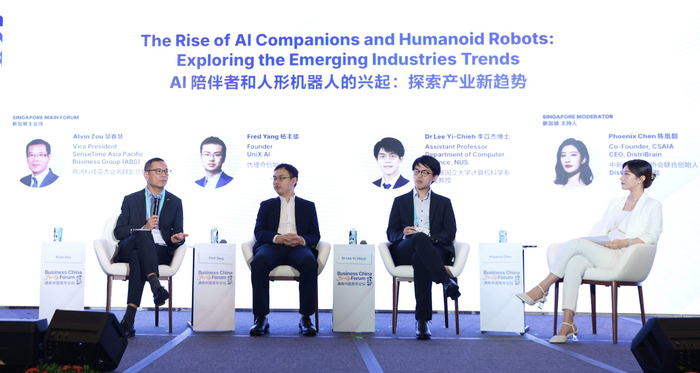
Core Insights - The global AI companion market is projected to exceed $28.1 billion in 2024 and surpass $140 billion by 2030, with a compound annual growth rate of 30% [1] - China and Singapore are emerging as key markets for AI companion development, with China being the second-largest market and Singapore serving as a testing ground for global validation [1] - The 2025 China-Singapore Youth Forum featured discussions on AI companionship and humanoid robots, highlighting the collaborative efforts between the two countries [2] Market Potential - The AI companion market is expected to grow significantly, with a forecasted market size of over $140 billion by 2030 [1] - China is recognized for its active application innovation ecosystem and complete industrial chain, while Singapore benefits from its international environment and advanced AI governance [1] Forum Discussions - The forum included insights from various industry leaders, focusing on the commercialization of AI companions and ethical considerations [3][4] - Key topics discussed included technology product breakthroughs, commercialization positioning, globalization strategies, and social ethics governance [4] Product Design and User Experience - Emphasis was placed on user experience in product design, with the notion that the best technology should be invisible to users [4][5] - The integration of tactile feedback in humanoid robots was highlighted as essential for precise control and safety in human environments [5] Commercialization Strategies - Companies are focusing on enhancing human capabilities rather than replacing them, with AI serving as a supportive tool in various sectors [6][8] - The importance of cultural adaptation and compliance with local regulations was stressed for successful market entry [9][10] Ethical Considerations - The need for a multi-faceted approach to AI ethics was emphasized, including the establishment of ethical review mechanisms and the importance of diverse perspectives in governance [13][14] - Discussions highlighted the potential risks of AI over-personification and the necessity of maintaining clear boundaries between human and AI interactions [12][14] Globalization Challenges - AI companies face challenges such as market acceptance, data privacy, computational resource limitations, and cultural adaptation when expanding internationally [9][10] - The importance of understanding local customer needs and regulatory environments was underscored for successful AI deployment in different regions [10][11]
罚单大砍 95% 后金城医药实控人再申诉,其父立案前套现4000多万
Tai Mei Ti A P P· 2025-10-10 11:40
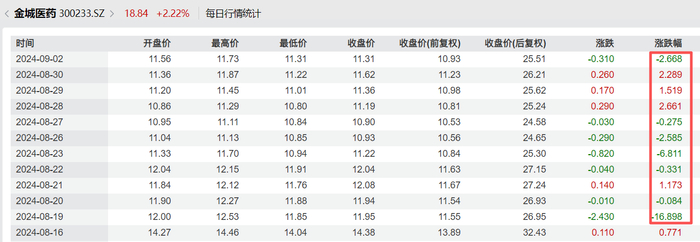
Core Viewpoint - The recent announcement from Jincheng Pharmaceutical (300233.SZ) regarding the administrative penalties against its actual controller and chairman Zhao Yeqing has significantly altered market expectations, with the proposed fines being reduced by 95% compared to earlier estimates [1][9]. Group 1: Administrative Penalties - The China Securities Regulatory Commission (CSRC) has issued a second administrative penalty notice proposing a total fine of 3 million yuan, with Zhao Yeqing responsible for 1.5 million yuan, Wang Zhen for 1.2 million yuan, and Liu Feng for 300,000 yuan [1]. - The initial penalty proposal was much harsher, totaling 61.76 million yuan, which included confiscation of illegal gains [5][9]. - Zhao Yeqing has chosen to continue appealing the decision, indicating that the 3 million yuan fine is not yet finalized [1][9]. Group 2: Market Reaction and Stock Performance - Following the announcement of the investigation into Zhao Yeqing for alleged market manipulation, Jincheng Pharmaceutical's stock price dropped significantly, falling 16.9% on the first trading day after the news [3]. - The stock continued to decline, reaching a low of 10.8 yuan per share [3]. - As of the latest closing, the stock price was 18.84 yuan per share, reflecting a 2.22% increase, with a market capitalization of 7.2 billion yuan [5]. Group 3: Company Financial Performance - Jincheng Pharmaceutical's financial performance has been unstable, with a slight revenue increase of 0.93% in 2023, but a significant net profit decline of 36.09% [6]. - For the first half of 2025, the company reported a revenue of 1.36 billion yuan, a decrease of 22.65%, and a net profit of 43.38 million yuan, down 66.78% year-on-year [8]. - The decline in cash flow from operating activities was attributed to decreased sales and reduced collections, with a net cash flow of 104 million yuan, down 40.34% [8]. Group 4: Shareholding Structure - Zhao Yeqing and his father Zhao Hongfu are the actual controllers of Jincheng Pharmaceutical, with respective direct holdings of 1.88% and 1.74%, and an additional 20.46% through Jincheng Industrial [5]. - The combined market value of their holdings is approximately 1.742 billion yuan [5].

股价暴涨30倍,新易盛实控人37亿高位套现,"易中天"三巨头年内减持超60亿
Tai Mei Ti A P P· 2025-10-10 08:35
Core Viewpoint - New Yi Sheng (300502.SZ), a leading optical module company, has announced a significant share transfer by its controlling shareholder, Gao Guangrong, who sold 11.43 million shares at 328 CNY per share, raising approximately 3.749 billion CNY, indicating a trend of major shareholders reducing their stakes amid market volatility [2][3][4]. Company Summary - Gao Guangrong's share transfer represents 1.15% of the total share capital, with the transfer price exceeding 70% of the average stock price over the previous 20 trading days [2][3]. - The share transfer was fully subscribed by 16 institutional investors, with a total subscription amounting to 29.26 million shares, resulting in a subscription ratio of 2.6 times [4]. - Following this transfer, Gao Guangrong's ownership will decrease from 7.39% to 6.24%, potentially changing his status from the largest shareholder to the second largest, as he will fall below the holding percentage of the second-largest shareholder, Huang Xiaolei [4]. Industry Context - The optical module sector, particularly the CPO segment, has seen a significant increase in volatility, with major shareholders from the "Yi Zhong Tian" trio (including Zhongji Xuchuang and Tianfu Communication) also engaging in substantial share reductions, totaling 2.301 billion CNY in the current year [7][8]. - Despite the share price adjustments, the fundamental business indicators for optical module companies remain strong, supported by increased capital expenditures from major clients like Nvidia, Google, Meta, Amazon, and Microsoft [8][13]. - The overall market sentiment is shifting, with concerns about high valuations leading to increased selling pressure from major shareholders, indicating a potential shift in the investment landscape for the optical module industry [7][8].


36.9亿算力订单突遭终止,原实控人急转增持,海南华铁算力转型迷雾重重
Tai Mei Ti A P P· 2025-10-10 06:20
Core Viewpoint - The termination of the 36.9 billion yuan "computing power service agreement" between Hainan Huatie and Hangzhou Company raises significant concerns about the company's operational integrity and future prospects, especially after a period of stock price volatility linked to this contract [2][3][5]. Group 1: Contract and Financial Impact - The computing power service agreement, signed in March 2025, was valued at 36.9 billion yuan and was expected to generate approximately 7 billion yuan in annual revenue, representing over 70% of Hainan Huatie's projected revenue for 2024 [3][5]. - Following the announcement of the contract, Hainan Huatie's stock price surged from 4.76 yuan to 13.25 yuan, marking a nearly threefold increase within a few months, with significant trading activity observed [3][4]. - The termination of the contract was attributed to changes in market conditions and the lack of any procurement orders since the agreement was signed, leading to no financial impact on the company's results as of the announcement date [5][7]. Group 2: Shareholder Actions and Market Reactions - The original controlling shareholder, Hu Danfeng, unexpectedly shifted from a planned reduction of holdings worth approximately 4.85 billion yuan to a commitment to purchase additional shares worth 30 to 50 million yuan, aiming to restore investor confidence [2][6]. - Hu Danfeng's previous plan involved selling up to 4.42 million shares, which would have constituted 2.22% of the company's total equity, but he has not executed this plan as of the termination announcement [6][7]. - The abrupt change in Hu Danfeng's strategy reflects the dual challenges faced by Hainan Huatie, including weak core business performance and difficulties in transitioning to the computing power sector [6][7]. Group 3: Company Performance and Future Outlook - Hainan Huatie has experienced a situation of "increasing revenue without increasing profit," with revenues rising from 2.607 billion yuan in 2021 to 5.171 billion yuan in 2024, while net profits have fluctuated between 498 million yuan and 605 million yuan [7]. - The company announced a 1 billion yuan investment in smart computing services in May 2024, aiming to provide high-end GPU computing resources and technical services, with cumulative asset deliveries exceeding 1.4 billion yuan by mid-2023 [7]. - The abrupt end of the 36.9 billion yuan order raises questions about the viability of Hainan Huatie's transition to the computing power business and whether Hu Danfeng's share purchase can genuinely restore investor confidence [7].


华为系公司赛力斯与字节合作具身智能,问界要开发人形机器人?
Tai Mei Ti A P P· 2025-10-10 03:05
Core Insights - Huawei-affiliated company Seres and ByteDance's Volcano Engine are collaborating to develop embodied intelligence and robotics, focusing on intelligent robot decision-making and human-machine enhancement technologies [2][10]. Group 1: Collaboration Details - Seres' subsidiary, Chongqing Phoenix Technology, signed a framework agreement with Volcano Engine to create a closed-loop mechanism for technology research and scene validation [2]. - The partnership aims to empower the automotive industry's digital transformation by integrating technology and real-world applications [12]. Group 2: Market Impact - Following the announcement of the collaboration, Seres' stock rose over 3% on October 10, reflecting positive market sentiment towards robotics and AI developments [4]. - The average stock price increase for robotics-related companies this year is 27.34%, while humanoid robotics stocks have surged by 83.6%, significantly outperforming the Shanghai Composite Index [4]. Group 3: Technological Advancements - Volcano Engine, a subsidiary of ByteDance, is leveraging its strengths in AI and cloud services to advance embodied intelligence, with a focus on integrating large models with robotics [6][7]. - The current phase of robotics, termed Robot 3.0, is characterized by the integration of large models that enhance the overall capabilities of perception, decision-making, and control [6]. Group 4: Financial Performance - Seres reported a revenue of 62.402 billion yuan for the first half of 2025, a year-on-year decline of 4.06%, while net profit increased by 81.03% to 2.941 billion yuan [8][9]. - The company has delivered over 147,000 units of its AITO brand vehicles, with significant contributions from models like the M9 and M8 [9]. Group 5: Industry Trends - The global humanoid robot market is projected to grow significantly, with estimates suggesting an increase from 2,500 units last year to 18,000 units by 2025 [15]. - Chinese companies are expected to dominate the production of humanoid robots, with projections indicating that over half of the global output will come from China [15].


全球AI竞赛:谁将掌握未来的技术脉动?| NEX-T Summit 2025
Tai Mei Ti A P P· 2025-10-10 02:08
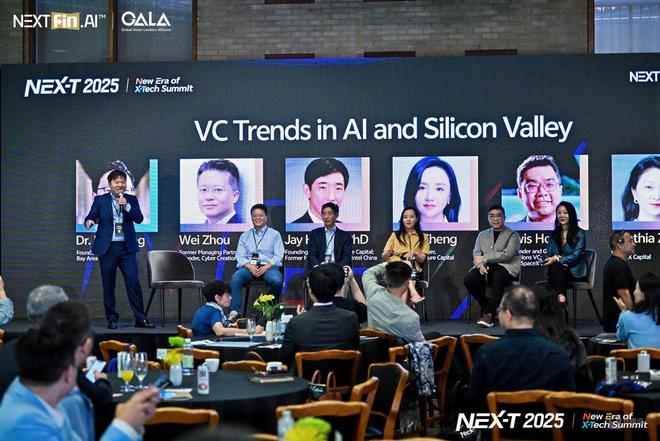
Core Insights - The global AI competition is intensifying, with emerging players beyond the US and China, highlighting the need to reassess opportunities and challenges in the next 3-5 years [2] - The NEX-T Summit 2025 held at Stanford University brought together industry leaders to discuss the future of AI and venture capital trends [2] AI Competition Landscape - The AI race has evolved from Silicon Valley to a global stage, with the US and China identified as the only superpowers in this domain [4] - There is a notable underestimation of each country's strengths, with the US potentially overlooking China's advancements in applied AI and China underestimating the US's lead in foundational models [5] - Middle Eastern countries are investing heavily in local AI startups to establish independent AI strategies, aiming to leverage their oil advantages into AI infrastructure [5] Investment Trends - In 2023, venture capital firms have invested a record $192.7 billion in AI startups, with 62.7% of US VC funding directed towards AI [8] - A significant concentration of investment is observed, with 80% of capital flowing to a few companies like OpenAI, raising questions about investment strategies for identifying the next big opportunity [8] Vertical AI Opportunities - Companies that can integrate deeply into specific industry workflows are seen as more promising investments compared to general AI models [8] - Examples of successful vertical AI applications include Subtle Medical in healthcare and Annual Robotic in logistics, showcasing the potential for innovation in niche markets [9][10] Future Market Focus - Key areas for future investment include next-generation AI content, AI hardware, and AI infrastructure, with significant market potential identified in these sectors [11] - The integration of AI with blockchain and energy management systems is also highlighted as a critical area for future growth [10][11] Conclusion - The next 3-5 years will be crucial for vertical AI applications across various sectors, including healthcare, autonomous driving, smart logistics, and energy management, presenting substantial market opportunities [12]
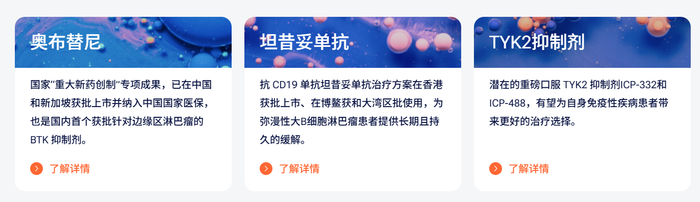
诺诚健华放弃巨头背书,奥布替尼二次出海换2.8亿美元“首付+股权绑定”
Tai Mei Ti A P P· 2025-10-09 15:15
Core Viewpoint - The recent licensing agreement between Nuo Cheng Jian Hua and Zenas has led to a significant market reaction, with Nuo Cheng Jian Hua's stock dropping while Zenas's stock surged, indicating a divergence in market sentiment regarding the deal's value and potential [1][2]. Summary by Sections Licensing Agreement Details - Nuo Cheng Jian Hua has licensed its BTK inhibitor, Oubutini, for multiple sclerosis and other autoimmune diseases to Zenas, receiving an upfront payment of $100 million, milestone payments, and 7 million shares of Zenas stock, with a total potential deal value exceeding $2 billion [1][2]. - The upfront payment and stock value combined amount to $280 million, which is considered reasonable compared to industry standards, where the average upfront payment ratio is around 8% [3]. Market Reaction and Sentiment - The market's cautious sentiment towards the deal stems from two main concerns: the upfront payment not meeting expectations and the perceived lack of recognition of Zenas as a partner [2][5]. - Nuo Cheng Jian Hua's stock fell by 6.24% in A-shares and 11.64% in Hong Kong shares, while Zenas's stock rose by 24.22% following the announcement [1]. Strategic Considerations - Nuo Cheng Jian Hua had previously engaged with multinational corporations (MNCs) but ultimately chose Zenas due to smoother communication and Zenas's strong clinical development capabilities, particularly in the field of multiple sclerosis [5][10]. - Zenas, founded in 2019 and listed on NASDAQ in 2024, currently has no commercial products but has a promising pipeline, including a dual-function monoclonal antibody that complements Oubutini [7][8]. Industry Context - The collaboration reflects a shift in the global innovation drug landscape from one-time licensing deals to deeper collaborative models, where local pharmaceutical companies can retain equity in new ventures [12]. - Nuo Cheng Jian Hua's previous partnership with Biogen ended after about 18 months, highlighting the challenges in securing long-term collaborations in the industry [11]. Future Outlook - The partnership aims to advance the development of Oubutini in treating primary and secondary progressive multiple sclerosis, with significant market opportunities projected in the U.S. alone [8]. - The success of this collaboration will depend on Zenas's ability to progress its pipeline and the overall market performance of its shares [12].