中金点睛

Search documents
中金:美联储在供给症结下克制降息
中金点睛· 2025-09-17 23:49
中金研究 美联储9月降息25个基点,符合市场预期。美联储较好回应了市场的关切,但也保持了克制。此前期待的降息50个基点并未出现,决策者对于下一步降 息存在较大分歧。往前看,由于就业数据过于疲软,我们预计联储或将于10月再次降息,但在这之后,通胀升温将使降息门槛越来越高,货币宽松空 间也将受限。当前美国经济的症结并非需求不足,而是成本上升。过度的货币宽松非但无法解决就业问题,反而可能加剧通胀,使经济陷入"类滞 胀"困境。 点击小程序查看报告原文 本次会议前,市场对于美联储降息有很高期待,由于劳动力市场疲软,投资者普遍认为美联储现在必须出手,以防止就业数据进一步下滑。 我们认为美联储较好回应了市场的关切,但也保持了克制。 首先,从政策立场看,美联储如期降息,并将就业放缓作为降息的理由。货币政策声明称, 决策者认为"就业方面的下行风险有所上升",尽管他们也认为"通胀水平有所回升,且依然偏高"[1]。换句话说,就业市场放缓的担忧压倒了对通胀的顾 虑,成为政策调整的直接推动力。 然而,市场此前期待的降息50个基点并未出现。 从投票结果来看[2],本周二刚刚就任理事的米兰投下了反对票,因其主张应降息50个基点,这符合市场 ...


中金 | AI进化论(17):解耦式推理创新,Rubin CPX驱动PCB市场迭代升级
中金点睛· 2025-09-17 23:49
Core Viewpoint - The introduction of Rubin CPX by Nvidia is expected to significantly innovate in PCB, connectors, and cooling architectures, potentially expanding the hardware market size, with the AI PCB market projected to reach $6.96 billion in 2027, a 142% increase from 2026 [2][5][32]. Group 1: Rubin CPX Innovations - Rubin CPX is designed for ultra-long context AI inference tasks, featuring a decoupled inference architecture that separates computation-intensive context processing from memory bandwidth-intensive generation stages, enhancing efficiency and performance [4][7]. - The GPU provides 30 Peta FLOPS of computing performance at NV FP4 precision and is equipped with 128GB GDDR7 memory, achieving a memory bandwidth of 2 TB/s, which offers a cost-effective solution compared to HBM [11][20]. - The hardware changes include a modular design for the tray architecture, liquid cooling upgrades, and a wireless cable structure, which collectively improve thermal management and connectivity [20][23]. Group 2: Market Impact and Projections - The estimated value of a single VR200 NVL144 cabinet PCB is approximately 456,000 yuan, with a single GPU corresponding to a PCB value of 6,333 yuan ($880), reflecting a 113% increase compared to the GB300 [5][28]. - The projected shipment volumes for 2027 are 10,000 racks across various models, leading to a total PCB market size of $6.96 billion, indicating a substantial growth trajectory for the AI PCB market [5][32]. - The anticipated PCB market sizes for 2025 and 2026 are $1.53 billion and $2.64 billion, respectively, highlighting the significant growth expected with the introduction of Rubin CPX [32].


中金:从液到固,设备先行——固态电池工艺革新驱动价值重估
中金点睛· 2025-09-17 23:49
Core Viewpoint - The solid-state battery industry is entering a critical phase of commercialization, with significant growth potential in equipment demand and technological advancements expected by 2030 [2][4]. Group 1: Market Potential - The incremental market space for solid-state battery equipment is projected to reach 2.5 billion yuan in 2027, with a compound annual growth rate (CAGR) of 122%, potentially reaching 27.3 billion yuan by 2030 [2][4]. - The value proportion of equipment in the front and mid-stages is expected to rise to 75%-80%, with new processes like dry electrode and isostatic pressing being key contributors to this growth [2][4]. Group 2: Technological Advancements - Solid-state batteries offer advantages such as high safety, energy density, and low-temperature performance compared to traditional lithium batteries, with theoretical energy densities exceeding 500 Wh/kg [6][7]. - The transition from liquid to solid electrolytes is marked by the introduction of new manufacturing processes, including dry mixing and isostatic pressing, which enhance the performance and safety of batteries [4][6]. Group 3: Industry Dynamics - Major battery manufacturers, including CATL, BYD, and LGES, are accelerating their solid-state battery development, with many aiming for small-scale production by 2027 [4][10]. - The industry is characterized by a multi-route approach to technology, with sulfide-based solid-state batteries currently leading due to their high ionic conductivity [15][17]. Group 4: Policy Support - The Chinese government has been progressively enhancing policies to support the solid-state battery industry, focusing on standardization and performance specifications from 2022 to 2025 [8][9]. - Key policies include the establishment of performance requirements for solid-state batteries, which will guide the industry's development and ensure safety and efficiency [9][10]. Group 5: Application Scenarios - Solid-state batteries are expected to find applications in electric vehicles, eVTOLs, and humanoid robots, where high energy density and safety are critical [23][25]. - The low-altitude economy is projected to grow significantly, with eVTOLs requiring batteries that meet stringent performance criteria, making solid-state batteries a suitable choice [23][25].



中金公司2025地缘经济主题研讨会成功举办
中金点睛· 2025-09-16 23:40
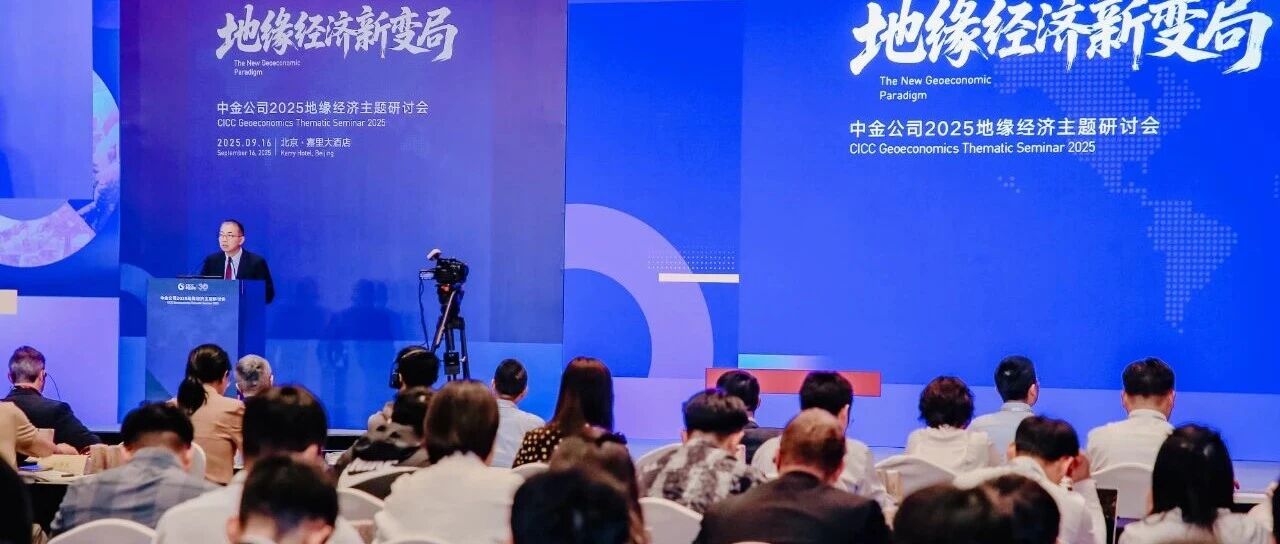
Core Insights - The seminar hosted by CICC focused on the theme of "New Changes in Geoeconomics," featuring discussions on digital finance, energy transition, strategic industries, and technological development [3][10] - The event attracted nearly 380 participants from government, industry, academia, and investment sectors, highlighting the importance of geoeconomic restructuring [2][10] Summary by Sections Opening Remarks - The seminar commenced with opening remarks from CICC Chairman Chen Liang, setting the stage for discussions on the new geoeconomic landscape [3][5] Keynote Speakers - Notable speakers included former Governor of the People's Bank of China Zhou Xiaochuan, Columbia University Professor Jeffrey D. Sachs, and Zheng Yongnian, Dean of the School of Public Policy at the Chinese University of Hong Kong (Shenzhen) [5][7] Research Publication - CICC released a joint report titled "Geoeconomics: Changes and Restructuring," analyzing the implications of geoeconomic competition and potential policy responses, which received positive feedback from attendees [7][10] Expert Discussions - The afternoon sessions featured experts from various prestigious institutions, including the University of Chicago, Fudan University, and MIT, discussing trends in geoeconomics [9][10] CICC Global Institute - CICC Global Institute aims to serve as a new think tank for public policy research and international discussions, focusing on long-term development issues in the Chinese and global economy [10]
中金:关注国内外政策走向,2027年后乙烯有望迎来拐点
中金点睛· 2025-09-16 23:40
Core Viewpoint - The Chinese ethylene industry is currently in an expansion phase, with a projected capacity increase of nearly 25 million tons over the next three years. However, a significant supply gap of over 21 million tons is expected to persist until 2024, with an import dependency rate of 31% [2][5][28]. Group 1: Current Industry Status - China's ethylene capacity has grown from 28.54 million tons in 2019 to 53.74 million tons in 2024, with a net increase of over 25 million tons driven by the expansion of private refining and integrated projects [5][7]. - Despite rapid capacity expansion, the import dependency for downstream products remains high, with polyethylene and ethylene glycol import dependency rates at 34% and 26%, respectively [5][8]. - The planned capacity for new projects from 2025 to 2027 totals 24.82 million tons, with expected annual increases of 20%, 12%, and 9% for those years [7][25]. Group 2: Global Supply Dynamics - The global ethylene supply landscape is undergoing a transformation, with an estimated net increase in global capacity of approximately 1.13 million tons in 2025, 1.57 million tons in 2026, and 840,000 tons in 2027, reflecting growth rates of 4.9%, 6.5%, and 3.3% respectively [3][25]. - Significant capacity exits are anticipated in Europe and Japan, with a total of 597 to 830 million tons expected to be shut down between 2025 and 2027, representing 3-4% of global capacity [2][24][25]. - The exit of older, less competitive capacity in Europe and Japan is driven by high production costs, with European ethylene production costs estimated at $885 per ton, significantly higher than the $200-$350 per ton costs in the U.S. and Middle East [16][19]. Group 3: Future Outlook - The ethylene industry is expected to reach a turning point post-2027, with potential marginal improvements in the market as new capacity aligns more closely with demand growth, which has historically been around 3.5% annually [3][25]. - If domestic and international policies effectively control new capacity and restructure older facilities, the industry may see accelerated recovery and a shift towards net exports by 2027 [39][40]. - The Chinese ethylene market is projected to account for approximately 35% of global capacity by 2027-2028, with a significant portion of new capacity concentrated in China and the Middle East [28][29].

地缘经济论 | 第一章 在依赖中制衡:从地缘政治到地缘经济
中金点睛· 2025-09-16 23:40
Core Viewpoint - The article discusses the evolution of international competition from traditional geopolitical dynamics to geoeconomic strategies, emphasizing the strategic use of economic tools to influence global relations and decision-making among nations [2][3]. Group 1: Transition from Globalization to Geoeconomic Competition - The rise of geoeconomics reflects a shift where economic tools are increasingly used to achieve national strategic goals, particularly evident in U.S. policies under the "America First" framework [4][6]. - Economic sanctions and trade barriers have become more prevalent, with a notable increase in their use since 2017, surpassing traditional military interventions [4][6]. - Geoeconomics provides a new analytical perspective that integrates international relations and economics, focusing on the strategic use of economic tools [3][6]. Group 2: Asymmetric Dependence in Economic Globalization - The article highlights that globalization has led to unprecedented economic interdependence among nations, characterized by asymmetrical dependencies that create opportunities for economic competition [7][10]. - The U.S. maintains a dominant position in the global financial system, leveraging its control over the dollar to influence international economic relations [10][12]. - Emerging economies, particularly China, are increasingly becoming critical players in global supply chains, reducing their dependency on traditional economic powers [18][19]. Group 3: Characteristics of Geoeconomic Competition - Geoeconomic competition is likely to become a new norm due to the changing nature of international conflicts, where economic tools are preferred over military options [19][20]. - Economic measures are flexible and controllable, allowing governments to adjust their strategies without escalating conflicts unnecessarily [19][20]. - The effectiveness of geoeconomic tools is contingent upon the nature of the issues at stake and the ability of nations to adapt to changing dependencies [20][21]. Group 4: Economic Tools and Their Classification - Economic tools in geoeconomic competition can be categorized based on strategic intent (offensive vs. defensive) and intervention methods (inducement vs. sanctions) [22][23]. - The classification framework helps in understanding how nations utilize economic resources to influence others' behaviors or capabilities [22][23]. Group 5: Sources of Economic Power - Economic power is derived from a nation's resource endowment and its control over key nodes in the global economic network [27][30]. - A country's ability to exert economic pressure is fundamentally linked to its economic endowment, including natural resources, capital, and technological capabilities [28][30]. - Control over critical nodes in global supply chains enhances a nation's influence, allowing it to leverage its economic advantages effectively [30][31]. Group 6: Quantitative Analysis of Geoeconomic Power - The article proposes a framework for quantifying economic power based on input-output networks, highlighting the interconnectedness of global economies [32][33]. - Key industries and their roles in the global economy are analyzed to identify critical nodes that hold significant leverage in geoeconomic competition [33][36]. - The evolution of supply and demand networks from 2000 to 2023 illustrates shifts in economic power dynamics among major economies, particularly the rise of China as a regional center [44][47].

中金:如果7天免赎成为历史,公募债基投资如何破局?
中金点睛· 2025-09-16 23:40
Core Viewpoint - The third phase of the public fund industry fee reform has officially started, focusing on the adjustment of sales fees to encourage long-term holding and reduce irrational short-term trading behaviors [2][9][11]. Group 1: Fee Reform Overview - In July 2023, the China Securities Regulatory Commission (CSRC) released the "Public Fund Industry Fee Reform Work Plan," marking the beginning of the third phase of fee reform [2][9]. - The reform aims to lower the comprehensive fee levels of public funds through a gradual approach, focusing on management fees, transaction fees, and sales fees [9][11]. - The proposed adjustments to redemption fees include a tiered structure for different holding periods, with a minimum of 1.5% for holdings under 7 days and 0.5% for holdings between 30 days to 6 months [12][11]. Group 2: Impact on Fund Market - The new redemption fee structure is expected to clarify the positioning of public products, distinguishing between long-term holding for off-market funds and active trading for ETFs [15][14]. - Frequent trading costs for bond funds are likely to increase, making it difficult for them to serve as tools for short-term trading, thus creating opportunities for bond ETFs [16][14]. - The cost of short-term adjustments for public funds of funds (FOFs) is expected to rise, leading to a trend towards ETF-based investment strategies [21][20]. Group 3: Recommendations for Investors - Investors are advised to optimize their pure bond fund management by using actively managed funds as a base, complemented by bond ETFs for market timing and liquidity management tools [29][31]. - A comprehensive evaluation system for bond ETFs is recommended, focusing on liquidity, tracking ability, and strategy uniqueness [31][32]. - The investment strategy for "fixed income plus" funds may polarize into long-term stable products and high-volatility aggressive products, maintaining a balance between risk and return [33][24]. Group 4: Future Product Development Directions - There is a significant opportunity for the development of bond ETFs, particularly in niche themes and strategies, as the market for these products is expanding rapidly [36][41]. - The diversification of institutional investors in bond ETFs is increasing, with a notable shift in the types of institutions holding these products [37][41]. - Future product innovations may include multi-asset ETFs and fixed-income ETFs, addressing the evolving needs of institutional investors [42][41].

诚邀体验 | 中金点睛数字化投研平台
中金点睛· 2025-09-16 23:40
Core Viewpoint - The article emphasizes the establishment of a digital research platform by CICC, aimed at providing efficient, professional, and accurate research services by integrating insights from over 30 specialized teams and covering more than 1800 individual stocks [1]. Group 1: Research Services - CICC's digital research platform, "CICC Insight," offers a one-stop service that includes research reports, conference activities, fundamental databases, and research frameworks [1]. - The platform is designed to deliver daily updates on research focuses and timely articles through the "CICC Morning Report" [4]. - It features live broadcasts where senior analysts interpret market hotspots, enhancing the accessibility of expert insights [4]. Group 2: Data and Frameworks - The platform includes over 160 industry research frameworks and 40 premium databases, providing comprehensive industry data [10]. - It also offers a "CICC Insight Big Model" that utilizes AI technology for intelligent search and question-answering capabilities, facilitating user inquiries [10]. Group 3: User Engagement - Users can unlock upgraded features by verifying their email, enhancing their experience on the platform [8]. - The platform aims to create an open and shared knowledge base in the financial industry, promoting collaboration and information exchange [1].

中金9月数说资产
中金点睛· 2025-09-15 23:31
Core Viewpoint - The demand continues to decline and is still searching for a bottom, with various economic indicators showing signs of weakness in August [4][10]. Demand Analysis - In August, the total retail sales (社零) grew by 3.4% year-on-year, a slowdown of 0.3 percentage points compared to July, marking the third consecutive month of decline [4][10]. - The structure of retail sales reflects a continued slowdown, particularly in the "old-for-new" category, which saw a decrease from 5.0% to 4.4% in growth [4][10]. - High-frequency data indicates that retail sales of home appliances and passenger vehicles have shown negative year-on-year growth since September, suggesting significant pressure on retail growth for the remainder of the year [4][10]. Fixed Asset Investment - Cumulative fixed asset investment growth fell to 0.5% year-on-year in the first eight months, down from 1.6% in July, with a month-on-month seasonally adjusted decline of 0.2% [5][6]. - The construction and installation sector remains a major drag, contributing a 1.6 percentage point decline to fixed asset investment, which has widened by 1.0 percentage points compared to the first seven months [5][6]. - Investment in real estate, infrastructure, and manufacturing showed year-on-year declines of -12.9%, +5.4%, and +5.1%, respectively, with all sectors experiencing a decrease compared to the previous month [5][6]. Real Estate Market - The sales area of newly built commercial housing in August saw a year-on-year decline of -10.6%, worsening from -7.8% in July, while the sales amount remained stable at -14.0% [28][29]. - The funding situation for real estate companies improved slightly, with the year-on-year decline in funds received narrowing to -11.9% from -15.8% in July, but new construction and project areas continue to show significant declines [29][30]. - The overall real estate sales volume and price improvement is contingent upon effective policies that enhance supply and demand dynamics [29][30]. Production Sector - The industrial value-added and service production indices in August were 5.2% and 5.6% year-on-year, respectively, indicating a continued decline in production growth [8][10]. - The export delivery value turned negative in August, with a year-on-year decline of -0.4%, reflecting weak domestic demand and certain industry pressures [8][10]. Market Performance - Despite the weak economic data, the A-share and Hong Kong stock markets have shown strong performance, reaching new highs for the year, driven by emotional and liquidity factors [10][11]. - The market's short-term volatility is expected to increase, but the underlying bullish trend remains intact, supported by structural improvements in key industries [11][12].

中金:股市配置的空间
中金点睛· 2025-09-15 23:31
Core Viewpoint - Financial cycle adjustments lead to significant changes in asset allocation, with a systematic increase in the proportion of safe assets and a decrease in real estate allocation, while stock assets may see a systematic increase [2][3][4]. Group 1: Financial Cycle Adjustments - Financial cycle adjustments indicate a shift in economic growth models, emphasizing efficiency improvements from technological innovation and population quality [3][4]. - The analysis shows that after a peak in real estate prices, the proportion of safe assets increases by over 5 percentage points in the fifth year, while real estate allocation decreases by about 8 percentage points, and stock allocation increases by approximately 3 percentage points [2][3]. - In the sixth to tenth years post-peak, safe asset allocation rises by around 5 percentage points, real estate allocation declines by about 10 percentage points, and stock allocation increases by approximately 5 percentage points [2][3]. Group 2: Asset Allocation Changes - The adjustment in the financial cycle leads to a significant change in investor risk preferences, with a tendency for safe assets to increase in allocation [5][6]. - International experiences show that after a financial cycle peak, the proportion of real estate in household asset allocation decreases systematically, while stock-related assets increase [7][10]. - For example, in the U.S., even after real estate prices recovered to previous highs, the allocation to real estate decreased from 45.0% to 36.0%, while stock-related assets increased from 36.9% to 44.4% [8][10]. Group 3: Impact on Chinese Market - In China, the proportion of safe assets in urban households is estimated to rise from about 16% in 2021 to approximately 27% by Q3 2025, while real estate allocation is expected to decrease from 74% to 58%, and stock-related assets to increase from 9% to 15% [16][17]. - The shift in monetary policy, particularly the increase in fiscal contributions to money supply, is expected to support the rise of stock allocations while reducing the appeal of real estate investments [17][20]. - The analysis indicates that the stock market's elasticity to monetary supply has increased, while the elasticity of the real estate market has decreased, suggesting a shift in investor focus towards equities [22][24]. Group 4: Sector Performance and Valuation - The differentiation in return on equity (ROE) and return on assets (ROA) between traditional and new economy sectors has become more pronounced, with new economy sectors showing improvement while traditional sectors lag [51][52]. - The valuation of new economy sectors has increased significantly, while traditional sectors have seen little change, indicating a potential need for traditional sectors to improve their valuations to sustain market growth [56][57]. - The analysis of A-share market performance shows that the new economy sectors have outperformed traditional sectors, aligning with the broader trend of efficiency-driven growth [59].