半导体芯闻

Search documents
英特尔工厂延期后,德国悄悄发力芯片
半导体芯闻· 2025-12-03 10:28
Core Insights - Germany has initiated a significant semiconductor funding program since the EU Chip Act came into effect, primarily aimed at supporting Intel's long-delayed €30 billion (approximately $34.8 billion) wafer fab project in Magdeburg [1] - The funding is being diversified across various technology projects, including mature node capacity in Dresden and quantum sensor-based measurement devices in Munich [1] - The urgency for this funding stems from the EU Chip Act's project tender announcement expected by the end of 2024, marking a shift from direct negotiations to a structured bidding process [1][2] Funding Allocation and Concerns - The funding plan includes €2 billion (approximately $2.3 billion) to ensure Intel's subsidies are not diverted to non-semiconductor projects, as the German budget faces pressure with €3 billion (approximately $3.4 billion) reallocated to general infrastructure [2] - There is a concern that remaining microelectronics funds, estimated at €7 billion to €8 billion (approximately $8.1 billion to $9.2 billion), may be diluted if not quickly deployed for reliable industrial projects [2] Project Timeline and Demand - The project solicitation is set to begin in mid-November 2024 and conclude in early January 2025, with industry demand significantly exceeding supply, as companies have requested approximately €6 billion (approximately $6.9 billion) in funding, three times the available amount [3] - A legal document allowing companies to "self-assume risk" and start work before final funding approval has been issued, although no projects have yet received binding funding grants [3][4] Approval Process and Political Support - Projects must first receive approval from the EU Commission's competition authority before public funds can be disbursed, with German ministries expressing support but awaiting final approval from Brussels [5] - A high-profile event by GlobalFoundries marked the formal launch of its factory expansion project under the EU Chip Act, attended by top German officials, emphasizing the political backing for semiconductor industry ambitions [5][6] Regional Dynamics and Competitive Landscape - The new funding structure has created competitive dynamics among German states, with Bavaria benefiting from a more favorable funding model compared to Saxony, which faces greater pressure due to its larger semiconductor cluster [7] - As multiple projects receive early approval, Germany aims to reshape its semiconductor landscape beyond a few large fabs, focusing on mature process nodes, memory projects, and core materials and chemicals [8] Future Outlook - Despite Intel's initial plans being canceled, Germany remains committed to developing its microelectronics industry, accelerating various innovative projects to prevent strategic funds from being diverted to other sectors [9]



大芯片封装需求,大增
半导体芯闻· 2025-12-03 10:28
Core Insights - The rapid development of artificial intelligence and high-performance computing has led to an increasing demand for heterogeneous integration, making advanced packaging technology a strategic focus [1] - TSMC's CoWoS platform is currently the leading solution in the field, but chip service providers are considering a shift to Intel's EMIB technology due to rising demands for packaging size and complexity [1][2] Group 1: CoWoS Technology - CoWoS technology connects computing logic, memory, and I/O chips through an intermediary layer, with various expansions like CoWoS-S, CoWoS-R, and CoWoS-L [1] - The market is rapidly shifting towards CoWoS-L as NVIDIA's Blackwell platform approaches mass production in 2025, which integrates silicon intermediary layers into the packaging [1] - CoWoS technology faces significant bottlenecks, including capacity shortages and rising manufacturing costs, primarily due to NVIDIA GPU occupying most of the CoWoS capacity [2] Group 2: EMIB Technology - Intel's EMIB offers several advantages over TSMC's CoWoS, such as direct integration of small silicon bridges into the substrate, which simplifies structure and improves production yield [2] - EMIB supports larger effective mask size expansions, with EMIB-M already supporting 6 times expansion, expected to reach 8-12 times by 2026-2027, compared to CoWoS's limits of 3.3 and 3.5 times [3] - EMIB is seen as a more cost-effective solution for AI customers needing ultra-large packaging due to the elimination of intermediary layers [3] Group 3: Market Implications - Intel has invested years in developing EMIB technology since establishing its independent foundry services (IFS) division in 2021, successfully applying it to server CPU platforms [4] - Major North American CSPs like Google and Meta are collaborating with Intel to adopt EMIB, which could significantly drive IFS growth [4] - Despite the potential of EMIB, CoWoS is expected to remain the primary packaging solution for NVIDIA and AMD's high-bandwidth products in the foreseeable future [4]


台积电A16 首发,唯一合作客户曝光
半导体芯闻· 2025-12-02 10:35
Group 1 - Nvidia is likely to become the sole customer for TSMC's A16 process (1.6 nm), with plans to integrate this technology into its next-generation GPU "Feynman" [1] - TSMC is accelerating the construction of its Kaohsiung P3 plant to start mass production for Nvidia by 2027, in response to Nvidia's significant demand for 3 nm chips and to prepare for A16 [1] - The A16 process utilizes nanosheet transistor architecture and SPR backside power delivery technology, which enhances logic density and reduces power drop, achieving an 8-10% speed increase and a 15-20% reduction in power consumption at the same voltage compared to N2P [1] Group 2 - Other major foundries are also advancing backside power delivery technology, with Samsung announcing plans to mass-produce BSPDN (backside power delivery network) process SF2Z by 2027, and Intel's PowerVia architecture set for the 2026 18A process node [2] - According to Nvidia's product roadmap, the Vera Rubin is expected to launch in the second half of 2026, Rubin Ultra in the second half of 2027, and Feynman in 2028, with A16 anticipated to be a key process for this generation of GPUs [2]
英特尔先进封装发威
半导体芯闻· 2025-12-02 10:18
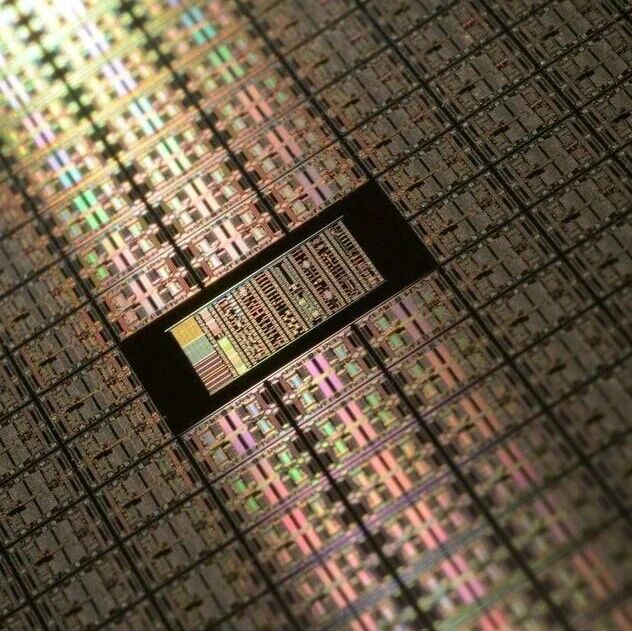
Core Viewpoint - Intel is advancing its AI semiconductor packaging technology at the Amkor factory in Incheon, South Korea, marking the first time it has outsourced this process, which was previously developed exclusively in its own fabs [1][2]. Group 1: AI Semiconductor Packaging Technology - Intel has established the advanced packaging technology "EMIB" at the Amkor K5 factory, which was chosen for its advanced equipment and infrastructure to support major North American tech companies like Nvidia and Apple [1][2]. - EMIB is a 2.5D packaging technology that connects different semiconductors, enhancing performance and cost-effectiveness compared to traditional silicon interposers [1][2]. - The next-generation EMIB technology, "EMIB-T," is set to enter mass production next year, integrating through-silicon vias (TSV) to improve speed and performance, which is crucial for AI semiconductor applications [2][4]. Group 2: Advanced Packaging Techniques - Intel has announced breakthroughs in multiple chip packaging technologies, including EMIB-T, which enhances chip size and power delivery capabilities, supporting new technologies like HBM4/4e [3][4]. - The new EMIB-T technology improves power efficiency and communication speed between chips, addressing voltage drop issues present in traditional EMIB connections [4][5]. - EMIB-T supports larger chip packaging sizes up to 120x180 mm and is compatible with organic or glass substrates, which are key directions for Intel's future packaging strategy [5][6]. Group 3: Thermal Management Innovations - Intel is addressing thermal challenges associated with increased chip packaging sizes and power consumption by introducing a new decoupled heat sink technology that improves thermal interface material coupling [5][6]. - The company is also developing a new thermal bonding process specifically for large packaging substrates, enhancing yield and reliability while supporting smaller EMIB connection pitches [6][7]. Group 4: Competitive Positioning in Chip Packaging - Intel's comprehensive and competitive packaging technology is essential for providing a full range of chip production solutions, allowing integration of chips from various suppliers into a single package [7]. - The company is expanding its packaging services to external clients, including major industry players like AWS and Cisco, as well as government projects, which are crucial for rapid revenue generation in its foundry business [7].
MLCC,需求大增
半导体芯闻· 2025-12-02 10:18
上季(2025年7-9月)村田整体接获的订单额为4,870亿日圆、较去年同期大增14.1%,其中电容订单 额大增18.1%至2,418亿日圆。 全球积层陶瓷电容(MLCC)龙头厂村田制作所(Murata Mfg)预估AI伺服器用MLCC将以年平均成长 率30%的速度呈现扩大、2030年度需求将扩增至2025年度的逾3倍水准。 共同通信报导,村田制作所社长中岛规巨1日在横滨市举行的事业战略说明会上表示,2030年度AI 伺服器用MLCC需求预估将成长至2025年度的3.3倍。随着AI伺服器处理能力提升、搭载的MLCC 数量也随之增加,村田制作所此次公布的预估值较去年11月公布的预估值进行上修。 中岛规巨指出,关于AI伺服器用MLCC需求、「是以预估年平均成长率30%左右、来作准备」。 截至日本股市2日早盘收盘(台北时间上午10点30分)为止,村田制作所涨0.40%、暂收3,237日圆, 今年迄今股价累计大涨约26%。 村田制作所10月31日公布财报资料指出,因AI伺服器及周边机器搭载的电子零件数量增加,带动 该公司产品需求扬升,今年度(2025年度、2025年4月-2026年3月)合并营收目标自1.64兆日圆上 ...
台积电2nm,疯狂扩产
半导体芯闻· 2025-12-02 10:18
Group 1 - The core viewpoint of the article is that TSMC is accelerating its capacity expansion for 2nm process technology to solidify its market dominance in advanced semiconductor foundry services, with plans to increase monthly production capacity significantly by 2027 [1][2]. - TSMC plans to raise its 2nm wafer capacity to approximately 150,000 wafers per month by 2027, compared to its current capacity of about 40,000 wafers per month, with an interim target of 80,000 to 90,000 wafers per month next year [1]. - UBS forecasts that while the 2nm process will account for less than 10% of TSMC's sales next year, this figure is expected to grow to 15-20% by 2027 [1]. Group 2 - TSMC holds a dominant position in the advanced semiconductor market, with a market share of 70.2% in the foundry sector as of Q2 this year, producing chips for major companies like Apple, Qualcomm, Nvidia, Google, and AMD [2]. - TSMC is planning to build three new 2nm fabrication plants in Taiwan to meet the increasing demand for AI chips, with a total investment of approximately 900 billion New Taiwan Dollars (around 4.21 trillion Korean Won) [2]. - Competitors like Samsung and Intel are also ramping up production to catch up with TSMC, with Samsung expected to double its wafer capacity to 21,000 wafers next year and Intel launching its 18A (1.8nm) process at its Arizona facility [3].
美国投资了一家EUV光刻机公司
半导体芯闻· 2025-12-02 10:18
Core Viewpoint - The Trump administration has agreed to invest up to $150 million in xLight, a startup focused on developing advanced semiconductor manufacturing technology, as part of its efforts to support strategically important domestic industries [1][2]. Group 1: Investment and Government Support - The U.S. Department of Commerce will provide incentives to xLight, which is working on improving the extreme ultraviolet (EUV) lithography technology critical for chip manufacturing [1][2]. - This investment utilizes funds from the 2022 CHIPS and Science Act, marking the first allocation from this act during Trump's second term [2]. - The agreement is still preliminary and subject to change, indicating that final terms have not yet been established [2]. Group 2: Technology and Innovation - xLight aims to build large "free electron lasers" powered by particle accelerators to provide more powerful and precise light sources for chip manufacturing [2][3]. - The company’s technology could potentially improve wafer processing efficiency by 30% to 40% and reduce energy consumption compared to current light sources [3]. - If successful, xLight's advancements could significantly enhance the economic viability of existing EUV lithography technology and lay the groundwork for future developments in the field [4]. Group 3: Leadership and Vision - Pat Gelsinger, former CEO of Intel, is now the executive chairman of xLight and views this venture as a significant opportunity to revive his career [1][3]. - Gelsinger has expressed a commitment to "awaken" Moore's Law, which predicts that the number of transistors on a chip will double approximately every two years [3]. - The startup has raised $40 million from investors, including Playground Global, where Gelsinger is a general partner [3].
定档12月6日!集成电路产业人才论坛报名开启!
半导体芯闻· 2025-12-02 10:18
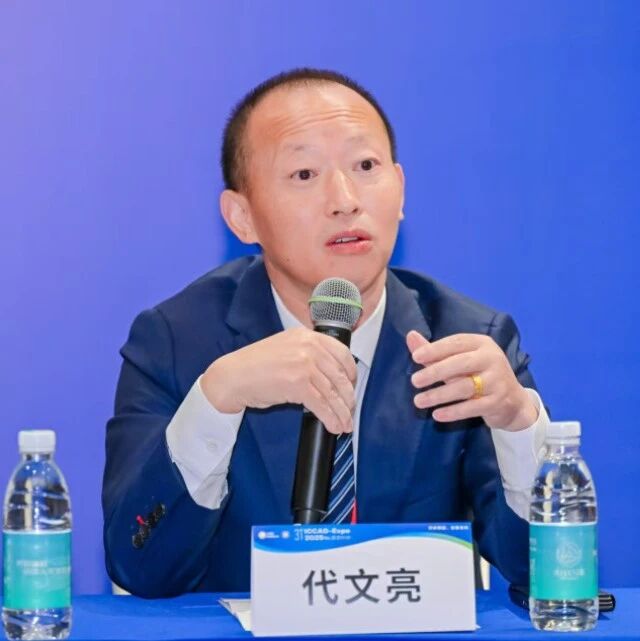
2025浦东国际人才港论坛 集成电路产业人才论坛 将于12月6日在张江科学会堂举办 敬请期待! 识别下方二维码 参与活动报名 03 产才报告, 为进一步促进集成电路国际人才交流与发展, 多维度探讨全球人才发展创新机遇与挑战,推动集 成电路产业高质量发展,由上海市浦东新区人才工 作局指导,上海张江高科技园区开发股份有限公司 主办,上海张江浩芯企业管理有限公司、复旦大学校 友总会集成电路行业分会承办的"2025浦东国际人 才港论坛 ·集成电路产业人才论坛"将于2025年12月 6日在上海张江科学会堂举行。 对集成电路领域人才 发展研究进行专业剖析 与数据解构,揭示行业动 向与成长路径。 时间地点 时间:2025年12月06日13:30-16:00(星期六) 地点:张江科学会堂(海科路1393号)二楼张江厅A LT 01 習演趋势, 关注产业人才吸引与 发展的新动向,呈现技术 成果落地应用的典范实 例,讲述具有启示意义的 创新历程。 02 精英共论, 融通未来 集结产业、学术与研 究领域的领军人物,展开 跨学科尖端科技的深入 探讨与理念交锋。 04 专项展区, 04 聚焦"芯"生态 14:15-14:30 光计算如 ...
DDR已被HBM超越
半导体芯闻· 2025-12-02 10:18
Core Insights - Major global IT companies are heavily investing in artificial intelligence and acquiring significant amounts of DRAM and flash memory, while smaller capacity PC memory and solid-state drives are facing price increases and supply shortages [1] - The primary driver of rising memory prices is demand from AI-related enterprises, with plans to double production capacity and processing power over the next three years [1] - Major DRAM suppliers have halted production of DDR4 products and announced price increases, leading to significant cost increases for PC manufacturers [1][2] Summary by Sections - **Memory Price Trends**: Memory prices have been rising since October, significantly increasing the sales costs for PC manufacturers, which are expected to raise new product prices by at least 20% next year [1] - **Supply Chain Challenges**: A procurement manager noted that memory price fluctuations have become more pronounced, with prices doubling every ten days, and even large companies may only receive about half of their orders next year [1][2] - **Impact on PC Manufacturers**: Major PC manufacturers are suffering losses as they have not reflected the increased costs of memory and solid-state drives in their product prices, leading to a situation where new PC products are already in a loss-making state [2] - **Future Production Adjustments**: The only solution to the rising costs is for major memory manufacturers to increase production of DDR5 and LPDDR5 memory, but they are currently focused on high-value products like HBM [2] - **Market Forecast Adjustments**: Global market research firms have downgraded their forecasts for PC shipments next year due to limited memory supply, which may lead to further declines in shipment volumes [2] - **Distribution Model Changes**: The distribution model for personal computers is expected to change, with no discounts on inventory likely until at least 2028, as manufacturers cannot afford to have excess stock while struggling to produce necessary products [3]
人工智能时代,EDA巨变
半导体芯闻· 2025-12-02 10:18
Core Viewpoint - The semiconductor industry is undergoing a significant transformation driven by AI, which is leading to a shift from traditional SoC designs to Chiplet architectures, enhancing performance and flexibility in chip design [2][5][9]. Group 1: Chip Design Evolution - The traditional SoC design is becoming inadequate due to increasing demands for AI processing power and the challenges posed by advanced manufacturing processes [5][6]. - The Chiplet model allows for the separation of different functional modules, improving yield and flexibility while enabling heterogeneous integration of various manufacturing processes [5][6]. - The transition from SoC to CoWoS (Chip on Wafer) can enhance bandwidth by 4 to 8 times, and moving towards SoW (System on Wafer) can increase scale by up to 40 times [6]. Group 2: EDA's Role in AI - EDA (Electronic Design Automation) must evolve to support the new demands of AI, requiring a shift from chip-level considerations to system-level integration, including power, thermal management, and interconnects [7][9]. - The introduction of AI into EDA processes aims to transition from rule-driven design to data-driven design, significantly improving design efficiency [9][10]. - The company is focusing on a dual strategy of "EDA FOR AI" and "AI+EDA," leveraging its expertise in Chiplet and system design to support AI chip development [9][10]. Group 3: Future Directions - The integration of AI into EDA tools is expected to lead to continuous learning and iteration, transforming EDA from a passive tool to an active collaborator in the design process [12]. - The next phase of AI development is anticipated to be the era of physical AI, where multi-physical simulation technologies will play a crucial role [12].