美股研究社

Search documents
从99%到99.99%,Robotaxi正在跨越“最后一公里”?
美股研究社· 2025-05-14 10:28
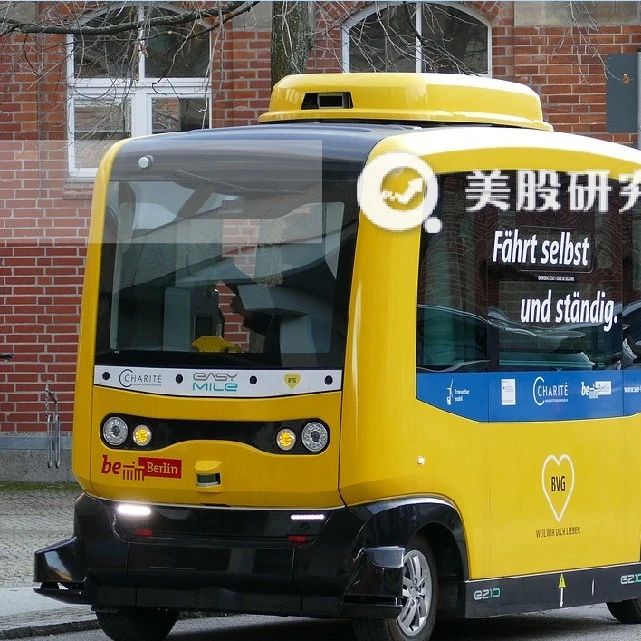
Core Viewpoint - The year 2025 is anticipated to be a breakthrough year for the integration of autonomous driving and artificial intelligence, with significant advancements in Robotaxi services and AI capabilities [1]. Group 1: Industry Developments - Tesla plans to launch a "fully autonomous" Robotaxi service in Austin, Texas, in June 2025, and aims to mass-produce the CyberCab model without a steering wheel by 2026 [1]. - Elon Musk's AI company xAI has raised $6 billion to enhance Tesla's autonomous driving technology, indicating a strong push towards a supercomputing factory [1]. - Global ride-hailing giants Uber and Lyft are collaborating with Waymo and Mobileye to accelerate the commercialization of autonomous driving, with both companies reporting significant progress in their recent quarterly earnings [1][3]. Group 2: Technological Advancements - Tesla's Full Self-Driving (FSD) system has accumulated over 1.6 billion miles of driving data, with the upcoming FSD V13 expected to increase the necessary takeover mileage by six times [3]. - The FSD V12 version utilizes end-to-end neural network technology to achieve "human-like" driving decisions, capable of handling complex scenarios [3]. - The competition in the Robotaxi market is characterized by two main camps: cost-driven and ecosystem-driven, with companies like Waymo leveraging Google's ecosystem for high-value scenarios [4]. Group 3: Market Potential and Financial Insights - The global market for Robotaxi services is projected to exceed $2 trillion by 2030, driven by technological breakthroughs and capital influx [5]. - Waymo's valuation has surpassed $45 billion, and Uber's stock has risen by 46.05% year-to-date due to its autonomous driving collaborations [5]. Group 4: Business Model Transformation - The traditional automotive business model centered on hardware sales is being disrupted by a data-driven, service-oriented ecosystem model [7]. - Tesla's "shared economy + subscription model" is expected to significantly alter its revenue structure, allowing vehicle owners to earn income from idle cars [9]. - Uber's strategy focuses on a light-asset platform approach, integrating third-party technologies to mitigate high costs associated with building its own fleet [9]. Group 5: Global Competitive Landscape - Chinese companies are leveraging cost advantages and local operational strategies to penetrate markets like the Middle East, with successful deployments of Robotaxi services [10][14]. - The regulatory environment in the U.S. varies significantly, with Texas being more permissive for autonomous vehicle testing compared to California's stringent regulations [12][13]. - Chinese firms are forming a self-sufficient supply chain in critical areas such as lidar and high-precision mapping, which could diminish Tesla's global procurement advantages [14][15].





Meta:前景乐观,但创新和利润风险依然存在
美股研究社· 2025-05-14 10:28
Core Viewpoint - Wall Street is optimistic about Meta's Q1 2025 performance, with stock prices rising approximately 8% due to a 16% year-over-year revenue growth driven by pricing recovery and strong ad exposure [1] Group 1: Financial Performance - Revenue growth is attributed to AI-driven targeted advertising and the monetization of Reels, benefiting from the ongoing TikTok ban in the U.S. [1] - Earnings met expectations, and the subsequent rebound indicates confidence, especially as Meta's index has corrected about 34% from its peak [1] - The company has slightly raised its performance guidance, with engagement metrics showing no signs of saturation [1] Group 2: Reality Labs and Investment Concerns - Analysts are closely monitoring the status of Reality Labs, which continues to incur significant losses, raising concerns about the long-term viability of its metaverse investments [2] - Despite some revenue from the metaverse, its attractiveness remains low, and competitors like Microsoft and Disney have scaled back their metaverse plans [2] - The potential for VR as a next-generation computing platform is acknowledged, but the market is questioning whether Meta will abandon its ambitious Reality Labs projects [2][3] Group 3: Capital Expenditure and Profitability - Meta's capital expenditure is expected to rise significantly, with guidance adjusted to $64 billion to $73 billion, which may pressure profit margins [6][8] - The increase in R&D spending and potential strategic hiring could further impact operating profit margins and free cash flow [6] - The pressure on free cash flow margins may lead to a reduction in share buybacks, which have been a support for stock prices [8] Group 4: Valuation and Market Sentiment - Meta's valuation is becoming a critical consideration, with its expected P/E ratio remaining competitive despite potential profit margin compression [10][12] - The market has not yet shown signs of significant overvaluation, but any delays or failures in R&D could pressure the P/E ratio [10] - Long-term investors may find value in Meta's future business preparations, while short-term investors are advised to be cautious due to potential mid-term valuation declines [12]


巨大逆风下,谷歌仍保持增长
美股研究社· 2025-05-13 10:58
作者 | Michael Del Monte 编译 | 华尔街大事件 谷歌 ( NASDAQ: GOOG )最近收到了针对其广告和搜索业务的负面监管裁决,这可能会使 整个公司面临核心业务剥离的风险。尽管 谷歌剥离 这些业务的可能性不大,但推翻裁决可能会 对公司起到积极的催化作用。 从业务角度来看, 谷歌的谷歌云业务在收入增长和利润率提升方面取得了显著进展,预计其增长 将在 2025 财年下半年加速。考虑到当前的增长机会,分析师认为谷歌的股价应为每股 185 美 元,相当于 2026 财年企业价值倍数 (EV/EBITDA) 的 13.55 倍。 2024 年 8 月, 谷歌还获得了一项负面裁决,指控 谷歌 与其网络浏览器开发商、智能手机制造 商和无线运营商一起, 在搜索服务和文字广告方面保持垄断地位。尽管有这项裁决,但 谷歌可 能面临额外的压力,因为它越来越多地使用 OpenAI 和 Perplexity 等人工智能搜索应用程序。因 此, 谷歌搜索量从 2022 年的 93% 下降 到 90%。谷歌在搜索领域失去份额的原因可能有很多。 我怀疑这主要是因为它能够使用更复杂的输入进行搜索,并能够接收更结构化的输出 ...


为什么纽蒙特是2025年的最佳投资对象
美股研究社· 2025-05-13 10:58
Core Viewpoint - Newmont Corporation is positioned as a strong investment opportunity due to its robust financial performance, strategic asset management, and favorable market conditions for gold, driven by economic uncertainty and rising gold prices [1][10]. Financial Performance - In Q1 2025, Newmont's net income surged to $1.9 billion, over ten times the amount from the same period last year, with adjusted earnings per share at $1.25, exceeding analyst expectations [3]. - Free cash flow reached $1.2 billion, marking a significant achievement despite a production decline to 1.54 million ounces due to recent asset sales [3]. - The total sustaining cost per ounce was $1,651, but the net profit margin improved, with the revenue-cost gap remaining well above $1,000 per ounce [3]. Asset Management - Newmont has strategically divested six smaller, less profitable mines, generating over $4 billion in cash, and is now focusing on 11 long-life, lower-cost mines [1][4]. - The company has a strong balance sheet with $4.7 billion in cash and total debt of $7.5 billion, resulting in a net debt to EBITDA ratio of 0.3 [3][4]. Growth Prospects - Newmont anticipates a total production of 5.6 million ounces for 2025, with over half expected in the second half of the year, driven by projects like Ahafo North in Ghana and the Tanami expansion in Australia [7]. - The company aims to increase production to 6.4 million ounces annually by 2027, supported by the expansion of the Cadia mine and growing global demand for precious metals [7]. Market Conditions - Economic uncertainty, inflation risks, and geopolitical tensions are driving demand for gold, with prices soaring to $3,325 per ounce [1]. - Newmont's diversified operations, including increased copper production post-Newcrest acquisition, reduce operational risks and align with global electrification trends [7][8]. Valuation and Returns - Newmont's forward P/E ratio is approximately 13, with an EBITDA multiple of about 6.4, indicating attractive valuation compared to peers [10][11]. - The company offers a dividend yield of around 2%, with potential for increase if gold prices remain high, alongside an ongoing stock buyback program [10].


4月CPI前瞻:CPI报告或暗藏“炸弹”,四大趋势不得不知!
美股研究社· 2025-05-13 10:58
Core Viewpoint - The article discusses the anticipated release of the U.S. Consumer Price Index (CPI) data for April, highlighting the potential market reactions and the implications of recent U.S.-China trade negotiations on inflation trends [3][4]. CPI Predictions - Wall Street expects the overall CPI month-on-month to record 0.3%, up from -0.1% last month, and the year-on-year CPI to remain steady at 2.4% [4]. - Core CPI month-on-month is predicted to be 0.3%, an increase from 0.1% in March, with a wide forecast range from 0.0% to 0.6% [4]. Trade Impact on Inflation - Economists believe the upcoming CPI report will reflect the impact of recent tariff measures, although the actual effect may be limited due to prior imports [4][5]. - The temporary tariff reduction agreement between the U.S. and China may lead to inventory replenishment by retailers, potentially causing short-term price increases [5]. Sector-Specific Insights - Economists are closely monitoring service categories that reflect discretionary spending, with travel-related prices like airfare and car rentals showing a downward trend [6]. - The housing category, which has the largest weight in CPI, is expected to slow down after a strong increase in March [6]. Price Trends - Goldman Sachs predicts a 0.31% month-on-month increase in overall CPI, driven by rising food and energy prices [6]. - The report anticipates a 0.5% decrease in used car prices, while new car prices are expected to rise by 0.1% due to reduced promotional activities [7]. Insurance Costs - Auto insurance prices are projected to rise by 0.7% month-on-month, reflecting increased costs for insurers due to higher vehicle prices and repair costs [7]. Future Outlook - Goldman Sachs suggests that unless retailers begin to liquidate previously accumulated inventories, tariffs will continue to hinder inflation from falling to the 2% target [8]. - The bank forecasts core CPI month-on-month to be around 0.35% in the coming months, with a potential decline in trend inflation due to reduced contributions from sectors like automotive and housing [8].

AMD 正在悄然追赶英伟达,只是华尔街尚未察觉
美股研究社· 2025-05-13 10:58
AMD (NASDAQ: AMD ) 公布了强劲的第一季度业绩,该公司股价目前正在强劲上涨。AMD 仍然 是 价值较高的半导体股票之一,并且有望在 2025 年强势回归。 该公司正在发布能够与英伟达产品竞争的 AI GPU,关税威胁现在也有所减弱,从而释放出更多上行 空间。 随着新产品的发布、持续的人工智能需求以及关税不确定性的消除,AMD 的股价应该会出现大幅升 值。 AMD上周发布了第一季度财报,我们看到了一些令人鼓舞的趋势。 | Q1 2025 Summary P&L GAAP | | | | | | | --- | --- | --- | --- | --- | --- | | $ in millions, except per share data and % | Q1.25 | Q1'24 | Y/Y | Q4'24 | Q/Q | | Revenue | $7,438 | $5,473 | Up 36% | $7,658 | Down 3% | | Gross Profit | $3,736 | $2,560 | Up 46% | $3,882 | Down 4% | | Gross Margi ...


神秘的贝莱德,是如何逆袭为全球第一大金融巨头的?
美股研究社· 2025-05-13 10:58
Core Viewpoint - The article discusses the significant acquisition of port assets by BlackRock, led by Li Ka-shing, highlighting the company's immense influence and strategic positioning in global finance and investment markets [3][4][5]. Group 1: BlackRock's Acquisition and Influence - Li Ka-shing plans to sell his port business to a consortium led by BlackRock for $22.765 billion, including key ports at both ends of the Panama Canal [3]. - BlackRock, the world's largest asset management company, manages $11.6 trillion in assets, with a presence in over 3,000 listed companies globally [8][10]. - If ranked as a sovereign state, BlackRock would be the third-largest in terms of total assets managed, surpassing the combined GDP of Germany, Japan, and France [9]. Group 2: Historical Development of BlackRock - BlackRock was founded in 1988 with just eight employees and initial funding of $5 million from Blackstone Group [11][13]. - The company separated from Blackstone in 1995 and was sold to PNC Financial Services Group, which helped solidify its business foundation [18][19]. - BlackRock went public in 1999, raising $126 million, which significantly enhanced its operational capacity [21]. Group 3: Technological Advancements - In 2000, BlackRock launched the Aladdin system, a powerful risk management tool that monitors over 2,000 risk factors and conducts extensive investment portfolio stress tests [24]. - The Aladdin system has become integral to global financial markets, processing data equivalent to ten years of the SEC's data daily [47]. Group 4: Strategic Acquisitions and Market Position - BlackRock expanded its product offerings by acquiring State Street Research and merging with Merrill Lynch Investment Management, enhancing its global footprint [28][30]. - The acquisition of Barclays' iShares in 2009 for $13.5 billion positioned BlackRock as a leader in the ETF market, significantly increasing its asset management scale [39][41]. Group 5: Political and Economic Influence - BlackRock's deep connections in political circles have raised concerns about its influence over public policy and financial regulations [48][50]. - The company has been involved in managing substantial government funds, such as the $450 billion rescue fund during the pandemic, without competitive bidding [50]. Group 6: BlackRock's Engagement in China - BlackRock's investment strategy in China includes significant stakes in major companies like Tencent and Alibaba, reflecting its deep penetration into key sectors [61][62]. - The firm has capitalized on opportunities in the Chinese real estate market, achieving high returns through strategic debt acquisitions [64]. Group 7: Global Capital Dynamics - BlackRock's investment philosophy views crises as opportunities for wealth redistribution, leveraging government funds to acquire strategic assets [66]. - The company has been active in emerging sectors like cryptocurrency and space assets, operating in regulatory gray areas [68]. Group 8: Broader Implications - The article emphasizes the need for scrutiny of BlackRock's operations, as its actions impact global economic stability and financial order [71][72]. - The rise of BlackRock serves as a reflection of the dual nature of finance, capable of both creating wealth and posing significant risks to societal structures [73][74].

用户决策提速,垂媒过时?一季度的汽车之家给出否定答案
美股研究社· 2025-05-13 10:58
Core Viewpoint - In 2025, the Chinese automotive market is accelerating its transition towards new energy and intelligence, leading to challenges for traditional media platforms like Autohome as consumer decision-making processes shorten and marketing budgets are restructured [1][2]. Financial Performance - Autohome's Q1 revenue decreased by 9.1% year-on-year to 1.454 billion yuan (approximately 205 million USD), down from 1.6 billion yuan [3][5]. - Gross profit for the quarter was 1.138 billion yuan (approximately 157 million USD), a decline of 12.5% from 1.3 billion yuan [5]. - Operating profit fell by 15.6% to 233 million yuan, while net profit decreased by 9.5% to 342 million yuan [5]. Business Segment Analysis - Traditional business segments are under pressure, with media service revenue dropping from 327 million yuan to 242 million yuan, a decline of 26% [6]. - Lead service revenue also fell from 726 million yuan to 645 million yuan (approximately 89.9 million USD), a decrease of 11.2% [6]. - However, online marketing and other revenues saw a slight increase from 555 million yuan to 566 million yuan (approximately 78.1 million USD) [7]. Technological Advancements - Autohome is actively responding to the decline in traditional business by accelerating technological iterations, launching an upgraded app with an AI assistant to enhance user experience [8][9]. - The company is focusing its R&D investments on high-value areas, utilizing AIGC tools to automate marketing content generation and improve lead conversion efficiency [9][10]. New Retail Strategy - Autohome's CEO stated that the new retail business is steadily progressing, with nearly 200 space stations and satellite franchise stores established to provide partners with advanced technology and resources [12]. - The company is innovatively integrating online and offline experiences, utilizing live marketing and immersive technologies to enhance customer engagement [13][14]. - Autohome's "Hundred Cities Renewal" campaign aims to promote new energy vehicles in lower-tier cities, covering nearly 250 cities with over 80% in lower-tier markets [14][15]. Cost Optimization and Capital Reserves - In Q1 2025, Autohome implemented a "precise cost-cutting" strategy, reducing sales and marketing expenses by 15.1% to 544 million yuan [17]. - The company has a strong cash position, with cash and cash equivalents totaling 21.93 billion yuan (approximately 3.02 billion USD) as of March 31, 2025 [19]. Industry Challenges - Autohome faces challenges from changing consumer habits, with a significant reduction in the time consumers spend on the platform due to shorter decision-making processes in the new energy vehicle market [20]. - The integration of services within the automotive ecosystem, particularly in the after-sales market, poses a challenge for Autohome as it seeks to align with Haier's automotive ecosystem [21].

自动驾驶将在今年大爆发!这四家美股公司必须关注!
美股研究社· 2025-05-13 10:58
Core Viewpoint - The article emphasizes that the autonomous driving market is on the verge of a significant breakthrough, with major companies like Tesla, Uber, and Waymo making substantial advancements in the commercialization of autonomous vehicles this year [3][4]. Group 1: Market Overview - The autonomous driving market is projected to grow from $1.7 trillion to $3.9 trillion over the next decade, with fully autonomous driving expected to increase from $60 billion in 2024 to $200 billion by 2033 [4]. - McKinsey predicts that autonomous driving could generate $400 billion in revenue by 2035 [4]. Group 2: Deployment Strategies - There are two primary strategies for deploying autonomous vehicles: gradual deployment (L2/L3 to L4) and direct deployment of fully autonomous systems (L4 Robotaxi) [5][13]. - Gradual deployment involves traditional automakers like Tesla and BMW, focusing on enhancing automation through user data and algorithm training [7][10]. - Direct deployment is led by tech companies like Waymo and Cruise, focusing on specific geofenced areas for autonomous operations [14][15]. Group 3: Key Players - Mobileye (MBLY) is highlighted as a core supplier for the second deployment strategy, providing essential components like chips and software for autonomous driving [21][24]. - MBLY holds a 50% market share in the Advanced Driver Assistance Systems (ADAS) market, with its EyeQ chip integrated into approximately one-third of new vehicles globally [26]. - Collaborations with major automakers like BMW and Volkswagen enhance MBLY's market presence and revenue potential [30][34]. Group 4: Uber and Lyft's Role - Uber is positioned as a leading player in the ride-hailing market, holding a 75% market share in the U.S., while Lyft holds 25% [48]. - Uber's profitability, with a net profit margin of 22.4%, contrasts with Lyft's lower profitability, indicating Uber's stronger market position [50][52]. - Collaborations with MBLY and other tech companies are crucial for both Uber and Lyft to integrate autonomous vehicles into their platforms [46][56]. Group 5: Pony.ai's Expansion - Pony.ai is identified as a Chinese autonomous driving software company, with significant growth potential in the robotaxi market, projected to expand from $54 million in 2023 to $12 billion by 2030 [58]. - The company has achieved all-weather Level 4 autonomous driving and is expanding its services in major Chinese cities [59][61]. - Partnerships with Uber and Toyota are expected to enhance Pony.ai's global reach and operational capabilities [63].

AI日报丨全线大涨!科技七巨头一夜市值飙升8375亿美元引领市场新航向,芯片股也全线上扬
美股研究社· 2025-05-13 10:58
Core Viewpoint - The rapid development of artificial intelligence technology is creating extensive opportunities in the market, with a focus on analyzing AI concept stocks and market trends [1]. Group 1: AI Developments - Manus AI platform has opened registration for all users without an invitation, offering daily free tasks and a one-time bonus of 1000 points [3]. - Apple is preparing to launch AI-based tools to extend device battery life, expected with the iOS 19 upgrade in September [4]. - Google has launched the AI Futures Fund to invest in collaborations with startups [5]. - Perplexity, an AI search startup supported by NVIDIA, is negotiating a new funding round with a valuation of $14 billion, aiming for a $500 million funding size led by Accel [6][7]. Group 2: Stock Market Performance - The U.S. stock market experienced a significant surge, particularly among the "Magnificent 7" tech stocks, which collectively increased in market value by $837.5 billion, marking the largest collective gain since April 9 [7]. - Chip stocks also saw a rise, with AMD's stock increasing by approximately 5%, reflecting market confidence in its competitive position in the processor market [8]. - Daniel Ives from Wedbush Securities expressed optimism that the market and tech stocks could reach new highs by 2025, indicating a strong bullish sentiment [8]. Group 3: Autonomous Driving Developments - The NHTSA has raised questions regarding Tesla's Full Self-Driving (FSD) software amid ongoing investigations into its safety in low visibility conditions [10][11]. - Tesla's FSD software is under scrutiny for its performance in various environmental conditions, with the company having completed over 1,500 trips and 15,000 miles in testing [14]. - Tesla's upcoming robotaxi service will compete with Waymo and Zoox in the autonomous driving market [15]. Group 4: Smartphone Innovations - Samsung has launched the Galaxy S25 Edge, a new ultra-thin smartphone priced at $1,099, set to release on May 30, 2025 [16][17]. - Apple is reportedly preparing to launch the iPhone 17 Air, expected to be the thinnest and lightest iPhone yet, with a starting price potentially above $1,299 [18].