
GEELY AUTO(00175)

Search documents
挺起工业发展“硬脊梁”
Guang Xi Ri Bao· 2025-12-22 02:11
Core Insights - The article highlights the transformation of Baise City into a modern industrial hub, focusing on the development of four key industries: aluminum, forestry, new energy, and new materials [1][2][3] Group 1: Aluminum Industry - Baise City has established a complete industrial chain from bauxite to high-end aluminum products, attracting leading companies like Geely and Aotai Aluminum [2] - The aluminum industry has seen a significant increase in transaction value, surpassing 110 billion yuan since the start of the 14th Five-Year Plan [2] - The production process has been optimized, with over 50% of the electricity used in aluminum production coming from clean energy sources [1] Group 2: Forestry Industry - The forestry sector in Baise has shifted from selling raw timber to selling products and brands, with a total output value reaching 850 billion yuan [2] - The city produces approximately 1 cubic meter of timber for every 15 cubic meters produced nationwide, indicating its significant role in the national timber market [2] - The industry has expanded from basic wood products to include plywood, custom furniture, and whole-house customization, enhancing the value chain [2] Group 3: New Energy Sector - Baise's main power grid now sources over 80% of its energy from clean energy, with annual electricity transmission exceeding 300 billion kilowatt-hours [3] - The city has attracted major companies in the renewable energy sector, forming clusters for wind turbine blades, photovoltaic components, and energy storage devices [3] - The continuous expansion of renewable energy installations has positioned Baise as a leader in Guangxi for two consecutive years [3] Group 4: New Materials Industry - The new materials industry in Baise has an annual output value exceeding 10 billion yuan, with multiple specialized industrial chains [3] - A notable project, the Shanghai Rongrong aluminum oxide continuous fiber product facility, has a total investment of 10.7 billion yuan and aims to become the largest of its kind in the country [3] - The restructuring of Baise's industrial framework has enhanced its resilience and competitiveness, moving from an aluminum-dominated economy to a diversified industrial base [3]
智通港股回购统计|12月22日





Zhi Tong Cai Jing· 2025-12-22 01:42
Summary of Key Points Core Viewpoint - A total of 40 companies conducted share buybacks on December 19, 2025, with Tencent Holdings (00700) leading in both the number of shares repurchased and the total amount spent on buybacks. Group 1: Buyback Details - Tencent Holdings (00700) repurchased 1.038 million shares for a total of 636 million yuan, with a year-to-date cumulative buyback of 95.679 million shares, representing 1.041% of its total share capital [2]. - Xiaomi Group-W (01810) repurchased 3.75 million shares for 152 million yuan, with a cumulative buyback of 127 million shares, accounting for 0.490% of its total share capital [2]. - China Merchants Industry Holdings (01919) repurchased 3.9655 million shares for 53.6689 million yuan, with a cumulative buyback of 105 million shares, representing 3.635% of its total share capital [2]. Group 2: Other Notable Buybacks - Kuaishou-W (01024) repurchased 755,000 shares for 49.9509 million yuan, with a cumulative buyback of 13.2687 million shares, accounting for 0.310% of its total share capital [2]. - China Feihe (06186) repurchased 8.529 million shares for 35.7702 million yuan, with a cumulative buyback of 251 million shares, representing 2.765% of its total share capital [2]. - Geely Automobile (00175) repurchased 907,000 shares for 15.2602 million yuan, with a cumulative buyback of 18.012 million shares, accounting for 0.179% of its total share capital [2]. Group 3: Additional Companies - Other companies that conducted buybacks include Mengniu Dairy (02319), which repurchased 200,000 shares for 3.0643 million yuan, and Beike-W (02423), which repurchased 560,400 shares for 3 million yuan [2]. - The buyback activities reflect a strategic move by these companies to enhance shareholder value and signal confidence in their business prospects [1][2].
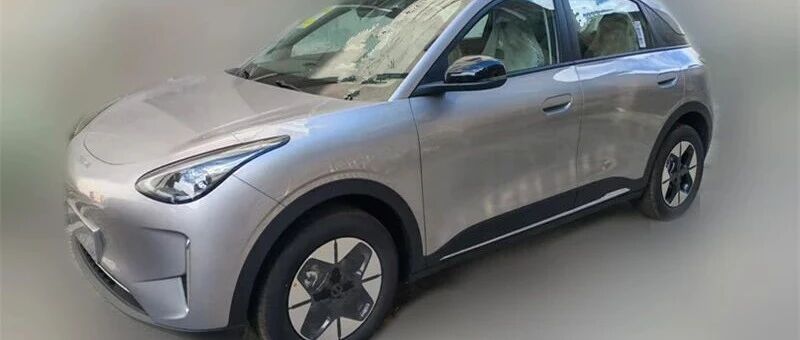
吉利星愿:进店7成客户冲它来,业绩最差的销售一月也能卖8台
车fans· 2025-12-22 00:30
Sales Performance - The new model of the Geely Star Wish was launched in October, and it has been well-received, with 70% of customers visiting local dealerships specifically for this model [2] - In the previous month, a total of 223 orders were received, with 131 vehicles delivered, of which 98 were Star Wish models [2] - The most popular configuration sold is the 410KM Exploration version, accounting for 60% of sales, while the color preference leans heavily towards pink [3][16] Customer Demographics - The customer demographic shows a gender ratio of approximately 2:8, with a wide age range from 19 to 50 years old, predominantly consisting of middle and primary school teachers and grassroots civil servants [4] - Many customers are influenced by family opinions, leading to cancellations of orders shortly after deposits are made [4] Competitive Landscape - The main competitors identified by customers include BYD Dolphin and Seagull, Wuling Bingo S, and Aion UT, with BYD models being the most frequently compared [7] - Customers often switch to BYD due to color availability and features like automatic parking, which are appealing to those lacking confidence in parking skills [7][10] Customer Preferences and Complaints - The Star Wish's appeal lies in its aesthetics, cost-effectiveness, and features like the Meizu car system and L2-level driving assistance, which cater to female drivers [10] - Common complaints include the absence of an engine cover or battery cover, which can be added later for a fee [19][21] - Regular maintenance costs are approximately ¥260, covering labor and parts, with intervals set at one year or 10,000 kilometers [21] Pricing and Discounts - Currently, there are no significant cash discounts available, only a manufacturer’s trade-in subsidy of ¥3,000 [12] - The most sold model is the 410KM Exploration version, with the best-selling color being cocoa beige [16] - The lowest configuration, the 310KM Youth version, has seen minimal sales, indicating a shift in customer interest away from lower-priced models [16] Purchase Incentives - There are specific subsidies available for teachers, civil servants, military personnel, and employees of Geely's partner companies, with amounts ranging from ¥500 to ¥1,000 [22] - The company is cautious about pricing strategies to avoid undercutting existing customers, especially with the recent model launch [22]

车企在激烈厮杀中告别2025,未来竞争更残酷
3 6 Ke· 2025-12-22 00:13
Core Insights - The competitive landscape of the Chinese automotive market is rapidly changing, with new players emerging and established leaders facing challenges [1][2] - The shift from a price war to a "value war" is evident, as companies seek to differentiate themselves amid increasing competition [1][5] - The upcoming reduction in purchase tax for new energy vehicles (NEVs) is expected to intensify competition between fuel and electric vehicles [8][9] Group 1: Market Dynamics - The title of "top car manufacturer" in China is becoming less stable, with BYD narrowly maintaining its lead over SAIC Group in revenue [1] - BYD's sales have been declining in 2025, with monthly sales from July to November showing significant year-on-year decreases [2] - Leap Motor has emerged as the new leader among new car manufacturers, surpassing Li Auto in delivery volumes [3] Group 2: Competitive Strategies - The automotive industry is transitioning from a focus on price competition to a focus on product value and differentiation [5][7] - Companies are increasingly recognizing the need for ecosystem collaboration to meet market demands and enhance competitiveness [7] - The "反内卷" (anti-involution) movement emphasizes the importance of healthy competition and sustainable business practices [6][7] Group 3: Future Outlook - The reduction of NEV purchase tax starting January 1, 2026, is anticipated to shift the market dynamics, potentially leading to a resurgence of fuel vehicle sales [8][10] - Industry leaders predict a "survival of the fittest" phase in the automotive sector, with a clearer competitive landscape emerging over the next five to ten years [10][11] - The competition is expected to become more intense, with a potential widening gap between leading and lagging companies as the market evolves [10]



年终报道∣车企在激烈厮杀中告别2025,未来竞争更残酷
Zhong Guo Ji Jin Bao· 2025-12-21 10:00
Core Insights - The competitive landscape of the Chinese automotive market is rapidly changing, with new leaders emerging and traditional giants facing challenges [2][3] - The shift from a price war to a "value war" is evident, as companies seek to differentiate themselves beyond just pricing strategies [2][5] - The reduction of subsidies for new energy vehicles (NEVs) is expected to intensify competition between fuel and electric vehicles [2][8] Group 1: Market Dynamics - In the first half of 2025, BYD narrowly maintained its position as the leading domestic automaker, with automotive revenue only exceeding SAIC Group by 8.17 billion [3] - BYD's sales have been declining since July 2025, with monthly sales dropping by 15.63%, 14.29%, 15.89%, 24.11%, and 26.81% year-on-year [3] - Leap Motor has emerged as the new leader among new car manufacturers, leading in delivery volumes for nine consecutive months [3][4] Group 2: Competitive Strategies - The automotive industry is transitioning towards a "反内卷" (anti-involution) approach, focusing on sustainable competition rather than price wars [5][6] - Major automakers have committed to reducing payment terms to suppliers to no more than 60 days, contrasting with some companies that had terms exceeding 120 days [6] - Companies are increasingly recognizing the importance of ecosystem collaboration, with GAC Group emphasizing deep co-creation with partners like Huawei [6] Group 3: Future Outlook - The introduction of a reduced purchase tax for NEVs starting January 1, 2026, is expected to shift the market dynamics from policy-driven growth to market-driven growth [8] - The penetration rate of NEVs in China reached 47% in the first 11 months of the year, with expectations of further growth [8] - Industry leaders predict a "survival of the fittest" phase in 2026, where only companies with stable strategies and strong foundations will thrive [9]

汽车行业周报:12月第二周国内乘用车市场有所回暖,出海持续加速-20251221
SINOLINK SECURITIES· 2025-12-21 09:38
Investment Rating - The report suggests a focus on themes of intelligentization and overseas expansion, indicating a positive outlook for companies like BYD and Geely Auto in the export sector, and Li Auto, Xpeng Motors, and others in the intelligentization and robotics sectors [1][18]. Core Insights - Short-term domestic demand is low, with retail sales of passenger vehicles declining year-on-year in November, while exports are expected to be a long-term theme with significant growth potential [1][12]. - The intelligentization and robotics sectors are accelerating, with advancements in autonomous driving and smart cockpit technologies becoming mainstream [15][16]. - The report highlights the importance of focusing on companies with strong export growth and those benefiting from intelligentization trends [1][18]. Summary by Sections Weekly Perspective - Domestic demand is currently weak, with November retail sales of passenger vehicles down 15.8% year-on-year. However, exports have shown strong growth, with a 50% increase in November compared to the previous year [1][11][12]. Industry Data Tracking - The Shanghai Composite Index decreased by 0.28%, while the automotive index increased by 0.10%. Notable stock performances included Zhejiang Shibao (+44.1%) and Haon Automotive (+28.4%) [2][19]. - In November, wholesale passenger vehicle sales reached 2.991 million units, a year-on-year increase of 1.7%, while new energy vehicle (NEV) sales rose by 17.6% [4][34]. Industry Dynamics - The report notes significant developments in the intelligentization of vehicles, with over 60% penetration of L2 and above autonomous driving systems in the market. The trend towards smart cockpits is also highlighted [15][16]. - Robotics technology is advancing rapidly, with new products being launched by domestic manufacturers and increased governmental focus on robotics technology in the U.S. [16][18].
电力设备与新能源行业研究:太空光伏”,之于商业航天,正如电力供应之于AI算力
SINOLINK SECURITIES· 2025-12-21 09:36
Investment Rating - The report suggests a "Buy" rating for the "Space Photovoltaics" sector, emphasizing its high potential due to the unique energy supply needs in commercial space endeavors [1][5]. Core Insights - The report highlights the increasing importance of "Space Photovoltaics" as a critical energy source for various space applications, including low Earth orbit satellites and future lunar bases, driven by the urgency of U.S.-China competition and limited orbital resources [1][5]. - The report also expresses optimism for the wind power sector, particularly following Poland's successful auction for 3.4GW of offshore wind projects, which is expected to accelerate order releases in the coming years [2][10]. - The hydrogen and fuel cell sector is gaining traction, with significant contracts for green ammonia as a marine fuel, indicating a growing market for sustainable energy solutions [12][13]. Summary by Sections Space Photovoltaics - The report emphasizes the necessity of solar energy in space applications, likening its importance to electricity supply for AI computing [1][5]. - The potential for rapid fundamental catalysts in this sector is noted, suggesting it may outpace other emerging industries like nuclear fusion and robotics [1][5]. Wind Power - Poland's recent auction for 3.4GW of offshore wind capacity is expected to enhance visibility for long-term European offshore wind demand, with annual grid connection capacities projected to exceed 14GW by 2031-2032 [2][9]. - The report anticipates accelerated releases of orders for components such as piles and subsea cables due to this growing demand [2][10]. Hydrogen and Fuel Cells - A major shipping company has secured a long-term contract for 15.8 million tons of green ammonia, validating its use as a marine fuel and highlighting the commercial viability of green hydrogen solutions [12][13]. - The report notes the comprehensive capabilities of Chinese companies in the green ammonia supply chain, from production to certification and logistics [13]. Lithium Battery Sector - Ford has terminated a significant battery supply agreement with LG Energy, reflecting shifts in electric vehicle demand expectations and policy adjustments [17][18]. - The report indicates a strong upward trend in lithium carbonate prices, with futures contracts surpassing 110,000 yuan/ton, driven by supply constraints and limited inventories [17][41]. AIDC and Liquid Cooling - The report highlights a surge in sentiment within the AIDC sector, driven by significant partnerships and the increasing demand for liquid cooling solutions in data centers [20][21]. - It emphasizes the importance of domestic companies in enhancing their positions in the global liquid cooling market, suggesting a favorable outlook for investment opportunities [20][21]. Electrical Equipment and Grid - The report discusses the planned H-share issuance by a key electrical equipment company, aimed at enhancing R&D and international expansion, which is seen as a critical milestone for the company's growth strategy [22][23]. - It highlights the expected growth in demand for electrical transformers and high-voltage direct current (HVDC) systems, driven by ongoing upgrades in the global power grid [22][23].




汽车行业周报(20251215-20251221):板块触底有望提前,建议提前布局明年机会-20251221
Huachuang Securities· 2025-12-21 09:32
Investment Rating - The report maintains a "Buy" recommendation for the automotive sector, suggesting that the sector is expected to bottom out and presents a good opportunity for early investment in the upcoming year [3]. Core Insights - Traditional vehicle stocks continue to show weak performance, which is anticipated as the market awaits clarity on 1Q policies and retail trends. The report suggests that the current moment is a favorable time for positioning [3]. - The report highlights significant interest in the intelligent driving sector, particularly with L3 level autonomous driving vehicles, which are expected to gain traction in 2026 due to potential policy and standard implementations [3]. - The report emphasizes the importance of monitoring the automotive sector's recovery, particularly focusing on companies like Geely and JAC, which are expected to benefit from high-end product strategies and international expansion [5]. Data Tracking - In early December, the discount rate for vehicles decreased slightly, with an average discount amount of 22,156 yuan, down 1,238 yuan from the previous month. The discount rate was reported at 9.7%, a decrease of 0.4 percentage points month-on-month [5]. - In October, wholesale vehicle sales reached 2.96 million units, a year-on-year increase of 7.5% and a month-on-month increase of 3.6%. However, retail sales fell to 2.09 million units, down 9.2% year-on-year and 6.4% month-on-month [5]. - In November, BYD's delivery volume was 480,186 units, showing a significant month-on-month increase of 8.7%, while traditional automaker Geely's sales reached 310,000 units, up 24.0% year-on-year [6][26]. Industry News - On December 15, the Ministry of Industry and Information Technology approved two L3 level autonomous driving vehicle models from Changan Automobile and BAIC Blue Valley [9][32]. - The report notes that the automotive sector's performance index increased by 0.09% this week, ranking 9th out of 29 sectors [10]. - The report mentions that the retail market for narrow passenger vehicles is expected to reach approximately 2.3 million units in December, reflecting a month-on-month growth of 3.4% but a year-on-year decline of 12.7% [34].

极星汽车获得吉利控股集团6亿美元支持
Cai Jing Wang· 2025-12-21 04:08
Group 1 - Polestar Automotive has signed a loan agreement with Geely Holding Group worth up to $600 million (approximately 4.224 billion RMB) to address funding shortages [1] - This funding support follows a previous equity injection of $200 million from PSD Investment Limited five months ago [1]
剑指高端核心市场,极氪北京三店齐开
Bei Jing Shang Bao· 2025-12-20 11:11
Core Viewpoint - Zeekr is strategically expanding its presence in Beijing by opening three new "Zeekr Home" stores, aligning with the transition of the new energy market from "popularization" to "high-end upgrade" [2] Group 1: Store Openings - On December 20, Zeekr opened three new stores in Beijing: Liuxiangqiao, Yuanbo, and Baiwang Green Valley [2] - The simultaneous opening of these stores is not merely a quantitative increase but a precise strategic move to enhance brand presence in key urban areas [2] Group 2: Market Strategy - With the penetration rate of the new energy market approaching 50%, first-tier cities are becoming crucial battlegrounds for high-end brand competition [2] - The new stores are designed to create a comprehensive service network covering the southern, western, and northern core areas of Beijing, addressing current consumer service needs and paving the way for product expansion in the coming year [2] Group 3: Store Features - The new stores feature an all-scenario design that includes immersive experiences, after-sales maintenance, and user community functions, aiming to build a complete ecosystem around "car purchase - car use - lifestyle" [2] Group 4: Product Performance - The flagship SUV, Zeekr 9X, has become a bestseller with an average transaction price of 538,000 yuan, securing the title of the best-selling large SUV over 500,000 yuan, with 80% of orders coming from users upgrading from high-end luxury brands [2]
