XPENG-W(09868)

Search documents
港股速报|情绪压制港股低开 小鹏汽车涨超5%
Mei Ri Jing Ji Xin Wen· 2025-11-07 02:38
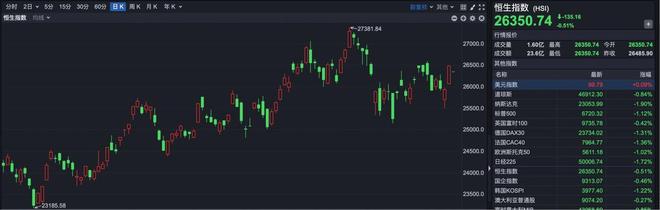
Market Overview - The Hong Kong stock market opened lower on November 7, with the Hang Seng Index at 26,350 points, down 135 points, a decline of 0.51% [1] - The Hang Seng Tech Index reported 5,895 points, down 49 points, a decrease of 0.83% [3] Influencing Factors - Analysts indicated that the decline in the Hang Seng Index may be influenced by a significant drop in the US stock market the previous night, where the Dow Jones fell nearly 400 points, a drop of 0.84%, and the Nasdaq experienced a decline of 1.90% [5] - Major tech stocks in the US, such as Nvidia and Tesla, saw declines exceeding 3% [5] Company Performance - Xpeng Motors (09868.HK) opened over 4% higher and expanded its gains to 5%, driven by a more than 9% increase in its US stock the previous night, with a peak increase of 14% during trading [5] - Pop Mart (09992.HK) fell over 4%, reaching a new low since May 21, with a total decline of 39% from its peak price of 339.80 HKD [6] - Newly listed stocks continued to decline, with WeRide down over 10%, Pony.ai down over 8%, and Winsan down over 6% [7] Sector Performance - The technology sector saw widespread declines, with Bilibili down over 3%, JD.com, Kuaishou, and Alibaba down over 2%, and Meituan and Tencent down over 1% [7] - Semiconductor stocks weakened, with Hua Hong Semiconductor down over 4% [7] - Apple-related stocks opened lower, with Hon Teng Precision down over 3% [7] Market Outlook - Institutions believe that external market volatility, particularly the adjustment sentiment in Nasdaq tech stocks, may impact the Hong Kong market [8] - Despite a stabilization in market sentiment, sector differentiation may persist, making it crucial to select stocks with genuine growth potential and earnings support [8] - Overall, institutions maintain a cautiously optimistic view on the Hong Kong market, suggesting to wait for improved market sentiment and sustained capital inflows to identify investment opportunities in core tech assets [8]

小鹏汽车顾宏地:公司20%多股东都是境内投资者
Mei Ri Jing Ji Xin Wen· 2025-11-07 02:27
Core Viewpoint - Xiaopeng Motors expresses a strong interest in attracting more domestic investors and is closely monitoring opportunities for a potential A-share listing in the future [1] Group 1 - Xiaopeng Motors' Vice Chairman and Co-President, Gu Hongdi, highlighted that over 20% of its shareholders are domestic investors through the Hong Kong Stock Connect [1] - The company is actively seeking opportunities for an A-share listing while observing market conditions [1]
小鹏汽车港股涨超4%
Mei Ri Jing Ji Xin Wen· 2025-11-07 01:58
Core Viewpoint - Xpeng Motors' Hong Kong stock rose over 4% on November 7 [1] Group 1 - The increase in stock price indicates positive market sentiment towards Xpeng Motors [1]
小鹏汽车发布鲲鹏超级增程技术 首搭车型小鹏X9超级增程开启预售
Zheng Quan Ri Bao Wang· 2025-11-07 01:56
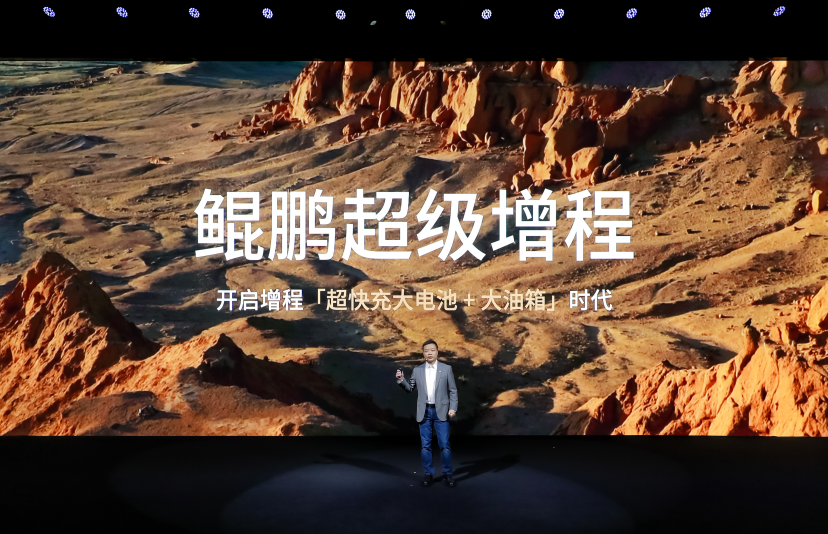
Core Viewpoint - Xiaopeng Motors has launched its new generation range extension technology, "Kunpeng Super Range Extension," aimed at addressing five major pain points faced by traditional range extension users, and has announced the pre-sale of its first model, the Xiaopeng X9 Super Range Extension [1][5][10] Technology and Features - The Kunpeng Super Range Extension technology combines a fast-charging large battery with a 60L fuel tank, achieving a CLTC pure electric range of over 450 km and a comprehensive range of over 1600 km, which is claimed to be the best in the industry [5][7] - The technology features a third-generation 1.5T efficient turbocharged engine that maintains a cruising speed of 150 km/h even in low battery conditions, addressing the issue of reduced power when the battery is depleted [5][6] - The system includes a high-efficiency oil-cooled generator and an intelligent energy management system, leading to a comprehensive fuel consumption that is 15% better than competitors in the same class [6][8] Model Launch - The Xiaopeng X9 Super Range Extension is the first model equipped with the Kunpeng technology, featuring a 63.3 kWh battery and a 60L fuel tank, making it the longest-range seven-seater vehicle globally with a CLTC comprehensive range of 1602 km [7][8] - The vehicle supports 92-octane gasoline, reducing operating costs, and achieves a low comprehensive energy consumption of 16.5 kWh/100 km [8][9] Design and Safety - The Xiaopeng X9 features a unique 9-in-1 integrated rear axle design, maximizing space utilization at 95.8%, while also enhancing vehicle safety with a high-strength steel and aluminum structure [9][10] - The vehicle meets safety standards in China and Europe, with a robust design that includes multiple safety features and airbags to protect occupants [10] Market Positioning - Xiaopeng Motors positions itself as a global AI automotive company, leveraging deep regional research to enhance user experience and promote the technological benefits of smart vehicles [4][10]
小鹏汽车涨近5% IRON人形机器人将于2026年底量产
Mei Ri Jing Ji Xin Wen· 2025-11-07 01:47
Core Viewpoint - XPeng Motors has introduced its next-generation humanoid robot, IRON, which is set to be mass-produced by the end of 2026, showcasing advanced features such as a human-like spine, bionic muscles, and fully covered flexible skin [1] Company Summary - XPeng Motors' stock (09868.HK) rose by 4.81% as of the latest report [1] - The unveiling of the IRON robot took place during the 2025 XPeng Technology Day event on November 5 [1] Industry Summary - The introduction of humanoid robots like IRON indicates a growing trend in the robotics industry, focusing on more human-like features and capabilities [1]

A股三大指数低开,存储器板块跌幅居前
Feng Huang Wang Cai Jing· 2025-11-07 01:36
Market Overview - A-shares opened lower with the Shanghai Composite Index down 0.34%, Shenzhen Component down 0.54%, and ChiNext down 0.72% [1] - U.S. stock indices also declined, with the S&P 500 down 1.12% to 6720.32 points, Nasdaq down 1.9% to 23053.99 points, and Dow Jones down 0.84% to 46912.3 points, influenced by signs of a deteriorating job market and misinterpretations of comments from OpenAI executives [2] Chinese Concept Stocks - The Nasdaq China Golden Dragon Index saw mixed results, with Alibaba up 1.69%, JD down 0.28%, Baidu up 3.01%, and NIO down 1.78%. Notably, XPeng Motors surged 9.64% after unveiling its second-generation VLA [3] Sector Insights Robotics Sector - CITIC Securities suggests that the robotics sector is entering a phase of consolidation after significant adjustments in October, with expectations for new catalysts or industry rhythm to support market sentiment. Key developments include Tesla's Optimus mass production orders and prototype releases [4] Power Equipment Sector - Huatai Securities reports a significant performance divergence in the power equipment sector for Q3, with non-UHV main networks showing a 38.2% increase in net profit, while distribution and meter segments faced declines of 23.6% and 28.4%, respectively. The non-UHV segment benefits from strong overseas demand and ongoing domestic infrastructure needs [5] Aluminum Supply - CITIC Securities indicates that global electrolytic aluminum supply and demand will remain balanced over the next three years, contingent on China's production levels and new overseas capacities. Any supply disruptions could lead to price increases due to the current high-profit environment [6] Quantum Computing - CICC highlights that quantum computing is at a critical juncture transitioning from research breakthroughs to commercial applications, with hardware expected to lead in industrialization. The global quantum computing market is projected to grow from $5 billion in 2024 to over $800 billion by 2035, with a CAGR exceeding 55% [8]



小鹏汽车-W高开近5% 小鹏X9超级增程开启预售 何小鹏再自证机器人内部没人
Zhi Tong Cai Jing· 2025-11-07 01:36
Core Viewpoint - Xiaopeng Motors (09868) experienced a nearly 5% increase in stock price following the announcement of the pre-sale for the Xiaopeng X9 Super Extended Range model, indicating strong market interest and potential sales growth [1] Group 1: Product Launch and Sales - The Xiaopeng X9 Super Extended Range is available in two versions, with pre-sale prices starting at 350,000 yuan for the Max version and 370,000 yuan for the Ultra version [1] - As of November 6, 2023, the pre-sale orders for the Xiaopeng X9 have set a new record for the same period in its history [1] Group 2: Technological Advancements - During the Xiaopeng Technology Day held on November 5, the company showcased four significant applications under its "Physical AI" strategy, including the second-generation VLA, Robotaxi, the new generation of the humanoid robot IRON, and two flight systems [1] - The CEO of Xiaopeng Motors confirmed that the new generation humanoid robot IRON operates without human intervention, highlighting the company's advancements in robotics [1] Group 3: Market Position and Future Outlook - According to CMB International, Xiaopeng Motors has achieved its annual sales target within the first ten months of 2025, driven by its competitive pricing, level of intelligence, and diverse product matrix in the electric vehicle sector [1] - The company is expected to achieve breakthrough progress in mass production of its humanoid robots, Robotaxi, and low-altitude aircraft by 2026, indicating significant growth potential in the future [1]
港股异动 | 小鹏汽车-W(09868)高开近5% 小鹏X9超级增程开启预售 何小鹏再自证机器人内部没人
智通财经网· 2025-11-07 01:28
Core Viewpoint - Xiaopeng Motors (09868) saw a nearly 5% increase in stock price following the pre-sale announcement of the Xiaopeng X9 Super Range, indicating strong market interest and confidence in the company's product offerings [1] Group 1: Product Launch and Sales Performance - The Xiaopeng X9 Super Range has two versions, with pre-sale prices starting at 350,000 yuan for the Max version and 370,000 yuan for the Ultra version [1] - As of November 6, the pre-sale orders for the Xiaopeng X9 Super Range have set a new record for the X9 model during the same period [1] Group 2: Technological Advancements and Strategic Initiatives - On November 5, during the Xiaopeng Technology Day, the company showcased four significant applications under its "Physical AI" strategy, including the second-generation VLA, Robotaxi, the new generation of the humanoid robot IRON, and two flight systems [1] - The company aims for breakthroughs in mass production of its humanoid robot, Robotaxi, and low-altitude aircraft by 2026, highlighting its self-research capabilities and diversified product matrix [1] Group 3: Market Position and Future Outlook - According to CMB International, Xiaopeng Motors has achieved its annual sales target within the first ten months of 2025, driven by its competitive pricing, level of intelligence, and diverse product offerings in the electric vehicle sector [1] - The company's growth potential remains a focal point for investors, particularly in light of its advancements in technology and product development [1]
小鹏汽车20251106
2025-11-07 01:28
Summary of Xiaopeng Motors Conference Call Company Overview - **Company**: Xiaopeng Motors - **Industry**: Electric Vehicles and Robotics Key Points Industry and Company Developments - Xiaopeng Motors plans to launch three Robot Taxi models by 2026, with trial operations in cities like Guangzhou, featuring six redundancy designs and a computing power of 3,000 TOPS [2][3] - The company expects to achieve sales of 700,000 vehicles in 2026, a growth of over 50% compared to approximately 450,000 in 2025, driven by updates to existing electric models and the introduction of new range-extended models [2][9] - Xiaopeng anticipates turning profitable in Q4 2025 with a gross margin of 18%-20%, and expects to achieve profitability for the entire year of 2026 with a gross margin exceeding 20% [2][10] Technological Advancements - The second-generation algorithm model, VLA, has been updated to the VA model, which simplifies the process from vision to action, improving efficiency and reducing errors. This model will be applied to the Ultra version vehicles in Q1 2026 [3][6] - Xiaopeng's humanoid robot, Ion, features 82 joints and is designed for various applications, with plans for mass production by the end of 2026 [3][4] Financial Expectations - Revenue is projected to reach between 130 billion to 140 billion RMB in 2026, based on the anticipated sales volume and an average price per vehicle of nearly 200,000 RMB [2][10] - The company aims for a market valuation of around 200 billion RMB based on a 1.5x price-to-sales ratio, with potential for valuation to exceed 300 billion RMB when including new business segments like Robot Taxi and robotics [10][14] Market Strategy - Xiaopeng's strategy focuses on synchronizing new product cycles with technological advancements to expand its customer base and enhance market valuation [5][12] - The company is optimistic about the commercial prospects of its robots, particularly in customer service roles, while remaining cautious about applications in household tasks [8][12] Competitive Advantages - Xiaopeng possesses unique advantages, including self-developed chips and algorithms, autonomous manufacturing capabilities, and strong model training abilities, positioning it favorably against competitors [12][14] - The company aims to leverage its technological innovations and brand strength to drive sales and improve profitability [13][14] Brand Development - Despite a decline in brand strength due to market oversupply, Xiaopeng anticipates a resurgence in brand recognition driven by advancements in technology and the rollout of Robot Taxi and robotics [13] Additional Insights - Xiaopeng's focus on expanding its product offerings and enhancing its technological capabilities is expected to differentiate it in a competitive market, potentially leading to above-average growth compared to industry peers [5][12]
智通港股沽空统计|11月7日
智通财经网· 2025-11-07 00:31
Short Selling Ratios - Anta Sports (82020) has the highest short selling ratio at 100.00% with a short selling amount of 440,500 HKD [1][2] - Lenovo Group (80992) follows with a short selling ratio of 88.65% and a short selling amount of 803,600 HKD [1][2] - Xiaomi Group (81810) ranks third with a short selling ratio of 75.57% and a short selling amount of 1,474,100 HKD [1][2] Short Selling Amounts - Alibaba (09988) leads in short selling amount with 2.261 billion HKD and a short selling ratio of 16.63% [1][2] - Tencent Holdings (00700) is second with a short selling amount of 1.662 billion HKD and a short selling ratio of 19.83% [1][2] - Semiconductor Manufacturing International Corporation (00981) ranks third with a short selling amount of 926 million HKD and a short selling ratio of 10.37% [1][2] Deviation Values - Shengjing Bank (02066) has the highest deviation value at 60.67% with a short selling ratio of 72.42% [1][2] - Xiaomi Group (81810) also shows a significant deviation value of 47.28% [1][2] - The third highest deviation value is not specified but is noted to be 39.69% for an unspecified stock [1][2]