
XPENG-W(09868)

Search documents
恒生科技基本面如何?财通证券列出11只大牛股 联想、腾讯位列其中
智通财经网· 2025-10-17 03:25
Group 1 - The core viewpoint is that the Hang Seng Technology sector is in the early stage of a macro liquidity recovery and an AI technology cycle, presenting high mid-term allocation value [1] Group 2 - The current fundamentals of the Hang Seng Technology sector benefit from the explosion in application and content driven by new technological changes, currently at the starting point of the AI technology cycle [2] - The long-term logic involves competition for user numbers and engagement in a market where traffic dividends are gradually diminishing, testing organizational capabilities [2] - High shareholder return capabilities are evident among quality companies following the decline of traffic dividends, with a focus on tracking EPS changes and policies, particularly in the consumer sector [2] Group 3 - The Hang Seng Technology sector is influenced by the Federal Reserve's transition to a liquidity easing phase since September, following the fastest and most extensive rate hikes since the 1980s [3] - The current price-to-earnings ratio (TTM) of the Hang Seng Technology sector is at the 34th percentile of the past five years [3] Group 4 - Investment recommendations suggest focusing on AI-related sectors, particularly those likely to achieve performance realization first, benefiting from accelerated capital expenditure by global companies [3] - The software application and content ecosystem is in the early stages of AI empowerment, with optimism for overseas software performance and other industry advancements [3] - The e-commerce, local life, and advertising technology sectors are performing steadily under policy stimulus and operational efficiency improvements [3] - Intelligent driving and mobility scenarios are accelerating, expected to become new growth drivers for the industry [3] Group 5 - Recommended companies for high performance certainty and leading AI technology and content ecosystem layouts include Tencent Holdings, Alibaba, and Baidu [3] - Mid-term elastic stocks include Lenovo Group, China Literature, Trip.com, and Sunny Optical [3] - Elastic stocks also include Kuaishou, Horizon Robotics, Kingdee International, and Xpeng Motors [4]




苏州一机器人公司原地解散,1个月前才获数亿融资;董宇辉双11三天狂卖3个亿;曹德旺卸任交棒长子;丰巢创始人兼CEO辞职丨邦早报
Sou Hu Cai Jing· 2025-10-17 00:16
Group 1 - Fuyao Glass announced that Chairman Cao Dewang resigned to promote strategic optimization and sustainable development, while Cao Hui was elected as the new chairman [1] - Cao Dewang will continue to serve as a director and honorary chairman, stating that stepping down is beneficial for the company [1] Group 2 - Fengchao's founder and CEO Xu Yubin resigned due to health reasons, having served since April 2015 [3] - Fengchao has not publicly responded regarding the successor or resignation details [3] Group 3 - During the "Double 11" shopping event, Dong Yuhui's livestream sales exceeded 300 million yuan over three days, with a total audience of nearly 70 million [4] - The sales included categories such as home appliances, home textiles, 3C digital products, and beauty [4] Group 4 - Xiaopeng Motors reported an export volume of over 5,000 units in September, marking a month-on-month increase of 65.8% and a year-on-year increase of 79.4% [6] - For the first nine months of 2025, Xiaopeng's export volume exceeded 29,723 units, a year-on-year growth of 125.2% [6] Group 5 - TSMC reported a net profit of approximately 452.3 billion New Taiwan dollars for Q3 2025, with a revenue of about 989.9 billion New Taiwan dollars, reflecting a year-on-year increase of 30.3% [8] - Advanced process technologies accounted for 74% of total wafer revenue, with 3nm and 5nm processes contributing significantly [8] Group 6 - Nestlé plans to lay off approximately 16,000 employees globally over the next two years, aiming for annual cost savings of 1 billion Swiss francs by 2027 [14] - The company reported sales of 65.87 billion Swiss francs for the first nine months of 2025, with an internal growth rate of 0.6% [14] Group 7 - Cloud technology company Yunji Technology officially listed on the Hong Kong Stock Exchange, with shares opening 49% higher on the first day [14] - The company raised approximately 660 million Hong Kong dollars through the issuance of 6.9 million shares [14] Group 8 - The Chinese customs reported a 7% increase in exports for the first three quarters, with significant growth in exports to ASEAN countries [20] - Exports to the US decreased by 16.9%, while exports to the EU increased by 8.2% [20] Group 9 - Omdia reported a 3% decline in the Chinese smartphone market for Q3 2025, with Vivo regaining the top position in shipments [20] - Vivo's shipment volume reached 11.8 million units, capturing 18% of the market share [20]





东风汽车与中国进出口银行达成合作;广汽董事长回应与京东造车进展丨汽车早参
Mei Ri Jing Ji Xin Wen· 2025-10-16 23:04
Group 1 - Xpeng Motors achieved an export volume of over 5,000 units in September, marking a month-on-month increase of 65.8% and a year-on-year increase of 79.4%, placing it in the top 17 of the export rankings [1] - For the first nine months of 2025, Xpeng Motors exported over 29,723 units, reflecting a year-on-year growth of 125.2% [1] - Xpeng Motors announced its entry into five new markets, including Switzerland, and is building a "three-in-one" global system to enhance its international presence [1] Group 2 - Dongfeng Motor signed a strategic cooperation agreement with the China Export-Import Bank to deepen collaboration in overseas financial support for the automotive industry [2] - This partnership aims to explore innovative financial solutions to support the international expansion of the Chinese automotive sector, potentially alleviating funding pressures for Dongfeng in overseas investments [2] - The agreement is expected to enhance Dongfeng's competitiveness in the global market and boost investor confidence in its growth potential [2] Group 3 - GAC Group's chairman responded to the progress of its collaboration with JD.com and CATL, emphasizing a shift towards user-centric vehicle development [3] - The partnership aims to integrate GAC's manufacturing capabilities with JD.com's user insights and CATL's battery technology, focusing on safety, energy storage, and service [3] - This collaboration signifies a new phase in the automotive industry's value chain restructuring, potentially driving a transition from manufacturing-driven to service-driven models [3] Group 4 - BMW's chairman emphasized the need for international cooperation and green development during a recent visit to China, highlighting the importance of maintaining fair market competition [4] - The chairman expressed confidence in China's growth potential and innovation capabilities, indicating BMW's commitment to deepening its presence in the Chinese market [4] - This stance is expected to bolster foreign investment confidence in China's new energy vehicle industry, particularly in high-end manufacturing sectors like smart driving and battery technology [4]



特朗普:或在未来两周内与普京会面;再创新高!现货黄金涨破4300美元;商务部:适时推出新的稳外贸政策;提前辞任董事长,曹德旺回应丨每经早参
Mei Ri Jing Ji Xin Wen· 2025-10-16 21:57
Group 1 - Eurozone's harmonized CPI for September has been released [2] - US import price index for September has been published [2] - EIA refined oil inventory data for the week of October 10 is set to be released [2] - Huawei Software (Chengdu) Ecosystem Conference will be held on October 17 [2] - Apple will allow pre-orders for iPhone Air in mainland China starting October 17, with official sales beginning on October 22 [2] Group 2 - US stock markets saw a collective decline, with the Dow down 0.65%, Nasdaq down 0.47%, and S&P 500 down 0.63% [3] - Notable declines in popular tech stocks, with Tesla and AMD dropping over 1%, while Nvidia rose over 1% [3] - Gold prices reached a new historical high, surpassing $4300 per ounce, with a 2.85% increase [3] Group 3 - International oil prices fell, with WTI crude down 1.54% to $56.95 per barrel and Brent crude down 1.37% to $61.06 per barrel [4] Group 4 - European stock indices closed higher, with Germany's DAX up 0.38%, France's CAC40 up 1.38%, and the UK's FTSE 100 up 0.12% [5] Group 5 - China's Ministry of Commerce plans to strengthen policy reserves and introduce new foreign trade stabilization policies [6] - The Ministry responded to US interpretations of China's rare earth export controls, asserting that the measures are legitimate and aimed at national security [7] - The Ministry expressed strong opposition to Dutch government interference in semiconductor operations [7] - China's Minister of Commerce met with Apple's CEO to discuss US-China economic relations and Apple's business in China [7] Group 6 - China's Foreign Ministry opposed unilateral sanctions imposed by the UK on Chinese oil companies [8] - The Ministry emphasized that normal cooperation between Chinese and Russian enterprises should not be disrupted [8] Group 7 - China's Ministry of Industry and Information Technology announced plans to establish a millisecond-level computing network by 2027 [9] - The National Healthcare Security Administration is advancing reforms for instant settlement of medical insurance funds by the end of 2025 [9] Group 8 - Over 4100 internet platform companies have reported tax-related information as of October 15 [10] - A rumor regarding the establishment of a polysilicon storage platform was confirmed to be false [10] Group 9 - NIO is facing a lawsuit from Singapore's sovereign wealth fund for alleged securities fraud [21] - The company’s stock price fell over 7% amid the news [21] Group 10 - Nestlé plans to cut approximately 16,000 jobs over the next two years, affecting 6% of its workforce [28] - The layoffs come despite the company exceeding third-quarter sales expectations [28]





热门中概股收盘涨跌不一
Xin Lang Cai Jing· 2025-10-16 21:38
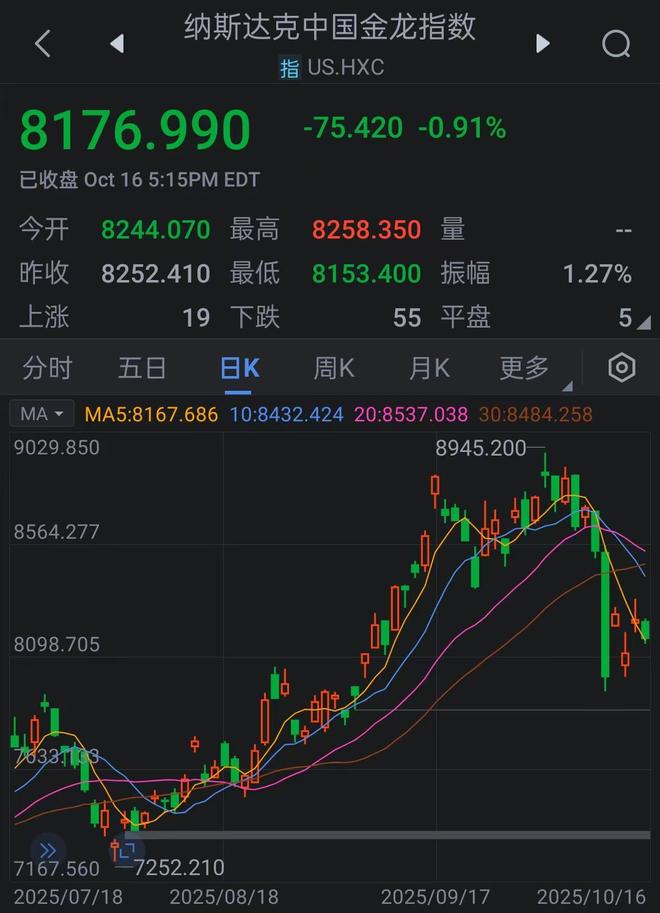
Core Viewpoint - The performance of popular Chinese concept stocks showed mixed results, with the Nasdaq Golden Dragon China Index declining by 0.91% [1] Group 1: Stock Performance - JD.com experienced a decline of over 1% [1] - Tencent Music saw a drop of over 1% [1] - XPeng fell by more than 1% [1] - Manbang Group increased by over 1% [1] - New Oriental dropped by more than 5% [1]


京东物流与小鹏汽车深化战略合作
Zheng Quan Shi Bao Wang· 2025-10-16 12:54
Core Insights - JD Logistics and Xpeng Motors announced a strategic partnership to enhance operations in the Middle East, with the opening of a parts warehouse in Dubai [1] Group 1: Strategic Partnership - JD Logistics will fully plan and operate the new parts warehouse for Xpeng Motors in the Jebel Ali Free Zone, Dubai [1] - This collaboration aims to improve the supply chain and service capabilities for Xpeng Motors in the Middle East region [1] Group 2: Warehouse Details - The newly established parts center stores over 1,000 types of automotive parts, catering to the maintenance needs of multiple Xpeng vehicle models [1] - It has become the largest automotive parts center for Xpeng Motors in the Middle East [1]
港股收评:三大指数涨跌不一!新能源车企、机器人板块承压,教育股强势
Ge Long Hui· 2025-10-16 08:56
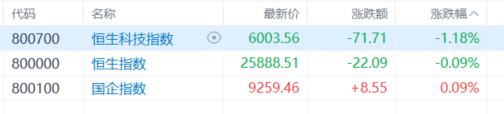
Market Overview - The Hong Kong stock market showed mixed performance on October 16, with the Hang Seng Index slightly down by 0.09%, the Hang Seng China Enterprises Index up by 0.09%, and the Hang Seng Tech Index down by 1.18% [1][2]. Technology Sector - Major technology stocks experienced a downturn, with Xiaomi down by 3.6%, Baidu, Meituan, and Tencent Holdings each down over 1%, while JD.com, Kuaishou, and Alibaba also saw slight declines [2][3][4]. - The overall performance of the technology sector was weak, contributing to the decline of the Hang Seng Tech Index [2][3]. New Energy Vehicle Sector - The new energy vehicle sector faced significant declines, with NIO down nearly 9% and other companies like Li Auto, Xpeng, and BYD also experiencing losses [5][6]. - Data from the China Passenger Car Association indicated that retail sales of new energy vehicles in October were 367,000 units, a year-on-year decrease of 1% [6]. Education Sector - The education sector showed strong performance, with companies like Think Academy seeing a remarkable increase of 26.5% in stock price, driven by plans to raise approximately HKD 241 million for future AI projects [9][10]. - The sector's rebound is attributed to positive policy signals and the adoption of AI technology by educational companies [10]. Apple Concept Stocks - Apple-related stocks performed well, with BYD Electronics rising nearly 5% following discussions between Apple's CEO Tim Cook and China's Ministry of Industry and Information Technology regarding business development in China [11][12]. Coal Sector - Coal stocks saw gains, with China Qinfa up over 8%, driven by increased demand for coal as winter approaches and a report indicating a rise in coal production [13][14]. Shipping Sector - The shipping sector was active, with stocks like Orient Overseas International and COSCO Shipping rising nearly 4% following the announcement of a special port fee for ships from the U.S. [14][16]. Innovative Drug Sector - The innovative drug sector experienced growth, with companies like 3SBio and Innovent Biologics rising nearly 6%, ahead of the European Society for Medical Oncology (ESMO) annual meeting [16][17]. Insurance Sector - Insurance stocks were active, with China Life Insurance rising nearly 5% after a positive earnings forecast from New China Life Insurance [18][19]. IPO Activity - Cloudwalk Technology debuted on the Hong Kong stock market, closing up 26.05% with a market capitalization of HKD 8.281 billion, following a highly oversubscribed IPO [20][23]. Market Outlook - Analysts expect the Hong Kong stock market to experience wide fluctuations, with a focus on sectors such as precious metals and the AI industry due to ongoing geopolitical tensions and trade issues [25].


小鹏汽车单月出口突破5000台 全球化战略进入加速期
Zheng Quan Shi Bao Wang· 2025-10-16 07:39
Core Insights - Xiaopeng Motors has significantly increased its export volume, with over 5,000 units exported in September 2025, marking a month-on-month growth of 65.8% and a year-on-year growth of 79.4%, placing it in the top 17 exporters [1] - For the first nine months of 2025, Xiaopeng Motors exported over 29,723 vehicles, reflecting a year-on-year increase of 125.2%, indicating an acceleration in its globalization strategy [1] Expansion and Localization - Xiaopeng Motors has officially entered five new European markets: Switzerland, Austria, Hungary, Slovenia, and Croatia, further expanding its European footprint [1] - The company has established a global sales and service network covering over 49 countries and regions [1] - During the 2025 Munich International Motor Show, Xiaopeng Motors launched its first European R&D center in Munich, focusing on local needs to drive technological innovation and product adaptation [2] - Localized production has commenced at the Magna factory in Graz, Austria, with the first mass-produced models, Xiaopeng G6 and G9, successfully rolling off the production line [2] - The first locally produced Xiaopeng X9 in Indonesia was successfully delivered in July, marking a significant step in the company's global localization production strategy [2] - The developments indicate that Xiaopeng Motors is building a comprehensive global system of "localized service + localized R&D + localized production," transitioning from product exports to a deeper integration in global markets [2]
汽车股午后跌幅扩大
Mei Ri Jing Ji Xin Wen· 2025-10-16 05:55
(文章来源:每日经济新闻) 每经AI快讯,汽车股午后跌幅扩大,截至发稿,小鹏汽车-W(09868.HK)跌4.84%,报81.65港元;长城 汽车(02333.HK)跌3.69%,报15.15港元;理想汽车-W(02015.HK)跌2.23%,报87.65港元;广汽集团 (02238.HK)跌1.16%,报3.42港元。 ...

汽车股午后跌幅扩大 新能源汽车购置税明年退坡 报道指多数车企态度谨慎
Zhi Tong Cai Jing· 2025-10-16 05:45
Core Viewpoint - The domestic electric vehicle (EV) market is facing increased pressure due to changes in tax policies, leading to a decline in stock prices for major automotive companies [1] Group 1: Stock Performance - Xpeng Motors (09868) shares fell by 4.84%, trading at HKD 81.65 [1] - Great Wall Motors (02333) shares decreased by 3.69%, trading at HKD 15.15 [1] - Li Auto (02015) shares dropped by 2.23%, trading at HKD 87.65 [1] - GAC Group (02238) shares declined by 1.16%, trading at HKD 3.42 [1] Group 2: Policy Changes - Starting in 2026, the standards for the domestic EV purchase tax exemption will be raised [1] - Most automakers are cautious about the market impact of the new regulations [1] Group 3: Market Sentiment - NIO's founder, Li Bin, indicated that all automakers will face significant pressure in Q1 next year, with policies like tax reductions potentially leading to a preemptive surge in demand [1] - He predicts that nationwide EV sales in Q1 next year could be around half of Q4 this year [1] - UBS reported that while most manufacturers can meet the new standards, the updated policies may appear stricter, negatively affecting market sentiment [1] - Shenwan Hongyuan noted that as EV subsidies phase out and the tax exemption policy ends next year, vehicle purchase costs will rise significantly, potentially leading to a market rush in Q4 [1]