BABA(09988)

Search documents
智通港股通持股解析|2月6日
智通财经网· 2026-02-06 00:31
Core Insights - The top three companies by stockholding ratio in the Hong Kong Stock Connect are China Telecom (71.39%), Gree Power Environmental (68.80%), and Haotian International Construction Investment (67.58%) [1] - Tencent Holdings, Xiaomi Group-W, and Pop Mart have seen the largest increases in stockholding amounts over the last five trading days, with increases of +36.02 billion, +22.89 billion, and +13.06 billion respectively [1] - Conversely, SMIC, Alibaba-W, and Zijin Mining International experienced the largest decreases in stockholding amounts, with reductions of -18.54 billion, -15.48 billion, and -11.14 billion respectively [2] Stockholding Ratios - The latest stockholding ratios for the top 20 companies in the Hong Kong Stock Connect are as follows: - China Telecom (00728): 99.09 million shares, 71.39% - Gree Power Environmental (01330): 2.78 million shares, 68.80% - Haotian International Construction Investment (01341): 75.00 million shares, 67.58% - Other notable companies include: - Kaisa New Energy (01108): 67.54% - Tianjin Chuangye Environmental Protection (01065): 66.84% [1] Recent Stock Increases - The top 10 companies with the largest stockholding increases in the last five trading days are: - Tencent Holdings (00700): +36.02 billion, +6.44 million shares - Xiaomi Group-W (01810): +22.89 billion, +6.55 million shares - Pop Mart (09992): +13.06 billion, +5.39 million shares - Other significant increases include: - Industrial and Commercial Bank of China (01398): +11.23 billion - China Merchants Bank (03968): +11.16 billion [1] Recent Stock Decreases - The top 10 companies with the largest stockholding decreases in the last five trading days are: - SMIC (00981): -18.54 billion, -2.75 million shares - Alibaba-W (09988): -15.48 billion, -0.97 million shares - Zijin Mining International (02259): -11.14 billion, -0.54 million shares - Other notable decreases include: - Zijin Mining (02899): -10.96 billion - Jiangxi Copper (00358): -6.97 billion [2]


智通港股沽空统计|2月6日
智通财经网· 2026-02-06 00:23
Group 1 - JD Group-SWR (89618), AIA Insurance-R (81299), and BYD Company-R (81211) have the highest short-selling ratios at 100.00%, 78.88%, and 68.19% respectively [1][2] - Tencent Holdings (00700), Alibaba-W (09988), and Pop Mart (09992) lead in short-selling amounts, with HKD 3.576 billion, HKD 2.767 billion, and HKD 1.287 billion respectively [1][2] - JD Group-SWR (89618), Tianqi Lithium (09696), and Budweiser APAC (01876) have the highest deviation values at 34.54%, 30.07%, and 30.01% respectively [1][2] Group 2 - The top short-selling ratio rankings show JD Group-SWR (89618) at 100.00%, AIA Insurance-R (81299) at 78.88%, and BYD Company-R (81211) at 68.19% [2] - The top short-selling amounts are led by Tencent Holdings (00700) at HKD 3.576 billion, Alibaba-W (09988) at HKD 2.767 billion, and Pop Mart (09992) at HKD 1.287 billion [2] - The top short-selling deviation values include JD Group-SWR (89618) at 34.54%, Tianqi Lithium (09696) at 30.07%, and Budweiser APAC (01876) at 30.01% [2]
千问APP“春节30亿大免单”正式上线 用AI一句话免费点奶茶
Huan Qiu Wang· 2026-02-05 23:58
通过千问APP一句话下单,免单卡可立即在全国30多万家奶茶店使用,蜜雪冰城、瑞幸咖啡、霸王茶 姬、奈雪的茶、沪上阿姨、茶百道、库迪咖啡等茶饮咖啡品牌都可使用。 此外,每邀请一名新朋友下载千问APP,双方可各得一张25元免单卡,每人最多可得21张,相当于525 块钱。当日累计成功邀请3位新朋友,则可获得机会,抽取价值万元的千问AI生活卡。 【环球网科技综合报道】2月6日一早,千问APP"春节30亿大免单"正式上线,发动奶茶攻势,邀请全国 人民用AI一句话免费点奶茶。千问APP人士表示,"我们希望通过春节大免单活动,邀请全国人民体验 AI时代的全新生活方式,让AI融入到人们真实的生活消费之中。" 今年春节的AI大战硝烟弥漫,此次千问春节30亿大免单,在阿里历史上的春节活动中投入最大,在春 节AI大战中投入金额也最高。 此前的1月15日,千问APP已接入淘宝闪购、支付宝、淘宝、飞猪、高德等阿里生态场景,上线AI购物 功能。 有网友对比各家AI应用的红包活动,千问的玩法简单直接、下载就给25元免单卡,门槛最低、金额最 大。 千问APP活动页面显示,第一波免单活动时间为2月6日-2月12日。所有用户更新千问APP后,都 ...
一边红包大战,一边高薪抢人!
Mei Ri Jing Ji Xin Wen· 2026-02-05 23:57
Group 1 - The core idea of the articles revolves around the intense competition among major tech companies like Alibaba, Tencent, and Baidu in the AI sector, particularly through cash incentives and high salaries to attract users and talent [1][2][3] - Alibaba's "Qianwen" app offers salaries up to 1.28 million yuan for positions related to user growth, while Tencent's "Yuanbao" has salaries exceeding 750,000 yuan for user operations roles [1] - Baidu initiated a 500 million yuan red envelope plan to promote its AI assistant "Wenxin Yiyan," which attracted over 50 million participants within a week, showcasing the effectiveness of cash incentives in user engagement [1][2] Group 2 - Tencent doubled its red envelope pool to 1 billion yuan, aiming to recreate the success of WeChat's red envelope feature, emphasizing user interaction and engagement [2] - Alibaba's 3 billion yuan "Spring Festival Treat" plan allows users to redeem cash and purchase services, integrating various services within its ecosystem to enhance user experience [2] - The user base for generative AI in China has reached 515 million, indicating a significant untapped market, with major players like Baidu, ByteDance, Alibaba, and Tencent all surpassing 100 million monthly active users [2][3] Group 3 - The articles highlight that while cash incentives can attract initial user engagement, long-term user retention requires a robust ecosystem and high-quality AI functionalities [3] - The success of AI applications will depend on their practical utility, accuracy, and integration into users' daily lives, rather than just one-time cash rewards [3] - Companies face the challenge of converting initial user interest into sustained engagement, as reliance on cash incentives alone may lead to a transient user base [3]

智通港股通资金流向统计(T+2)|2月6日





智通财经网· 2026-02-05 23:34
| 股票名称 | 净流出(元)↓ | 净流出比 | 收盘价 | | --- | --- | --- | --- | | 盈富基金(02800) | -37.62 亿 | -16.47% | 27.000(+0.22%) | | 中芯国际(00981) | -15.84 亿 | -24.07% | 70.450(-2.42%) | | 阿里巴巴-W(09988) | -12.14 亿 | -6.84% | 161.000(-1.41%) | | 快手-W(01024) | -3.77 亿 | -7.36% | 73.450(-4.61%) | | 百济神州(06160) | -3.60 亿 | -32.55% | 205.800(+3.89%) | | 长飞光纤光缆(06869) | -1.87 亿 | -5.53% | 94.950(+12.23%) | | 中国宏桥(01378) | -1.62 亿 | -6.97% | 35.300(+1.26%) | | 中国太平(00966) | -1.49 亿 | -32.35% | 25.300(+2.51%) | | 长城汽车(02333) | -1.39 亿 ...
红包“四国杀”,打响AI入口争夺战
Shen Zhen Shang Bao· 2026-02-05 22:54
Core Viewpoint - The major internet companies Tencent, Alibaba, Baidu, and ByteDance are engaged in a "red envelope war" as they prepare for the 2026 Spring Festival, with significant cash giveaways aimed at gaining user engagement and establishing dominance in the AI sector [2][6]. Group 1: Cash Red Envelope Initiatives - Tencent announced a 10 billion yuan cash red envelope campaign starting February 1, 2026, while Baidu launched a 5 billion yuan initiative on the same day [2][4]. - Alibaba's Qianwen APP revealed a massive 30 billion yuan "Spring Festival Treat Plan" on February 2, 2026, marking its largest investment in a Spring Festival campaign [4]. - Users can participate in Tencent's red envelope activities by logging in daily, completing tasks, and sharing links, with the potential to win significant cash prizes [3][4]. Group 2: AI Integration and User Engagement - The red envelope campaigns are seen as a strategy to test user engagement with AI applications, marking a shift from previous marketing tactics that focused solely on cash giveaways [6][9]. - Industry experts suggest that the effectiveness of these campaigns will depend on the quality and usability of the AI products offered, rather than just the cash incentives [9][10]. - The competition is characterized by each company's focus on integrating their core business strengths, with Tencent leveraging social features, Alibaba focusing on a comprehensive ecosystem, and Baidu enhancing search functionalities [5][6]. Group 3: Long-term Implications for AI Market - The ongoing "red envelope war" is viewed as a significant event in the AI landscape, potentially accelerating the adoption and application of AI technologies across various sectors [8]. - Analysts predict that the competition will lead to a more profound integration of AI into everyday life, with companies needing to address real user needs to ensure long-term retention [10]. - The AI market in China is expected to grow significantly, with projections indicating a core industry scale surpassing 900 billion yuan by 2024, reflecting a 24% year-on-year increase [10].

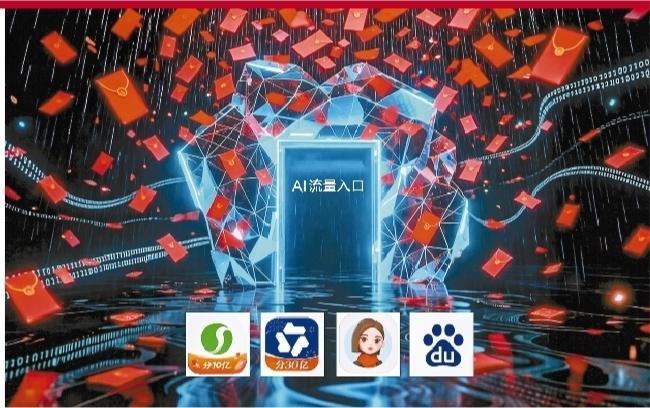
红包大战,意在超级流量入口
Shen Zhen Shang Bao· 2026-02-05 22:54
Core Viewpoint - The current "red envelope war" among internet giants has shifted from mobile payments to artificial intelligence, with significant financial investments aimed at establishing the next generation of "super traffic entrances" that will shape the competitive landscape for the next decade [1][2]. Group 1: Company Strategies - Tencent has launched the "Shangyuanbao" initiative with a budget of 1 billion yuan, following its previous 500 million yuan investment during the 2015 Spring Festival [1]. - Alibaba's "Qianwen" has announced a 3 billion yuan investment for its "Spring Festival Treat Plan," integrating various services within its ecosystem [1]. - Baidu and ByteDance are also participating, with Baidu embedding its AI assistant into its app and offering 500 million yuan in cash rewards, while ByteDance collaborates with the Spring Festival Gala as the exclusive AI cloud partner [1]. Group 2: Market Dynamics - The competition for AI as a new traffic entrance is driven by the maturity of large models capable of handling complex tasks, and a substantial user base that supports AI's market foundation [3]. - By June 2025, the user base for generative AI in China is projected to reach 515 million, with a penetration rate of 36.5% [3]. - The saturation of mobile internet traffic and stagnant user engagement has prompted internet giants to seek new avenues for traffic [3]. Group 3: Competitive Landscape - The current battle for AI traffic entrances is reminiscent of past browser and mobile app wars, with AI agents capable of aggregating traffic, data, and transactions, potentially leading to a "winner-takes-all" scenario [3][4]. - The development of a super entrance requires advanced model capabilities, vast computational power, data, ecosystem integration, and scenario refinement, favoring major internet players [4]. Group 4: Opportunities for Smaller Players - Smaller players can still find opportunities by integrating with major models and creating plugins or skills that can be frequently utilized by mainstream AI agents [5]. - The emergence of the AI agent economy is expected to create a trillion-dollar software and service market by 2030, with significant online consumption growth [5]. Group 5: Impact on Businesses - The shift in traffic entrances poses both challenges and opportunities for ordinary businesses, as AI agents may favor recommending self-operated or leading brands, potentially marginalizing smaller businesses [6]. - Businesses that adapt to become "AI-friendly" and utilize free AI tools may gain a competitive edge in the new market landscape [6].
阿里字节领跑,百度腾讯掉队?智能体之争谁能笑到最后
Sou Hu Cai Jing· 2026-02-05 21:02
Core Insights - The year 2026 is anticipated to be a pivotal moment for the AI agent industry, with significant policy developments, accelerated actions from tech giants, and increased capital market investments [1][3] - There are differing opinions on the current state of competition in the AI agent space, with some believing that leading players like ByteDance and Alibaba have initiated a peak competition, while others argue that the market is still in its infancy due to technological limitations and ecosystem challenges [1][5] Investment Trends - The popularity of AI agents is reflected in capital movements, with five out of the top ten investment sectors in 2025 being directly related to AI agents [3] - Approximately 20% of new unicorns are centered around AI technology, indicating a crowded and competitive landscape with over 120 domestic AI agent platforms [3][4] AI Agent Maturity Levels - AI agents can be categorized into three levels: "basic" agents for simple tasks, "upgraded" agents capable of more complex operations, and future "complete" agents that may operate autonomously like humans [3][4] - Currently, most domestic AI agents are still at the "basic" level, performing tasks such as PPT creation and translation, with only a few, like Doubao and Qianwen, reaching the "upgraded" level [4][5] Competitive Landscape - The competitive hierarchy is emerging, with ByteDance and Alibaba leading as "seed players" capable of providing comprehensive solutions, followed by specialized players and those offering technical tools [7] - The Chinese AI agent market is expected to be dominated by large enterprises, which will hold about 80% market share due to their clear business needs and data foundations [7] Advantages of Leading Players - ByteDance and Alibaba's competitive edge stems from their self-developed large models, extensive ecosystems, and profitable products that can be scaled [8][11] - Alibaba's ecosystem is seen as a "super entrance" for activating its vast commercial network, while ByteDance leverages its traffic advantages through platforms like Douyin and TikTok [11][12] Challenges Faced by Leading Players - Despite their advantages, both companies face challenges: Alibaba's ecosystem is heavily reliant on its own platforms, limiting cross-platform collaboration, while ByteDance's late entry into the market has resulted in a lack of deep industry knowledge [12][14] - The competition is fierce, with predictions that 90% of AI agents may be overshadowed by large models, making it difficult for smaller players to compete [13] Market Dynamics - The AI agent market is characterized by a complex and broad landscape, suggesting that no single company can dominate entirely, leading to a multi-track, differentiated competition [18] - While ByteDance and Alibaba currently lead, there remains room for other players to carve out niches in vertical markets and through technological differentiation [18]
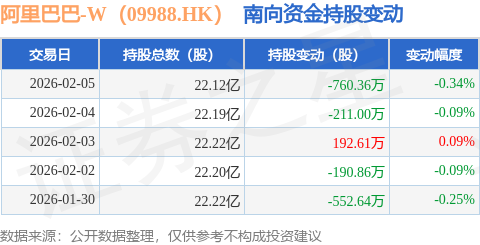
阿里巴巴-W(09988.HK):2月5日南向资金减持760.36万股
Sou Hu Cai Jing· 2026-02-05 19:43
Group 1 - The core point of the news is that southbound funds have reduced their holdings in Alibaba-W (09988.HK) by 7.60 million shares on February 5, 2026, marking a trend of net reductions over the past five trading days [1] - Over the last 20 trading days, there have been 12 days of net increases in holdings by southbound funds, totaling an increase of 1.67 million shares [1] - As of now, southbound funds hold a total of 2.21 billion shares of Alibaba-W, which represents 11.57% of the company's total issued ordinary shares [1] Group 2 - The trading data shows a total shareholding of 2.21 billion shares on February 5, 2026, with a decrease of 0.34% from the previous day [2] - The shareholding changes over the last five trading days include a reduction of 0.09% on February 4, 2026, and a reduction of 0.25% on January 30, 2026 [2] - Alibaba Group operates across seven business segments, including Chinese retail, international commerce, local services, logistics, cloud services, digital media and entertainment, and innovation and other businesses [2]
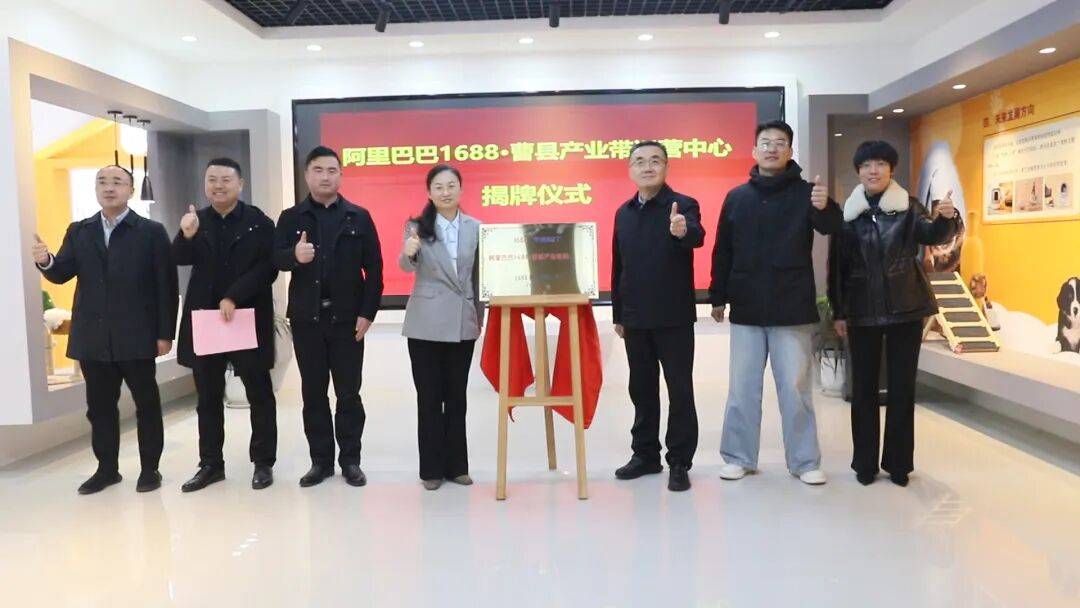
山东首家——“阿里巴巴1688・曹县产业带运营中心”(县级)正式揭牌
Sou Hu Cai Jing· 2026-02-05 18:50
揭牌仪式结束后,现场还举办了专项业务培训会,1688平台专家与企业代表围绕数字化转型、供应链优化等议题展开深入交流。与会企业纷纷表示,运营 中心的成立将为其带来更精准的资源对接和更务实的服务支持,有助于破解发展难题,拓展市场空间。 此次揭牌仪式,不仅彰显了菏泽在电商领域的扎实基础与创新活力,也为县域产业与互联网平台深度融合树立了新标杆。未来,市县将继续携手阿里巴巴 1688平台,以产业带运营中心为纽带,推动更多企业融入数字化发展浪潮,共同谱写电商产业高质量发展的崭新篇章。 菏泽市商务局党组成员、副局长曹先银在致辞中表示,此次揭牌意义非凡,它不仅是物理空间的落成,更是战略支点的确立,标志着阿里与菏泽曹县的合 作从线上资源链接,迈向线下服务深度融合的新阶段,将把1688平台的技术、数据、金融等优质资源,精准输送到企业"家门口",是数实融合的生动实 践,更是菏泽抢抓新经济机遇的关键举措。市商务局将一如既往地关注和支持曹县电商产业的发展,政企平台三方同心同向、协力共进,共同将曹县产业 带运营中心建设好、运营好,为全市电子商务高质量发展和现代化产业体系建设注入新的强劲动能。 曹县县委常委、宣传部部长王倩表示,此次产业带 ...