KWEICHOW MOUTAI(600519)

Search documents
杠杆资金净买入前十:浙文互联(2.65亿元)、人民网(2.21亿元)




Jin Rong Jie· 2026-01-21 01:01
Group 1 - The top ten stocks with net financing purchases on January 20 include: Zhejiang Wenhu Internet (265 million), People's Daily Online (221 million), Zijin Mining (214 million), Kweichow Moutai (195 million), Shanghai Electric Power (163 million), Guodian NARI Technology (152 million), Aerospace Electronics (148 million), China Power Construction (140 million), Changdian Technology (131 million), and Baotou Steel (128 million) [1]
最新!茅台品牌价值达596.3亿美元,位居全球烈酒行业第一
Xin Lang Cai Jing· 2026-01-21 00:18
Group 1 - The core report from Brand Finance reveals that Moutai's brand value increased by 2.2% to reach $59.63 billion, ranking first in the global spirits industry [1][2] - The report indicates that Apple continues to lead the brand value rankings, with 192 American brands contributing 53.4% of the total brand value, while China has 68 brands, accounting for 15.1% [1][2] - Despite a decrease of one brand from the previous year, the total brand value of the 68 Chinese brands increased by 9.7%, indicating an improvement in average brand value [1][2] Group 2 - Moutai's average brand strength index is reported at 76.4 out of 100, which is 0.6 points higher than the average score of 75.8 for the global top 500 brands [1][2] - For the third quarter of 2025, Moutai reported total revenue of 130.904 billion yuan, a year-on-year increase of 6.32%, with operating income of 128.454 billion yuan, also up by 6.36% [3] - The net profit attributable to the parent company for the first three quarters was 64.627 billion yuan, reflecting a growth of 6.25%, with an estimated average daily profit of 237 million yuan [3]
2026年第3周:酒行业周度市场观察
艾瑞咨询· 2026-01-21 00:07
Industry Environment - After a year and a half, Australian wine is reshaping the Chinese imported wine market as China terminates anti-dumping and countervailing duties on Australian imported wine starting March 29, 2024, leading to an initial surge in imports, followed by a significant decline in sales due to inventory buildup and economic pressures, with declines ranging from 20% to 70% [2][3] - Despite challenges, Australian wine is seen as having product strength, prompting the industry to streamline brands and enhance promotions to reshape market dynamics [3] Low-Alcohol Beverage Market - The low-alcohol beverage market has rapidly grown, increasing from 20 billion yuan in 2020 to an expected 57 billion yuan by 2024, with global market projections surpassing 740 billion yuan by 2025, driven by young consumers and a trend towards "tipsy enjoyment" [4] - Traditional liquor companies and retail brands are entering the low-alcohol space, but the market faces challenges such as brand homogenization and declining repurchase rates, indicating a need for innovation to establish long-term competitiveness [4] New Product Innovations in Alcohol Industry - In 2025, leading liquor companies are leveraging product innovation to navigate challenges, with notable new products like Moutai's 1935 premium version and Wuliangye's youth-oriented design gaining market traction [5] - The industry is witnessing a trend towards low-alcohol and youth-oriented products, with a focus on value reconstruction across all price ranges, indicating a shift in consumer preferences and competitive dynamics [5] Changing Landscape of Baijiu Industry - The baijiu industry is undergoing significant changes, with Shanxi Fenjiu surpassing Luzhou Laojiao and Yanghe in revenue, marking a competitive shift among leading brands [6] - The overall industry is under pressure, with many mid-sized companies experiencing declines, while top brands like Moutai and Fenjiu show slight growth, indicating a potential gradual recovery in 2026 [6] New Beverage Trends - The new beverage sector is experiencing growth, with brands like Xiaojinjiu and Guolifang successfully filling market gaps through innovative products that cater to younger consumers and diverse consumption scenarios [7] - The success of these new products is attributed to their ability to meet specific consumer needs and drive emotional consumption, positioning them as mainstream options in the market [7] Marketing Strategies of Leading Brands - Major liquor companies are optimizing inventory and enhancing marketing strategies to adapt to the current industry adjustment period, focusing on consumer-centric approaches and diversified consumption scenarios [9] - Companies are employing a pyramid product structure to solidify core offerings while exploring niche markets, indicating a shift from scale expansion to refined operations [9] Brand Dynamics - Guizhou Zhenjiu is upgrading its "Dazhen" product to enhance quality and packaging, aiming to establish it as a classic product in the market [10] - Wuliangchun is deepening emotional connections with consumers through its 30th-anniversary marketing activities, showcasing a shift towards more profound brand engagement [11] Value Competition in Baijiu Industry - The baijiu industry is entering a phase of value competition, with brands like Xifengjiu focusing on quality and cultural empowerment to drive their revival [12][13] - The emphasis on quality and innovation is seen as essential for long-term success in a competitive market [12][13] Retail Innovations - Sam's Club is restructuring its display of aged baijiu by grouping products by production year, aiming to enhance value perception and broaden consumption scenarios [23] - This adjustment reflects a collaborative effort between distributors and retailers to address market challenges and improve product value expression [23]






5年前1瓶茅台≈10克黄金,如今≈?
财联社· 2026-01-20 16:06
C 则联社 一图看懂 5年前1瓶茅台~10克黄金 如今~? 5年前,1瓶飞天茅台约等于10克黄金。如今国际金价已 突破4700美元/盎司,再创新高。那么,同样一瓶茅台, 现在还能值几克黄金? 7x24h电报 头条新闻 实时盯盘 VIP资讯 为速度和交易而生 上海报业集团主管主办 策划:周颖 制图: 翟一然 下载财联社APP获取更多资讯 准确 快速 权威 专业 | 飞天茅台价格(原箱) | | 金价(约) | | --- | --- | --- | | 3840元/瓶 | | 369.11元/克 | | 団 2021年9月 | =10.4g | | | 背后原因:全球货币 | | | | 宽松,"液体黄金"神 | | | | 话盛行,茅台金融属 | | | | 性达到顶峰。 | | | | 飞天茅台价格(原箱) | | 金价 (红) | | 1550元/瓶 | | 1060元/克 | | 団 2026年1月20日 | | | | 背后原因: 茅台金融 | =1.46a | | | 属性消退,黄金成为 | | | | 全球信用对冲工具: | | | | 央行购金、地缘冲突、 | | | | 去美元化叙事等。 | ...

15只白酒股上涨 贵州茅台下跌0.18%
Bei Jing Shang Bao· 2026-01-20 11:05
Core Viewpoint - The white liquor sector is experiencing a mixed performance, with a potential for valuation recovery by 2026 as the industry undergoes a clearing process [1] Industry Summary - The Shanghai Composite Index closed at 4113.65 points, down 0.01%, while the white liquor sector index closed at 2216.15 points, up 0.10% [1] - 15 white liquor stocks saw gains, with notable performances from brands like Luzhou Laojiao, which rose by 2.35%, and Yanghe Brewery, which increased by 3.55% [1] - Guizhou Moutai's stock price fell by 0.18% to 1373.55 yuan per share, while Wuliangye's stock price increased by 0.34% to 104.91 yuan per share [1] Company Summary - According to Huashang Securities, the white liquor market is expected to face subdued demand in 2025, continuing a trend of weak peak seasons, which has led to a decline in prices due to increased subsidies during major shopping events [1] - The revenue and profit growth rates of listed white liquor companies are projected to decline significantly in Q3 2025, with current valuations having returned to historically low levels, reflecting market sentiment [1] - There is an increasing awareness among shareholders regarding returns, and the value attributes of white liquor companies are becoming more prominent as the industry approaches a bottoming phase [1] - By 2026, it is anticipated that the price-to-earnings (PE) ratio will recover ahead of earnings per share (EPS) as the industry stabilizes [1]
食品饮料行业2026年投资策略:白酒有望调整结束,大众品优选个股
Southwest Securities· 2026-01-20 09:16
Core Insights - The report indicates that the adjustment period for high-end liquor is expected to end, highlighting the long-term investment value in this sector. The price of mainstream liquor has decreased from approximately 2200 yuan around the Spring Festival in 2025 to about 1560 yuan currently, with a notable decline since June [4][30][32] - The beer industry is anticipated to benefit from a low base effect in 2026, with emerging retail channels and government consumption stimulus policies expected to drive recovery [5][42] - The dairy industry is currently in a transitional phase, with low milk prices expected to rebound as demand improves and supply stabilizes. The long-term growth potential remains strong due to ongoing consumption upgrades [5][60][63] - The condiment sector is projected to benefit from a gradual recovery in restaurant consumption, with both B2B and B2C channels expected to see improved sales as consumer spending recovers [5][79] Liquor Industry - High-end liquor is expected to stabilize after a period of adjustment, with long-term investment value becoming more apparent. The market share of premium liquor brands continues to rise, and the consumption upgrade trend remains intact despite short-term impacts [4][30][34] - The competition in the mid-range liquor segment has intensified, with brands experiencing varying levels of performance due to market pressures. The demand for mid-range products has been notably affected by weak business consumption [36][39] - Inventory management is crucial, with manufacturers actively controlling supply to maintain price stability. The introduction of information systems has improved inventory management capabilities [40][39] Beer Industry - The beer market is expected to recover due to a low base effect from 2025, with national leaders likely to benefit significantly. The rise of instant retail channels is also anticipated to drive growth in non-on-premise beer sales [42][43] - The industry is entering a mature phase, with a focus on premiumization and product structure upgrades. The market share of high-end products is increasing, reflecting a shift in consumer preferences [47][50] - Cost stability is expected in 2026, with barley prices remaining low and contributing to profit margins. The overall cost structure is anticipated to support profitability in the beer sector [51][53] Dairy Industry - The dairy sector is currently experiencing a down cycle in milk prices, but a rebound is expected as demand improves and supply stabilizes. The long-term growth potential remains strong due to increasing consumer preferences for high-quality dairy products [60][63] - The population base in China supports the demand for dairy products, with significant growth potential in rural areas where consumption is currently lower compared to urban areas [66][70] - The industry is witnessing a shift towards high-quality growth, with leading companies focusing on improving profitability through better cost management and efficiency [60][77] Condiment Industry - The condiment sector is expected to benefit from a gradual recovery in restaurant consumption, with B2B channels likely to see significant improvements as consumer spending increases [79][84] - The industry has shown resilience, with a stable growth rate over the past five years. The market size for condiments has surpassed 650 billion yuan, driven by rising consumer demand and changing eating habits [83][84] - Cost advantages are anticipated in 2026, with raw material prices remaining low, which will help maintain stable growth in the condiment sector [79][80]



A股重磅!宽基ETF连续出现净赎回,有“巨无霸”份额回落至“924”行情之前,多只科创、创业板系ETF份额缩水,发生了啥?
Jin Rong Jie· 2026-01-20 08:57
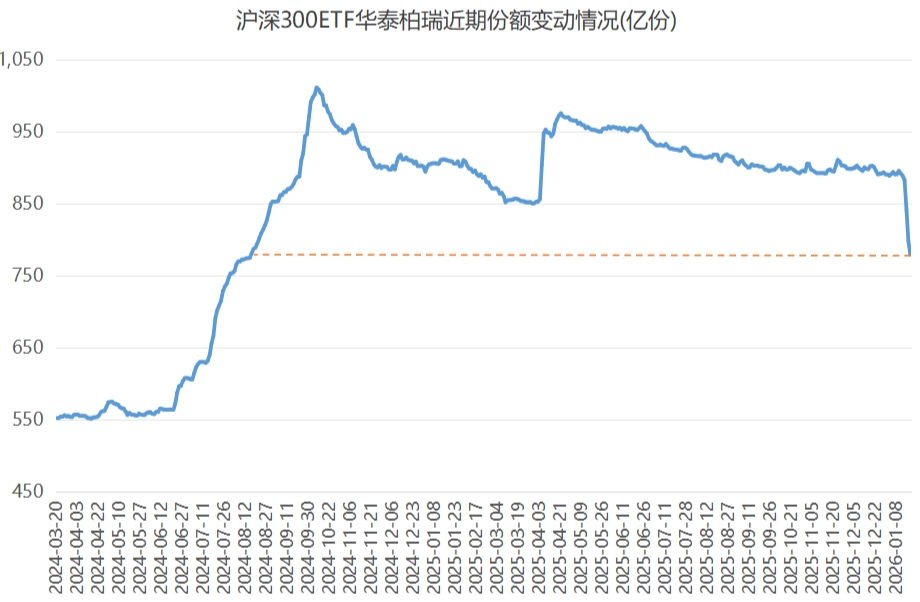
Group 1 - Recent net redemptions in A-share broad-based ETFs have drawn market attention, with significant outflows recorded on January 15 and 16, totaling 687 billion and 863 billion respectively, marking the highest single-day outflows in history [1] - As of January 19, four out of six major broad-based ETFs saw their shares decline by over 10% in the last three trading days, with the largest, Huatai-PB CSI 300 ETF, dropping to 778.63 billion shares, a scale of approximately 369.2 billion, the lowest since August 2024 [1] - The ChiNext and STAR Market ETFs also experienced significant declines, with the E Fund STAR 50 ETF and E Fund ChiNext ETF seeing share reductions of 34.55% and 20.22% respectively [3] Group 2 - In contrast to the outflows from broad-based ETFs, certain commodity, cross-border, and narrow-based ETFs attracted significant inflows, with the Southern Nonferrous ETF being the only product to receive over 10 billion in net inflows, totaling 100.87 billion, driven by rising base metal prices [3] - Other ETFs such as Yongying Satellite ETF, Harvest Software ETF, and GF Media ETF also received net inflows exceeding 6 billion [3] - According to CITIC Securities, the impact of ETF redemptions on individual stocks was significant, with main board, ChiNext, and STAR Market stocks experiencing sell-offs of 946 billion, 334 billion, and 265 billion respectively during the peak outflow days [3] Group 3 - Regulatory measures have been implemented to cool down the market following rapid price increases and overheated sentiment, including raising the minimum margin requirement for margin trading from 80% to 100% [5][6] - The China Securities Regulatory Commission emphasized the need for comprehensive market monitoring and timely counter-cyclical adjustments to maintain market stability and prevent excessive volatility [6] - There are differing views on the long-term outlook for A-shares, with some analysts suggesting the potential for a slow bull market due to reforms, while others remain skeptical about escaping historical volatility patterns [7]





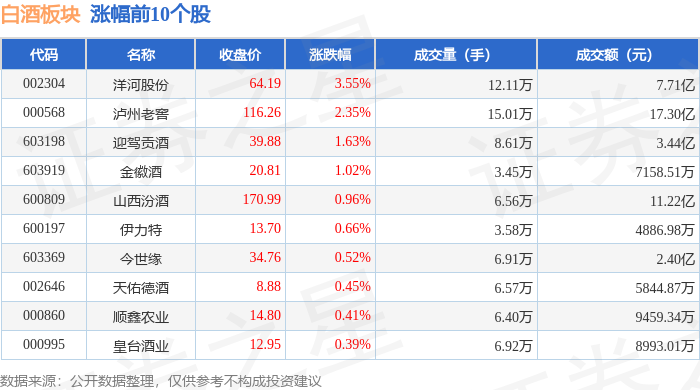
白酒板块1月20日涨0.3%,洋河股份领涨,主力资金净流入1.91亿元
Zheng Xing Xing Ye Ri Bao· 2026-01-20 08:51
Market Overview - The liquor sector experienced a slight increase of 0.3% on January 20, with Yanghe Distillery leading the gains [1] - The Shanghai Composite Index closed at 4113.65, down 0.01%, while the Shenzhen Component Index closed at 14155.63, down 0.97% [1] Individual Stock Performance - Yanghe Distillery (002304) closed at 64.19, up 3.55% with a trading volume of 121,100 shares and a transaction value of 771 million [1] - Luzhou Laojiao (000568) closed at 116.26, up 2.35% with a trading volume of 150,100 shares and a transaction value of 1.73 billion [1] - Other notable performers include: - Yingjia Grape Wine (603198) at 39.88, up 1.63% [1] - Shanxi Fenjiu (600809) at 170.99, up 0.96% [1] - Wuliangye (000858) at 104.91, up 0.34% [2] Capital Flow Analysis - The liquor sector saw a net inflow of 191 million from institutional investors, while retail investors experienced a net outflow of 1.88 billion [2] - The capital flow for key stocks includes: - Yanghe Distillery with a net inflow of 80.15 million from institutional investors [3] - Luzhou Laojiao with a net outflow of 111 million from retail investors [3] - Wuliangye with a net inflow of 10.61 million from institutional investors [3]


一个经济学家的2025年资本市场十大年度词汇
Xin Lang Cai Jing· 2026-01-20 08:11
Group 1: Tariffs and Global Market Dynamics - The concept of "reciprocal tariffs" continues to disrupt global capital markets, reflecting the interplay between major power competition and asset pricing [2][17] - The implementation of these tariffs by the Trump administration has led to significant inflationary pressures in the U.S., with household food costs rising and a technical bear market in U.S. stocks [2][17] - China's strategic response, including precise tariff adjustments and supply chain optimization, has stabilized its export share and accelerated high-end manufacturing [2][18] Group 2: Revaluation of Chinese Assets - The systematic revaluation of Chinese assets in 2025 is driven by deepening institutional reforms, technological breakthroughs, and an upgraded global role [3][19] - Institutional reforms are reshaping the capital market ecosystem, transitioning from a "scale-oriented" to a "quality-first" approach, enhancing policy consistency and attracting long-term capital [3][19] - Technological advancements, particularly in AI and high-end manufacturing, are creating a closed loop of "technological breakthroughs—commercial realization—capital feedback," leading to a systemic increase in asset profitability [3][19][20] Group 3: Gold Market Dynamics - The price of gold reached historical highs in 2025, reflecting a resurgence of "gold faith" in the capital market amid a restructuring of the global financial order [4][21] - The strength of gold is attributed to cracks in the U.S. dollar credit system, with political influences on Federal Reserve decisions undermining the dollar's status as a global public good [4][21] - The rise of gold tokens and the structural differentiation in investor behavior highlight the contrasting logics of "certainty defense" versus "growth speculation" [4][21] Group 4: Class Stabilization Funds - The introduction of class stabilization funds in China represents a significant governance innovation aimed at redefining capital market functions and correcting market failures [5][22] - These funds are designed to mitigate risks associated with asset price volatility, providing a dual protective mechanism through substantial capital reserves and market interventions [5][22] - The timely actions of these funds have effectively restored investor confidence and shifted market sentiment from pessimism to rational value assessment [5][22] Group 5: Inclusivity in Capital Markets - The concept of "capital market inclusivity" emerged as a core consensus in 2025, facilitating a multi-dimensional breakthrough in the "technology-industry-finance" ecosystem [6][24] - The establishment of the Sci-Tech Innovation Board has enabled the acceptance of unprofitable hard-tech companies, aligning capital with new productive forces [6][24] - Regulatory clarity and market-oriented principles have balanced government intervention with effective market operations, enhancing the capital foundation for industrial upgrades [6][24] Group 6: ETF Market Growth - The ETF market in 2025 reached nearly 60 trillion yuan, becoming the largest in Asia and symbolizing a significant ecological transformation in capital markets [7][25] - The rise of ETFs reflects an evolution in market efficiency, with their low management fees making them accessible to younger and smaller investors [7][25] - ETFs have also played a crucial role in stabilizing market expectations through strategic interventions by central financial authorities [7][25] Group 7: The Rise of "Han Wang" - The emergence of "Han Wang" as the new stock king in A-shares signifies a shift from consumption-driven to innovation-driven economic paradigms in China [8][27] - The rapid growth and profitability of Han Wang highlight the transition of the AI chip industry from technological challenges to commercial success [8][27] - This shift reflects a broader trend of capital markets transitioning from supporting traditional industries to empowering new productive forces [8][27] Group 8: Rare Earths as Strategic Assets - Rare earths have become a core focus in A-shares, driven by the convergence of resource revolutions and technological changes [9][29] - China's advancements in extraction technology and its dominance in global refining capacity underscore the strategic importance of rare earths in the tech revolution [9][29] - The complete industrial chain of rare earths positions China as a stabilizing force in key sectors like AI and renewable energy, enhancing its competitive edge [9][29][30] Group 9: Emotional Consumption Trends - "Emotional consumption" has emerged as a new mainline in A-share consumer sectors, reflecting a shift from material satisfaction to emotional value [10][30] - This trend is characterized by structural changes in consumer demand, with companies that resonate emotionally with consumers experiencing significant revenue growth [10][30] - The capital market's ability to capture this trend through differentiated valuation systems is crucial for the sustainable growth of the consumer sector [10][30] Group 10: Narrative Trading - "Narrative trading" has become a central symbol of ecological transformation in A-shares, intertwining behavioral finance with asset pricing [11][31] - This phenomenon has led to shifts in household asset allocation, with increased investments in thematic products driven by collective narratives [11][31] - The rise of narrative trading highlights the need for enhanced investor education to maintain market stability amid potential valuation bubbles [11][31]

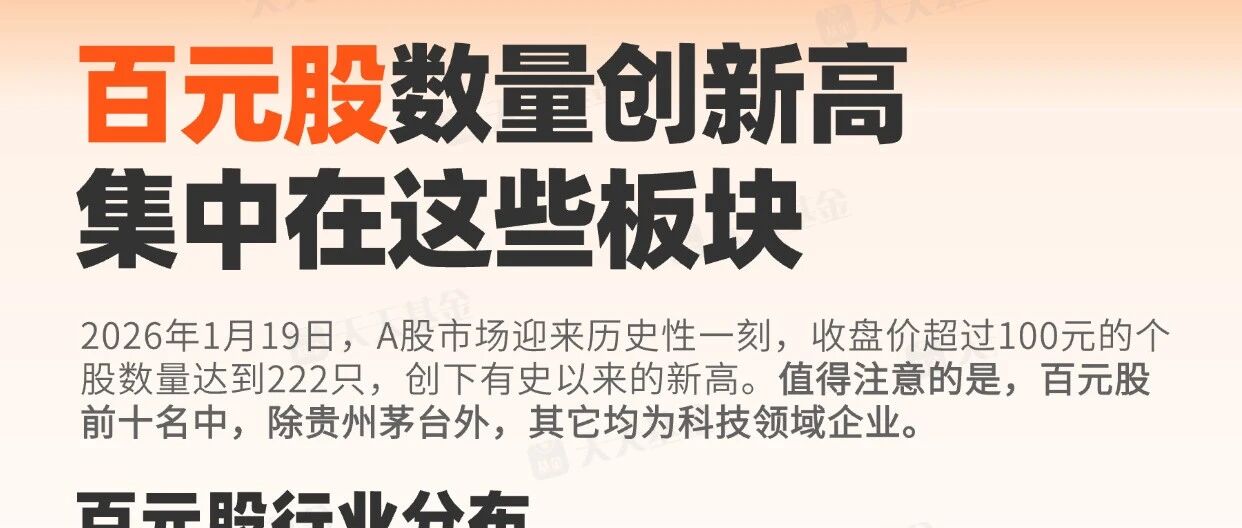
百元股数量创新高,集中在这些板块
天天基金网· 2026-01-20 07:07
Core Viewpoint - The A-share market has reached a historic milestone with the number of stocks closing above 100 yuan reaching 222, marking a new high in history, predominantly driven by technology companies, except for Kweichow Moutai [1][6]. Group 1: Distribution of Hundred Yuan Stocks - The electronic industry leads with 79 stocks, accounting for 35.59% of the total hundred yuan stocks. The machinery equipment industry has 26 stocks (11.71%), and the computer industry has 24 stocks (10.81%) [6]. Group 2: Top Ten Hundred Yuan Stocks - The top three stocks are: 1. Cambricon (寒武纪-U) with a closing price of 1419.66 yuan and a 2025 increase of 106.01% [3]. 2. Kweichow Moutai (贵州茅台) at 1376.00 yuan with a decrease of 6.29% [3]. 3. Source Code Technology (源杰科技) at 748.29 yuan with a remarkable increase of 379.34% [4]. Group 3: Market Trends and Future Outlook - The overall rise in the A-share market has led to a significant increase in the average stock price level, with the number of hundred yuan stocks surpassing 200 as of January 19, 2026 [6]. - Experts predict that the hundred yuan stock group will continue to expand due to ongoing trends in the technology industry and sustained inflow of long-term capital, although structural differentiation is expected to become more pronounced [6].