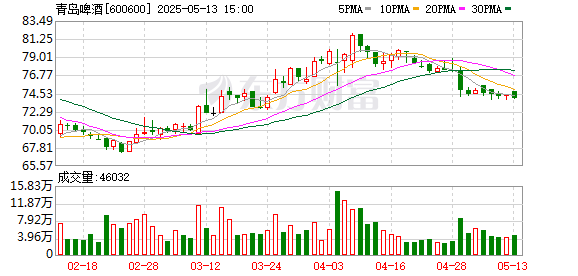
Tsingtao Brewery(600600)

Search documents
青啤喝黄酒,会晕否?
IPO日报· 2025-05-17 06:56
Core Viewpoint - Qingdao Beer is acquiring 100% equity of Jimo Yellow Wine Factory for 665 million yuan as a strategy to seek new growth points amid slowing beer industry growth [1][10]. Industry Overview - The Chinese beer industry has experienced a decline since reaching a peak production of 35 million kiloliters in 2013, with a 28.6% decrease compared to 2013 levels by 2023 [3][6]. - In 2024, the beer production is projected to be 35.213 million kiloliters, a year-on-year decrease of 0.6% [4]. - The industry is now in a mature market phase, where growth relies on capturing market share from competitors rather than overall market expansion [6]. Company Performance - Qingdao Beer reported a slight increase in net profit of 1.81% to 4.345 billion yuan in 2024, but revenue declined by 5.3% to 32.14 billion yuan, ranking third in the industry [6][8]. - Revenue across key regions, including Shandong, North China, and South China, showed varying degrees of decline, with Shandong's sales dropping from 22.869 billion yuan in 2023 to 22.095 billion yuan in 2024 [8][9]. Acquisition Rationale - The acquisition of Jimo Yellow Wine is aimed at diversifying Qingdao Beer's product line and expanding market channels, potentially providing a complementary sales effect between beer and yellow wine [12][10]. - Jimo Yellow Wine, established in 1949, has a small revenue scale of 166 million yuan in 2024, with a year-on-year growth of 13.5% [16]. Market Dynamics - The beer industry is facing intensified competition, particularly from brands like China Resources Snow Beer and AB InBev, which is pressuring Qingdao Beer's growth [6][10]. - The seasonal nature of beer sales has been highlighted, with the fourth quarter traditionally being a low sales period for Qingdao Beer [13].



食品饮料行业2024年报和2025一季报综述:白酒处于调整期,零食景气度较高
CHINA DRAGON SECURITIES· 2025-05-17 00:30
Investment Rating - The report maintains a "Recommended" investment rating for the food and beverage sector [2] Core Insights - The food and beverage industry is experiencing a period of adjustment, particularly in the liquor segment, while the snack sector shows high levels of prosperity [1] - The overall revenue and net profit growth rates for the food and beverage industry have slowed down in Q1 2025 compared to 2024, with a notable performance differentiation among sub-sectors [4][14] - The report highlights that the liquor industry is in a bottoming phase, while the snack industry continues to thrive [4][22] Summary by Relevant Sections 1. Industry Overview - In 2024, the food and beverage industry achieved a total revenue of CNY 10,877.93 billion, with a year-on-year growth of 3.91%, and a net profit of CNY 2,171.12 billion, growing by 5.51% [14] - For Q1 2025, the industry reported revenues of CNY 3,264.12 billion, a 2.52% increase year-on-year, and net profits of CNY 815.45 billion, growing by 0.27% [14] 2. Sub-sector Performance - **Liquor**: The liquor sector saw a revenue increase of 1.60% in Q1 2025, with net profits growing by 2.26%. High-end liquor brands like Guizhou Moutai and Shanxi Fenjiu showed strong resilience [15][22] - **Snacks**: The snack sector reported a remarkable revenue growth of 30.96% in Q1 2025, driven by the expansion of popular product categories and new sales channels [15][30] - **Soft Drinks**: The soft drink sector maintained a high level of prosperity, with leading companies showing significant revenue growth [4][30] - **Dairy Products**: The dairy sector showed signs of improvement in Q1 2025, with a notable reduction in profit decline compared to 2024 [4][30] - **Condiments**: The condiment sector is experiencing a recovery, with improved performance attributed to cost reductions in raw materials [4][30] 3. Investment Recommendations - The report suggests focusing on key companies within each sub-sector, including Guizhou Moutai, Shanxi Fenjiu, and Youyou Foods in the liquor and snack sectors, respectively [4][5][30] - The food and beverage sector is expected to benefit from macroeconomic policies aimed at boosting consumption, indicating potential for recovery [4][5]




新消费快讯|始祖鸟联手松赞推出纳木措主题系列;白犀牛完成2亿元B轮融资
新消费智库· 2025-05-16 12:34
这是新消费智库第 2 6 3 5 期文章 新消费导读 新消费 1. 安慕希 × 绿箭推出清新薄荷味酸奶 1. 安慕希 × 绿箭推出清新薄荷味酸奶 2. 52TOYS 上线异形系列新品 3. Alexander Wang 与喜茶携手推出联名系列 4. 和其正推新养生水 5. 雀巢冠能发布抗过敏猫粮新品 6. 山东未来机器人获数亿元战略领投 7. 青岛啤酒拟收购即墨黄酒 100% 股权 8. 博裕基金拟收购北京 SKP 最高 45% 股权 9. 传欧莱雅有意收购 Medi k8 10. 白犀牛完成 2 亿元 B 轮融资 11. 斯嘉丽 · 约翰逊护肤品牌创业伙伴离职 12. PETA 呼吁爱马仕推出纯素奢侈包袋 13. 美团闪购联合百大品牌推出安心闪购计划 14. CRAFT 于上海和南京双城开店 15. 始祖鸟联手松赞推出纳木措主题系列 安慕希官宣推出与绿箭联名的夏季限定新品:清新薄荷味酸奶。该产品融合薄荷与酸奶风味,希望为消费者带来解暑与清凉体验。营养含量方 面,新品采用无蔗糖配方,每瓶含 7.1 克蛋白质。 ( FBIF 食品饮料创新) 2. 52TOYS 上线异形系列新品 52TOYS 重磅官宣「异形」系 ...



食饮24年与25年一季度业绩综述:业绩分化加大,经营战略重要性凸显
LIANCHU SECURITIES· 2025-05-16 10:56
Investment Rating - The report maintains a "Positive" investment rating for the food and beverage industry [7] Core Insights - The food and beverage industry is experiencing increased performance differentiation, highlighting the importance of operational management and business strategy [3] - In 2024, the food and beverage sector is expected to achieve a modest single-digit growth, with revenue and net profit growth rates slowing down, indicating ongoing demand pressure [3][10] - Structural growth opportunities exist in sub-sectors like beverages and snacks, with some products/channels showing year-on-year growth rates exceeding 30% [3] Summary by Sections Overall Food and Beverage Industry - In 2024, the food and beverage sector achieved revenue of CNY 10,877.93 billion, a year-on-year increase of 3.91%, with a slowdown of 4.06 percentage points [10] - The net profit attributable to shareholders reached CNY 2,104.49 billion, growing by 6.07%, but also showing a slowdown of 10.35 percentage points [10] - The industry ranked 10th and 9th in revenue and net profit growth among 31 first-level industries [10] Baijiu (Chinese Liquor) - The baijiu industry saw revenue and profit growth exceeding 7% in 2024, with over half of A-share listed companies reporting growth [21] - High-end baijiu brands are shifting towards mid-to-high-end markets, with notable growth in brands like Guizhou Moutai and Wuliangye [21][24] - The competitive landscape is intensifying, particularly in the mid-range segment, with companies adopting diverse strategies to maintain market share [22][24] Soft Drinks - The soft drink sector is characterized by strong performance from functional beverages, with companies like Dongpeng Beverage leading with a revenue growth of 40.63% [26][28] - The market is facing challenges from health-conscious consumer trends and competition from tea beverages [26] - Companies are encouraged to innovate and diversify their product offerings to adapt to changing consumer preferences [27] Snacks - The snack industry is experiencing significant growth, particularly through community group buying and e-commerce channels [29] - Companies like Wancheng Group and Yanjinpuzi are expanding rapidly, with Wancheng Group's revenue from snack stores increasing by 262.94% [29] - However, some companies face pressure due to declining foot traffic in physical stores and intense competition [30] Condiments - The condiment sector is benefiting from cost reductions and the expansion of compound condiments, with major players like Haitian Flavor Industry reporting strong performance [32][33] - The industry is expected to accelerate product upgrades and national expansion as the restaurant sector recovers [32] Beer - The beer industry is seeing a slowdown in consumption upgrades, but there are still growth opportunities in the craft beer segment [34][35] - Companies are focusing on product innovation and market penetration to adapt to changing consumer demands [34][35]


青啤6.6亿“喝”黄酒,能否酿出“第二春”?
3 6 Ke· 2025-05-15 01:29
Core Viewpoint - Qingdao Beer is acquiring 100% of Jimo Yellow Wine for 665 million yuan to optimize its seasonal losses and diversify its business, leveraging the complementary seasonal sales of beer and yellow wine [1][3][5] Group 1: Acquisition Details - The acquisition price of 6.65 billion yuan represents a premium of over 200% compared to Jimo Yellow Wine's net assets of 203 million yuan [1] - Jimo Yellow Wine reported a revenue of 166 million yuan in 2024, a year-on-year increase of 13.5%, and a net profit of 30.47 million yuan, up 38% [2] Group 2: Market Context - Qingdao Beer has faced declining sales, with a 5.3% drop in revenue to 32.138 billion yuan in 2024, marking the lowest growth rates for net profit since 2017 [5] - The beer industry in China is experiencing a downturn, with a 0.6% decrease in production among major breweries in 2024 [6] Group 3: Strategic Implications - The acquisition aims to address Qingdao Beer’s seasonal losses, as the fourth quarter is a peak season for yellow wine, contrasting with beer's summer peak [3][6] - Analysts express caution regarding the acquisition, highlighting challenges in integrating the two distinct product lines and the need for effective market education for yellow wine [8]
青岛啤酒回应收购即墨黄酒原因:丰富产品线、与啤酒形成销售互补
Bei Ke Cai Jing· 2025-05-15 00:48
Group 1 - Qingdao Beer announced the acquisition of 100% equity in Jimo Yellow Wine from Xinhua Jin Group and Lujin Group for a total consideration of RMB 66.5 million, along with adjustments for profit and loss during the price adjustment period [1] - Jimo Yellow Wine, established in 1949, is a significant representative of traditional Chinese yellow wine, known for its unique flavor and rich cultural heritage [1] - In 2024, Jimo Yellow Wine achieved a revenue of RMB 166.41 million, representing a year-on-year growth of 13.5%, and a net profit of RMB 30.47 million, with a year-on-year increase of 38.0% [1] Group 2 - The acquisition is aimed at diversifying the company's business and creating new growth opportunities, enhancing the product line and market channels [2] - The integration of Jimo Yellow Wine is expected to complement Qingdao Beer's existing beer products, creating a competitive cross-category product portfolio [2] - Post-acquisition, the company plans to integrate supply chains, sales networks, and channels of both Jimo Yellow Wine and beer products to achieve synergy [2]
中期策略会交流反馈报告(附16家公司要点):行业渐进修复,结构亮点已现
Huachuang Securities· 2025-05-14 11:12
Core Insights - The food and beverage industry is gradually recovering, with structural highlights emerging, particularly in the liquor and consumer goods sectors [2][5][12] - Investment recommendations emphasize the importance of domestic demand recovery, suggesting a more optimistic outlook for investment opportunities in the food and beverage sector [12][13] Industry Overview Liquor Sector - Liquor companies are pragmatically lowering growth targets, focusing on healthy operations. Most companies have abandoned aggressive growth goals for 2024, instead aiming for stable operations [5][7] - The industry is entering a phase of inventory clearance, with expectations of gradual recovery in the second half of the year. Key players are advised to focus on channel health and payment quality [5][7] - Specific company insights include: - Moutai and Wuliangye are maintaining strong market positions, while other brands are adjusting strategies to manage inventory and pricing [7][8] - The overall growth target for the liquor industry has been adjusted to a range of 5% to 10% [7] Consumer Goods Sector - Traditional leaders in dairy, beer, and yeast are showing signs of recovery, while new business models are gaining traction [9][12] - Key insights from specific companies include: - Yili is expected to achieve revenue growth of 2.7% in 2025, with a focus on high-quality products [9][10] - Anqi Yeast is experiencing steady growth driven by overseas markets and cost advantages [10] - Modern Dairy anticipates double-digit growth in raw milk production, supported by improved operational efficiency [10] - The snack and beverage segments are highlighted as areas of potential growth, with recommendations for companies like Dongpeng and Salted Fish [12][13] Investment Recommendations - The report suggests a focus on leading liquor brands as they begin to show signs of bottoming out, with recommendations for Moutai, Wuliangye, and Fenjiu [12][13] - In the consumer goods sector, there is an emphasis on snacks and beverages, with recommendations for companies like Dongpeng and Salted Fish, as well as a focus on the recovery of the beer and dairy sectors [12][13]

券商看空青岛啤酒6.65亿买黄酒新帅第一把火能烧旺吗?
Xin Lang Cai Jing· 2025-05-13 21:05
Core Viewpoint - Qingdao Beer is pursuing a cross-industry acquisition by planning to acquire 100% of the shares of Shandong Jimo Huangjiu Factory for a total consideration of 665 million yuan, aiming to create new growth points and diversify its business beyond beer [2][6]. Group 1: Acquisition Details - The acquisition involves Qingdao Beer purchasing the entire stake of Jimo Huangjiu, which was founded in 1949 and is a representative of Northern Huangjiu [3][7]. - The acquisition price is set at 665 million yuan, which includes adjustments for profit and loss during the price adjustment period [2][8]. - Jimo Huangjiu reported a revenue of 166 million yuan in 2024, with a net profit of 30.47 million yuan, reflecting a year-on-year growth of 13.5% and 38% respectively [8]. Group 2: Market Context - The Chinese beer industry has been in a downward trend since reaching a peak production of 50.615 million tons in 2013, prompting Qingdao Beer to seek diversification through acquisitions [6]. - Qingdao Beer has faced challenges in its core beer business, with a decline in sales volume for its main brand, which fell to 4.34 million kiloliters in 2024, a decrease of approximately 4.82% year-on-year [4][11]. Group 3: Financial Performance - In 2024, Qingdao Beer reported a net profit of 4.345 billion yuan, marking a year-on-year increase of 1.81%, the lowest growth rate since 2017 [5][11]. - The company's revenue for 2024 was 32.138 billion yuan, down 5.3% from the previous year [11]. Group 4: Market Reactions and Concerns - Market analysts have expressed caution regarding the acquisition, citing limited synergy between beer and Huangjiu due to different consumer bases and sales channels [10]. - Concerns have been raised about potential management conflicts post-acquisition and the unclear strategy for diversification given the smaller scale of Jimo Huangjiu [10].

动态 | 青岛啤酒将整合旗下饮料业务;贵州茅台称目前没有港股上市的相关计划
Sou Hu Cai Jing· 2025-05-13 14:27
Company Developments - Luckin Coffee has launched a new round of franchise recruitment, targeting over 800 specific locations across 186 cities in China, with more than 500 locations already approved and over 400 stores opened as of April this year [1] - Three Squirrels has acknowledged a reduction in the number of distributors, with a 20% decrease over the past two years, and plans to optimize distributor management services to enhance cooperation and satisfaction [3] - BR Foods from Brazil plans to open a factory in China on May 15, focusing on producing hamburgers, chicken nuggets, and bacon using Brazilian meat [4] - Qingdao Beer Group will integrate its beverage business after merging with Qingdao Beverage Group, ensuring no competition among similar products [4] - Kweichow Moutai has stated there are currently no plans for a Hong Kong stock listing [5] - Anheuser-Busch announced a $300 million investment plan in its U.S. factories, equivalent to approximately 2.1 billion RMB, as part of a broader strategy to enhance operations and meet consumer demands [5] Industry Trends - The Chinese beverage industry is undergoing significant changes, with five major shifts identified: global upheaval, China's rise, a new industrial cycle, technological advancements, and changes in the new generation [3][4] - Nestlé Italy is focusing on the silver economy, with 35%-38% of sales coming from consumers aged 50-65, and plans to invest 1.5%-2% of revenue in R&D to improve product quality for older consumers [6] - Ferrero North America is set to launch its largest innovation initiative, introducing new square-shaped Ferrero Rocher chocolates and a new peanut flavor of Nutella [6] Regulatory and Economic Developments - The U.S. and China have made significant progress in trade talks, with the U.S. canceling 91% of tariffs and China reciprocating, which is expected to benefit producers and consumers in both countries [8]




青岛啤酒收购黄酒企业 多元化布局转向生态化竞争
Zhong Guo Jing Ying Bao· 2025-05-13 12:48
Core Viewpoint - Qingdao Beer is expanding its business by acquiring a 100% stake in Jimo Yellow Wine for 665 million yuan, aiming to diversify its operations beyond beer and enhance its product offerings [2][3]. Group 1: Acquisition Details - The acquisition of Jimo Yellow Wine is part of Qingdao Beer's strategy to broaden its non-beer business and create new growth opportunities [2]. - The deal involves Qingdao Beer purchasing the stake from Xinhua Jin Group and Shandong Lujin Import and Export Group, with the total price including adjustments for profit and loss during the price adjustment period [3]. Group 2: Financial Performance - Jimo Yellow Wine is projected to achieve a revenue of 166 million yuan in 2024, reflecting a year-on-year growth of 13.5%, and a net profit of 30 million yuan, up 38% from the previous year [4]. - In contrast, Qingdao Beer is expected to report a revenue of 32.138 billion yuan and a net profit exceeding 4.3 billion yuan in 2024, significantly higher than Jimo Yellow Wine [6]. Group 3: Market Strategy - The integration of Jimo Yellow Wine is anticipated to complement Qingdao Beer's product line and market channels, providing consumers with a more diverse selection [5]. - The acquisition is seen as a strategic move to mitigate seasonal sales fluctuations, particularly since the fourth quarter is typically a slow season for Qingdao Beer [6]. Group 4: Industry Context - The beer industry is facing challenges from the rise of craft beers, prompting major beer groups to adopt multi-brand, multi-category, and multi-channel strategies to enhance revenue growth [2][10]. - Qingdao Beer is focusing on high-end and diversified product offerings, with plans to strengthen its main brand and develop new products to meet consumer demands [10][11].