
Shanxi Xinghuacun Fen Wine Factory (600809)

Search documents
山西汾酒:选举武跃飞为副董事长
news flash· 2025-05-29 10:56
Core Points - Shanxi Fenjiu announced the election of Wu Yuefei as the vice chairman of the eighth board of directors, with a term consistent with the current board [1] Summary by Category Company Governance - The eighth board of directors of Shanxi Fenjiu held its 73rd meeting on May 29, 2025, where Wu Yuefei was elected as the vice chairman [1]

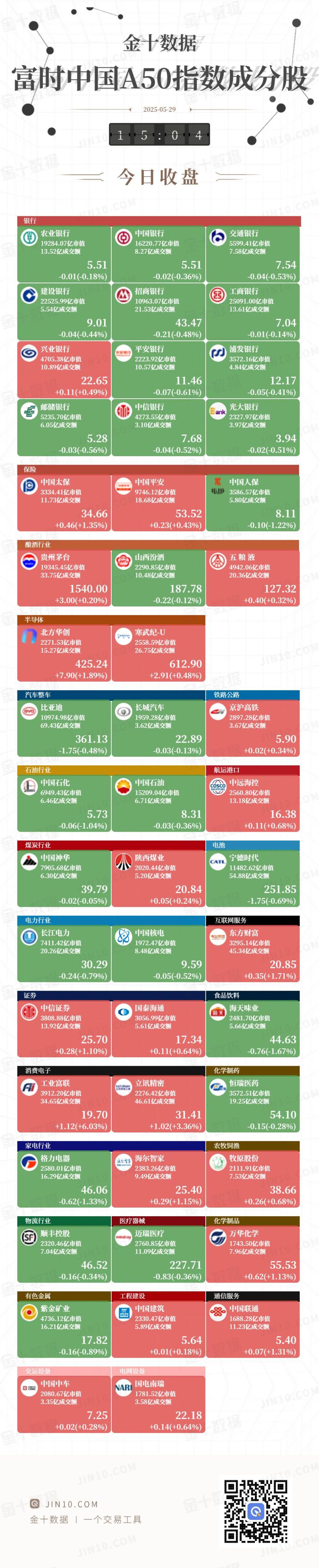
金十图示:2025年05月29日(周四)富时中国A50指数成分股今日收盘行情一览:半导体板块全天走高,汽车板块午后飘绿
news flash· 2025-05-29 07:08
Market Overview - The FTSE China A50 Index component stocks showed a mixed performance with the semiconductor sector rising throughout the day while the automotive sector turned negative in the afternoon [1] Insurance Sector - China Life Insurance had a market capitalization of 358.657 billion with a trading volume of 1.868 billion, increasing by 1.35% - China Pacific Insurance had a market capitalization of 333.441 billion with a trading volume of 0.580 billion, increasing by 0.43% - Ping An Insurance had a market capitalization of 974.612 billion with a trading volume of 1.173 billion, decreasing by 1.22% [3] Alcohol Industry - Kweichow Moutai had a market capitalization of 1934.545 billion with a trading volume of 10.48 billion, decreasing by 0.12% - Wuliangye Yibin had a market capitalization of 229.085 billion with a trading volume of 20.36 billion, increasing by 0.32% - Shanxi Fenjiu had a market capitalization of 494.206 billion with a trading volume of 33.75 billion, increasing by 0.20% [3] Semiconductor Sector - Northern Huachuang had a market capitalization of 227.153 billion with a trading volume of 15.27 billion, increasing by 1.89% - Cambricon Technologies had a market capitalization of 255.859 billion with a trading volume of 26.75 billion, increasing by 0.48% [3] Automotive Sector - BYD had a market capitalization of 289.728 billion with a trading volume of 69.43 billion, decreasing by 0.48% - Great Wall Motors had a market capitalization of 1097.498 billion with a trading volume of 3.62 billion, decreasing by 0.13% - Beijing-Shanghai High-Speed Railway had a market capitalization of 195.928 billion with a trading volume of 3.67 billion, increasing by 0.34% [3] Energy Sector - COSCO Shipping had a market capitalization of 1520.904 billion with a trading volume of 6.46 billion, decreasing by 0.36% - Sinopec had a market capitalization of 694.943 billion with a trading volume of 13.18 billion, decreasing by 1.04% [3] Coal Industry - China Shenhua Energy had a market capitalization of 202.044 billion with a trading volume of 6.30 billion, decreasing by 0.05% - Shaanxi Coal and Chemical Industry had a market capitalization of 790.568 billion with a trading volume of 54.88 billion, increasing by 0.24% [3] Power Sector - China Yangtze Power had a market capitalization of 741.142 billion with a trading volume of 20.26 billion, increasing by 1.71% - China Nuclear Power had a market capitalization of 197.247 billion with a trading volume of 8.48 billion, decreasing by 0.79% [4] Food and Beverage Sector - Citic Securities had a market capitalization of 380.888 billion with a trading volume of 13.92 billion, increasing by 1.10% - Haitai Flavoring had a market capitalization of 248.170 billion with a trading volume of 5.66 billion, decreasing by 1.67% [4] Consumer Electronics - Heng Rui Medicine had a market capitalization of 391.220 billion with a trading volume of 34.65 billion, decreasing by 0.28% - Industrial Fulian had a market capitalization of 357.251 billion with a trading volume of 46.61 billion, increasing by 6.03% [4] Logistics Sector - Mindray Medical had a market capitalization of 174.350 billion with a trading volume of 7.04 billion, decreasing by 0.34% - SF Holding had a market capitalization of 232.046 billion with a trading volume of 11.09 billion, decreasing by 0.36% [4] Telecommunications - China Unicom had a market capitalization of 473.612 billion with a trading volume of 11.23 billion, increasing by 1.31% [4]






2025年中国白酒行业报告:高端量价双增,次高端进入调整周期
Qin Ce Xiao Fei Yan Jiu· 2025-05-29 03:05
Investment Rating - The report indicates a positive investment outlook for the Chinese liquor industry, particularly for high-end brands, while noting that the mid-range segment is entering an adjustment phase [3][22]. Core Insights - The Chinese liquor industry is experiencing a significant transformation from "scale expansion" to "value enhancement," with a notable decline in production but an increase in sales revenue, reflecting a trend towards premium consumption [12][13]. - High-end brands are maintaining growth in both volume and price, while the mid-range segment faces challenges, leading to a differentiated market landscape [3][25]. - The industry is witnessing a dual-track transformation in distribution channels, focusing on digitalization of traditional channels and diversification into new consumption scenarios [30][32]. Summary by Sections Current Status of the Liquor Industry - The liquor market is showing signs of recovery, with a revenue growth rate of 7.3% in 2024, significantly outperforming the overall food and beverage sector [6]. - Despite a decline in production from 1,358.4 million liters in 2016 to 414.5 million liters in 2024, sales revenue increased from 561.78 billion yuan to 796.38 billion yuan, indicating a shift towards higher quality consumption [3][12][13]. Competitive Landscape - The competitive landscape is characterized by three main trends: leading brands driving growth, mid-range brands under pressure, and regional brands finding opportunities [19][60]. - High-end liquor companies like Kweichow Moutai, Wuliangye, and Luzhou Laojiao exhibit high gross margins and low marketing expenses, reflecting strong brand power [56]. - The report highlights the emergence of a new competitive trio: Kweichow Moutai, Wuliangye, and Shanxi Fenjiu, with Shanxi Fenjiu surpassing Yanghe in revenue due to its national strategy [60][64]. Trends in Consumption and Distribution - The report notes a structural adjustment in the liquor market, with high-end brands benefiting from premium pricing strategies while mid-range brands face inventory pressures [25][34]. - The distribution channels are evolving, with traditional distributors still holding a 55% market share, but new channels like e-commerce and live streaming are rapidly gaining traction [30][31]. - The digital transformation of traditional channels is highlighted, with initiatives like Yanghe's "Sky Net Project" improving operational efficiency [30][31]. Financial Performance and Growth Drivers - Kweichow Moutai's revenue grew from 109.464 billion yuan in 2019 to 174.144 billion yuan in 2024, with a compound annual growth rate of 15.4% [64]. - Shanxi Fenjiu's revenue increased from 199.71 billion yuan in 2021 to 360.11 billion yuan in 2024, driven by high-end product offerings and a national expansion strategy [76][82]. - The report emphasizes the importance of digital marketing and international expansion as key growth strategies for leading liquor companies [60][64].

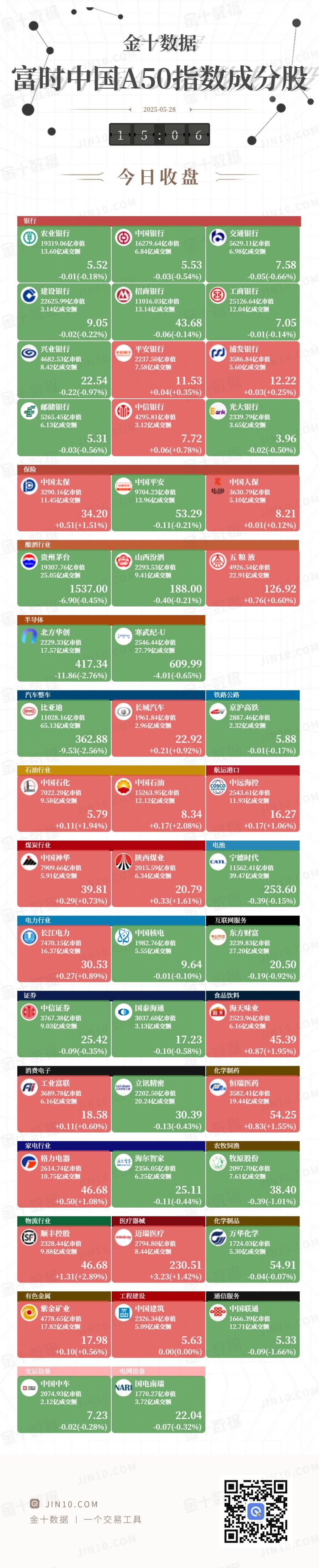
金十图示:2025年05月28日(周三)富时中国A50指数成分股今日收盘行情一览:石油、煤炭板块全天飘红,银行、汽车板块午后继续涨跌互现
news flash· 2025-05-28 07:12
Market Overview - The FTSE China A50 Index component stocks showed mixed performance with the oil and coal sectors gaining throughout the day, while the banking and automotive sectors fluctuated in the afternoon [1]. Sector Performance Insurance - China Pacific Insurance, China Ping An, and China Life Insurance had market capitalizations of 329.02 billion, 363.08 billion, and 970.42 billion respectively, with trading volumes of 1.145 billion, 1.396 billion, and 0.510 billion [3]. Alcohol Industry - Kweichow Moutai, Shanxi Fenjiu, and Wuliangye had market capitalizations of 1,930.78 billion, 229.35 billion, and 492.65 billion respectively, with trading volumes of 2.505 billion, 0.941 billion, and 2.291 billion [3]. Semiconductor - Northern Huachuang and Cambrian had market capitalizations of 222.93 billion and 254.64 billion respectively, with trading volumes of 1.757 billion and 2.779 billion [3]. Automotive - BYD, Great Wall Motors, and Beijing-Shanghai High-Speed Railway had market capitalizations of 1,102.81 billion, 288.75 billion, and 196.18 billion respectively, with trading volumes of 6.513 billion, 0.296 billion, and 0.232 billion [3]. Oil Industry - COSCO Shipping, Sinopec, and China National Offshore Oil Corporation had market capitalizations of 702.22 billion, 1,526.39 billion, and 254.36 billion respectively, with trading volumes of 0.958 billion, 1.212 billion, and 1.193 billion [3]. Coal Industry - Shaanxi Coal and Ningde Times had market capitalizations of 201.56 billion and 790.97 billion respectively, with trading volumes of 0.591 billion and 0.634 billion [3]. Power Industry - Yangtze Power and China Nuclear Power had market capitalizations of 198.28 billion and 747.01 billion respectively, with trading volumes of 1.637 billion and 0.555 billion [4]. Food and Beverage - Citic Securities, Guotai Junan, and Haitian Flavoring had market capitalizations of 303.76 billion, 376.74 billion, and 252.40 billion respectively, with trading volumes of 0.903 billion, 0.313 billion, and 0.616 billion [4]. Consumer Electronics - Industrial Fulian, Luxshare Precision, and Kairui Pharmaceutical had market capitalizations of 368.98 billion, 220.25 billion, and 358.24 billion respectively, with trading volumes of 2.024 billion, 0.616 billion, and 1.944 billion [4]. Home Appliances - Gree Electric, Haier Smart Home, and Muyuan Foods had market capitalizations of 261.47 billion, 209.77 billion, and 235.61 billion respectively, with trading volumes of 1.075 billion, 0.625 billion, and 0.761 billion [4]. Medical Devices - Mindray Medical, Wanhua Chemical, and SF Holding had market capitalizations of 172.40 billion, 232.84 billion, and 279.48 billion respectively, with trading volumes of 0.988 billion, 0.530 billion, and 0.844 billion [4]. Communication Services - Zijin Mining, China State Construction, and China Unicom had market capitalizations of 232.63 billion, 166.64 billion, and 477.87 billion respectively, with trading volumes of 1.782 billion, 0.509 billion, and 1.271 billion [4].





TOP6酒企相继召开业绩说明会,白酒行业真要变天了?
Sou Hu Cai Jing· 2025-05-28 03:48
Core Viewpoint - The top six listed liquor companies in China are transitioning to a low-speed growth model, reflecting a structural change in the industry due to external economic pressures, market transformation, and inventory adjustments [1][3][4] Industry Performance - In Q1 2023, the total revenue of large-scale liquor enterprises in China was 196.3 billion, a slight increase of 0.38% year-on-year, while total profit decreased by 0.73% [3] - The production of liquor in China from January to April 2025 was 1.308 million kiloliters, a year-on-year decrease of 7.8%, indicating a potential eighth consecutive year of declining production if the trend continues [1] Strategic Adjustments - Major liquor companies are adopting more pragmatic and quality-focused growth strategies, with Moutai setting a revenue growth target of around 9% for 2023 [4][6] - Companies like Wuliangye and Luzhou Laojiao emphasize stability and gradual progress in their development goals, reflecting a shift from rapid growth to high-quality development [4][6] Market and Channel Strategies - Companies are focusing on enhancing channel operation efficiency and quality, with Yanghe implementing product optimization and inventory control measures [8][10] - Luzhou Laojiao is adjusting sales targets and market policies based on consumer behavior, while Gujing Gongjiu is optimizing resource allocation for better effectiveness [10] Product Innovation - The industry is seeing a trend towards low-alcohol products, with Luzhou Laojiao's 38-degree Guojiao 1573 achieving over 10 billion in revenue [18][20] - The low-alcohol market is projected to grow significantly, with a compound annual growth rate of around 30% from 2021 to 2024, indicating a promising opportunity for smaller enterprises [20][21] Youth Engagement - The liquor industry recognizes the importance of engaging younger consumers, with companies like Wuliangye and Fenjiu launching targeted products and marketing strategies to attract this demographic [14][16] - The younger consumer segment (ages 25-40) accounted for 38% of liquor consumers in the first half of 2023, highlighting the need for brands to adapt to changing preferences [14] Conclusion - The liquor industry is undergoing a significant transformation, moving from rapid expansion to a focus on value creation and quality development, with both large and small enterprises needing to adapt to these changes to thrive in the evolving market landscape [21]




观酒 白酒产量持续下滑,中小酒企“存量厮杀”加剧
Nan Fang Du Shi Bao· 2025-05-27 10:23
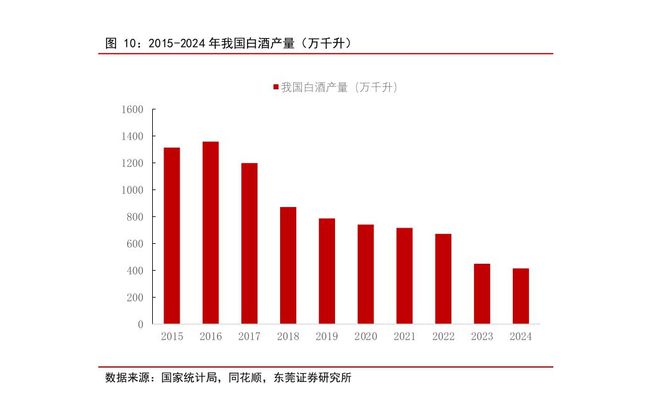
随着白酒产量的持续下滑,行业整体踏入存量竞争阶段。有白酒上市公司5月就公开表示:酒类消费供 需结构出现了转移和分化,酒类消费市场进入到存量期;舍得酒业(600702.SH)也在近期提及"行业挤 压式存量竞争不断加剧"。 国家统计局最新数据显示,2025年1-4月,全国规模以上企业白酒(折65度,商品量)产量130.8万千 升,同比下降7.8%。其中,4月产量28.1万千升,同比下降13.8%。 记者注意到,2016年以来,白酒产量逐年下滑。据国家统计局数据,我国白酒产量在2016年达到1358.4 万千升的高点,此后便开启逐年下滑模式,2024年我国白酒产量为414.5万千升。 一位白酒上市公司高管表示:"行业调整短期会增加企业经营难度,导致行业竞争加剧,但对于行业健 康度提升也有积极作用。" 白酒产量逐年下滑,中小酒企"存量厮杀"加剧 国家统计局数据显示,2024年,全国规模以上企业累计白酒产量(折65度,商品量)414.5万千升,同比 下降1.8%;2024年12月,规模以上企业白酒(折65度)产量47.4万千升,同比下降7.6%。 来源于东莞证券研究所 这是白酒产量持续下滑的第八个年头。产量收缩的原因, ...


2025中国品牌出海·环球行丨汾酒亮相意大利米兰 东方酒韵“破圈”时刻到来
Huan Qiu Wang· 2025-05-27 09:38
Core Viewpoint - The event "New Quality Leading, Brand Setting Sail" held in Milan showcases the internationalization of Chinese liquor, particularly focusing on Shanxi Xinghuacun Fenjiu International Trade Co., which aims to promote Chinese liquor culture globally [1][3]. Group 1: Event Overview - The event was guided by the Chinese Consulate in Milan and organized by Global Times, highlighting the achievements of Chinese liquor brands in international markets [1]. - Fenjiu International's General Manager, Zhang Weidong, emphasized the importance of quality and culture in representing Chinese products abroad [5][7]. Group 2: Cultural Integration - Zhang Weidong stated that food and drink serve as important cultural ambassadors between China and Italy, with Fenjiu's products already well-received in Italy [3][5]. - The company aims to tell a compelling story of Chinese brand globalization, focusing on quality and cultural narratives [5][10]. Group 3: Market Strategies - Fenjiu's international strategy includes two main paths: cultural immersion through the Chinese diaspora and breaking into local markets via cocktail culture [7][12]. - The company has established a presence in over 70 countries, with more than 100 overseas distributors and 9,000 retail outlets [7][12]. Group 4: Performance Metrics - Fenjiu reported a revenue of 36.011 billion yuan in 2024, a year-on-year increase of 12.79%, and a net profit of 12.243 billion yuan, up 17.29% [12][13]. - The company has been proactive in aligning with international standards and enhancing its global footprint through various initiatives since 1992 [13][17]. Group 5: Future Outlook - The company is focused on transforming from a "Chinese famous liquor" to a "world famous liquor" by leveraging its historical craftsmanship and innovative approaches [17].

机构预计消费复苏将是贯穿全年的投资主线。主要消费ETF(159672)盘中飘红,溢价交易
Sou Hu Cai Jing· 2025-05-27 05:35
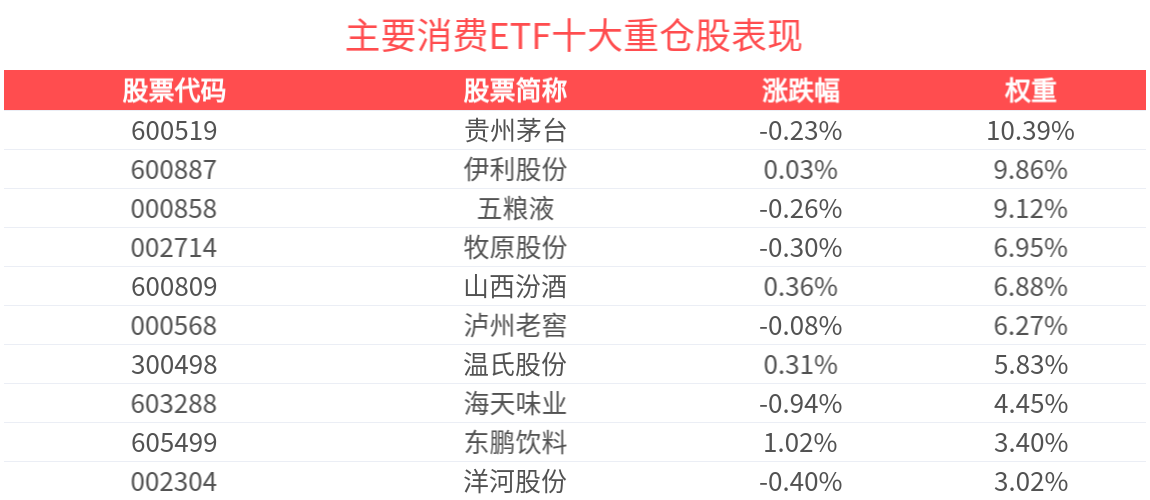
Group 1 - The main consumption index (000932) has shown a slight increase of 0.14% as of May 27, 2025, with notable gains in stocks such as Yanjing Beer (2.89%) and Angel Yeast (2.85%) [1] - The major consumption ETF (159672) has risen by 4.04% over the past three months, indicating a positive trend in consumer sector investments [1] - Huatai Securities expresses optimism regarding the food and beverage industry during the economic transition towards consumption, supported by clear policies and steady growth in retail sales [1] Group 2 - The major consumption ETF closely tracks the main consumption index and is categorized into 11 primary and 35 secondary industries, providing a comprehensive analysis tool for investors [2] - Since its inception, the major consumption ETF has achieved a maximum monthly return of 24.35% and an average monthly return of 5.36% [2] - The current price-to-earnings ratio (PE-TTM) of the major consumption index is 19.75, indicating a valuation lower than 95.63% of the past year, suggesting historical low valuations [2] Group 3 - As of April 30, 2025, the top ten weighted stocks in the main consumption index account for 67.16% of the total index, with Yili (10.39%) and Kweichow Moutai (10.39%) being the largest contributors [3] - The top ten stocks include notable companies such as Wuliangye and Moutai, reflecting the concentration of market weight in a few key players [3][5]




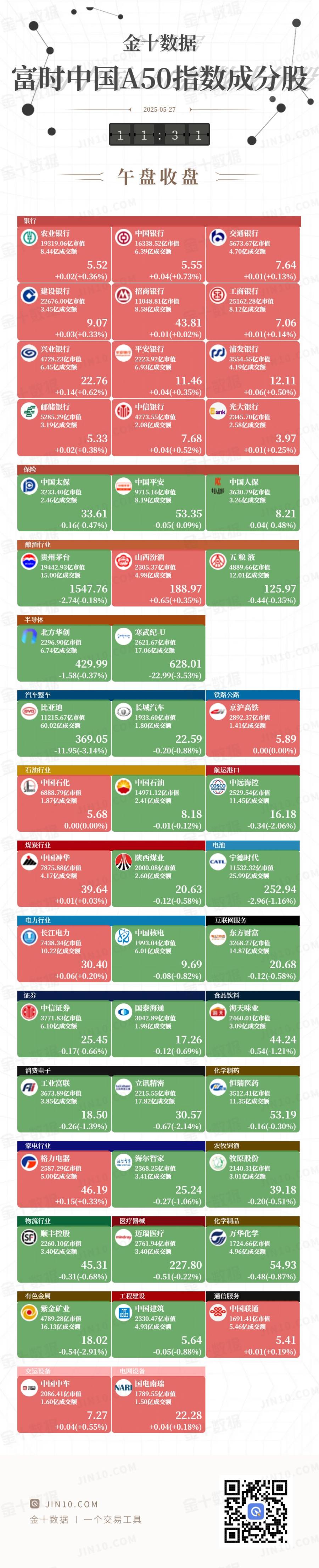
金十图示:2025年05月27日(周二)富时中国A50指数成分股午盘收盘行情一览:银行板块全线飘红,半导体、汽车板块跌幅居前
news flash· 2025-05-27 03:39
Market Overview - The FTSE China A50 Index showed a mixed performance with the banking sector seeing gains while the semiconductor and automotive sectors experienced declines [1] Banking Sector - Major banks such as China Pacific Insurance, Ping An Insurance, and China Life Insurance reported market capitalizations of 363.08 billion, 323.34 billion, and 971.52 billion respectively, with trading volumes of 246 million, 819 million, and 326 million [3] Semiconductor Sector - North China Innovation and Cambricon Technologies had market capitalizations of 229.69 billion and 262.17 billion respectively, with trading volumes of 1.706 billion and 674 million, showing declines of 1.58 (-0.37%) and 22.99 (-3.53%) [3] Automotive Sector - Great Wall Motors and BYD reported market capitalizations of 193.36 billion and 289.24 billion respectively, with trading volumes of 6.002 billion and 1.8 billion, both showing declines of 11.95 (-3.14%) and 0.20 (-0.88%) [3] Oil and Gas Sector - China Shipping and Sinopec had market capitalizations of 688.88 billion and 252.95 billion respectively, with trading volumes of 1.145 billion and 187 million, showing no significant change [3] Coal Sector - China Shenhua and Shaanxi Coal and Chemical Industry reported market capitalizations of 200.01 billion and 787.59 billion respectively, with trading volumes of 417 million and 260 million, with slight changes in stock prices [3] Power Sector - Yangtze Power and China Nuclear Power had market capitalizations of 199.30 billion and 743.83 billion respectively, with trading volumes of 1.022 billion and 601 million, showing minor fluctuations [4] Food and Beverage Sector - China Citic Securities and Haitai Flavoring reported market capitalizations of 377.18 billion and 246.00 billion respectively, with trading volumes of 198 million and 610 million, both showing slight declines [4] Consumer Electronics Sector - Industrial Fulian and Luxshare Precision reported market capitalizations of 367.39 billion and 221.56 billion respectively, with trading volumes of 1.782 billion and 1.135 billion, both showing declines [4] Logistics Sector - Mindray Medical and Wanhua Chemical reported market capitalizations of 172.47 billion and 226.01 billion respectively, with trading volumes of 340 million and 340 million, both showing slight declines [4] Construction Sector - China State Construction and Zijin Mining reported market capitalizations of 478.93 billion and 233.05 billion respectively, with trading volumes of 1.613 billion and 493 million, showing minor fluctuations [4][5]



食品饮料周报(25年第21周):茅台股东大会传递穿越周期信心,啤酒、饮料进入需求旺季
Guoxin Securities· 2025-05-27 00:50
Investment Rating - The investment rating for the food and beverage sector is "Outperform the Market" [4][5][76]. Core Views - The report highlights that the liquor industry is currently facing pressure on volume and price during the off-season, but the confidence from the Moutai shareholders' meeting indicates resilience through cycles. Moutai's chairman emphasized the company's commitment to product quality and cultural foundation, while the general manager pointed out the need for rational recognition of the current cyclical challenges [2][11]. - The beverage sector is entering a demand peak season, with expectations for good sales performance due to low base comparisons from the previous year. The report suggests that the beer industry is stabilizing and recovering, with a focus on structural allocation opportunities [3][14][20]. Summary by Sections 1. Weekly Perspective - Moutai's shareholders' meeting conveyed confidence in navigating through cycles, while beer and beverage sectors are entering a demand peak [1][11]. - The liquor production from January to April 2025 was 1.308 million kiloliters, down 7.8% year-on-year, with April's production down 13.8% [2][11]. 2. Key Data Tracking - The food and beverage sector declined by 1.32% from May 19 to May 23, 2025, underperforming the Shanghai Composite Index by 0.76 percentage points [21]. - The white liquor index fell by 2.8% during the same period, influenced by external disturbances and ongoing demand pressures [13][21]. 3. Key Company Earnings Forecast and Investment Ratings - Moutai (600519.SH) is rated "Outperform the Market" with a projected EPS of 75.28 in 2025 and a PE ratio of 20.9 [4]. - Other companies such as Wuliangye (000858.SZ), Shanxi Fenjiu (600809.SH), and Luzhou Laojiao (000568.SZ) also received "Outperform the Market" ratings, indicating strong performance expectations [4]. 4. Sector Analysis - The beer industry is expected to enter a sales verification phase, with good performance anticipated due to last year's low base [14][15]. - The snack sector is experiencing a trend of efficiency improvements across the supply chain, with recommendations for companies that are innovating and breaking into new channels [16]. - The condiment sector shows strong performance from leading companies, with a focus on the recovery of the restaurant chain [17]. - The frozen food sector is stabilizing, but the restaurant industry remains weak, impacting sales [18]. - The dairy sector is seeing a potential policy catalyst for demand recovery, with supply clearing accelerating [19].