YONGHUI SUPERSTORES(601933)

Search documents
福州零售洗牌:永辉超市招牌少了,朴朴超市和小象超市都有新动作
Sou Hu Cai Jing· 2025-10-25 02:31
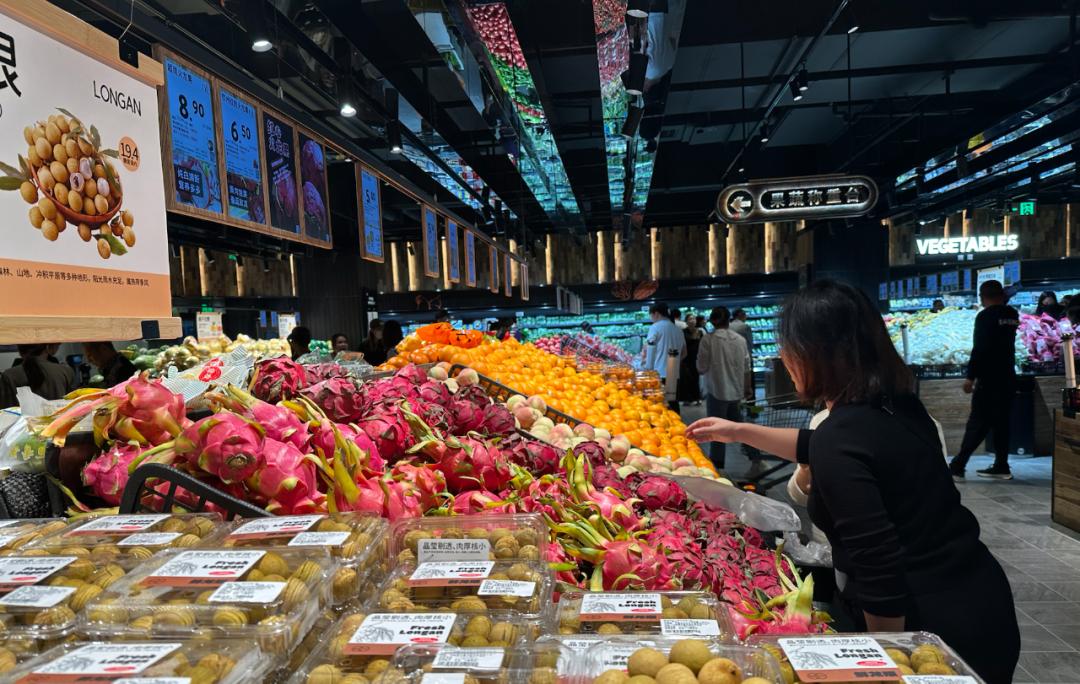
Core Insights - The retail landscape in Fuzhou is undergoing significant changes, with the transition from Yonghui to Pupu being a focal point of this transformation [1][3][10] Group 1: Market Dynamics - Pupu has captured over 50% of the fresh e-commerce market share in Fuzhou, while Yonghui holds approximately 30%, together controlling nearly 80% of the market [4] - The shift in store branding from Yonghui to Pupu reflects the competitive pressures and market share erosion faced by Yonghui [4][5] Group 2: Pupu's Strategy - Pupu's growth strategy focuses on deep regional penetration, achieving a local market penetration rate of 70% in Fuzhou, which has significantly impacted Yonghui's previous dominance [5] - Pupu has expanded its operations to cover nine cities, establishing over 400 front warehouses to enhance service efficiency [5] Group 3: Yonghui's Response - In response to Pupu's market encroachment, Yonghui is adopting management philosophies from the successful retailer Pang Donglai, emphasizing a culture of sincerity and trust [6] - Yonghui's store transformation efforts have resulted in an average customer traffic increase of 80% in remodeled stores, with over 60% of these stores entering a stable profitability phase [6] Group 4: Competitive Landscape - New entrants like Meituan's Xiaoxiang Supermarket are planning to enter the Fuzhou market, leveraging a delivery network of over 7 million riders to offer 30-minute delivery services [7] - Pupu is also diversifying its offerings with the introduction of "Pupu Kitchen," aiming to capture core consumer scenarios and further solidify its market position [8]


永辉超市10月23日获融资买入2843.17万元,融资余额15.37亿元
Xin Lang Cai Jing· 2025-10-24 01:51
Core Insights - Yonghui Supermarket's stock increased by 0.42% on October 23, with a trading volume of 432 million yuan [1] - The company experienced a net financing outflow of 1.51 million yuan on the same day, indicating a higher level of financing activity [1] Financing Summary - On October 23, Yonghui Supermarket had a financing buy amount of 28.43 million yuan and a financing repayment of 29.95 million yuan, resulting in a net financing buy of -1.51 million yuan [1] - The total financing and securities balance as of October 23 was 1.55 billion yuan, with the financing balance accounting for 3.57% of the circulating market value, which is above the 70th percentile of the past year [1] - The company had a securities lending repayment of 13,800 shares and a securities lending sell of 48,700 shares, with a total lending balance of 3.50 million shares, indicating a high level of short selling activity [1] Company Performance - As of June 30, Yonghui Supermarket reported a total of 359,800 shareholders, a decrease of 6.24% from the previous period [2] - The company achieved a revenue of 29.95 billion yuan for the first half of 2025, a year-on-year decrease of 20.73%, and a net profit attributable to shareholders of -241 million yuan, a decrease of 187.38% [2] - Since its A-share listing, Yonghui Supermarket has distributed a total of 7.10 billion yuan in dividends, with no dividends paid in the last three years [2] Shareholder Composition - As of June 30, 2025, Hong Kong Central Clearing Limited was the seventh largest circulating shareholder, holding 104 million shares, an increase of 11.89 million shares from the previous period [2] - The Southern CSI 500 ETF was the tenth largest circulating shareholder, holding 67.36 million shares as a new shareholder [2]
永辉超市股价连续3天上涨累计涨幅+Inf%,汇丰晋信基金旗下1只基金持153.39万股,浮盈赚取728.6万元
Xin Lang Cai Jing· 2025-10-23 07:21
Core Viewpoint - Yonghui Supermarket's stock price has seen a continuous increase over three days, indicating positive market sentiment and potential investment opportunities [1][2]. Company Overview - Yonghui Supermarket Co., Ltd. is located in Fuzhou, Fujian Province, established on April 13, 2001, and listed on December 15, 2010. The company primarily operates in the retail sector [1]. - The revenue composition of Yonghui Supermarket includes: 56.78% from food and daily necessities, 38.42% from fresh and processed products, 3.30% from other sources, and 1.51% from rental income [1]. Stock Performance - As of October 23, Yonghui Supermarket's stock price is 4.75 CNY per share, with a trading volume of 4.32 billion CNY and a turnover rate of 1.00%. The total market capitalization is 431.06 billion CNY [1]. - The stock has experienced a cumulative increase of +Inf% over the past three days [1]. Fund Holdings - HSBC Jintrust Fund has a significant holding in Yonghui Supermarket, with its HSBC Jintrust Consumer Dividend Stock Fund (540009) holding 1.5339 million shares, accounting for 3.83% of the fund's net value, making it the eighth-largest holding [2]. - During the three-day increase, the fund has realized a floating profit of approximately 728.6 thousand CNY [2]. Fund Performance - The HSBC Jintrust Consumer Dividend Stock Fund was established on December 8, 2010, with a current size of 196 million CNY. Year-to-date returns are 4.27%, ranking 4038 out of 4218 in its category, while the one-year return is 6.05%, ranking 3534 out of 3875 [2]. - The fund has achieved a total return of 88.01% since its inception [2].
永辉超市股价连续3天上涨累计涨幅+Inf%,嘉实基金旗下1只基金持2091.14万股,浮盈赚取9932.93万元
Xin Lang Cai Jing· 2025-10-23 07:16
Group 1 - YH Supermarket's stock price increased by 0.42% to 4.75 CNY per share, with a trading volume of 4.32 billion CNY and a turnover rate of 1.00%, resulting in a total market capitalization of 431.06 billion CNY [1] - The stock has experienced a continuous rise for three days, with a cumulative increase of +Inf% during this period [1] - YH Supermarket, established on April 13, 2001, and listed on December 15, 2010, primarily operates in the retail sector, with revenue composition as follows: 56.78% from food products, 38.42% from fresh and processed goods, 3.30% from other sources, and 1.51% from rental income [1] Group 2 - According to data, one fund from Jiashi Fund holds a significant position in YH Supermarket, specifically Jiashi New Consumption Stock A (001044), which reduced its holdings by 218.43 million shares in Q2, retaining 20.91 million shares, accounting for 5.29% of the fund's net value, ranking as the eighth largest holding [2] - The fund has realized a floating profit of approximately 418,200 CNY today, and during the three-day increase, the floating profit reached 99.32 million CNY [2] - Jiashi New Consumption Stock A was established on March 23, 2015, with a current scale of 1.937 billion CNY, and has reported a loss of 4.31% year-to-date, ranking 4205 out of 4218 in its category [2]
网传泰安吾悦广场永辉超市要闭店?属实!因房租问题将停业
Qi Lu Wan Bao Wang· 2025-10-22 13:34
Core Points - Yonghui Supermarket (601933) has announced the permanent closure of its Tai'an Wuyue store due to unresolved rental negotiations with Wuyue Plaza, despite multiple rounds of discussions [1][2] - The company has acknowledged shortcomings in its operational philosophy and management experience, which have not met customer expectations regarding product quality, store environment, and employee welfare [1] - Starting from November 14, 2025, the store will conduct clearance sales with discounts on various products, including food, daily necessities, and fresh produce, to reduce inventory before closing [2] Company Actions - Yonghui Supermarket will implement a nationwide adjustment starting in 2024, focusing on improvements in management standards, product structure, store layout, and employee care to better serve customers and society [1] - Employees affected by the closure will have two options: transfer to another Yonghui store in the Tai'an area or receive economic compensation according to labor contract terms [2] Customer Communication - Customers can continue to use their shopping cards and membership points at other Yonghui stores after the Tai'an Wuyue store closes, and a customer service hotline is available for inquiries [1]
永辉超市携手福州市总工会共建工匠学院实训基地
Zheng Quan Ri Bao Wang· 2025-10-22 07:45
Core Points - Yonghui Supermarket's Oty Store and Central Kitchen Bakery Factory were awarded the title of "Training Base for Craftsman Academy in Fuzhou's Commercial Trade Industry," marking official recognition of the company's achievements in talent cultivation within the retail sector [1] - The two training bases will serve as important platforms for the deepening of the "Craftsman Program," with the Oty Store showcasing innovations in retail service upgrades and the Central Kitchen demonstrating advancements in supply chain standardization and food safety control [1] - The Fuzhou Commercial Trade Union Chairman emphasized that the training base provides a significant practical teaching platform for the local commercial trade industry, enhancing professional skills and supporting sustainable industry development [1] Company Developments - Yonghui Supermarket officially obtained vocational skill level recognition qualifications in 2024, with 53 employees successfully receiving nationally recognized "Vocational Skill Level Certificates" during the recognition window from March to June 2025 [1] - The certificates are integrated into a national online query system and hold equal validity to national vocational qualifications, significantly enhancing employee skill value and market competitiveness [1]
叶国富谈与胖东来合作:于东来是大爱,不是商业合作不收一分钱,纯帮忙
Xin Lang Ke Ji· 2025-10-22 07:07
Core Insights - The dialogue between Luo Yonghao and Ye Guofu focuses on consumer trends in trendy products and the story behind the "Fat Transformation Store" initiative [1] Group 1: Collaboration and Support - Luo Yonghao highlights the collaboration with Yu Donglai, emphasizing that it is a selfless act of support for Yonghui Supermarket's transformation and growth, rather than a commercial partnership [1] - The support from Yu Donglai is characterized as a significant factor in Yonghui's development, showcasing a model of altruism in business [1] Group 2: Quality and Consumer Preferences - The success of Fat Donglai is attributed to high product quality and excellent service, which has led to its popularity in Xuchang and nationwide recognition [1] - The "Fat Transformation Store" initiative is progressing well across the country, with various supermarket brands, including Bubugao, adopting a focus on quality retail [1] - There is a shift away from low-quality, low-price strategies, as consumers increasingly demand higher quality and safety in food products [1]
郑州7家永辉已完成调改 初步形成“胖”式零售网络
Sou Hu Cai Jing· 2025-10-22 02:48
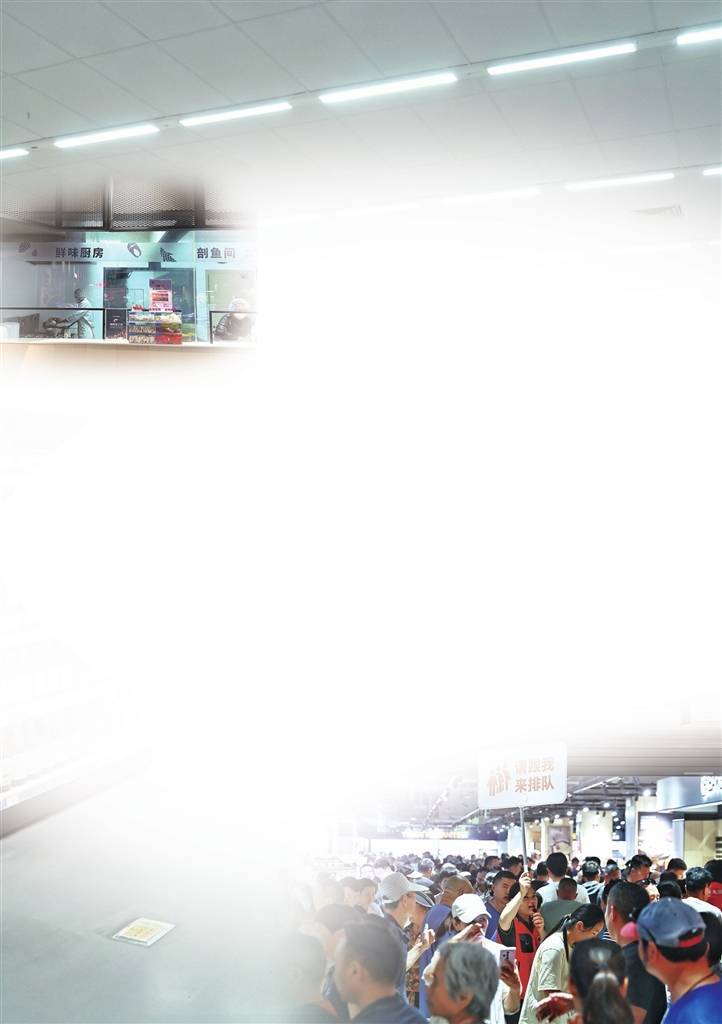
Core Insights - Yonghui Supermarket is undergoing a transformation by adopting the "Fat Donglai" retail model, focusing on enhancing service and experience across its seven stores in Zhengzhou [2][6] - The company aims to optimize its supply chain and develop a proprietary brand system to improve profitability and customer engagement [6][9] Store Transformation - Yonghui has completed adjustments in seven stores in Zhengzhou, aligning product structure, space layout, service capabilities, and employee benefits with the "Fat Donglai" model [2][6] - The stores have seen an average customer traffic increase of 80%, with over 60% of the adjusted stores achieving profitability levels surpassing the highest in the past five years [6][9] Product and Service Enhancements - The product range in stores has been optimized, with a 26.8% increase in new products, achieving 80% alignment with the "Fat Donglai" standards, and a rise in imported products to 15% [2][6] - The introduction of a "Fresh Kitchen" in the Yuhua Plaza store allows customers to have seafood and meat cooked on-site, catering to busy professionals [5] Employee Welfare - Average employee salaries have been raised to 5,000 yuan, reflecting the company's commitment to improving staff welfare [4] Proprietary Brand Development - Yonghui plans to focus on developing its proprietary brand system, with a goal of launching 500 proprietary products over the next five years [9][10] - The company aims to collaborate with suppliers to create 100 billion-level products within three years, enhancing its product ecosystem [8][9] Market Trends - The retail industry is witnessing a shift towards proprietary brands as companies seek to bypass traditional distribution channels and reduce costs [10][12] - The average number of proprietary products developed by retailers is increasing, indicating a growing trend in the market [11][12]
新CEO王守诚上任后首次访谈:永辉已经走出了危险期
36氪· 2025-10-22 00:46
Core Viewpoint - The acquisition of Yonghui Supermarket by Miniso has led to significant changes in the company's operational model, focusing on the "Fat Donglai" approach to enhance customer experience and operational efficiency [4][5][6]. Group 1: Acquisition and Leadership Changes - Miniso announced the acquisition of Yonghui Supermarket for approximately 6.2 billion yuan, which raised questions about the strategic direction of the company [5]. - Yonghui Supermarket appointed Wang Shoucheng as the new CEO, marking a shift towards a more stable leadership structure after a six-month vacancy [6][9]. Group 2: Operational Improvements - Under Wang Shoucheng's leadership, Yonghui has seen a significant increase in customer traffic, with an average growth of 80% in remodeled stores, and over 60% of these stores achieving profitability levels surpassing the highest in the past five years [6][12]. - The company has implemented a three-year reform plan, currently in its initial stage, to adopt the "Fat Donglai" model, aiming to create a unique operational path [7][11]. Group 3: Cultural and Structural Changes - Yonghui has undergone extensive organizational restructuring, including the establishment of 26 regional divisions to enhance operational efficiency and learning [14][15]. - The company has shifted its focus from profit margins to customer satisfaction and product sales rates as key performance indicators for its procurement and product teams [21][22]. Group 4: Anti-Corruption Measures - Yonghui has taken a firm stance against corruption, implementing various mechanisms to guide employees towards ethical practices and away from self-serving behaviors [19][20]. - The company has redefined its procurement strategy, eliminating unreasonable backend revenue practices to reduce corruption risks [21][22]. Group 5: Private Label Strategy - Yonghui aims to develop its private label products by ensuring quality and supply stability, while also allowing partners to earn reasonable profits [28][31]. - The company has learned from past mistakes in private label development, now focusing on quality standards and effective management processes [31][32]. Group 6: Future Outlook - Yonghui has reportedly passed its most challenging phase, with plans to refine its operations further and achieve a stable state within three to five years [39][50].
41亿净现金,胖东来告诉你什么才是真正的赚钱
3 6 Ke· 2025-10-21 23:22
Core Insights - The article highlights the contrasting financial health of the retail company Pang Dong Lai, which holds 4.1 billion cash with no debt, against the backdrop of struggling competitors facing significant losses and closures [1][3][4]. Financial Performance - Pang Dong Lai's sales exceeded 18.4 billion in 2025, showing a growth from 16.9 billion in 2024, with a projected net profit nearing 1 billion, maintaining a profit margin of around 5% [7]. - In contrast, competitors like Yonghui Supermarket reported a cumulative loss of over 8 billion in three years, with a net loss of 241 million in the first half of 2025 [6][14]. Business Strategy - Pang Dong Lai's strategy focuses on quality and efficiency rather than aggressive expansion, with a stable fresh produce loss rate of 0.8%, significantly lower than the industry average of 3.5% [7][8]. - The company maintains a high customer repurchase rate of 80%, double the industry average, indicating strong customer loyalty [7]. Management Practices - The management practices at Pang Dong Lai emphasize rigorous standards across all operations, from product sourcing to employee treatment, with 42% of revenue allocated to employee compensation [11][12]. - The company has a comprehensive internal management manual that covers various operational aspects, ensuring consistency and quality in service [11]. Market Position - Despite being perceived as less ambitious due to its limited expansion (only 13 stores), Pang Dong Lai's approach has proven to be effective, generating over 10 billion in revenue with a strong cash position [12][15]. - The article suggests that the focus on quality over quantity is a sustainable path for long-term success in the retail industry, especially as market conditions change [20][23].