
LZLJ(000568)

Search documents
食品饮料周报:白酒愁云惨淡,啤酒迎来春天
Zheng Quan Zhi Xing· 2025-07-25 07:17
Market Performance - The Shanghai and Shenzhen 300 Index increased by 1.69%, while the Shenwan Food and Beverage Index rose by 0.56% during the week of July 21-25, 2025 [1] - The top five performing stocks included ST Xifa, Jiaoda Onlian, Huang Shanghuang, Tianyoude Wine, and Knight Dairy [1] Institutional Insights - Dongwu Securities emphasizes a focus on five sectors: beverages, new consumption, new retail, dairy, liquor, and health products. Key companies include Dongpeng Beverage and Nongfu Spring in the beverage sector [2] - The liquor sector is experiencing a bottoming out, with recommendations to consider buying on the left side, highlighting stocks like Kweichow Moutai, Luzhou Laojiao, Shanxi Fenjiu, and Wuliangye [2] - The beer market remains stable, with notable performances from Yanjing Beer and Zhujiang Beer, while the consumer goods sector shows a slight weakening in growth momentum [3] Regulatory Developments - A national standard for campus meal service management has been approved, aimed at enhancing food safety regulations for meal preparation and delivery services in schools [7] - The Ministry of Public Security reported the resolution of over 540 criminal cases related to counterfeit "special supply wine," with 260,000 bottles seized and an involved amount of 3.7 billion yuan [6] Industry Trends - The liquor market is facing challenges, with several small to medium-sized liquor companies issuing profit warnings. However, major liquor companies like Kweichow Moutai are seeing increased investment from prominent fund managers [9] - The beer sector is experiencing a resurgence, driven by favorable weather and events boosting consumer demand, with companies like Yanjing and Zhujiang Beer reporting growth [9] Company Developments - The Guizhou Renhuai City Wine Association has approved a new self-discipline convention, which includes strict regulations on production and marketing practices [10] - Luzhou Laojiao Group has established a new partnership with a capital contribution of approximately 245 million yuan, focusing on enterprise management and consulting services [12] - Qinghua Fenjiu launched a new product, the Qinghua Fenjiu 30 Revival Edition, with upgrades in packaging and quality [13]





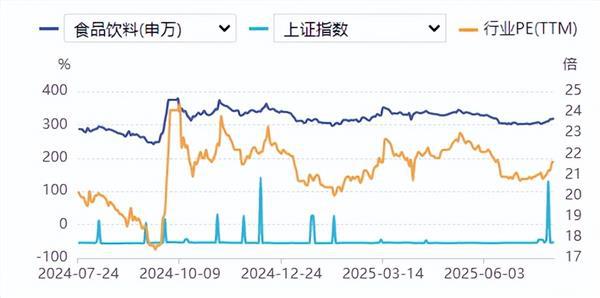
2022Q2基金持仓:食饮持仓环比减少,白酒环比减仓较多
Minsheng Securities· 2025-07-25 06:51
Investment Rating - The investment recommendation for the food and beverage industry is "Outperform the Market" [10][16] Core Insights - The heavy holding ratio for the food and beverage industry decreased by 2.13 percentage points to 6.62% in Q2 2025, with the white liquor heavy holding ratio dropping by 2.34 percentage points to 4.96% [5][19] - The top five holdings in the food and beverage sector are Kweichow Moutai (0.98%), Wuliangye (0.43%), Shanxi Fenjiu (0.38%), Luzhou Laojiao (0.26%), and Dongpeng Beverage (0.18%) [5][14] - The report highlights a shift in fund allocations, with non-dairy beverages seeing an increase in holdings while white liquor experienced significant reductions [12][27] Summary by Sections 1. Q2 2025 Fund Holdings: Decrease in Food and Beverage Holdings, Significant Reduction in White Liquor - The heavy holding ratio for the food and beverage industry is 6.62%, with an overweight ratio of 1.63%, both showing a decrease [11][19] - The heavy holding ratio for white liquor is 4.96%, with an overweight ratio of 1.63%, also reflecting a decline [11][19] 1.1 Food and Beverage Industry Public Fund Holding Ratio - The public fund heavy holding ratio for the food and beverage industry is 6.62%, down 2.13 percentage points, ranking fourth among sectors [19][20] - The standard allocation ratio is 4.99%, with an overweight ratio of 1.63%, down 1.55 percentage points [19][20] 1.2 Excluding Heavy White Liquor Funds - The concentration of white liquor holdings is high, with eight funds holding over 1 billion yuan in white liquor, accounting for 52.91% of the total white liquor holding value [12][24] - Excluding these funds, the remaining funds show a white liquor holding ratio of 2.34%, down 1.79 percentage points [12][24] 1.3 Non-Dairy Beverages Increased Holdings - In Q2 2025, the holding ratios for various sub-sectors are as follows: white liquor (4.96%), beer (0.35%), non-dairy beverages (0.40%), and others, with non-dairy beverages seeing a 0.15 percentage point increase [13][27] 1.4 Non-Dairy Beverages and Snack Foods Increased Holdings - The top five holdings in the food and beverage sector are Kweichow Moutai, Wuliangye, Shanxi Fenjiu, Luzhou Laojiao, and Gujing Gongjiu [41][44] - The report notes that Dongpeng Beverage, Yanjing Beer, and Salted Fish saw the largest increases in holdings [14][44] 1.5 Net Outflow of Northbound Capital from the Food and Beverage Industry - As of June 2025, northbound capital holdings in the food and beverage sector totaled 177 billion yuan, with a holding ratio of 3.75%, down 0.40 percentage points [15][22] 2. Investment Recommendations - The report suggests focusing on structural growth opportunities in new channels and products, while also considering traditional cyclical stocks that are currently undervalued [16][19]

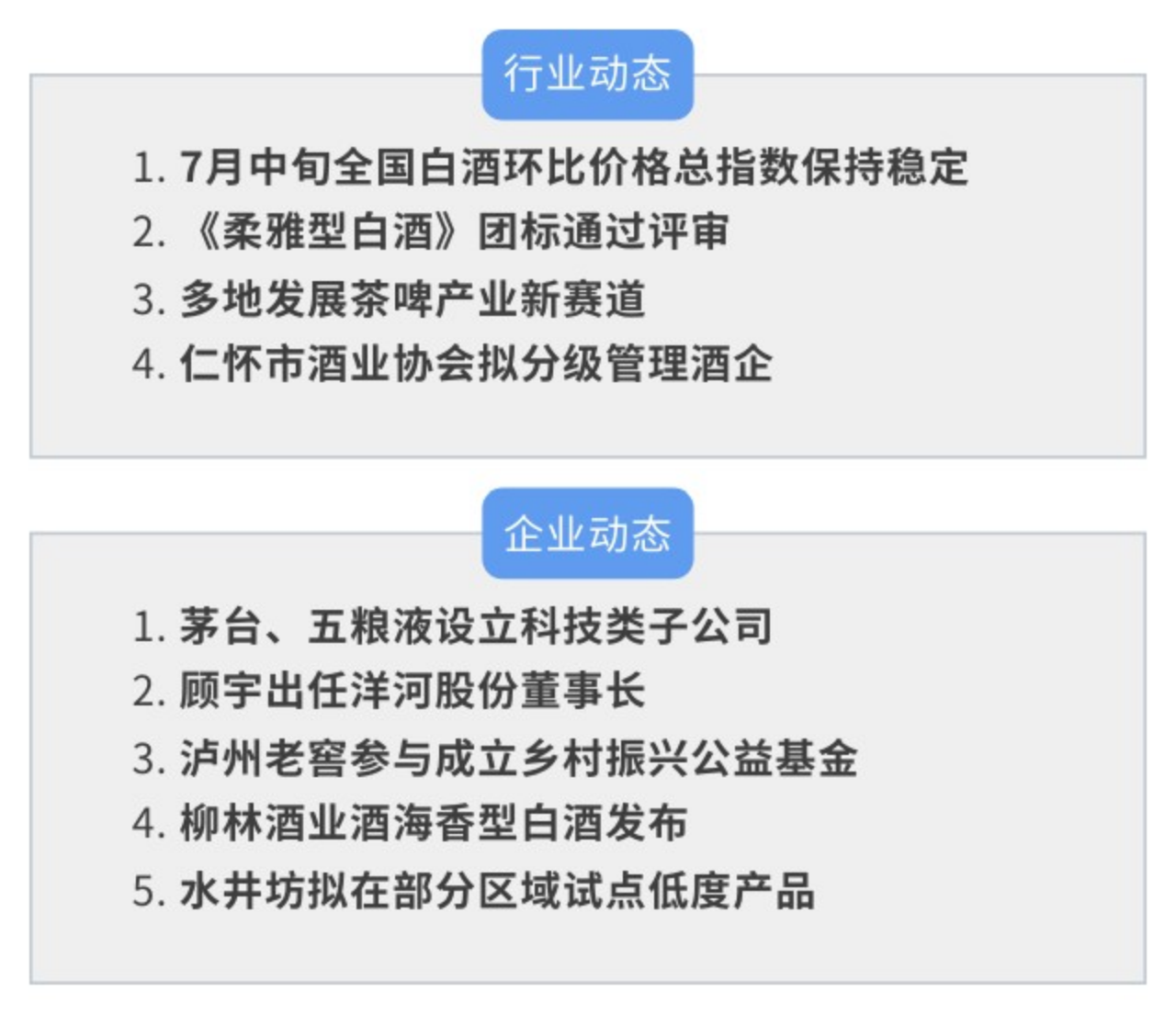
中经酒业周报∣7月中旬全国白酒环比价格总指数保持稳定,《柔雅型白酒》团标通过评审,茅台、五粮液设立科技类子公司
Xin Hua Cai Jing· 2025-07-25 03:00
Industry Dynamics - The national white liquor price index remained stable at 100.00 in mid-July, with the famous liquor index also at 100.00, while local liquor saw a slight decrease of 0.01% to 99.99. The base price index for national white liquor wholesale prices increased by 8.34% to 108.34, with famous liquor up by 10.38% to 110.38, local liquor up by 3.74% to 103.74, and base liquor up by 10.21% to 110.21 [1] - The "Soft Elegant White Liquor" group standard was approved, defining the production process and style characteristics, which will help standardize production, inspection, and sales, promoting healthy industry development [1] - The tea beer industry is emerging, with strategic partnerships formed in Guizhou and Anhui to develop tea-infused beer products, aligning with consumer demand for low-alcohol and healthy beverages [2][3] - The Guizhou Renhuai City Liquor Industry Association introduced a tiered management system for liquor companies, categorizing them into "reliable," "basic compliance," and "high-risk" enterprises, with penalties for violations and rewards for outstanding performance [4] Company Developments - Wuliangye established a technology subsidiary with a registered capital of 100 million yuan, focusing on fermentation process optimization and technology research [5] - Kweichow Moutai announced the establishment of a scientific research institute with a registered capital of 1 billion yuan, aiming to enhance product quality and explore new growth areas [5] - Gu Yu was elected as the chairman of Yanghe Co., marking a leadership change [5] - Luzhou Laojiao announced a partnership to establish a rural revitalization public welfare fund with a total donation of 20 million yuan over three years [5] - Liulin Liquor launched a new fragrance type, "Jiu Hai Xiang," utilizing a unique fermentation process and a standardized production system [5] - Shui Jing Fang is testing low-alcohol products below 38 degrees in select markets [6]


一场技术与场景碰撞的创新秀
Jin Rong Shi Bao· 2025-07-25 00:57
Group 1: Digital Currency Development - Digital RMB has developed applications across various sectors including retail, dining, education, and public services, forming a replicable model for online and offline use [1][7] - As of April 2025, the cumulative transaction amount of digital RMB in pilot areas reached 10.8 trillion yuan, with 2.1 billion personal wallets opened through the digital RMB app [1][7] Group 2: Supply Chain Finance and Smart Contracts - Agricultural Bank of China has integrated digital RMB smart contracts into the supply chain of Luzhou Laojiao, enabling precise control of loan funds for 2,259 downstream distributors, resulting in 2.418 billion yuan in loans [2] - Smart contracts are effectively addressing financing challenges for small and micro enterprises, enhancing fund management efficiency and reducing compliance costs [2] Group 3: Prepaid Consumption Management - Postal Savings Bank has utilized smart contract technology to address the issue of "easy recharge, difficult refund" in prepaid consumption, covering over 700 merchants and preventing consumer losses [3] - Agricultural Bank has established a regulatory system for prepaid funds, incorporating over 4,000 merchants and 1.5 billion yuan into its network, ensuring consumer protection [3] Group 4: Inclusive Finance Innovations - CITIC Bank is exploring digital RMB loan services, launching products like "信保贷" and "政采e贷" to support small and micro enterprises [4] - Postal Savings Bank has created a payment loop from planting to retail in agricultural scenarios, demonstrating the practical application of digital RMB in rural finance [4] Group 5: Cross-Border Payment Enhancements - The "Currency Bridge" project aims to improve cross-border payment efficiency and reduce costs, with 35 banks from four jurisdictions participating in real transactions [8][9] - The platform can process cross-border payments in 6 to 9 seconds, significantly cutting costs compared to traditional methods [9] Group 6: Expanding Digital RMB Usage - Didi Group has integrated digital RMB into its services, allowing users to pay for bike rentals and freight services in over 250 cities [5][6] - Tencent is enhancing the digital RMB experience for foreign visitors in China, enabling them to use digital RMB in various scenarios through WeChat [10]




行业点评报告:食品饮料仓位新低,建议布局白酒与新消费潜力股
KAIYUAN SECURITIES· 2025-07-24 05:43
Investment Rating - The industry investment rating is "Positive" (maintained) [1] Core Viewpoints - The food and beverage sector has seen a significant decline in fund allocation, with the configuration ratio dropping from 9.8% in Q1 2025 to 8.0% in Q2 2025, marking a new low since 2020 [3][12] - The decline in fund allocation is primarily attributed to the impact of the alcohol ban, which has further contracted consumption scenarios, particularly in the traditional liquor sector [5][6] - Despite the current pessimism, there is an expectation of a market style switch in July, which may lead to some capital returning to the sector [5][13] Summary by Sections Fund Allocation Trends - In Q2 2025, the allocation ratio for food and beverage in active equity funds decreased to 5.6%, down from 8.1% in Q1 2025, indicating a significant reduction in food and beverage investments [5][12] - The proportion of funds heavily invested in liquor dropped from 6.57% in Q1 2025 to 3.97% in Q2 2025, reflecting a broad reduction in liquor company holdings [4][20] - The overall market fund allocation for liquor also fell from 8.5% to 6.8% during the same period [20] Investment Recommendations - The report suggests a strategic focus on the liquor sector, particularly as the market is expected to find a bottom in the second half of the year [6][33] - It is recommended to gradually build positions in leading liquor companies such as Kweichow Moutai, Luzhou Laojiao, and Shanxi Fenjiu, which maintain high dividend yields [6][33] - For new consumption stocks, the report advises identifying high-quality companies that align with industry trends and holding them long-term, focusing on opportunities in new channels and product categories [6][34] Performance Metrics - The food and beverage sector's market value declined by 3.4% in Q2 2025, ranking 31 out of 32 sectors [13][18] - The sector's transaction amount ratio increased to 2.70%, indicating a slight recovery in trading activity despite the overall decline [13][18] - The report highlights that the majority of liquor companies experienced a decrease in fund holdings, while some consumer goods companies saw an increase in their market value [5][32]


2025年二季度主动基金重仓股追踪
ZHONGTAI SECURITIES· 2025-07-24 04:52
1. Report Industry Investment Rating - The report does not explicitly mention the overall industry investment rating 2. Core Viewpoints of the Report - In Q2 2025, the overall market value of A - share holdings of active equity - oriented funds decreased, while that of H - share holdings increased. The industry concentration of the top heavy - stock holdings of equity - oriented funds decreased. The communication, non - bank finance, and media industries saw significant increases in allocation ratios, while the steel, food and beverage, and coal industries had large reduction ratios [4][6]. - The structure of the top heavy - stocks of active equity - oriented funds changed. The overall number of large - market - cap leaders decreased, and the holdings of sub - industry leaders increased. The new high - growth technology stocks related to AI emerged, while traditional large - cap white - horse stocks were significantly reduced [4]. - In terms of industry leaders, the communication, non - bank finance, media, agriculture, forestry, animal husbandry, and beauty care industries were significantly increased, while the steel, coal, real estate, social services, and food and beverage industries were significantly reduced [21]. - The report suggests focusing on four investment themes: communication and hardware upstream under AI diffusion, non - bank finance, new consumption in the Hong Kong stock market, and national defense and military industry [26] 3. Summary by Relevant Catalogs 3.1 2025Q2 Active Fund Heavy - Stock Holding Structure Overview - **A - share and H - share holdings changes**: In Q2 2025, the total market value of active equity - oriented fund heavy - stock holdings was 1736.2 billion yuan, a 1.66% QoQ decrease. A - share holdings decreased by 2.79% QoQ to 1394.8 billion yuan, while H - share holdings increased by 3.20% QoQ to 341.3 billion yuan. Due to the complex macro - economic environment and market volatility, funds faced redemption pressure and tended to reduce large - cap stocks with poor liquidity [6]. - **Industry concentration decline**: From Q1 to Q2 2025, the industry concentration of the heavy - stock holdings of equity - oriented funds decreased. CR3 decreased by 0.56 percentage points to 38.37%, and CR5 decreased by 4.18 percentage points to 51.18%. The top five industries in terms of holding market value remained the same, but the proportion of the electronics industry increased, while the other four industries decreased [4][7]. - **Structural adjustment of industry holdings**: In Q2 2025, 12 industries saw an increase in the total market value of holdings. The communication, non - bank finance, and media industries had large increases in allocation ratios, rising by 75.88%, 64.62%, and 38.37% respectively. The steel, food and beverage, and coal industries had large reduction ratios, decreasing by 46.32%, 26.16%, and 23.99% respectively [9] 3.2 Q2 Active Fund Top Heavy - Stock Tracking - **Change in the structure of top heavy - stocks**: In Q2 2025, the structure of the top 20 heavy - stocks of active equity - oriented funds changed. The large - market - cap leaders decreased, and the sub - industry leaders increased. The market value of the top 20 heavy - stocks accounted for 20.72% of all heavy - stocks, a 2% decrease from Q1 [12]. - **Changes in the top five heavy - stocks**: The top five heavy - stocks remained the same, but the overall holdings decreased. New high - growth technology stocks such as New Fiber Optic Technology and Inphi Corporation quickly rose in the rankings, while traditional large - cap white - horse stocks such as Luxshare Precision Industry, Midea Group, and Contemporary Amperex Technology were significantly reduced [4]. - **Hong Kong stock market adjustment**: In the Hong Kong stock market, AI and Internet media leaders were reduced, while the pharmaceutical and new consumption sectors that performed well in Q2 were significantly increased [18] 3.3 Q2 Industry Leader Heavy - Stock Tracking - **Industry leader allocation changes**: In Q2 2025, the communication, non - bank finance, media, agriculture, forestry, animal husbandry, and beauty care industries were significantly increased, while the steel, coal, real estate, social services, and food and beverage industries were significantly reduced [21]. - **Communication industry focus**: Driven by the booming demand for AI hardware, the communication industry became the focus of funds. The optical module sector, which benefits from the expansion of AI capital expenditure, was the main area for increasing communication heavy - stocks. The profitability of communication equipment is expected to continue to improve in the second half of the year [22]. - **Non - bank finance sector highlights**: The leaders of the non - bank finance sector attracted attention. The holdings of Ping An Insurance and CPIC increased by 55% and 41% respectively, and securities leaders such as Citic Securities and Huatai Securities also saw over 30% increases. The brokerage sector's performance is expected to continue to improve [23] 3.4 Investment Recommendations - **AI diffusion - related communication and hardware upstream**: The significant increase in the holdings of optical module leaders reflects that funds are extending from AI software to computing infrastructure. AI capital expenditure is expected to drive the performance of upstream sectors in the second half of the year [26]. - **Non - bank finance sector**: The concentrated increase in holdings of leaders such as Citic Securities and Ping An Insurance reflects the positive expectations of the market for the profitability improvement of the brokerage and insurance sectors. The non - bank finance sector is expected to achieve a resonance of valuation repair and performance recovery [26]. - **Hong Kong stock new consumption theme**: After the correction in the AI sector, funds refocused on consumption structure highlights, especially in the Hong Kong stock market. Sub - sectors such as pets, toys, and emotional consumption have become important directions for heavy - stock allocation [26]. - **National defense and military industry safety theme**: The significant increase in the holdings of core military stocks reflects the high attention of institutions to the "national security + high - end manufacturing" theme. The military industry has policy support, order growth, and mid - report performance improvement expectations, with medium - term allocation value [27]





食品饮料行业报告(2025.07.14-2025.07.18):白酒迎来情绪修复,大众品关注个股机会
China Post Securities· 2025-07-24 03:22
Industry Investment Rating - The investment rating for the food and beverage industry is "Outperform the Market" and is maintained [1] Core Insights - The report highlights that the liquor sector has faced challenges due to the implementation of the "Regulations on Strict Economy and Opposition to Waste" by the central government, leading to a decline in revenue and profits for most liquor companies in Q2 2025. However, recent media corrections have stabilized the sector, and a gradual recovery is expected [3][20] - The report emphasizes the importance of individual stock opportunities within the consumer goods sector, particularly in the context of the liquor market's recovery and the introduction of innovative products [4][21] Summary by Sections Industry Overview - The closing index for the food and beverage sector is 17226.07, with a 52-week high of 19809.29 [1] - The sector has shown a relative performance decline compared to the CSI 300 index, with a year-on-year retail sales growth of 4.8% in June 2025 [14] Liquor Sector Analysis - The report notes that major liquor companies like Moutai, Wuliangye, and Luzhou Laojiao have varying price-to-earnings ratios, indicating a mixed valuation landscape [20] - The introduction of new products, such as the "Jiu Gui Free Love" by Jiu Gui Jiu and its collaboration with the retail channel "Pang Dong Lai," is expected to drive sales and innovate marketing strategies [5][18] Fund Holdings and Market Sentiment - As of Q2 2025, the food and beverage sector's fund holding ratio is 6.75%, reflecting a decrease of 2.12 percentage points, indicating cautious sentiment among investors [4][20] - The liquor segment's fund holding ratio is 4.98%, also down by 2.42 percentage points, suggesting a trend of risk aversion in the market [20] Company Performance Highlights - Dongpeng Beverage reported stable revenue growth, with significant increases in electrolyte water and fruit tea segments [22] - The report mentions that companies like Youfei Foods and Guoquan are focusing on channel optimization and product innovation to drive growth [23] - The performance of companies such as Zhou Hei Ya and Jiahe Foods is noted, with both showing signs of recovery despite facing challenges [23] Market Trends and Price Movements - The food and beverage sector index increased by 0.68% in the latest week, ranking 13th among 30 sectors, while the dynamic PE ratio stands at 21.26 [24] - The report highlights that soft drinks and dairy products have shown the highest growth rates among sub-sectors [24]


白酒公司集体降度,靠“小甜水”找增量
Xin Lang Cai Jing· 2025-07-24 02:06
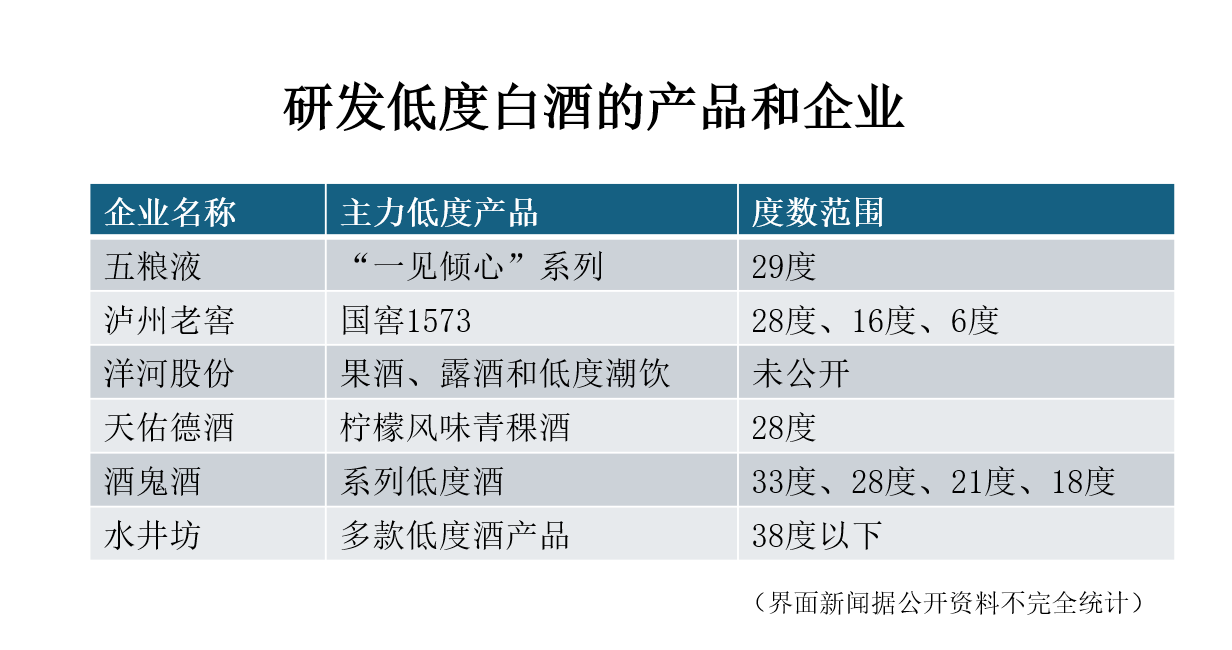
Group 1 - The core viewpoint of the articles highlights a significant shift in the Chinese liquor industry, with major companies developing and promoting low-alcohol products below 38 degrees, aiming to attract younger consumers and diversify their product lines [1][3][9] - Major companies like Wuliangye, Luzhou Laojiao, and Yanghe are actively participating in this trend, with Wuliangye planning to launch a 29-degree product and Luzhou Laojiao already having developed a 28-degree version [2][3][4] - The low-alcohol market is projected to grow significantly, with estimates suggesting it will exceed 74 billion yuan by 2025, reflecting a compound annual growth rate of 25%, which is much higher than the overall growth of the liquor industry [3][9][10] Group 2 - The shift towards low-alcohol products is driven by changing consumer preferences, particularly among younger demographics, where over 60% prefer low-alcohol options due to the harshness of high-alcohol beverages [3][9] - Companies are not only focusing on low-alcohol products but are also exploring cocktail mixes to create a more diverse flavor profile suitable for summer consumption [5][6] - The industry is witnessing a competitive landscape where traditional high-alcohol brands are adapting to market demands, with the success of low-alcohol products hinging on the companies' ability to innovate in brewing techniques and expand distribution channels [9][10]


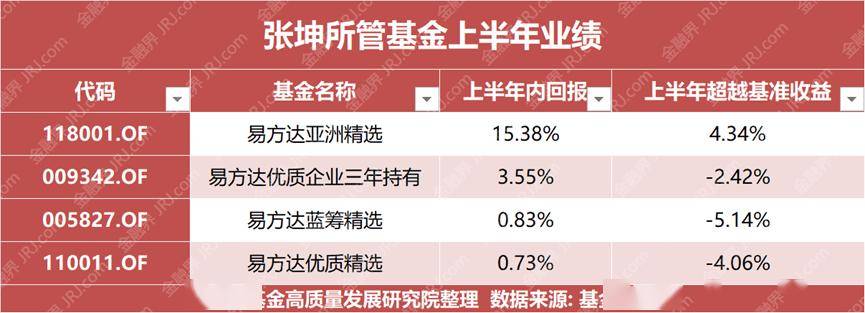
张坤,朱少醒二季度持仓大曝光!公募标杆人物为何逆势加仓这些行业股票?
Sou Hu Cai Jing· 2025-07-23 15:35
Group 1: Zhang Kun's Investment Strategy - Zhang Kun maintains a focus on core consumer stocks and is optimistic about the long-term resilience of the economy, with a total fund size of 55.047 billion yuan as of Q2 2025 [1] - The performance of Zhang Kun's funds in the first half of the year shows a return of 15.38% for the E Fund Asia Select fund, while the E Fund Blue Chip Select fund returned only 0.83% [1][3] - The top ten holdings include Tencent Holdings, Alibaba-W, and Wuliangye, with significant increases in positions for JD Health and SF Express, while Tencent Holdings saw a reduction [2][3] Group 2: Market Analysis and Outlook - Zhang Kun emphasizes that the current low valuations of holdings reflect expectations of future profit declines, making them attractive for long-term investors [4] - He believes that the economic growth will be driven by market forces, individual dynamism, and technological advancements, with a vision for GDP per capita to reach the level of moderately developed countries by 2035 [3][4] Group 3: Zhu Shaoxing's Investment Focus - Zhu Shaoxing's fund, the Fortune Tianhui Select Growth Mixed Fund, has a scale of 23.544 billion yuan and a stock position of 94.05%, with the top ten holdings accounting for 34.98% of net value [5][6] - The top ten holdings include Guizhou Moutai and Ningbo Bank, with new entries like Jerry Holdings and Guangdong Hongda, while companies like BYD and Luxshare Precision have exited the top ten [6][7] Group 4: Market Conditions and Future Expectations - Zhu Shaoxing notes that the market experienced volatility due to trade tensions but expects a resolution through negotiations, with monetary and fiscal policies actively supporting the market [7][8] - He highlights that the overall valuation of A-shares remains attractive, and the risk-reward ratio for equity assets is favorable, focusing on collecting high-potential companies for long-term value realization [8]


白酒行业深度:逆周期白酒投资策略
2025-07-23 14:35
Summary of the White Wine Industry Conference Call Industry Overview - The conference call focuses on the white wine industry, particularly the impact of recent policies and market conditions on investment strategies and company performance [1][3][5]. Key Points and Arguments 1. **Impact of the Alcohol Ban**: The alcohol ban has affected sales by at least 30%, primarily impacting consumption among civil servants, state-owned enterprises, and public institutions, which delays the expected industry cycle turning point to 2025 Q3 [1][4]. 2. **Differences in Current and Previous Cycles**: The current cycle differs from 2012-2015 as it restricts drinking scenarios rather than just high-end wine purchases, leading to more severe policy impacts on the industry [5][7]. 3. **Short-term Industry Pressure**: The white wine industry faces short-term pressures with no significant recovery in the dining and drinking markets, and intensified competition in the mid-to-high-end segment [1][6][10]. 4. **Investment Strategy**: A counter-cyclical investment strategy is recommended, focusing on companies' profit and market value bottoms under pessimistic conditions. For instance, if Moutai's price drops to 1,500 yuan, it could still yield over 10 billion yuan in profit with a dividend yield exceeding 5% [1][9]. 5. **Best Investment Timing**: The best time to invest in the white wine sector is expected to be in the fall of 2025, as the impact of the alcohol ban will be significant in Q3, and Moutai's price may hit a bottom [11][13]. 6. **Institutional Holdings**: Institutional holdings in the white wine sector have dropped to levels seen in 2016, indicating a clean slate for potential market recovery once sentiment improves or favorable policies are introduced [2][13]. 7. **Recommended Stocks**: The recommended stocks include Guizhou Moutai, Shanxi Fenjiu, and Luzhou Laojiao, with additional attention to Shede and Koude Jiao, as well as the emerging consumption logic of Zhenjiu Lidou [1][20]. Additional Important Insights 1. **Market Dynamics**: The white wine market is influenced by various factors, including policy changes, economic conditions, and internal competition among brands, particularly in the mid-to-high-end segment [7][8]. 2. **Challenges Ahead**: The industry faces challenges such as ongoing short-term pressures, intensified competition, and the need for companies to adjust pricing strategies and product structures [8][10]. 3. **Long-term Outlook**: Despite current challenges, the white wine industry is expected to recover in the long term, with cyclical characteristics suggesting eventual market recovery [10][12]. 4. **Emerging Brands**: Emerging brands like Zhenjiu Lidou are gaining attention due to innovative marketing strategies and product offerings that appeal to new consumer segments [17][19]. This summary encapsulates the critical insights and recommendations from the conference call regarding the white wine industry, highlighting the current challenges and potential investment opportunities.