
WLY(000858)

Search documents
A股:上涨原因找到了,是否预示大涨来了?不出意外,周二大盘会这么走
Sou Hu Cai Jing· 2025-11-10 17:54
Market Overview - The Shanghai Composite Index closed at 4018.60 points, up 0.53%, while the Shenzhen Component Index rose 0.18% to 13427.61 points. The ChiNext Index fell 0.92% to 3178.83 points, indicating a mixed performance in the market with over 3300 stocks showing gains, reflecting a relatively positive structure [1]. Sector Performance - The liquor sector saw significant gains, with stocks like Shede Liquor and Jiu Gui Jiu hitting the daily limit, and major players like Kweichow Moutai and Wuliangye showing notable increases. The sector index recorded its largest single-day gain in nearly eight months [2]. - In the dairy and beverage manufacturing sectors, stocks such as Yili and Yangyuan Beverage experienced substantial increases in trading volume [2]. - The precious metals sector was led by Hunan Gold, which showed strong performance in the afternoon session [2]. - Chemical materials also performed well, with companies like Weiling and Tianji hitting the daily limit [3]. Declining Sectors - The copper cable and wireless charging sectors faced declines, with Jia Yuan Technology leading the drop [4]. - The humanoid robot concept saw a significant decline, with Zhejiang Rongtai hitting the daily limit down [5]. - The communication equipment and components sector, particularly the computing hardware segment, experienced notable adjustments, with Ningde Times falling over 2% [6]. Market Drivers - The market rebound was supported by both sentiment and technical factors, with indices from three regions showing a coordinated rise. The A50 futures index continued to rise in the afternoon, and the securities sector saw a sharp increase, which helped stabilize the main boards of Shanghai and Shenzhen, countering the pullback in the ChiNext and high-tech sectors [9]. - Consumer sectors, particularly liquor and food and beverage, attracted significant northbound capital, driven by favorable macroeconomic data, leading to a substantial increase in trading volume and boosting the main indices [10]. - The core drivers of the market's rise were defensive consumer stocks and financial weights, rather than high-beta technology stocks, indicating a preference for short-term trading strategies [11]. Capital Flow and Volume Changes - There was a net outflow of over 37 billion yuan in main capital throughout the day, despite a late rally in indices that did not see a significant increase in follow-up capital [12]. - The liquor sector's trading volume surged by approximately 20 billion yuan compared to the previous Friday, while the food and beverage sector also saw significant volume increases. The securities sector experienced moderate volume growth, primarily for index support [13]. Technical Analysis and Sector Logic - The liquor sector index broke through the six-month moving average and surpassed an eight-month platform, indicating potential for short-term upward momentum. However, the volume and capital composition suggest a likelihood of a pullback on Tuesday, presenting a potential exit point for short-term traders [14]. - The securities sector is expected to exhibit strong protective attributes but may enter a narrow trading range on Tuesday [15]. - The technology and communication sectors may see a rebound after recent declines, particularly if leading stocks show signs of support and capital interest [15]. Future Outlook and Strategy - The Shanghai Composite Index is close to the previous high of 4025 points, with expectations of a high opening on Tuesday, followed by a potential pullback due to profit-taking [16]. - For the consumer sectors (liquor and food and beverage), the strategy should focus on defense and waiting for pullbacks to re-enter [17]. - In the technology and communication sectors, attention should be paid to the rhythm of rebounds, with opportunities for low-entry participation [18]. - The financial sector (securities and banks) is expected to maintain its protective attributes, but caution is advised regarding non-leading stocks [19]. - Overall, the market's rise appears to be a result of index support from weighty stocks rather than a broad-based rally, suggesting a continuation of a volatile market structure [23].




五粮液·一见倾心60天卖1个亿!白酒巨头何以征服年轻人?
Nan Fang Du Shi Bao· 2025-11-10 15:44
Core Insights - The launch of 29-degree Wuliangye "Yijian Qingxin" achieved over 100 million yuan in sales within 60 days, indicating strong market response and validating the company's strategy to target younger consumers with lower-alcohol products [1][3][6] Group 1: Product Innovation - The product's success is attributed to its low alcohol content and innovative packaging, which appeals to the younger demographic's preference for a "lightly intoxicated" experience [3][5] - Wuliangye utilized decades of low-alcohol technology to ensure the product maintains flavor despite the reduced alcohol content, achieving a smooth taste profile that resonates with young consumers [3][6] Group 2: Marketing Strategy - The collaboration with singer G.E.M. as a global ambassador effectively transformed the brand's image from a "business symbol" to an "emotional companion," enhancing engagement with the target audience [5][6] - The marketing approach includes breaking traditional distribution models by establishing an "online direct sales, e-commerce first" system, which incorporates a referral-based sales strategy that incentivizes consumers to promote the product [5][6] Group 3: Industry Trends - Major liquor companies are increasingly focusing on the low-alcohol market, with several brands launching similar products to cater to changing consumer preferences [6][8] - The low-alcohol market is projected to exceed 74 billion yuan by 2025, with a compound annual growth rate of 25%, indicating a significant shift in consumer behavior towards lower-alcohol beverages [8][9]
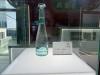
五粮液以酒为媒链接世界 进博会“全勤生”再启程
Bei Jing Shang Bao· 2025-11-10 14:58
Core Viewpoint - The eighth China International Import Expo (CIIE) showcases Wuliangye's commitment to global market integration and cultural exchange, highlighting its role as a leading Chinese liquor brand and its continuous participation in the event since its inception [1][4]. Group 1: Participation and Brand Representation - Wuliangye has been a consistent participant in the CIIE for eight years, evolving from an exhibitor to a "Senior Partner," thus playing a significant role in promoting Chinese brands globally [2][3]. - The Wuliangye cultural experience center at the National Exhibition and Convention Center (Shanghai) has undergone a comprehensive upgrade, featuring a core exhibition inspired by "water" that illustrates the brand's journey from Yibin to the world [2][3]. Group 2: Product Innovation and Cultural Exchange - Wuliangye showcased a variety of core products, including the 8th generation Wuliangye and creative cultural products, emphasizing the craftsmanship and flavors of Chinese liquor [2][4]. - The company launched the "He Mei Wu Zhou" series blind boxes as part of its "Wu Fu Jin Bao" initiative, promoting diversity and harmony while facilitating cultural exchange [2][4]. Group 3: Global Outreach and Market Expansion - Wuliangye has initiated the "He Mei Global Tour," a pioneering cross-national cultural exchange program that has reached 19 countries, enhancing the global presence of Chinese liquor [4][5]. - The brand's products are now available in multiple countries, with an increasing share in overseas markets, reflecting its commitment to global trade cooperation and cultural integration [4][5].
吃喝板块暴力拉升,主力狂买超百亿元!食品ETF(515710)大涨3.64%,估值低位布局正当时?
Xin Lang Ji Jin· 2025-11-10 12:09
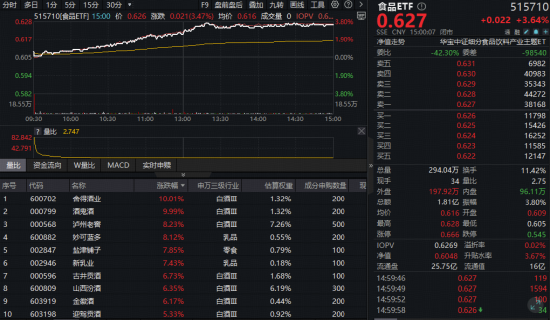
Group 1: Market Performance - The food and beverage sector has shown strong performance, leading the market with a 3.64% increase in the food ETF (515710) as of the close on November 10 [1][3] - Major liquor stocks experienced significant gains, with Shede Liquor and Jiu Gui Liquor hitting the daily limit, and Luzhou Laojiao rising by 8.23% [1][3] Group 2: Capital Inflow - The food and beverage sector attracted over 10 billion CNY in net inflows from main funds in a single day, ranking first among 30 sectors [3][4] - The food ETF (515710) has seen a net inflow of over 1.2 billion CNY in the last five trading days and more than 2.4 billion CNY in the last ten trading days [4][5] Group 3: Valuation and Investment Opportunities - The valuation of the food and beverage sector is currently at a historical low, with the food ETF's underlying index PE ratio at 20.59, indicating a good entry point for long-term investments [6][7] - Analysts suggest that the food and beverage industry is gradually bottoming out, with opportunities to invest in liquor stocks at low prices [7][8]


主力资金丨尾盘10股获资金爆买!
Zheng Quan Shi Bao Wang· 2025-11-10 11:06
Core Insights - The main point of the articles is the analysis of capital flow in various industries, highlighting the sectors that experienced significant inflows and outflows of funds on November 10, 2023. Group 1: Industry Performance - A total of 23 industries saw an increase, with the beauty care and food & beverage sectors leading with gains exceeding 3% [1] - Among the 8 declining industries, the power equipment sector had the largest drop at 1.09% [1] - The food & beverage and retail sectors received the highest net inflows, each exceeding 1.1 billion [1] Group 2: Capital Inflows - Ten industries experienced net inflows, with food & beverage and retail sectors leading with inflows over 1.1 billion each [1] - The real estate sector saw a net inflow of 700 million, while light industry manufacturing and pharmaceutical sectors each had inflows exceeding 400 million [1] Group 3: Capital Outflows - The power equipment sector had the highest net outflow, amounting to 6.88 billion [2] - Other sectors with significant outflows included electronics, mechanical equipment, automotive, and computer industries, each exceeding 2 billion [2] Group 4: Individual Stock Performance - Notable stocks with significant net inflows included Cambridge Technology with 758 million, marking the highest inflow since June 12, 2023 [4] - Wuliangye, a leading liquor company, saw a net inflow of 652 million, emphasizing its commitment to shareholder returns with a projected cash dividend rate of 70% for 2024 [4] - Other companies with notable inflows included BYD, Fushikong, and China Duty Free, among others [5] Group 5: End-of-Day Capital Flow - At the end of the trading day, there was a net inflow of 1.165 billion across the markets, with the ChiNext board contributing 928 million [10] - Individual stocks with significant end-of-day inflows included Tianfu Communication with 316 million [11]




大消费板块集中爆发,低估值滞涨股揭晓(附名单)
Zheng Quan Shi Bao Wang· 2025-11-10 10:43
Group 1 - The core viewpoint of the articles indicates a significant rebound in the consumer sector, with various sub-sectors such as beauty care, food and beverage, retail, and tourism showing strong stock performance as of November 10, 2023 [1][2] - The Shanghai Composite Index closed with a gain of 0.53%, surpassing the 4000-point mark, driven by a collective surge in consumer stocks [1] - The Ministry of Finance's report on November 7, 2023, highlighted ongoing efforts to boost consumption through fiscal policies, including subsidies for personal consumption loans [1][2] Group 2 - The food and beverage sector is nearing a bottom in its fundamental performance, with expectations for recovery increasing as negative impacts have largely been released [2] - The service consumption sector is undergoing a transformation, supported by policy initiatives, and is expected to become a key investment focus [2] - The "14th Five-Year Plan" emphasizes the importance of enhancing consumer power and expanding the supply of quality consumer goods and services [2] Group 3 - A total of 123 consumer stocks with rolling P/E ratios below 30 and underperforming the Shanghai Composite Index have been identified, indicating potential valuation advantages [3] - Among these, nine stocks with market capitalizations exceeding 100 billion yuan include major players like Kweichow Moutai and Gree Electric [3] - The stock with the largest decline is Ganyuan Food, which has dropped 33.79% year-to-date, with a reported net profit decline of 43.66% in the first three quarters [3][4] Group 4 - There are 43 stocks among the identified consumer stocks that have an upside potential exceeding 20%, with Poya leading at 49.05% [6][8] - Xueda Education and Haoyue Care follow closely with expected increases of 48.6% and 47.01%, respectively, driven by their strong market positions and growth strategies [6][7] - Poya has submitted a prospectus for a Hong Kong IPO to accelerate international expansion and support potential mergers and acquisitions [6][8]


喝好酒、查好价,“酒价内参”正式上线,破局价格混沌!
新浪财经· 2025-11-10 10:19
Core Insights - The Chinese liquor industry is undergoing significant adjustments, characterized by rational consumption, price inversion, and high inventory levels, with "data distortion" and "information isolation" being key bottlenecks for industry transformation [2][6][12] - The launch of "JiuJia Neican," a price service system, aims to provide objective, real, scientific, and traceable data to address these challenges and enhance market insights [2][12] Industry Overview - The liquor industry has transitioned from prosperity to adjustment over the past decade, with high-end brands like Moutai experiencing significant growth from 2015 to 2022, followed by a cautious market sentiment post-2022 [6][7] - Leading companies maintain strong risk resistance and market share, while mid-tier companies face substantial declines in performance, highlighting the increasing "Matthew Effect" in market competition [7][12] Product Focus - "JiuJia Neican" targets nine major representative products from leading companies, ensuring strong industry representation based on revenue, market focus, and consumer recognition [7][12] - The service emphasizes terminal transaction prices over wholesale prices, capturing real market demand through data from major e-commerce platforms and offline retail [7][8] Consumer Behavior - Recent trends indicate a shift from ostentatious consumption to self-satisfying emotional consumption, with price-performance ratios becoming critical in consumer decision-making [8][12] - The integration of real transaction prices across channels provides consumers with authoritative guidance, enhancing their purchasing experience and avoiding misleading pricing [8][12] Data Collection and Validation - "JiuJia Neican" employs a comprehensive data collection network across various regions and channels, ensuring representative and reliable pricing data [10][11] - The system integrates data from approximately 200 distributors and retail points, maintaining a balanced data structure across different channels and regions [11] Strategic Implications - For liquor companies, real-time tracking of competitor prices and sales trends allows for better market demand assessment and optimized production and channel strategies [12] - The introduction of "JiuJia Neican" addresses the industry's information asymmetry, establishing a meaningful terminal price system that can serve as a barometer for industry health and support high-quality development [12]
数据复盘丨免税、磷化工等概念走强 88股获主力资金净流入超1亿元
Zheng Quan Shi Bao Wang· 2025-11-10 09:57
Market Overview - The Shanghai Composite Index closed at 4018.60 points, up 0.53%, with a trading volume of 960.6 billion yuan [1] - The Shenzhen Component Index closed at 13427.61 points, up 0.18%, with a trading volume of 1213.865 billion yuan [1] - The ChiNext Index closed at 3178.83 points, down 0.92%, with a trading volume of 523.234 billion yuan [1] - The total trading volume of both markets reached 2174.465 billion yuan, an increase of 175.398 billion yuan compared to the previous trading day [1] Sector Performance - Strong sectors included beauty care, food and beverage, retail, agriculture, precious metals, oil and petrochemicals, insurance, and textiles [2] - Active concepts included duty-free, phosphorus chemicals, diamond cultivation, dairy, community group buying, liquor, nano-silver, organic silicon, and prepared dishes [2] - Weak sectors included electric equipment, machinery, electronics, communications, automotive, and steel [2] Stock Performance - A total of 3249 stocks rose, while 1812 stocks fell, with 98 stocks remaining flat and 8 stocks suspended [2] - 92 stocks hit the daily limit up, while 15 stocks hit the daily limit down [2] Fund Flow - The net outflow of main funds in the Shanghai and Shenzhen markets was 25.429 billion yuan, with the ChiNext experiencing a net outflow of 14.756 billion yuan [5] - The food and beverage sector saw the highest net inflow of main funds, amounting to 1.563 billion yuan [5] - The electric equipment sector had the largest net outflow, totaling 6.88 billion yuan [5] Individual Stock Highlights - 2106 stocks experienced net inflows, with 88 stocks receiving over 1 billion yuan in net inflows [8] - Cambridge Technology had the highest net inflow of 758 million yuan, followed by Wuliangye and BYD [9] - 3052 stocks faced net outflows, with 128 stocks seeing over 1 billion yuan in net outflows [11] - The stock with the highest net outflow was Xinyi Sheng, with an outflow of 1.816 billion yuan [12] Institutional Activity - Institutions had a net buy of 10 stocks, with Wanrun Technology leading at approximately 131.24 million yuan [14] - The total net sell by institutions was about 697 million yuan, with Xinquan shares experiencing the highest net sell of approximately 333.3 million yuan [14]


40.79亿元主力资金今日抢筹食品饮料板块
Zheng Quan Shi Bao Wang· 2025-11-10 09:31
Core Viewpoint - The Shanghai Composite Index rose by 0.53% on November 10, with 23 industries experiencing gains, particularly in the beauty care and food & beverage sectors, which increased by 3.60% and 3.22% respectively [1] Industry Summary Food & Beverage Industry - The food & beverage industry saw a rise of 3.22% with a net inflow of 4.079 billion yuan in main funds, and 118 out of 124 stocks in this sector increased in value, with 9 hitting the daily limit [2] - Major contributors to the net inflow included Kweichow Moutai with a net inflow of 833 million yuan, followed by Wuliangye and Jiu Gui Jiu with inflows of 608 million yuan and 386 million yuan respectively [2] - The top gainers in the food & beverage sector included Kweichow Moutai (up 2.02%), Wuliangye (up 3.47%), and Jiu Gui Jiu (up 9.99%) [2] Fund Flow Analysis - The food & beverage sector had 81 stocks with net inflows, while the top three stocks with the highest net outflows were Jinzi Ham, Jiaoda Kunchong, and Chengde Lululemon, with outflows of 36.64 million yuan, 29.31 million yuan, and 25.71 million yuan respectively [2][4] - The overall market saw a net outflow of 31.427 billion yuan, with 17 industries experiencing net outflows, led by the electronics sector with an outflow of 9.6 billion yuan [1] Performance of Other Industries - The top declining industries included power equipment and machinery, which fell by 1.09% and 0.71% respectively [1]
白酒进入底部战略性布局期:黎明前夕,曙光将至
Shenwan Hongyuan Securities· 2025-11-10 08:43
Investment Rating - The report maintains a "Positive" outlook on the liquor industry, indicating that it is entering a strategic allocation period as it approaches a bottom phase [2]. Core Insights - The liquor sector is expected to experience a fundamental turning point in Q3 2026, with a potential dual impact on valuation and performance by the end of 2026 and into 2027. This is based on historical performance patterns observed from 2012 to 2015, where stock price turning points preceded fundamental turning points [2]. - The report emphasizes the need for patience regarding the fundamental recovery and notes that individual company adjustments will vary, leading to differentiated stock performances during this period. It anticipates that the main contribution to stock price returns will come from valuation adjustments rather than earnings growth in the near term [2]. Summary by Sections Fundamental Analysis - The liquor sector has been experiencing a significant downturn since Q4 2024, with Q3 2025 showing accelerated declines. The industry is projected to face a 20%-30% year-on-year decline in sales volume in Q3 2025, with a 50% drop compared to Q3 2024. High-end liquor prices are also declining as the market seeks a balance between volume and price [4]. - Looking ahead, Q1 2026 is expected to continue facing double-digit sales volume declines, but stabilization is anticipated in Q2 2026, with a potential recovery in demand and pricing by Q3 2026 [4]. Valuation Analysis - As of October 31, 2025, the liquor sector's absolute PE ratio stands at 18.7x, significantly below the historical average of 27.6x since 2011. The relative PE ratio compared to the Shanghai Composite Index is 1.14x, also below the historical average of 2.01x. The report suggests that leading companies are expected to increase their dividend payout ratios, with most currently offering dividend yields above 3%, indicating long-term investment value [4]. Holdings Analysis - In Q3 2025, the liquor sector's holdings accounted for 5.52% of total fund investments, a decrease of 1.26 percentage points from previous quarters, returning to levels seen in Q2 2017. This indicates a significant reduction in fund exposure to the liquor sector compared to historical averages [4].