BYD(002594)

Search documents
比亚迪称王!电动车年销量首次超越特斯拉,特斯拉股价大跳水
Xin Lang Cai Jing· 2026-01-04 01:29
Core Viewpoint - BYD has surpassed Tesla in electric vehicle deliveries, claiming the title of "global electric vehicle sales champion" for the first time, marking a significant shift in the competitive landscape of the electric vehicle market [1][11]. Group 1: Tesla's Performance - Tesla's fourth-quarter delivery volume decreased by 15.6% year-on-year, totaling 418,227 vehicles, which was below analysts' expectations of 440,907 vehicles [5][15]. - For the entire year of 2025, Tesla's delivery volume fell by 8.6%, marking the second consecutive year of decline [5][15]. - The decline in Tesla's sales is attributed to the expiration of the U.S. federal electric vehicle tax credit in September 2025, which previously incentivized purchases [5][15]. Group 2: BYD's Growth - BYD reported a 28% year-on-year increase in pure electric vehicle sales for 2025, reaching 2.25 million units [7][17]. - In contrast, Tesla's total annual deliveries were 1.64 million, reflecting an 8.6% decrease [7][17]. - BYD is also experiencing rapid growth in overseas markets, particularly in Latin America and Southeast Asia, with plans to expand production in Brazil and increase exports to Europe [19]. Group 3: Market Dynamics - Tesla is facing increased competition not only from BYD but also from established European automakers, such as Volkswagen, which have surpassed Tesla in electric vehicle sales in Europe [11][22]. - Analysts predict that the U.S. electric vehicle market may struggle in 2026, with a potential turning point expected in 2027 when more manufacturers introduce electric vehicles priced below $30,000 [5][15].




目标完成!比亚迪年销460万辆
Xin Lang Cai Jing· 2026-01-04 01:19
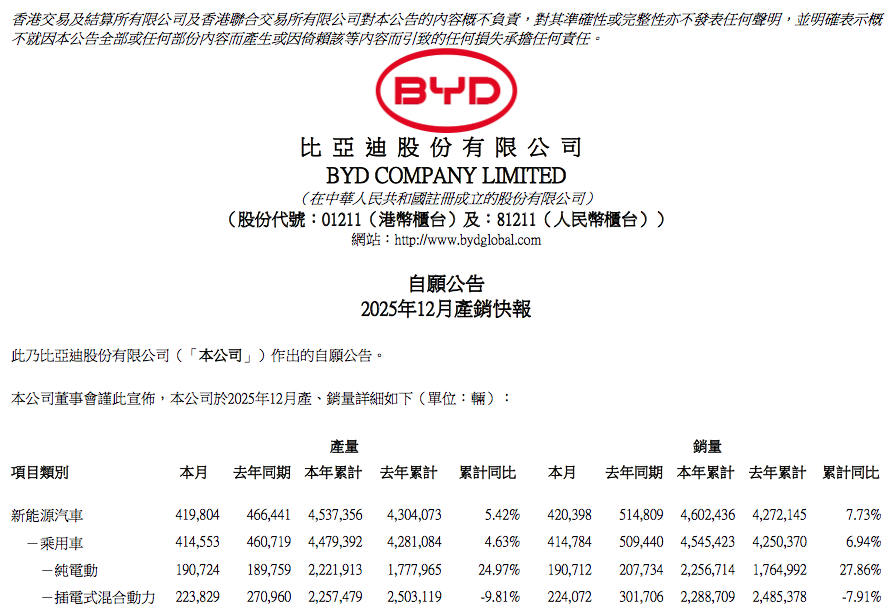
Core Viewpoint - BYD reported its December 2025 and full-year sales data, showing a total of 420,400 electric vehicles sold in December, with a total annual sales of 4,602,436 units, reflecting a year-on-year growth of 7.73% [1][9]. Sales Data Summary - In December 2025, BYD's total sales of new energy vehicles reached 420,400 units, including 414,800 passenger cars, 190,700 pure electric vehicles, and 223,800 plug-in hybrid vehicles [1][2]. - For the entire year of 2025, BYD's cumulative sales of new energy vehicles amounted to 4,602,436 units, with passenger car sales at 4,545,423 units, pure electric vehicle sales at 2,256,714 units (up 27.86%), and plug-in hybrid vehicle sales at 2,288,709 units (down 7.91%) [1][2][12]. Brand Performance - The Dynasty and Ocean networks contributed significantly to sales, with December sales of 344,900 units, including 155,436 units from the Dynasty network and 188,838 units from the Ocean network [3][13]. - The Dynasty network's annual cumulative sales reached 1,885,203 units, while the Ocean network's annual sales totaled 2,220,008 units [4][14]. Export Performance - In December, BYD exported 133,200 new energy vehicles, with total overseas sales for 2025 exceeding 1 million units, marking a 145% year-on-year increase [10][19]. - The company is enhancing its competitiveness in overseas markets through localized production and self-shipping strategies to mitigate high tariffs in regions like Europe and the US [19]. Milestones - BYD announced the production of its 15 millionth new energy vehicle on December 18, 2025, highlighting a significant milestone for the Chinese automotive industry [10][19].
2025年杀青汽车渠道瘦身进行时
Xin Lang Cai Jing· 2026-01-04 01:19
Core Viewpoint - In 2025, the Chinese automotive industry is at a historic turning point, with the penetration rate of new energy vehicles exceeding 50%, marking a shift towards a high-quality development phase characterized by a balance between traditional and electric vehicles [2][16]. Group 1: Industry Transformation - The automotive channel system is undergoing unprecedented restructuring, shifting from scale expansion to integration optimization, model innovation, and deepening market penetration [2][16]. - The era of merely pursuing the number of outlets has ended, with a focus on quality improvement and efficiency optimization becoming the core issues [2][3]. - The automotive channel transformation is clearly presenting three major trends: lightweight, hybrid, and downward expansion, aimed at addressing high costs and low efficiency in the industry [2][3][11]. Group 2: Lightweight Trend - The traditional heavy asset 4S stores are facing high rent and inventory pressures, prompting automakers to explore lightweight outlet models [4][19]. - Lincoln China's "Spark Plan" serves as a benchmark for lightweight transformation, significantly reducing single-store investment from 20-30 million yuan to 4 million yuan, leading to a 40% decrease in dealer operating costs [4][18]. - The optimization of profit structure in lightweight stores allows after-sales profits to fully cover operating costs, enhancing profitability [4][18]. Group 3: Hybrid Trend - The trend of channel hybridization, which began in 2024, continues to deepen in 2025, with brands exploring flexible combinations of direct sales, agency, and authorization models [7][21]. - NIO is cautiously adopting a hybrid approach, allowing local agents to manage market operations while maintaining brand control [7][21]. - BYD's Tengshi and Fangchengbao brands are implementing a dual-track system of direct sales and authorization to enhance channel efficiency [8][22]. Group 4: Downward Expansion Trend - The trend of channel downward expansion is accelerating, with significant sales growth in lower-tier cities, reflecting a clear shift in the automotive consumption market [11][25]. - Leap Motor's strategy of lowering the price of main models to the 150,000 yuan range has led to a 113.42% year-on-year increase in deliveries, with over 60% of sales coming from lower-tier markets [11][25]. - Third-party involvement, such as JD Auto's collaboration with GAC and CATL, is creating new models for the lower-tier market, significantly reducing the purchase threshold [12][26]. Group 5: Efficiency Revolution - The core of channel transformation is an efficiency revolution, focusing on serving more users at lower costs [12][26]. - The automotive channel is undergoing structural reshaping through lightweight, hybrid, and downward expansion trends, but the evolution of channels is far from over [12][26].




研判2025!中国共享出行行业发展背景、产业链、交易规模、竞争格局及未来前景:共享出行交易规模稳步提升,正向智能化、绿色化方向深度演进[图]
Chan Ye Xin Xi Wang· 2026-01-04 01:17
Core Insights - The shared economy model, leveraging internet technology and resource sharing, has rapidly emerged, significantly impacting various sectors including transportation and finance [1] - The shared mobility sector has seen a recovery in transaction volume, reaching 234.5 billion yuan in 2024, a year-on-year increase of 9.07% [1][9] - Future growth is expected as shared mobility integrates with advanced technologies like autonomous driving and electric vehicles, enhancing service intelligence and sustainability [1][9] Shared Mobility Industry Overview - Shared mobility refers to transportation methods where users do not own vehicles but share them, including ride-hailing services and bike-sharing [2] - The industry encompasses various innovative models such as ride-hailing, bike-sharing, and car-sharing services [2] Development Background of Shared Mobility - The shared economy, centered around internet platforms, optimizes resource allocation and enhances efficiency [4] - China's shared economy market size is projected to grow from 19.6 trillion yuan in 2015 to 44.6 trillion yuan in 2024, with a compound annual growth rate of 9.57% [4] Shared Mobility Industry Chain - The industry chain includes hardware suppliers (vehicle manufacturers, battery suppliers) at the upstream, platform operators in the middle, and end-users at the downstream [5] Current State of Shared Mobility - The user base for shared mobility in China has grown from 380 million in 2016 to 710 million in 2024, with a compound annual growth rate of 8.13% [8] - The shared mobility sector is becoming a vital part of urban transportation, driven by urbanization and increasing environmental awareness [8] Competitive Landscape and Key Players - The shared mobility industry features a competitive landscape with major players like Didi Chuxing, Cao Cao Mobility, and others in ride-hailing, while bike-sharing is dominated by companies like Hello Bike and Meituan Bike [9] Future Trends in Shared Mobility - The integration of services and the emergence of Mobility as a Service (MaaS) will enhance user experience and operational efficiency [13] - Technological advancements will improve user experience and operational intelligence, with AI and autonomous driving playing key roles [14] - The green transition in shared mobility will involve collaboration with urban energy systems, enhancing sustainability [15]



雷军:小字是陋习,骂小米应该客观;传比亚迪组建5000人智驾团队;人类首次「看见」黑洞扭曲时空 | 极客早知道
Sou Hu Cai Jing· 2026-01-04 00:53
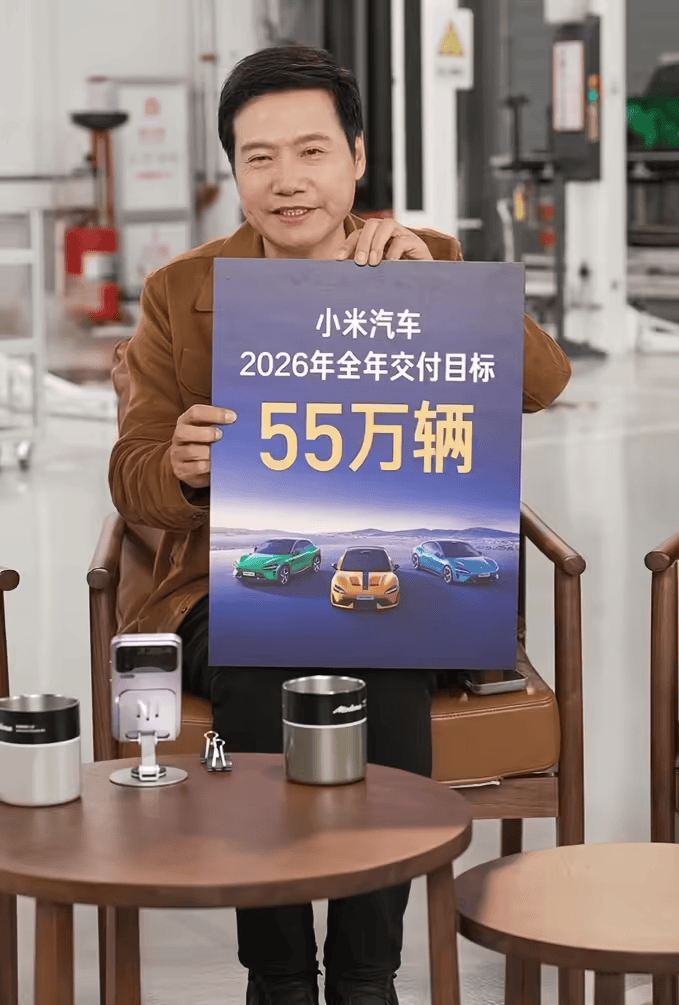
Group 1: Xiaomi - Xiaomi's founder Lei Jun announced a delivery target of 550,000 vehicles for Xiaomi Auto in 2026 [1] - Lei Jun acknowledged the industry's issue with "PPT small text" and committed to immediate rectification, emphasizing the importance of objective feedback from users [4] Group 2: BYD - BYD has formed a specialized team of over 5,000 people for driver assistance and plans to invest over 100 billion in smart technology [5] - By the end of 2025, BYD aims to have over 2.5 million vehicles equipped with the "Tianshen Eye" system, creating the largest vehicle cloud database in China [5] Group 3: Microsoft - Microsoft CEO Satya Nadella stated that 2026 will be a critical year for AI, emphasizing that application choices are more important than model capabilities [6] Group 4: Apple - Apple's upcoming A20 chip is projected to cost $280 per unit, marking an 80% increase from the previous A19 chip, making it the most expensive mobile processor to date [9] - The A20 chip will utilize TSMC's 2nm process and will feature advanced technologies to enhance efficiency and AI processing capabilities [10][11] - Apple plans to launch a new entry-level MacBook in Spring 2026, featuring a 12.9-inch display and the A18 Pro chip, aimed at the budget to mid-range market [16][17] Group 5: AI and Robotics - The first visual AI tennis robot, Tenniix, will debut at CES 2026, featuring smart tracking and adaptive training capabilities [11][12][15] - The robot will support voice interaction and provide personalized training experiences based on player performance data [15]



汽车早报|特斯拉电动车年销量首次被比亚迪超越 小米汽车2026年全年交付目标55万辆
Xin Lang Cai Jing· 2026-01-04 00:40
Group 1: Global Electric Vehicle Market - In the period from January to November 2025, global automobile sales are projected to reach 87.66 million units, with new energy vehicles (NEVs) accounting for 20.33 million units, representing 30% of total sales, an increase of 3.7 percentage points from 2024 [1] - By November 2025, China's share of the global NEV market is expected to reach 68.4%, with a notable 73.7% share in November alone [1] - The contribution of China to the global increase in NEV sales from January to November 2025 is estimated at 68%, with Germany and India contributing 5% and 4% respectively [1] Group 2: China's Electric Vehicle Market Performance - In the same period, China's share of the global pure electric vehicle market is projected to be 64.3%, a slight increase of 1 percentage point from 2024 [2] - China's share of the global plug-in hybrid market is expected to reach 76.4%, indicating strong performance in this segment [2] - The overseas market share of Chinese NEV manufacturers is reported to be 20% in November 2025, up 1.3 percentage points from October [2] Group 3: Company-Specific Developments - Tesla's global vehicle deliveries for 2025 are reported at 1.636 million units, marking an 8.6% decline year-on-year, and for the first time, Tesla's sales have been surpassed by BYD [3] - Xiaomi aims to deliver 550,000 vehicles in 2026, with a target of over 410,000 units in 2025, exceeding the initial plan of 300,000 [4] - BYD's December 2025 NEV sales reached approximately 420,398 units, a year-on-year decline of 18.2%, while total annual sales for 2025 were 4,602,436 units, reflecting a 7.73% increase [5] - Chery's total sales for 2025 reached 2,631,381 units, an 8% increase from the previous year [6] - Changan's sales for 2025 were reported at 2.913 million units, a growth of 8.5%, with NEV sales increasing by 51% to 1.109 million units [8] Group 4: Market Trends and Innovations - Stellantis has decided to resume production of the V8-powered Ram TRX pickup truck due to relaxed U.S. federal emissions regulations, with the 2027 model expected to launch in late 2026 at a price of approximately $100,000 [9]

高增长潜力的新能源赛道,31股获机构扎堆看好
Zheng Quan Shi Bao· 2026-01-04 00:33
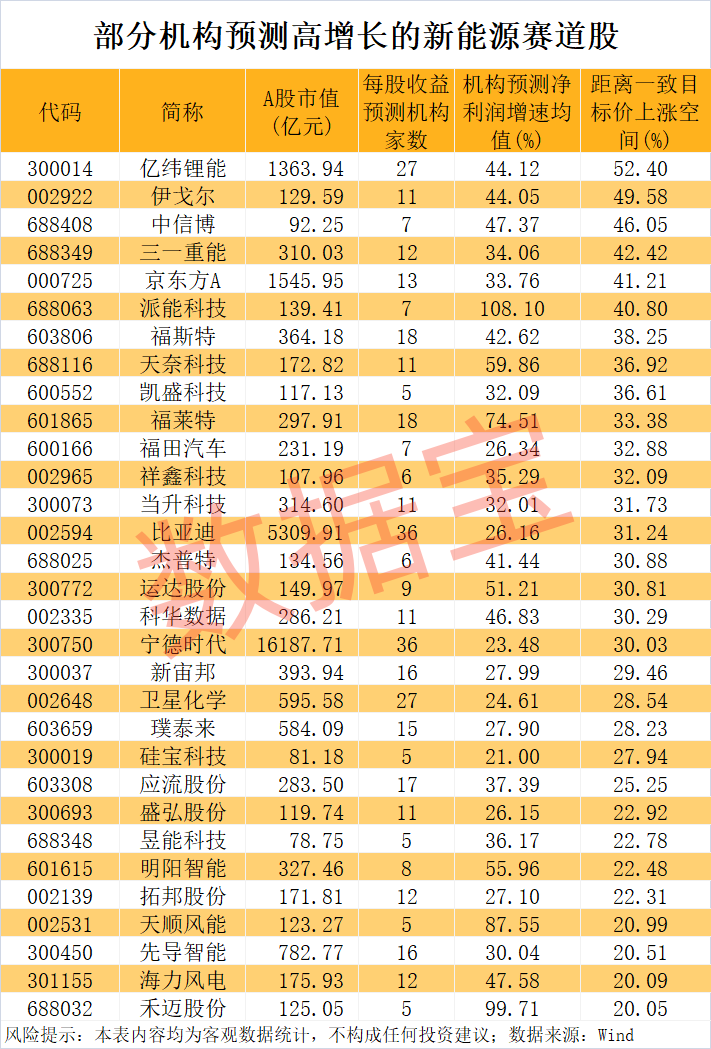
Core Insights - The rapid expansion of AI data centers, combined with the "anti-involution" trend, is expected to create new opportunities in the renewable energy sector by 2026 [1] Group 1: Policy and Regulatory Developments - The National Development and Reform Commission and the National Energy Administration aim for renewable energy generation to account for approximately 30% of total power generation by 2030 [2] - By 2035, a new type of power grid platform will be established, enhancing the optimization of power resources and supporting the stable operation of the power system [2] Group 2: Market Growth and Trends - The "14th Five-Year Plan" indicates that non-fossil energy will gradually become the main energy supply, marking a significant transformation in the energy supply structure [3] - The global demand for electricity is expected to expand exponentially due to the booming AI data centers and the acceleration of global electrification [3] Group 3: Investment Opportunities - A report from Citigroup highlights that transformer and large-scale energy storage systems (ESS) may become critical bottleneck assets in supporting the expansion of AI data centers [3] - Various institutions have released strategies for 2026, expressing optimism for the renewable energy sector, particularly in upstream materials like graphite anode materials and lithium hexafluorophosphate [3] Group 4: High-Growth Stocks - A total of 64 stocks in the renewable energy sector are projected to have a net profit growth rate exceeding 20% in both 2026 and 2027 [5] - Among these, 31 stocks have an upside potential of over 20% based on the comparison of their closing prices on December 31, 2025, with the target prices predicted by institutions [5] Group 5: Specific Stock Insights - EVE Energy is expected to have a price increase potential of 52.4%, driven by the launch of a new cylindrical battery project and improvements in profitability through energy storage and solid-state batteries [7] - Igor's stock has a potential increase of 49.58%, benefiting from the scaling of overseas production and new growth opportunities in the data center sector [7] - The rolling P/E ratio for Satellite Chemical is the lowest at 9.71, with ongoing development of immersion liquid cooling solutions for various applications [8][9]




瞄准5万亿美元市场:跨界布局机器人,时代的新共识
3 6 Ke· 2026-01-04 00:26
Core Insights - The Chinese robotics industry is poised for significant growth by the end of 2025, with humanoid robots transitioning from experimental concepts to practical applications, achieving over 50% growth and indicating a trillion-yuan industry on the horizon [1] - The entry of major players from various sectors such as automotive, electronics, and the internet into the robotics field marks a shift from niche exploration to widespread competition, creating a unique trend of "cross-industry integration" [1] Group 1: Market Dynamics - In the first eight months of 2025, the primary market financing in the robotics sector reached 38.624 billion yuan, 1.8 times the total for 2024, highlighting the blue ocean effect attracting significant investment [2] - The global industrial robot sales are projected to reach 542,000 units in 2024, with China accounting for 295,000 units, representing 54% of the global market [2] - By 2025, the Chinese robotics market is expected to exceed 150 billion yuan, capturing 35% of the global market share, with predictions suggesting the market for embodied intelligence could reach 400 billion yuan by 2030 and over a trillion yuan by 2035 [2] Group 2: Industry Trends - At least 20 automotive companies have entered the humanoid robot market by the end of 2025, with notable developments including Chery's humanoid robot Mocha and BYD's production line for core robot components [3] - The automotive industry's supply chain overlaps significantly with robotics, with a 60% compatibility rate, driving car manufacturers to invest in robotics as they view vehicles as "mobile intelligent robots" [3] - Home appliance manufacturers are transitioning from traditional manufacturing to smart ecosystems, with companies like Midea establishing dedicated innovation centers for humanoid robots and developing comprehensive R&D systems [7] Group 3: Strategic Shifts - The automotive sector is seen as a key player in the transition to robotics, with companies like Geely planning to invest 5 billion yuan over three years to develop critical components and establish an ecosystem covering all robotics applications [6] - Internet giants are leveraging their technological and capital advantages to enter the robotics space, with ByteDance and Huawei making significant investments in developing advanced robotic models and systems [8] - The competition in the robotics sector is viewed as a strategic restructuring driven by technological advancements, with companies aiming to activate existing technological capabilities and build new ecosystems [9] Group 4: Challenges Ahead - Despite the enthusiasm for entering the robotics market, cross-industry players face challenges such as adapting core competencies to the robotics field, where technology paths are still being defined [10] - The high precision and stability required for industrial applications pose significant challenges for companies transitioning from other sectors, as they may struggle to meet the diverse demands of various operational environments [11] - Cost remains a critical issue, with companies like BYD and GAC aiming to reduce the production cost of humanoid robots to below 200,000 yuan, which requires overcoming substantial supply chain and process optimization challenges [11]


早报:雷军开启2026年首播 比亚迪纯电销量超特斯拉
Sou Hu Cai Jing· 2026-01-04 00:26
Group 1 - Lei Jun, founder of Xiaomi, addressed various questions regarding Xiaomi's automotive developments during a live stream, emphasizing the complexity of automotive technology and inviting constructive criticism [1][3] - NIO's founder, Li Bin, announced plans to build over 1,000 battery swap stations in 2026, contributing to a total of over 4,600 stations by year-end, and highlighted the completion of a 2,700 km battery swap route [3][5] - BYD has reportedly surpassed Tesla in pure electric vehicle sales starting from Q4 2023, with expectations to maintain this lead for five consecutive quarters through 2025 [1][5] Group 2 - Li Bin outlined five strategic requirements for NIO to ensure high-quality development in a competitive automotive industry, focusing on technology innovation and infrastructure investment [5] - Tesla's global vehicle deliveries are projected to decline by approximately 8.6% in 2025, with BYD expected to outperform Tesla in multiple key performance indicators, including revenue and profit margins [5][7] - The Xiaomi 15 Ultra smartphone achieved nearly double the sales of the Xiaomi 17 Ultra in its first three days, indicating strong market performance [7][9]

最高降30万!宝马中国回应30多款车型降价;比亚迪超越特斯拉!拿下纯电汽车全球第一;山姆被指多款商品货源与小象超市趋同,多方回应!
雷峰网· 2026-01-04 00:22
Group 1 - BMW China announced price adjustments for over 30 models, with some reductions exceeding 300,000 yuan, indicating a strategic response to market dynamics and performance pressures [4][5] - The most significant price drop was for the BMW iX1 eDrive25L, which decreased from 299,900 yuan to 228,000 yuan, a reduction of 24% [4] - BMW's sales in China have declined by 11.2% year-on-year, and the company does not expect rapid growth in the Chinese market in 2026 and 2027 [5] Group 2 - BYD is projected to sell 2.25 million pure electric vehicles in 2025, surpassing Tesla's expected deliveries of 1.64 million, marking a significant milestone in the electric vehicle market [7][8] - BYD's overall vehicle sales are expected to reach 4.6 million in 2025, with a year-on-year growth of approximately 8% [7] Group 3 - Wallmart's Sam's Club in China is expected to achieve sales of over 140 billion yuan in 2025, a 40% increase from the previous year, contributing to Walmart China's goal of reaching 200 billion yuan in sales by 2026 [23][24] - Sam's Club plans to open 10 new stores in 2025, bringing the total to 63, supporting its growth strategy through both same-store sales and new store openings [24] Group 4 - Wallmart's Sam's Club aims for a comparable store sales growth of 15% in 2026, driven by both existing store performance and new openings [23] - The strong performance of Sam's Club is expected to significantly enhance Walmart China's market position, making it a dominant player in the retail sector [23] Group 5 - Kimi, a Chinese AI startup, completed a $500 million Series C financing round, with a post-investment valuation of approximately $4.3 billion, indicating strong investor confidence [16] - The company reported a significant increase in overseas revenue, with a month-on-month growth of over 170% in paid users from September to November 2025 [16] Group 6 - Wallmart's Sam's Club in China achieved a record number of new store openings in 2025, contributing to its robust sales growth and market expansion strategy [24] - The company is leveraging its strong brand and operational efficiency to enhance its competitive position in the retail market [23]