
PDD(PDD)

Search documents
2025年《财富》中国500强净资产收益率最高的40家公司
财富FORTUNE· 2025-07-22 04:03
Core Insights - The 2025 Fortune China 500 list was released, providing insights into the latest development trends of China's largest companies [1] Group 1: Company Performance - Zhuhai Wanda Commercial Management Group Co., Ltd. topped the list with a return on equity (ROE) exceeding 64% [2] - Sails ranked second, while Haidilao took the third position; Nongfu Spring, Moutai, and Pinduoduo ranked fourth to sixth respectively [2]






PDD Holdings Inc. Sponsored ADR (PDD) Surpasses Market Returns: Some Facts Worth Knowing
ZACKS· 2025-07-21 22:46
The Zacks Rank system, ranging from #1 (Strong Buy) to #5 (Strong Sell), possesses a remarkable history of outdoing, externally audited, with #1 stocks returning an average annual gain of +25% since 1988. Over the last 30 days, the Zacks Consensus EPS estimate has witnessed an unchanged state. PDD Holdings Inc. Sponsored ADR is holding a Zacks Rank of #5 (Strong Sell) right now. With respect to valuation, PDD Holdings Inc. Sponsored ADR is currently being traded at a Forward P/E ratio of 12.41. This indicat ...

金十图示:2025年07月21日(周一)中国科技互联网公司市值排名TOP 50一览
news flash· 2025-07-21 02:56
Group 1 - The top 50 Chinese technology and internet companies by market capitalization as of July 21, 2025, are listed, with TSMC leading at $124.684 billion [3][4]. - Tencent Holdings ranks second with a market cap of $60.3704 billion, followed by Alibaba at $28.679 billion [3][4]. - Xiaomi Group and Pinduoduo hold the fourth and fifth positions, with market caps of $18.9457 billion and $15.4741 billion, respectively [3][4]. Group 2 - Meituan and NetEase are ranked sixth and seventh, with market caps of $10.3371 billion and $8.6191 billion [4]. - JD.com, SMIC, and Kuaishou follow, with market caps of $4.8896 billion, $4.8429 billion, and $3.948 billion, respectively [4][5]. - Li Auto and Tencent Music are also in the top 15, with market caps of $3.404 billion and $3.3193 billion [5]. Group 3 - Baidu, Beike, and Tonghuashun are ranked 13th, 14th, and 15th, with market caps of $3.0187 billion, $2.2374 billion, and $2.0827 billion, respectively [5][6]. - The list includes various companies from different sectors, indicating a diverse representation within the technology and internet industry [6]. - The market capitalization figures are calculated based on the current exchange rate of USD to HKD [6].





ESG观察|充电宝市场“变天”:假“3C”贴纸横行,电商平台出手封堵漏洞
Xin Lang Cai Jing· 2025-07-21 02:44
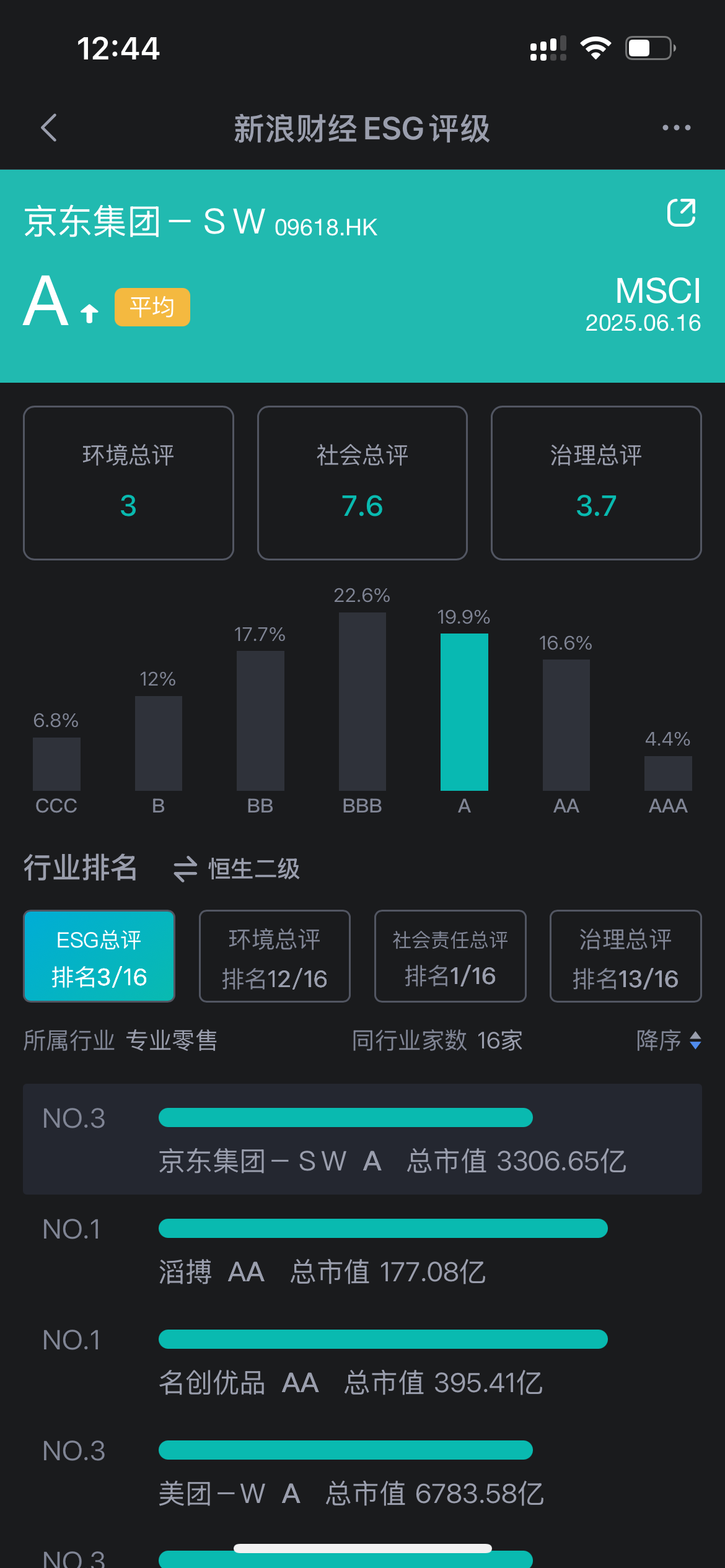
Core Viewpoint - The article discusses the recent regulatory actions and compliance issues related to the sale of non-compliant lithium battery products on e-commerce platforms in China, particularly focusing on the implications for companies like JD.com and Pinduoduo in terms of their ESG ratings and responsibilities [1][2][3]. Group 1: Regulatory Actions - Starting from June 28, 2023, the Civil Aviation Administration of China has prohibited passengers from carrying power banks without a 3C mark, unclear 3C marks, or recalled models on domestic flights due to safety concerns related to lithium batteries [1]. - The State Administration for Market Regulation announced that from August 1, 2023, lithium-ion batteries and power banks will be subject to CCC certification management, with a complete ban on uncertified products from August 1, 2024 [2]. - E-commerce platforms like Taobao, Tmall, and Pinduoduo have strengthened their regulatory measures by blocking searches for "3C stickers" and similar terms to prevent the sale of non-compliant products [2][10]. Group 2: ESG Ratings and Company Performance - JD.com received an A+ rating from MSCI for its ESG performance, ranking third among 16 peers in the professional retail sector, with a social responsibility score of 7.6, the highest in its industry [3][5]. - Pinduoduo, on the other hand, received a CCC rating from MSCI, indicating a need for significant improvement in its social responsibility efforts, with a score of only 2.7 [3][7]. - The actions taken by e-commerce platforms align with the Electronic Commerce Law of the People's Republic of China, which mandates that products sold must meet safety and environmental protection requirements [3][10]. Group 3: Market Implications - The enforcement of these regulations and the subsequent actions by e-commerce platforms may reduce the risk of legal actions and fines related to the sale of non-compliant products, thereby protecting consumer safety [10]. - The ongoing issues with the availability of non-compliant products highlight the need for further refinement in regulatory measures to close existing loopholes [10].

2025拼多多跨境电商Temu商业模式、空间展望及优势研判分析报告
Sou Hu Cai Jing· 2025-07-20 23:54
Group 1 - Temu, a cross-border e-commerce platform under Pinduoduo, is rapidly entering overseas markets with a focus on extreme low pricing and a self-operated model [1][2][15] - Since its launch in September 2022, Temu has expanded to 47 countries, offering a wide range of products at significantly lower prices compared to competitors like Amazon [2][23] - The platform's unique model allows merchants to supply goods while Temu manages pricing, marketing, and logistics, effectively reducing costs and enhancing price competitiveness [2][3][15] Group 2 - Temu's supply chain efficiency is bolstered by leveraging Pinduoduo's domestic experience, utilizing a C2M model to connect directly with manufacturers and customize products based on consumer demand [3][28] - The operational structure of Temu is flat, promoting quick decision-making and high efficiency, which has led to significant cost reductions in logistics [3][4] - Marketing strategies include high-frequency advertising and targeted promotions on social media platforms, which have proven effective in user acquisition [4][6] Group 3 - The global e-commerce market is projected to reach $8.15 trillion by 2026, with an increasing online penetration rate, creating opportunities for platforms like Temu [5][6] - In the U.S., where Amazon holds a significant market share, there is a growing demand for cost-effective options, positioning Temu favorably to capture market share [5][6] - Temu's strategy focuses on the middle and lower-end consumer segments, aiming to fulfill everyday needs with low prices and a broad product range [5][6] Group 4 - Temu's business model is characterized by a zero-commission and low-entry barrier for small and medium-sized merchants, enhancing market accessibility [16][17] - The platform's pricing strategy includes various discounts and free shipping, creating a compelling value proposition for consumers [20][21] - As of June 2023, Temu's GMV reached $1 billion, with over 100 million active users in the U.S., indicating strong growth momentum [2][23][26]

拼多多突然暂停信息流投放CID,原因没那么简单
3 6 Ke· 2025-07-18 09:12
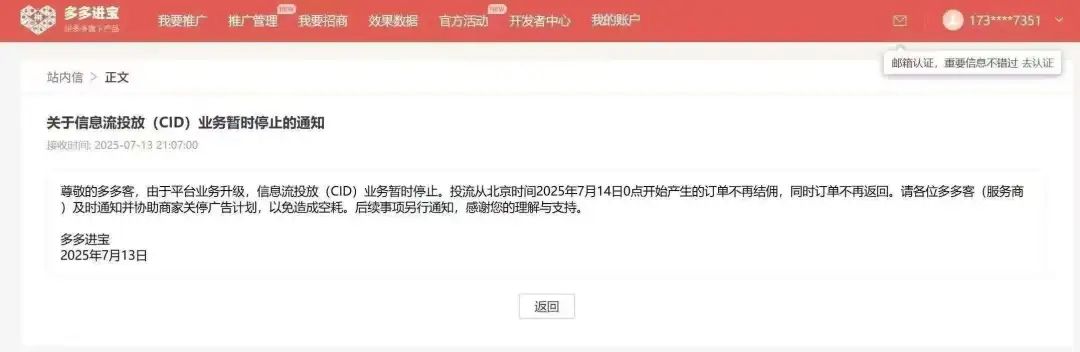
Core Viewpoint - Pinduoduo has unexpectedly suspended its Click ID (CID) advertising mechanism, causing significant disruption in the advertising industry, raising questions about the motivations behind this abrupt decision [2][5][27] Group 1: Overview of CID - CID, or Click ID, is a unique identifier generated during ad clicks, linking external traffic to transactions on platforms like Pinduoduo, facilitating the tracking of ad effectiveness [2][3] - The CID mechanism allows e-commerce platforms to leverage external traffic from content platforms, enhancing conversion rates and identifying potential best-selling products [3][4] Group 2: Industry Context - The advertising industry was experiencing a surge in CID usage, with competitors like Alibaba and Kuaishou expanding their CID collaborations, indicating a growing reliance on this model [4][5] - Pinduoduo, previously a strong advocate for the CID model, has now taken a step back, which contrasts sharply with the industry's momentum [5][6] Group 3: Reasons for Suspension - The term "suspend" rather than "terminate" suggests that Pinduoduo may be negotiating terms with content platforms regarding data sharing and commission structures, indicating potential future reinstatement of CID [5][6][25] - The suspension may also reflect Pinduoduo's shift towards a more self-sufficient operational model, focusing on internal growth strategies rather than relying on external traffic [7][29] Group 4: Data Control and Attribution Issues - The transparency of data is a significant concern, as the CID model diminishes Pinduoduo's control over data, making it difficult to assess the return on investment (ROI) accurately [11][12][16] - The complexity of attribution in advertising creates disputes among platforms regarding credit for conversions, complicating data analysis and optimization efforts [19][20][24] Group 5: Implications for the Industry - Pinduoduo's decision to pause CID highlights the need for clearer rules and data management practices within the advertising ecosystem, prompting a reevaluation of relationships between e-commerce platforms, content platforms, and service providers [26][27] - The move signals Pinduoduo's intent to redefine its role in the advertising landscape, prioritizing internal capabilities over external dependencies [28][29]
金十图示:2025年07月18日(周五)中国科技互联网公司市值排名TOP 50一览
news flash· 2025-07-18 02:58
| 42 | | 三七互娱 | 51.18 | | | --- | --- | --- | --- | --- | | 43 | | 新大陆 | 46.33 | | | 44 | | 岩山科技 | 44.76 | | | 45 | | 中国民航信息网络 | 44.44 | | | 46 | INESA | 云赛智联 | 42.99 | | | 47 | | 阅文集团 | 42.47 | 3 1 | | 48 | | 东华软件 | 42.26 | -1 | | 49 | | 金山云 | 41.49 | -1 | | 50 | | 银之杰 | 41.44 | -1 + | | 8 | | 中芯国际 | 474.12 | 11 | | --- | --- | --- | --- | --- | | 9 | | 京东 | 471.23 | 1 t | | 10 | | 快手-W | 383.82 | 1 t | | II | | 腾讯音乐 | 346.34 | 1 t | | 12 | | 理想汽车 | 335.69 | 1 t | | 13 | Bal & En | 百度 | 300.83 | 11 | | 14 ...



财经早报:做强国内大循环再举“发令枪” A股融资余额八连增
Xin Lang Zheng Quan· 2025-07-18 00:15
Group 1 - Chinese assets are experiencing a resurgence, with NIO and Li Auto rising nearly 7% as foreign investment increases in A-shares [2] - The Invesco Global Sovereign Asset Management Research indicates a noticeable recovery in interest from international investment institutions towards the Chinese market, managing approximately $27 trillion in assets [2] - Several foreign institutions express optimism about Chinese assets due to the stable economic performance, policy benefits, and improved corporate earnings outlook [2] Group 2 - The U.S. House of Representatives has advanced cryptocurrency legislation, supported by President Trump, which has led to significant stock price increases for companies in the crypto sector [3] - Blue Ocean Interactive surged over 45% after announcing the establishment of LK Crypto, focusing on mainstream crypto asset management and RWA [3] - Hong Kong is actively developing stablecoin products, creating a dual regulatory framework that connects the U.S. dollar stablecoin with the mainland [3] Group 3 - The Hong Kong IPO market is witnessing a surge, with a significant increase in financing amounts, reflecting global capital's confidence in China's industrial upgrade and consumption potential [7] - On July 9, the Hong Kong Stock Exchange saw five companies queueing for listing in a single day, raising over 10 billion HKD [7] Group 4 - The domestic consumption and investment policies are being emphasized by the Chinese government to strengthen the domestic circulation [5][6] - Analysts highlight the urgency and necessity of promoting consumption as a core strategy for economic growth [6] Group 5 - The A-share market has seen an increase in financing balance for eight consecutive days, totaling an increase of 44.038 billion CNY, indicating positive market sentiment [10] - Analysts suggest that the current macro environment and market risk appetite signal potential for further market growth [10] Group 6 - The number of private equity MOM products registered this year has reached a new high, with 43 products registered by July 15, surpassing the total for the past nine years [14] - This trend indicates a strong interest in the MOM fund model, which allows for diversified asset management [14] Group 7 - The beverage brand Wahaha is facing a decline in sales following a family dispute involving its chairman, which has raised concerns among distributors [16] - The internal family conflict could potentially disrupt the competitive landscape of the Chinese beverage industry [16] Group 8 - The domestic electric vehicle market is seeing significant growth, with L2-level assisted driving penetration exceeding 50% [18] - The heavy truck sales in the first half of the year have increased by approximately 7%, with new energy heavy trucks being a major highlight [18] Group 9 - The stock market is experiencing fluctuations, with the Shanghai Composite Index slightly declining by 0.03% to 3503.78 points [19] - The Hong Kong market is also showing mixed performance, with the Hang Seng Index and the Hang Seng Tech Index experiencing slight declines and gains, respectively [19] Group 10 - The U.S. stock market has seen gains driven by positive economic data and corporate earnings reports, with the S&P 500 rising by 0.45% [20] - Approximately 88% of S&P 500 companies that have reported earnings exceeded analyst expectations, boosting investor confidence [20] Group 11 - Several foreign investment banks have expressed positive views on the Chinese market, with Citigroup raising its ratings for Chinese and Korean markets to "overweight" [21] - Citigroup projects the Hang Seng Index to reach 25,000 points by the end of the year and the CSI 300 Index to reach 4,200 points [21] Group 12 - The stock market's investment logic is shifting towards cash flow analysis in a low-interest-rate environment, with a focus on high-dividend and strong cash flow companies [22] - Analysts are optimistic about sectors such as automotive, electronics, and traditional high-growth areas like AI and pharmaceuticals [22]



2025年6月社消零售数据点评:大促前置影响6月表现,黄金零售短期承压
EBSCN· 2025-07-17 05:18
Investment Rating - The industry is rated as "Buy" [6] Core Viewpoints - In June 2025, the total retail sales of social consumer goods reached 4.23 trillion yuan, with a year-on-year growth of 4.8%, a decrease of 1.6 percentage points compared to May [1] - The retail sales of gold and jewelry increased by 6.1% year-on-year in June, but the growth rate decreased by 15.7 percentage points compared to May [3] - The retail sales of household appliances grew by 32.4% year-on-year in June, although the growth rate fell by 20.6 percentage points from May [4] - The overall retail sales growth in June was impacted by a high base from the previous year and the elongation of the promotional cycle, leading to a release of consumer demand in advance [5] Summary by Relevant Sections Social Consumer Goods Retail - The total retail sales for June 2025 were 4.23 trillion yuan, with a year-on-year growth of 4.8% [1] - The retail sales for the first half of 2025 reached 24.55 trillion yuan, with a year-on-year growth of 5.0% [1] Consumer Price Index (CPI) - The CPI in June 2025 showed a year-on-year growth of 0.1%, improving from a -0.1% in May [1] Retail Categories Performance - Grocery and food retail sales grew by 8.7% year-on-year in June, while beverage sales declined by 4.4% [1] - Textile and clothing retail sales increased by 1.9% year-on-year, while cosmetics sales fell by 2.3% [2] - The retail sales of gold and jewelry increased by 6.1% year-on-year, but the growth rate decreased significantly [3] - Household appliances saw a substantial growth of 32.4% year-on-year, despite a decline in growth rate [4]
金十图示:2025年07月17日(周四)中国科技互联网公司市值排名TOP 50一览


news flash· 2025-07-17 02:54
Group 1 - The article presents the market capitalization rankings of the top 50 Chinese technology and internet companies as of July 17, 2025 [1] - Alibaba leads the list with a market capitalization of $2760.32 billion, followed by Xiaomi Group at $1871.42 billion and Pinduoduo at $1492.47 billion [3][4] - Meituan ranks sixth with a market capitalization of $978.45 billion, indicating strong performance among major players in the sector [4] Group 2 - Other notable companies include Oriental Fortune at $515.59 billion, SMIC at $466.49 billion, and JD.com at $456.09 billion, showcasing a diverse range of businesses within the top rankings [4][5] - Kuaishou ranks 11th with a market capitalization of $376.96 billion, while Tencent Music and Li Auto follow closely with $332.09 billion and $314.71 billion respectively [4][5] - The list also features companies like Xpeng Motors at $170.92 billion and iFlytek at $151.19 billion, reflecting the growing influence of electric vehicles and AI technology in the market [4][5]
