
XPENG(XPEV)

Search documents
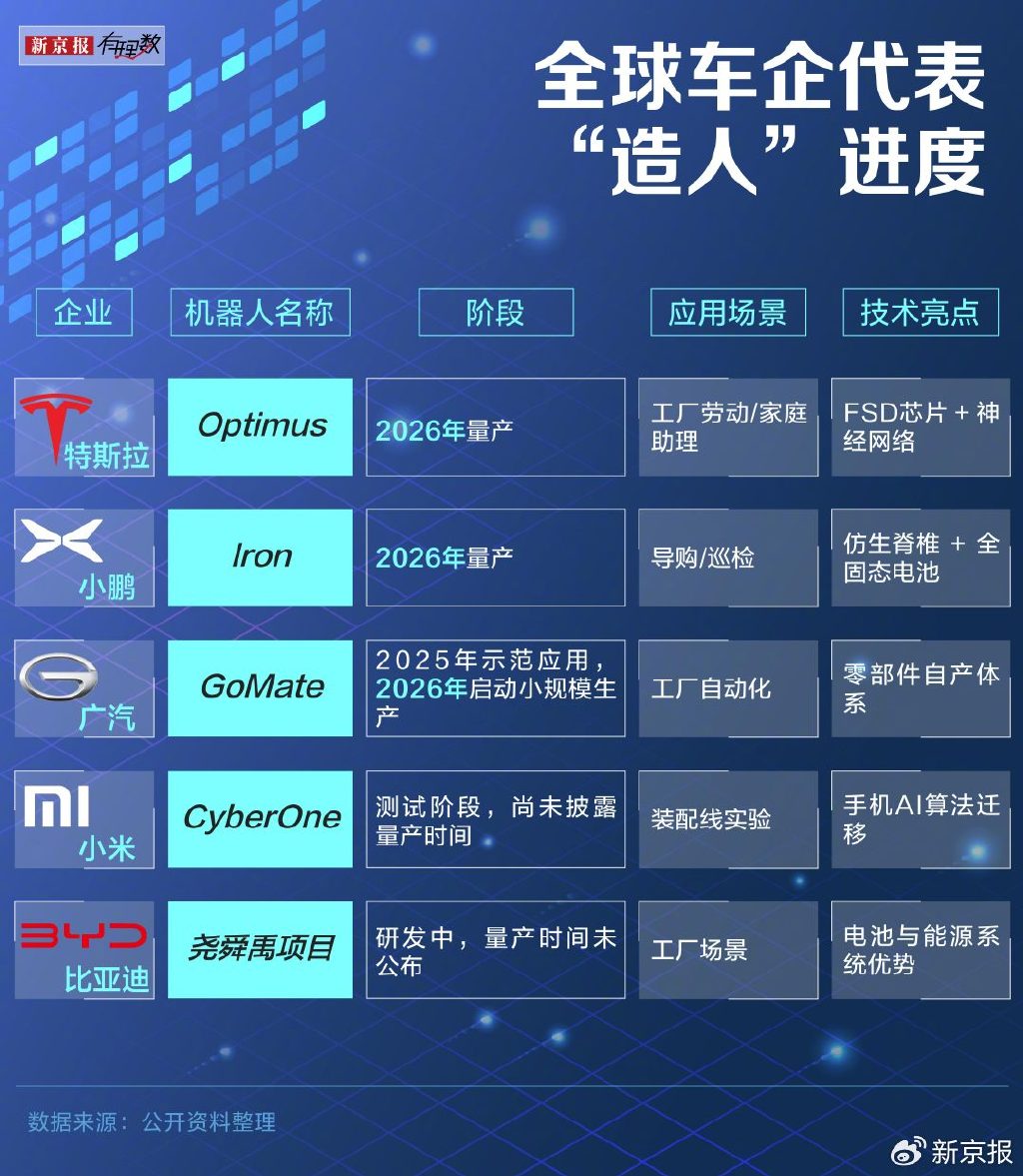
“人机辨真”大战之后:车企为什么要一边造车,一边“造人”?
Xin Jing Bao· 2025-11-13 12:26
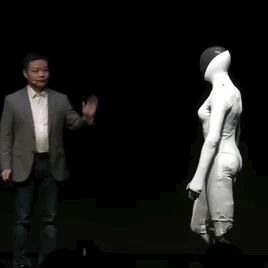
Core Insights - The unveiling of XPeng's humanoid robot Iron has sparked widespread debate about its authenticity, with many questioning whether it is a real robot or a human in disguise [1][2] - XPeng's CEO, He Xiaopeng, demonstrated Iron's capabilities, including its flexible skin and advanced mechanics, aiming to dispel doubts about the robot's identity [1][2] - The humanoid robot market is rapidly expanding, with approximately 18 automotive companies entering the field, driven by technological synergies and commercial motivations [4][6] Technical Features - Iron features 82 degrees of freedom, allowing it to perform complex movements like a model walk, significantly surpassing the 19 degrees of freedom of a previously showcased robot [2][3] - The robot is equipped with three Turing AI chips, providing a processing power of 2250 TOPS, and utilizes a self-developed physical world model for enhanced multi-modal coordination [3][6] - The design of Iron incorporates a bionic spine and flexible skin, contributing to its human-like movement and appearance [2][3] Industry Trends - The automotive industry is increasingly investing in humanoid robots as a means to leverage existing technologies from electric vehicles, with cost advantages estimated to be 30%-50% lower than tech companies [6][8] - The competition in the electric vehicle market has intensified, prompting companies to explore new narratives, with humanoid robots seen as a more imaginative venture [8][10] - The commercialization of humanoid robots is expected to progress faster than that of autonomous driving, due to more controllable environments and lower risks [8][10] Strategic Implications - Automotive companies are not just creating robots for novelty; they aim to reshape a new intelligent ecosystem that integrates vehicles, robots, and energy systems [10][11] - Companies like Tesla and XPeng envision their robots as extensions of AI ecosystems, with applications in various sectors including manufacturing and home assistance [11][12] - The development of humanoid robots is viewed as a competition for energy efficiency, with the potential for solid-state batteries to enhance the capabilities of these robots [11][12]


10月新能源车销量“成绩单”:比亚迪销售44万,零跑超7万,蔚来/小鹏/小米破4万
高工锂电· 2025-11-13 11:39
Core Viewpoint - The article highlights the performance of various electric vehicle brands in October 2025, showcasing the sales growth and market dynamics in the Chinese electric vehicle sector, particularly during the traditional peak sales season. Group 1: Overall Market Performance - October 2025 marked a traditional peak sales season for the automotive market, driven by the National Day holiday's customer attraction effect and year-end policy adjustments [5] - Among the 12 tracked automotive brands, most reported positive growth in new energy vehicle sales for October, with only Li Auto and GAC Aion showing negative month-on-month growth [5] Group 2: Brand-Specific Sales Data - BYD sold approximately 441,706 vehicles in October, a month-on-month increase of 11.5% but a year-on-year decrease of 12.1%. Cumulatively, BYD's sales from January to October reached about 3.7 million, reflecting a year-on-year growth of 13.9% [6] - Leap Motor achieved a record high of 70,289 vehicle deliveries in October, marking a year-on-year increase of over 84% and a cumulative total of 465,805 vehicles for the year, up 120.7% [8] - Xpeng Motors delivered 42,013 vehicles in October, a year-on-year increase of 76% and a month-on-month growth of 1%. The cumulative total for the year reached 355,209 vehicles, up 190% [10] - NIO delivered 40,397 vehicles in October, with a year-on-year growth of 92.6%. The cumulative total for the year stands at 913,182 vehicles [13] - Xiaomi's vehicle deliveries exceeded 40,000 in October, maintaining the same level as the previous month but doubling compared to the same period last year. The cumulative total for the year surpassed 290,000, reflecting a growth of 283.2% [17] - Deep Blue Automotive sold 36,792 vehicles in October, with a year-on-year increase of 32.1% and a cumulative total of 269,058 vehicles for the year, up 57.1% [19] - Li Auto delivered 31,767 vehicles in October, showing a year-on-year decline of 38.2% and a cumulative total of 328,916 vehicles for the year, down 16.4% [22] - GAC Aion's sales reached 27,014 vehicles in October, with a year-on-year decrease of 32.6% and a cumulative total of 261,992 vehicles for the year, down 25.9% [24] - Zeekr delivered 21,423 vehicles in October, with a year-on-year decline of 14.5% but a month-on-month increase of 17.3%. The cumulative total for the year is 165,023 vehicles, down 1.7% [27] - Lantu delivered 17,218 vehicles in October, reflecting a year-on-year increase of 70% and a cumulative total of 114,210 vehicles for the year, up 82% [31] - Avita's sales reached 13,506 vehicles in October, with a year-on-year growth of 34.3% and a cumulative total of 104,245 vehicles for the year, up 104.6% [33] - Zhiji Automotive delivered 13,159 vehicles in October, marking a year-on-year increase of 31.6% and a cumulative total of 63,452 vehicles for the year, up 27.1% [36]




【财经早报】2025-11-13 星期四
Sou Hu Cai Jing· 2025-11-13 00:54
Industry News - The National Energy Administration has issued guidelines to promote the integrated development of renewable energy, aiming for significant improvements in reliability and market competitiveness by 2030 [2] - The Ministry of Industry and Information Technology reported that over 600,000 technology and innovation-oriented SMEs have been cultivated in China, with more than 140,000 specialized and innovative SMEs [5] - The Ministry of Industry and Information Technology is seeking public opinions on the management measures for the printed circuit board industry, emphasizing the need for technological advancement and quality improvement [10] - The Ministry of Education has outlined plans to establish a comprehensive technology education system in primary and secondary schools by 2030, enhancing practical skills and interdisciplinary teaching methods [11] - The State Post Bureau reported that from October 21 to November 11, the national express delivery companies collected 13.938 billion packages, with a daily average of 634 million, indicating a significant expansion in the express delivery market [12] Company News - Haibo Sichuang has signed a strategic cooperation agreement with CATL to procure a total of no less than 200 GWh of electricity from 2026 to 2028 [16] - Century Huatong plans to repurchase between 500 million to 1 billion yuan of its shares for cancellation [16] - Changrong Co. intends to establish a controlling subsidiary to cooperate in the construction of a 100 MW photovoltaic power station [16] - CATL has begun mass production of its fifth-generation lithium iron phosphate battery products [16] - Shengton Mining is advancing its internationalization process with a planned investment of 1.423 billion yuan in its subsidiary [16] - Jingyuan Environmental Protection has won a water treatment project in the power industry worth approximately 143 million yuan [16] - Sturdy Medical's wholly-owned subsidiary plans to invest 2 billion yuan to build a production base for all-cotton spunlace non-woven fabric [16] - Giant Star Legend is deepening its cooperation with Yushu Technology to accelerate the commercialization of the robotics industry [16]


增程“二次战争”:技术派车企开始接管战场?
Tai Mei Ti A P P· 2025-11-13 00:44
Core Insights - The article discusses the evolution of range-extended electric vehicles (REEVs) in the automotive industry, highlighting a shift from the initial focus on alleviating range anxiety to enhancing user experience through advanced technology integration [2][3][12] - The competition in the REEV market is now characterized by a deeper emphasis on technical capabilities, energy efficiency, and adaptability to various driving scenarios, rather than merely extending driving range [4][5][12] Summary by Sections First War vs. Second War - The first phase of the REEV market addressed the issue of range anxiety, providing consumers with a flexible solution that combined electric and fuel options, thus proving the viability of REEVs [3][12] - The second phase, marked by the entry of technology-driven companies, focuses on optimizing user experience and integrating advanced technologies into REEV systems [5][12] Technological Advancements - Companies like Xiaopeng and Leap Motor are now competing on the basis of their ability to balance integration, energy consumption, and spatial efficiency, moving beyond simple functionality [4][5] - The introduction of advanced materials and AI in control systems signifies a shift towards higher technical barriers in the REEV market, emphasizing the importance of R&D capabilities [5][12] Market Strategies - There is a notable divergence in technical strategies, with some companies opting for "large battery + small fuel tank" configurations aimed at urban users, while others prefer "large battery + large fuel tank" setups to cater to long-distance travel needs [6][7] - The strategic choice of configurations reflects a deeper understanding of user scenarios and market demands, particularly in international markets where charging infrastructure may be lacking [8][9] Global Expansion - Several Chinese brands view REEVs as a gateway to international markets, leveraging their unique features to address the challenges posed by inadequate charging facilities in many regions [9][12] - The article notes that while REEVs are perceived as a transitional technology in China, they offer a practical solution in diverse global markets, providing users with a "zero-anxiety" electric driving experience [9][12] Challenges Ahead - The article highlights potential challenges in the global expansion of REEVs, including consumer understanding, regulatory risks, and the need for localization in different markets [10][11] - Despite these challenges, the rise of REEVs represents a victory for practical solutions that meet the immediate needs of consumers, balancing the benefits of electric vehicles with the realities of current infrastructure [11][12]


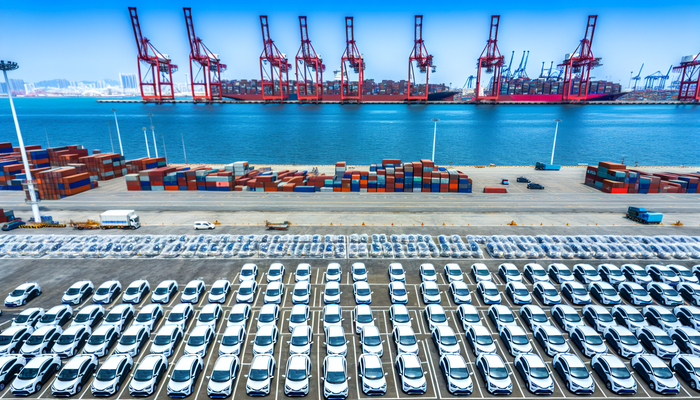
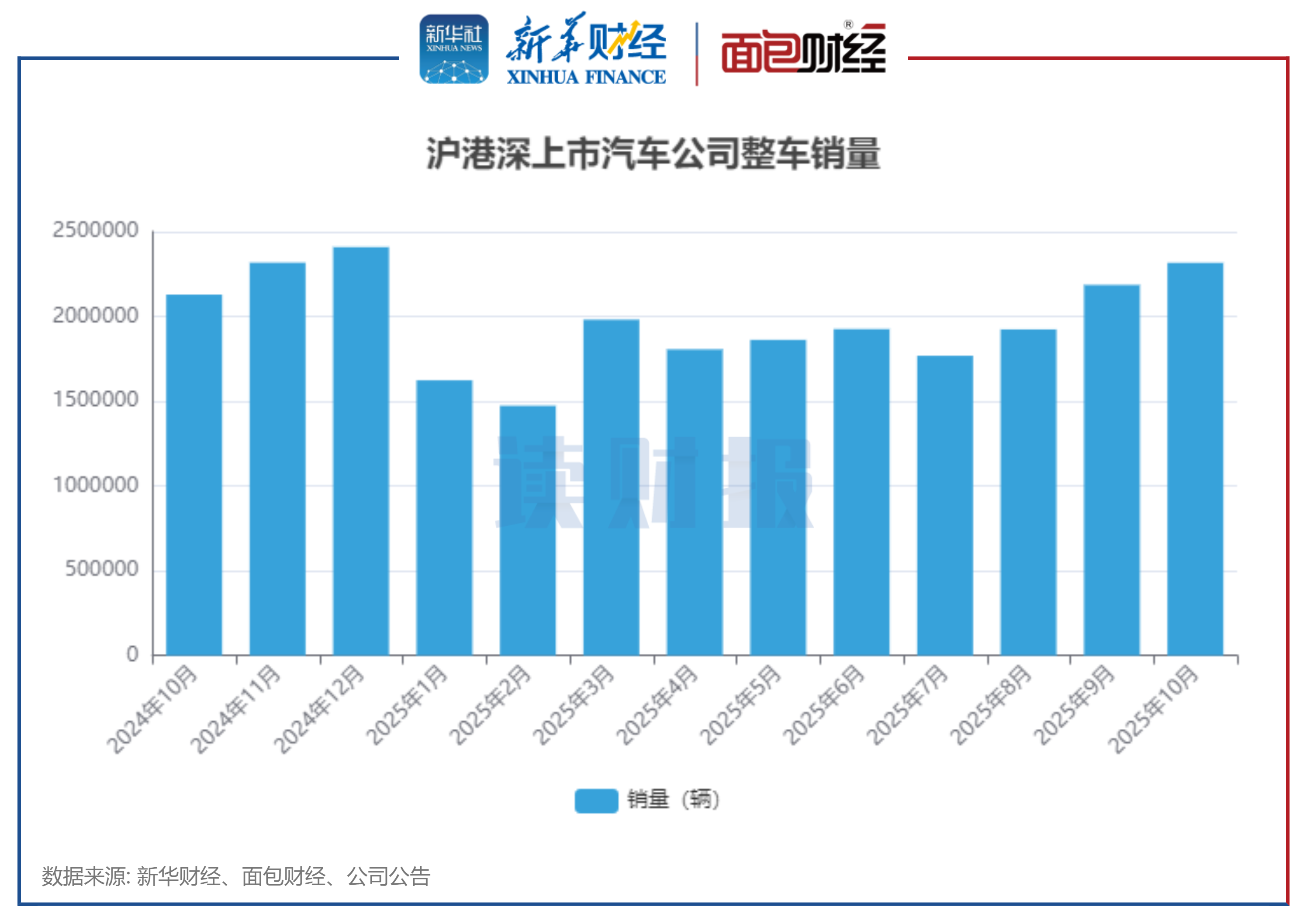
上市车企10月销量:整车销量超231万辆北汽蓝谷、蔚来等销量增速加快
Xin Lang Cai Jing· 2025-11-13 00:05
Core Insights - In October 2025, 20 major A and H-share listed automotive manufacturers reported a total vehicle sales of 2.3166 million units, representing a year-on-year increase of 8.82% and a month-on-month increase of 5.97% [1][2] - The total sales of new energy vehicles (NEVs) reached approximately 1.3078 million units, marking a year-on-year increase of 15.63% and a month-on-month increase of 9.68%, with a penetration rate of about 57.48% [1][3] Group 1: Overall Vehicle Sales - The top-selling company in October 2025 was SAIC Motor, with sales of 454,000 units, reflecting a year-on-year growth of 12.96% [2] - Other notable manufacturers included BYD, Geely, and Changan, which followed closely in sales figures [2] - Companies like Beiqi Blue Valley and Qianli Technology saw their sales growth exceed 100% year-on-year, while NIO and XPeng also experienced significant growth [2] Group 2: New Energy Vehicle Sales - The leading companies in NEV sales for October 2025 were BYD, SAIC Motor, and Geely, with sales of 441,700 units, 206,700 units, and 177,900 units respectively [3] - Beiqi Blue Valley's NEV sales growth exceeded 100% year-on-year, while NIO and XPeng also saw substantial increases in their sales growth rates compared to September [3] - BYD's total sales for the year up to October reached 3.7019 million units, showing a year-on-year increase of 13.88% [3]




谁在带队小鹏机器人:IRON背后的关键人物
自动驾驶之心· 2025-11-13 00:04
Core Viewpoint - The article discusses the development and leadership behind Xiaopeng Motors' humanoid robot project "IRON," highlighting the key figures and their contributions to the project. Group 1: Leadership and Team Structure - Mi Liangchuan is identified as the key figure leading the Xiaopeng robot business, responsible for overseeing the technical direction and product implementation of the humanoid robot project [7][19][20]. - The team behind IRON includes notable members such as Chen Jie, who focuses on reinforcement learning, and Ge Yixiao, the founding director of the intelligent mimicry department [45][52]. - Liu Xianming, head of Xiaopeng's autonomous driving department, is also contributing to the robot's development by improving the visual-language alignment (VLA) system [60][63]. Group 2: Technical Innovations - The design of IRON incorporates human-like features, particularly its spine-like structure, which enhances its movement capabilities [9][10][11]. - The development of a self-developed generative controller has increased the robot's freedom of movement, particularly in its front foot [15] - The team experienced significant advancements in IRON's capabilities within a short period, attributed to improvements in data and computational power [13][14]. Group 3: Historical Context and Development Path - Xiaopeng Motors began its foray into robotics by acquiring a startup focused on quadruped robots, which laid the groundwork for its humanoid robot ambitions [73][76]. - The company faced internal debates regarding the direction of its robotics efforts, particularly whether to pursue humanoid robots, which were initially met with skepticism [86][90]. - Following the emergence of AI advancements, the company pivoted towards humanoid robotics, leading to the creation of the first humanoid robot, PX5, which set the stage for the IRON project [91][100]. Group 4: Market Position and Future Outlook - Xiaopeng Motors is positioning humanoid robots as a third growth curve alongside smart and flying vehicles, indicating a strategic shift in focus [100]. - The company has garnered significant financial resources, with nearly 50 billion RMB available for research and development, enhancing its competitive edge in the robotics sector [46].
降息,突发!美联储,大消息!美股突变,黄金大涨
Zheng Quan Shi Bao· 2025-11-12 23:55
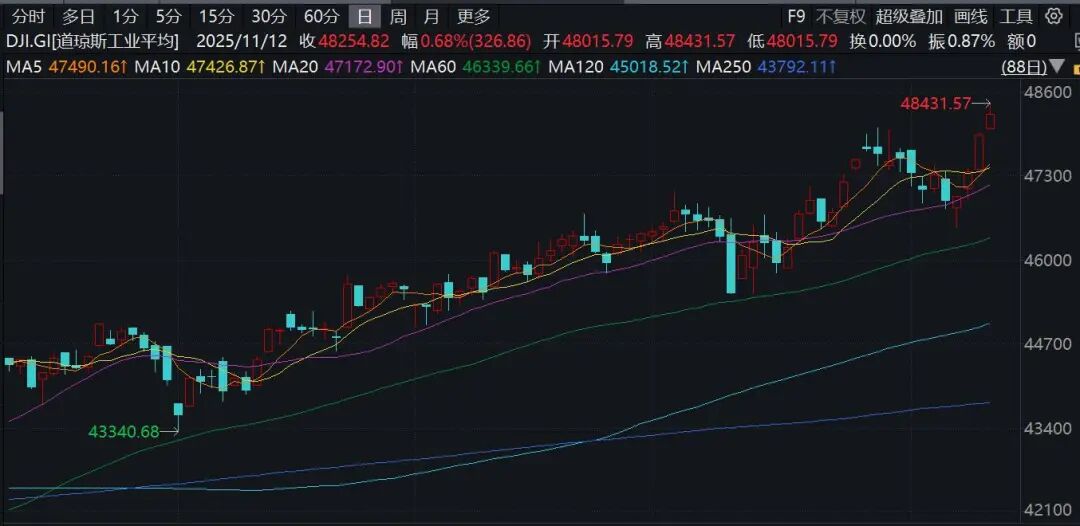
Market Overview - The three major U.S. stock indices showed mixed performance, with the Dow Jones Industrial Average rising by 0.68% to set a new closing high, while the Nasdaq Composite fell by 0.26%, and the S&P 500 increased by 0.06% [1] Individual Stocks - Bank stocks experienced a broad rally, with Goldman Sachs rising over 3%, and Citigroup and Morgan Stanley both increasing by over 2% [2] - Large technology stocks had mixed results, with AMD rising by 9%, while Oracle fell by over 3% and Tesla dropped by over 2% [2] - Chinese concept stocks saw a decline, with the Nasdaq Golden Dragon China Index falling by 1.46%. Stocks such as Xpeng Motors, NIO, iQIYI, and Baidu dropped over 2%, while Li Auto, Alibaba, and JD.com fell by over 1% [2] Gold and Silver Market - International gold prices surged, with spot gold surpassing $4200 per ounce for the first time since October 21, marking an intraday increase of over 2%. Spot silver also saw a significant rise, climbing over 4% at one point [2] Federal Reserve and Economic Policy - There are expectations on Wall Street that the record-long U.S. government shutdown may soon come to an end, as the House of Representatives is set to vote on a temporary funding bill previously passed by the Senate [3] - The Federal Reserve is undergoing personnel changes, with Atlanta Fed President Bostic unexpectedly announcing his retirement effective February next year. Discussions regarding the next Fed chair have surfaced, with Kevin Hassett indicating he would accept the position if invited by Trump [3] - Most regional Fed officials are not actively pushing for a rate cut in December, with Bostic supporting the idea of maintaining rates until inflation reaches 2%. Boston Fed President Collins also favors keeping rates unchanged to curb inflation [3] - According to CME's "FedWatch," the probability of a 25 basis point rate cut in December is 59.4%, while the probability of maintaining rates is 40.6%. The likelihood of cumulative rate cuts of 25 basis points by January is 51.5%, with a 23.5% chance of rates remaining unchanged and a 25% chance of a 50 basis point cut [4][5]


读财报上市车企10月销量:整车销量超231万辆 北汽蓝谷、蔚来等销量增速加快
Zhong Guo Jin Rong Xin Xi Wang· 2025-11-12 23:48
Core Insights - In October 2025, 20 A and H-share listed automotive manufacturers reported a total vehicle sales of 2.3166 million units, representing a year-on-year increase of 8.82% [1][4] - Among these, 16 companies disclosed their new energy vehicle (NEV) sales, totaling approximately 1.3078 million units, which is a year-on-year increase of 15.63% and a penetration rate of about 57.48% [1][8] Group 1: Overall Vehicle Sales - The total vehicle sales for October 2025 reached 2.3166 million units, marking a month-on-month growth of 5.97% [1][4] - SAIC Motor led the sales with 454,000 units, followed by BYD with 441,706 units and Geely with 307,133 units [5][6] - Notable growth was observed in companies like BAIC Blue Valley and NIO, with sales growth exceeding 100% year-on-year, while companies like Ideal Auto and NIO experienced a decline of over 30% [4][8] Group 2: New Energy Vehicle Sales - The total NEV sales for October 2025 were approximately 1.3078 million units, with a month-on-month increase of 9.68% [8][11] - Leading NEV manufacturers included BYD, SAIC Motor, and Geely, with sales of 441,706 units, 206,692 units, and 177,882 units respectively [11][15] - Companies such as BAIC Blue Valley and NIO saw their NEV sales growth exceed 50%, while Ideal Auto and BYD reported a year-on-year decline in sales [11][15]


深圳广州“老板密度”领跑全国 新企业推动新产业加速跑
2 1 Shi Ji Jing Ji Bao Dao· 2025-11-12 23:10
Core Insights - The phenomenon of "boss economy" in Guangdong is highlighted, with approximately 1 in 5 people in Guangzhou and 1 in 4 in Shenzhen being business owners, indicating a robust entrepreneurial environment [1][2] - As of October 2023, Guangzhou has over 4.217 million registered business entities, a year-on-year increase of 15.86%, ranking second nationally, while Shenzhen has surpassed 4.57 million, leading the country [1][4] - The quality of these businesses is significant, with Guangzhou having 21 companies in the Fortune China 500 list and Shenzhen having 38, including 8 in the top 100 [1][2] Summary by Sections Business Growth and Density - The total number of business entities in Guangzhou has seen rapid growth, crossing the 4 million mark in just 12 years, with a notable increase in private enterprises, which account for 95% of the total [4][5] - The number of foreign enterprises in Guangzhou exceeds 50,000, with 368 Fortune 500 companies established in the city, contributing to a vibrant market ecosystem [5] Economic Contributions - The private economy in Guangzhou has shown continuous vitality, with its added value increasing from 1.02 trillion yuan in 2020 to 1.31 trillion yuan in 2024, representing 42.3% of the GDP and contributing over 80% of new employment [4] - The combined number of business entities in Guangzhou and Shenzhen approaches 9 million, forming a solid foundation for the Guangdong-Hong Kong-Macao Greater Bay Area [6] Emerging Industries - Guangdong's business entities have doubled from 10 million to 20 million in less than 8 years, with an average annual increase of 1.256 million entities from 2017 to 2024 [7] - New business registrations in emerging sectors such as low-altitude economy, artificial intelligence, and quantum technology have surged, with some areas seeing growth rates exceeding 100% [8][9] Investment and Ecosystem - The conducive business environment in Guangdong, characterized by a complete industrial chain and a large consumer market, has attracted numerous enterprises, enhancing their growth potential [8][9] - Companies like TCL and Xiaopeng Motors are establishing significant operations in Guangzhou, benefiting from the region's robust industrial ecosystem [9][10] Economic Performance - In the first three quarters of 2023, Guangzhou's GDP exceeded 2.3 trillion yuan, with emerging industries contributing over one-third to this growth [10] - Shenzhen's GDP reached 27.896 trillion yuan, with high-tech product output experiencing substantial growth rates [10]


美股三大指数收盘涨跌不一 AMD涨9%
Xin Lang Cai Jing· 2025-11-12 23:04
Group 1 - The three major U.S. stock indices closed mixed, with the Dow Jones Industrial Average rising by 0.68%, the Nasdaq Composite falling by 0.26%, and the S&P 500 increasing by 0.06% [1] - AMD saw a significant increase in its stock price, rising by 9% [1] - Oracle's stock declined by over 3%, while Tesla's stock fell by more than 2% [1] Group 2 - Most popular Chinese concept stocks experienced declines, with the Nasdaq Golden Dragon China Index dropping by 1.46% [1] - Stocks of Xpeng Motors, NIO, iQIYI, and Baidu each fell by over 2% [1]