XPENG(XPEV)

Search documents
一周重磅日程:最重要的财报和数据,都来了
Sou Hu Cai Jing· 2025-11-16 12:32
Group 1: Economic Indicators and Events - The U.S. government has ended its shutdown, and the release of previously frozen economic data is set to resume, including the non-farm payroll report on November 20 and actual wage data on November 21 [14] - Japan's Ministry of Finance will auction 800 billion yen of 20-year government bonds, amid indications from Prime Minister Kishi Nobuo of a shift towards expansionary fiscal policy [18] - The Chinese Loan Prime Rate (LPR) for November is expected to remain unchanged, with the announcement scheduled for November 20 [15] Group 2: Corporate Earnings Reports - Nvidia is set to release its Q3 earnings report on November 19, with analysts expecting adjusted earnings per share of $1.25 and revenue of $54.8 billion, reflecting year-over-year increases of 54% and 56% respectively [11] - Other major companies such as Baidu, Pinduoduo, Xiaomi, Kuaishou, and Netease are also scheduled to report earnings next week, following Tencent and JD.com [12] - The earnings reports from these companies are anticipated to significantly influence market sentiment, particularly in the AI and tech sectors [11][12] Group 3: Major Events and Conferences - The Microsoft Ignite 2025 conference will take place from November 18 to 21, focusing on artificial intelligence, cloud computing, and platform architecture innovations [17] - The 2025 Data Storage Industry Conference will be held on November 19 in Guangzhou, centered on the theme of "Building a New Ecosystem for Storage, Creating a New Future for AI" [19] - The Dubai Airshow will occur from November 17 to 21, featuring over 1,500 exhibitors, including the debut of China's C919 aircraft in the Middle East [20]




锂电产业链保持高景气度,多环节价格上行
Huaxin Securities· 2025-11-16 10:03
Core Insights - The report highlights the robust demand in the lithium battery supply chain, with significant year-on-year growth in China's new energy vehicle production and sales, reaching 177.2 million units and 171.5 million units in October, respectively, marking increases of 21.1% and 20% [3][78] - The supply side is seeing continuous innovation from battery and main engine manufacturers, with policies actively supporting the industry, leading to an improved supply-demand balance and stabilization of prices after a period of decline [3][78] - The report maintains a positive outlook on high-quality companies within the lithium battery supply chain, particularly in segments like solid-state batteries and liquid cooling technologies, while recommending a "buy" rating for several key players [4][78] Market Tracking - The report notes that the new energy vehicle index, lithium battery index, and energy storage index have shown strong performance, with year-to-date increases of 49.80%, 77.57%, and 65.75%, respectively [22] - Individual stock performance highlights include significant gains for companies like Huasheng Lithium and Haike New Energy, which saw increases of 79.6% and 71.4% respectively, while companies like XWANDA and Kecuan Technology experienced declines of 12.1% and 11.5% [5][26] Lithium Battery Supply Chain Price Tracking - Key materials in the lithium battery supply chain have shown price fluctuations, with lithium carbonate prices rising to 85,200 RMB/ton, a 6.0% increase from the previous week, and lithium hexafluorophosphate seeing a substantial increase of 24.7% [6][34][38] - The report indicates that the prices of lithium hydroxide and cobalt have also increased, reflecting a tightening supply and strong demand in the market [6][34] Production and Sales Data Tracking - Cumulative production and sales of new energy vehicles in China reached 13.015 million and 12.943 million units from January to October, with year-on-year growth of 33.1% and 32.7% respectively [3][47] - The report emphasizes the leading position of new energy vehicles in the overall automotive market, with significant monthly production and sales figures [47] Industry Dynamics - The report discusses upcoming changes in the new energy vehicle purchase tax policy, which is expected to stimulate market demand and shift the industry focus from price competition to value competition [68] - It also highlights advancements in robotics and autonomous driving technologies, indicating a broader trend towards automation and innovation within the industry [68][70] Key Company Announcements - Haike New Energy has signed a strategic cooperation agreement with Kunlun New Materials for the supply of electrolyte solvents, indicating a commitment to securing raw materials for future production [73] - Shangtai Technology has approved an investment agreement for a new project to produce 200,000 tons of lithium-ion battery anode materials, reflecting ongoing expansion efforts in the sector [73] Industry Rating and Investment Strategy - The report maintains a "recommended" rating for the new energy vehicle industry, emphasizing the potential for price recovery and the importance of high-quality companies in the supply chain [4][78] - It suggests focusing on companies that are expected to deliver excess returns, particularly in emerging areas such as solid-state batteries and liquid cooling technologies [4][78]



关税突发!国常会,重磅!证监会最新发声!芯片,大消息!影响一周市场的十大消息
券商中国· 2025-11-16 09:48
Group 1 - The State Council emphasizes enhancing the adaptability of supply and demand in consumer goods to further promote consumption policies [2][3] - The meeting highlights the importance of aligning consumption upgrades with industrial upgrades, focusing on high-quality supply to meet diverse demands [3] - There is a push for innovation in new technologies and business models, particularly in key industries, to develop new products and value-added services [3] Group 2 - The China Securities Regulatory Commission (CSRC) stresses the significance of the 14th Five-Year Plan period for establishing a robust financial foundation and enhancing market resilience [4] - The CSRC aims to improve the quality and value of listed companies while ensuring effective regulatory enforcement and deeper market openness [4] Group 3 - The Shanghai Stock Exchange is monitoring stocks with severe abnormal fluctuations, including companies like HeFu China and Huasheng Lithium [5] - HeFu China reported a cumulative increase of 256.29% over twelve trading days, significantly outpacing industry and index growth, leading to a trading suspension [5] Group 4 - Samsung Electronics has raised the prices of certain memory chips by up to 60% due to a supply shortage driven by the AI data center construction boom [6] - Analysts predict a potential price increase of 40% to 50% for contracts in the upcoming quarter [6] Group 5 - The U.S. government has signed an executive order to eliminate "reciprocal tariffs" on certain agricultural products, responding to domestic demand and inflation pressures [7] - This adjustment is seen as a reaction to recent electoral losses for the Republican Party, reflecting voter dissatisfaction with rising prices [7] Group 6 - The upcoming LPR announcement on November 20 is highly anticipated, alongside significant earnings reports from major companies like Nvidia and Baidu [9] - The market is closely watching these developments for insights into future economic and monetary policy directions [9] Group 7 - A total of 56 companies will have their restricted shares unlocked this week, amounting to 5.109 billion shares with a total market value of approximately 983.46 billion yuan [13][14] - The companies with the highest unlock values include Ruijie Networks (480.34 billion yuan) and Innovation New Materials (96.31 billion yuan) [14]




港股周报:关注港股财报季,看好港股科技估值持续提升-20251116
Minsheng Securities· 2025-11-16 09:17
Market Overview - The Hang Seng Index rose by 1.26% this week, with a trading volume of HKD 1.16 trillion[1] - The Hang Seng Technology Index decreased by 0.42%, while the Hang Seng China Enterprises Index increased by 1.41%[1] - Net inflow from southbound trading was HKD 22.6 billion this week, totaling HKD 1,214.3 billion year-to-date, which is 164.5% of the total net inflow for 2024[1] Sector Performance - The top two performing sectors this week were Consumer Staples and Paper & Packaging, with weekly gains of 10.27% and 6.66% respectively[1] - Notable stocks in the Consumer Staples sector included Jiangsu Hongxin, Alpha Enterprises, and JD Health, with increases of 13.21%, 11.54%, and 6.59% respectively[1] - Other strong performing sectors included Pharmaceuticals & Biotechnology (5.4%) and Durable Goods (5.03%)[1] AI Developments - GPT-5.1 was officially released on November 13, featuring enhanced models for improved communication and reasoning capabilities[2] - Baidu launched the Wenxin 5.0 model, which supports multimodal input and output, boasting over 2.4 trillion parameters[2] Company Earnings - Tencent reported Q3 2025 revenue of HKD 192.9 billion, a 15% year-on-year increase, with a net profit of HKD 63.1 billion, up 19%[8] - JD Group achieved Q3 2025 revenue of HKD 299.1 billion, a 14.9% increase year-on-year, but net profit fell to HKD 5.3 billion from HKD 11.7 billion in the previous year[8] - Bilibili's Q3 2025 revenue was HKD 7.69 billion, a 5% increase, with adjusted net profit soaring 233% to HKD 0.79 billion[8] Investment Recommendations - The report suggests focusing on platform-based internet companies with computational resources and model capabilities, including Tencent, Kuaishou, Alibaba, Xiaomi, Baidu, and Meituan[4] - AI ecosystem companies with model or application capabilities are also recommended, such as Qunar, Meitu, JD Health, and Zhihu[4] Risks - Geopolitical risks may impact overseas revenue and competitiveness, potentially affecting stock prices[26] - Regulatory risks in the internet sector could influence industry and individual stock performance[26] - Consumer recovery may not meet expectations, posing a risk to the consumer sector[26]



宁德时代签200GWh合作;瑞浦兰钧完成H股配售募资;派能科技10亿扩产;楚能正式跨界造车;亿纬刘金成:三元电池具备更高回收价值
起点锂电· 2025-11-16 09:16
Group 1 - RuiPu LanJun completed H-share placement, raising approximately HKD 794 million for working capital and business development [6] - The placement involved the sale of 60 million shares at HKD 13.35 per share, representing about 6.86% of the issued H-shares before the placement [5] - The fifth generation of lithium iron phosphate batteries has begun mass production at CATL, achieving breakthroughs in energy density and cycle life [7] Group 2 - Haibo Shichuang signed a ten-year strategic cooperation agreement with CATL, committing to purchase a cumulative total of 200 GWh of electricity from 2026 to 2028 [8] - Pylon Technologies signed a contract for a 2 GWh energy storage battery project in Hefei, with a total investment of CNY 1 billion [9] - Guizhou Zhaoke Energy's lithium battery production project has been completed, with an annual capacity of 2 GWh [10] Group 3 - The first phase of the Times Chang'an capacity expansion project has been put into production in Yibin, increasing CATL's capacity from 180 GWh to 210 GWh [11] - Chuangneng New Energy has entered the automotive sector by acquiring the Weima factory, allowing it to bypass lengthy approval processes for production qualifications [12][13] - Shangtai Technology plans to invest in a 200,000-ton anode material project with an estimated total investment of approximately CNY 4.07 billion [15] Group 4 - Ganfeng Lithium's PPGS lithium salt lake project in Argentina has received a key environmental impact assessment report, marking significant progress [16] - A new silicon-carbon anode material project has been signed in Inner Mongolia, with a planned investment of CNY 5 billion [17] - GCL signed a contract for a 150,000-ton lithium battery cathode material project in Sichuan, expected to be operational by the end of 2025 [18] Group 5 - Haike New Source signed a strategic cooperation agreement with Kunlun New Materials for the supply of 596,200 tons of electrolyte solvents from 2026 to 2028 [20] - CATL invested in a silicon-carbon anode material company, increasing its stake in the industry [21] - Hunan Youneng reported a 64.86% increase in phosphate cathode material sales in the first three quarters, totaling 784,900 tons [22] Group 6 - Zhongding Intelligent has re-applied for listing on the Hong Kong Stock Exchange, with revenue projections showing steady growth from CNY 1.643 billion in 2022 to CNY 1.798 billion in 2024 [24] - Shenzhen Zhongji has initiated IPO counseling for listing on the Beijing Stock Exchange, focusing on lithium battery production automation [25] - Haimeixing has supplied various lithium battery process equipment to Zhongxin Innovation, strengthening their long-term partnership [26] Group 7 - A 400,000-ton battery recycling project has been approved in Anhui, aimed at reusing waste batteries [28] - A new recovery technology developed in South Korea can recover over 95% of nickel and cobalt from used batteries, significantly improving efficiency and environmental impact [29] - Yiwei Lithium Energy's chairman discussed the core challenges in battery technology, emphasizing lifecycle value and performance in extreme cold [30] Group 8 - GAC and CATL signed a comprehensive strategic cooperation agreement to enhance collaboration in the new energy sector [32] - Li Bin has stepped down as chairman of NIO Battery Technology, a move coinciding with the company's push for profitability [33] - XPeng Motors' market capitalization surpassed Geely's, driven by strong performance in AI and robotics product launches [34]




汽车和汽车零部件行业周报20251116:宇树科技完成上市辅导,关注国产机器人IPO进程-20251116
Minsheng Securities· 2025-11-16 05:42
Investment Rating - The report maintains a positive investment outlook for the automotive and automotive parts industry, particularly focusing on companies involved in intelligent driving and electric vehicles [3][4]. Core Insights - The automotive sector has shown weaker performance compared to the market, with a decline of 1.7% in the A-share automotive sector from November 10 to November 16, 2025, ranking 27th among sub-industries [29]. - Key companies to watch include Geely, Xpeng Motors, BYD, Xiaomi Group, Li Auto, Berteli, Top Group, New Spring, Hu Guang, and Chunfeng Power, as they are expected to benefit from the ongoing transformation in the automotive industry [9][10]. - The report highlights the importance of Tesla's production progress and technological iterations as a core theme, alongside the upcoming IPOs of domestic robot manufacturers like Yushu Technology, which could serve as strong catalysts for the industry [10][16]. Summary by Sections 1. Weekly Insights - Yushu Technology has completed its IPO guidance and plans to submit its IPO application between October and December 2025, with a post-investment valuation exceeding 12 billion yuan [10]. - The report emphasizes the significance of Tesla's advancements and the upcoming IPOs of domestic robot manufacturers as key drivers for the market [10][16]. 1.1 Passenger Vehicles - The report recommends focusing on high-quality domestic brands that are accelerating in intelligence and globalization, specifically naming Geely, Xpeng, BYD, Xiaomi, Li Auto, and Seres [13]. 1.2 Intelligent Electric Vehicles - The report anticipates long-term growth acceleration in the intelligent electric vehicle sector, highlighting the importance of intelligent driving technologies and the increasing market share of domestic brands [14][15]. 1.3 Robotics - The report notes that leading companies are accelerating their entry into the robotics sector, marking the beginning of a new era in embodied intelligence, with significant developments expected in 2026 [15][17]. 1.4 Liquid Cooling - The report discusses the rising demand for liquid cooling solutions driven by AI technology, predicting a compound annual growth rate of 27.6% from 2024 to 2030, with the market expected to reach 21.3 billion USD by 2030 [20][21]. 1.5 Motorcycles - The report highlights the rapid expansion of the large-displacement motorcycle market, with sales showing significant year-on-year growth, particularly in the 500cc to 800cc segment [22][24]. 1.6 Heavy Trucks - The report indicates that the expansion of the old-for-new subsidy policy will stimulate demand for heavy trucks, with a notable increase in sales observed in October 2025 [24][25]. 1.7 Tires - The report emphasizes the ongoing globalization of the tire industry, recommending leading companies that are well-positioned for growth and have strong manufacturing capabilities [26][27].


晚间四大利空!中概股全线大跌,黄金下跌2%,小心第三个利空
Sou Hu Cai Jing· 2025-11-15 17:13
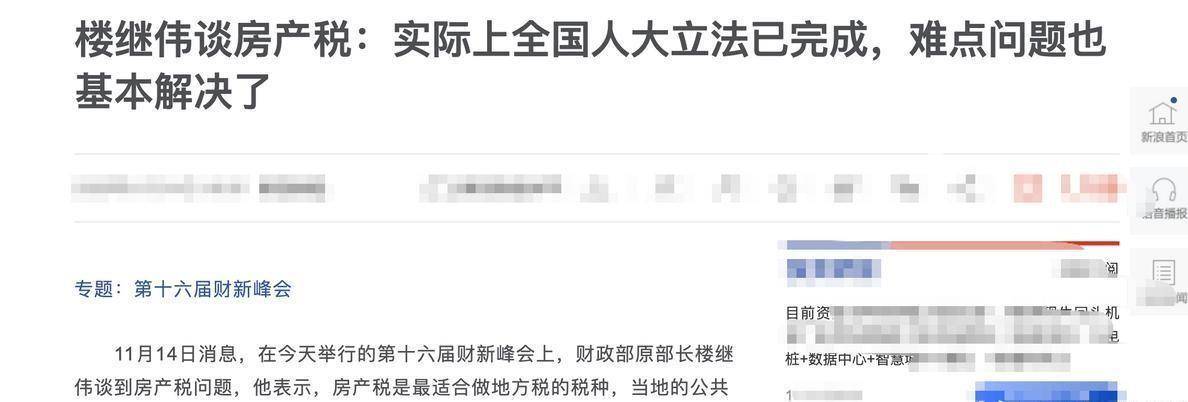
Market Overview - The market is experiencing a significant downturn, with the probability of a Federal Reserve rate cut in December dropping from 67% to below 50% in just one month [1][2] - The strong performance of the Nasdaq index contrasts sharply with the decline in Chinese concept stocks, indicating a split market sentiment [1] Impact on Chinese Concept Stocks - Chinese concept stocks are facing severe declines, with Alibaba down nearly 4%, JD down over 4%, and XPeng down more than 5% [1][4] - JD's recent earnings report revealed a 55% year-over-year drop in net profit, exacerbating concerns about the sustainability of growth in the e-commerce sector [4][5] - The competitive landscape in the electric vehicle market has shifted from a "blue ocean" to a "bloody battleground," leading to significant losses for companies like XPeng and NIO [5] Economic and Regulatory Concerns - The potential introduction of a property tax has raised concerns in the market, particularly as the real estate sector has not fully recovered [10] - Ongoing uncertainties regarding U.S.-China audit regulations continue to create a precarious environment for Chinese companies listed in the U.S., with some facing potential delisting [10] Gold Market Dynamics - Gold prices have seen a dramatic drop, with futures falling 2.62% in a single day, attributed to a new tax policy that increased costs for non-investment gold [3][12] - The recent easing of geopolitical tensions has diminished gold's appeal as a safe-haven asset, leading to significant outflows from gold ETFs [12] Investor Sentiment - Investors are divided on whether to buy into the current market downturn or to remain cautious, with some viewing the low valuations of Chinese concept stocks as a buying opportunity while others prefer to shift to defensive sectors [14]


密集上调!外资,最新表态
证券时报· 2025-11-15 13:22
Core Viewpoint - Foreign capital continues to show optimism towards Chinese assets, with several major financial institutions raising target prices for key Chinese companies, indicating a positive outlook for the Chinese stock market [1][7]. Group 1: Target Price Adjustments - Citigroup raised the target price for Tencent Holdings from 735 HKD to 751 HKD per share, maintaining a "Buy" rating [3]. - Morgan Stanley increased the target price for Bilibili's US stock from 23 USD to 25 USD, while Citigroup raised it to 27 USD, and Lyon raised it to 29.1 USD [4]. - Morgan Stanley significantly raised the target price for XPeng Motors' Hong Kong stock to 195 HKD, and UBS raised the target price for China Hongqiao to 38.60 HKD [1][5]. Group 2: Company Performance Insights - Tencent's third-quarter revenue grew by 15% year-on-year to 192.9 billion CNY, with a Non-IFRS net profit of 70.6 billion CNY, up 18% year-on-year [3]. - Bilibili's third-quarter advertising revenue and adjusted operating profit exceeded expectations, prompting analysts to raise profit forecasts for 2025 and 2026 [4]. - XPeng Motors is expected to see growth driven by its recent AI initiatives, including Robotaxi and humanoid robots, although significant revenue contributions are not anticipated until late 2026 [5]. Group 3: Positive Sentiment Towards Chinese Market - UBS stated that the valuation and capital flow conditions of the Chinese stock market are favorable, maintaining an "overweight" rating on Chinese stocks [8]. - Global asset management executives expressed increasing confidence in the long-term investment value of the Chinese market, citing improvements in macroeconomic conditions and policy environments [9]. - The consensus among foreign investment executives is that investing in China represents investing in the future, with a focus on the opportunities presented by China's 14th Five-Year Plan [9].



昨夜!黄金大跌,中概股下挫!美降息预期,悬了?
Zheng Quan Shi Bao· 2025-11-15 00:20
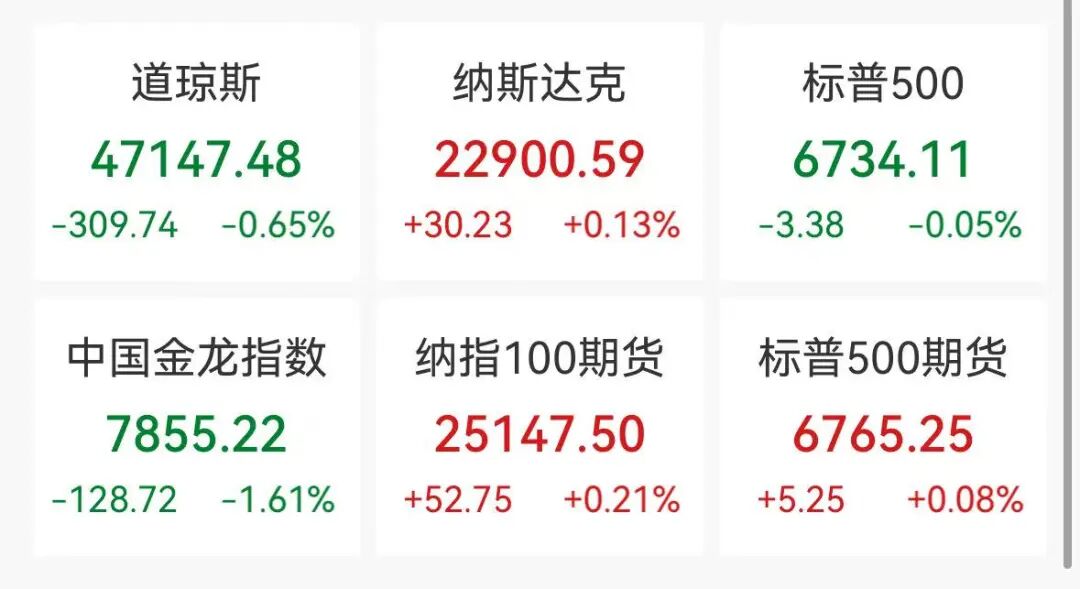
Market Overview - The majority of European and American stock markets closed lower on November 14, with the Dow Jones Industrial Average down 0.65% at 47147.48 points, the S&P 500 down 0.05% at 6734.11 points, and the Nasdaq up 0.13% at 22900.59 points [1][2] - For the week, the Dow Jones increased by 0.34%, the S&P 500 by 0.08%, while the Nasdaq decreased by 0.45% [1] Chinese Concept Stocks - The Nasdaq China Golden Dragon Index fell by 1.61%, while the Wind Chinese Concept Technology Leaders Index dropped by 2.28% [2] - Popular Chinese concept stocks mostly declined, with notable drops including Futu Holdings down over 7%, Gaotu Group down over 5%, and Xpeng Motors down over 5% [4] Oracle Corporation - Oracle's stock fell nearly 7% this week, reflecting growing concerns over AI themes and high valuations in tech stocks [5] - The company has committed to investing thousands of billions in chip purchases and data center construction to fulfill agreements with OpenAI, leading to a nearly 30% drop in stock price over the past month [5][6] - Barclays downgraded Oracle's debt rating to "underweight," warning that its credit rating could fall to BBB-, just above junk status, and highlighted the risk of exhausting cash reserves by November 2026 [6][7] Federal Reserve and Interest Rates - Market expectations for a rate cut by the Federal Reserve in December have decreased significantly, with the probability dropping from 67% to below 50% [8] - Kansas City Fed President Jeff Schmieding expressed concerns that further rate cuts could entrench high inflation rather than support the labor market [8] Commodity Prices - International gold prices fell over 2%, with COMEX gold futures down 2.62% to $4084.4 per ounce, while silver futures dropped 5.21% to $50.4 per ounce [9] - The decline in gold prices is attributed to reduced optimism regarding Fed rate cuts, as rising interest rates diminish the appeal of non-yielding assets like gold [9] - Crude oil prices saw an increase, with West Texas Intermediate rising 2.15% to $59.95 per barrel, influenced by geopolitical tensions [9]






中概股下挫 京东、百度、阿里跌约4% 比特币跌破9.6万美元
2 1 Shi Ji Jing Ji Bao Dao· 2025-11-14 23:56
Market Overview - Major indices showed mixed performance with Dow Jones down 309.74 points (-0.65%), Nasdaq up 30.23 points (+0.13%), and S&P 500 down 3.38 points (-0.05%) [1] - The Nasdaq China Golden Dragon Index fell 128.72 points (-1.61%) [1] Technology Sector - Large tech stocks exhibited mixed results; Nvidia rose over 1%, Microsoft increased by more than 1%, while Amazon fell over 1% and Google dropped 0.78% [1] - The Philadelphia Semiconductor Index decreased by 0.11%, with notable declines in Lam Research (over -3%) and Microchip Technology (over -2%) [2] Chinese Stocks - The Nasdaq China Golden Dragon Index declined by 1.61%, with significant drops in Futu Holdings (over -7%) and Gaotu Techedu (over -5%) [2][3] - Other Chinese stocks like Xpeng Motors and JD.com also saw declines of over 5% [4] Energy Sector - Energy stocks collectively rose, with Exxon Mobil and Chevron both increasing by over 1% [1] Airline Sector - Airline stocks experienced a downturn, with American Airlines and Delta Airlines both dropping over 2% [1] Cryptocurrency Market - Major cryptocurrencies faced significant declines, with Bitcoin falling below $96,000 and Ethereum down by 2.25% [5][6] - Over 210,000 traders were liquidated in the past 24 hours due to market volatility [5] Economic Impact - The U.S. government shutdown has affected the release of important economic data, with ongoing impacts on various sectors [6] - Trade negotiations between Switzerland and the U.S. are ongoing, focusing on reducing import tariffs on Swiss goods [7]