蜜雪冰城

Search documents
今年,消费彻底变了
Ge Long Hui A P P· 2025-12-28 08:57
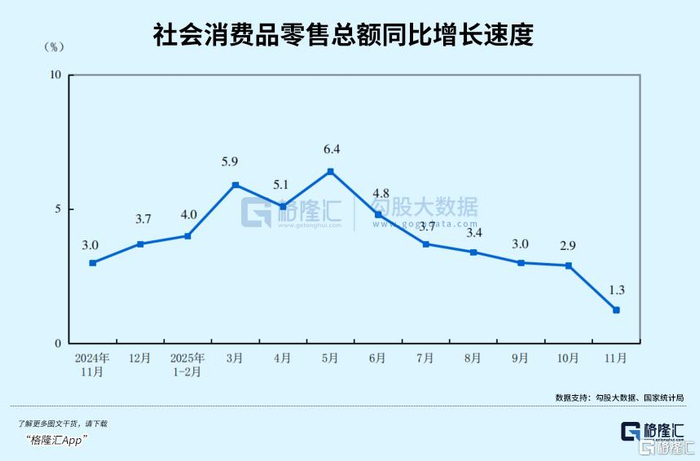
Core Insights - The consumption industry has undergone significant changes over the past year, with a shift in focus from traditional products like liquor to new consumption trends driven by emotional and social factors [1][10]. Group 1: Consumption Trends - Despite perceptions of a cooling consumption market, consumer demand has shown stability, with retail sales growing by 4.0% year-on-year in the first 11 months of this year, surpassing the 3.5% growth expected for the entire year of 2024 [4][5]. - The contribution of final consumption expenditure to economic growth reached 53.5% in the first three quarters of 2025, an increase of 9 percentage points compared to the entire year of 2024 [4]. - The concept of "new consumption" has emerged, characterized by emotional and social attributes, as seen in the popularity of brands like Bubble Mart and the rise of "self-reward" consumption [8][9]. Group 2: Consumer Behavior - Young consumers, particularly those from the Z generation, are becoming the main drivers of consumption, with 56.3% of them willing to spend on emotional value and interests, a 16.2 percentage point increase from 2024 [10][9]. - The trend of "rational consumption" is also evident, where consumers are increasingly focused on quality and value, with 47% of respondents indicating they only purchase essentials to avoid waste, while 68% are willing to spend more on products that help relieve stress [11][10]. Group 3: Market Opportunities - The second-hand economy is thriving, with platforms like Xianyu seeing a 30% year-on-year increase in transaction volume, reflecting young consumers' acceptance of "recycled consumption" [12]. - The health and wellness industry is benefiting from consumers' desire to invest in personal growth, with products like smart home devices and effective skincare gaining traction [14][13]. - The pet economy is emerging as a significant market, driven by the emotional support pets provide, with a wide range of related products and services [24]. Group 4: Future Outlook - The emotional consumption market in China is projected to reach 2.3 trillion yuan in 2024, with expectations to exceed 4.5 trillion yuan by 2029, indicating substantial growth potential [16]. - The consumption landscape is evolving into a complex ecosystem where rational and emotional consumption coexist, reshaping investment strategies and market dynamics [27].

争抢中国富豪
投资界· 2025-12-28 08:47
Core Viewpoint - The article discusses the recent trend of wealthy Chinese individuals returning to Hong Kong from Singapore, highlighting Hong Kong's growing appeal as a financial hub and its advantages in wealth management and digital currency policies [4][6][8]. Group 1: Wealth Migration Trends - In recent years, there has been a notable shift of wealthy Chinese individuals from Singapore back to Hong Kong, with a reported 22.9% increase in high-net-worth individuals in Hong Kong compared to the same period in 2024 [4]. - The report from the Hong Kong Accounting Firm indicates that there are 17,215 high-net-worth individuals in Hong Kong, marking it as the region with the largest growth in the global wealth market [4]. Group 2: Financial Market Dynamics - Hong Kong's stock market has shown exceptional activity, with projections indicating that it will reclaim the top position in the global IPO market in 2025, raising an estimated HKD 272.1 billion and listing 100 companies, representing a year-on-year growth of 210% and 43% respectively [6]. - Notable companies such as CATL and Chery Automobile have chosen to list on the Hong Kong Stock Exchange, with CATL's IPO raising HKD 410 billion, the largest globally for the year [6]. Group 3: Digital Currency Environment - Hong Kong is positioning itself as a global innovation center for digital assets, with a supportive regulatory environment that has attracted many digital currency players back from Singapore [8]. - The Hong Kong government has released policies aimed at fostering a conducive environment for digital assets, including the "New Capital Investor Entry Scheme" which has gained attention for its flexible investment arrangements [8][9]. Group 4: Family Office Development - The family office sector in Hong Kong is rapidly growing, with assets under management reaching HKD 14.5 trillion in 2023, a 76% increase from HKD 825 billion in 2017 [11]. - Hong Kong has approximately 2,700 single-family offices managing over USD 1 trillion in assets, which is double that of Singapore, indicating a competitive advantage in the family office market [11][12]. Group 5: Regulatory Challenges in Singapore - Singapore's family office market has faced scrutiny due to allegations of money laundering and fraud, leading to increased regulatory measures that may deter some wealthy individuals from establishing offices there [14][15]. - Recent high-profile cases of fraud linked to family offices in Singapore have raised concerns about the integrity of the financial environment, prompting stricter regulations [15].

全球亿万富豪加速涌现,中国大陆新增70位亿万富豪,来自哪些行业?
Xin Lang Cai Jing· 2025-12-28 01:56
Group 1 - The core viewpoint of the article is that a new generation of billionaires is emerging, driven by business innovation and wealth transfer, with a notable increase in the number of self-made billionaires [2][3] - According to UBS's report, the number of billionaires globally is projected to increase by 287, reaching a total of 2,919 by 2025 [3] - The report defines "new billionaires" as individuals whose assets first reach or exceed $1 billion [3] Group 2 - Among the 287 new billionaires, 196 are self-made entrepreneurs, while 91 gained wealth primarily through inheritance [4] - The total wealth inherited by the 91 heirs reached a historical high of $2,978 billion, despite a decrease in the number of heirs [6] - In China, 70 new billionaires were added, bringing the total to 470, with 98% being self-made entrepreneurs, a higher proportion than in other major economies [7] Group 3 - The technology sector is expected to become the largest industry for billionaires, benefiting from the performance of companies involved in the AI wave [9] - The overall asset scale of tech billionaires increased by nearly a quarter (23.8%), amounting to approximately $3 trillion, making it comparable to the consumer and retail sectors [10] - The fastest-growing six American tech billionaires saw their combined wealth increase by $171 billion, with a growth rate exceeding 25% [11] Group 4 - The report indicates that geopolitical conflicts, tariffs, and policy uncertainties are major risks faced by billionaires, leading to an increasing number considering relocation [12] - Among surveyed billionaires, 36% have relocated at least once, and nearly 10% are contemplating moving [12] - A significant majority (82%) of billionaires with children wish for their offspring to develop skills for independent success rather than relying solely on inherited wealth [13]

新茶饮上市背后:流水的品牌,铁打的供应链
Ge Long Hui· 2025-12-26 17:52
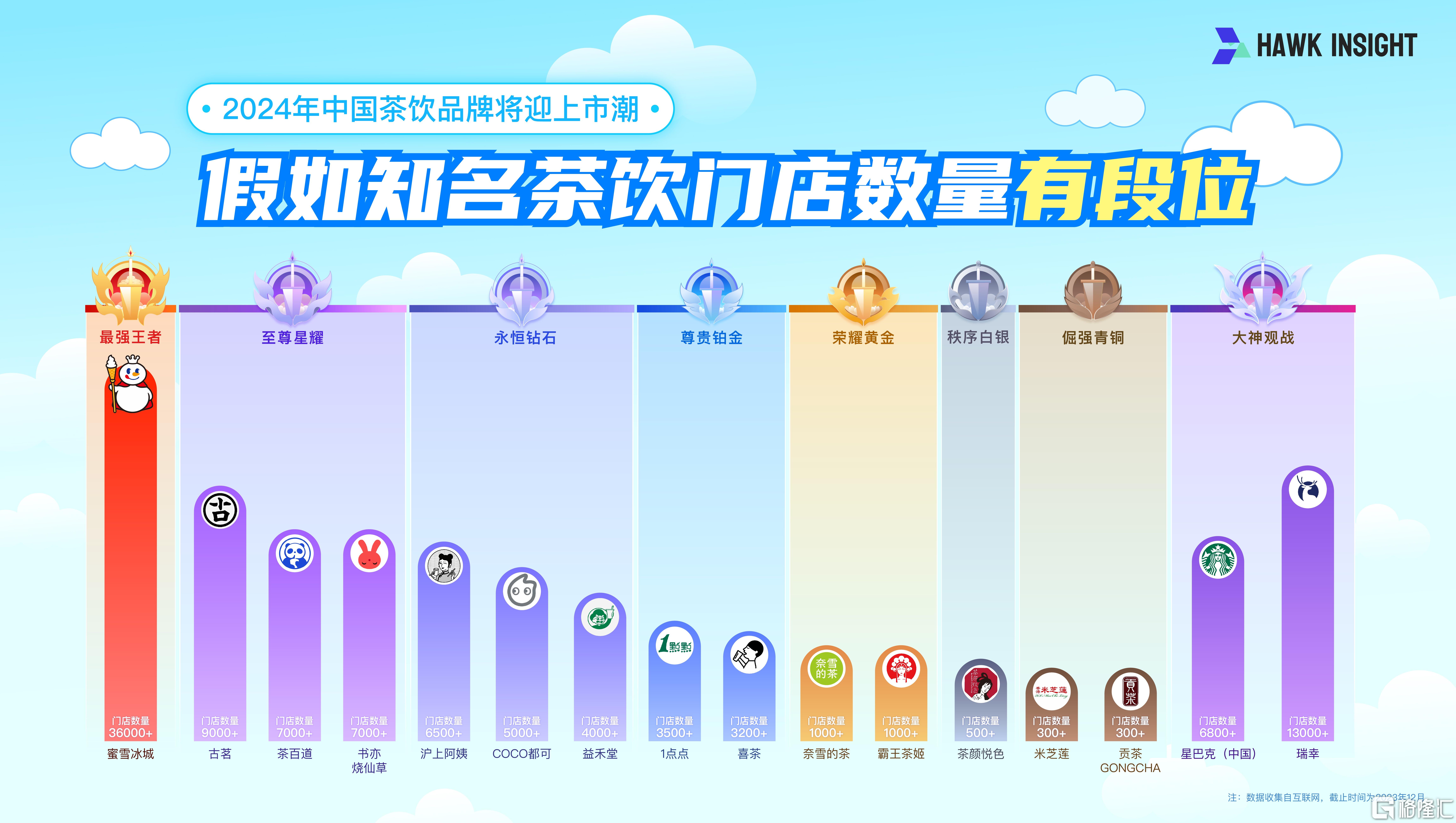
Group 1 - The new tea beverage industry is experiencing a resurgence, with significant interest in new products and flavors, leading to increased activity in the secondary market [2] - Major players like Cha Bai Dao, Mi Xue Bing Cheng, and Gu Ming have submitted IPO applications, indicating a competitive push in the new tea beverage sector [2][3] - The number of stores for the top 20 new tea brands has increased by 32% from 78,324 at the end of 2022 to 103,783 by the end of 2023, reflecting a strong growth trend [2] Group 2 - New tea brands are aggressively pursuing the "10,000 stores" goal as a strategy to capture market share, with Gu Ming reaching 9,001 stores and Mi Xue Bing Cheng leading with 36,000 stores [3][5] - The expansion into lower-tier markets is a key focus, with significant growth in delivery orders from fourth and fifth-tier cities, showing increases of 30% and 36% respectively [5][8] - The price competition in the tea beverage market has intensified, with many brands offering products at promotional prices around 9.9 yuan, reflecting a shift in consumer behavior towards value [7][14] Group 3 - The profitability of tea beverage brands is under pressure, with net profit margins for mature brands ranging from 10% to 15%, significantly lower than expected [8][11] - Companies like Nai Xue's Tea have faced substantial losses, with cumulative losses of 808 million yuan from 2020 to 2022, highlighting the financial challenges in the industry [8][11] - The supply chain has become a critical factor for success, with brands like Mi Xue Bing Cheng generating 98% of their revenue from selling materials and equipment to franchisees, emphasizing the importance of a robust supply chain [15][16] Group 4 - The new tea beverage industry is expected to see a gradual decline in growth rates, with projected market growth rates of 13.4%, 6.4%, and 5.7% from 2023 to 2025 [8] - The industry is characterized by low barriers to entry and high product homogeneity, leading to intense competition and price wars among brands [14][21] - Future trends in the industry are expected to focus on product innovation, supply chain optimization, and channel expansion, with a growing emphasis on the importance of supply chain management [21][22]

瑞幸+茅台,龙年没火起来
Ge Long Hui· 2025-12-26 17:52
Core Insights - The new collaboration product "Sauce Aroma Chocolate" from Luckin Coffee and Kweichow Moutai has not replicated the success of the previous "Sauce Aroma Latte" [2][5] - The initial response to "Sauce Aroma Chocolate" has been lukewarm, with low sales and minimal social media buzz compared to the previous product launch [2][5][11] Product Launch and Sales Performance - "Sauce Aroma Chocolate" was launched on January 22, priced at 38 yuan per cup, but available for 18 yuan after discounts [2] - In contrast to the "Sauce Aroma Latte," which sold over 5.42 million cups and generated over 100 million yuan in sales on its first day, "Sauce Aroma Chocolate" did not sell out at stores and had low consumer awareness [5][10] - Consumers reported that the product remained available at multiple Luckin locations even hours after its launch [2][11] Consumer Reception and Market Trends - The initial excitement for "Sauce Aroma Latte" stemmed from its unique blend of Moutai liquor and coffee, appealing to a younger demographic who found it affordable compared to other Moutai products [10] - However, after the novelty wore off, many consumers expressed a lack of interest in repurchasing, which may explain the poor reception of the new chocolate product [10][11] - Luckin Coffee has been recognized as a "product explosion machine" in the coffee industry, but the challenge remains to maintain consumer interest with new offerings [3][16] Competitive Landscape - Luckin Coffee's pricing strategy is more affordable than Starbucks, allowing it to capture a significant market share [18] - The company faces increasing competition from both traditional coffee brands and emerging tea beverage brands that are also entering the coffee market [22][23] - The ongoing price war in the coffee sector has led to many brands offering coffee at lower prices, intensifying competition [25]

现制茶饮巨头齐聚港股冲刺IPO 茶饮第二股将花落谁家?
Ge Long Hui· 2025-12-26 17:52
Core Viewpoint - The competition in the Chinese ready-to-drink tea market is intensifying as multiple brands, including Mixue Ice City, Gu Ming, and Cha Bai Dao, are preparing for IPOs, aiming to become the second listed tea brand after Nayuki Tea [2][27]. Group 1: Market Overview - The Chinese ready-to-drink tea market is projected to reach a scale of 149.8 billion yuan in 2023, with a compound annual growth rate of nearly 20% over the past three years, and is expected to expand to 201.5 billion yuan by 2025 [3]. - As of August 31, 2023, there are approximately 515,000 new tea drink stores in operation, a growth of over 36% from 378,000 stores at the end of 2020 [3]. Group 2: Company Expansion Strategies - Mixue Ice City has over 32,000 stores in China and approximately 4,000 overseas, with a cup output of about 5.8 billion cups in the first nine months of 2023, making it the leading ready-to-drink beverage company in China and the second globally [8]. - Gu Ming has 9,001 stores as of December 31, 2023, a 35% increase from the end of 2022, positioning it as a strong contender to enter the "10,000-store era" [8]. - Cha Bai Dao has 7,111 stores, achieving coverage across all provinces and cities in mainland China, and is also approaching the "10,000-store era" [8]. Group 3: Future Expansion Directions - Gu Ming plans to expand into northern China, where it currently has no presence in 19 provinces, indicating significant growth potential [10]. - Cha Bai Dao aims to increase its penetration in second-tier and lower-tier cities, where it currently has about 60% of its stores, and will focus on enhancing store density in potential business districts [12]. - Mixue Ice City is focusing on international expansion, having opened its first overseas store in Vietnam in 2018 and now operating in 11 countries, with plans to deepen its presence in Southeast Asia [13][15]. Group 4: Supply Chain and Logistics - Mixue Ice City has built a large-scale supply and logistics system, with 26 warehouses totaling over 300,000 square meters, making it the largest in the industry [15][16]. - Gu Ming operates the largest cold chain logistics infrastructure among Chinese ready-to-drink tea brands, with 21 warehouses and a delivery cost of only about 0.9% of GMV [18][19]. - Cha Bai Dao relies on a combination of self-operated and third-party logistics, with 22 high-standard warehouses covering a total area of approximately 80,000 square meters [21][22]. Group 5: Marketing Strategies - Mixue Ice City has successfully created a strong brand IP, "Xue Wang," which has garnered over 87 billion exposures on social media platforms, and has developed various related products and events [23][24]. - Other brands, such as Cha Bai Dao and Gu Ming, have engaged in numerous co-branding marketing events, with over 230 collaborations reported in the first three quarters of 2023 [26]. Group 6: Conclusion - The entry of brands like Cha Bai Dao into the IPO stage suggests a potential reshuffling in the ready-to-drink tea market, with various aspects such as R&D, supply chain, digitalization, cold chain logistics, and marketing presenting opportunities for growth [27].
奈雪的茶败走平价市场
Ge Long Hui· 2025-12-26 17:52
Core Insights - The article highlights the significant presence of milk tea brands in lower-tier markets, with a notable absence of high-end tea brands like Nayuki and Heytea in these areas [2][3] - Nayuki has faced challenges in penetrating the lower-tier market and has decided to shut down its sub-brand Taigai due to lack of profitability [4][5] Group 1: Market Trends - The lower-tier market has seen a surge in milk tea brands such as Mixue, Gu Ming, and Cha Bai Dao, while high-end brands like Nayuki and Heytea are rarely mentioned [2][3] - Nayuki's attempts to enter the lower-tier market through sub-brands have not been successful, leading to a focus on its main brand [4][7] Group 2: Nayuki's Strategy - Nayuki announced the closure of its Taigai sub-brand, which had only 7 operational stores left, indicating a drastic decline from its peak of over 800 stores [5][19] - The company has previously closed another sub-brand, Pear Mountain, which targeted price-sensitive consumers, indicating a pattern of struggling with lower-tier market strategies [5][7] Group 3: Competitive Landscape - Nayuki's market presence is significantly lower than that of Heytea, which has 3,326 stores compared to Nayuki's 1,505 [9][11] - The differences in brand strategy and market approach between Nayuki and Heytea are evident, with Heytea focusing on product innovation and collaborations to maintain consumer interest [11][12] Group 4: Challenges in Lower-Tier Markets - High-end tea brands face challenges in lower-tier markets due to higher price points and complex supply chains, making it difficult to attract price-sensitive consumers [18][19] - Nayuki's high franchise fees and operational requirements create barriers for expansion into lower-tier markets, limiting its growth potential [19][20]

“读秒捡钱”,这个春节县城奶茶赚疯了
Ge Long Hui· 2025-12-26 14:10
Core Insights - The rapid development of tea beverage brands in county-level markets reflects a significant shift in consumer preferences and market dynamics, with major brands like Starbucks and Heytea expanding into these areas [4][19] - The tea beverage industry experienced a surge in demand during the recent Spring Festival, with a notable increase in delivery orders from county markets, indicating a robust growth potential in these previously underserved regions [6][5] Market Trends - The number of new chain tea beverage stores in county areas exceeded 9,000 in 2022, with an overall opening rate of approximately 36%, showcasing the rapid expansion of this market segment [10] - Major tea brands have reported a 65% year-on-year increase in delivery orders during the Spring Festival period, highlighting the growing consumer base and demand in county markets [6] Consumer Behavior - Consumers in county areas are increasingly seeking diverse beverage options, with a shift from traditional offerings to modern tea drinks, reflecting changing tastes and preferences among younger demographics [5][19] - The average price of a tea beverage ranges from 10 to 20 yuan, making it accessible to a broad consumer base while still generating significant daily revenue for stores [11] Business Strategies - Brands are focusing on improving order fulfillment speed and operational efficiency to capitalize on peak demand periods, with some stores achieving beverage preparation times of around one minute [8][9] - The expansion strategy includes targeting lower-rent locations outside of prime commercial areas, allowing for cost savings while still reaching a wide customer base through delivery services [16][18] Competitive Landscape - The tea beverage market is becoming increasingly competitive, with many brands facing challenges related to product homogeneity and market saturation, prompting a focus on differentiation and innovation [11][12] - The rise of online marketing and delivery platforms has become crucial for brand visibility and sales, particularly in county markets where traditional foot traffic may be lower [18][23]

2026年商社行业年度策略报告:政策雨露育生机-20251226
ZHONGTAI SECURITIES· 2025-12-26 13:03
Core Insights - The report predicts a recovery in the commercial sector in 2026, benefiting from supportive policies and a rebound in consumer demand after a bottoming out in 2024-2025 [5][6][9] Sector Outlook Duty-Free - The new duty-free policy starting in November 2025 is expected to drive a strong recovery in the duty-free sector, with a focus on China Duty Free Group and Zhuhai Duty Free Group [6][9][14] Hotels - Hotel operations showed improvement in late 2025, with expectations for growth driven by domestic demand, spring and autumn travel, and inbound tourism in 2026. Key companies to watch include ShouLai Hotel, Junting Hotel, Huazhu Group, and Atour [6][20] Catering - The catering sector showed a year-on-year growth of 3.8% in October 2025, with expectations for recovery in 2026. Companies to focus on include Xiaocaiyuan, Dashishi, Yum China, and Haidilao [21][22] Tea Beverage - Leading tea beverage companies are expected to maintain good growth in 2026, with a focus on brands like Mixue Ice City, Guming, and Tea Baidao [6][25][29] Human Resources - The outsourcing industry is expected to continue steady growth, with a focus on new application scenarios and models. Key companies include Kelly Services, Beijing Human Resources, and Foreign Service Holdings [6][37] Tourism and Scenic Spots - The tourism sector is expected to benefit from holiday effects in 2026, with a focus on companies like Jiuhua Tourism, Emei Mountain A, and Lijiang Shares [31][32] Supermarkets - The trend of reform in supermarkets is expected to continue in 2026, with a focus on companies like Jiajiayue, Xinhua Department Store, and Yonghui Supermarket [7][39] Education - The education sector is expected to maintain a favorable trend, with a focus on companies that can capitalize on the rising demand for vocational education and exam retakes. Key companies include Xueda Education, Kevin Education, and China Oriental Education [7][45]
血汗钱受威胁?海南封关首日,3万亿美金资金紧急寻找出路
Sou Hu Cai Jing· 2025-12-26 12:21
Core Insights - The transformation in Hainan is not just about luxury shopping but represents a significant change in the wealth management strategy for billions of people, driven by China's vast foreign exchange reserves and the risks associated with holding US Treasury bonds [1][3] Group 1: Economic Strategy - The upcoming full closure operation in Hainan on December 18, 2025, is a strategic move aimed at creating a secure channel for national wealth, likened to a "Noah's Ark" to withstand financial storms [3] - Hainan's policy of "one line open, two lines controlled" allows for a low-tax environment to attract foreign investment while maintaining a firewall against potential financial risks from the mainland [5] Group 2: Investment and Business Environment - The low-tax environment in Hainan is a key factor attracting global companies, with notable firms like Siemens Energy and Longi Green Energy establishing operations there, indicating the strategic potential of the region [5] - The establishment of the EF account system in Hainan has facilitated over 295 billion yuan in transactions since its launch in May 2024, indicating a shift in the use of the renminbi from a transaction currency to an asset currency [6] Group 3: Financial Network and Collaboration - Hainan's initiatives are part of a broader strategy involving discussions with oil-rich nations like Saudi Arabia to use the renminbi for oil settlements, reflecting a move towards a more diversified global financial network [6] - The collaboration between Shanghai, Hong Kong, and Hainan represents a coordinated effort to enhance China's financial resilience, with each city playing a distinct role in this strategy [7]