伊利股份

Search documents
什么是企业护城河,常见的企业护城河有哪些呢?|投资小知识
银行螺丝钉· 2026-01-25 13:42
Core Insights - The article discusses various types of competitive advantages, referred to as "moats," that companies can possess to maintain their market position and profitability [3][9][13]. Group 1: Types of Competitive Advantages - **Scale Advantage**: Companies like BlackRock, Vanguard, and State Street dominate the index fund market, collectively holding over 80% of the global market share. Larger funds can lower management fees, attracting more investors and creating a positive feedback loop [3]. - **Network Effect**: Industries such as stock exchanges and e-commerce benefit from network effects, where the value of the network increases with the number of users. For instance, the Hong Kong Stock Exchange has a significant market share, making it difficult for new entrants to compete [6][7]. - **Brand Advantage**: In sectors like consumer goods and pharmaceuticals, brand recognition plays a crucial role. Consumers often remember only a few brands, such as Moutai in liquor or Yili in dairy products, which illustrates the power of brand loyalty [9]. - **Switching Costs**: Companies that create ecosystems, like Apple with its product matrix, increase switching costs for users. Once consumers are accustomed to a particular ecosystem, it becomes challenging to switch to competitors [10][12]. - **Resource Advantage**: Industries such as mining and energy benefit from unique resources that are difficult to replicate. Companies with low extraction costs can maintain profitability and market dominance [13]. Group 2: Financial Characteristics of Companies with Moats - Companies with established moats typically exhibit strong financial metrics, indicating their ability to sustain profits over time [13].


食品饮料行业周报:茅台批价坚挺旺季氛围渐起,鸣鸣很忙上市催化零食板块-20260125
Shenwan Hongyuan Securities· 2026-01-25 13:08
Investment Rating - The report maintains a positive outlook on the liquor sector, particularly on premium brands like Guizhou Moutai, Luzhou Laojiao, and Shanxi Fenjiu, while also highlighting the potential of other brands such as Wuliangye and Jinjing Wine [2][7]. Core Insights - The liquor market is undergoing a restructuring phase, with expectations of a double-digit decline in sales year-on-year for Q1 2026, but a potential stabilization in Q2 and a turning point in Q3 [2][7]. - The report anticipates a recovery in the liquor sector by the end of 2026 and into 2027, driven by improved fundamentals and valuation [2][7]. - The consumer goods sector is showing structural improvements, with competition shifting from price to quality, leading to a gradual balance in supply and demand [2][9]. Summary by Sections 1. Weekly Insights on Food and Beverage - The food and beverage sector saw a decline of 1.41% last week, with liquor down 2.80%, underperforming the Shanghai Composite Index by 2.25 percentage points [6]. - Notable stock performances included a 19.59% increase for Haoxiangni and a 14.32% rise for Wancheng Group [6]. 2. Market Performance of Food and Beverage Sectors - The report highlights the price stability of Moutai, with a current price of 1560 RMB per bottle, up 20 RMB from the previous week, indicating a positive trend in pricing [8][27]. - The report notes that Moutai's pricing has found a bottom, reducing downward risks significantly, and anticipates a potential increase in sales volume as the Spring Festival approaches [8]. 3. Industry Events and Updates - The report mentions the upcoming IPO of Mingming Hen Mang, a leading snack retail chain, which is expected to catalyze the snack sector [10]. - The report emphasizes the importance of supply chain management and digitalization in enhancing competitive advantages for companies like Mingming Hen Mang [10]. 4. Valuation Table - The food and beverage sector's dynamic PE is currently at 19.27x, with a premium rate of 10%, while the liquor sector's dynamic PE stands at 17.50x, indicating a zero premium [27].






一周新消费NO.345|六个核桃官宣马丽为品牌代言人;「认养一头牛」官宣品牌代言人赵丽颖
新消费智库· 2026-01-25 13:03
New Product Launches - Water Otter launched its first low GI fiber fruit tea, featuring a blend of seven NFC fruit and vegetable juices for a naturally sweet taste [2] - Mengniu introduced a new light yogurt bowl with reduced sugar content (25%) and approximately 282 kcal per serving, suitable for fitness and meal replacement [2] - White Elephant entered the health tea market with its new "Eighteen Tea," emphasizing clean ingredients and a visually appealing design [2] - Fengxing released a new "Ginger Scallion White Cut Chicken Flavor Milk," suitable for social gatherings and afternoon tea [3] - Yili launched multiple ice cream products, including various flavors that highlight quality milk sources and real fruit ingredients [5] - PepsiCo collaborated with the Chinese animation "Little Monster's Summer" to launch a themed can featuring popular characters [5] - Woji Fresh and Xiaohongshu introduced "Mahjong Cookies," made with New Zealand whole milk powder and zero trans fats [5] - Yuanqi Forest launched an apple hawthorn juice, fermented with probiotics and featuring a blend of apple and hawthorn juices [8] - Hema introduced a new low-sugar taurine-flavored beverage, suitable for outdoor activities and long drives [8] Brand Endorsements - Six Walnuts announced actress Ma Li as its brand ambassador, promoting a positive New Year message [33] - "Adopt a Cow" appointed actress Zhao Liying as its brand ambassador, with projected revenue exceeding 7 billion yuan in 2025 [33] - Zegna announced actor Chen Weiting as its global ambassador, enhancing its brand image in contemporary menswear [33] Industry Developments - JD's Seven Fresh Kitchen established a new company in Xiamen, focusing on food services and internet sales [10] - Chow Tai Fook opened a flagship store in Bangkok's Siam Paragon, showcasing Chinese craftsmanship and aesthetics [13] - Meituan Travel launched a "Safe Travel Plan" for seniors, providing free guidance services for passengers aged 55 and above [10] - Bosideng entered the Parisian market with a new high-end product line, collaborating with British designer Kim Jones [10] Investment and Financing - Boyu Capital acquired a 75% stake in Beijing Badaling Outlet, continuing its investment strategy in retail [20] - L Catterton invested in the high-end perfume brand Ex Nihilo, anticipating significant retail growth by 2025 [22] - OMOWAY completed a multi-million dollar Pre-A round financing, focusing on product delivery and global market expansion [22] - NoBull raised $50 million, achieving a valuation of $1 billion, with plans to expand into the nutrition sector [22] - Fangyuan Capital announced the acquisition of 92% of Jixiangju, a pickled vegetable and seasoning company [22]
湖北和广东调研反馈、周观点:啤酒推新蓄力,烘焙旺季稳健-20260125
GOLDEN SUN SECURITIES· 2026-01-25 11:22
Investment Rating - The report maintains an "Accumulate" rating for the food and beverage industry [5] Core Insights - The upcoming Spring Festival is expected to boost sales in the liquor sector, with Moutai leading the industry towards an unexpected improvement. Short-term focus should be on the demand for the Spring Festival, while medium-term investments should target leading brands across various price segments [1] - In the beer segment, new product launches are being prepared, with a focus on high-growth channels and consumer trends towards personalized and diversified consumption [2] - The baking sector is showing stable performance, with companies like Lihigh Foods preparing for the sales peak and benefiting from favorable policies regarding cream products [3] Summary by Relevant Sections Liquor Sector - The Spring Festival is driving demand, with Moutai expected to lead the market. Key short-term stocks include Guizhou Moutai, Guo Jiu Gong Jiu, and others, while medium-term focus should be on Wuliangye and Shanxi Fenjiu [1] Beer Sector - Current beer sales are in a low season, but new product launches and high growth in instant retail channels are promising. Companies like Chongqing Beer are launching new 1L cans to meet consumer preferences [2] Food Sector - Lihigh Foods is preparing for the sales peak with a focus on quality over quantity, while Anqi Yeast is benefiting from declining sugarcane prices, enhancing profit margins [3] - Yizhi Konjac is experiencing rapid demand growth, with a stable supply chain and product innovation driving its market position [4]




食品饮料行业:25Q4持仓分析:白酒再降,大众品回暖
GF SECURITIES· 2026-01-25 09:12
Investment Rating - The industry investment rating is "Buy" [2] Core Insights - The food and beverage sector's heavy stockholding ratio continues to decline, with a slight recovery in the allocation of consumer goods [6][14] - The white liquor sector has seen a slight decrease in stockholding ratios, while consumer goods have shown some recovery [6][31] - The report highlights a potential for recovery in the white liquor sector after a four-year adjustment period, with expectations for both valuation and performance to stabilize [6][31] Summary by Sections 1. Fund Holding Overview - As of Q4 2025, the food and beverage sector's heavy stockholding ratio is 6.1%, down 0.3 percentage points from Q2 2025, with a total market value of 43.998 billion CNY [14][21] - The allocation of active equity funds in the food and beverage sector has decreased to 32.3%, while passive funds have increased to 63.3% [21][22] 2. Sub-industry Holding Analysis (1) White Liquor Sector - The heavy stockholding ratio for white liquor has decreased to 5.1%, with an allocation of +2.7 percentage points [31][33] - Active equity funds' heavy stockholding ratio for white liquor is 2.9%, down 0.3 percentage points [31][33] (2) Consumer Goods - The heavy stockholding ratio for consumer goods has increased to 0.97%, but remains in a low allocation state [47][51] - Key sub-sectors such as dairy and seasoning products have shown a recovery in stockholding ratios [47][51] 3. Individual Stock Analysis - Among the top 20 heavy stocks, only Kweichow Moutai remains in the food and beverage sector, dropping from second to fourth place [6][31] - The report recommends several stocks for investment, including Kweichow Moutai, Luzhou Laojiao, and Yili [6][31] 4. Sector Overview - The report indicates that the food and beverage sector is experiencing a recovery phase, with expectations for moderate price increases in 2026 [6][31] - The report emphasizes the importance of new products and channels for individual stock performance [6][31]
行业周报:春节旺季备货催化,大众品迎来布局窗口-20260125
KAIYUAN SECURITIES· 2026-01-25 08:42
Investment Rating - The industry investment rating is "Positive" (maintained) [1] Core Viewpoints - The food and beverage sector is currently at a low position in terms of fundamentals and valuations, presenting significant investment opportunities as the peak season approaches [4][12] - The food and beverage index experienced a decline of 1.4% from January 19 to January 23, ranking 25th among 28 sectors, underperforming the CSI 300 by approximately 0.8 percentage points [12][13] - The Consumer Price Index (CPI) rose by 0.8% year-on-year in December 2025, indicating a mild recovery trend, and has returned to relatively high levels compared to recent years [4][12] - The upcoming Spring Festival is expected to catalyze performance in the sector, with strong demand for consumer goods, particularly in the snack segment, which continues to show upward momentum [4][12] Summary by Sections Weekly Insights - The food and beverage sector is positioned for a recovery as it approaches the peak season, with a notable increase in demand expected during the Spring Festival [4][12] - The sector's current valuation aligns with policy support aimed at boosting consumption, providing a safety margin for investments [4][12] Market Performance - The food and beverage index's performance was weaker than the broader market, with specific sub-sectors like snacks (+6.1%), processed foods (+4.9%), and baked goods (+4.3%) showing relative strength [12][13] Upstream Data - Recent data indicates a decline in some upstream raw material prices, with whole milk powder prices down 13.5% year-on-year as of January 20, 2026 [19][21] - The price of fresh milk was reported at 3.03 CNY per kilogram, reflecting a year-on-year decrease of 2.6% [19][21] Alcohol Industry Data - In December 2025, the production of liquor (65-degree equivalent) decreased by 12.1% year-on-year, with a total production of 354.9 million liters for the year [42][43] Recommended Investment Targets - Key investment opportunities identified include raw milk/dairy products, the snack sector, and the restaurant supply chain, with specific companies highlighted for their growth potential [4][5][12]

连续36个季度重仓贵州茅台!公募的白酒坚守与困境,如何突围?
券商中国· 2026-01-25 07:54
Core Viewpoint - The latest public fund top ten heavy stocks show a significant shift, with AI technology and new energy stocks occupying nine positions, leaving only one for Kweichow Moutai, indicating a divergence in the consumer sector [1][2]. Group 1: Changes in Fund Holdings - As of 2025, only Kweichow Moutai remains among the top ten heavy stocks in public active equity funds, with the other nine being tech and new energy companies like Zhongji Xuchuang and Ningde Times [2]. - In Q4 2021, three liquor stocks were among the top ten heavy stocks, including Moutai and Wuliangye, which were key players in the previous structural market [2]. - By the end of 2025, 1,048 funds held Kweichow Moutai, with a total market value of 118.203 billion yuan, ranking fourth among the top ten heavy stocks [2]. Group 2: Performance of Traditional Consumer Funds - Some funds have been loyal to traditional liquor stocks, with E Fund Blue Chip Select holding Kweichow Moutai for 29 consecutive quarters and Invesco Great Wall New Growth for 36 quarters [3]. - Many funds focusing on traditional consumption have seen poor performance, with some funds losing over 30% since inception and others reporting negative returns for four consecutive years [3]. - Fund managers focusing on traditional consumption often neglect to analyze their heavy holdings, instead discussing macroeconomic factors, which may indicate a disconnect from their investment strategies [3]. Group 3: Emergence of New Consumption Trends - New consumption trends, such as collectible toys and the "millet economy," have gained traction, with funds increasingly investing in these areas, while traditional consumer funds remain unresponsive [4][5]. - For example, Pop Mart has 123 funds holding it, with significant positions taken by active equity funds that are not traditional consumer funds [5]. - The divide between new and old consumption is perceived as non-existent, with both being products of changing market demands and technological advancements [5][6]. Group 4: Future Consumption Opportunities - Consumption remains a vital driver of economic growth, with expectations for service consumption in entertainment, gaming, and tourism to provide new investment opportunities [6][7]. - Fund managers suggest that the previous optimism surrounding traditional consumption stocks may be misplaced, advocating for a focus on emerging sectors like gaming and sports as new growth areas [7]. - The integration of technology and manufacturing is expected to create synergies, particularly in the robotics sector, which is becoming increasingly relevant across various industries [7].

食品饮料行业周度市场观察-20260125
Ai Rui Zi Xun· 2026-01-25 03:03
Investment Rating - The report does not explicitly provide an investment rating for the food and beverage industry Core Insights - The food and beverage industry is witnessing diverse trends such as the emergence of fresh food restaurants, smart products, and health management, indicating a shift towards quality consumption and lifestyle changes [2] - The 2025 consumption landscape in China is being reshaped by trends like the rise of night economy, health-oriented products, and the popularity of new Chinese-style beverages [4] - Local brands are gaining traction in the ready-to-drink coffee market, with significant sales growth driven by competitive pricing and innovative product offerings [4] Industry Environment - The pet economy is evolving, with a projected market size exceeding 300 billion yuan by 2024, driven by younger consumers seeking quality and diverse pet-related services [2] - The baking market in China has expanded to 365,000 stores, with a notable increase in health-conscious and visually appealing products, alongside a rise in pet baking [2] - The ready-to-drink coffee market is experiencing a transformation, with local brands like Nongfu Spring and Dongpeng gaining market share through affordable pricing and innovative flavors [4] - The new dietary guidelines in the U.S. emphasize protein and healthy fats while reducing sugar intake, reflecting a global trend towards healthier food options [5] - The rise of community bakeries is characterized by personalized service and community engagement, proving that small stores can compete effectively [7] - New Chinese-style health drinks are gaining popularity, with a market potential reaching billions, driven by the demand for convenient health solutions [8] - The condiment industry is seeing a split between leading brands and those struggling to keep up, with a focus on health-oriented product innovation [8] - The takeaway market is evolving into a competitive landscape, with platforms like Meituan and Alibaba expanding into instant retail [9] - The no-sugar beverage market in China is expected to double in size within five years, driven by increasing health awareness [14] - The rise of new health-oriented food products is appealing to younger consumers, with a focus on traditional ingredients and health benefits [15] Top Brand News - The acquisition of yogurt brand Suan Nai Kuan Kuan by Mo Yogurt reflects the ongoing consolidation in the ready-to-drink beverage sector [16] - Yili Group is actively engaging in capital operations, including debt repayment and establishing investment subsidiaries to seek growth opportunities [16] - Huablin Group is revitalizing its War Horse brand to compete with Dongpeng, launching new sugar-free products to cater to health-conscious consumers [17] - New retail formats combining supermarkets, markets, and restaurants are emerging in Shanghai, showcasing a shift in consumer preferences and supply chain integration [17] - The collaboration between Lynk & Co and Starbucks highlights innovative marketing strategies aimed at enhancing customer engagement [19] - Gu Ming has exceeded its expansion goals, planning to open 4,000 new stores in 2026, focusing on supply chain efficiency and product diversification [19]
信用债周度观察(20260119-20260123):信用债发行量整体环比上升,各行业信用利差涨跌互现-20260124
EBSCN· 2026-01-24 12:58
Report Industry Investment Rating No relevant information provided. Core View of the Report The issuance volume of credit bonds increased overall on a weekly basis, and the credit spreads of various industries showed mixed trends. [1] Summary by Relevant Catalogs 1. Primary Market 1.1 Issue Statistics - From January 19 to January 23, 2026, a total of 366 credit bonds were issued, with a total issuance scale of 385.863 billion yuan, a week-on-week increase of 16.29%. Among them, 175 industrial bonds were issued, with a scale of 203.9 billion yuan, a week-on-week increase of 19.17%, accounting for 52.84% of the total issuance scale; 158 urban investment bonds were issued, with a scale of 92.143 billion yuan, a week-on-week decrease of 0.71%, accounting for 23.88%; 33 financial bonds were issued, with a scale of 89.82 billion yuan, a week-on-week increase of 32.28%, accounting for 23.28%. [1][10] - The average issuance term of credit bonds this week was 2.88 years. The average issuance term of industrial bonds was 2.40 years, urban investment bonds was 3.71 years, and financial bonds was 1.69 years. [1][14] - The average issuance coupon rate of credit bonds this week was 2.15%. The average issuance coupon rate of industrial bonds was 2.05%, urban investment bonds was 2.32%, and financial bonds was 1.85%. [2][19] 1.2 Cancellation of Issuance Statistics Two credit bonds were cancelled for issuance this week. [3][23] 2. Secondary Market 2.1 Credit Spread Tracking - This week, the industry credit spreads showed mixed trends. Among Shenwan's primary industries, the largest decline in the AAA - rated industry credit spread was in the automotive sector, down 5.3BP; the largest increase in the AA + - rated industry credit spread was in the computer sector, up 3.9BP, and the largest decline was in the electronics sector, down 5.7BP; the largest increase in the AA - rated industry credit spread was in the electronics sector, up 0.2BP, and the largest decline was in the non - banking finance sector, down 6.9BP. [3][25] - The credit spreads of coal and steel declined overall this week. The credit spreads of AAA, AA +, and AA - rated coal decreased by 4.6BP, 1.2BP, and 2.6BP respectively. The credit spreads of AAA and AA + - rated steel decreased by 4.6BP and 3BP respectively. [25] - The credit spreads of urban investment and non - urban investment bonds of all levels declined overall this week. The credit spreads of three levels of urban investment bonds decreased by 3.7BP, 3BP, and 3.7BP respectively; the credit spreads of three levels of non - urban investment bonds decreased by 3.1BP, 3.2BP, and 3.5BP respectively. [25] - The credit spreads of state - owned enterprises and private enterprises declined overall this week. The credit spreads of three levels of central state - owned enterprises decreased by 2.7BP, 4.8BP, and 3.2BP respectively; the credit spreads of three levels of local state - owned enterprises decreased by 3.3BP, 3.2BP, and 4.1BP respectively; the credit spreads of AAA and AA + - rated private enterprises decreased by 3.6BP and 0.3BP respectively. [26] - The regional urban investment credit spreads declined overall this week. The three regions with the highest AAA - rated credit spreads this week were Yunnan, Liaoning, and Shaanxi, with credit spreads of 97, 89, and 82BPs respectively; the regions with the highest AA + - rated credit spreads were Qinghai, Yunnan, and Gansu, with credit spreads of 124, 118, and 117BPs respectively; the regions with the highest AA - rated credit spreads were Sichuan, Guangxi, and Yunnan, with credit spreads of 135, 125, and 124BPs respectively. The largest decline in the AAA - rated credit spread was in Liaoning, down 6.9BP; the largest decline in the AA + - rated credit spread was in Ningxia, down 6.6BP; the largest decline in the AA - rated credit spread was in Shaanxi, down 17.4BP. [28] 2.2 Trading Volume Statistics - This week, the total trading volume of credit bonds was 1687.18 billion yuan, a week - on - week increase of 20.18%. Among various types of credit bonds, the top three in terms of trading volume were commercial bank bonds, corporate bonds, and medium - term notes. Specifically, the trading volume of commercial bank bonds reached 580.513 billion yuan, a week - on - week increase of 24.26%, accounting for 34.41% of the total credit bond trading volume this week; the trading volume of corporate bonds reached 444.52 billion yuan, a week - on - week increase of 20.49%, accounting for 26.35%; the trading volume of medium - term notes reached 362.291 billion yuan, a week - on - week increase of 19.12%, accounting for 21.47%. [3][29] 2.3 Actively Traded Bonds This Week The report selected the top 20 urban investment bonds, industrial bonds, and financial bonds in terms of trading volume this week from DM client data for investors' reference. [31]
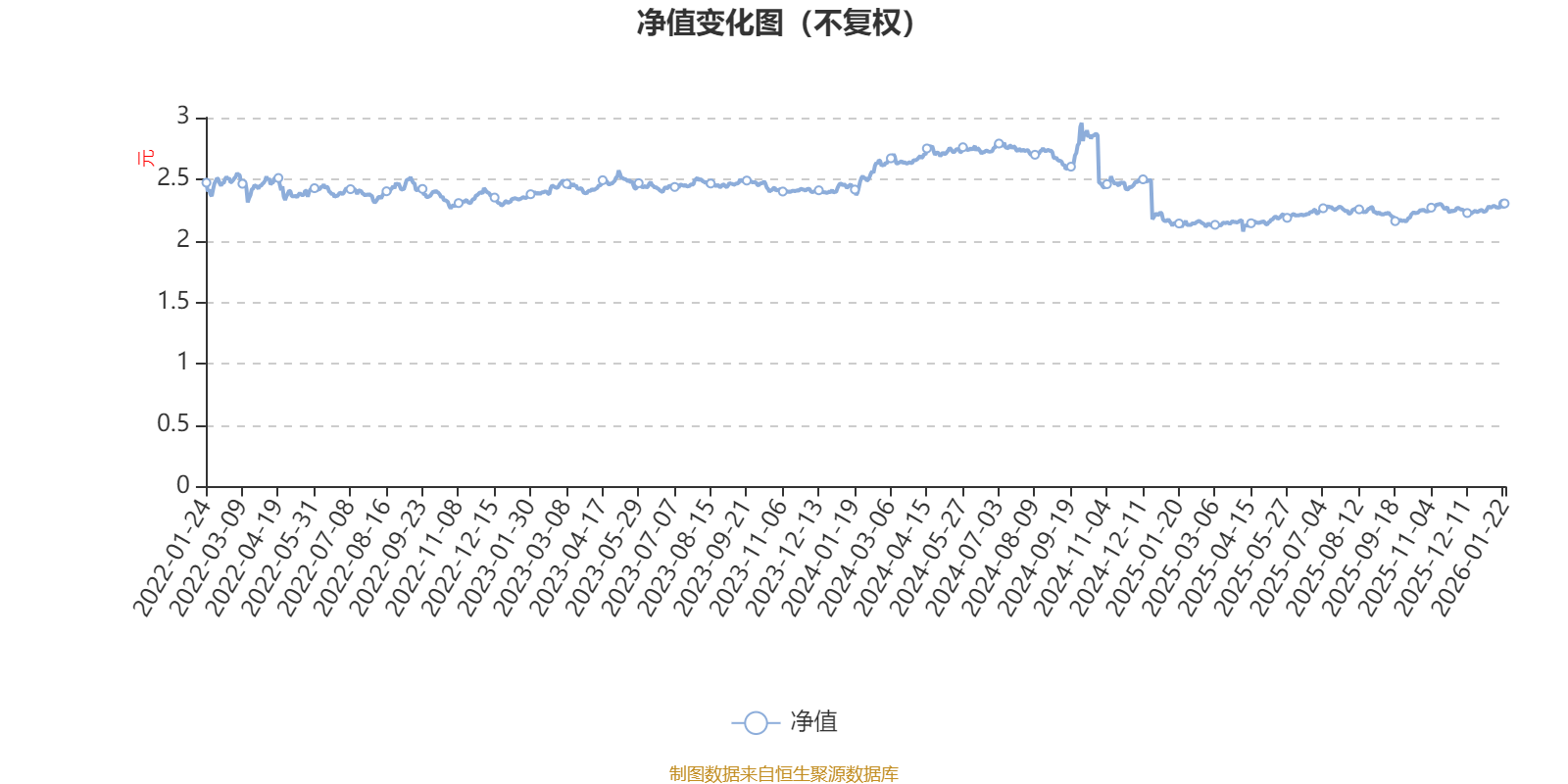
长盛量化红利混合A:2025年第四季度利润2267.90万元 净值增长率3.98%
Sou Hu Cai Jing· 2026-01-24 08:32
该基金属于偏股混合型基金。截至1月22日,单位净值为2.302元。基金经理是王宁和陈亘斯。 AI基金长盛量化红利混合A(080005)披露2025年四季报,第四季度基金利润2267.90万元,加权平均基金份额本期利润0.0903元。报告期内,基金净值增长 率为3.98%,截至四季度末,基金规模为4.81亿元。 基金管理人在四季报中表示,从行业角度观察,红利质量与红利现金流覆盖有色、制造等表现较好的行业,而红利价值、红利低波中的银行、交运、食品饮 料表现均较差。从风格角度观察,受到三季度的科技主题与大盘成长共振向上以及成交放大的影响,市场的风险偏好持续改善并扩散,红利主题投资者也 从"避险为主"逐步转向"复苏预期 + 盈利改善",红利质量指数中的高盈利、高增长属性的标的更受青睐。长盛量化红利基金2025年四季度以稳定的仓位运 行,积极调整组合的行业与风格,增配盈利质量较高且业绩较稳定的能支撑未来较高股息率的上市公司,同时减配盈利能力和质量可能恶化的无法持续高分 红的上市公司,保持组合的红利特性具有较强的前瞻性和延续性。 截至1月22日,长盛量化红利混合A近三个月复权单位净值增长率为2.90%,位于同类可比基金2 ...