
嘉能可

Search documents
矿端扰动加剧,铜价趋于上行
Tong Guan Jin Yuan Qi Huo· 2025-10-14 23:30
1. Report Industry Investment Rating No relevant content provided. 2. Core Views of the Report - Macroeconomically, the U.S. government shutdown and intensified China - U.S. game have increased global market risk - aversion, leading to a joint upward movement of gold, silver, and copper. The Fed has different views on future policy paths after the interest - rate cut, while China will implement moderately loose policies and proactive fiscal policies [2]. - Fundamentally, global mine - end supply disturbances have intensified, with some major mining companies lowering their annual production guidance. The growth rate of global mine - end supply this year is less than 1%, and domestic refined copper production has declined. In September, the demand growth of traditional industries in China was limited, while emerging industries maintained a steady copper - using growth rate. Domestic inventories rebounded from a low level, and global inventories continued to increase [2]. - Overall, market risk - aversion demand has increased due to the U.S. trade policy. The Fed has differences in the interest - rate cut rhythm but basically agrees on the direction. Global economic growth remains stable under the background of wide - fiscal policies. China's anti - involution and stable - growth policies are clear. With the intensification of mine - end shortages and the tightening of the domestic supply - demand balance, copper prices are expected to return to the upward channel after shock adjustments in October [2]. 3. Summary According to the Directory 3.1 2025 September Copper Market Review - In September 2025, copper prices showed a strong upward trend. LME copper rose from around $9,875 to over $10,440, and SHFE copper rose from 79,500 to around 83,800. The Fed's interest - rate cut in September and supply disturbances in major mines supported copper prices. After the National Day, despite the short - term impact of China - U.S. trade frictions, copper prices rebounded quickly [7]. - In September, downstream copper - using industries faced cost pressures due to rising copper prices. The start - up rates of copper cable enterprises and air - conditioning production decreased, while the start - up rates of copper rod and copper foil enterprises in the primary processing industry rebounded. Social inventories remained low, and the spot market supply - demand structure was in a tight balance [9][10]. 3.2 Macroeconomic Analysis 3.2.1 U.S. Government Shutdown and Recurrence of China - U.S. Trade Frictions - The U.S. government shutdown during the National Day may delay the release of important economic data, affecting the Fed's decision - making on the interest - rate cut path. China - U.S. trade frictions have recurred, increasing market risk - aversion [13]. 3.2.2 U.S. Manufacturing Downturn and Eurozone Manufacturing in Contraction - The U.S. September ISM manufacturing PMI was 48.7, remaining in the contraction range. New orders decreased, while production and employment showed some improvement. The eurozone's September manufacturing PMI was 49.5, falling back below the boom - bust line. Germany and France's manufacturing PMIs declined, and the eurozone's economic outlook depends on its overall economic performance [14][16]. 3.2.3 China's Central Bank to Implement Moderately Loose Policies and Industrial Profit Growth - China's central bank will implement moderately loose policies and use proactive fiscal policies to support employment and foreign trade. In August, the profits of industrial enterprises above designated size increased by 20.4% year - on - year, and the cumulative growth from January to August turned positive for the first time, which is positive for copper prices [17][18]. 3.3 Fundamental Analysis 3.3.1 Intensified Global Mine - End Supply Disturbances and Lowered Production Expectations of Major Miners - As of the end of September, the spot TC of copper concentrate remained at a relatively low level of around - $40/ton. The growth rate of global copper concentrate supply in 2025 is expected to be less than 1%. Many major mines have encountered problems, and some major mining companies have significantly lowered their production expectations for this year and next year [21]. 3.3.2 Possible Decline in Domestic Production and Limited Release of Overseas Refined Copper Capacity - In September, China's electrolytic copper production was 1121,300 tons, with a year - on - year increase of 11.65%. However, due to the 770 - document and the shortage of raw materials, domestic production in October is expected to have limited upward space. Overseas, some smelters have shut down, and the new refined copper production capacity in 2025 is limited [27][28]. 3.3.3 Marginal Decline in Refined Copper Imports and the Impact of Document 770 on Scrap Copper Enterprises - From January to August, China's imports of unforged copper and copper products increased by 2.6% year - on - year, while refined copper imports decreased by 6.4%. In September, the import window was not fully opened. Document 770 increased the negative tax rate of scrap copper rod enterprises, leading to production cuts [51][52]. 3.3.4 Continuous Increase in North American Inventories and Low - Level Rebound in Domestic Social Inventories - Since September, domestic inventories have rebounded from a low level, and global inventories have continued to increase. North American inventories are still flowing in. It is expected that global inventories will remain stable or decline slightly in October, and domestic inventories will fluctuate at a low level [53][55]. 3.3.5 Traditional Industries Entering the Peak Season and Stable Growth in Emerging Industries (Except Photovoltaic) - In the power grid investment, due to the high copper price, some projects have been postponed. The photovoltaic industry is undergoing structural adjustments, and the growth rate of wind power is expected to slow down. The real estate market is still at the bottom, and the air - conditioning production in October has decreased. However, new energy vehicles have maintained a strong growth momentum, and it is expected that the refined copper consumption will recover steadily in October [61][72]. 3.4 Market Outlook - Macroeconomically, the U.S. government shutdown and China - U.S. game have increased market risk - aversion. The Fed has differences in the interest - rate cut path, and China will implement loose policies. Fundamentally, the supply side is tightening, and the demand side has limited growth in traditional industries and stable growth in emerging industries. Copper prices are expected to return to the upward channel after shock adjustments in October [77][78].
刚果(金)确定今年底前的钴出口配额分配方案
Shang Wu Bu Wang Zhan· 2025-10-14 15:49
Core Insights - The Congolese government announced a distribution plan for cobalt export quotas for the remainder of the year, marking the end of an eight-month cobalt export ban that began in February [1] Group 1: Export Quota Details - The new export quotas will take effect on October 16 and will be allocated based on each company's total export volume over the past three years [1] - Approximately 18,000 tons of cobalt can be exported by mining companies for the remainder of this year, with annual export limits set at 96,600 tons for both 2026 and 2027, which is less than half of last year's production [1] Group 2: Major Companies and Their Quotas - China Molybdenum, the world's largest cobalt producer, has been approved to export 6,500 tons of cobalt by the end of 2025, accounting for 36% of the total quota [1] - It is projected that China Molybdenum will export 31,200 tons of cobalt in 2026, representing 27% of its total production in Congo last year, which was 114,000 tons, over 40% of global production [1] - Glencore and Eurasian Resources, the second and third largest cobalt producers globally, have been granted export quotas of 3,925 tons and 2,125 tons, respectively, making up 22% and 12% of the total quota [1] - Other Chinese mining companies, including Huagong Mining, Huayou Cobalt, China Nonferrous Metal Industry Group, Minmetals Resources, Zijin Mining, and Jinchuan Group, along with some other local producers, have also received export quotas proportionally [1]


狂飙超76%!它,涨幅超黄金!
Sou Hu Cai Jing· 2025-10-14 05:32
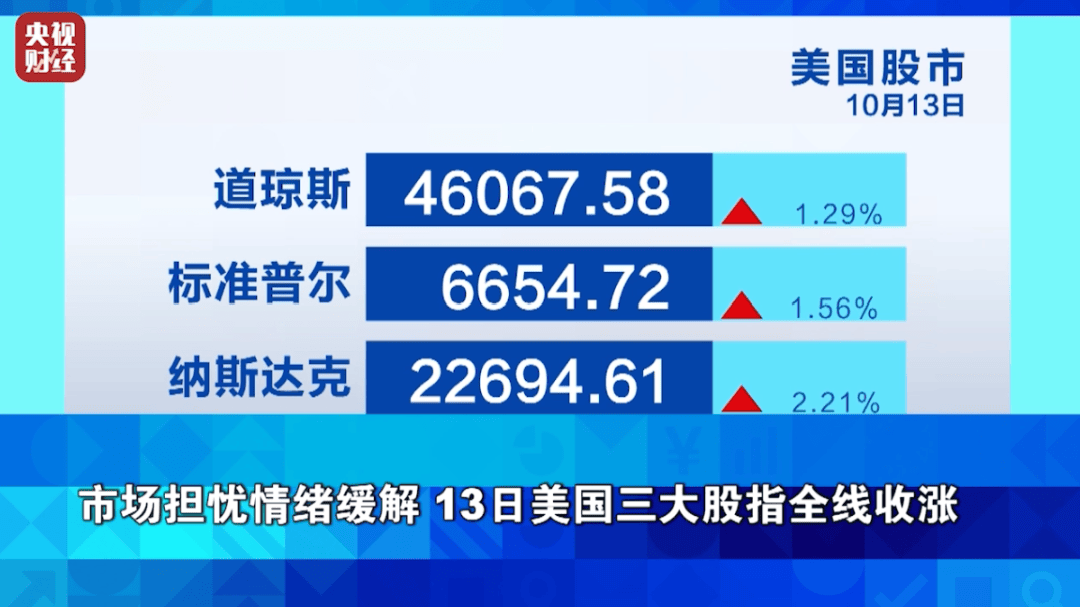
Group 1: Precious Metals - Silver prices have surged this year, closing at $52.27 per ounce, with a cumulative increase of 76.53%, outpacing gold [1][7] - The rise in silver prices is attributed to a squeeze in the market as London physical silver inventories have reached multi-year lows [7] - Gold prices also saw a significant increase, closing above $4100 per ounce for the first time, with a rise of 3.31% [5] Group 2: Stock Market - U.S. stock indices rose across the board, with the Dow Jones up 1.29%, S&P 500 up 1.56%, and Nasdaq up 2.21%, driven by a rebound in chip and tech stocks [3] - Investor sentiment improved following the U.S. White House's easing of trade tensions, leading to increased buying activity [3] Group 3: Oil Market - International oil prices increased, with light crude oil futures closing at $59.49 per barrel, up 1.0%, and Brent crude at $63.32 per barrel, up 0.94% [9] - OPEC's monthly report indicated a slight upward revision in global oil demand growth for 2025, projecting an increase of 1.3 million barrels per day [9] Group 4: Key Stocks - OpenAI and semiconductor giant Broadcom have entered a long-term chip collaboration agreement, resulting in a significant stock price increase for Broadcom, which rose by 9.88% [11] - European mining stocks saw notable gains, with Anglo American up over 4% and Glencore up over 3%, reflecting improved investor sentiment [11]

小金属何来“战略价值”?
Xin Lang Cai Jing· 2025-10-13 16:40
Summary of Key Points Core Viewpoint The recent quota distribution in the Democratic Republic of Congo (DRC) has led to significant implications for cobalt supply, with mining companies receiving the majority of quotas while smelting plants are left without direct allocations. This shift is expected to create a tight supply situation, impacting cobalt prices and market dynamics. Quota Distribution - The total quota allocated is 96,600 tons, with 87,000 tons as the basic quota and 10% as strategic quotas, which can be adjusted based on price changes [2] - Major mining companies like Luoyang Molybdenum (3,120 tons), Glencore (1,330 tons), and Eurasian Resources (1,020 tons) dominate the quota distribution, while domestic smelting plants received no direct quotas [2][3] - The government platforms EGC, STL, and ARECOMS received a combined quota of 16,700 tons for 2026, which can be utilized by smelting plants through collaboration [3] Supply Chain Implications - The lack of direct quotas for smelting plants means they will have to rely on mining companies for raw material supply, leading to increased competition and potential price hikes [7] - Cobalt prices are expected to reflect structural issues rather than just supply-demand balance, as smelting companies will need to purchase raw materials from quota-holding mining firms [7][8] Strategic Quotas and Regulations - Strategic quotas totaling 9,600 tons are aimed at supporting national key projects, indicating a focus on resource nationalism [5] - New regulations prevent quota transfer and require unused quotas to be forfeited, tightening control over cobalt exports [4][6] Market Dynamics and Future Outlook - The pricing power for cobalt is shifting towards companies like Glencore, as they will be the primary suppliers for cobalt salt manufacturers [8] - Resource nationalism is expected to increase costs for acquiring raw materials, leading to higher prices and a need for countries to build new supply chains and safety stocks [8] Conclusion The recent quota changes in the DRC are reshaping the cobalt market, concentrating power among a few mining companies and creating a tighter supply environment that could lead to significant price increases and shifts in market dynamics [7][8]

刚果钴分配配额落地对钴产业链的影响
2025-10-13 14:56
Summary of Key Points from the Conference Call Industry Overview - The conference call discusses the impact of the Democratic Republic of the Congo (DRC) government's new cobalt resource management policies on the cobalt industry, particularly affecting Chinese enterprises and the global cobalt supply chain [1][10]. Core Insights and Arguments - **New Cobalt Policies**: The DRC has implemented a quota system and export licensing to enhance tax revenue, prevent smuggling, and promote local industry development. This has temporarily restricted raw material imports for Chinese companies, affecting their strategic reserves and smelting operations [1][10]. - **Export License Requirements**: Companies must pay mining privilege fees and meet several conditions, including prepayment, quota verification, product traceability, and compliance with ESG standards to activate export licenses [1][5]. - **Impact on Chinese Companies**: Companies without their own mines, such as Hanrui and Tengyuan Cobalt, have struggled to obtain quotas due to regulatory non-compliance. However, EDC and STL are allowed to process artisanal mining products [1][8][10]. - **Hanrui's Production Capacity**: Hanrui has a cobalt production capacity of 5,000 tons in the DRC and is seeking to export independently of the strategic quota to alleviate supply shortages. The future of Hanrui's production depends on pricing and export licensing [1][9]. - **Global Cobalt Market Dynamics**: Major suppliers like Glencore, Exxon, and Eurasian Resources dominate the market, holding at least 70% market share. China may increasingly rely on Indonesian production to meet demand, but a supply gap is expected by 2026 [1][11]. - **Supply Shortages**: A projected cobalt supply gap of approximately 20,000 tons is anticipated in 2026, potentially widening in 2027. The demand from 3C products is expected to be more resilient to price increases compared to electric vehicle batteries [2][17]. - **Cobalt Pricing and Demand Elasticity**: The price sensitivity of 3C products is higher, with procurement continuing at prices between 450,000 to 500,000 CNY per ton. In contrast, electric vehicle manufacturers may reduce purchases if prices exceed 450,000 CNY per ton [18]. Additional Important Insights - **Inventory Management**: Chinese companies have begun to deplete cobalt inventories since June, with expectations to consume existing stocks by the end of 2025. The current inventory levels are around 70,000 to 80,000 tons [12][23]. - **Safety Stock Levels**: Historically, companies maintained about three months of safety stock, but due to current supply constraints, many have reduced this to around one month [24]. - **Potential for Future Policy Changes**: The DRC government is unlikely to relax mineral quotas in the near term, as they are focused on strict enforcement of the new policies to avoid triggering excessive taxation [19]. This summary encapsulates the critical aspects of the conference call, highlighting the implications of the DRC's new cobalt policies on the industry and the challenges faced by companies, particularly those in China.

每日投行/机构观点梳理(2025-10-13)
Jin Shi Shu Ju· 2025-10-13 11:33
Group 1: Copper and Nickel Market Outlook - Goldman Sachs forecasts copper prices to remain in the range of $10,000 to $11,000 per ton in 2026/2027 [1] - Goldman Sachs predicts nickel prices will decline by 6% to $14,500 per ton by December 2026 due to the need for Indonesian nickel producers to lower profit margins to limit supply growth [1] Group 2: Gold Price Predictions - Canadian Imperial Bank of Commerce expects gold prices to rise to $4,500 per ounce in 2026 and 2027, before falling to $4,250 in 2028 and $4,000 in 2029, driven by long-term inflation concerns [1] - The recent surge in gold prices is attributed to fears of long-term inflation and wealth preservation, as the Federal Reserve's monetary policy has not adequately addressed these concerns [1] Group 3: Japanese Yen and Interest Rate Expectations - State Street Bank indicates that the delay in interest rate hikes has exacerbated the weakness of the Japanese yen, with market reactions expected if there is no consensus on the appointment of the new Prime Minister [2] Group 4: European Central Bank's Stance - Pantheon Macroeconomics suggests that the European Central Bank is unlikely to lower interest rates in the coming months despite a weak economic outlook, as they may view current economic weakness as temporary [3] Group 5: Chinese Market and Liquidity - China International Capital Corporation highlights October as a potential liquidity resonance window, suggesting that A-shares and Hong Kong stocks offer better value compared to U.S. stocks due to a shift towards a more accommodative monetary policy [4] - The report indicates that the recent escalation in U.S.-China trade tensions is expected to have a weaker impact on A-shares compared to previous events, with a focus on long-term asset revaluation in China [5] Group 6: Gold Market Dynamics - Guoxin Securities notes that the recent rise in gold prices is driven by expectations of Federal Reserve rate cuts, geopolitical risks, and increased investment demand, marking the beginning of a new strong cycle for gold [6] Group 7: Energy Storage and Lithium Battery Sector - CITIC Securities continues to recommend the energy storage sector, citing a turning point in domestic energy storage economics and a favorable outlook for the lithium battery industry [7] Group 8: Cobalt and Rare Earth Strategic Opportunities - CITIC Securities identifies strategic opportunities in cobalt and rare earths, with new export quotas from the Democratic Republic of Congo expected to lead to a market shift from surplus to shortage [8] Group 9: Market Volatility and Investment Strategy - Everbright Securities predicts that the market may enter a phase of wide fluctuations due to high valuations and cautious capital, while also noting potential support from upcoming policy expectations [9] Group 10: Long-term Outlook for Gold - Guoxin Securities maintains a positive long-term outlook for gold, suggesting that the third wave of opportunities may arise from shifts in capital flows due to the peak of the AI technology wave [10] Group 11: External Shocks and Chinese Market Opportunities - Guotai Junan Securities views external shocks as buying opportunities for the Chinese market, emphasizing the internal certainty of China's transformation and the demand for quality assets [11]
刚果钴配额制生效在即,钴价进入结构性上行周期
高工锂电· 2025-10-13 11:26
Core Viewpoint - The Democratic Republic of Congo (DRC) has implemented a quota system for cobalt exports, transitioning from an export ban to a regulated quota management system, significantly impacting global cobalt supply and pricing dynamics [3][6][18]. Summary by Sections Export Quota Details - The DRC government announced cobalt export quotas, ending an eight-month export ban, with annual quotas set at 96,600 tons for 2026 and 2027, and a remaining quarterly export limit of 18,100 tons for 2025 [3]. - Export quotas are allocated to mining companies and government-controlled platforms, excluding smelters from direct quotas [3][4]. Resource Concentration - Six mining companies and platforms control nearly 80% of the export quotas, with major allocations to companies like Luoyang Molybdenum (31,200 tons) and Glencore (13,300 tons) [4][5]. - The concentration of quotas enhances the bargaining power of these entities, as only they possess the rights to export [6]. Export Regulations - The new regulations impose strict conditions on quota transferability and require prepayment of mining rights fees, increasing operational and financial pressures on companies [7][9]. - The complexity of the new export process may lead to uncertainties in the supply chain, affecting the overall export rhythm [8][9]. Price Dynamics - The DRC's quota system is expected to shift the pricing mechanism from demand-driven to supply-driven, with domestic cobalt prices rising significantly from 169,000 CNY/ton to approximately 340,000 CNY/ton [13][14]. - The tightening of supply due to the loss of direct export rights for smelters may lead to increased procurement costs for smaller clients [14]. Industry Response - The domestic lithium battery industry is adapting by securing long-term contracts with quota holders, exploring new supply channels, and advancing cobalt-free battery technologies [16][17]. - The anticipated reduction in cobalt supply by 67,000 tons globally due to the quota system is prompting a shift in market dynamics [15][19]. Long-term Implications - The DRC's quota system is seen as a strategic move to redistribute global cobalt profits and enhance local processing capabilities, potentially leading to a more competitive landscape in the cobalt market [18][19].

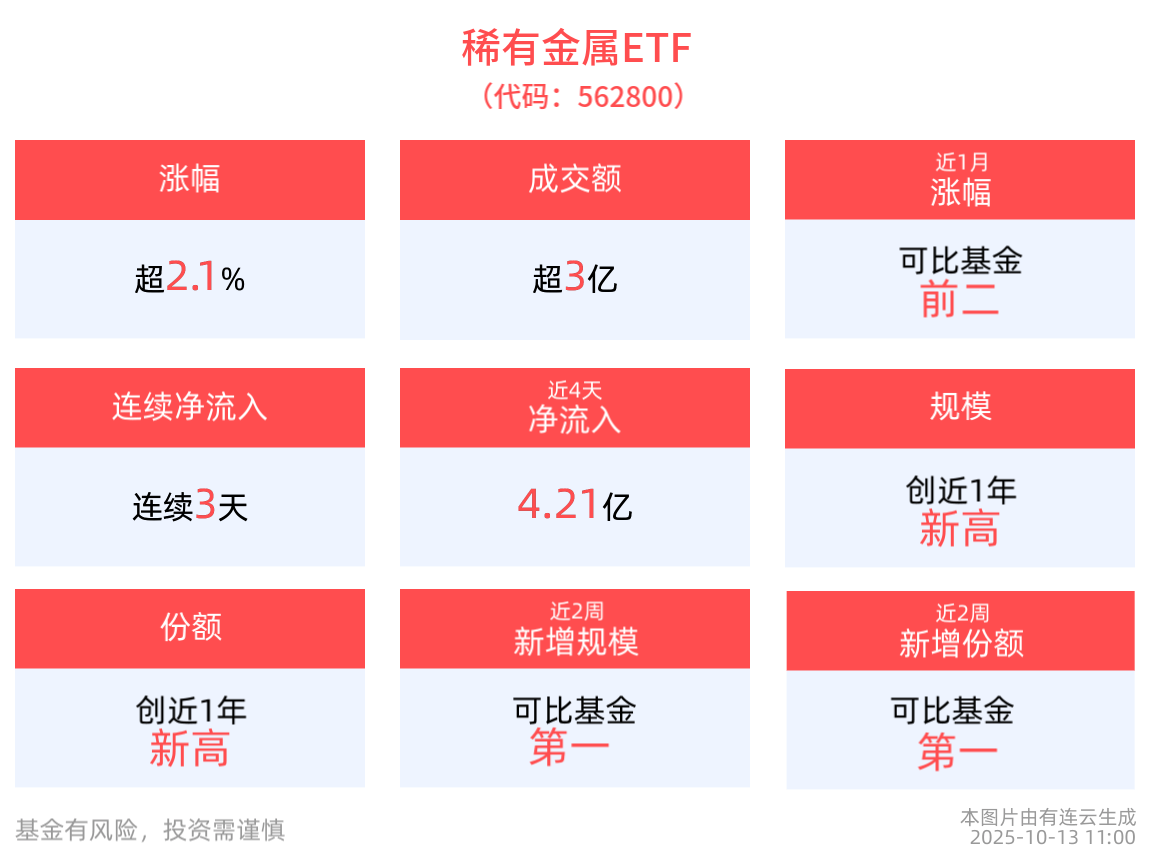
近3天获得连续资金净流入,稀有金属ETF(562800)盘中涨超2%,成分股银河磁体20cm涨停
Sou Hu Cai Jing· 2025-10-13 03:30
Group 1: Rare Metal ETF Performance - The Rare Metal ETF has a turnover rate of 11.57% during trading, with a transaction volume of 359 million yuan, indicating active market trading [3] - The latest scale of the Rare Metal ETF reached 3.08 billion yuan, marking a new high since its inception and ranking first among comparable funds [3] - The ETF's share reached 3.67 billion shares, also a new high since inception, and ranks first among comparable funds [3] - Over the past three days, the Rare Metal ETF has seen continuous net inflows, with a maximum single-day net inflow of 358 million yuan, totaling 551 million yuan [3] - As of October 10, the net value of the Rare Metal ETF has increased by 17.31% over the past three years [3] - The highest monthly return since inception is 24.02%, with the longest consecutive monthly increase being five months and a maximum increase of 66.25%, averaging a monthly return of 8.60% [3] Group 2: Cobalt Export Quotas and Market Dynamics - According to CITIC Construction Investment, cobalt export quotas for Congo (Kinshasa) have been finalized, with Luoyang Molybdenum, Glencore, and Eurasian Resources holding the top three shares at 35.9%, 27.3%, and 21.6% respectively [4] - The total quota for 2026 and 2027 is set at 96,600 tons, which includes a basic quota of 87,000 tons allocated to production enterprises and a strategic quota of 9,600 tons [4] - Under the quota system, only about 44% of production can be exported, resulting in a reduction of over 100,000 tons [4] - Based on estimates for 2024, with a supply of 270,000 tons and demand of 230,000 tons, the market is expected to shift from a surplus of about 70,000 tons to a shortage of about 30,000 tons, potentially driving cobalt prices higher [4] Group 3: Rare Earth Export Controls - The Ministry of Commerce has issued four documents to strengthen rare earth export controls, adding five categories of medium and heavy rare earths to the export control list [4] - The controls also extend to the entire industrial chain, including equipment, technology, and raw materials, with additional regulations on overseas military and high-end semiconductor demands [4] - The strategic position of rare earths has been further reinforced through these measures [4] Group 4: Rare Metal Index and Investment Opportunities - As of September 30, 2025, the top ten weighted stocks in the CSI Rare Metal Theme Index include Northern Rare Earth, Luoyang Molybdenum, Huayou Cobalt, and others, collectively accounting for 59.91% of the index [4] - Investors can also participate in the rare metal sector through the Rare Metal ETF linked fund (014111) [4]



锌月报:宏微扰动增多,锌价弱势震荡-20251013
Tong Guan Jin Yuan Qi Huo· 2025-10-13 02:38
1. Report Industry Investment Rating No relevant content provided. 2. Core Views of the Report - The Fed restarted the interest - rate cut cycle, which is favorable for risk assets, but the US government shutdown and the resurgence of China - US tariff conflicts have increased macro uncertainties. China's economy faces certain pressures, and new policy - based financial instruments are expected to strengthen economic growth this year, with the possibility of further policy stimulus still existing [3][88]. - The divergence between domestic and foreign zinc processing fees has intensified. The inflection point of domestic ore processing fees has emerged, and there is still room for adjustment as smelters' winter storage demand rises. The continuous decline in the price of by - product sulfuric acid has compressed smelter profit margins, reducing production enthusiasm. Although refined zinc supply will recover in October, the room for further growth is limited. The current Shanghai - London price ratio is near the critical point for zinc ingot exports, and the opening of the export window is expected to relieve the domestic surplus pressure [3][88]. - The peak consumption season is somewhat dull. The start - up rate of primary enterprises has improved month - on - month but is weaker than the same period. They maintain a just - in - time purchasing rhythm and lack the willingness to actively replenish inventories. In the terminal market, infrastructure has a marginal repair demand and may become an important support for demand in the future; the consumption of automobiles and household appliances remains resilient, the performance in the wind and solar sectors is divergent, the export of galvanized sheets faces weakening pressure, and the real estate sector continues to be weak [3][88]. - Overall, there are more overseas macro disturbances, and market sentiment may fluctuate. The macro trend is less clear. Fundamentally, the situation remains strong overseas and weak domestically. The resumption of smelter production has promoted supply recovery, and demand lacks significant highlights, leading to an increase in supply - demand pressure. However, the expectation of zinc ingot exports is strengthening, which will relieve the domestic surplus pressure, while the liquidity risk of LME zinc will also decrease. These two forces will balance each other, and zinc prices are expected to fluctuate weakly [3][90]. 3. Summary by Relevant Catalogs 3.1 Zinc Market Review - In September, the main contract price of SHFE zinc first rose and then declined, seeking support. At the beginning of the month, supported by the Fed's interest - rate cut expectation and the peak consumption season, zinc prices fluctuated strongly. After the Fed cut interest rates, the market sold on the news, and the strong US economic data supported the US dollar, causing zinc prices to fall to 21,825 yuan/ton, with a monthly decline of 1.42%. LME zinc rose first and then fell. In the first half of the month, it broke through $2,900/ton and reached a high of $3,003.5/ton. After the interest - rate cut and hawkish remarks from Powell, it corrected and closed at $2,956.5/ton, with a monthly increase of 5.06% [8]. 3.2 Macroeconomic Analysis 3.2.1 US Situation - The US economy is cooling but remains resilient. The Q2 real GDP grew by 2.08% year - on - year and 3.8% quarter - on - quarter. In August, retail sales increased by 4.8% year - on - year and 0.6% month - on - month. In September, the ISM manufacturing PMI was 49.1, but new orders declined. The non - manufacturing PMI was 50, with business activity falling below the boom - bust line. The ADP employment data in September decreased by 32,000, and inflation continued to rise slowly. In September, the Fed cut interest rates by 25bp to 4.0 - 4.25% [11][12]. - The US government shut down in late September, and Trump announced additional tariffs on China in October, which increased market uncertainties [13]. 3.2.2 Eurozone Situation - In September, the eurozone's manufacturing PMI fell to 49.5, while the services PMI rose to 51.4. Inflation rose slightly, and the unemployment rate dropped to 6.2% in August. The ECB kept interest rates unchanged in September, and its officials' statements were cautious [14]. 3.2.3 China's Situation - In August, most of China's economic indicators continued to decline. Exports, industrial production, consumption, and investment all showed different degrees of slowdown. The manufacturing PMI in September was 49.8%, and the non - manufacturing PMI fell to 50.0%. The consumption during the National Day holiday was structurally differentiated [16]. - Policy support is expected. The Politburo meeting in September decided to hold the Fourth Plenary Session of the 20th CPC Central Committee, and new policy - based financial instruments worth 500 billion yuan are expected to boost infrastructure investment [17]. 3.3 Zinc Fundamental Analysis 3.3.1 Zinc Ore Supply - Global zinc concentrate supply has recovered as expected. From January to July 2025, the cumulative output was 7.1994 million tons, a year - on - year increase of 6.02%. Overseas zinc concentrate output is expected to increase by about 550,000 tons this year, and domestic output is expected to increase by about 100,000 tons [30]. - The divergence between domestic and foreign processing fees has intensified. In October, the average domestic processing fee was 3,650 yuan/ton, a month - on - month decrease of 300 yuan/ton, while the average import processing fee was $87.51/dry ton, a month - on - month increase of $16.83/dry ton. In August 2025, 467,300 tons of zinc concentrate were imported, and from January to August, the cumulative import volume was 3.5027 million tons, a year - on - year increase of 43.06% [34][35]. 3.3.2 Refined Zinc Supply - Overseas smelters are operating at low loads, while China contributes to the increase in supply. From January to July 2025, global refined zinc output was 7.911 million tons, a year - on - year decrease of 1.15%. Overseas output decreased by 4.7%, while China's output increased by 2.65% [41]. - From January to September 2025, the cumulative output of refined zinc was 5.0691 million tons, a year - on - year increase of 8.85%. In September, the output was 600,100 tons, a month - on - month decrease of 4.2%. It is expected that the output in October will increase by 3.77% to 622,700 tons. In August, 25,600 tons of refined zinc were imported, and from January to August, the cumulative import volume was 235,500 tons, a year - on - year decrease of 11.81%. The import window remains closed, and the export window may open [45][46]. 3.3.3 Refined Zinc Demand - Globally, from January to July 2025, refined zinc consumption was 7.843 million tons, a year - on - year increase of 2.12%. Overseas consumption increased by 1.33%, and domestic consumption increased by 2.96%. The supply surplus in the global zinc market was 72,000 tons, a significant reduction from the previous year [56]. - In the overseas market, the real estate and automotive sectors showed marginal improvement. In the US, new home sales in August reached an annualized rate of 800,000 units, and new car sales in August were 1.4913 million units. In the eurozone, the construction confidence index improved slightly [57]. - In September, the start - up rate of primary processing enterprises showed a slow recovery. In August, 1.0975 million tons of galvanized sheets were exported, and from January to August, the cumulative export volume was 9.2182 million tons, a year - on - year increase of 10.96% [60][62]. - In the traditional infrastructure sector, investment growth has declined, but there is a demand for recovery. In the real estate sector, investment and sales continue to be weak. In the automotive and household appliance sectors, production and sales are resilient. In the emerging consumption sector, the photovoltaic industry is expected to drive zinc consumption growth, and the wind power industry is also developing well [64][72][73]. 3.3.4 Global Visible Inventory - In September, LME zinc inventory continued to decline, reaching 38,200 tons at the end of the month. The LME 0 - 3 spot premium rose and then slightly declined to $55.98/ton. - In September, China's social inventory first increased and then decreased, reaching 141,400 tons at the end of the month. There is a strong expectation of inventory accumulation during the National Day holiday in early October, but inventory is expected to decline again after the holiday [87].
贸易摩擦重现,铜价冲高回落
Tong Guan Jin Yuan Qi Huo· 2025-10-13 02:38
Report Industry Investment Rating No relevant information provided. Core Views of the Report - Last week, the copper price rose and then fell due to the escalation of Sino - US trade tensions, with Trump threatening to impose high tariffs on China again, which caused market panic. The Fed's September meeting minutes showed a large divergence between hawks and doves on the pace of interest rate cuts this year. The US government shutdown may delay important inflation and employment data, affecting the Fed's decision on future interest rate cut paths. These factors dampened market risk appetite, causing the London copper price to be blocked after rising to $11,000. On the fundamental side, Teck Resources significantly lowered its production forecasts for this year and next due to the extended shutdown of the QB project, intensifying concerns about global mine - end supply. Domestic refined copper production is expected to decline, social inventories are running at a low level, and the near - month futures market maintains a flat - water structure. Overall, although the supply shortage disturbances at overseas resource ends continue to heat up, Sino - US trade frictions reappeared last week, and the Fed's hawks and doves have differences on the interest rate cut rhythm. In the context of the spread of overseas macro - panic sentiment, the copper price is expected to enter a shock adjustment in the short term [2][3][8]. Summary by Relevant Catalogs Market Data - **Price Changes**: From September 26th to October 10th, LME copper rose from $10,205/ton to $10,374/ton, an increase of $169 or 1.66%; COMEX copper rose from 476.45 cents/pound to 484.5 cents/pound, an increase of 8.05 cents or 1.69%; SHFE copper rose from 82,470 yuan/ton to 85,910 yuan/ton, an increase of 3,440 yuan or 4.17%; international copper rose from 72,870 yuan/ton to 73,880 yuan/ton, an increase of 1,010 yuan or 1.39%. The Shanghai - London ratio rose from 8.08 to 8.28, an increase of 0.2. The LME spot premium/discount rose from -$33.91/ton to -$31.19/ton, an increase of $2.72 or - 8.02%. The Shanghai spot premium/discount rose from - 5 yuan/ton to 20 yuan/ton, an increase of 25 yuan [4]. - **Inventory Changes**: From September 26th to October 10th, LME inventory decreased from 144,400 tons to 139,400 tons, a decrease of 5,000 tons or 3.46%; COMEX inventory increased from 322,284 short tons to 339,525 short tons, an increase of 17,241 short tons or 5.35%; SHFE inventory increased from 98,761 tons to 109,672 tons, an increase of 10,911 tons or 11.05%; Shanghai bonded area inventory increased from 76,300 tons to 88,000 tons, an increase of 11,700 tons or 15.33%. The total inventory increased from 641,745 tons to 676,597 tons, an increase of 34,852 tons or 5.43% [7]. Market Analysis and Outlook - **Price Fluctuation Reasons**: The rise and fall of the copper price last week were mainly due to the escalation of Sino - US trade tensions and the Fed's internal differences on interest rate cuts. Trump's threat to impose high tariffs on China and the possible delay of important economic data due to the US government shutdown dampened market risk appetite. On the fundamental side, the extension of the shutdown of Teck Resources' QB project and production problems in other mines intensified concerns about global mine - end supply [2][8]. - **Inventory Situation**: As of September 26th, the total inventory of LME, COMEX, SHFE, and Shanghai bonded area decreased to 641,000 tons. LME copper inventory decreased by 3,200 tons, the proportion of cancelled warehouse receipts decreased to 7.15%; SHFE inventory decreased by 7,000 tons; Shanghai bonded area inventory was basically flat. The rebound of the Shanghai - London ratio last week was mainly due to the Fed's overall interest rate cuts falling short of expectations, which boosted the US dollar index to rise from a low level [8]. - **Macro Situation**: Trump's threat to impose tariffs on China and export controls on key software hit market risk appetite, causing a sharp decline in overseas financial market prices. The Fed's September meeting minutes showed differences among officials on the rate and frequency of interest rate cuts. The continued shutdown of the US government may make the Fed lose economic data as a policy reference. In China, the official manufacturing PMI in September rose to 49.8, indicating that manufacturing production activities are accelerating and market demand is improving [9]. - **Supply - Demand Situation**: Teck Resources lowered its production guidance for this year and next due to the extended shutdown of the QB project. Panama's copper mine has no hope of resuming production this year, and some mines in Indonesia and Chile are also facing production declines. Global refined copper production is expected to decline slightly in October due to the shortage of overseas ore supply and the new waste copper policy. In terms of demand, the construction progress of power grid investment projects has been postponed, the start - up rate of copper cable production is lower than usual, but the new energy vehicle and photovoltaic industries show certain demand [10]. Industry News - **Chilean Copper Mines**: Codelco's copper production in August decreased by 25% due to a fatal collapse accident at the El Teniente copper mine. The Escondida copper mine's production was basically stable, while the Collahuasi copper mine's production decreased by 27% due to lower ore grades [12]. - **Teck Resources**: Due to the extended shutdown of the QB project to raise the tailings dam height, Teck Resources lowered its 2025 production guidance from 210,000 - 230,000 tons to 170,000 - 190,000 tons and its 2026 production forecast from 280,000 - 310,000 tons to 200,000 - 235,000 tons. The net cash unit cost in 2025 is expected to be between $2.65 - $3.00 per pound, higher than the previous forecast [13]. - **Freeport - McMoRan**: The company found the remains of all 7 missing workers at the Grasberg copper mine in Indonesia after a mudslide. The mine is expected to fully resume operations in 2027, and some unaffected areas may restart production later this year. The company has declared force majeure on its Indonesian freight and lowered its production forecasts for this year and next [14].
