蜜雪冰城

Search documents
茶咖烘焙小火锅面馆成商场新宠:餐饮“四大金刚”如何成调改热门?
Sou Hu Cai Jing· 2025-09-10 05:51
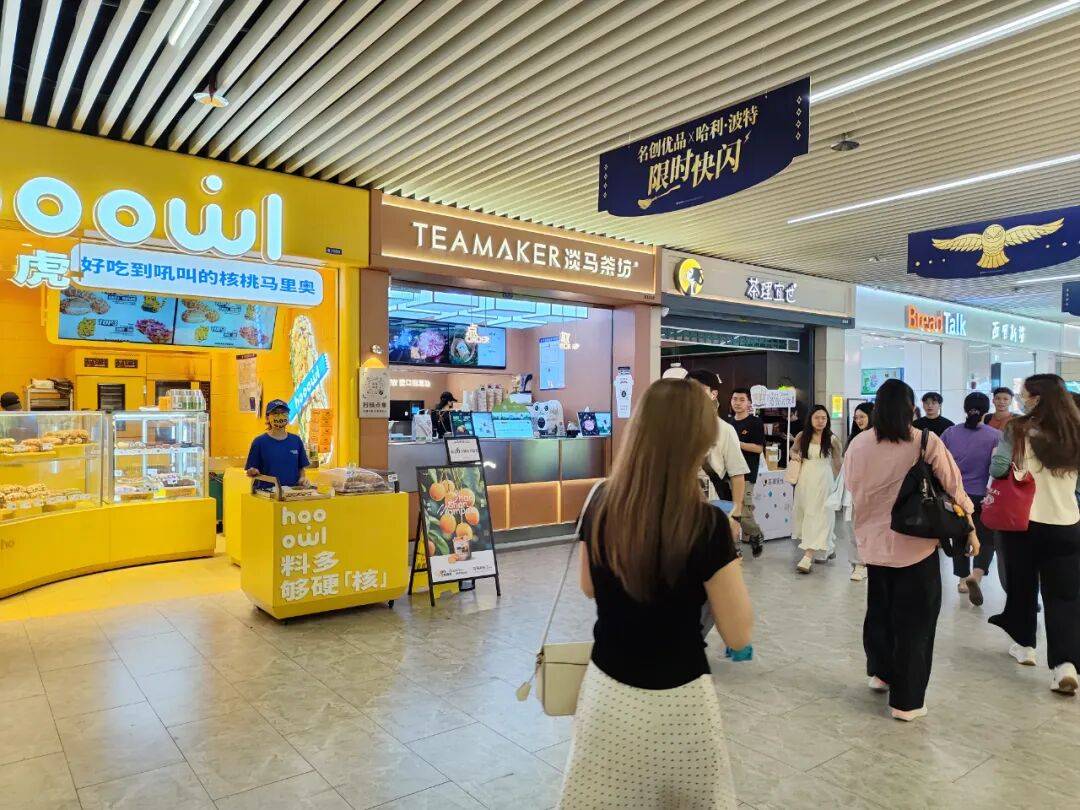
Core Insights - The shift in retail landscape is evident as fast fashion brands like H&M are being replaced by dining establishments such as SHAKESHACK, indicating a broader trend of dining brands taking over retail spaces previously occupied by apparel and beauty brands [1][3]. Retail Landscape Changes - High-end malls, such as Shenzhen's iN City Plaza, have seen a significant transformation, with 50% of their space now occupied by dining brands like Mixue Ice City and Luckin Coffee, reflecting a nationwide trend of retail contraction [3][4]. - In Q2 of this year, dining establishments accounted for 30% of new openings in malls, with high-end malls seeing a ratio of 1.51 for dining openings to closures, highlighting an accelerated shift in retail dynamics [3][4]. Dining Brand Competition - Four main categories—tea and coffee, baking, hot pot, and noodle shops—are intensifying competition within mall dining spaces, with numerous brands clustering in prime locations [3][6]. - New tea brands are frequently appearing in key positions within malls, while baking brands are also expanding their presence, indicating a strategic focus on high-traffic areas [3][6]. Market Pressures and Opportunities - Shopping centers are increasingly reliant on dining brands due to rising vacancy rates, with projections indicating a 27% increase in empty spaces by mid-2025, particularly in tier-three cities [4][6]. - The apparel sector is facing significant challenges, with brands like ZARA reducing their store count from 183 to under 80, and others like GAP and H&M frequently closing stores [4][6]. New Market Entries - Over 120 new commercial projects were launched in the first half of this year, totaling approximately 9 million square meters, indicating a trend of continuous market entry despite existing vacancies [6]. - The restaurant sector is favored for its ability to attract customers, high turnover rates, and stable rental income, making it a preferred choice for mall operators [6][7]. Strategic Value of Malls for Dining Brands - Dining brands are increasingly recognizing the strategic value of mall locations, with 30% of Bawang Tea's stores situated in malls, primarily on the first floor, enhancing brand visibility [6][7]. - The standardized nature of the four main dining categories allows for quick adaptation and brand turnover, reshaping the commercial real estate landscape in China [7].

解码新消费下阶段主要看点?
2025-09-09 14:53
Summary of Key Points from Conference Call Records Industry Overview - The new consumption sector benefits from policy support and consumption upgrades, catering to the needs of Generation Z, with performance growth exceeding the industry average and long-term growth potential, particularly in areas like the pet economy and trendy IP derivatives [1][3][12] Core Insights and Arguments - New consumption companies are actively expanding into overseas markets, showing excellent single-store profitability and rapid store opening speeds, leading to significant growth and attracting attention from southern capital and overseas active equity funds [1][4] - The expectation of interest rate cuts by the Federal Reserve is strong, with a nearly 100% probability of a rate cut on September 18, which is expected to enhance market risk appetite and liquidity, thereby increasing the valuation levels of the new consumption sector [5][6][7] - The Hong Kong stock market has underperformed compared to the A-share market due to fundamental profit downgrades, liquidity contraction, and low valuation levels, but the new consumption sector may benefit from improved liquidity and upward revisions in performance [1][8][12] - Internet platform subsidies led to significant profit losses in the Hong Kong stock market in Q2, but some segments, like ready-to-eat beverage companies, benefited, although certain sub-sectors have seen corrections from previous highs [1][11] Additional Important Insights - The new consumption sector shows a clear sustainability in performance growth, driven by the high consumption willingness of young consumers, particularly in areas like the pet economy and trendy IP derivatives, with over two-thirds of young people's spending focused on emotional and seasonal consumption [3][6] - The new consumption sector is expected to lead market strength in the near future, especially in the Hong Kong market, as it transitions from goods to service-oriented and emotional consumption [2][12] - The performance of the Hong Kong stock market in 2025 is expected to lag behind the A-share market, particularly in sectors like software services, semiconductors, and consumer services, while sectors like pharmaceutical biotechnology and essential consumer retail may outperform [10] - The upcoming Federal Reserve rate cuts are anticipated to significantly benefit non-essential and emotional stocks in the Hong Kong market, reinforcing the investment value of the new consumption sector [5][7] Investment Recommendations - It is recommended to focus on the new consumption sectors such as the pet economy, trendy concepts, and beauty care, which are expected to outperform traditional sectors due to policy support, consumption upgrades, and technological and channel innovations [1][12][13] - The Penghua Fund's National Index Hong Kong Consumption ETF (159,265) tracks the National Index Hong Kong Consumption Index, which has a high concentration of new consumption stocks, making it suitable for investors [1][16] - Investors are advised to use index-based tools for investment in the new consumption sector, which is characterized by new products, channels, and marketing models, and to consider the Penghua Fund's index products for diversified exposure [13][15]
奋进的河南——决胜“十四五”丨“万亿之城”挑大梁
He Nan Ri Bao· 2025-09-07 23:33
Core Insights - The article highlights the significant progress and achievements of Zhengzhou as it transitions into a major economic hub, emphasizing its role in high-quality development and governance during the "14th Five-Year Plan" and the upcoming "15th Five-Year Plan" [1] Economic Development - Zhengzhou is recognized as a "trillion-yuan city," with a projected GDP of 14,532.1 billion yuan for 2024, and a population of 13.086 million [6] - The city aims for a GDP of 7,329.3 billion yuan in the first half of 2025, maintaining a provincial economic dominance of 23.1% [6] Industry and Innovation - Zhengzhou is home to significant industrial advancements, with the establishment of six trillion-yuan industrial clusters, including electronic information, automotive, and equipment manufacturing [7] - The city is fostering innovation through the development of the Central Plains Science and Technology City, which has attracted numerous research institutions and talent, including 96 academicians [8] Trade and Global Engagement - Zhengzhou is actively participating in the "Belt and Road" initiative and RCEP, enhancing its role as a logistics hub with 62 cargo flight routes and a strong performance in foreign trade, achieving an import-export total of 2,746.8 billion yuan in the first half of the year, a 38.7% increase [9] Governance and Urban Management - The city has implemented innovative governance practices, integrating party leadership with data-driven management to enhance urban governance efficiency [10]
旅游酒店餐饮一服务连锁正当其时,寻找未来的万千店品牌
2025-09-07 16:19
Summary of Conference Call Records Industry Overview - The service chain industry in China has significant growth potential compared to the mature market in the U.S., which has 27 service consumption companies with a market value exceeding $10 billion, while China has only 7, indicating a vast market opportunity [1][4] - Service consumption demonstrates resilience and growth potential, serving as a key driver for long-term consumption upgrades, even during economic fluctuations [1][4] Key Insights and Arguments - The rise in chain store rates presents structural opportunities, as chains offer standardization and branding advantages over standalone stores, leading to higher occupancy rates and operational efficiency in the hotel sector [1][4] - The performance of the social service industry in the first half of 2025 saw rapid growth in certain sectors, such as tea drinks and hotels, which are less correlated with macroeconomic trends, resulting in superior stock performance and higher valuations [2][3] - Investment in service chains is justified by the emergence of scalable brands in China, such as Yum, Huazhu, and Haidilao, with trends indicating market expansion into lower-tier cities and upward market segmentation [3][4] Investment Considerations - When selecting service industry companies for investment, focus on product quality and operational strength to ensure long-term competitiveness and growth potential [7][10] - Different positioning strategies exist among brands: cost-oriented brands focus on extreme cost efficiency, while mid-to-high-end brands emphasize personalized experiences [9][10] Market Trends and Future Outlook - The hotel industry is currently in a downward cycle due to oversupply, with RevPAR not yet positive; however, large chain hotels with strong product capabilities and operational efficiency can still gain market share [20] - The trend of service chain brands expanding into lower-tier markets is notable, with brands like Huazhu and Mixue actively entering these areas [15][20] - The beverage industry is experiencing good growth, driven by consumer demand for quality and emotional value, with ready-to-drink beverages becoming popular [19][20] Risks and Challenges - The service chain industry faces risks during different lifecycle stages, particularly in the growth phase where rapid expansion may not be sustainable [10][11] - The restaurant sector shows a divergence in performance, with fast food brands generally performing well, while traditional dining experiences face challenges [18][19] Additional Insights - The infrastructure supporting the development of service chains includes improved supply chains, automation, and enhanced online and offline channels [5][6] - The phenomenon of brand and category exposure can enhance consumer recognition and sales, rather than causing market cannibalization [6][10] - The recent trend of the tea beverage industry shows a rapid iteration cycle, with some brands successfully navigating challenges to achieve recovery [12][16] This summary encapsulates the key points from the conference call records, highlighting the potential and challenges within the service chain industry in China, along with investment considerations and market trends.
一周新消费NO.325|蜜雪冰城上新两款开学季新品;a2牛奶完成收购雅士利新西兰工厂
新消费智库· 2025-09-07 13:03
New Product Launches - Mengniu has launched a new functional milk series targeting the elderly, including three products with 3.6g of native protein and 120mg of calcium per box [5][6] - Qingdao Beer has introduced a new white beer called "Hua Kai Mo Bai," with a malt concentration of 9% in 500ml cans [6] - Guizhou Chun has released two new products, Pure 6 and Pure 12, both at 40.9 degrees and positioned at 300 yuan and 500 yuan price points respectively [6] - "Guo Zi Shu Liao" has launched a new barley tea product, which is caffeine-free and sugar-free, with a minimum of 10g/L roasted barley [7] - "Moli Nai Bai" has collaborated with Shanghai Animation Film Studio to launch two new products inspired by the classic animation "Ginseng Fruit" [9] - Mixue Ice City has introduced two new back-to-school drinks, Lemon Milk Coffee priced at 8 yuan and Snow King Lemon Milk at 7 yuan [9] Market Expansion and Strategic Moves - H&M has officially entered the Brazilian market by opening its first store in São Paulo and launching an e-commerce platform [11] - Lucky Coffee has opened its first overseas store in Malaysia, marking the beginning of its global expansion [11] - The hotel brand Ying'nFlo has opened its first store in Wuhan, focusing on high-quality experiences for the new generation [11] - Haidilao has opened its first community store in Beijing, offering breakfast items and plans to expand its menu [12] - Yili Group has formed a strategic partnership with Hainan Airlines to promote its dairy products on flights [12] Investment and Financing Activities - Proya has announced plans to go public in Hong Kong to enhance its international strategy and financing capabilities [15] - a2 Milk Company has completed the acquisition of a milk powder manufacturing plant in New Zealand previously owned by Yashili [16] - The cosmetics brand Huazhi Xiao has completed a Series B financing round to support its global expansion and supply chain integration [16] - Debut, a biotech beauty leader, has secured $20 million in funding to accelerate its AI-based ingredient discovery platform [18] - PepsiCo has agreed to increase its stake in Celsius Holdings for $585 million, raising its ownership to 11% [19] New Food and Beverage Products - Shuanghui has launched "Crispy Pig Skin" snacks with two flavors, significantly reducing fat content compared to traditional chips [20] - Master Kong has introduced a new "Duck Shit Fragrant Lemon Tea," featuring rich tea flavors and natural sweetness [21] - Want Power, a brand under Wangwang, has launched a new product "Berry Care," rich in core ingredients beneficial for health [21] - Nongfu Spring has released a new "Water Source Bottle" series showcasing water from 15 premium sources [21] - Kirin Beverage has launched a new roasted tea latte, suitable for various occasions [22]



被麦肯锡的年中盘点报告刷屏,我从中总结了20条高价值洞察
3 6 Ke· 2025-09-05 12:07
Core Insights - The report from McKinsey highlights five major surprises in the Chinese consumer market, emphasizing the need for positive news to boost confidence among entrepreneurs, investors, and consumers [1] Macro Confidence and Consumer Sentiment - "Sleeping funds" represent the largest growth engine for future consumption, with total household deposits in China reaching 163 trillion yuan, indicating a potential for significant consumer spending once confidence is restored [2] - Consumer sentiment is shifting from a downgrade to a more "prudent" approach, with retail sales still growing at 5.0%, suggesting consumers are spending smarter and are willing to pay for quality and emotional value [2][3] - High-value categories like automobiles (+11.2%) and home appliances (+30.7%) are experiencing strong growth, indicating that consumers are willing to pay for quality products rather than engaging in price wars [2] Industry Opportunities and Market New Frontiers - The domestic brand share in the new energy vehicle market is close to 90%, showcasing a significant opportunity for brands to leverage technological changes and consumer trends for competitive advantage [4] - China's automobile export volume has increased eightfold since 2019, marking a shift from merely selling products to selling brands, with a notable increase in average export prices [4] - Cultural exports, exemplified by successful IPs like "Black Myth: Wukong," indicate a growing potential for Chinese cultural products to become global trends, opening new avenues for various industries [4][5] Capital Trends and Corporate Strategies - The capital market is favoring consumer brands, with four out of the top ten IPOs in Hong Kong coming from the consumer sector, reflecting long-term investor confidence in the Chinese consumer market [6] - The success of tea brands like Mixue Ice City and Gu Ming highlights the effectiveness of supply chain management and product innovation in the retail sector [6] - Private equity is increasingly investing in "new retail," indicating a reassessment of the value of physical retail spaces and the potential for growth through digitalization and innovative business models [6] Insights for Business Leaders - Global social media can be a powerful tool for brand promotion, as seen with Labubu's success linked to K-pop influencer Lisa [7] - Strong cultural products can drive local economies, suggesting that businesses should consider how their offerings can create new economic opportunities [7] - Expanding visa-free policies in China presents a chance for businesses to attract international customers, particularly in the tourism sector [7] - Focusing on existing customer bases may yield better results than acquiring new customers, as successful companies demonstrate the importance of deep user engagement [7] - Micro-level positive changes can signal macro-level opportunities, encouraging businesses to look beyond pessimistic macro data [7]
2025上半年消费图鉴:情绪、性价比与钱的流向
3 6 Ke· 2025-09-05 08:46
Group 1: Consumer Market Overview - The overall consumer market in China shows vitality, with a 5% year-on-year growth in retail sales of consumer goods in the first half of 2025, reaching 24.55 trillion yuan [1][2] - The contribution rate of final consumption expenditure to GDP growth is 52%, indicating that domestic demand is a key driver of economic growth [1] - The Consumer Price Index (CPI) has shown signs of recovery, with a 0.1% year-on-year increase in June and a 0.8% increase in July, suggesting a continuous recovery in domestic demand [1] Group 2: Emotional Consumption Trends - Emotional consumption has become a significant trend, with the emotional consumption market expected to exceed 2 trillion yuan by 2025, growing at a compound annual growth rate of 12% since 2013 [3][4] - Companies like Pop Mart have seen substantial revenue from emotional products, with LABUBU generating 4.81 billion yuan in revenue in the first half of 2025, contributing to Pop Mart's total revenue of 13.88 billion yuan, a 204.4% year-on-year increase [4][5] - The rise of emotional consumption is reflected in various sectors, including toys, gaming, and entertainment, where consumers are willing to pay a premium for products that provide emotional value [3][4] Group 3: Shifts in Consumer Preferences - There is a notable shift from traditional consumption patterns, often referred to as "old consumption," towards emotional and experience-driven purchases, particularly among younger consumers [6][8] - The traditional liquor and high-end tea markets are experiencing declines, with many companies reporting negative growth in revenue and profit, contrasting with the growth seen in emotional consumption sectors [6][7] - The younger generation prioritizes individual satisfaction and emotional value over traditional status symbols, leading to a decline in "face consumption" [8][9] Group 4: Impact on Specific Industries - The restaurant industry is facing challenges, with major chains like Haidilao reporting a 3.7% decline in revenue, while their takeaway business is growing significantly [14] - The tea beverage market is also seeing a divide, with brands like Mixue Ice City performing well, while others like Nayuki's Tea are struggling with losses [15] - The home appliance sector has benefited from government subsidies, with major players like Midea and Haier reporting over 10% revenue growth, while the smartphone market saw a 65% increase in sales during the subsidy period [16][18] Group 5: Real Estate and Investment Trends - The real estate market is experiencing a downturn, with a 11.2% year-on-year decline in real estate development investment in the first half of 2025, leading to cautious consumer sentiment towards property purchases [18][19] - Investment trends indicate a shift towards stock markets and gold, with A-shares and Hong Kong stocks seeing increased liquidity, while gold prices continue to rise, reflecting a preference for safer assets [19][20] - The overall sentiment among consumers is characterized by a cautious approach to spending, with many preferring to save rather than invest in real estate, leading to a significant increase in second-hand property transactions [18][20]



农产品新消费观察丨新茶饮何以持续火爆
Ren Min Ri Bao· 2025-09-05 02:59
Group 1: Core Insights - The article discusses the implementation plan for promoting agricultural product consumption, emphasizing the need to optimize supply, innovate circulation, and activate market demand to enhance diverse and quality consumption potential [1] - The rise of personalized, diversified, and quality consumption trends in agricultural products is highlighted, with new scenarios, models, and channels becoming significant growth points [1] Group 2: New Tea Beverage Market - The new tea beverage market in China is rapidly expanding, with the market size expected to exceed 200 billion yuan this year [3] - The consumption of new tea beverages reflects changing consumer preferences, with a focus on health, participation, and cultural elements [4][6][7] Group 3: Agricultural Product Integration - New tea beverage companies are integrating various agricultural products, leading to increased sales and income for farmers, such as the significant rise in the price of yellow skin fruit by 60% [8][9] - The collaboration between tea beverage companies and farmers has resulted in improved agricultural practices and product quality, benefiting local economies [10][12] Group 4: Transformation of Traditional Tea Industry - Traditional tea companies are transforming by diversifying their product offerings, such as introducing matcha-based products, which have seen substantial market success [11] - The development of high-quality tea products is driven by consumer demand for premium ingredients and innovative applications, expanding the tea industry's market boundaries [13][14]

Z世代,正在用情绪消费重塑市场
3 6 Ke· 2025-09-05 00:06
Group 1: Trend in Toy Industry - The toy industry is experiencing phenomenal growth in 2025, with Pop Mart achieving a revenue of 138.76 billion RMB, a year-on-year increase of 204.4%, and a pre-tax profit of 61.57 billion RMB, up 401.2% [2] - Pop Mart has evolved from a single blind box manufacturer to an "IP full industry chain operator," with 13 artist IPs generating over 100 million RMB in revenue in the first half of 2025 [2] - The card game sector, represented by Ka You, is also seeing significant growth, with a projected revenue of 100.57 billion RMB in 2024, a year-on-year increase of 278% [2] Group 2: Market Dynamics and Consumer Behavior - The rise of emotional consumption and the "Z generation" is driving the toy market, with over 500 million people in this demographic expected by 2024, leading to a market size of approximately 600 billion RMB [3] - The toy market is shifting towards mid-to-high-end products, with blind boxes, building toys, and card games leading the growth [4] - The overseas expansion of Chinese toy brands, particularly Pop Mart, is becoming a new trend, with significant revenue growth in international markets [4] Group 3: New Tea Beverage Industry Transformation - The new tea beverage industry is undergoing a transformation, focusing on "quality-price ratio" and large-scale operations, with major brands like Mixue Ice City and Gu Ming achieving impressive market valuations [7] - Mixue Ice City reported a revenue of 148.7 billion RMB in the first half of 2025, a year-on-year increase of 39.3%, with a global store count of 53,014 [8] - Gu Ming's revenue reached approximately 56.63 billion RMB in the first half of 2025, a year-on-year increase of 41.2%, indicating a strong performance in the mid-tier market [8] Group 4: Competitive Strategies and Market Outlook - The franchise model is becoming mainstream in the new tea beverage sector, allowing brands to expand rapidly with lower capital investment [9] - Supply chain management is emerging as a critical competitive advantage, with leading companies focusing on direct sourcing and optimizing logistics to enhance product quality and profitability [9] - The Z generation's increasing demand for health-conscious options is expected to drive the tea beverage industry towards more refined and stable offerings [9]
古茗收入增速最快,蜜雪冰城开店最多
Nan Fang Du Shi Bao· 2025-09-04 23:07
Core Insights - The tea beverage industry is experiencing significant changes in revenue and store expansion, with brands like Mixue Ice City leading in revenue growth while Nayuki is facing declines in both revenue and store count [3][12][14]. Revenue Performance - Mixue Ice City reported the highest revenue at 14.875 billion yuan, with a year-on-year growth of 39.3% [12]. - The fastest revenue growth was seen in Gu Ming, which achieved a 41.2% increase, reaching 5.663 billion yuan [12]. - Nayuki is the only brand with a revenue decline, reporting 2.178 billion yuan, down 14.4% year-on-year [12]. Profitability - Mixue Ice City also leads in net profit, achieving 2.693 billion yuan, a 42.9% increase [13]. - Gu Ming's net profit grew by 121.5% to 1.625 billion yuan, while Nayuki reported a net loss of 118 million yuan, although this was a 73.1% improvement from the previous year [6][13]. Store Expansion - Mixue Ice City added 6,534 stores, bringing its total to 53,014, while Gu Ming increased its store count by 1,265 to 11,179 [14][15]. - Nayuki, however, closed 160 stores, resulting in a total of 1,638 stores [15]. Store Closure Rates - The highest closure rate was observed in Hu Shang A Yi at 7.05%, while Mixue Ice City had the lowest at 2.55% [16]. Average Store Revenue - Nayuki reported the highest average monthly revenue per store at 22.98 million yuan, while Hu Shang A Yi had the lowest at 3.26 million yuan [9][18]. - Gu Ming's average monthly revenue per store increased by 23.96% to 8.95 million yuan [17]. New Product Launches - Hu Shang A Yi launched 136 new products in the first half of the year, while Gu Ming introduced 52 new products [19][20]. - Mixue Ice City also released several new products, although its top-selling items were existing products [20]. Impact of Delivery Wars - The ongoing delivery wars have positively impacted revenue for several brands, with Nayuki seeing a 7.6% increase in delivery revenue [21]. - However, the delivery wars have also created operational challenges, increasing workload and affecting service quality [21][22]. Strategic Responses - Brands like Ba Wang Cha Ji are focusing on maintaining quality and avoiding price wars, emphasizing long-term brand loyalty over short-term discounts [23][24].