
极氪

Search documents
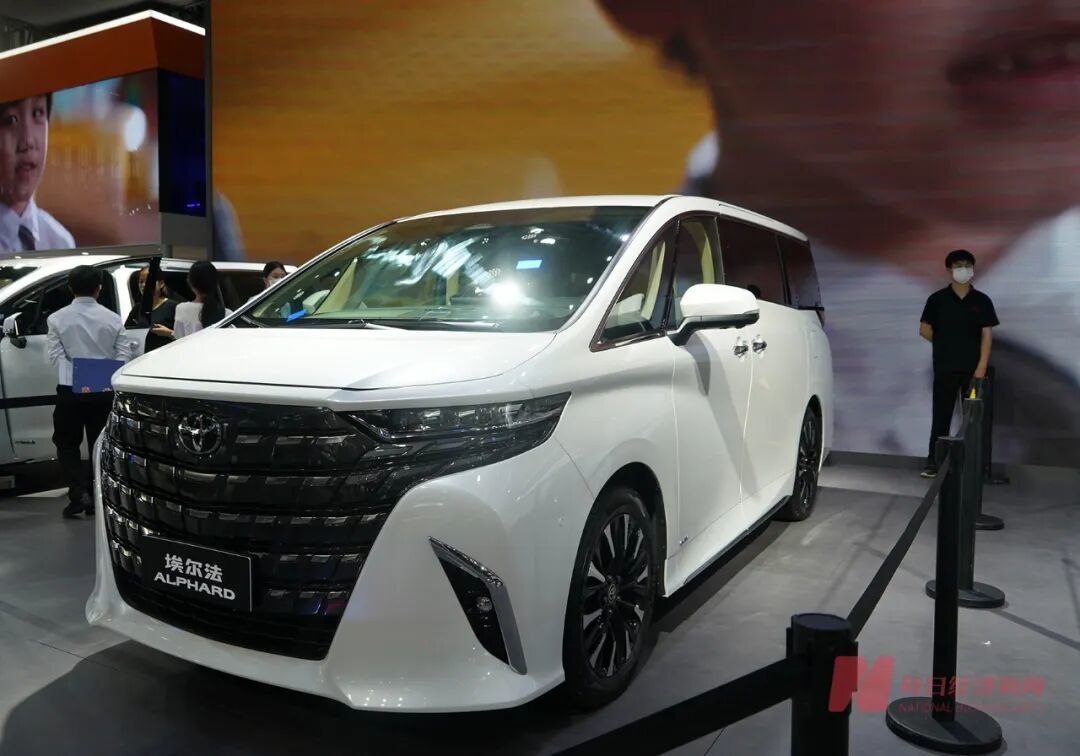
丰田埃尔法被曝“行情崩了”,多地经销商:仍加价10万元,店内无现车
Mei Ri Jing Ji Xin Wen· 2025-08-27 13:19
Core Viewpoint - The market for Toyota Alphard is experiencing a significant shift, with a notable decrease in price premiums and a lack of available inventory, indicating changing consumer preferences and increased competition from domestic brands [1][2][7]. Group 1: Pricing and Inventory Situation - Recent reports indicate that the price premium for the Toyota Alphard has decreased from around 30,000 yuan to approximately 10,000 yuan, reflecting a significant market adjustment [2][8]. - Many dealers across various regions, including Beijing and Shanghai, report a complete lack of inventory for both new and old models of the Alphard, leading to increased price premiums for those with available stock [4][8]. - A dealer in Hangzhou mentioned that the new model was sold with a 160,000 yuan markup, while the old model had a 100,000 yuan markup, indicating that even with reduced premiums, the final price remains high [4][8]. Group 2: Market Dynamics and Competition - The Alphard, once a dominant player in the high-end MPV market, is facing declining sales, with 2022 sales dropping to 21,000 units, a year-on-year decline of over 12%, and 2023 sales projected at 19,000 units [8][10]. - The vehicle's popularity in the Guangdong-Hong Kong-Macau Greater Bay Area is waning, with competitors like Zeekr 009 and Denza D9 capturing significant market share [10]. - The rise of domestic high-end MPVs and changing consumer preferences are challenging the Alphard's status as a luxury symbol, as buyers now have more options within the 1 million yuan price range [10][12]. Group 3: Import Market Trends - The overall import car market in China is experiencing a downturn, with a reported 32% year-on-year decline in imported vehicles from January to July 2025 [12][13]. - The demand for non-luxury imported vehicles is sharply decreasing, while luxury brands like Lexus and Porsche are performing relatively well [13]. - The long-term trend shows a continuous decline in the import car market, with projections indicating that the scale of imports will remain below demand in the near future [13].


3000马力靠铁锂电池撑,仰望U9刷新全球电动车极速
高工锂电· 2025-08-27 10:47
Core Viewpoint - BYD's Yangwang brand has set a new global record for electric vehicles with its U9 model, achieving a top speed of 472.41 km/h, surpassing the previous record of 438.73 km/h held by Aspark Owl SP600, making it the fastest production electric vehicle in the world [3] Group 1: Performance and Technology - The Yangwang U9 features the world's first mass-produced 1200V ultra-high voltage platform, equipped with four independent motors, achieving a peak power of 555 kW per motor and a total vehicle power of 2220 kW (approximately 3018 horsepower) [3] - The U9 utilizes lithium iron phosphate (LFP) batteries instead of the commonly used ternary lithium batteries, which is noteworthy given the high-performance output [4][5] - The combination of high-performance data and LFP battery technology has raised some skepticism in the industry regarding the feasibility of achieving such high power outputs [6][7] - The recent testing has demonstrated that LFP batteries can support high power discharge, achieving 2220 kW (approximately 30C), which is significant for the racing sector [8][9] Group 2: Market Implications - The Yangwang U9 serves as a technological benchmark for the industry, prompting a reevaluation of the performance potential and market applications of LFP batteries, especially in high-end vehicles [10] - Other high-end models from BYD, such as the Yangwang U7 and the Denza D9 DM-i, also utilize BYD's LFP blade batteries, indicating a trend towards LFP in premium segments [11] - The adoption of LFP batteries is influencing joint venture brands to explore high-end applications, as seen with the upcoming Mercedes-Benz GLC plug-in hybrid version [12][13] - Data from GGII indicates that the domestic installation volume of LFP batteries is projected to reach approximately 223.1 GWh in the first half of 2025, marking a 71% year-on-year increase and a market share of 77.4%, up 12.5 percentage points from the previous year [14] - The ongoing technological advancements and high-end applications of LFP batteries may challenge the market share of ternary batteries in the mid to high-end passenger vehicle segment [15]


吉利汽车(0175.HK):核心净利高速增长 海外布局进入攻坚期
Ge Long Hui· 2025-08-26 20:09
Core Viewpoint - Geely Automobile has demonstrated strong performance in the first half of 2025, with significant revenue growth and a notable increase in core net profit, despite challenges in net profit due to foreign exchange losses and other factors [1][2]. Financial Performance - Total revenue for the first half of 2025 reached 150.28 billion RMB, a year-on-year increase of 26.5%, marking a historical high [1]. - Net profit attributable to shareholders was 9.29 billion RMB, down 13.9% year-on-year; however, core net profit, excluding foreign exchange gains and other one-time items, was 6.66 billion RMB, up 102% year-on-year [1]. - In Q2 alone, the company achieved revenue of 77.79 billion RMB, with year-on-year and quarter-on-quarter increases of 28.4% and 7.3%, respectively [1]. - The overall gross margin slightly decreased by 0.3 percentage points to 16.4%, attributed to the increased sales of economical new energy vehicles and intensified industry price competition [1][2]. Cost Management - Selling and administrative expense ratios decreased by 1.0 and 0.7 percentage points to 5.6% and 1.9%, respectively, indicating effective scale effects and channel integration [2]. - R&D investment decreased by 8.6% to 8.35 billion RMB, primarily focused on new energy and intelligent technology, with an R&D expense ratio down by 1.1 percentage points to 6.6% [2]. - Despite a decrease in average selling price by 14,000 RMB to 96,000 RMB, the core net profit per vehicle increased by 37% to 4,724 RMB [2]. Sales Performance - Total sales volume reached 1.409 million vehicles, a year-on-year increase of 47.4%, significantly outpacing the domestic passenger vehicle industry's growth of 13% [2]. - New energy vehicle sales surged to 725,000 units, up 126.5%, accounting for 51.5% of total sales [2]. - The company has raised its sales target for the year to 3 million vehicles, increasing the growth rate forecast from 25% to 38% [2]. International Expansion - The company exported 184,000 vehicles, a decrease of 7.7% year-on-year, primarily due to challenges in the Eastern European market; however, new energy vehicle exports increased by 146% to 40,000 units [3]. - Geely has established five overseas regions to accelerate its international strategy, focusing on organizational structure, resource allocation, after-sales service, and product planning [3]. Strategic Moves - Geely announced plans to privatize Zeekr (ZK.N), making it a wholly-owned subsidiary, which is part of its strategy to streamline operations and enhance synergies among its brands [3][4]. - The company plans to launch 10 new models in 2025, with positive market feedback for recently launched models indicating strong potential for future sales [4]. Investment Outlook - Based on the latest financial data and projections, the company has adjusted its EPS estimates for 2025, 2026, and 2027 to 1.537, 1.852, and 2.320 RMB, respectively [5]. - The target price has been adjusted to 24.3 HKD, corresponding to projected P/E ratios of 14.4, 12, and 9.6 for 2025, 2026, and 2027 [5].

联创电子20250826
2025-08-26 15:02
Summary of the Conference Call for Lianchuang Electronics Company Overview - **Company**: Lianchuang Electronics - **Date**: August 26, 2025 Key Points Industry and Revenue Performance - **Overall Revenue**: Lianchuang Electronics experienced a 50% year-over-year reduction in total revenue, with optical business revenue increasing by 6% to 2.3 billion yuan [2][3][4] - **Optical Business Growth**: The growth in optical business is attributed to the increase in high-definition wide-angle and automotive optical segments, with automotive optical revenue reaching 1.6 billion yuan in the first half of the year, more than doubling year-over-year [2][4] - **Mobile Optical Decline**: Revenue from mobile optical products decreased by 50% [2][4] Automotive Optical Business - **Key Clients**: Major clients in the automotive optical sector include BYD, Zeekr, and NIO, with the average value per vehicle exceeding 2,000 yuan for NIO and Zeekr [2][5][6] - **Revenue Projections**: Expected revenue from automotive optical business is approximately 3.5 billion yuan for 2025, with potential to reach 5 billion yuan in 2026 [10][25] - **Production Capacity**: The Hefei base is projected to reach a production capacity of 50 million units by the end of the year, with an estimated annual output of over 10 million modules [3][18] High-Definition Wide-Angle Business - **Client Changes**: Initially served GoPro, DJI, and Yingshi, but Yingshi has shifted to other suppliers. GoPro remains the largest lens supplier, while DJI focuses on obstacle avoidance lenses [11][12] - **Market Size**: The overall market for high-definition wide-angle products is expected to be around 400 to 500 million yuan this year [11] Robotics Market Insights - **Domestic Market Potential**: The domestic robotics market is in its early R&D stages, with significant growth potential. Early investment and positioning are deemed crucial [21][22] - **International Market Dynamics**: The international robotics market is primarily led by Tesla and Boston Dynamics, with Tesla adopting a full-vision approach [22] Financial Outlook - **2025 Revenue Target**: The company aims for total revenue of approximately 11 billion yuan in 2025, with optical business expected to exceed 5 billion yuan [25] - **Profitability Expectations**: The company anticipates achieving profitability by the end of the year, with a positive outlook for net profit in 2026 [25][34] Market Position and Competition - **Market Share**: Lianchuang Electronics and Sunny Optical together hold about 50% of the global market share in ADAS lens supply, with Lianchuang expected to ship 60 to 70 million automotive lenses this year [33] - **Competitive Landscape**: The company is positioned competitively within the automotive lens market, with ongoing collaborations with traditional manufacturers [33] Strategic Initiatives - **Value Chain Integration**: The company emphasizes its complete integration across the glass, lens, and module supply chain, enhancing its competitive edge in the A-share market [24] - **Investment in R&D**: Significant investments in R&D are ongoing, particularly in the optical field, to support future growth and market positioning [34] Additional Insights - **Touch Display Business**: The touch display segment is being gradually shifted towards automotive applications, with plans to divest non-automotive screen business to reduce financial drag [19] - **North American Market Engagement**: The company maintains close collaboration with NVIDIA and has established a factory in Mexico to better serve North American clients [16][17] This summary encapsulates the key insights and projections from the conference call, highlighting Lianchuang Electronics' current performance, market dynamics, and strategic direction.

新车看点 | 别克全新GL8陆尊,如何面对新一代MPV消费者?
Guan Cha Zhe Wang· 2025-08-26 14:10
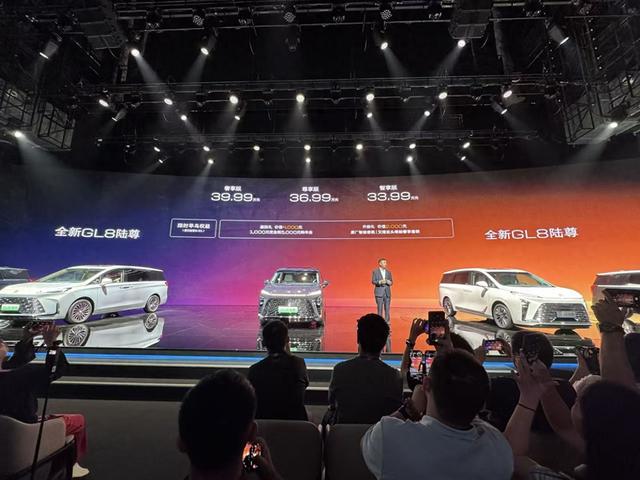
Core Viewpoint - The launch of the new Buick GL8 Land尊 marks a strategic move by the company to maintain its competitive edge in the high-end MPV market amidst increasing competition from both traditional rivals and new energy brands [2][5]. Group 1: Product Launch Details - The new GL8 Land尊 is available in three luxury versions, priced at 339,900, 369,900, and 399,900 yuan [1]. - The GL8 series has been a significant player in the Chinese MPV market for 26 years, with cumulative sales exceeding 2 million units, making it the first in the high-end MPV segment to achieve this milestone [2]. - The new model features an upgraded "真龙" plug-in hybrid system, offering an electric range of over 200 km and supporting the industry's first hybrid 5C fast charging [2][11]. Group 2: Competitive Landscape - The GL8 Land尊 faces competition not only from traditional rivals like Toyota Sienna but also from emerging domestic brands such as 腾势D9, 极氪009, and others in the new energy MPV segment [2]. - The introduction of the GL8 Land尊 is part of Buick's strategy to adapt to the evolving demands of high-end MPV users in the new energy era [5]. Group 3: Design and Features - The exterior design of the GL8 Land尊 emphasizes luxury with features like diamond gloss paint and a spacious interior designed for comfort [7][9]. - The vehicle includes advanced comfort features such as Nappa leather seats with heating and massage functions, a Bose 12-speaker sound system, and various high-tech amenities [9][11]. - The dimensions of the GL8 Land尊 are 5219 mm in length, 1878 mm in width, and 1807 mm in height, with a wheelbase of 3088 mm, providing ample space for passengers [7]. Group 4: Performance and Efficiency - The GL8 Land尊 is equipped with a 1.5T turbocharged engine and features a 0-100 km/h acceleration time of 7.8 seconds [11]. - The vehicle's fuel consumption is rated at 6.83 L per 100 km when depleted, with a comprehensive energy consumption of 0.93 L per 100 km [11]. - The new model supports a comprehensive range of 1450 km and can recharge 100 km in just 10 minutes using the 5C fast charging capability [11].

特斯拉能否打破30万纯电市场销量魔咒?
3 6 Ke· 2025-08-26 10:59
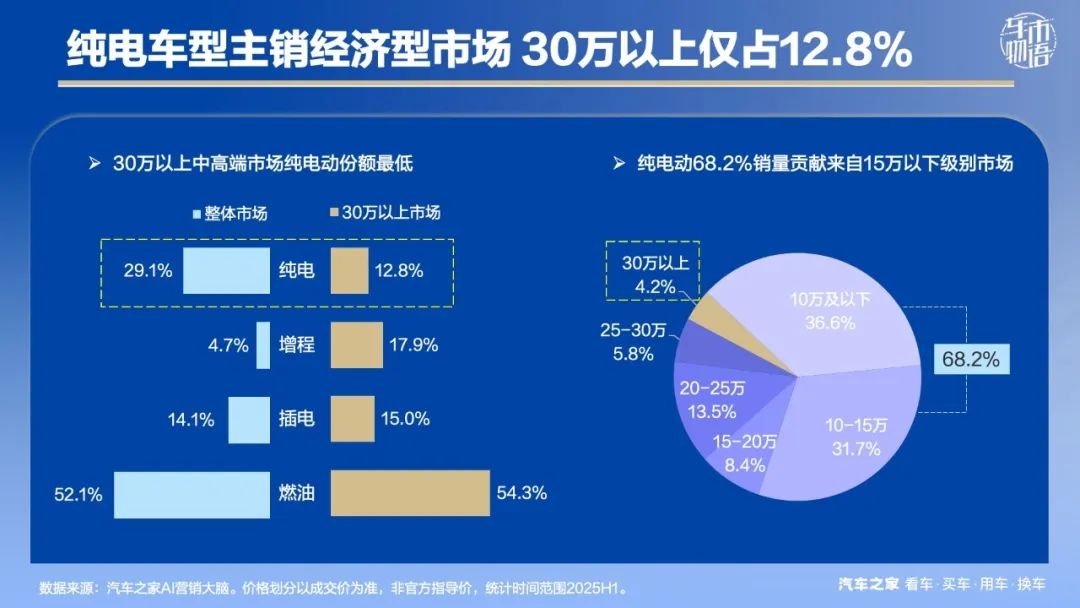
Core Insights - The introduction of Tesla's Model Y L has sparked discussions about its potential impact on the pricing and market dynamics of electric vehicles, particularly in the context of the Ideal i8 and other competitors [1][26] - The electric vehicle market faces challenges in breaking the 300,000 yuan price barrier, with a significant majority of sales coming from models priced below 150,000 yuan [1][3] - Consumer preferences are shifting towards six or seven-seater vehicles, with a notable inclination towards SUVs, indicating a change in market demand [8][12] Market Dynamics - The electric vehicle market is heavily influenced by consumer demographics, with 97% of potential buyers in the six-seater segment coming from replacement needs, primarily traditional fuel vehicle owners [3][21] - The high depreciation rates of electric vehicles contribute to consumer hesitance in investing more in pure electric models [3][12] - The sales performance of pure electric models remains weak, with the best-selling model, Zeekr 009, not exceeding 9,000 units in the first half of 2025 [6][12] Consumer Preferences - A significant 76.6% of consumers prefer SUVs when considering six-seater vehicles, with 41.4% specifically looking for six-seater versions for enhanced comfort [8][12] - Key factors influencing vehicle purchase decisions include space, comfort, safety, and energy efficiency, with over 60% of users prioritizing these aspects [12][14] - The reliability of Tesla's battery management system and electric drive system is a major draw for potential buyers, with over 80% of users valuing these features [14][26] Pricing and Value Perception - The official price of Model Y L is set at 339,000 yuan, which many consumers perceive as high, especially when considering additional costs for features like Full Self-Driving (FSD) [16][18] - Over 50% of users are reluctant to pay for FSD due to perceived high costs, and 32.7% express distrust in the utility of smart driving features [18][26] - The potential for Model Y L to penetrate the market hinges on its ability to attract high-income consumers, with 48.4% of potential buyers having an annual household income exceeding 300,000 yuan [23][26]

英伟达机器人新“大脑”来了!Jetson Thor AI算力提高6.5倍,解锁物理AI实时推理
美股IPO· 2025-08-26 00:31
Core Viewpoint - Nvidia's Jetson Thor platform significantly enhances AI computing power and efficiency, enabling real-time processing for robotics and physical AI applications [1][3][5]. Group 1: Product Features and Specifications - Jetson Thor offers up to 2070 FP4 TFLOPS of AI computing power with a power consumption of 130 watts, and features 128GB of memory [1][3]. - The platform's AI computing performance is 7.5 times greater than its predecessor, Jetson Orin, while CPU performance has increased by 3.1 times [5][7]. - The developer kit, Jetson AGX Thor, is priced at $3499, with a bulk purchase price of $2999 for orders over 1000 units [1][3]. Group 2: Applications and Industry Adoption - Jetson Thor is designed to support various generative AI models, enabling real-time processing of high-speed sensor data and visual reasoning in dynamic environments [7][12]. - Major industry players such as Agility Robotics, Amazon Robotics, and Boston Dynamics have adopted Jetson Thor for their next-generation robotics [3][12]. - The platform is expected to enhance the agility, decision-making speed, and autonomy of robots, making it crucial for navigation and interaction in real-world scenarios [13]. Group 3: Ecosystem and Support - Jetson Thor is supported by a complete Nvidia Jetson software platform, compatible with major AI frameworks and generative AI models [11]. - The platform has attracted over 2 million developers and more than 150 hardware and software partners since its launch in 2014 [11]. - Research institutions like Stanford University and Carnegie Mellon University are leveraging Jetson Thor to advance capabilities in perception, planning, and navigation models [11]. Group 4: Autonomous Driving Applications - Nvidia has also launched the DRIVE AGX Thor developer kit for autonomous vehicles, which is now available for pre-order and expected to ship in September [4][14]. - Leading automotive companies, including BYD and Volvo, are developing solutions based on the DRIVE AGX Thor platform [14][15].


突发利空,美医药股大跌
Zheng Quan Shi Bao· 2025-08-26 00:13
Group 1 - The U.S. stock market experienced a decline on August 25, with the Dow Jones falling by 0.77%, the S&P 500 by 0.43%, and the Nasdaq by 0.22% [1] - Chinese concept stocks showed mixed performance, with the Nasdaq Golden Dragon China Index up by 0.11%, while companies like Douyu and Sohu rose over 3% [1] - President Trump announced plans to significantly reduce drug prices, aiming to cut them to 1/1400 to 1/1500 of current levels, which led to a broad decline in pharmaceutical stocks [1][3] Group 2 - Intel's stock fell by 1.01% after the company warned that the U.S. government's 10% stake could pose risks to its international sales and future subsidy eligibility [2] - The U.S. government is set to become Intel's largest shareholder by purchasing 9.9% of its stock at a price lower than the market value, which may dilute existing shareholders' equity [2] - In the last fiscal year, 76% of Intel's revenue came from international markets, highlighting the potential impact of government ownership on its global business [2] Group 3 - Major pharmaceutical companies like DexCom, Moderna, Pfizer, and Merck saw significant stock declines following Trump's announcement on drug price reductions [3] - DexCom's stock dropped over 7.6%, while Moderna fell by 6.53%, Pfizer by 2.86%, and Merck by 2.36% in response to the news [3]
二手车贬值调查:小米昔日加价买,如今一年跌八万
Di Yi Cai Jing· 2025-08-25 12:04
Core Insights - The second-hand car market is facing increasing customer acquisition costs and declining profitability, leading to widespread losses among dealers [1][10] - The myth of high resale value for second-hand cars has been shattered due to changes in the new car market, particularly with aggressive pricing from new energy vehicles (NEVs) [1][2] - The market is experiencing a significant reshuffle, with many dealers exiting and only a few managing to remain profitable [10][12] Market Dynamics - The resale value of second-hand cars is closely linked to new car prices and depreciation rates, with many popular models now seeing lower resale values [1][2] - A report indicates that most pure electric vehicles have a one-year resale value below 80%, with many models around 70% [2] - The depreciation of certain models, such as the BYD Han, can exceed 50% within two years, highlighting the volatility in the market [2] Brand-Specific Insights - Different brands exhibit varying resale values, with NIO's rental electric vehicles showing particularly low resale values due to weak market demand [3][4] - Tesla stands out in the second-hand market with relatively stable prices and high demand, leading to quicker vehicle turnover for dealers [4][5] - The Xiaomi SU7 has experienced significant price drops due to market oversupply, demonstrating the cyclical nature of the second-hand market [5][10] Transaction Challenges - The second-hand car market is characterized by a lack of standardization, leading to a "one car, one condition, one price" approach, complicating transactions [6][8] - Many dealers do not provide after-sales support, relying on official warranties, which further complicates consumer trust [8][9] - The introduction of third-party inspection services, like "Check Doctor," aims to improve transparency regarding vehicle conditions, particularly for battery health [7][9] Industry Restructuring - The second-hand car industry has been undergoing a significant restructuring since 2020, exacerbated by economic fluctuations and changes in the automotive market [10][11] - A report indicates that nearly 90% of second-hand car dealers have a gross profit margin below 6%, with many facing operational losses [10][12] - The market is shifting towards specialization, with successful dealers focusing on one or two brands to better understand pricing dynamics and reduce risks [12]
二手车贬值调查:小米SU7昔日还要加价买,如今一年跌八万
Di Yi Cai Jing· 2025-08-25 11:59
Core Viewpoint - The second-hand car market is experiencing significant challenges, including declining car values, increased competition, and a shift in consumer behavior towards new cars, particularly in the context of the rising popularity of electric vehicles [1][10][11]. Group 1: Market Dynamics - The second-hand car market is characterized by a mix of players and a lack of standardized trading practices, leading to a chaotic environment [1][6]. - The depreciation of second-hand cars, especially electric vehicles, has become pronounced, with many models losing substantial value shortly after purchase [2][4]. - The market for second-hand electric vehicles is particularly volatile, with brands like NIO experiencing significant drops in resale value due to low demand and complex ownership structures [3][10]. Group 2: Consumer Behavior - Consumers are increasingly cautious, with many opting for new cars due to aggressive pricing and marketing strategies, which diverts potential buyers from the second-hand market [11][12]. - The rise of online platforms has empowered consumers with better access to information, enhancing their bargaining power and reducing the margins for dealers [11][12]. Group 3: Dealer Challenges - Many second-hand car dealers are facing financial difficulties, with a significant portion operating at a loss, leading to a wave of market exits [10][12]. - The cost of customer acquisition has risen sharply, as dealers now rely on digital marketing and social media to attract buyers, which adds to their operational costs [11][12]. - The market is undergoing a consolidation phase, with successful dealers focusing on specialization and brand-specific strategies to mitigate risks [12]. Group 4: Valuation Trends - The depreciation rates for electric vehicles are alarming, with many models seeing values drop to around 50% after three years [2][3]. - Specific models, such as the BYD Han, have been reported to lose over 50% of their value within two years, highlighting the volatility in the second-hand electric vehicle market [2][4]. - The overall profitability of second-hand car dealers is under pressure, with many reporting margins below 6%, and a significant number operating with margins of 4% or less [10][11]. Group 5: Industry Responses - Major companies, such as CATL, are entering the second-hand electric vehicle market, offering buyback guarantees and comprehensive inspection services to enhance consumer confidence [9]. - The introduction of third-party inspection services is becoming more common, helping to address concerns about vehicle condition and battery health, which are critical for electric vehicles [7][9].