
康波周期

Search documents
宏观周周谈:调整到位了吗?
2025-10-19 15:58
Summary of Conference Call Records Industry Overview - The macroeconomic environment is influenced by the Federal Reserve's interest rate cuts and the depreciation of the US dollar, leading to an expansion of global liquidity and a shift of funds from the US to other markets. The dollar index has decreased from 115 to below 100, indicating a reversal in capital flows and a narrative of "the East rising and the West declining" [1][2] Key Points and Arguments - **Market Drivers for 2025**: The primary driver for the market in 2025 is the weak dollar, which has led to an increase in non-US equity assets. The expansion of global liquidity, driven by the Fed's rate cuts and dollar depreciation since September 2024, has facilitated this shift [2][3] - **Hong Kong Stock Market Performance**: Over the past year, the Hong Kong stock market has experienced three significant pulse movements closely tied to the Fed's monetary policy and global liquidity changes. The first pulse occurred in September 2024, driven by favorable policy expectations, while the second and third pulses occurred in early 2025 and September 2025, respectively, following dollar fluctuations and Fed rate cuts [3][4] - **Impact of Fed's Monetary Policy**: The Fed's recent monetary policy has significantly impacted the market. In September 2025, the Fed revised down its non-farm employment data, providing a rationale for a 75 basis point rate cut. However, the guidance for future cuts was adjusted to 25 basis points per year, compressing expectations for future liquidity expansion [5][6] - **Investor Behavior and Market Stability**: Changes in investor behavior, particularly among state-owned and professional investors, have been observed. A significant decrease in the central bank's debt holdings indicates profit-taking and a potential shift in market dynamics, leading to an uneven market state that could increase future volatility [6][8] - **Investor Sentiment and Market Trends**: In 2025, investor sentiment has led to significant market movements. Many investors, having realized substantial gains, are opting to take profits or adjust their portfolios. This behavior has contributed to a rapid market decline, particularly in the dual innovation sector, as investors react to perceived risks and expectations of state intervention [8][10] - **Future Market Signals**: The current Kondratiev cycle's downturn is expected to persist until at least November 2026, with the overall bull market trend continuing. Observations of the relationship between the dollar index and the Hang Seng Technology Index are crucial for future bullish signals. A potential rise in the Hang Seng Technology Index is anticipated by December 2025 or January 2026 [9][10] Other Important Insights - **Social Financing Trends**: The current social financing growth has decreased by 230 billion, with a growth rate of 8.7%, reflecting a slight decline compared to previous periods. The high net financing of government bonds continues to impact overall income growth [12][13] - **Gold's Role in Market Adjustments**: Gold has acted as a safe haven during equity asset adjustments, with its price reflecting market risk sentiment. The recent stabilization in gold prices indicates an improvement in market risk sentiment, despite ongoing downward pressures [11] - **US-China Trade Relations**: Recent developments in US-China trade relations indicate a temporary easing of tensions, with both sides engaging in talks to manage short-term risks. However, significant barriers remain, and achieving breakthrough results is challenging due to a lack of mutual trust [20][22] - **Market Signals for Reassessment**: To reassess bullish positions, it is essential to monitor the Fed's signals for further easing and the dollar index's movements. A significant drop in the dollar index could lead to increased liquidity flowing into non-US markets, positively impacting Hong Kong, H-shares, and A-shares [10][19] This summary encapsulates the key insights and developments from the conference call, providing a comprehensive overview of the current market dynamics and future outlook.
从卖方首席到私募掌门!丁鲁明“以身入局”,共同把握三十年“国运牛”!
私募排排网· 2025-10-16 00:00
Core Viewpoint - The article discusses the establishment of Shanghai Ruicheng Private Equity by Ding Luming, a prominent analyst with 16 years of experience in sell-side research, emphasizing a unique investment philosophy based on the "Kondratiev Wave" theory and a commitment to achieving sustainable excess returns for investors [2][4][5]. Group 1: Company Overview - Shanghai Ruicheng Private Equity aims to create a "Chinese version of Bridgewater," focusing on a differentiated path that prioritizes unique asset allocation strategies based on the Kondratiev cycle rather than blindly pursuing scale [5][10]. - The firm has successfully registered its products and is positioned to leverage Ding Luming's extensive experience in sell-side research to directly benefit investors [6][19]. Group 2: Investment Philosophy - The investment philosophy is rooted in the belief that the period before 2025 will be characterized by a long-term bearish outlook, while the period after 2025 is expected to shift towards a bullish perspective [6][25]. - Ding Luming's strategy combines traditional asset allocation with modern quantitative investment techniques, aiming to create products that investors can hold for the long term [8][9]. Group 3: Performance Metrics - Ding Luming's personal trading account reportedly achieved an excess return of ***% from January to July this year, with the excess return exceeding ***% in August [5][19]. - The strategy employed by Ruicheng has demonstrated significant performance, with a simulated annualized excess return of ***% over the CSI 300 index from 2017 to 2024 [5][19]. Group 4: Market Outlook - The firm anticipates a significant transformation in the A-share market over the next 30 years, driven by China's rise as a global leader in technology and economic sectors [25]. - The expected ranking of asset classes for the next 6-12 months is equities > bonds > commodities, with technology sectors identified as having the highest potential returns [24][25].

创新驱动,如何成为引领性发展战略
Sou Hu Cai Jing· 2025-10-15 08:51
Core Insights - Technological innovation is identified as the core driving force for economic development during the "14th Five-Year Plan" period, leading to significant achievements in key technology breakthroughs, industrial upgrades, and green transformation [1] - The transition from factor-driven to innovation-driven economic growth is emphasized, with the upcoming economic Kondratiev wave cycle indicating a shift towards artificial intelligence and new energy [1][4] - The increase in R&D investment from 2.4 trillion yuan at the end of the "13th Five-Year Plan" to 3.6 trillion yuan in 2024, a nearly 50% growth, highlights the strengthening of China's innovation capabilities [1][2] R&D and Technological Advancements - The R&D expenditure intensity is projected to reach 2.69% of GDP in 2024, nearing the OECD average, with basic research funding accounting for 6.88% [1] - Significant changes in research paradigms and resource allocation are noted, including the breaking of traditional disciplinary boundaries and the establishment of demand-driven basic research mechanisms [2] - The high-tech manufacturing sector has seen an average annual growth of 8.7% from 2020 to 2024, with notable advancements in artificial intelligence, cloud computing, and bio-economy [2] Digital Economy and Green Technology - The value added by core digital economy industries is expected to rise from 7.8% of GDP in 2020 to 10.4% in 2024, surpassing the "14th Five-Year Plan" target of 10% [3] - The share of wind and solar power in total electricity consumption is projected to increase from 9.7% in 2020 to 18.6% in 2024, indicating a strong lead in green technology [3] - The integration of digital technology with the real economy has led to the emergence of over 400 national-level specialized "little giant" enterprises in the AI sector [3] Future Outlook and Strategic Directions - The upcoming "15th Five-Year Plan" period will see a multi-technology approach driving the sixth Kondratiev wave, emphasizing the importance of collaborative effects among technologies [4] - Key areas for China include achieving breakthroughs in quantum technology, brain-computer interface commercialization, and low-carbon transformation in high-energy industries [4] - A strategic shift is needed from following to leading in technology, focusing on system reconstruction and global competitiveness in new energy and digital economy sectors [4]
继续看多黄金和AI产业链
2025-10-13 01:00
Summary of Key Points from Conference Call Industry or Company Involved - Focus on the gold market and AI industry chain [1][10] - A-share market outlook and sentiment analysis [2][12] - Performance of A-share and Hong Kong stock markets [7][15] Core Insights and Arguments - **A-share Market Outlook**: The expected rise of the Wind All A Index to 7,200 points and the Shanghai Composite Index to approximately 4,500 points by Q4 2025 indicates a positive outlook for the A-share market [1][5] - **Economic Conditions**: The GDP of the US and Japan has entered a downward cycle, while the Eurozone GDP peaked in Q3. Predictions suggest a weakening of the yen against the dollar and a decrease in the euro's strength against the dollar [1][6] - **Investment Strategy**: A bullish stance on the CSI All Share Index and a bearish view on the Hong Kong Hang Seng Index, with a focus on sectors such as machinery, electric equipment, new energy, defense, retail, and telecommunications for relative gains in October [1][7] - **Economic Cycle Analysis**: Currently in a depression phase of the Kondratiev wave cycle, with AI expected to lead the next recovery phase. The negative impact of population decline is anticipated from 2018 to 2030 [1][8] - **Gold Market Dynamics**: Gold prices are expected to rise due to a negative correlation with real interest rates, with increased demand from ETFs and central banks. A recommendation to accumulate gold on dips is provided [1][10] - **Silver Market Insights**: Silver's performance is driven more by industrial demand than by the gold-silver ratio. Caution is advised for short-term speculative investments in silver [11] Other Important but Possibly Overlooked Content - **A-share Sentiment Index**: Indicates that the number of stocks reaching new highs is increasing while those reaching new lows is decreasing, suggesting a potential entry point for investors [12][13] - **Options Market Volatility**: Implied volatility for put options is higher than for call options, indicating a slightly pessimistic outlook for short-term stock movements [14] - **Hong Kong Market Sentiment**: The sentiment index shows a bearish outlook, with declining trading volume and turnover rates, despite a rise in price-to-earnings ratios [15] - **Performance of Risk Combinations**: Low-risk and medium-high risk asset allocation strategies have shown positive returns, with the low-risk combination achieving a 2.57% absolute return year-to-date [17] - **Industry and Style Rotation**: The computer industry shows the highest growth rate, closely related to AI, while sectors like defense, retail, and non-bank financials are gaining institutional attention [18][19]
第六轮康波周期来临,白酒行业或面临根本性重塑
Sou Hu Cai Jing· 2025-10-10 11:17
Core Insights - The article emphasizes the importance of understanding and adapting to economic cycles, particularly the Kondratiev wave, as a strategic advantage for the liquor industry during transitional periods [2][10][24] Summary by Sections Economic Cycles and the Liquor Industry - The liquor industry is currently facing challenges such as inventory pressure, price fluctuations, and weak consumption, which are often misinterpreted as inherent industry issues [2] - The concept of the Kondratiev cycle suggests that economic fluctuations are not random but follow a long-term pattern of approximately 50 to 60 years, indicating that current difficulties may be the tail end of the fifth technological revolution [3][4][9] Technological Revolutions and Their Impact - Each Kondratiev cycle is driven by significant technological advancements that reshape production and lifestyle, with the current cycle being characterized by the rise of artificial intelligence, renewable energy, and biotechnology [5][12] - The transition from the fifth to the sixth Kondratiev cycle is anticipated to bring about a new wave of wealth creation, fundamentally altering the rules of the liquor industry [10][11] Opportunities for the Liquor Industry - The emergence of new wealth creators, such as leaders in AI and renewable energy, is expected to drive demand for high-end liquor, as these individuals seek products that symbolize social status and cultural significance [17][20] - New business scenarios arising from technological advancements will create fresh opportunities for high-end liquor consumption, reinforcing its role in social rituals and celebrations [18][19] Strategic Recommendations for Liquor Companies - The current adjustment period should be viewed as a strategic preparation phase for the upcoming prosperity associated with the new Kondratiev cycle, focusing on brand value and channel health [22][23] - Companies should invest in deepening brand culture and modernizing distribution channels to effectively reach new consumer segments when demand surges [22][23] Conclusion - The article concludes that the liquor industry must recognize the cyclical nature of economic trends and prepare for the impending opportunities that the sixth Kondratiev cycle will bring, ensuring that they are well-positioned to benefit from the next wave of growth [24]
黄金的逆袭剧本
Hu Xiu· 2025-10-09 07:38
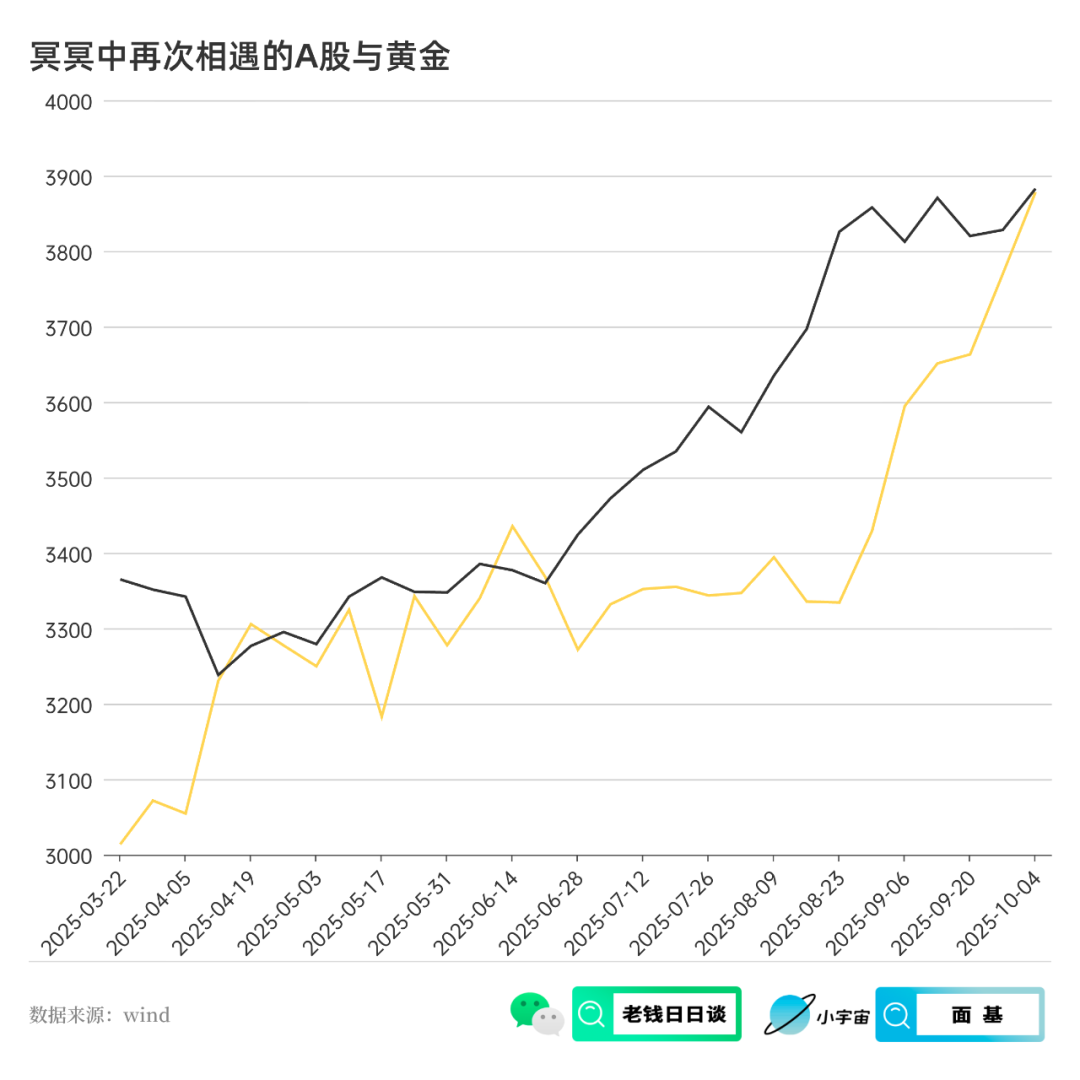
Core Viewpoint - The article discusses the significant rise in gold prices, which have reached historical highs, and the potential for gold to break the 4000 mark, paralleling the A-share market's movements. It emphasizes the shift in perception of gold from a non-yielding asset to a valuable hard currency in the global capital market [3][4]. Group 1: Historical Context and Events - In early 2022, gold prices were around 1820 USD, peaking above 2000 USD in March before dropping close to 1600 USD by October, marking a tumultuous year for gold [6][7]. - The outbreak of the Russia-Ukraine conflict in February 2022 led to a significant questioning of the dollar's credibility, impacting global central banks and investors [8]. - Following the 2014 Crimea incident, the Russian central bank increased its gold reserves from less than 10% to 37% of its foreign exchange reserves, while China's gold reserve percentage was only 3% at that time [10][11]. Group 2: Theoretical Frameworks and Predictions - Zoltan Pozsar's report, "Brentwood III Era," proposed a new monetary system where gold serves as the ultimate payment anchor, challenging the dollar's dominance [14][15]. - The report suggested that as dollar credibility wanes, gold would become a key medium of exchange, linking directly to physical commodities rather than being tied to a single currency [15][16]. - The article posits that the 2022 events marked a transition into a non-normal phase of the credit currency system, with the freezing of Russian reserves raising doubts about the dollar's reliability [23][24]. Group 3: Recent Developments and Future Outlook - In 2023, despite rising U.S. interest rates, gold prices rebounded to around 2000 USD, indicating a decoupling from dollar interest rates, which now reflect a deeper trust crisis in the dollar [32]. - Central banks, particularly China's, have been increasing their gold holdings since late 2022, while reducing their U.S. debt holdings by nearly 10 percentage points over three years [35][38]. - The article suggests that the ongoing AI narrative and economic conditions could influence gold's role in investment portfolios, especially as the macroeconomic cycle evolves [40][41]. Group 4: Long-term Trends and Investment Implications - Since 2024, gold prices have entered a bullish trend, breaking past ten-year resistance levels and moving towards 4000 USD, driven by economic indicators and shifts in monetary policy [41][43]. - The article highlights the cyclical nature of gold's performance, noting that it tends to thrive during recessionary periods, while its value may diminish during recovery phases [47]. - The uncertainty surrounding AI advancements and their potential impact on the macroeconomic landscape reinforces gold's position as a protective asset in investment strategies [53][54].
贵金属专题20251008
2025-10-09 02:00
Summary of Key Points from the Conference Call Industry Overview - The conference call focuses on the precious metals and non-ferrous metals industry, particularly copper and gold, highlighting their market dynamics and investment opportunities [2][3][4][10]. Core Insights and Arguments Copper Market Dynamics - Copper prices are driven by demand from new energy and AI sectors, moving away from traditional reliance on China's real estate and infrastructure [2]. - Supply constraints are exacerbated by long construction cycles for mines and unexpected disruptions, leading to a tight supply situation [2][4]. - The expected price trend for copper is a sustained tight balance, with strategic reserves and resource nationalism potentially intensifying supply pressures [6]. Demand Drivers - The global manufacturing rotation and technological energy revolution significantly boost demand for non-ferrous metals, with copper and aluminum benefiting from AI, electric vehicles, and grid construction [2][7][8]. - The consumption structure of non-ferrous metals is changing due to the rise of multiple countries and new technological revolutions [3][7]. Gold Market Insights - Gold prices are influenced by various factors, including Federal Reserve policies, government actions, and the negative interest rate environment [2][10]. - Central banks continue to increase gold holdings, providing solid support for gold prices, which could reach $4,000 per ounce [2][20]. - Historical data shows that gold's performance is not solely tied to the depreciation of the dollar, as it has risen even during dollar strength periods [13]. Investment Recommendations - Recommended investment targets include gold and silver companies, with specific mentions of Lingbao, Tongguan, and Shengda Resources for their attractive valuations [2][27][28]. - The expected average gold price for 2025 is projected to remain high, with related stocks showing low valuations compared to historical averages [26][27]. Additional Important Insights - The current economic environment is characterized by a "Kondratiev wave" cycle, with the fifth wave beginning in 1992, leading to a period of recession marked by geopolitical risks and asset bubbles [15][18]. - The potential for asset bubbles is heightened by high debt levels and loose monetary policies, complicating traditional economic frameworks [16][17]. - The Indian market's adjustment of gold import duties has led to increased imports, impacting global gold prices [24][25]. Conclusion - The non-ferrous metals market is expected to maintain a strong growth trajectory, driven by technological advancements and changing consumption patterns, while the gold market remains a critical asset class amid economic uncertainties and geopolitical tensions [2][10][19].
金融属性继续推动金属价格
GOLDEN SUN SECURITIES· 2025-10-08 06:50
Investment Rating - The report maintains a "Buy" rating for key stocks in the steel industry, including Xining Special Steel, Nanjing Steel, Hualing Steel, and Baosteel [5][8]. Core Viewpoints - The financial attributes of metals continue to drive prices, with the CITIC Steel Index rising by 3.18% [1][86]. - The manufacturing sector shows signs of improvement, with the PMI for September at 49.8%, indicating a slight recovery in manufacturing activity [4][12]. - The report emphasizes the importance of supply-side policies and the potential for a recovery in the steel industry, particularly in the context of energy investments and infrastructure upgrades [2][4]. Supply Analysis - Daily molten iron production has decreased by 0.6 million tons to 241.8 million tons, while the production of rebar and hot-rolled coils has slightly increased [11][16]. - The capacity utilization rate of 247 steel mills is at 90.7%, down 0.2 percentage points from the previous week but up 6.2 percentage points year-on-year [16][23]. Inventory Analysis - Total steel inventory has decreased by 2.5% week-on-week, with social inventory declining more than factory inventory [23][25]. - The social inventory of five major steel products stands at 10.589 million tons, down 2.8% week-on-week and up 16.1% year-on-year [25][27]. Demand Analysis - Apparent consumption of five major steel products improved by 3.5% week-on-week, with rebar demand showing significant recovery [37][47]. - The average weekly transaction volume for construction steel was 103,000 tons, down 1.4% from the previous week [38][47]. Raw Material Analysis - Iron ore prices remained stable, with the Platts 62% iron ore price index at $103.9 per ton, unchanged from the previous week [54][66]. - The report notes an increase in Australian iron ore shipments by 8.1% week-on-week, while Brazilian shipments decreased by 13.7% [54][66]. Price and Profit Analysis - The Myspic comprehensive steel price index decreased by 0.9% week-on-week, indicating a slight decline in steel prices [66][67]. - The current cost of long-process rebar is 3,422 yuan per ton, with a loss of 188 yuan per ton, while hot-rolled coil costs 3,648 yuan per ton, with a loss of 299 yuan per ton [67][68].


超级会员9月学习实录:银发经济新机遇与未来三年投资方向
吴晓波频道· 2025-09-30 00:29
Core Insights - The article emphasizes the importance of identifying wealth opportunities for ordinary individuals in the current economic climate, focusing on both entrepreneurial ventures and investment strategies [2][32]. Group 1: Online Workshops - The online workshops are designed to explore two main paths for personal wealth growth: earning through work and earning through investments [5][6]. - The first workshop, led by investor Wang Cen, discusses low-cost business opportunities suitable for ordinary people, particularly in a slowing economy [6][12]. - Key insights include the CHEES model for market scanning, which focuses on five consumer needs: affordability, health, emotional connection, entertainment, and lifestyle [7][11]. - Three high-potential business sectors are highlighted: - The "无人经济" (无人自助娱乐,无人情趣用品, and 无人自助健身房) which leverages technology for cost efficiency and convenience [9]. - The second-hand market, particularly in restaurant equipment and luxury goods, which addresses information asymmetry in high-value asset transactions [9]. - The light model for small shops, emphasizing "single product hits" and operational efficiency with investment thresholds between 150,000 to 500,000 yuan [10]. Group 2: Investment Strategies - The second workshop, led by economist Zhu Zhenxin, focuses on core investment logic and market valuation principles for the A-share market [12][17]. - Five core principles for understanding market valuation are presented: - Profitability is prioritized over asset value, with a focus on cash flow generation [13]. - Long-term stability is favored over short-term performance [14]. - Growth potential is more valuable than current performance [15]. - Macro factors should be considered over micro factors in investment decisions [16]. - Focus on leading companies with competitive advantages in a differentiated market [17]. Group 3: Offline Practical Course - An offline course held on September 20 in Hangzhou aimed to bridge theory and practice, featuring real-world case studies from successful entrepreneurs [19][21]. - Key highlights include: - Wang Cen's analysis of three high-potential sectors using the CHEES model, including the "银发经济" (silver economy) and its opportunities in senior care and health products [22]. - The "宠物经济" (pet economy) focusing on high-margin services like pet funerals, showcasing a successful case with annual revenue of 230 million yuan [22]. - The community dining model exemplified by "元气考拉," which operates as a second kitchen with a focus on efficiency and low investment [25]. Group 4: Membership Value - The membership program offers a comprehensive growth support system, combining online learning, offline engagement, and community networking [27][32]. - Members have access to over 180 courses, including ongoing updates on business insights and investment trends [28][31]. - The program aims to provide a systematic understanding of wealth generation and practical methodologies for implementation [33].

汇丰晋信基金郑小兵:筑牢“安全防线”底部布局静待宏观共振
Shang Hai Zheng Quan Bao· 2025-09-28 15:12
Core Viewpoint - The investment strategy emphasizes "preventing losses before seeking profits," focusing on maintaining a "safety margin" in investments, with an expectation of a macroeconomic turning point that could lead to comprehensive market gains [1][2]. Group 1: Investment Philosophy - The investment approach prioritizes "safety" by analyzing four dimensions: macroeconomic conditions, industry selection, individual stock choices, and entry/exit points, aiming for long-term resilience with controlled drawdowns [2]. - Macroeconomic analysis is deemed foundational for investment decisions, with current conditions indicating a stabilization in the domestic economy while overseas risks are increasing, leading to a preference for "left-side" positioning and risk control rather than chasing short-term trends [2]. - In industry selection, the focus is on sectors with low valuations, strong ties to the domestic economy, and long-term potential, explicitly avoiding sectors with "dream valuations" to mitigate risks from short-term speculation [2]. Group 2: Stock Selection and Trading Strategy - The stock selection principle is to favor companies with a safety margin on the downside and growth potential on the upside, prioritizing those with low valuations and stable performance, while avoiding stocks that are currently popular but lack long-term growth prospects [2]. - The trading strategy involves monitoring "market sentiment" to determine optimal entry and exit points, aiming to avoid buying at peaks and selling at lows, which helps reduce short-term volatility and enhances long-term investment outcomes [3]. Group 3: Future Outlook - The outlook anticipates a macroeconomic transition characterized by "domestic gradual recovery and overseas decline," with a potential turning point for macroeconomic synchronization expected around 2026 [4]. - The current core holdings are concentrated in the aviation sector, which is linked to expectations of RMB appreciation and strong domestic economic correlation, with favorable conditions such as declining oil prices and historical low valuations providing a sufficient safety margin [4].