
市场风险偏好

Search documents
黄金走势推演与后市机会分析(2025.11.9)
Sou Hu Cai Jing· 2025-11-09 08:35
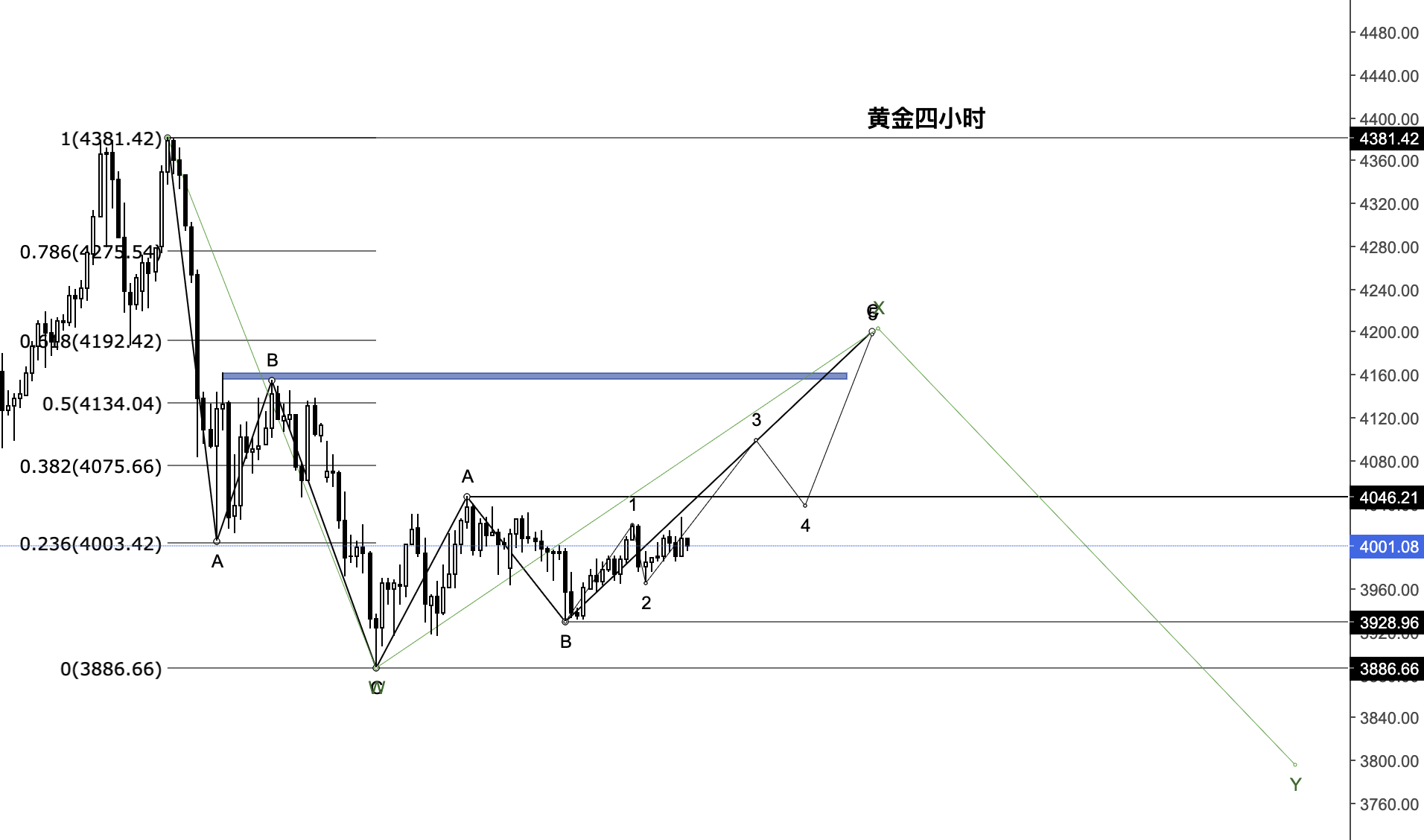
Group 1: Market Overview - The gold market is currently experiencing a fluctuating pattern with alternating bullish and bearish candles, indicating a "downward test followed by recovery" trend [1] - The U.S. government shutdown continues to create record delays in key economic data releases, with consumer confidence dropping to a three-year low [2][4] - The Federal Reserve shows significant internal divisions regarding monetary policy, with market attention on the potential for interest rate cuts in December [2][4] Group 2: Technical Analysis - Gold is trading in a range around $4,000, influenced by safe-haven demand, central bank purchases, and fluctuations in the U.S. dollar [3] - The price has not broken below the key support level of $3,886 or above the resistance level of $4,046, maintaining a range-bound movement [5] - Key levels to watch include the resistance at $4,046 and support at $3,928 and $3,886, which will significantly impact future price direction [7][9]

日度策略参考-20251107
Guo Mao Qi Huo· 2025-11-07 06:35
Report Industry Investment Rating No relevant content provided. Core Viewpoints of the Report - The current macro - level is in a relatively vacuum period, A - shares lack a clear upward main line, market trading volume remains low, and the stock index continues to fluctuate, accumulating momentum for the next round of upward movement. Meanwhile, with policy support and abundant macro - liquidity, there is still strong support below the stock index [1]. Summary by Related Catalogs Macro Finance - **Treasury Bonds**: Asset shortage and weak economy are beneficial to bond futures, but the central bank has recently warned of interest - rate risks, suppressing the upward space, showing an oscillating trend [1]. - **Copper**: The tight pattern of US dollar liquidity has eased, market risk appetite has recovered, and copper prices have stopped falling [1]. - **Aluminum**: Recently, the industrial - side driving force is limited, and the macro - level benefits have been digested, so aluminum prices are oscillating [1]. - **Alumina**: With still a small profit in production, domestic alumina production capacity is continuously released, and both production and inventory are increasing, putting pressure on the spot price. Recently, attention should be paid to the cost support [1]. - **Zinc**: The US government shutdown has reached the longest historical record, and market risk - aversion sentiment has increased. The LME zinc inventory has been continuously decreasing, and the short - squeeze movement has driven zinc prices higher. However, considering the domestic oversupply, caution is needed when chasing high prices [1]. Non - ferrous Metals - **Nickel**: The better - than - expected US ADP data has alleviated concerns about the US economic recession, but the expectation of the Fed's interest - rate cut has been suppressed, and market risk appetite has fluctuated. Indonesia has recently restricted the approval of nickel - related smelting projects again, but the approved projects are not affected. In the fourth quarter, attention should be paid to the approval of nickel - ore quotas in 2026. Nickel prices may oscillate in the short term, and high inventory pressure should be watched out for. It is recommended to trade within a short - term range, and the long - term surplus pattern of primary nickel will continue [1]. - **Stainless Steel**: The better - than - expected US ADP data has alleviated concerns about the US economic recession, but the expectation of the Fed's interest - rate cut has been suppressed, and market risk appetite has fluctuated. Indonesia has restricted the approval of nickel - related smelting projects again, but the approved projects are not affected. In the fourth quarter, attention should be paid to the progress of the approval of Indonesian nickel - ore quotas, and the premium at the ore end is currently stable. The price of raw - material ferronickel has weakened slightly, the social inventory of stainless steel has decreased slightly, and the steel mills' production plan for October is stable. Macro - sentiment is fluctuating, steel mills have recently lifted price limits, and stainless - steel futures are oscillating at the bottom. It is recommended to trade short - term and look for opportunities to sell on rallies [1]. - **Tin**: Recently, the positive macro - sentiment has been digested. Considering that the raw - material end of tin has not recovered and the new - quality demand is expected to be good, it is still recommended to pay attention to the opportunity of going long on dips in the long - term [1]. Precious Metals and New Energy - **Precious Metals (Gold and Silver)**: Judges of the high - court generally question the legitimacy of tariffs, increasing market uncertainty and supporting precious - metal prices. However, the resilience of US economic data has disrupted the interest - rate cut expectation. Precious metals are expected to oscillate within a range in the short term [1]. - **Industrial Silicon**: The production capacity in the northwest is continuously resuming, the start - up in the southwest is weaker than in previous years, and the impact of the dry season is weakened [1]. - **Polysilicon**: In the long - term, there is an expectation of production - capacity reduction. In the fourth quarter, the terminal installation will increase marginally. The anti - involution policy has not been implemented for a long time, and market sentiment has faded [1]. - **Lithium Carbonate**: The traditional peak season for new - energy vehicles is approaching, the energy - storage demand is strong, but the hedging pressure is large [1]. Ferrous Metals - **Rebar**: There are concerns about the potential weakening of industrial demand in the off - season. After the macro - sentiment is realized, attention should be paid to the upward pressure. It is advisable to participate in the out - of - the - money accumulative put option strategy [1]. - **Hot - Rolled Coil**: The off - season effect of the industry is not obvious, but the industrial structure is still loose. Similarly, attention should be paid to the upward pressure on prices after the macro - sentiment is realized [1]. - **Iron Ore**: Near - month production is restricted, but the commodity sentiment is good, and there is still an upward opportunity for far - month contracts [1]. - **Sulfur**: The direct demand is good, and there is cost support, but the supply is high, inventory is accumulating, and the sector is under pressure, with limited price rebound space [1]. - **Coke and Coking Coal**: Coking coal is struggling near the previous high, repeatedly testing the support. The high point of the coke futures price has included the expectation of five rounds of price increases, but the actual three - round price increase has been delayed, and the game is intense. Based on the tight supply, coke and coking coal are relatively strong, but considering the weakening of steel prices and the potential weakening of steel demand in November, the futures prices of coke and coking coal are likely to return to the oscillating range after a false breakout. In the short - term, it is advisable to wait and see, and in the long - term, it is still advisable to go long at low prices. Industrial customers can consider selling hedging [1]. Agricultural Products - **Palm Oil**: In the short term, palm oil still faces the dual pressures of seasonal production increase and weak exports. However, starting from November, Malaysia enters the traditional production - reduction cycle. If export data improve significantly, it may trigger a staged rebound [1]. - **Soybean Oil**: According to the China - US negotiation agreement, China will purchase 12 million tons of US soybeans in the next two months, which may bring a loose expectation for soybean oil in the fourth quarter, and the rebound momentum is insufficient. The actual impact needs to be observed [1]. - **Rapeseed Oil**: The meeting between Chinese and Canadian leaders has brought the expectation of Sino - Canadian relaxation, and the bumper harvest of Canadian rapeseed has put pressure on the futures price [1]. - **Cotton**: Although the production capacity in Xinjiang is expanding, the production capacity in the inland may decrease marginally. At the same time, due to the thinning of spinning profits in Xinjiang, the operating rate may also be affected. The contradiction between the expansion of Xinjiang's production capacity and the reduction of spinning profits makes the cotton demand in the new year highly uncertain. The current futures price has fully priced in the selling pressure of new crops, and the downward space is limited, but under the background of a record - high production of new crops, the basis and futures price may continue to be under pressure [1]. - **Sugar**: Typhoons before and after the National Day have had an adverse impact on the sugar - cane harvest and production in South China. There is a seasonal upward impetus for sugar prices in the short term. In the medium - term, considering the good growth of sugar cane this year, the rebound space after the new - sugar listing is expected to be limited [1]. - **Soybeans and Soybean Meal**: The domestic soybean purchase and crushing profit is poor, and the domestic futures price is undervalued. With the expectation of China's purchase of US soybeans, the import cost of US soybeans is expected to rise, and the domestic futures price is expected to rebound in the short term to repair the crushing profit. However, the current loose supply of domestic soybean - meal spot and the expected loose global soybean supply in the long - term limit the rebound height [1]. - **Paper Pulp**: The current trading logic of paper pulp is related to the trading of old warehouse receipts for the November contract. With weak downstream demand, the futures price is under great pressure. It is recommended to conduct a reverse spread between the November and January contracts [1]. - **Log**: The fundamentals of logs have declined, but the spot price is firm. After a sharp decline in the futures price, the risk - return ratio of short - selling is low. It is recommended to wait and see [1]. - **Live Pigs**: In the past half - month, the spot price has risen alternately in the north and south due to secondary fattening, frozen - product storage, and reluctance to sell, which has postponed the production capacity. There is still pressure on the November slaughter. In the short term, the futures price is at the same level as the spot price, and the futures price will follow the spot price to stabilize and then weaken [1]. Energy and Chemicals - **Crude Oil**: OPEC+ plans to continue a small - scale production increase in December, the short - term geopolitical speculation has cooled down, and the suspension of some China - US trade - tariff policies has eased market sentiment [1]. - **Fuel Oil**: Similar to crude oil, the short - term supply - demand contradiction is not prominent, and it follows the trend of crude oil. The demand for the 14th Five - Year Plan construction rush is likely to be falsified, and the supply of Venezuelan crude oil is sufficient. The profit of asphalt is high [1]. - **Natural Rubber**: There is strong support from raw - material costs, the mid - stream inventory is continuously decreasing, and the commodity - market atmosphere is positive [1]. - **BR Rubber**: The decline of crude - oil prices has reduced the cost support of butadiene, and the supply of synthetic rubber is loose. High - production and high - inventory have not suppressed the price, and the mainstream supply price has been continuously reduced [1]. - **PTA**: Gasoline profit and low benzene price support PX. The gasoline cracking price has risen above $15, prompting refineries to increase gasoline production and reduce the feed of aromatic - hydrocarbon units. Overseas device failures and the decline of the operating load of some domestic reforming units, as well as the rotation inspection of large domestic PTA devices, have led to a decline in domestic PTA production [1]. - **Ethylene Glycol**: The decline of crude - oil prices has led to a decline in ethylene - glycol prices, while the rise of coal prices has slightly strengthened the cost support of domestic ethylene glycol. The "Golden September and Silver October" of the polyester industry is coming to an end, and the domestic demand has not significantly declined [1]. - **Short - Fiber**: Gasoline profit and low benzene price support PX. The rebound of PTA prices has strengthened the basis of short - fiber. Short - fiber prices continue to fluctuate closely with costs [1]. - **Styrene**: The Asian benzene price is still weak, the operating rates of STDP and reforming units have declined, the arbitrage window from Northeast Asia to the US is still closed, the profit of domestic styrene has decreased, the number of styrene - device overhauls has gradually increased, and crude - oil prices have continued to fall [1]. - **Urea**: The export sentiment has eased slightly, and the limited domestic demand restricts the upward space. There is support from anti - involution and cost - end factors [1]. - **PE**: Under high - supply, the inventory pressure is large, the intensity of overhauls has weakened, and the downstream demand is slowly increasing, but the peak season is not prosperous [1]. - **PP**: The support from overhauls is limited, and the new - device production has increased the supply pressure. The downstream improvement is less than expected, and the futures price has returned to the fundamentals, showing a weak - oscillating trend [1]. - **PVC**: The overhauls have decreased compared with the previous period, and the new production capacity has been released, increasing the supply pressure. The rise of coal prices has strengthened the cost support of PVC [1]. - **Caustic Soda**: Many alumina projects in Guangxi are planned to be put into production, the subsequent concentration of overhauls will decrease, the high - concentration caustic soda is at a negative premium, the absolute price is low, and the near - month warehouse receipts are limited, so there is a risk of short - squeeze [1]. - **LPG**: The international oil - gas fundamentals are continuously loose, the CP/FEI prices have weakened, the valuation of the domestic LPG futures price has been repaired, and the domestic spot fundamentals are stable due to short - term cooling and chemical rigid demand [1]. Others - **Container Shipping (European Route)**: The positive macro - sentiment has been gradually digested, the expectation of price increases in the peak season has been priced in advance, and the shipping capacity supply in November is relatively loose [1].
日度策略参考-20251106
Guo Mao Qi Huo· 2025-11-06 05:28
Report Summary 1. Industry Investment Ratings The report does not provide an overall industry investment rating. It offers trend judgments for various commodities within different sectors, including "oscillating", "bullish", and "bearish". 2. Core Views - The current macro - level is in a relatively vacuous period, with A - shares lacking a clear upward mainline. The market trading volume remains low, and the stock index continues to oscillate while accumulating momentum for the next upward movement. There is strong support below the stock index due to policy protection and abundant macro - liquidity [1]. - Different commodities in various sectors are affected by a combination of macroeconomic factors, supply - demand fundamentals, and geopolitical events, resulting in different price trends and investment outlooks. 3. Summary by Commodity Sectors Macro - Financial - **Stock Index**: Oscillating. A - shares lack an upward mainline, trading volume is low, but there is strong support below due to policy and liquidity [1]. - **Treasury Bonds**: Oscillating. Asset shortage and weak economy are favorable for bond futures, but the central bank's short - term interest rate risk warning suppresses the upward space [1]. - **Gold and Silver**: Oscillating. The tightness of the US dollar liquidity has eased, and precious metals are stabilizing and oscillating [1]. Non - Ferrous Metals - **Copper**: Oscillating. The tightness of the US dollar liquidity has eased, market risk appetite has recovered, and copper prices have stopped falling. Limited industrial drivers and digested macro - benefits lead to an oscillating trend [1]. - **Aluminum**: Oscillating. With small production profits, domestic alumina production capacity is continuously released, and production and inventory are both increasing, pressuring the spot price. Attention should be paid to cost support [1]. - **Zinc**: Oscillating. The US government shutdown has increased market risk aversion. LME zinc inventory is continuously decreasing, and the risk of a short squeeze remains, but domestic fundamentals are still in surplus, so be cautious when chasing high prices [1]. - **Nickel**: Oscillating. US economic data and Fed policy expectations affect market risk appetite. The RKAB policy in Indonesia has been implemented, and nickel prices are mainly affected by macro factors in the short term, with high inventory pressure [1]. - **Stainless Steel**: Oscillating. Macro - sentiment is volatile, and stainless steel futures are oscillating at the bottom. Pay attention to the actual production of steel mills [1]. - **Tin**: Oscillating. Macro - benefits have been digested, and considering the raw material shortage and good new - quality demand expectations, it is recommended to pay attention to buying at low prices in the long - term [1]. - **Industrial Silicon**: Oscillating. Northwest production capacity is resuming, and southwest production is weak. The impact of the dry season is weakening [1]. - **Polysilicon**: Oscillating. There is an expectation of production capacity reduction in the long - term, and terminal installation is expected to increase in the fourth quarter [1]. - **Lithium Carbonate**: Oscillating. The traditional peak season for new - energy vehicles is approaching, and energy - storage demand is strong, but there is hedging pressure [1]. Black Metals - **Rebar**: Oscillating. There are concerns about weakening industrial demand in the off - season, and attention should be paid to upward pressure after the realization of macro - sentiment [1]. - **Hot - Rolled Coil**: Oscillating. The off - season effect is not obvious, but the industrial structure is loose, and attention should be paid to upward price pressure [1]. - **Iron Ore**: Oscillating. Near - month contracts are restricted by production cuts, but there is an upward opportunity for far - month contracts due to good commodity sentiment [1]. - **Coke**: Oscillating. There is cost support and direct demand, but high supply and inventory accumulation put pressure on the sector, and the price rebound space is limited [1]. - **Silicon Iron**: Oscillating. Short - term production profit is poor, cost support is strong, but high supply and downstream pressure limit price rebound [1]. - **Coking Coal and Coke**: Oscillating. Coal and coke are strong due to tight supply, but downstream steel prices have weakened first, and there is a risk of the price returning to the oscillating range. It is recommended to wait and see in the short - term and go long at low prices in the long - term [1]. Agricultural Products - **Palm Oil**: Oscillating. It is currently under the pressure of seasonal production increase and weak exports, but may rebound if export data improves in the traditional production - reduction cycle starting in November [1]. - **Soybean Oil**: Oscillating. China's purchase of US soybeans may bring a loose supply expectation, and the rebound momentum is insufficient [1]. - **Rapeseed Oil**: Oscillating. The meeting between Chinese and Canadian leaders and Canadian rapeseed harvest put pressure on the market [1]. - **Cotton**: Oscillating. Uncertainty in cotton demand exists due to the contradiction between Xinjiang's production capacity expansion and reduced spinning profit. The downside space is limited, but the new - crop basis and futures price may be under pressure [1]. - **Sugar**: Oscillating. Typhoons have affected sugarcane production, and there is seasonal upward pressure, but the rebound space is limited after new - sugar listing [1]. - **Corn**: Oscillating. There is selling pressure in the short - term, and the market is expected to oscillate and bottom out. Attention should be paid to traders' inventory - building rhythm and policy changes [1]. - **Soybean Meal**: Oscillating. Domestic soybean purchase and processing margins are poor, and the market may rebound to repair margins, but the supply is expected to be loose in the near and far terms, limiting the rebound height [1]. Energy and Chemicals - **Crude Oil**: Oscillating. OPEC+ plans to maintain a small increase in production in December, geopolitical speculation has cooled, and trade policies have eased market sentiment [1]. - **Fuel Oil**: Oscillating. Similar to crude oil, affected by OPEC+ production policy, geopolitics, and trade policies [1]. - **Asphalt**: Bearish. Short - term supply - demand contradiction is not prominent, following crude oil. The "14th Five - Year Plan" construction demand is likely to be false, and supply is sufficient with high profits [1]. - **Natural Rubber**: Oscillating. Supported by raw material cost, with decreasing intermediate inventory and a positive commodity market atmosphere [1]. - **Synthetic Rubber**: Oscillating. Crude oil price decline weakens the cost support of butadiene, and synthetic rubber supply is loose with high inventory [1]. - **PTA**: Oscillating. The news of the "anti - involution" policy, overseas and domestic device failures, and maintenance have affected production and prices [1]. - **Ethylene Glycol**: Oscillating. It follows the decline of crude oil prices, but coal price increase strengthens cost support. The polyester peak season is ending without obvious decline [1]. - **Short - Fiber**: Oscillating. It is affected by the PTA price and cost, with a strengthening basis [1]. - **Styrene**: Oscillating. Weak Asian benzene prices, low device operating rates, and closed arbitrage windows have affected the market [1]. - **Urea**: Oscillating. Export sentiment has eased, and domestic demand is insufficient, but there is support from the "anti - involution" policy and cost [1]. - **PE**: Oscillating. High supply leads to large inventory pressure, weakening maintenance, and slow - growing demand [1]. - **PP**: Oscillating. Insufficient maintenance support and new device production increase supply pressure, and demand improvement is less than expected [1]. - **PVC**: Oscillating. New device production and reduced maintenance increase supply pressure, and coal price increase strengthens cost support [1]. - **Caustic Soda**: Oscillating. Planned production expansion in Guangxi, reduced maintenance concentration, and potential short - squeeze risk [1]. - **LPG**: Oscillating. International oil and gas fundamentals are loose, and domestic spot fundamentals are stable [1].
华安期货:11月6日黄金白银震荡调整
Sou Hu Cai Jing· 2025-11-06 04:38
Group 1 - The core viewpoint indicates that gold and silver futures experienced fluctuations, with COMEX gold futures rising by 0.75% to $3990.40 per ounce and COMEX silver futures increasing by 1.20% to $47.86 per ounce [1] - The Chinese government announced specific measures to implement the consensus reached during the China-US Kuala Lumpur economic and trade consultations, including the suspension of tariffs on certain imported goods from the US and maintaining a 10% tariff rate [1] Group 2 - The ADP's newly released weekly employment data shows signs of improvement in the US labor market, leading to increased uncertainty regarding the Federal Reserve's future interest rate cuts [3] - The market sentiment has improved due to the progress in China-US economic and trade consultations [3] - The market outlook suggests a period of adjustment, with upcoming focus on the US ISM Manufacturing PMI and China's foreign exchange reserves [3]

华安期货:11月4日黄金白银震荡调整
Sou Hu Cai Jing· 2025-11-04 03:32
Core Viewpoint - The article discusses the recent fluctuations in gold and silver prices, highlighting the impact of various economic factors and market conditions on these precious metals [1][3]. Market Performance - COMEX gold futures increased by 0.43% to $4013.7 per ounce, while COMEX silver futures decreased by 0.52% to $47.91 per ounce [1]. Economic Indicators - The Federal Reserve lowered interest rates in October and indicated a halt in balance sheet reduction [3]. - Recent ADP employment data shows signs of improvement in the U.S. labor market [3]. - Progress in U.S.-China trade negotiations has led to a recovery in market risk appetite [3]. Global Demand for Gold - Global gold demand reached a record high in Q3, with central banks net purchasing a total of 220 tons, representing a 28% increase quarter-over-quarter [3]. Fiscal Outlook - The IMF forecasts that the expanding budget deficit will lead to an increasing debt burden ratio for the U.S. [3]. Tax Policy Changes - A new tax policy for investment gold has been introduced, changing the tax chain to "upstream tax refund, downstream full taxation" [3]. Industry Demand - Positive demand outlook in the electronics and photovoltaic sectors [3]. Market Outlook - The market is expected to experience fluctuations and adjustments, with upcoming attention on U.S. ISM manufacturing PMI and China's foreign exchange reserves [3].
金属周报 | 当降息遇上“鹰派指引”,金铜价格上行势头受阻
对冲研投· 2025-11-03 03:23
Macro Overview - The Federal Reserve's FOMC meeting last week resulted in a 25 basis point rate cut, but Chairman Powell's hawkish comments created uncertainty about a potential December rate cut, reflecting internal divisions within the Fed regarding future rate paths [2][5][6] - Risk assets had already priced in the December rate cut, leading to pressure on commodities including gold and copper [2][5] Precious Metals Market - Gold prices fell by 2.75% on COMEX, while silver saw a slight decline of 0.33%. In contrast, SHFE silver rose by 0.96% [3][27] - The precious metals market is currently in an adjustment phase, lacking upward momentum due to a combination of a stronger dollar and reduced safe-haven demand [6][26] - The market is closely monitoring upcoming U.S. economic data and the potential for changes in December rate cut expectations [57] Copper Market Analysis - COMEX copper prices experienced minor fluctuations, with a slight decrease of 0.07%. SHFE copper fell by 0.81% [3][9] - Domestic refined copper consumption has weakened, with various segments showing signs of consumption suppression, making it difficult to sustain high copper prices [9][10] - The potential for a market squeeze in copper has decreased, leading to some capital outflow, although port congestion in Tanzania may provide price support [5][7] Inventory and Supply Chain - COMEX copper inventories have increased significantly, surpassing 350,000 tons, indicating a potential oversupply situation [9] - The copper concentrate TC index fell to -42.45 USD/ton, reflecting a cautious trading atmosphere with limited changes in the spot market [15] - Domestic electrolytic copper inventories rose to 192,200 tons, while SHFE gold and silver inventories showed mixed trends [20][42] Market Sentiment and Future Outlook - The market sentiment remains cautious, with expectations of weak demand for refined copper and related products, leading to potential production cuts in some regions [23][57] - The long-term outlook for gold prices remains positive, driven by sovereign credit hedging, despite short-term uncertainties [57]

A500ETF易方达(159361)近3日“揽金”10亿元,机构称政策明确性有望提升市场风险偏好
Mei Ri Jing Ji Xin Wen· 2025-10-30 14:34
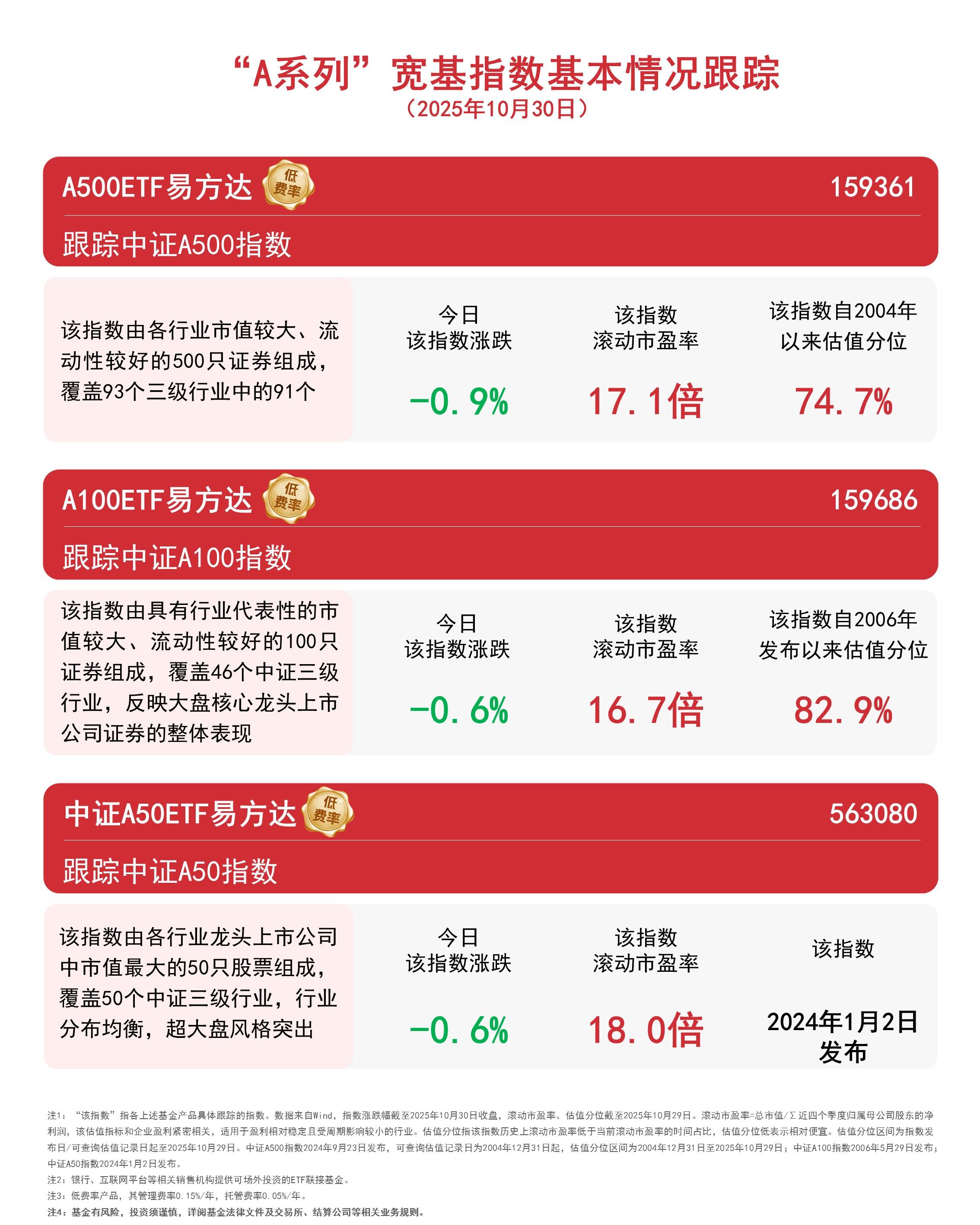
Core Insights - The CSI A500 index declined by 0.9%, while the CSI A100 and A50 indices both fell by 0.6% [1] - The A500 ETF from E Fund (159361) has seen a net inflow of nearly 1 billion yuan over the last three trading days [1] - CITIC Securities suggests that short-term policy clarity is expected to enhance market risk appetite, while the "14th Five-Year Plan" outlines a modern industrial system blueprint that provides a clear growth path for A-shares [1] Market Performance - The CSI A500 index experienced a drop of 0.9% [1] - Both the CSI A100 and A50 indices recorded a decrease of 0.6% [1] Fund Flows - E Fund's A500 ETF (159361) has attracted a cumulative net inflow of approximately 1 billion yuan over the past three trading days [1] Future Outlook - Short-term market risk appetite may improve due to clearer policies [1] - The "14th Five-Year Plan" is expected to solidify the foundation for a bull market through technological breakthroughs and industrial upgrades [1]
STARTRADER星迈:欧元能否在风险情绪提振下继续上行?
Sou Hu Cai Jing· 2025-10-28 10:46
Group 1 - The euro continues to appreciate, breaking through 1.1650, reaching a one-week high [1][3] - The market sentiment is supported by easing US-China trade tensions, a rare earth agreement with Japan, and expectations of a 25 basis point rate cut by the Federal Reserve [3][4] - The euro/dollar bullish momentum remains weak, with resistance levels at 1.1670 and 1.1730 [1][4][6] Group 2 - The German GfK consumer confidence index for November fell to -24.1, the lowest in seven months, contrary to market expectations [4] - The US and Japan have signed a framework agreement to ensure rare earth supply and reduce dependence on China, boosting investor sentiment [4][6] - The euro/dollar has shown a short-term bullish trend since the low of 1.1580, but momentum indicators suggest a weakening trend [6]

宏观情绪改善且到港持续大降 铁矿石强势反弹走高
Jin Tou Wang· 2025-10-28 07:43
Core Viewpoint - The iron ore market is experiencing a rebound in risk appetite, with prices showing an upward trend due to a decrease in port inventories and positive macroeconomic sentiment [1][2]. Group 1: Market Performance - As of October 28, iron ore futures prices increased by 2.06%, reaching 793.5 yuan/ton [1]. - The total iron ore inventory at 47 Chinese ports is reported at 150.07 million tons, a decrease of 582,300 tons from the previous week [2]. - The total inventory at 45 ports stands at 143.11 million tons, reflecting a week-on-week decline of 577,300 tons [2]. Group 2: Supply and Demand Dynamics - Satellite data indicates that from October 20 to October 26, the total iron ore inventory at seven major ports in Australia and Brazil decreased by 147,000 tons, continuing the destocking trend [2]. - During the same period, global iron ore shipments totaled 33.884 million tons, an increase of 548,000 tons [2]. - Iron ore arrivals at 47 Chinese ports amounted to 20.843 million tons, down by 5.92 million tons week-on-week [2]. Group 3: Future Market Outlook - Analysts from Chao Dong Tian Cheng Futures suggest that while supply is increasing and demand remains weak, the recent drop in port inventories and improved macroeconomic conditions may lead to a short-term price increase [3]. - Hualian Futures reports that despite expectations of increased supply, the overall demand for iron ore is declining, and port inventories are likely to continue accumulating [3]. - Zhengxin Futures notes that the supply-demand structure is improving, with attention on the progress of the West Mangdu project, which may lead to increased supply [3].
市场风险偏好回升,金价承压
Bao Cheng Qi Huo· 2025-10-27 09:25
Group 1: Report Industry Investment Rating - No relevant information provided Group 2: Core Viewpoints of the Report - Last week, the gold price rose first and then fell, dropping by more than 7% from the high during the week and then stabilizing and rebounding. The decline was due to the easing of Sino-US trade tensions, the expectation of a ceasefire in Russia-Ukraine, and strong profit-taking intentions after the significant increase since September. The short - term easing of Sino - US trade friction reduced the safe - haven demand and increased market risk appetite, which was negative for the gold price. The lower - than - expected US CPI in September made the market expect a steady progress of US interest rate cuts, which was positive for the gold price. The sharp decline in the gold price increased the profit - taking intention of previous long positions, breaking the short - term strong pattern. Attention should be paid to the support of the 20 - day moving average [5][23] Group 3: Summary by Relevant Catalog 1. Market Review 1.1 Weekly Trend - The report presents a graph showing the linkage between the US dollar index and COMEX gold futures closing price [9] 1.2 Indicator Changes | Indicator | 10/24 | 10/17 | Weekly Change | | --- | --- | --- | --- | | COMEX Gold | 4,126.90 | 4,267.90 | -3.30% | | COMEX Silver | 48.41 | 50.63 | -4.38% | | SHFE Gold Main Contract | 938.10 | 999.80 | -6.17% | | SHFE Silver Main Contract | 11,332.00 | 12,249.00 | -7.49% | | US Dollar Index | 98.94 | 98.55 | 0.39% | | USD/CNH | 7.13 | 7.13 | -0.02% | | 10 - Year US Treasury Real Yield | 1.73 | 1.75 | -0.02 | | S&P 500 | 6,791.69 | 6,664.01 | 1.92% | | WTI Crude Oil Continuous | 61.44 | 57.64 | 6.59% | | COMEX Gold - Silver Ratio | 85.25 | 84.30 | 1.12% | | SHFE Gold - Silver Ratio | 82.78 | 81.62 | 1.42% | | SPDR Gold ETF | 1,046.93 | 1,047.21 | -0.28 | | iShare Gold ETF | 484.26 | 487.19 | -2.93% | [10] 2. Gold Price Rise and Fall - Last week, the US dollar index and Treasury yields stabilized and rebounded, and the gold price fell from a high level. The overall market risk appetite increased, and the risk - aversion sentiment decreased significantly [14][15] 3. Tracking of Other Indicators - Last week, international gold ETFs showed outflows. Precious metals rose and then fell, silver had a larger decline, and the gold - silver ratio fluctuated and rebounded [18][22] 4. Conclusion - The conclusion is consistent with the core viewpoints, emphasizing the reasons for the rise and fall of the gold price, the impact of Sino - US trade and US economic data on the gold price, and the change of the short - term pattern of the gold price, as well as suggesting to pay attention to the support of the 20 - day moving average [23]