Workflow
通胀数据
icon
Search documents
政府重开又如何?最关键的数据可能永远消失
Xin Lang Cai Jing· 2025-11-11 07:31
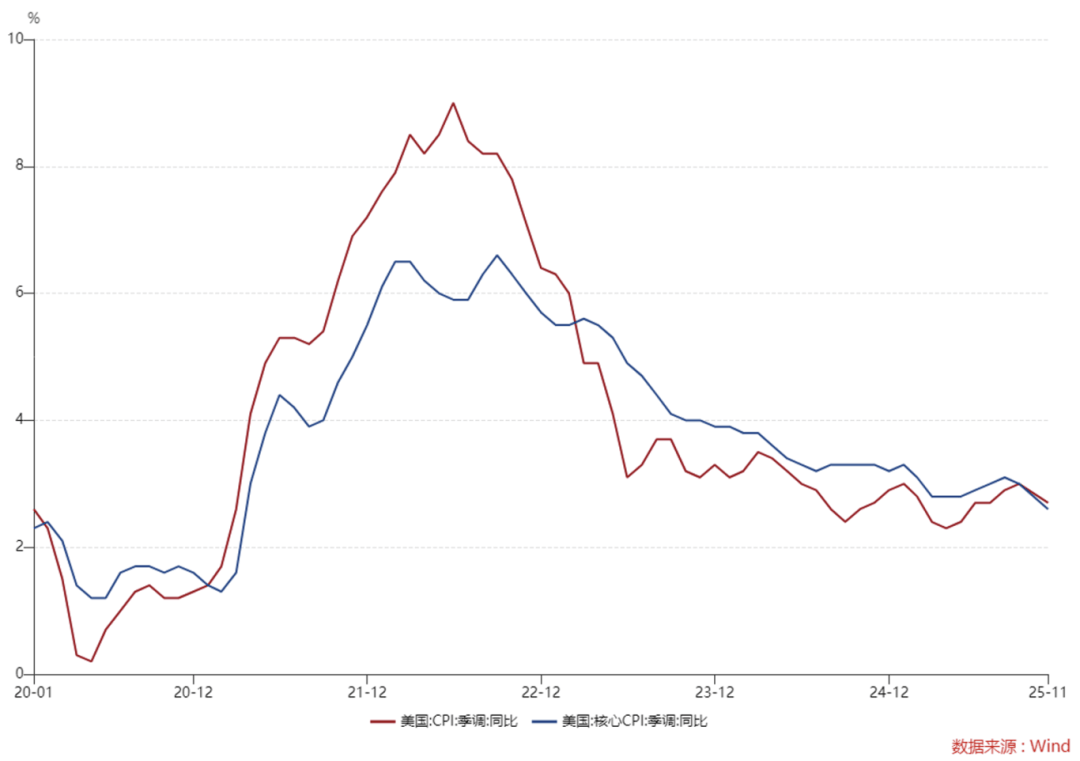
白宫的一个账号在10月24日发帖称,原因是"调查员无法部署到现场——这使我们失去了关键数据。"9 月份的通胀数据在停摆期间发布,低于预期,但顽固地保持在3%左右。 更新的数据发布时间表预计要到政府重新开放几天后才会公布,因为负责监督这些发布工作的官员几乎 都被停薪休假了。悬而未决的问题包括11月份的通胀数据是否也会受到影响。周一早上,一位白宫官员 没有立即回应有关计划以及何时可能重新安排数据发布的问题。 9月和10月的月度就业报告均未发布,普遍的预期是,当政府工作人员重返工作岗位后(最早在本周晚 些时候),首批公布的新数据将是9月份的就业数据。Evercore ISI副董事长古哈(Krishna Guha)周一 在一份报告中预测:"第一批劳动力数据——延迟的9月份就业报告——应该在停摆结束后的几天内发 布,尽管10月/11月的数据何时以及如何公布仍不确定。" 华盛顿结束政府停摆的新途径,或许能迅速逆转40天停摆带来的一些经济损失,但政府数据的中断可能 需要更长时间才能恢复正常。市场最密切关注的至少部分信息似乎很可能永远丢失,而一旦联邦工作人 员重返工作岗位,一些关于9月份劳动力市场状况的旧数据可能会很快公布。 ...
华尔街的最大“噩梦”:一大堆“垃圾数据”即将来袭
Sou Hu Cai Jing· 2025-11-11 04:49
Group 1 - The U.S. government shutdown has created a significant "black hole" in the economy, leading to a backlog of critical economic reports that will soon be released [2] - The September employment report is expected to be released soon, with estimates suggesting it could be available as early as this week or early next week [2] - The shutdown has severely impacted the release of key inflation reports for October, including the Consumer Price Index (CPI), Producer Price Index (PPI), and Personal Consumption Expenditures (PCE) index, which may not be published at all [4] Group 2 - The delay in the September employment report and the potential absence of the October inflation reports will hinder the Federal Reserve's decision-making regarding interest rate cuts in their upcoming meetings [4] - The October employment report is likely to be delayed significantly, possibly until just before the Federal Reserve's next meeting on December 9-10, and may even be combined with the November report [4][6] - The forced leave of hundreds of thousands of federal employees could distort the data in the October report, making it less reliable [6]
早盘直击|今日行情关注
Group 1 - The core viewpoint of the article highlights an improvement in inflation data, leading to a temporary shift in market investment styles, with CPI rising from -0.3% to 0.2% and PPI improving from -2.3% to -2.1% [1] - The recent slight improvement in inflation data indicates a reduction in price downward pressure, with rising prices in upstream resources and some industrial products triggering local market hotspots [1] - The consumer sector, which had been quiet for a long time, has seen a significant rebound due to the CPI returning to positive territory, reflecting the main characteristics of the year-end consolidation market: sector rotation, unclear main lines, and balanced allocation [1] Group 2 - On Monday, the stock market experienced a rebound with increased trading volume, with the Shanghai Composite Index consolidating before a strong upward movement, closing near its highest point [1] - The Shenzhen Component Index showed weaker performance compared to the Shanghai Composite, primarily adjusting throughout the day before finally turning upward, closing above the 5-day moving average [1] - The market's focus is expected to remain on the macroeconomic data for October, which will guide adjustments in asset and industry allocation based on economic conditions [1]
消费政策暖风频吹,食品饮料ETF天弘(159736)10月以来累计"吸金”近2亿元,机构:白酒板块进入布局区间
Group 1 - The three major indices opened higher collectively, while the food and beverage sector experienced a slight pullback, with the Tianhong Food and Beverage ETF (159736) declining by 0.14% [1] - The Tianhong Food and Beverage ETF has shown significant capital inflow, with a net inflow exceeding 180 million yuan since October, indicating strong investor interest [1] - The ETF tracks the CSI Food and Beverage Index, focusing on leading stocks in high-end and mid-range liquor, as well as key players in beverages, dairy, condiments, and beer [1] Group 2 - The National Bureau of Statistics reported that the Consumer Price Index (CPI) rose by 0.2% year-on-year in October, reversing a previous decline, while the Producer Price Index (PPI) saw a year-on-year decrease of 2.1%, with a narrowing decline for the third consecutive month [2] - Huajin Securities noted that the improvement in core CPI and PPI indicates a positive trend, emphasizing the need to strengthen domestic demand amid uncertainties from global supply chain restructuring [2] - Open Source Securities suggested that liquor manufacturers are managing inventory levels to support long-term health, and the current white liquor sector is entering a favorable investment phase [2]
A股午评:创业板指跌2.13%,算力硬件板块领跌,大消费板块逆势走强
Ge Long Hui· 2025-11-10 03:41
Core Viewpoint - The A-share market experienced a collective adjustment in the morning session, with the Shanghai Composite Index down by 0.03% to 3996.26 points, while the Shenzhen Component Index fell by 0.59% and the ChiNext Index dropped by 2.13% [1] Group 1: Market Performance - The three major indices of A-shares adjusted collectively, with the Shanghai Composite Index at 3996.26 points [1] - The total trading volume in the Shanghai, Shenzhen, and Beijing markets reached 145.44 billion yuan, an increase of 18.83 billion yuan compared to the previous day [1] - Over 2900 stocks in the market showed gains despite the overall decline [1] Group 2: Sector Performance - The consumer sector showed resilience, with industries such as dairy, liquor, food, and duty-free shops leading the gains [1] - Positive signals were released from the National Bureau of Statistics regarding October's inflation data [1] - The Ministry of Finance indicated that it will continue to implement measures to boost consumption [1] - The chemical sector maintained its upward trend [1] - The copper cable high-speed connection and CPO hardware sectors experienced significant declines [1]
内外部扩散是否将导致产业景气行情调整?
Huaan Securities· 2025-11-09 13:58
Key Insights - The report indicates that the results of the China-US trade negotiations and the marginal weakening of the macro economy are expected to lead to a continuation of high-level fluctuations in the market, rather than a signal for an adjustment in industrial prosperity [2][3] - The internal diffusion and high-cut-low phenomenon are ongoing, presenting a good opportunity for positioning in the AI industry [2][6] - Key sectors with performance support include energy storage/batteries, military industry, storage, and engineering machinery [2][49] Market Perspectives - The ongoing US government shutdown has led to increased uncertainty regarding the Federal Reserve's interest rate cuts, with a high probability of a rate cut in December [3][12] - Recent data shows a slowdown in the US job market, which aligns with concerns expressed by the Federal Reserve Chairman [14][13] - The October export data showed a decline due to fewer working days and high base effects, with expectations of a slight negative growth in the fourth quarter [4][17][18] Industry Configuration - The report emphasizes that the internal and external diffusion observed does not indicate the end of the first phase of industrial prosperity, as historical trends show that strong sectors often remain robust without significant internal diffusion [6][28] - The AI industry is highlighted as a key area for investment, with a focus on sectors such as computing power and applications, which are expected to continue their growth trajectory [47][48] - Other sectors with solid performance support include energy storage, military, storage, and engineering machinery, which are anticipated to benefit from ongoing demand and market conditions [49][51]
通胀数据点评:核心CPI“1.2%”,PPI环比“首次转正”
Tianfeng Securities· 2025-11-09 10:41
Report Industry Investment Rating - Not provided in the content Core Viewpoints of the Report - The inflation data in October showed the characteristics of "warming CPI and improving PPI". The CPI turned from negative to positive year-on-year, and the core CPI reached a new high since March 2024. The PPI's year-on-year decline narrowed, and the month-on-month increase was positive for the first time this year, reflecting the resonance of policies to expand domestic demand and the long - holiday effect, with both consumer and industrial product prices improving [1][6] Summary by Related Catalogs 1. 10 - month CPI and PPI Data Overview - In October, the CPI was 0.2% year - on - year (previous value - 0.3%), 0.2% month - on - month (previous value 0.1%); the PPI was - 2.1% year - on - year (previous value - 2.3%), 0.1% month - on - month (previous value 0.0%) [1][6] 2. Structural Highlights behind the Strong Core CPI - The continuous release of policies to expand domestic demand has increased residents' marginal propensity to consume and supported core prices. Under the "trade - in" policy, the prices of household appliances, cultural and entertainment durable goods, and household sundries increased by 2.4% - 5.0%, and the decline of fuel - powered car prices narrowed to 2.3% [2][7] - The "resilience" of service consumption is prominent. In October, service prices increased by 0.8% year - on - year, a major driver of the core CPI. Service consumption demand, represented by tourism and entertainment, continued to be released, and may gradually become a stabilizer for domestic demand growth. During the National Day and Mid - Autumn Festival, hotel accommodation, air ticket, and tourism prices increased by 8.6%, 4.5%, and 2.5% respectively, higher than seasonal levels [2][7] - Affected by international gold prices, domestic gold jewelry prices increased by 50.3% year - on - year, supporting industrial consumer goods prices [2][7] 3. Reasons for the First Positive Month - on - Month PPI in October - Positive aspects: The increase in upstream raw material prices was mainly driven by a 0.1% month - on - month increase in production material prices. The improvement in supply - demand relationships led to price increases in some industries, such as a 1.6% month - on - month increase in the coal mining and washing industry. Some industries, like computers and lithium batteries, saw price increases due to improved supply - demand patterns supported by industrial upgrading policies. International price increases in non - ferrous metals were transmitted to the domestic market, driving a 2.4% month - on - month increase in the non - ferrous metal smelting and rolling processing industry [3][8] - Areas to improve: The month - on - month price of consumer goods was flat, and the year - on - year price still decreased by 1.4%, indicating that the recovery of terminal consumer demand lagged behind that of the upstream. The positive month - on - month increase in upstream raw material prices but slow recovery of downstream demand may squeeze the profit margins of mid - and downstream enterprises [3][8] 4. Implications of the Widening CPI - PPI Gap - In October, the CPI was 0.2% year - on - year, the PPI was - 2.1% year - on - year, and the gap was 2.3 percentage points, 0.3 percentage points wider than in September [4][9] - The year - on - year increase in CPI was mainly driven by service consumption and some industrial consumer goods, but this demand was not enough to fully absorb the industrial supply capacity, and industrial product prices were still in the negative range year - on - year. The widening gap means that the gross profit margins of mid - and downstream industries in the industrial chain, such as food processing, home appliances, and automobiles, are expected to improve [4][9]
【广发宏观郭磊】如何看10月通胀数据及其影响链条
郭磊宏观茶座· 2025-11-09 09:27
Core Viewpoint - The inflation data for October shows continued improvement, with CPI at 0.2% year-on-year, slightly above the model prediction of 0.16%, and PPI at -2.1%, better than the predicted -2.37% [1][6]. Inflation Data Summary - CPI and PPI data indicate a positive trend, with CPI showing a year-on-year increase of 0.2% and PPI at -2.1% [5][6]. - The simulated deflation index, based on CPI and PPI, stands at -0.72%, the highest since September of the previous year, excluding January [1][5]. - Core CPI, excluding food and energy, has expanded for six consecutive months, reaching 1.2% year-on-year in October, the highest since March 2024 [8][9]. Price Trends in Specific Categories - Notable price trends include: - Pork prices continue to decline, with a month-on-month decrease of 2.5% [11]. - Alcohol prices also fell by 0.1% month-on-month [11]. - Household appliance prices broke a three-month upward trend, decreasing by 0.7% month-on-month [11]. - Gold jewelry prices surged by 10.2% month-on-month, with a year-on-year increase of 50.3% [11][13]. - Medical service prices rose by 2.4% year-on-year, indicating a relatively high growth rate within CPI components [14]. Industrial Price Movements - Industrial prices show mixed trends: - Upstream production materials increased by 0.1% month-on-month, with mining industries up by 1.0% [15]. - Downstream consumer goods remained flat, with general daily necessities up by 0.7% [15]. - Durable goods, including automobiles and home appliances, saw a month-on-month decline of 0.3% [15][18]. Sector-Specific Insights - In specific sectors: - Upstream coal and non-ferrous metals experienced significant month-on-month increases [18]. - Midstream fuel processing and chemical industries faced declines, influenced by oil prices [18]. - Downstream automotive manufacturing showed a narrowing decline, while agricultural processing expanded its negative growth [18][19]. - Cement prices increased significantly due to policy-driven financial tools and the implementation of the revised Anti-Unfair Competition Law [21]. Future Price Trends - Looking ahead, pork prices are expected to stabilize, which may lead to a continued rebound in CPI year-on-year [21]. - The PPI base is slightly higher, with global pricing products presenting uncertainties; however, the cement price trend suggests a potential floor for construction product prices [21]. - Overall, the deflation index is anticipated to continue rising in the coming months, reflecting supply-demand dynamics that influence corporate profit margins and performance [21][4].
非农“没了”,下周的美国CPI也要“没了”,美联储12月还能“闭眼降息”吗?
Hua Er Jie Jian Wen· 2025-11-09 01:27
Core Insights - The U.S. government is experiencing a prolonged shutdown, leading to a halt in the release of key economic data, which complicates the Federal Reserve's decision-making process for the upcoming December meeting [2][3] - The Labor Statistics Bureau has postponed the release of the October CPI report, raising concerns that it may not be published at all, further complicating discussions on interest rate decisions [2][3] - The absence of official data may provide a rationale for policymakers concerned about inflation to maintain interest rates in December, despite market expectations leaning towards a rate cut [2][3] Data Vacuum and Decision-Making Challenges - The current situation poses significant challenges for the Federal Reserve, which relies on data for decision-making; the lack of recent employment and inflation data undermines the foundation for policy decisions [3] - Fed Chair Powell indicated that a rate cut in December is not guaranteed, and the absence of official data may strengthen the position of those focused on inflation risks [3][4] Alternative Indicators - In the absence of official data, some private sector employment reports are helping to fill the gaps, but alternative inflation indicators are harder to obtain and less comprehensive [4] - The Cleveland Fed's "nowcast" model suggests that the October CPI year-on-year increase may be similar to September's lower-than-expected 3% [4] Impact of Government Shutdown - The timing of the government shutdown's resolution will be crucial for the Fed's December decision, as it will determine how quickly economic data can be updated [5][6] - Various scenarios have been proposed regarding the potential impact of data recovery on policy decisions, ranging from receiving outdated reports to having multiple recent employment reports available before the December meeting [6] Scenarios for Employment Reports - Scenario one involves receiving an outdated September employment report, which is unlikely to influence a rate cut decision [6] - Scenario two considers the release of both September and October reports, which could complicate the decision if the unemployment rate remains stable [6] - Scenario three anticipates the release of three complete employment reports, where the unemployment rate will significantly influence the Fed's decision on whether to maintain or cut rates [6]
天盟黄金:黄金重回4000美元,是回光返照还是暴涨前奏?
Sou Hu Cai Jing· 2025-11-07 08:08
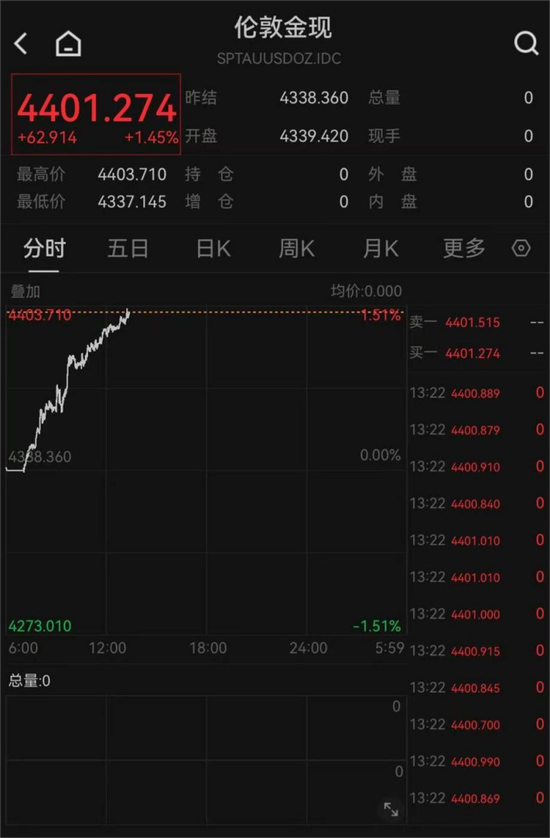
Group 1 - The global market has entered a volatile phase, with US stock index futures declining and spot gold rising above $4000 per ounce, reflecting a shift towards defensive assets as risk appetite diminishes [1][4] - Recent positive data from the US ISM services index and ADP employment figures initially boosted investor confidence in an economic "soft landing," but concerns over high valuations in the tech sector have resurfaced, leading to a cautious market sentiment [3] - The return of risk-averse capital has made gold a focal point, with its price driven by safe-haven buying and asset allocation needs, indicating a potential structural adjustment in the market [4][8] Group 2 - The recent rise in gold prices above $4000 is attributed to a decrease in the 10-year US Treasury yield and a slight dip in the US dollar index, signaling a flow of funds into safe-haven assets [4] - The upcoming changes in domestic gold taxation and the clarification of "investment" versus "non-investment" uses are expected to enhance market liquidity and shift the industry structure towards a focus on gold recycling [5][6] - The gold recovery market is anticipated to become a crucial link between the financial and physical gold sectors, potentially influencing future price volatility [6]