
供需基本面

Search documents
中辉期货日刊-20250805
Zhong Hui Qi Huo· 2025-08-05 01:49
Report Industry Investment Rating - Most varieties are rated as "Cautiously Bearish", while some are rated as "Bearish" [1][2] Core Views - The supply surplus pressure of crude oil is rising, and the oil price is falling [1][3] - LPG follows the decline of oil price [1][9] - For L, the number of restarted devices is increasing, and it is cautiously bearish [1][15] - PP has weak supply and demand, and short positions should be held [1][22] - PVC's trading returns to the weak fundamentals, and it is cautiously bearish [1][29] - PX has a tight supply - demand balance, but there is no unexpected bullish news at home and abroad, and it is cautiously bearish [1][35] - PTA has a tight supply - demand balance expected to be loose, and it is cautiously bearish [1][39] - MEG has a tight supply - demand balance, but the macro - sentiment has faded, and it is cautiously bearish [1][43] - The spot price of glass is lowered, and the futures price continues to correct [1][47] - The inventory of soda ash turns from decreasing to increasing, and the futures price center falls [1][52] - The registered warehouse receipts of caustic soda increase, and the futures price center moves down [1][57] - Methanol's supply - demand tight balance is expected to be loose, and there is no unexpected news, and it is cautiously bearish [1][62] Summaries by Variety Crude Oil - **Market Review**: Overnight international oil prices fell, with WTI down 1.54%, Brent down 1.31%, and SC down 2.14% [5] - **Basic Logic**: OPEC+ will increase production in September, and the peak season is in the second half. The oil price center still has room to decline, and the key support level is around $60 [6] - **Supply - Demand and Inventory**: OPEC+ will increase production by 547,000 barrels per day in September. US crude oil production increased in May. Demand in Shandong independent refineries decreased. US commercial crude oil and strategic reserve increased, while gasoline inventory decreased and distillate inventory increased [7] - **Strategy Recommendation**: Partially close short positions. Pay attention to the range of SC [500 - 515] [8] LPG - **Market Review**: On August 4, the PG main contract closed at 3,921 yuan/ton, down 1.66% [11] - **Basic Logic**: The cost - end oil price fell, and Saudi Arabia lowered the CP contract price. The supply increased slightly, and the demand from downstream industries was mixed. The inventory situation was complex [12] - **Strategy Recommendation**: Close short positions. Pay attention to the range of PG [3800 - 3900] [13] L - **Market Review**: The L2509 contract closed at 7,279 yuan/ton, and the North China basis was - 89 yuan/ton [17] - **Basic Logic**: Social inventory has increased for 6 consecutive weeks. Most devices have restarted, and the supply pressure has increased. The downstream is in the off - season, and the restocking power is insufficient [19] - **Strategy Recommendation**: Hold short positions [20] PP - **Market Review**: The PP2509 contract closed at 7,074 yuan/ton, and the East China basis was - 6 yuan/ton [24] - **Basic Logic**: Supply and demand are both weak. The inventory of polyolefin petrochemicals of two major companies has risen, and the de - stocking pressure still exists. The production capacity will be released in the third quarter [26] - **Strategy Recommendation**: Hold short positions or conduct a 9 - 1 calendar spread [26] PVC - **Market Review**: The V2601 contract closed at 4,981 yuan/ton, and the Changzhou basis was - 121 yuan/ton [31] - **Basic Logic**: The cost support has improved, but the supply will increase in August due to less maintenance and new capacity release. The demand is in the off - season, and the inventory will continue to accumulate [32] - **Strategy Recommendation**: Hold short positions [32] PX - **Market Review**: On August 1, the spot price of PX in East China was 7,015 yuan/ton, and the PX09 contract closed at 6,812 yuan/ton [36] - **Basic Logic**: The supply and demand are in a tight balance, and the inventory is decreasing but still high. There is no unexpected bullish news at home and abroad [37] - **Strategy Recommendation**: Reduce short positions, sell put options, and pay attention to buying opportunities during callbacks. Pay attention to the range of PX [6700 - 6810] [38] PTA - **Market Review**: On August 1, the spot price of PTA in East China was 4,740 yuan/ton, and the TA09 contract closed at 4,744 yuan/ton [40] - **Basic Logic**: The supply pressure is expected to increase due to new device production. The demand from downstream polyester and terminal weaving is weak. The supply - demand balance in August is expected to be loose [41] - **Strategy Recommendation**: Hold short positions cautiously (partially close), sell put options, and pay attention to the opportunity to widen the processing margin. Pay attention to the range of TA [4650 - 4730] [42] MEG - **Market Review**: On August 1, the spot price of ethylene glycol in East China was 4,480 yuan/ton, and the EG09 contract closed at 4,405 yuan/ton [44] - **Basic Logic**: Domestic and overseas devices have slightly increased their loads, but the arrival and import volumes are still low. The downstream demand is weak, and the inventory is low [45] - **Strategy Recommendation**: Hold short positions cautiously (partially close), sell put options, and pay attention to low - buying opportunities. Pay attention to the range of EG [4360 - 4420] [46] Glass - **Market Review**: The spot market price was lowered, and the futures price center moved down [49] - **Basic Logic**: There is no unexpected policy in the Politburo meeting, and the manufacturing PMI has declined. The supply has increased slightly, the demand is structurally differentiated, and the inventory has decreased mainly due to transfer [50] - **Strategy Recommendation**: Pay attention to the range of FG [1050 - 1100] [51] Soda Ash - **Market Review**: The heavy - soda ash spot price was lowered, and the futures price was differentiated [54] - **Basic Logic**: The hype of macro - policies has cooled down, and short - selling funds have increased. Supply has decreased slightly, demand is mostly rigid, and inventory has started to increase again [55] - **Strategy Recommendation**: Wait patiently for the price to correct [55] Caustic Soda - **Market Review**: The flake caustic soda spot price was raised, and the futures price was differentiated [59] - **Basic Logic**: Supply decreased due to summer maintenance, and some downstream alumina plants resumed production. Inventory is relatively high year - on - year, and the macro - policy expectation has cooled down [60] - **Strategy Recommendation**: None provided [61] Methanol - **Market Review**: On August 1, the spot price of methanol in East China was 2,385 yuan/ton, and the main 09 contract closed at 2,393 yuan/ton [62] - **Basic Logic**: Domestic and overseas devices are restarting or increasing loads, and the supply pressure is expected to increase. Demand is good but expected to weaken. Inventory is accumulating [63] - **Strategy Recommendation**: Hold short positions cautiously (partially close), sell call options under low - volatility conditions, and conduct a MA9 - 1 reverse spread. Pay attention to the range of MA [2365 - 2395] [64]
银河日评|十四五收官与十五五规划形成双轮驱动,全市场超3800只个股上涨
Sou Hu Cai Jing· 2025-08-04 13:35
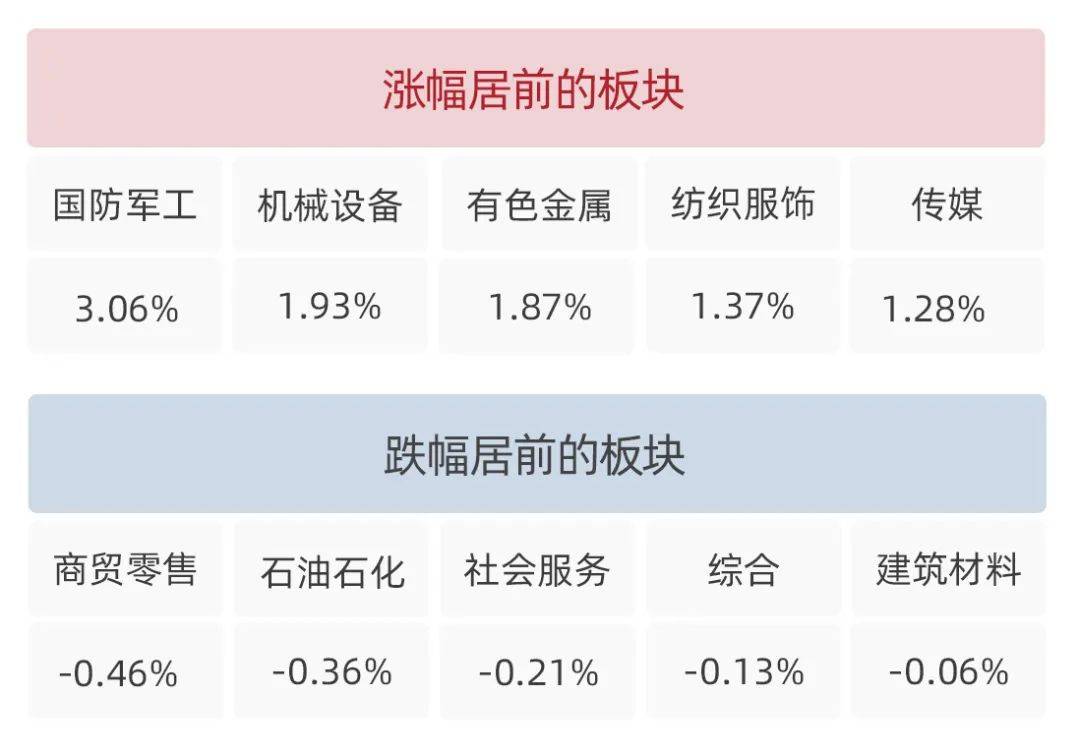
Market Performance - The defense and military, machinery equipment, and non-ferrous metals sectors showed the highest gains, with increases of 3.06%, 1.93%, and 1.87% respectively [1] - Over 3,300 stocks in the market experienced an increase [1] - The Shanghai Composite Index rose by 0.66%, while the CSI 300 and Shenzhen Composite Index increased by 0.39% and 0.46% respectively [1] Sector Analysis - The defense and military sector is driven by the dual momentum of the completion of the 14th Five-Year Plan and the initiation of the 15th Five-Year Plan, alongside increased demand due to international geopolitical conflicts [2] - The machinery equipment sector benefits from the upcoming implementation of the Ministry of Industry and Information Technology's growth stabilization plan and equipment renewal policies, with the manufacturing PMI returning to an expansion zone [2] - The non-ferrous metals sector is supported by a robust supply-demand dynamic, with industrial metals like copper, aluminum, and rare earths benefiting from infrastructure and new energy demands, while strategic metals like germanium and antimony are experiencing price premiums due to export controls [2] Weak Sectors - The retail sector is facing challenges due to the U.S. suspension of small-value tax exemptions, which may increase cash flow pressures for companies and suppress expansion expectations [2] - The oil and petrochemical sector is negatively impacted by OPEC+'s decision to increase production by 547,000 barrels per day starting in September, leading to a significant drop in international oil prices [2] - The social services sector is experiencing notable outflows of main funds, compounded by rapid sector rotation, resulting in declines [2] Future Outlook - The A-share market has shown adjustments amid internal and external disturbances, with increased market divergence [3] - The temporary relief from U.S.-China tariff pressures has not fully alleviated risks, as factors like delayed Fed rate cuts and domestic policy not exceeding expectations continue to suppress risk appetite [3] - The recent Politburo meeting emphasized the implementation of existing policies and capacity governance, shifting the policy focus from short-term stimulus to structural optimization, which may strengthen market positioning in the medium to long term [3]

橡胶甲醇原油:偏空因素主导,能化震荡偏弱
Bao Cheng Qi Huo· 2025-08-04 11:12
Report Industry Investment Rating - No relevant content found Core Viewpoints - The domestic Shanghai rubber futures contract 2509 may maintain a volatile and stable trend after the full release of negative sentiment, with the futures price finding support at the 40 - and 60 - day moving averages [4]. - The domestic methanol futures contract 2509 may maintain a volatile and weak trend under the dominance of bearish factors, dragged down by the sharp decline in domestic coal futures and the weak supply - demand fundamentals of methanol [4]. - The prices of domestic and foreign crude oil futures may maintain a volatile and weak trend under the dominance of bearish sentiment, as the supply pressure increases after OPEC+ oil - producing countries decide to significantly expand production in September [5]. Summary of Each Section 1. Industry Dynamics Rubber - As of July 27, 2025, the total inventory of natural rubber in bonded and general trade in Qingdao was 640,400 tons, a month - on - month increase of 6,000 tons or 0.91%. The bonded area inventory decreased by 2.70% to 75,800 tons, while the general trade inventory increased by 1.42% to 564,600 tons. The storage rate of bonded warehouses decreased by 0.38 percentage points, and the pick - up rate increased by 0.63 percentage points; the storage rate of general trade warehouses increased by 1.67 percentage points, and the pick - up rate increased by 0.14 percentage points [8]. - As of August 1, 2025, the capacity utilization rate of China's semi - steel tire sample enterprises was 69.98%, a week - on - week slight decrease of 0.08 percentage points and a year - on - year sharp decline of 9.22 percentage points; the capacity utilization rate of China's full - steel tire sample enterprises was 59.26%, a week - on - week slight decline of 2.97 percentage points and a year - on - year slight increase of 2.76 percentage points [8]. - In the terminal retail sector, in June 2025, China's automobile dealer inventory warning index was 56.6%, a year - on - year decrease of 5.7 percentage points and a month - on - month increase of 3.9 percentage points. The inventory warning index was above the boom - bust line, indicating a decline in the prosperity of the automobile circulation industry [8]. - From January to June 2025, China's automobile production and sales were 15.621 million and 15.653 million vehicles respectively, a year - on - year increase of 12.5% and 11.4%. The production and sales of new energy vehicles were 6.968 million and 6.937 million vehicles respectively, a year - on - year increase of 41.4% and 40.3%, and the new - car sales of new energy vehicles accounted for 44.3% of the total new - car sales [9]. Methanol - As of the week of August 1, 2025, the average domestic methanol operating rate was 81.92%, a week - on - week slight increase of 0.26%, a month - on - month slight decline of 3.28%, and a significant year - on - year increase of 11.46%. The average weekly methanol production in China reached 1.9302 million tons, a week - on - week slight increase of 31,300 tons, a month - on - month significant decline of 56,900 tons, and a significant year - on - year increase of 312,000 tons compared to 1.6182 million tons last year [10]. - As of the week of August 1, 2025, the domestic formaldehyde operating rate was 28.55%, a week - on - week slight increase of 0.59%. The dimethyl ether operating rate was 5.72%, a week - on - week slight increase of 0.41%. The acetic acid operating rate was 88.79%, a week - on - week slight decrease of 4.16%. The MTBE operating rate was 54.84%, a week - on - week slight decrease of 2.32%. The average operating load of domestic coal (methanol) to olefin plants was 75.72%, a week - on - week slight decline of 0.70 percentage points and a month - on - month slight decrease of 2.67 percentage points. As of August 1, 2025, the futures market profit of domestic methanol to olefins was - 87 yuan/ton, a week - on - week significant recovery of 249 yuan/ton and a month - on - month slight recovery of 21 yuan/ton [10]. - As of the week of August 1, 2025, the port methanol inventory in East and South China was 650,300 tons, a week - on - week significant increase of 63,200 tons, a month - on - month significant increase of 150,600 tons, and a significant year - on - year decrease of 158,000 tons. As of the week of July 31, 2025, the total inland methanol inventory in China was 324,700 tons, a week - on - week slight decrease of 15,200 tons, a month - on - month slight decrease of 16,900 tons, and a significant year - on - year decrease of 75,600 tons compared to 400,300 tons last year [11][13] Crude Oil - As of the week of July 25, 2025, the number of active oil rigs in the United States was 415, a week - on - week slight decrease of 7 and a year - on - year decrease of 67. The average daily crude oil production in the United States was 13.314 million barrels, a week - on - week slight increase of 41,000 barrels per day and a year - on - year increase of 14,000 barrels per day [13]. - As of the week of July 25, 2025, the U.S. commercial crude oil inventory (excluding strategic petroleum reserves) reached 426.7 million barrels, a week - on - week significant increase of 7.698 million barrels and a year - on - year significant decrease of 6.358 million barrels. The crude oil inventory in Cushing, Oklahoma, was 22.553 million barrels, a week - on - week slight increase of 690,000 barrels; the U.S. Strategic Petroleum Reserve (SPR) inventory was 402.7 million barrels, a week - on - week slight increase of 238,000 barrels. The U.S. refinery operating rate was maintained at 95.4%, a week - on - week slight decrease of 0.1 percentage points, a month - on - month slight increase of 0.5 percentage points, and a year - on - year significant increase of 5.3 percentage points [13]. - As of July 29, 2025, the average non - commercial net long positions in WTI crude oil were 156,023 contracts, a week - on - week slight increase of 2,692 contracts and a significant decrease of 49,956 contracts or 24.25% compared to the June average of 205,979 contracts. As of July 29, 2025, the average net long positions of Brent crude oil futures funds were 249,973 contracts, a week - on - week significant increase of 22,728 contracts and a significant increase of 63,690 contracts or 34.19% compared to the June average of 186,283 contracts [14]. 2. Spot Price Table - The spot price of Shanghai rubber was 14,400 yuan/ton, a decrease of 50 yuan/ton from the previous day; the futures price of the main contract was 14,365 yuan/ton, an increase of 55 yuan/ton from the previous day; the basis was +35 yuan/ton, a change of - 55 yuan/ton [16]. - The spot price of methanol was 2,410 yuan/ton, a decrease of 12 yuan/ton from the previous day; the futures price of the main contract was 2,390 yuan/ton, a decrease of 3 yuan/ton from the previous day; the basis was +20 yuan/ton, a change of +3 yuan/ton [16]. - The spot price of crude oil was 495.7 yuan/barrel, a decrease of 0.7 yuan/barrel from the previous day; the futures price of the main contract was 514.3 yuan/barrel, a decrease of 13.6 yuan/barrel from the previous day; the basis was - 18.6 yuan/barrel, a change of +12.9 yuan/barrel [16]. 3. Related Charts - The report provides multiple charts related to rubber, methanol, and crude oil, including basis, month - to - month spread, inventory, and net position changes, with data sources from Wind and Baocheng Futures Research Institute [17][30][43]
镍:多空博弈加剧,镍价窄幅震荡不锈钢:宏观淡化回归基本面,钢价低位震荡运行
Guo Tai Jun An Qi Huo· 2025-08-03 12:55
1. Report Industry Investment Ratings No relevant content provided. 2. Core Views of the Report - For nickel, the multi - empty game intensifies, and the nickel price fluctuates narrowly. The fundamental contradiction is not prominent, and the disk margin follows the macro - sentiment change [4]. - For stainless steel, the macro factor fades, and it returns to the fundamentals. The steel price fluctuates at a low level [5]. - For industrial silicon, pay attention to the resumption progress of upstream factories. The market is trading the upstream resumption expectation, and the disk has short - term fluctuations [27][32]. - For polysilicon, it may have a short - term correction, and it is recommended to hold positions cautiously. The policy market dominates, but there is still a short - term correction drive [27][33]. - For lithium carbonate, the'movement - style anti - involution' cools down. Pay attention to the progress of the approval of mining certificates in Jiangxi. The price is under pressure, and the unilateral price will fluctuate widely [61][64]. - For palm oil, the macro - sentiment fades, and it may have a short - term pullback. The market is trading the de - stocking market in the second half of the year, but the current price may not match the fundamentals [86][87]. - For soybean oil, it lacks effective driving forces. Pay attention to the results of the China - US negotiations [86]. 3. Summaries According to Relevant Catalogs Nickel and Stainless Steel - **Fundamentals** - Nickel: The influence of the macro - sentiment on the nickel market is marginal, and the fundamentals determine the elasticity. The contradiction at the ore end fades, and the smelting end logic leads to a narrow - range oscillation judgment. The global refined nickel inventory increases moderately, and the short - term nickel price has a limited decline but is suppressed above [4]. - Stainless steel: The macro factor fades, and it returns to the fundamentals. The 8 - month production schedule shows a marginal increase, and the nickel - iron price is revised upwards. The inventory has decreased moderately, but it is still higher than last year [5]. - **Inventory Changes** - Nickel: The Chinese refined nickel social inventory decreases, the LME nickel inventory increases, the nickel - iron inventory has high - level destocking, and the Chinese port nickel - ore inventory increases [6][7][8]. - Stainless steel: The national stainless - steel social total inventory decreases weekly, with different trends in cold - rolled and hot - rolled inventories [8]. - **Market News** - There are news about the potential export suspension of nickel from Canada to the US, the trial production of a nickel - iron project in Indonesia, environmental violations in an Indonesian industrial park, and the adjustment of the mining quota period in Indonesia [9]. Industrial Silicon and Polysilicon - **Price Trends** - Industrial silicon: The futures price shows a weak oscillation, and the spot price drops. The Xinjiang 99 - silicon and Inner Mongolia 99 - silicon prices decline [27]. - Polysilicon: The futures price rises and then falls, and the spot trading is weak [27]. - **Supply and Demand Fundamentals** - Industrial silicon: The supply side has a marginal increase in production, and the overall industry inventory continues to be destocked. The demand side has stable short - term demand [28][29]. - Polysilicon: The supply side has an increase in short - term production, and the upstream inventory is destocked. The demand side has a slight increase in silicon wafer production, but the price transmission is not smooth [29][31]. - **后市观点** - Industrial silicon: Pay attention to the resumption rhythm of upstream factories. The increase in futures warehouse receipts may affect the market sentiment [32]. - Polysilicon: The policy market dominates, but there is a short - term correction drive. Pay attention to the registration of futures warehouse receipts [33]. Lithium Carbonate - **Price Trends** - The futures contract price drops significantly, and the spot price also decreases. The basis and the spread between contracts change [61]. - **Supply and Demand Fundamentals** - Supply: The lithium concentrate price drops, and the production of lithium carbonate decreases, mainly due to the reduction of mica and salt - lake enterprises [62]. - Demand: The downstream procurement willingness increases, but the absolute demand is still lower than expected [62]. - Inventory: The total social inventory of lithium carbonate decreases, with upstream destocking and downstream inventory accumulation [63]. - **后市观点** - The'movement - style anti - involution' expectation is broken, and the price is under pressure. Pay attention to the progress of the approval of mining certificates in Jiangxi [64]. Palm Oil and Soybean Oil - **Last Week's Views and Logic** - Palm oil: The domestic macro - sentiment pushes the price to a three - year high, but the lack of downstream demand makes it difficult to continue rising [86]. - Soybean oil: The large number of export orders stimulates trading enthusiasm, and the soybean - palm oil price spread narrows [86]. - **This Week's Views and Logic** - Palm oil: The MPOB report's negative impact is digested, and the market trades the de - stocking market. Malaysia may continue to accumulate inventory in July, and Indonesia's production recovery may be lower than expected. The international oil market may have a systemic upward trend, and the palm oil price is relatively resistant to decline [87]. - Soybean oil: It lacks effective driving forces, and it is necessary to pay attention to the results of the China - US negotiations [86].
工业硅:建议关注上游工厂的复产进度,多晶硅:短期或有回调,建议谨慎持仓
Guo Tai Jun An Qi Huo· 2025-08-03 06:08
Report Industry Investment Rating - The report suggests a cautious approach towards the upstream industrial silicon and polysilicon sectors, with a potential for price corrections. It recommends short - selling industrial silicon on rallies, and a short - term short or intraday short strategy for polysilicon [1][7] Core Viewpoints - Industrial silicon prices are affected by upstream factory复产 rhythms. If there is large - scale复产, the supply - demand balance will shift to oversupply, driving the price down. Polysilicon is policy - driven, but there is a short - term correction drive. The price transmission from upstream to downstream is not smooth [6][7] Summary by Related Content Price Trends - Industrial silicon futures showed a weak oscillation this week, with the Friday closing price at 8,500 yuan/ton. Spot prices also declined, with Xinjiang 99 - silicon at 9,050 yuan/ton (down 450 yuan week - on - week) and Inner Mongolia 99 - silicon at 9,350 yuan/ton (down 400 yuan week - on - week). Polysilicon futures rose and then fell, closing at 49,200 yuan/ton on Friday, and the spot market had weak transactions [1] Supply - Demand Fundamentals Industrial Silicon - Supply: Sichuan's production increased, while Xinjiang's decreased. Overall weekly production increased marginally. Yunnan's复产 was slow. The futures warehouse receipts increased by 0.4 million tons this week, social inventory increased by 0.5 million tons, and factory inventory decreased by 0.6 million tons, resulting in overall inventory reduction [2] - Demand: Downstream short - term demand was stable. Polysilicon's weekly production increased, boosting the purchase of industrial silicon. Organic silicon's weekly production also increased, but its terminal consumption had limited improvement. The aluminum alloy and export markets had no significant increase in demand [3] Polysilicon - Supply: Short - term weekly production continued to increase, with an estimated production of 120,000 - 130,000 tons in August. Factory inventory decreased due to speculative restocking by downstream buyers [3] - Demand: After the profit of silicon wafers was restored, production increased slightly in August compared to July. However, the price increase transmission from upstream to downstream was not smooth, and the acceptance of component price increases by end - users was yet to be observed [5] Market Outlook Industrial Silicon - Attention should be paid to the upstream factory复产 rhythm. The increase in futures warehouse receipts may affect market sentiment. If there is large - scale复产, the supply - demand balance will shift to oversupply, driving the price down. It is recommended to short - sell on rallies, with an expected price range of 8,200 - 9,000 yuan/ton next week [6][7] Polysilicon - The short - term market sentiment has cooled down, and there is a correction drive. The price transmission from upstream to downstream is not smooth. It is a policy - driven market, and the long - term strategy is to buy on dips, while short - term shorting or intraday shorting may be more appropriate. The expected price range next week is 46,000 - 55,000 yuan/ton [7] Trading Strategies - Unilateral: Short - sell industrial silicon on rallies; for polysilicon, short - term shorting or intraday shorting [7] - Inter - period: Consider entering a reverse spread position for PS2509/PS2511 based on futures warehouse receipt registration [8] - Hedging: Recommend upstream industrial silicon and polysilicon factories to sell for hedging [8]
【期货热点追踪】双焦期货夜盘领跌内盘期市,机构分析表示,市场关注的焦点或将逐步转向供需基本面,预计短期黑色商品整体或弱势运行为主,当前焦煤期货价格处于贴水状态,现货价格对盘面能够提供一定支撑。
news flash· 2025-08-01 14:10
Group 1 - The futures market for coking coal and coke is experiencing a downward trend, with institutions indicating that the focus may shift towards supply and demand fundamentals [1] - The overall performance of black commodities is expected to remain weak in the short term [1] - Current coking coal futures prices are in a state of discount, while spot prices are providing some support to the futures market [1]
中辉能化观点-20250801
Zhong Hui Qi Huo· 2025-08-01 02:58
1. Report Industry Investment Ratings - Most of the products in the report are rated as "Cautiously Bearish", including LPG, L, PP, PVC, PX, PTA, ethylene glycol, glass, soda ash, caustic soda, methanol, urea, propylene. Crude oil is recommended to hold short positions, and asphalt is rated as "Bearish" [1][2]. 2. Core Views of the Report - The report analyzes various commodities, indicating that many are facing supply - demand imbalances or macro - economic pressures, leading to a generally bearish outlook. For example, geopolitical risks in the oil market are releasing, and OPEC+ production increases are putting pressure on oil prices. New capacity in some chemical products is expected to increase supply, while demand is seasonally weak [1][6]. 3. Summaries Based on Commodity Categories Crude Oil - **Core View**: Hold short positions [1]. - **Logic**: Geopolitical risks have been released, and oil prices have fallen. Although there are short - term geopolitical and macro - economic positives, from a supply - demand perspective, OPEC+ production increases are gradually releasing pressure, and the peak season is in the second half, with the oil price center still having room to decline. The US 5 - month crude oil production increased, and commercial and strategic oil reserves also changed [6][7]. - **Strategy**: For the 10 - contract, short positions can be established, and call options can be bought to protect the position. If short positions are already held, it is recommended to continue holding. Pay attention to the range of 520 - 530 yuan for SC [8]. LPG - **Core View**: Cautiously bearish [1]. - **Logic**: Cost - end oil prices are oscillating, and Saudi Arabia has lowered the August CP contract price. The LPG's own fundamentals are okay, but the cost end is the main drag. Supply has increased slightly, and demand from some downstream industries has decreased. Inventory has changed, with port inventory increasing and refinery inventory decreasing [11]. - **Strategy**: Temporarily wait and see. Pay attention to the range of 3950 - 4050 yuan for PG [12]. L (Polyethylene) - **Core View**: Cautiously bearish [1]. - **Logic**: Most devices have recently restarted, increasing supply pressure. The basis and monthly spreads are at low levels compared to the same period. Social inventory has been accumulating for 5 weeks, and the fundamentals are weak. There are plans to put new capacity into production in August [18]. - **Strategy**: Industrial customers can sell - hedge at an appropriate time, and short positions can be established on the far - month contracts. Pay attention to the range of 7200 - 7500 yuan for L [18]. PP (Polypropylene) - **Core View**: Cautiously bearish [1]. - **Logic**: Market sentiment has cooled. Although there are high - level maintenance in the short - term, the production capacity pressure in the third quarter is high. New capacity is planned to be released in August, and domestic demand is at the turning point between peak and off - peak seasons, with weak downstream restocking power. Inventory has started to accumulate, and high production restricts the rebound space [25]. - **Strategy**: Short positions can be established on the far - month contracts or a 9 - 1 monthly positive spread can be established. Pay attention to the range of 7050 - 7200 yuan for PP [25]. PVC - **Core View**: Cautiously bearish [1]. - **Logic**: The market has returned to weak fundamentals, and the futures price has fallen below the 20 - day moving average. New devices have reached full - load production, and there are few maintenance plans in August. It is the off - season for both domestic and foreign demand, and social inventory has been accumulating for 6 weeks, with the supply - demand pattern expected to continue to accumulate inventory in August [31]. - **Strategy**: Short positions can be established on rebounds. Pay attention to the range of 5000 - 5120 yuan for V [31]. PX - **Core View**: Cautiously bearish [1]. - **Logic**: Supply - demand is in a tight balance, and PX inventory is declining but still relatively high. PXN is not low, and there is no macro - economic upside surprise at the end of July. The probability of a September interest rate cut has decreased, and overnight crude oil has weakened [1]. - **Strategy**: Reduce long positions, pay attention to buying opportunities on pull - backs, and sell put options. Pay attention to the range of 6800 - 6920 yuan for PX [37]. PTA - **Core View**: Cautiously bearish [1]. - **Logic**: Recent device changes are relatively small, but new PTA devices are expected to be put into production, increasing supply - side pressure. Demand is seasonally weak, and the fundamentals are expected to shift from a tight balance to a looser state. The cost support has weakened [40]. - **Strategy**: Reduce long positions; pay attention to the possibility of expanding the PTA processing fee; sell call options. Pay attention to the range of 4720 - 4800 yuan for TA [41]. Ethylene Glycol - **Core View**: Cautiously bearish [1]. - **Logic**: Domestic and foreign ethylene glycol devices have slightly increased their loads. The arrival and import volumes are low compared to the same period, but the inflection point is approaching. Downstream demand is in the off - season, and orders are continuously declining. Although the supply - demand was in a tight balance in July, low inventory supports the price, but the macro - economic situation is not favorable [44]. - **Strategy**: Reduce long positions, pay attention to short - selling opportunities, and sell call options. Pay attention to the range of 4360 - 4430 yuan for EG [45]. Glass - **Core View**: Cautiously bearish [2]. - **Logic**: Politburo meeting policies did not exceed expectations, and the manufacturing PMI declined and was below the boom - bust line, suppressing the commodity market sentiment. Production capacity fluctuates slightly at a low level, and inventory has decreased for 6 weeks, mainly due to inventory transfer rather than terminal consumption. As the delivery month approaches, the market focus shifts from expectations to fundamentals [49]. - **Strategy**: Pay attention to the range of 1090 - 1150 yuan for FG [50]. Soda Ash - **Core View**: Cautiously bearish [2]. - **Logic**: The hype of macro - policies has cooled, and short - selling funds have increased. The overall production of soda ash has slightly decreased, and the inventory of soda ash plants has decreased for the third week but is still at a historical high. The supply - demand surplus pattern has not significantly improved, and the fundamentals are bearish under the background of high supply and high inventory. The market logic has shifted from macro - policy expectations to the industrial fundamentals [54]. - **Strategy**: Wait patiently for the price to pull back [54]. Caustic Soda - **Core View**: Cautiously bearish [2]. - **Logic**: Due to summer device maintenance, industry start - up has declined. Some downstream alumina plants have resumed production, and alumina production and capacity utilization have increased. Caustic soda supply and demand are balanced, but inventory is high compared to the same period, and there is no obvious fundamental driver for the futures price. Macro - policy expectations have cooled, and the downstream alumina futures price has pulled back [59]. - **Strategy**: Adjust the operation cycle to be shorter [59]. Methanol - **Core View**: Cautiously bearish [2]. - **Logic**: Domestic and foreign methanol devices have increased their loads, and the supply - side pressure is expected to increase. In August, port methanol is expected to start the inventory accumulation cycle. Demand is relatively good, but traditional demand has declined. Social inventory is low overall, but the trend is to accumulate. The cost support is stable [62]. - **Strategy**: Reduce long positions, pay attention to short - selling opportunities, and sell call options. Pay attention to the range of 2370 - 2420 yuan for MA [63]. Urea - **Core View**: Cautiously bearish [2]. - **Logic**: Urea device start - up remains high, and production pressure is not reduced. Domestic agricultural and industrial demand is weak, and factory inventory has increased, but exports are relatively good, and port inventory has decreased. The domestic urea fundamentals are still relatively loose, and there is no macro - economic upside surprise [2]. - **Strategy**: Reduce long positions in batches, short positions can be established on rallies. Urea has a wide - range oscillation, and double - selling options can be used. Pay attention to the range of 1705 - 1735 yuan for UR [2]. Asphalt - **Core View**: Bearish [2]. - **Logic**: The cost - end oil price has room to compress, and raw material supply is sufficient. Supply has increased while demand has decreased, inventory has accumulated, and the current cracking spread is at a high level, with over - valuation [2]. - **Strategy**: Try short positions with a light position. Pay attention to the range of 3600 - 3700 yuan for BU [2]. Propylene - **Core View**: Cautiously bearish [2]. - **Logic**: The August propane CP quotation has decreased, weakening cost support. The spot decline has slowed down, and the futures price is closing the basis. PDH start - up has continued to rise, and factory inventory is at a high level and accumulating. PP powder start - up is at a low level compared to the same period, and demand support is insufficient [2]. - **Strategy**: Short positions can be established on rebounds, hold the 1 - 2 monthly reverse spread, and go long on the PP futures processing fee. Pay attention to the range of 6450 - 6600 yuan for PL [2].
宏观面强预期,基本面弱现实
Hua Tai Qi Huo· 2025-07-31 05:04
Report Industry Investment Rating - Unilateral: Neutral; Inter - period: PL01 - 05 reverse spread; Inter - variety: Long PL2601 and short PP2509 [4] Core Viewpoints - For propylene, after the Politburo meeting, there are strong expectations on the macro - policy front, but the supply - demand fundamentals remain weak. Supply - side pressure is increasing significantly, with device restarts and rising PDH capacity utilization. Many downstream devices have maintenance plans, and the cost support is weak due to the weak oil prices [3]. - For polyolefins, the fundamentals change little, and the supply - demand pattern has no obvious improvement. There are both shutdown and startup plans for some devices, with rising capacity utilization expectations and increasing supply pressure. The cost support is weak, and the terminal consumption is in the off - season [3] Summary by Directory I. Propylene Basis Structure - Figures related to propylene basis structure include the closing price of the propylene main contract, East China basis, North China basis, and the 01 - 05 contract [10][13] II. Propylene Production Profit and Operating Rate - Figures involve the difference between China's propylene CFR and Japan's naphtha CFR, propylene capacity utilization, PDH production gross profit, PDH capacity utilization, MTO production gross profit, and methanol - to - olefins capacity utilization [19][21][29] III. Propylene Import and Export Profits - Figures include the differences between South Korea's FOB and China's CFR, Japan's CFR and China's CFR, Southeast Asia's CFR and China's CFR, and propylene import profit [35][37] IV. Propylene Downstream Profits and Operating Rates - Figures cover the production profits and operating rates of PP powder, propylene oxide, n - butanol, octanol, acrylic acid, acrylonitrile, and phenol - acetone [43][53][60] V. Propylene Inventory - Figures show propylene in - plant inventory and PP powder in - plant inventory [69] VI. Polyolefin Basis Structure - Figures include the trend of the plastic futures main contract, the basis between LL East China and the main contract, the trend of the polypropylene futures main contract, and the basis between PP East China and the main contract [70][74] VII. Polyolefin Production Profit and Operating Rate - Figures involve LL production profit (crude - oil - based), PE operating rate, PE weekly output, PE maintenance loss, PP production profit (crude - oil - based), PP production profit (PDH - based), PP operating rate, PP weekly output, PP maintenance loss, and PDH - based PP capacity utilization [79][87][93] VIII. Polyolefin Non - Standard Price Differences - Figures show the price differences between HD injection molding and LL East China, HD blow molding and LL East China, HD film and LL East China, LD East China and LL, PP low - melt copolymer and drawn wire in East China, and PP homopolymer injection molding and drawn wire in East China [97][100][101] IX. Polyolefin Import and Export Profits - Figures include LL import profit, differences between LL US Gulf FOB and China's CFR, LL Southeast Asia CFR and China's CFR, LL Europe FD and China's CFR, PP import profit, PP export profit (to Southeast Asia), differences between PP homopolymer injection molding US Gulf FOB and China's CFR, PP homopolymer injection molding Southeast Asia CFR and China's CFR, PP homopolymer injection molding Northwest Europe FOB and China's CFR, and LL export profit [106][117][122] X. Polyolefin Downstream Operating Rates and Profits - Figures cover the operating rates of PE downstream agricultural film, packaging film, winding film, PP downstream woven bags, BOPP film, injection molding, and their corresponding production gross profits [128][129][134] XI. Polyolefin Inventory - Figures show the inventories of PE and PP in oil - based enterprises, coal - chemical enterprises, traders, and ports [139][142][144]
焦煤、焦炭封跌停板,交易逻辑变了吗?
news flash· 2025-07-28 11:38
Core Viewpoint - The trading logic for coking coal and coke has shifted from being primarily driven by market sentiment and expectations to focusing more on supply and demand fundamentals due to recent price fluctuations and regulatory measures [1] Group 1: Market Sentiment and Price Movements - Previously, the market experienced heightened emotions and significant price increases due to the "anti-involution" backdrop and the impact of coal production checks on market sentiment [1] - The coking coal market faced a temporary supply-demand imbalance, leading to a phase of high demand driven by downstream inventory replenishment [1] - Following the implementation of risk control measures by exchanges, there was a substantial price drop in coking coal and coke [1] Group 2: Future Outlook and Trading Strategy - The current trading logic is expected to transition towards a focus on supply-demand fundamentals, with particular attention on the progress of coal mine production checks and regulatory enforcement [1] - Short-term price adjustments for coking coal are anticipated, as the previous rapid price increases may allow for further downward movement [1] - The market is expected to see intense competition at current price levels, suggesting a strategy of cautious observation and waiting for new driving factors to emerge [1]
中辉期货原油日报-20250704
Zhong Hui Qi Huo· 2025-07-04 06:11
品种 核心观点 主要逻辑及价格区间 原油 反弹偏空 地缘担忧再起,油价反弹,关注周末 OPEC+会议。消息称伊朗暂停与国 际原子能机构合作,地缘担忧再起,短期油价反弹;从供需基本面看, OPEC+从 4 月份开始正式增产,当前产能处于增产初期,加上当前处于消 费旺季,油价下方有一定支撑,但随着增产量逐渐上升,油价下行压力较 大。策略:轻仓试空并购买看涨期权保护。SC【495-515】 LPG 反弹 油价企稳,库存下降,液化气反弹。地缘担忧再起,成本端油价企稳反弹; 下游化工需求有所下降,PDH 开工回落;库存端利好,厂内和港口库存均 上升。策略:短线反弹,但上方受限,反弹偏空。PG【4200-4300】 L 空头反弹 现货涨价,华北基差为-64(环比+44),近期装置检修加强,新装置暂未 释放,供给压力边际缓解。LD、HD 进口窗口打开。需求淡季,下游刚需 拿货为主,关注后续库存去化力度。7-8 月仍有山东新时代、裕龙石化等 合计 205 万吨新装置计划投产,中长期预期偏弱。策略:短期反弹思路对 待。L【7200-7400】 PP 空头反弹 出口毛利转正,低价成交略有放量,成本支撑好转,MTO 盘面利润同期 ...