
反内卷政策

Search documents
港股日评:港股整体承压,港股通电力设备及新能源领涨-20250905
Changjiang Securities· 2025-09-04 23:30
Group 1 - The Hong Kong stock market faced overall pressure, with the Hang Seng Index declining by 1.12% to close at 25,058.51, the Hang Seng Tech Index down 1.85% to 5,578.86, and the Hang Seng China Enterprises Index falling 1.25% to 8,937.09 [6][8] - The market's trading volume reached HKD 302.23 billion, with net inflows from southbound funds amounting to HKD 706 million [2][8] - Sectors with stable cash flow and high defensive attributes, such as utilities, coal, and banks, showed resilience and outperformed the market despite the overall downturn [6][8] Group 2 - In terms of sector performance, the power equipment and new energy sectors led gains with an increase of 1.46%, while sectors like non-ferrous metals and pharmaceuticals saw declines of 4.94% and 4.01%, respectively [6][8] - The report highlights a market style shift, with funds rotating towards sectors that exhibit strong defensive characteristics amid market volatility [8] - Future outlook suggests potential for Hong Kong stocks to reach new highs, driven by AI technology, sustained inflows from southbound funds, and favorable monetary conditions [8]
大盘突然大跌,基金公司火线解读
Zhong Guo Ji Jin Bao· 2025-09-04 23:03
Market Overview - The three major indices all declined on September 4, with the Shenzhen Component Index down 2.83%, the Shanghai Composite Index down 1.25%, and the ChiNext Index down 4.25% [1] - Fund companies believe that the recent market adjustment is mainly influenced by profit-taking from previous gains, changes in market fund flows, and adjustments in policy expectations [1][2] Market Sentiment and Fund Flows - Market volatility is attributed to multiple factors, including profit-taking, marginal changes in investor sentiment, and differentiated fund flows [2] - Continuous inflow of funds and increased risk appetite have led to some stocks' valuations deviating from fundamentals, creating short-term correction pressure [2] - There is a rotation of funds between sectors, with some moving from high-volatility growth sectors to undervalued and defensive areas [2] Short-term Market Outlook - The current market adjustment is considered normal, and there is no need for panic, as valuations have not reached bubble levels [3] - The market is expected to remain in a state of fluctuation, with structural differentiation among hot sectors likely to continue [3] - As profit-taking behavior gradually releases, overall selling pressure in the market is expected to weaken, making indicators like trading volume and fund flows important for future trends [3] Economic and Policy Support - Despite short-term correction pressures, the backdrop of "asset scarcity" continues, with expectations for the Federal Reserve to lower interest rates becoming clearer [4] - The ongoing "anti-involution" policies are expected to improve corporate earnings, providing support for the market [4] Investment Strategies - In the current market environment, flexibility and foresight in strategies are essential, with a recommendation to adopt a "barbell strategy" [5] - On the offensive side, investors are encouraged to look for opportunities in sectors like AI, robotics, and innovative pharmaceuticals during corrections [5][6] - On the defensive side, focusing on dividend-paying and cash flow-stable industries is advised, along with tracking broad market indices like the A500 and CSI 300 [6] Sector Focus - Key areas of interest include AI-related industries, domestic brand competitiveness, and resource products [6] - The technology growth sector, particularly in TMT, advanced manufacturing, and biopharmaceuticals, is expected to remain a market focus [6]
汇丰晋信消费红利股票:2025年上半年利润444.66万元 净值增长率2.57%
Sou Hu Cai Jing· 2025-09-04 17:49
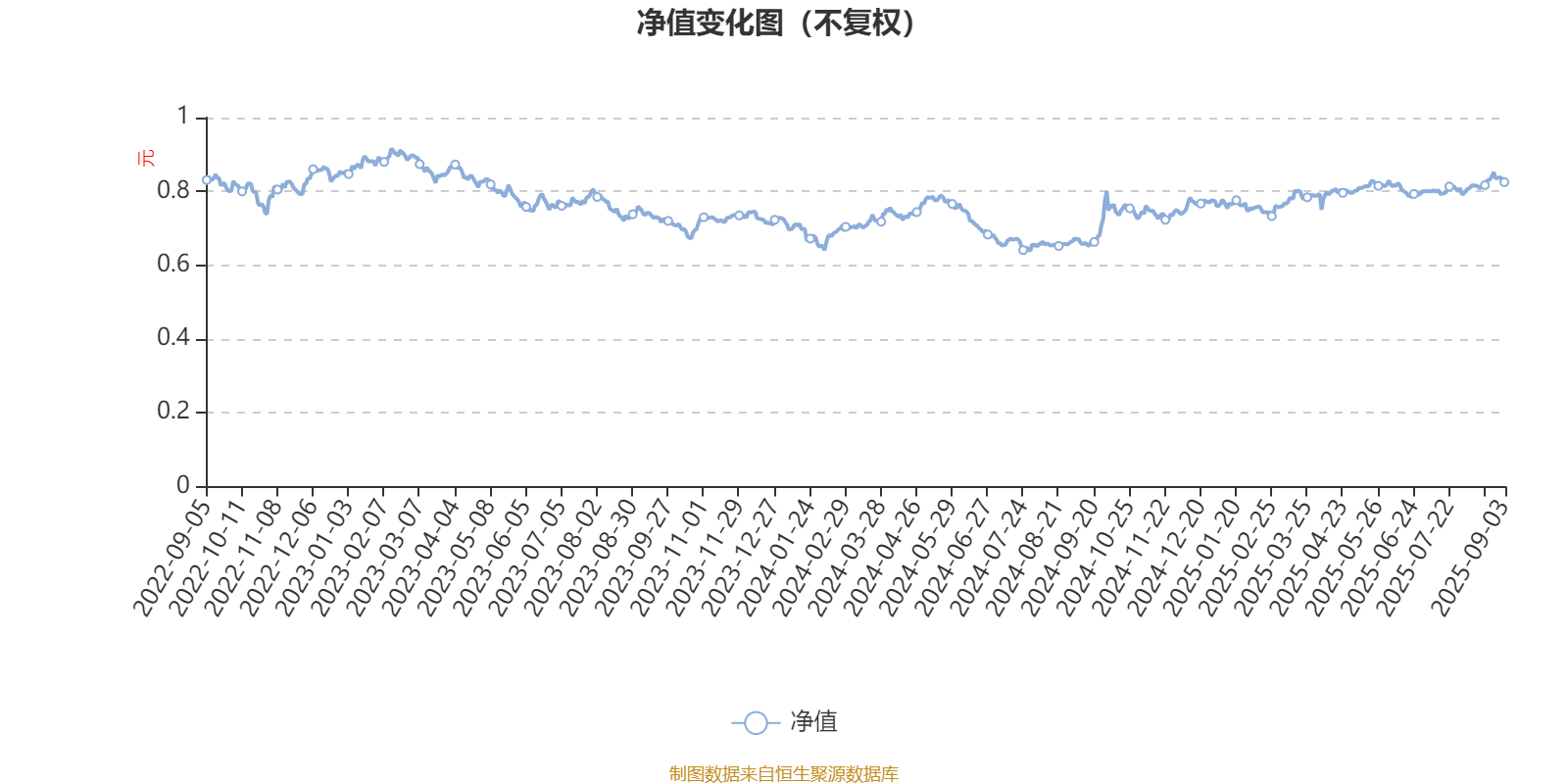
Core Viewpoint - The HSBC Jintrust Consumption Dividend Stock Fund (540009) reported a profit of 4.4466 million yuan for the first half of 2025, with a net value growth rate of 2.57% and a fund size of 196 million yuan as of the end of June 2025 [3][32]. Fund Performance - As of September 3, 2025, the fund's net value growth rates were 0.50% over the past three months, 9.04% over the past six months, 22.60% over the past year, and -2.13% over the past three years, ranking 34/41, 22/41, 20/41, and 10/38 among comparable funds respectively [6]. Valuation Metrics - As of June 30, 2025, the fund's weighted average price-to-earnings (P/E) ratio was approximately 17.91 times, lower than the industry average of 20.03 times. The weighted average price-to-book (P/B) ratio was about 2.69 times, compared to the industry average of 3.1 times, and the weighted average price-to-sales (P/S) ratio was around 1.34 times, against an industry average of 2.06 times [11]. Growth Metrics - For the first half of 2025, the weighted revenue growth rate of the fund's held stocks was 0.04%, while the weighted net profit growth rate was 0.46%, with a weighted annualized return on equity of 0.15% [18]. Fund Composition - As of June 30, 2025, the fund had a total of 6,044 holders, with a total of 247 million shares held. Institutional investors accounted for 35.13% of the holdings, while individual investors made up 64.87% [35]. The fund's top ten holdings included companies such as Haida Group, Gree Electric Appliances, and SF Holding [41]. Trading Activity - The fund's turnover rate for the last six months was approximately 169.03%, consistently higher than the industry average [38].

桐昆股份&恒力石化
2025-09-04 14:36
Summary of Conference Call Records Industry and Companies Involved - **Industry**: Petrochemical and Polyester Fiber Industry - **Companies**: Tongkun Co., Ltd. (桐昆股份) and Hengli Petrochemical (恒力石化) Key Points and Arguments Hengli Petrochemical 1. Hengli Petrochemical has achieved impressive performance since its production began in 2019, averaging a monthly profit of approximately 4 billion yuan, with capital expenditures tapering off and dividend payout ratios increased to over 50% [1][4] 2. The company is expected to benefit from the anti-involution policy, which is likely to enhance the midstream petrochemical sector's prosperity, driving product price spreads and valuation recovery [1][5] 3. With the new 10 million tons of PTA capacity coming online, Hengli Petrochemical is positioned for significant profit potential, supported by the lowest cost curve globally, providing a strong competitive advantage [1][5] 4. The company’s valuation is anticipated to recover to around 50, reflecting a favorable economic position as the anti-involution policy takes effect and interest rate cuts are expected [5] Tongkun Co., Ltd. 1. Tongkun is recognized as a leading enterprise in the domestic polyester filament market, with a strong scale and technological advantage [1][6] 2. The demand for polyester filament is steadily growing, primarily driven by the apparel and home textile sectors, with global annual consumption around 60 million tons, expected to increase with population growth and rising consumption levels [1][9] 3. The company is focusing on maintaining its market leadership and exploring new growth opportunities to achieve sustainable development [6] 4. Tongkun's current valuation is at a historical low of approximately 0.9 times PB, with potential for recovery as market conditions improve [18][20] Industry Challenges and Trends 1. The polyester filament industry faces supply-side challenges due to overcapacity from leading companies, which has led to a supply-demand imbalance affecting industry prosperity and profit margins [1][11] 2. The top five companies hold about 65% market share, indicating a highly concentrated market structure that impacts the expansion capabilities of smaller firms [11] 3. From 2024 onwards, leading companies are expected to slow down their capacity expansion, with annual growth rates projected to decrease to 1-2% by 2026-2027, while global demand continues to rise [12] 4. Collaborative efforts among leading companies to improve market conditions have shown some effectiveness, with strategies like reducing operating rates and joint pricing leading to slight performance improvements [14] Investment Insights 1. In the current market environment, investors are advised to focus on leading companies like Hengli Petrochemical, which have strong profit capabilities and ample cash flow, making them preferred choices for investment portfolios [7] 2. The shift in Tongkun's strategy from focusing on market share to prioritizing profit and market capitalization reflects a broader industry trend influenced by anti-involution policies [15] 3. The potential for valuation recovery in both companies is supported by historical patterns, with expectations for PB ratios to rise as market conditions improve [18][20] Policy Impact 1. Policy changes and industry regulations are crucial for the sector's development, with ongoing discussions between industry associations and government bodies regarding potential production restrictions [16] Future Outlook 1. The overall outlook for the polyester filament market remains optimistic, with expectations for demand growth and improved industry conditions as leading companies adjust their production strategies [10][12][20]


对话宏观:自上而下如何理解煤炭反内卷?
2025-09-04 14:36
Summary of Conference Call Records Industry Overview - The discussion revolves around the coal industry and its impact on the broader economy, particularly in relation to the "anti-involution" policy aimed at addressing insufficient domestic demand and industry profit issues [1][2][3]. Core Points and Arguments 1. **Anti-Involution Policy Goals**: - The policy aims to break the negative cycle of government revenue and corporate profits, focusing on industries like photovoltaic and new energy [1]. - Short-term goals include restraining corporate debt risks, while long-term goals focus on preventing local government risks and stabilizing the Producer Price Index (PPI) [2][3]. 2. **Importance of PPI**: - PPI's year-on-year growth is crucial as it directly affects corporate profitability and overall economic health. Continuous decline in PPI can lead to increased price competition and significant corporate losses [4][5]. - Measures to boost PPI include controlling overcapacity, increasing industry concentration, improving demand-side management, and enhancing regulatory oversight [5][6]. 3. **Commodity Price Management**: - Managing the prices of major commodities like coal, steel, and non-ferrous metals is seen as the most effective way to achieve PPI stabilization [7][9]. - A 1.42% increase in coal prices can lead to a 1% increase in overall PPI, indicating a strong elasticity in traditional commodities [9]. 4. **Specific Price Increase Requirements**: - To achieve a positive PPI by the end of the year, coal prices need to rise by 34% compared to the June average if coal is the only focus. However, if coal, steel, and non-ferrous metals all increase by 8%, PPI can return to positive growth [10][15]. 5. **Challenges and Future Trends**: - The difficulty of achieving PPI growth is likened to the challenge of gaining admission to a prestigious university, indicating significant hurdles ahead [10]. - Current price increases in coal (12%) and steel (5%) are still below the required levels, and future price movements will depend on policy clarity and market conditions [12][16]. Other Important Insights - **Debt Risk Management**: - The anti-involution policy is fundamentally about managing debt risks, particularly in industries like photovoltaic and new energy, which have seen a spread of debt issues [2][15]. - The focus is on fostering profitable enterprises rather than merely increasing production capacity to mitigate local government risks [2][3]. - **Market Expectations**: - The timing of policy announcements is crucial, with expectations for clarity in September to guide market behavior [14]. - The potential for extreme price increases in coal is low, as the current policy approach is more market-oriented, aiming to balance upstream and downstream profit distributions [17]. - **GDP Projections**: - The GDP performance for the second half of 2025 is expected to remain stable, influenced by external export demands and domestic infrastructure projects [18]. This summary encapsulates the key discussions and insights from the conference call, focusing on the coal industry and its implications for the broader economic landscape.
光伏周价格 | 头部企业“抱团”涨价,光伏产业链价格易涨难跌
TrendForce集邦· 2025-09-04 09:04
Core Viewpoint - The article discusses the recent price trends in the photovoltaic industry, highlighting the upward price movement across various segments despite an oversupply in the market and cautious demand from downstream customers [4][6][11]. Group 1: Polysilicon - The supply of polysilicon continues to increase, with monthly output expected to reach around 130,000 tons, an increase of approximately 8,000 tons from August [4]. - Market transactions remain cautious, with lower trading volumes and a lack of strong purchasing intent from downstream customers [5]. - Driven by national policies, polysilicon prices have not decreased despite the supply-demand imbalance, with the highest quotes reaching 55 RMB/kg [6]. Group 2: Silicon Wafers - The overall inventory of silicon wafers remains stable, but there are significant structural issues, particularly with 210RN wafers facing oversupply [8]. - Demand varies by size, with 183N and 210N wafers showing balanced demand, supporting price increases, while 210RN wafers struggle [8]. - Prices for 183N and 210N wafers are expected to rise by 0.05 RMB per piece due to healthy supply-demand relationships, while 210R prices are likely to remain unchanged [9]. Group 3: Solar Cells - The inventory levels of solar cells are relatively healthy, but there is a clear structural disparity in supply and demand [10]. - The demand for 210N high-efficiency cells is improving, providing solid support for prices, while 183N cells maintain competitiveness despite production-demand mismatches [9]. - Solar cell prices are expected to follow the upward trend of silicon wafer prices, indicating a challenging pricing environment [10]. Group 4: Solar Modules - The continuous rise in upstream prices is pushing up production costs for solar modules, yet terminal demand remains weak [11]. - Module manufacturers are raising quotes to above 0.7 RMB, but actual transaction prices hover around 0.68 RMB per watt, indicating a struggle to pass on cost increases [11]. - Despite the challenges, the price outlook for modules remains optimistic, supported by cost, policy, and demand factors, with a low likelihood of price reductions [11].

新能源及有色金属日报:政策预期影响较大,多晶硅盘面偏强运行-20250904
Hua Tai Qi Huo· 2025-09-04 05:59
Group 1: Report Investment Ratings - Industrial silicon: Unilateral - Neutral, no specific ratings for other strategies [2] - Polysilicon: Unilateral - Short - term range operation, no specific ratings for other strategies [5] Group 2: Core Views - Industrial silicon: With stable spot prices, significant supply increase, polysilicon self - disciplined production cuts in September on the consumer side, inventory may start to increase, and the industrial silicon market may experience weak and volatile operations influenced by overall commodity sentiment [2] - Polysilicon: Spot quotes have been raised, downstream product prices have also increased. After self - disciplined production cuts in September, there is a certain reduction in supply, and the supply - demand fundamentals have improved to some extent. The market is greatly affected by anti - involution policies, with large price fluctuations. In the medium - to - long - term, it is suitable to buy on dips [5] Group 3: Market Analysis of Industrial Silicon - Futures: On September 3, 2025, the industrial silicon futures price fluctuated. The main contract 2511 opened at 8520 yuan/ton and closed at 8490 yuan/ton, a change of (-25) yuan/ton or (-0.29)% from the previous settlement. The position of the main contract 2511 was 279742 lots, and the number of warehouse receipts was 50348 lots, a change of 319 lots from the previous day [1] - Supply: Industrial silicon spot prices remained stable. In August 2025, industrial silicon production was 386,000 tons, a 14% month - on - month increase and a 19% year - on - year decrease. From January to August 2025, cumulative production decreased by 20% year - on - year [1] - Consumption: The quoted price of silicone DMC was 10500 - 10800 (-50) yuan/ton. Downstream procurement was cautious due to poor terminal demand, and monomer plants still adopted a strategy of offering discounts to secure orders [1] Group 4: Market Analysis of Polysilicon - Futures: On September 3, 2025, the main polysilicon futures contract 2511 showed a strong and volatile trend, opening at 52000 yuan/ton and closing at 52160 yuan/ton, a 0.34% change from the previous trading day. The position of the main contract was 149210 lots, and the trading volume was 362759 lots [3] - Spot: Polysilicon spot prices remained stable. N - type material was priced at 49.00 - 54.00 (0.00) yuan/kg, and n - type granular silicon was priced at 48.00 - 49.00 (0.00) yuan/kg [3] - Inventory and Production: Polysilicon factory inventory decreased, while silicon wafer inventory increased. The latest polysilicon inventory was 213,000 tons, a - 14.29% month - on - month change; silicon wafer inventory was 18.05GW, a 3.68% month - on - month change. Weekly polysilicon production was 31,000 tons, a 6.53% week - on - week change; silicon wafer production was 13.31GW, an 8.30% week - on - week change [3] - Industry Forecast: In September, the expected polysilicon production in China is less than 130,000 tons, mainly due to expected production cuts in Inner Mongolia and Qinghai. Some second - and third - tier production lines have resumed production, offsetting part of the reduction [4] - Downstream Products: Silicon wafers, battery cells, and component prices remained stable [4]
广发期货《有色》日报-20250904
Guang Fa Qi Huo· 2025-09-04 05:51
Report Industry Investment Ratings No information provided in the reports regarding industry investment ratings. Core Views Copper - Macro: Fed's dovish stance boosts copper prices, but concerns about "stagflation" limit upside. Future price depends on smoothness of rate - cut expectations and impact of tariff - induced inflation. - Fundamentals: "Weak reality + stable expectations". Weak reality is due to potential decline in copper demand in H2, but limited supply elasticity restricts supply - demand deterioration. Stable expectations come from improved rate - cut expectations and domestic stimulus policies. Copper prices will at least oscillate without a clear US recession, and an upward cycle needs the resonance of commodity and financial attributes. The reference range for the main contract is 79,000 - 81,000 yuan/ton [1]. Aluminum - Alumina: Market shows "high supply, high inventory, low demand". Supply is affected by rainy - season bauxite imports and new capacity, while demand from electrolytic aluminum is limited. Current prices are near the cost zone, with limited downside. The reference range for the main contract is 2900 - 3200 yuan/ton. - Electrolytic Aluminum: Macro expectations and fundamental improvements resonate. Supply is at a high level, demand is marginally improving, and inventory is low. However, high prices suppress downstream purchases. The price is expected to oscillate between 20,400 - 21,000 yuan/ton, and may fall if demand does not improve [2]. Aluminum Alloy - Fed's rate - cut expectations boost the commodity atmosphere. Supply of scrap aluminum is tight, and some plants have reduced production due to tax policy adjustments. Demand is still weak but shows signs of improvement. If imports are limited, the price will remain firm, and the price difference with aluminum may narrow. The reference range for the main contract is 20,000 - 20,600 yuan/ton [3]. Zinc - Supply: Overseas mines are in an up - cycle, and high TC encourages smelters. August refined zinc output exceeded expectations. - Demand: Entering the peak season, spot trading has improved. The decline in the three primary processing industries' operating rates is limited. - Outlook: Supply is expected to be loose, providing limited upward impetus. Low and declining inventory provides support. Zinc prices may oscillate, with the main contract reference range of 21,500 - 23,000 yuan/ton [6]. Tin - Supply: Tin ore supply is tight, and imports decreased in July. Although Myanmar's production is expected to resume in Q4, it may be delayed. - Demand: Demand from the photovoltaic and electronics sectors is weak. - Outlook: Fundamentals are strong, and prices are oscillating at a high level. If supply recovers smoothly, short - selling is recommended; otherwise, prices will continue to oscillate between 265,000 - 285,000 yuan/ton [8]. Nickel - Macro: US rate - cut expectations and positive domestic policies. - Industry: Nickel prices fell, and spot trading was okay. Nickel ore prices are firm, and nickel - iron prices are strong. Stainless - steel demand is weak, and short - term supply - demand mismatch in nickel sulfate has pushed up prices. - Outlook: Cost provides support, and supply is expected to be loose in the medium - term. Prices are expected to adjust within the range of 118,000 - 126,000 yuan/ton [10]. Stainless Steel - Macro: Fed's rate - cut expectations and positive domestic policies ease export pressure and boost demand expectations. - Industry: Ore prices are firm, nickel - iron prices have increased, and chromium - iron supply has news disturbances. Supply pressure may increase, but terminal demand is still weak. - Outlook: Raw material prices support costs, and the market is cautiously optimistic. Prices are expected to oscillate between 12,600 - 13,400 yuan/ton [12]. Lithium Carbonate - Market: Prices continue to decline, with support around 72,000 yuan/ton. - Fundamentals: Supply contraction is gradually realized, with some reduction in production and imports. Demand is robust, but actual demand growth needs further tracking due to inventory pressure in the material industry. - Outlook: After a decline in the price center, it will oscillate widely, with the main contract reference range of 70,000 - 75,000 yuan/ton [13]. Summary by Relevant Catalogs Price and Basis Copper - SMM 1 electrolytic copper price rose 0.45% to 80,520 yuan/ton, and the premium decreased by 30 yuan/ton. - Import loss was - 53 yuan/ton, a decrease of 369.24 yuan/ton from the previous day [1]. Aluminum - SMM A00 aluminum price rose 0.10% to 20,730 yuan/ton, and the premium decreased by 10 yuan/ton. - Alumina prices in different regions decreased slightly [2]. Aluminum Alloy - SMM ADC12 prices remained stable at 20,750 yuan/ton. - The scrap - refined price difference in different regions increased [3]. Zinc - SMM 0 zinc ingot price rose 0.41% to 22,240 yuan/ton, and the premium remained unchanged. - Import loss was - 2479 yuan/ton, a decrease of 212.63 yuan/ton [6]. Tin - SMM 1 tin price fell 0.15% to 273,100 yuan/ton, and the premium decreased by 200 yuan/ton. - Import loss was - 20,238.59 yuan/ton, a 0.70% decrease [8]. Nickel - SMM 1 electrolytic nickel price fell 1.29% to 122,450 yuan/ton. - The cost of producing electrolytic nickel from integrated MHP and high - grade nickel matte decreased [10]. Stainless Steel - 304/2B (Wuxi and Foshan) prices fell 0.38% to 13,150 yuan/ton. - The spot - futures price difference decreased by 5 yuan/ton [12]. Lithium Carbonate - SMM battery - grade lithium carbonate price fell 2.06% to 75,900 yuan/ton. - The price of lithium spodumene concentrate decreased [13]. Month - to - Month Spreads - Copper, aluminum, zinc, tin, nickel, stainless steel, and lithium carbonate all have corresponding month - to - month spread data, with different changes in each case [1][2][3][6][8][10][12][13]. Fundamental Data Copper - August electrolytic copper production was 117.15 million tons, a 0.24% decrease. - July import volume was 29.69 million tons, a 1.20% decrease [1]. Aluminum - August alumina production was 773.82 million tons, a 1.15% increase. - August electrolytic aluminum production was 373.26 million tons, a 0.30% increase [2]. Aluminum Alloy - July recycled aluminum alloy ingot production was 62.50 million tons, a 1.63% increase. - July primary aluminum alloy ingot production was 26.60 million tons, a 4.31% increase [3]. Zinc - August refined zinc production was 62.62 million tons, a 3.88% increase. - July import volume was 1.79 million tons, a 50.35% decrease [6]. Tin - July tin ore import was 10,278 tons, a 13.71% decrease. - July refined tin production was 15,940 tons, a 15.42% increase [8]. Nickel - China's refined nickel production in August was 32,200 tons, a 1.26% increase. - July import volume was 17,536 tons, an 8.46% decrease [10]. Stainless Steel - China's 300 - series stainless - steel crude steel production (43 companies) in August was 171.33 million tons, a 3.83% decrease. - July import volume was 7.30 million tons, a 33.30% decrease [12]. Lithium Carbonate - August lithium carbonate production was 85,240 tons, a 4.55% increase. - July import volume was 13,845 tons, a 21.77% decrease [13].
国泰君安期货商品研究晨报:能源化工-20250904
Guo Tai Jun An Qi Huo· 2025-09-04 02:37
1. Report Industry Investment Ratings - No direct industry investment ratings are provided in the report. However, trend intensities are given for each product, indicating their short - to medium - term outlooks. For example, - 1 represents a weakly bearish outlook, 0 represents a neutral outlook, and - 2 represents a strongly bearish outlook [11][17][28] 2. Core Views of the Report - The report analyzes multiple energy and chemical products, highlighting their current market conditions, trends, and future outlooks. It notes that some products are facing cost pressures, supply - demand imbalances, and policy uncertainties, while others are influenced by seasonal factors and inventory levels [4][9][16] 3. Category - by - Category Summaries A. Aromatics and Polyester - Related Products - **Para - Xylene (PX)**: Cost has collapsed, and the unilateral trend has weakened. It is recommended to do 11 - 01 positive spreads and 1 - 5 reverse spreads. Unilateral prices have limited downside space, and it is advisable to go long on dips before mid - September [4][9] - **PTA**: Followed the decline in crude oil prices. Continue to focus on the 11 - 1 positive spreads for the month - spread and long PTA short PX for processing fees [4][9] - **MEG**: With the decline of coal and crude oil prices, the valuation of ethylene glycol has declined, and the short - term trend is weak [4][9] B. Rubber and Synthetic Rubber - **Rubber**: The market is in a weakly bearish and oscillating pattern. In August, the prices of natural rubber and other raw materials fluctuated upwards, and the tire raw material cost increased. The full - steel tire market price was basically stable in August, and it is expected to remain stable in September [10][11][13] - **Synthetic Rubber**: In the short term, it is in an oscillating and pressured state. The inventory of high - cis polybutadiene rubber has increased slightly, and the short - term supply of butadiene is under pressure. However, the "anti - involution" policy provides some support to the overall valuation of commodities [14][15][16] C. Bitumen - The price is under pressure from OPEC's potential production increase, but geopolitical risks still exist. The total weekly output of domestic bitumen decreased by 3.3% week - on - week and increased by 3.3% year - on - year. Both factory and social inventories have decreased [19][20][31] D. Plastics - **LLDPE**: In the short term, it is weak, and in the medium term, it will be in an oscillating market. The demand for PE is improving due to the upcoming peak season for the agricultural film industry, but recent commodity sentiment has declined, affecting futures prices. The supply pressure may be alleviated in the East China region at the end of September [32][33] - **PP**: In the short term, it oscillates, and in the medium term, there is still downward pressure. Although short - term demand has improved, the cost side is weak, and the supply pressure will increase in the future [36][37] E. Alkali Products - **Caustic Soda**: It is not advisable to chase short positions. The market will still have wide - range oscillations in the short term. The current driving force for caustic soda is insufficient, and the market is in a state of expectation game. The main obstacles to the rise are export and alumina [40][41] - **Soda Ash**: The spot market has little change. The domestic soda ash market is weakly stable and oscillating, with flexible price transactions. The downstream demand fluctuates little, and the procurement sentiment is not good [63][65] F. Pulp and Paper - **Pulp**: It is in an oscillating state. The spot price of pulp is stable, and the futures market has a slight upward trend. The supply side has support from the new round of foreign offers, but the demand side is still weak [45][48] - **Offset Printing Paper**: It is oscillating at a low level with limited upward momentum [2] G. Glass and Methanol - **Glass**: The price of the original glass sheet is stable. The short - term supply - demand situation is relatively stable, and downstream orders have little change [50][51] - **Methanol**: It is in an oscillating pattern. The short - term fundamentals have significant contradictions, with continuous inventory accumulation at ports. However, the "anti - involution" policy provides some support to the overall valuation of commodities [53][56][57] H. Fertilizers - **Urea**: Spot trading is light, and futures are at a premium. In the short term, the export has not significantly driven the spot market, and the mid - term trend is still under pressure due to the expected inventory accumulation in the fourth quarter [58][59][60] I. Styrene - **Styrene**: It is bearish in the medium term. The short - term market is oscillating, but the mid - term fundamentals are weak due to factors such as inventory accumulation and the end of the "anti - involution" hype [61][62] J. LPG and Propylene - **LPG**: There is an expectation of OPEC+ production increase, leading to a decline in crude oil cost [68] - **Propylene**: High spot prices have suppressed buying interest, and attention should be paid to the risk of price decline [69] K. PVC - The market is still under pressure. The high - production and high - inventory structure is difficult to change, and exports may be affected by policy disturbances [79][80][81] L. Fuel Oil - **Fuel Oil**: It has been continuously retracing, and may continue to be weaker than low - sulfur fuel oil in the short term [82] - **Low - Sulfur Fuel Oil**: The downward trend continues, and the spread between high - and low - sulfur fuels in the overseas spot market is oscillating at a high level [82] M. Shipping Index - **Container Shipping Index (European Line)**: It is in a wide - range oscillating state, with recent price declines in European and US - West shipping routes [84]
大越期货玻璃早报-20250904
Da Yue Qi Huo· 2025-09-04 02:21
Report Summary 1. Report Industry Investment Rating No information provided. 2. Core View of the Report The glass market is expected to be weak and fluctuate in the short term due to weak fundamentals, with supply at a relatively low level but terminal demand remaining sluggish and inventory rebounding [2][5]. 3. Summary by Related Catalogs 3.1 Daily View - The glass production profit has declined, industry cold repair has slowed, and the start - up rate and production have dropped to historical lows. Downstream deep - processing orders are less than in previous years, and real - estate terminal demand is weak [2]. - The basis shows that the futures price is at a premium to the spot price, with a basis of - 79 yuan for FG2601 [2]. - National float glass enterprise inventory is 62.566 billion weight boxes, a 1.64% decrease from the previous week, and it is above the 5 - year average [2]. - The price is below the 20 - day moving average, and the 20 - day moving average is downward [2]. - The main position is net short, and short positions are increasing [2]. - In summary, the glass fundamentals are weak, and it is expected to fluctuate weakly in the short term [2]. 3.2 Influencing Factors - **Likely Positive Factors**: There is an expectation of capacity clearance in the float glass industry under the influence of the "anti - involution" policy [3]. - **Likely Negative Factors**: Real - estate terminal demand is still weak, with deep - processing enterprise orders at a historical low. The capital collection in the deep - processing industry is not optimistic, and traders and processors are cautious, mainly digesting original inventory. The market sentiment of "anti - involution" has faded [4]. 3.3 Main Logic The glass supply has declined to a relatively low level, but the terminal demand is weak, and the inventory has rebounded. Therefore, the glass market is expected to fluctuate weakly [5]. 3.4 Glass Futures Market - The closing price of the main contract of glass futures increased by 0.09% to 1135 yuan/ton, the spot price of Shahe Safety large - board remained unchanged at 1056 yuan/ton, and the main basis decreased by 1.28% to - 79 yuan/ton [6]. 3.5 Glass Spot Market The market price of 5mm white glass large - board in Hebei Shahe, the spot benchmark, remained unchanged at 1056 yuan/ton compared with the previous day [11]. 3.6 Fundamental Analysis - **Cost Side**: The glass production profit has declined [2]. - **Supply Side**: The number of national float glass production lines in operation is 223, with a start - up rate of 75.49%, at a historical low. The daily melting capacity is 159,600 tons, at the lowest level in the same period in history but showing signs of stabilization and recovery [21][23]. - **Demand Side**: In June 2025, the apparent consumption of float glass was 4.634 million tons. The real - estate terminal demand is weak, and the orders of deep - processing enterprises are at a historical low [27]. - **Inventory**: National float glass enterprise inventory is 62.566 billion weight boxes, a 1.64% decrease from the previous week, and it is above the 5 - year average [2][42]. - **Supply - Demand Balance Sheet**: The report provides the annual supply - demand balance sheet of float glass from 2017 to 2024E, including data on production, apparent supply, consumption, production growth rate, consumption growth rate, and net import ratio [43].