关税政策

Search documents
美国零售商陷入圣诞荒
Yang Shi Wang· 2025-10-12 03:37
Core Insights - The National Christmas Tree Company, a major importer of artificial Christmas trees in the U.S., has reported a 25% decline in overall import volume this year due to the tariffs imposed by the Trump administration [1] - The company anticipates a supply shortage during the upcoming holiday season, with import volumes in August and September experiencing year-over-year declines of 58% and 70%, respectively [1] - In response to increased costs from tariffs, the company plans to raise product prices by 10% [1] Industry Impact - The limited inventory of artificial Christmas trees, along with other decorative items like lights and wreaths, is expected to affect the holiday market significantly [1] - The high production costs of artificial Christmas trees and related products in the U.S. are attributed to labor costs, making domestically produced trees 2.5 to 3 times more expensive than those manufactured abroad [1] - Several companies, including the National Christmas Tree Company, are in discussions with the U.S. Treasury and the Office of the U.S. Trade Representative to address supply issues during the holiday season [1]
泰国出口商被敦促将重点放在美国市场上
Shang Wu Bu Wang Zhan· 2025-10-11 16:23
Core Viewpoint - The new tariffs imposed by the United States on imported wooden furniture are prompting Thai manufacturers to enhance their competitiveness in the U.S. market rather than abandon it [1] Group 1: Tariff Details - The U.S. will impose a 10% tariff on imported softwood lumber and logs starting October 14 [1] - A 25% tariff will be applied to kitchen cabinets, vanities, and upholstered wooden furniture [1] Group 2: Impact on Thai Manufacturers - Deesawat Industries urges Thai companies to not give up on the U.S. market despite the new tariffs [1] - The new tariffs are expected to affect not only Thai exports to the U.S. but also create uncertainty for exports to other countries [1]
美联储,降息大消息
中国基金报· 2025-10-11 16:12
【导读】美联储官员关于降息的最新看法 中国基金报记者 泰勒 大家好,经历过昨晚全球暴跌,市场一片狼藉,今天没有特别多更进一步的消息。简单看看 美联储的官员,这两天对于接下来的降息路线,有何新的看法。 圣路易斯联储穆萨莱姆: 若劳动力市场走弱,愿意继续降息 圣路易斯联储主席阿尔贝托·穆萨莱姆 表示, 作为对劳动力市场走弱的"保险", 他支持上月 的降息举措,但同时重申,决策者仍需继续对抗偏高的通胀。 美联储官员们将于10月28 日 —29日召开下一次政策会议。 美联储理事巴尔: 对进一步降息应持谨慎态度 美联储理事迈克尔·巴尔 呼吁在进一步降息问题上保持谨慎,强调关税可能带来持续性的通 胀。 巴尔在一场活动的讲话中表示:"常识表明,当不确定性很高时,应该谨慎行事。" 他还说,联储官员"在调整政策时应保持谨慎,以便我们能够收集更多数据、更新预测,并更 好地评估风险平衡"。 巴尔表示他支持上个月美联储的降息举措,并称在就业走弱与通胀上行这两方面风险并存的 情况下,政策制定者如今处境艰难。 穆萨莱姆周五在一场活动上说:"展望未来,我对进一步降息持开放态度,以便为劳动力市场 走弱提供更多保险。但我认为我们必须谨慎行事, ...


特朗普关税最新消息,美联储核心领导齐发声,释放鸽派信号
Sou Hu Cai Jing· 2025-10-11 03:53
特朗普的关税政策成了一把双刃剑。 德国汽车工业协会主席希尔德加德·穆勒警告,特朗普的关税计划将导致美国汽车价格上涨,并给全球汽车 制造商带来不利影响。 美国进口商已把大部分关税以更高价格的形式转嫁给消费者。 美国标普全球4月份的综合价格指数升至一年多以来的最高水平,涨价主要受到关税、进口成本上升以及劳动力成本上涨的推动。 特朗普的关税大棒刚刚挥出,德国经济已经应声倒地,8月对美出口暴跌20%,创下四年新低。 但真正让人意外的是,这根关税大棒竟然弯了个 弯,反弹回来砸中了美国自己。 德国联邦统计局的数据显示,德国8月对美出口跌至109亿欧元,而自美进口却增长到80亿欧元。 表面上看,德国贸易顺差扩大至171.7亿欧元, 但这完全靠的是欧盟内部贸易在支撑。 德国经济研究所的测算描绘了更严峻的图景:如果美国持续对欧盟产品加征50%关税直至2028年底,德国经济将蒙受累计约2000亿欧元的损 失。 若欧盟实施对等反制,这一数字可能升至2500亿欧元。 白宫已多次表示可能通过提名更鸽派人士进入美联储理事会来影响政策方向。 鲍威尔任期将于2026年5月届满,特朗普对下一届主席提名人选的 态度及其可能推动的理事会结构重组, ...

美政府“停摆”令美国农场主处境雪上加霜
Xin Lang Cai Jing· 2025-10-11 02:14
美国政府的关税政策导致美国农业面临成本上涨和出口减少,而目前仍在持续的美国联邦政府"停摆", 让美国农场主们的处境雪上加霜。大豆对于美国农业及农产品出口至关重要。根据美国农业部的数据, 2024年大豆以245.8亿美元的出口额位居美国农产品出口首位,占农产品出口总额的14%。但美国政府 的关税政策导致农业成本不断上涨,而且还极大损害了美国和其他国家的贸易关系,使得大豆等农产品 的出口受到极大冲击。正值收获季的美国农场主们不知该如何处理收获的大豆,这让像罗布·埃沃特这 样的农场主苦不堪言。(央视新闻) ...
直线大跳水!刚刚,162万人爆仓!
Sou Hu Cai Jing· 2025-10-11 01:03
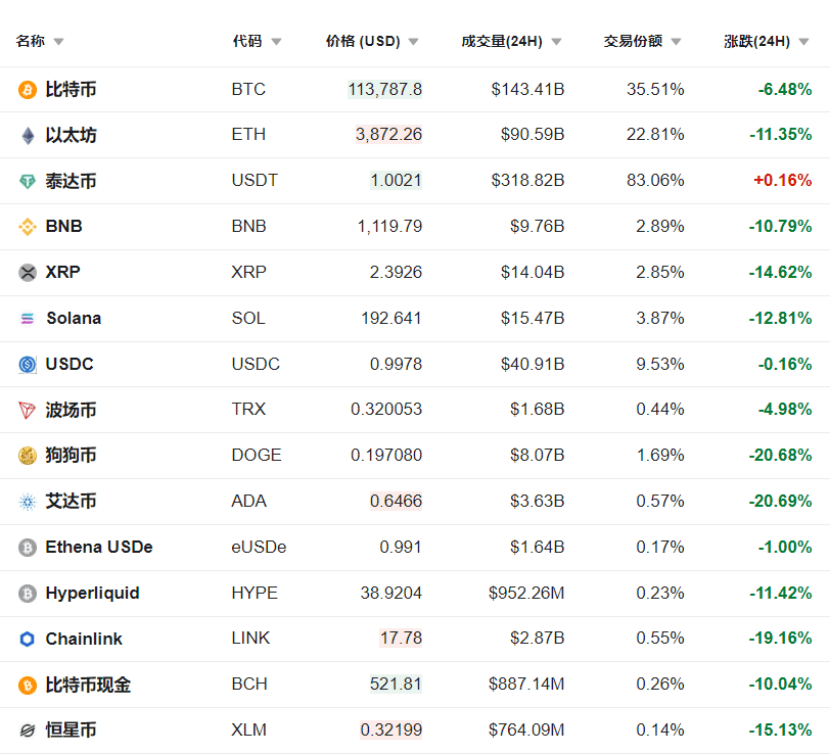
加密货币,全线大跌! 在美国关税政策反复无常、美国联邦政府"停摆"持续的背景下,投机属性较强的加密货币市场迎来大跌行情。刚刚过 去的24小时内,比特币跌幅一度暴跌近15%,以太坊一度跌超20%,其他市值更小的加密货币也纷纷大跌。 此次急速大跳水,又导致不少人爆仓。coinglass数据显示,过去24小时,加密货币全网合约爆仓超190亿美元,爆仓人 数高达162万人,其中九成为多单爆仓。 加密货币集体暴跌 随着美股市场的跳水,加密货币市场也迎来暴跌。过去24小时内,比特币一度从12.2万美元的位置直线跳水至10.39万 美元,跌幅接近15%;以太坊一度从4363美元跳水至3468美元,跌幅超过20%。艾达币、BNB、XRP等纷纷重挫。 截至记者发稿时,比特币跌6.48%报11.38万美元,以太坊跌超11%报3872美元,BNB跌超10%,Solana跌超12%,XRP 跌近15%,艾达币、狗狗币跌超20%。 隔夜(10月10日),美股市场也大幅跳水,纳指跌幅超过3.5%。加密货币概念股集体重挫,Coinbase、MARA跌近 8%,Circle跌超11%,Robinhood跌近9%,MicroStrategy跌 ...
特朗普5天下达4道关税令,税率最高达100%,美国要将油门踩到底?
Sou Hu Cai Jing· 2025-10-10 19:12
Group 1: Tariff Policies - President Trump issued four tariff orders within five days, targeting imported patented drugs, cabinets and soft furniture, heavy trucks produced abroad, and foreign-made films, with the highest tax rate reaching 100% for patented drugs and films [1][3] - The tariffs are designed to protect domestic industries, with specific rates set at 100% for patented drugs, 50% for cabinets, and 30% for soft furniture, aiming to encourage manufacturing to return to the U.S. [3][5] - The 25% tariff on heavy trucks includes exemptions for products under the USMCA agreement, balancing regional trade cooperation with domestic industry protection [5] Group 2: Economic and Political Implications - The tariffs reflect a response to significant trade deficits and the outflow of manufacturing jobs, which are critical concerns for the Trump administration [8] - The targeted industries correspond to the needs of swing states, such as Michigan's auto manufacturing and North Carolina's furniture industry, aiming to secure support from blue-collar voters [8] - The classification of foreign film production as a "national security threat" indicates concerns over the erosion of American cultural influence, as Hollywood has been a key vehicle for U.S. values [8] Group 3: Global Trade Reactions - The U.S. tariffs have triggered a global backlash, with the EU considering trade countermeasures and China implementing targeted measures against U.S. entities [10] - Canada expressed dissatisfaction with the discriminatory exemptions for heavy trucks, indicating a refusal to concede on trade issues with the U.S. [10] - The unilateral approach of the U.S. may risk shrinking overseas markets for American companies and destabilizing global supply chains [10] Group 4: Societal Impact - The tariffs may lead to increased costs for American consumers, particularly in pharmaceuticals and other goods, raising concerns about the actual benefits of the policies [12] - The disconnect between the intended goals of the tariffs and their real-world effects is becoming evident, with ordinary citizens facing higher living costs [12] - The ongoing pressure from both domestic and international fronts may challenge the sustainability of Trump's aggressive tariff strategy [14]
Tariff News Pushing Portfolios Down? Add Active ETF Flexibility
Etftrends· 2025-10-10 16:51
Core Insights - The recent tariff announcements by the president have significantly impacted market dynamics, creating both opportunities and challenges for investors [1][3] - Active ETFs are positioned to adapt more swiftly to tariff news compared to passive funds, which are bound by strict allocation rules [1][2] Active ETFs vs. Passive Funds - Passive international equity funds are constrained by market-cap approaches, potentially favoring larger firms and neglecting smaller firms with higher growth potential [2] - Active ETFs provide greater flexibility in investment strategies, allowing for a broader range of investments across different categories and market capitalizations [2] Investment Strategies Amid Tariff News - The potential for high tariffs necessitates identifying companies with strong cash flows that can withstand increased input costs [3] - Investors facing tax liabilities may consider reallocating equity investments into active ETFs as a strategy for tax-loss harvesting [3] - The uncertainty surrounding future tariffs suggests that incorporating active ETF exposure could be a beneficial strategy for portfolio management [3]
President Trump threatens 'massive' tariff increase on Chinese products into U.S.
Youtube· 2025-10-10 15:54
Group 1: Market Reaction - The market has sharply declined following the president's announcement regarding potential retaliatory measures against China, particularly in response to China's restrictions on rare earth materials [1][7] - The NASDAQ, which was approaching its 33rd record high of the year, fell by a full percent due to the tariff discussions [7] Group 2: U.S.-China Relations - The president has threatened unspecified retaliatory actions against China and appears to have canceled a scheduled meeting with President Xi Jinping, citing the Chinese move as surprising and inappropriate [2][4][9] - The president indicated that the U.S. has two monopolies and is considering a significant increase in tariffs on Chinese imports as a countermeasure [5][6] Group 3: Rare Earth Materials - The U.S. is particularly vulnerable to China's control over rare earth materials, which are essential for various industries [14] - The Chinese government is perceived to be leveraging its position during a transitional period for the U.S. as it attempts to establish its own supply chains for rare earths [14][15] Group 4: Agricultural Impact - The U.S. agricultural sector, particularly soybean farmers, is facing significant challenges due to reduced Chinese purchases, prompting discussions of a targeted bailout for the soy industry [20][24] - The political sensitivity surrounding rural America is highlighted, as the president aims to mitigate the economic impact of trade policies on this demographic [24][25]
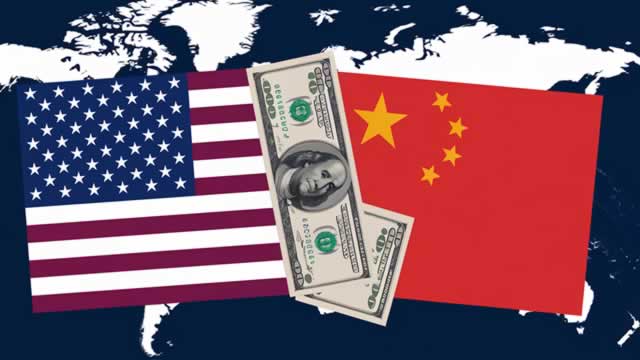
Stocks Tumble As Trump Mulls 'Massive' China Tariffs: What's Moving Markets Friday?
Benzinga· 2025-10-10 15:47
Market Reaction - The stock market experienced a significant decline following President Trump's threat of a substantial increase in tariffs on Chinese imports, leading to a sharp drop in equity indices and risk sentiment [1][3]. - By 12:25 p.m. ET, the Nasdaq 100 fell nearly 2% to below 24,600 points, while the Dow Jones Industrial Average decreased about 400 points, or 1%, to below 46,000 [3][8]. Company Performance - Advanced Micro Devices (NASDAQ:AMD) was among the top decliners, dropping 7% after a strong week that had positioned it for its best weekly performance since 2016 [3]. - Chinese stocks faced significant losses, with JD.com Inc. (NASDAQ:JD), Alibaba Group Holding Ltd. (NYSE:BABA), Baidu Inc. (NASDAQ:BIDU), and PDD Holdings Inc. (NASDAQ:PDD) each declining approximately 4% or more [4]. ETF and Commodity Movements - The iShares China Large-Cap ETF (NYSE:FXI) fell by 3.2%, reflecting the broader decline in Chinese equities [4]. - The U.S. dollar weakened, while gold prices rebounded above $4,000 per ounce as investors sought safe-haven assets [4].