货币政策宽松

Search documents
银行股逆势走强成避风港,农行A股大涨3.5%创新高
Di Yi Cai Jing· 2025-11-12 12:56
Core Viewpoint - The banking sector has emerged as a "safe haven" amid market downturns, with significant gains in stock prices, particularly among state-owned banks, driven by rising risk aversion, institutional fund inflows, and expectations of loose monetary policy [1][2][3]. Group 1: Market Performance - On November 12, the banking index rose by 0.46%, outperforming the Shanghai Composite Index, which fell by 0.07%, and the Shenzhen Component Index, which declined by 0.36% [1]. - The banking sector has accumulated an increase of 8.73% as of the close on November 12 [1]. - Agricultural Bank of China led the sector with a 3.49% increase, reaching a market capitalization of over 3 trillion yuan [2]. Group 2: Fund Flows and Investment Trends - The banking sector saw a net inflow of 1.076 billion yuan in principal funds, with Agricultural Bank, Ping An Bank, and Construction Bank being the top beneficiaries [2]. - The E Fund Bank ETF attracted 567 million yuan over nearly 22 trading days, indicating strong interest in banking stocks [2]. Group 3: Factors Driving Performance - Analysts attribute the banking sector's resilience to a combination of heightened risk aversion, sustained long-term fund allocation, and reinforced expectations of monetary policy easing [3]. - The average dividend yield for the banking sector is approximately 6.5%, significantly higher than the 1.80% yield on 10-year government bonds, making it attractive for low-risk investors [3]. Group 4: Future Outlook - Analysts expect the high dividend strategy to remain a key theme, with long-term funds likely to continue increasing their allocations to banking stocks [4][6]. - The banking sector is anticipated to benefit from a stable net interest margin and improved profitability due to supportive monetary policies and financial regulations [5][6]. - Structural adjustments in banking services towards technology, green finance, and pension finance are expected to enhance long-term growth prospects and valuation recovery [6].
黄文涛:A股、港股有“新四牛”逻辑
Zhong Guo Xin Wen Wang· 2025-11-12 12:25
Core Viewpoint - The new rise of A-shares and Hong Kong stocks is driven by the "New Four Bulls" logic, which includes capital inflow, technological innovation, institutional reform, and consumption upgrade [1][2]. Group 1: New Four Bulls Logic - Capital inflow is a significant factor driving the market [2]. - Technological innovation is expected to play a crucial role in market dynamics [2]. - Institutional reform is anticipated to enhance market efficiency and attractiveness [2]. - Consumption upgrade reflects the changing consumer behavior and spending patterns [2]. Group 2: Market Outlook - The "New Four Bulls" market trend is expected to gradually unfold along an upward trajectory, with the market center gradually rising, maintaining a "slow bull" pattern through 2026 [2]. - Key investment themes will revolve around technological self-reliance, industrial upgrades, and resource security, with opportunities identified in AI, semiconductors, computers, primary products, precious metals, new energy, high-end manufacturing, humanoid robots, and low-altitude economy [2]. Group 3: Monetary Policy and Economic Environment - The U.S. is projected to be in a rate-cutting cycle over the next two to three years, while China is expected to implement a dual easing of fiscal and monetary policies, creating a favorable external environment [3]. - By 2026, China's monetary policy is anticipated to remain accommodative, with a potential 50 basis point reduction in the reserve requirement ratio and continued interest rate cuts [3]. - The easing monetary policy is expected to positively impact macroeconomic stability and capital markets, supporting growth, employment, and expectations [3]. Group 4: Saudi-China Investment Cooperation - The Saudi stock exchange is focused on deepening capital cooperation opportunities between Saudi Arabia and China, enhancing connectivity [3]. - China's direct investment in Saudi Arabia is rapidly increasing, indicating a growing partnership in both scale and strategic depth [3]. - The Saudi stock exchange has signed memorandums of understanding with Shanghai and Shenzhen exchanges to promote bilateral capital flow [5].



房贷利率又下调了!
Sou Hu Cai Jing· 2025-11-12 06:44
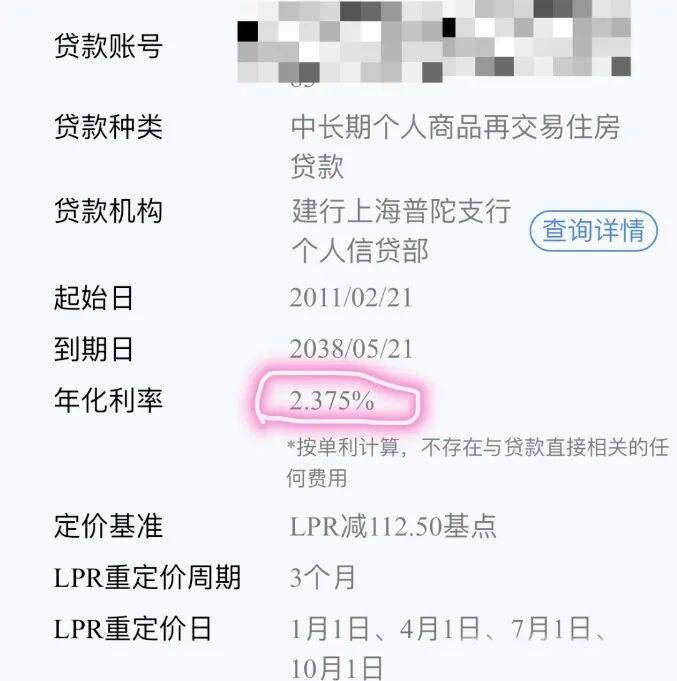
Core Viewpoint - A significant number of homeowners have seen their mortgage interest rates reduced, with one case reporting a rate as low as 2.375%, which is a reduction of 112.5 basis points from the LPR [1][2]. Group 1: Mortgage Rate Changes - The mortgage rate of 2.375% is based on a pricing benchmark of LPR minus 112.5 basis points, indicating a trend of decreasing rates for existing loans [2]. - The average weighted interest rate for newly issued commercial personal housing loans in Q3 2025 was reported at 3.07%, which is a decrease of approximately 26 basis points compared to the average of 3.33% in the same period of 2024 [3]. Group 2: Monetary Policy and Economic Signals - The Federal Reserve has lowered interest rates by a total of 50 basis points over the past two months, with predictions of an additional 25 basis points cut in December, creating more room for domestic rate reductions [3]. - The central bank has indicated a "moderately loose" monetary policy, suggesting potential rate cuts of up to 30 basis points and a reserve requirement ratio reduction of 0.5 percentage points [4]. - A favorable credit environment is emerging for prospective homebuyers, with expectations of lower starting rates for new mortgages and potential reductions in monthly payments for existing borrowers due to anticipated LPR adjustments [6]. Group 3: Future Outlook - All indicators, from international trends to domestic policies, suggest that the monetary policy is shifting towards easing, with a high likelihood of continued interest rate cuts into late 2025 and early 2026 [6].
欧盟推迟实施碳排放新规恐压制通胀 欧洲央行或被迫重启宽松
智通财经网· 2025-11-12 06:44
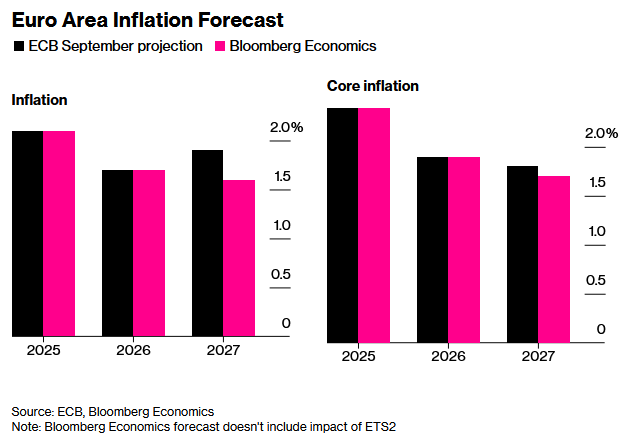
Core Viewpoint - The postponement of the EU's new carbon pricing system (ETS2) is expected to exert pressure on inflation forecasts and may reignite calls for further interest rate cuts in the market [1][4]. Group 1: Impact on Inflation - The delay in implementing ETS2 could lead to lower consumer price index (CPI) growth in the Eurozone by 2027 compared to current predictions, potentially resulting in inflation rates below the European Central Bank's (ECB) target of 2% for 2026 and 2027 [1][4]. - Danske Bank economists suggest that if ETS2 does not take effect by 2027, the extent of low inflation could be greater, providing a rationale for further rate cuts despite opposition from some officials [4]. - The ECB's latest quarterly forecast anticipates inflation rates of 1.7% and 1.9% for the next two years, with research indicating that ETS2 could raise inflation by 0.2 percentage points or more in 2027 [4][7]. Group 2: Political and Economic Context - Despite political commitments to significantly reduce carbon emissions by 2040, concerns over rising energy costs may lead to voter backlash, complicating the implementation of ETS2 [7]. - The ETS2 aims to expand the existing emissions trading system to include sectors like construction and road transport, which could have broader economic implications [7]. - ECB President Lagarde downplayed the risks associated with the delay, indicating that the EU Commission's proposal still aims for a 2027 launch, while other ECB officials emphasize that achieving the 2% inflation target heavily relies on the implementation of ETS2 [7]. Group 3: Broader Economic Implications - Analysts from Morgan Stanley and Bank of America suggest that the ETS2 issue alone may not decisively influence ECB policy, especially given the unexpectedly strong GDP growth in the Eurozone [7]. - However, if economic conditions weaken due to ongoing trade issues and inflation expectations decline, the situation may shift towards further monetary easing [7].
宁证期货今日早评-20251112
Ning Zheng Qi Huo· 2025-11-12 02:25
1. Report Industry Investment Ratings No industry investment ratings are provided in the given reports. 2. Core Views of the Report - The economic downward pressure in the US is increasing, raising the probability of an interest - rate cut in December, but there are still internal differences within the Fed. Gold is expected to be volatile and bullish in the short - term and may experience high - level oscillations in the medium - term [1]. - Investors are evaluating the impact of US sanctions on Russia, and the international oil price has risen for three consecutive days. However, concerns about oversupply in the oil market limit price increases, and oil prices are expected to run in a volatile manner [1]. - The US government shutdown is about to end, risk appetite has increased. Silver has broken out of the narrow - range oscillation range, with short - term correction pressure, and attention should be paid to whether there is a divergence between the medium - term trends of silver and gold [3]. - The monetary policy remains in a loose orientation, which supports the bond market in the long - term. However, due to factors such as liquidity easing, the stock - bond seesaw effect, and open - market bond trading, the operation of the bond market becomes more difficult, and it is expected to oscillate in the medium - term [3]. - The national hog price adjusted weakly and steadily. The SPPOMA data shows that the production of Malaysian palm oil from November 1 - 10, 2025 decreased compared to the same period last month. Palm oil prices are expected to have room for further increase, and short - term long positions can be considered [5]. - The domestic methanol market is expected to oscillate weakly in the short - term, with the upper pressure at the 2120 level, and it is recommended to wait and see for further stabilization [7]. - The short - term short - fiber is expected to fluctuate following the cost side and run in a volatile manner [7]. - The domestic PVC market is expected to oscillate weakly in the short - term, with the upper pressure at the 4625 level for the 01 contract, and it is recommended to wait and see [8]. - The domestic soda ash market is expected to run in a volatile manner in the short - term, with the lower support at the 1205 level for the 01 contract, and it is recommended to wait and see or do short - term long positions on corrections [9]. - The synthetic rubber market is expected to run weakly in a volatile manner due to weak supply - demand drivers [10][11]. 3. Summaries by Related Catalogs Gold - According to ADP statistics, from October 1 - 25, the US private sector lost an average of 11,250 jobs every two weeks, with a total loss of 45,000 jobs in the month, the largest monthly decline since March 2023. The US economic downward pressure increases the probability of an interest - rate cut in December, but there are internal differences within the Fed. The US dollar index has weak upward momentum, and gold is volatile and bullish in the short - term and may experience high - level oscillations in the medium - term [1]. Crude Oil - A Reuters survey of five analysts shows that as of the week of November 7, US crude oil inventories increased by about 1.2 million barrels, with an estimated range of a decrease of 2 million barrels to an increase of 6 million barrels; US gasoline inventories decreased by 2.6 million barrels, with an estimated range of a decrease of 1.2 - 4 million barrels. Investors are evaluating the impact of US sanctions on Russia, and the expectation of the end of the US government shutdown has led to three consecutive days of oil price increases. However, concerns about oversupply in the oil market limit price increases, and oil prices are expected to run in a volatile manner. The OPEC and IEA November "Oil Market Monthly Reports" will be released on November 12 and 13 respectively [1]. Silver - The US Senate passed the "Continuing Appropriations and Extension Act", taking a key step to end the government shutdown. The bill will provide funds for the federal government until January 30 next year, revoke some lay - off measures during the shutdown, and temporarily prevent further lay - offs. The US House of Representatives plans to vote on the Senate - passed temporary appropriation bill on Wednesday. The end of the government shutdown has increased risk appetite. Silver has broken out of the narrow - range oscillation range, with short - term correction pressure, and attention should be paid to whether there is a divergence between the medium - term trends of silver and gold [3]. Long - term Treasury Bonds - The central bank's third - quarter monetary policy implementation report states that in the next step, a moderately loose monetary policy will be implemented to keep social financing conditions relatively loose, while continuing to improve the monetary policy framework and strengthening the implementation and transmission of monetary policy. The monetary policy remains in a loose orientation, which supports the bond market in the long - term. The central bank's open - market bond trading and continuous short - term liquidity injection are both positive for the bond market. However, due to factors such as liquidity easing, the stock - bond seesaw effect, and open - market bond trading, the operation of the bond market becomes more difficult, and it is expected to oscillate in the medium - term [3]. Hog - According to the monitoring of the Ministry of Agriculture and Rural Affairs, on November 11, the "Agricultural Product Wholesale Price 200 Index" was 125.57, and the "Vegetable Basket" product wholesale price index was 127.67, up 0.01 point from the previous day. As of 14:00, the average price of pork in the national agricultural product wholesale market was 18.11 yuan/kg, down 0.1% from the previous day. The national hog price adjusted weakly and steadily. The large - scale enterprises' slaughter progress was a bit slow and still under pressure, while the slaughter of large - weight hogs by small farmers increased, and the terminal demand was insufficient. The supply exceeded the demand, and the price mainly adjusted weakly. The LH2601 contract still has downward pressure in the short - term and will oscillate at the bottom. The breeding side can hedge in a timely manner according to the slaughter rhythm [4]. Soybean Meal - According to Mysteel statistics, on the previous trading day, the total sales volume of soybean meal in major domestic oil mills was 314,100 tons, an increase of 120,500 tons from the previous trading day. Among them, the spot sales volume was 125,100 tons, an increase of 39,500 tons from the previous trading day, and the far - month basis sales volume was 189,000 tons, an increase of 81,000 tons from the previous trading day. The operating rate of the national dynamic full - sample oil mills was 53.51%, a decrease of 2.55% from the previous day. Currently, the supply of imported soybeans is sufficient, the operating rate of oil mills is slowly recovering, and the crushing volume is at a relatively high level, while the demand is relatively stable. The increase in soybean meal inventory limits the upward space of spot prices. The purchasing sentiment of downstream feed enterprises is average, and they mainly replenish inventory based on existing inventory levels. The 01 contract is expected to oscillate in a narrow range between 3030 - 3090 in the short - term [4]. Palm Oil - The SPPOMA data shows that the production of Malaysian palm oil from November 1 - 10, 2025 decreased compared to the same period last month. The implementation of Canada's clean - fuel regulations and local government blending policies has led to a rise in rapeseed oil prices, driving up palm oil prices. Domestically, the basis prices in various regions, especially in South China, have increased rapidly, and the market trading is light, mainly fulfilling previous contracts. Palm oil prices are expected to have room for further increase, and short - term long positions can be considered [5]. Methanol - The weekly signing volume of methanol sample production enterprises in the northwest region was 88,800 tons, an increase of 64,900 tons from the previous week. The market price of methanol in Taicang, Jiangsu was 2060 yuan/ton, and the price remained stable. The domestic weekly methanol production capacity utilization rate was 87.79%, an increase of 1.18%. The 700,000 - ton/year methanol plant of Yulin Kaiyue is expected to resume operation this week. The total downstream production capacity utilization rate was 74.84%, a decrease of 0.43% from the previous week. The inventory of Chinese methanol ports was 1.5171 million tons, an increase of 10,600 tons from the previous week. The inventory of Chinese methanol sample production enterprises was 386,400 tons, an increase of 10,400 tons from the previous week. The domestic methanol market is expected to oscillate weakly in the short - term, with the upper pressure at the 2120 level, and it is recommended to wait and see for further stabilization [7]. Short - fiber - The production of Chinese polyester short - fiber this cycle was 167,000 tons, a week - on - week increase of 5200 tons, with a growth rate of 3.21%. The average comprehensive production capacity utilization rate during this cycle was 88.37%, a week - on - week increase of 2.74%. The sales - to - production ratio of polyester short - fiber factories on the previous trading day was 41.96%, a decrease of 28.51% from the previous trading day. Supply has increased while demand has remained flat, with a slight inventory build - up this week. After the sales - to - production ratio reached a high, it declined, but the overall inventory pressure is not large. The short - term short - fiber is expected to fluctuate following the cost side and run in a volatile manner [7]. PVC - The price of East China SG - 5 type PVC was 4510 yuan/ton, a decrease of 10 yuan/ton from the previous day. The PVC production capacity utilization rate was 80.75%, a week - on - week increase of 2.49%. The PVC social inventory was 1.0352 million tons, a week - on - week decrease of 0.13%. The average profit of national calcium - carbide - based PVC production enterprises was - 769 yuan/ton, and the average profit of national ethylene - based PVC production enterprises was - 465 yuan/ton. The operating rate of domestic PVC pipe sample enterprises was 39.4%, a decrease of 2.6 percentage points from the previous week. The domestic PVC market is expected to oscillate weakly in the short - term, with the upper pressure at the 4625 level for the 01 contract, and it is recommended to wait and see [8]. Soda Ash - The mainstream price of national heavy - duty soda ash was 1264 yuan/ton, and the price remained stable. The weekly production of soda ash was 746,800 tons, a week - on - week decrease of 1.43%. The total inventory of soda ash manufacturers was 1.7142 million tons, a week - on - week increase of 0.72%. The operating rate of float glass was 75.92%, a week - on - week decrease of 0.43 percentage points. The national average price of float glass was 1150 yuan/ton, a decrease of 3 yuan/ton from the previous day. The total inventory of national float glass sample enterprises was 63.136 million weight cases, a week - on - week decrease of 4.03%. The domestic soda ash market is expected to run in a volatile manner in the short - term, with the lower support at the 1205 level for the 01 contract, and it is recommended to wait and see or do short - term long positions on corrections [9]. Synthetic Rubber - As of November 11, the price of butadiene in the Shandong market was 6975 yuan/ton, and the price of cis - polybutadiene rubber of Qilu Petrochemical was 10,400 yuan/ton. As of November 11, the weekly average profit of the C4 extraction process was 237 yuan/ton. Based on the butadiene price, the static cost of cis - polybutadiene rubber was estimated to be 8500 yuan/ton. On November 10, the latest market data released by the Passenger Car Association showed that the retail sales volume of the national passenger car market in October reached 2.242 million vehicles, a year - on - year decrease of 0.8% and a month - on - month slight decrease of 0.1%. The raw material side is still under pressure from large domestic supply. On the demand side, tire enterprises still face shipment pressure, and foreign trade orders are less than expected. Some enterprises plan to reduce production or conduct maintenance in November, which will restrict the improvement of overall production capacity utilization. There is a lack of substantial positive factors. The synthetic rubber market is expected to run weakly in a volatile manner [10][11].
日媒:基建腐败重创菲律宾经济
Huan Qiu Shi Bao· 2025-11-10 22:51
Group 1 - The Philippines' economy has been significantly impacted by a widespread infrastructure corruption scandal, leading to a growth rate of only 4.0% in Q3, the slowest since the COVID-19 pandemic began [1][3] - The corruption scandal has severely undermined consumer and investor confidence, with public construction growth contracting by 26.1%, the lowest level since 2011 [3] - Estimated economic losses from corruption in flood control projects alone amount to approximately 118.5 billion pesos, with total losses in public infrastructure from 2022 to 2025 projected at around 623.5 billion pesos [1][3] Group 2 - The Philippine peso has experienced a sharp decline, reflecting market concerns over economic stability and potential growth slowdown due to infrastructure spending controversies [3] - The government is facing challenges in achieving its annual growth target of 5.5%, with current growth rates falling short of expectations [3] - Geopolitical risks have deterred foreign investment, particularly from Chinese and Western multinational companies, leading to a shift of potential investments to neighboring countries like Vietnam, Malaysia, and Thailand [4]

澳洲联储副主席警示降息空间受限,通胀压力与产能瓶颈制约货币政策宽松
Sou Hu Cai Jing· 2025-11-10 11:23
Core Viewpoint - The Reserve Bank of Australia's Deputy Governor Andrew Hauser indicated that the current economy faces significant capacity constraints, limiting further interest rate cuts [1] Economic Conditions - Economic capacity utilization is at its highest level in the past 40 years during the recovery period [1] - Inflation pressures remain persistently above the central bank's target range, increasing the risk of continuing loose monetary policy [1] Monetary Policy - Hauser emphasized that if demand growth exceeds existing capacity limits, it will exacerbate inflationary risks [1] - Despite the RBA having implemented three interest rate cuts totaling 75 basis points, the latest data shows a rebound in inflation in the third quarter, forcing the central bank to pause further easing measures [1]
铜周报:铜价延续上涨趋势-20251109
Dong Ya Qi Huo· 2025-11-09 01:23
Report Summary 1. Investment Rating No investment rating for the copper industry is provided in the report. 2. Core View - The macro - environment and fundamentals still offer positive support, but high copper prices suppress consumption and there is inventory accumulation pressure. As a result, Shanghai copper is expected to fluctuate strongly at a high level [3][4]. 3. Summary by Category Copper Futures Market - **Price and Volume Data**: The latest price of Shanghai Copper Main Contract is 85,940 yuan/ton, with a weekly decline of 1.23%. Its position is 207,136 lots, down 51,183 lots from the previous week, and the trading volume is 91,276 lots. Similar declines are seen in other copper futures contracts such as Shanghai Copper Index - weighted, International Copper, LME Copper 3 - month, and COMEX Copper [5]. Copper Spot Market - **Price and Premium Data**: The latest price of Shanghai Non - ferrous 1 copper is 86,015 yuan/ton, down 1.555 yuan/ton (-1.78%) from the previous week. Different spot trading platforms show varying price changes and premium adjustments [9][10]. Copper Advanced Data - **Import Profit, TC, and Ratios**: The copper import profit is - 521.63 yuan/ton, with a weekly change of 301.49 yuan/ton (-36.63%). The copper concentrate TC is - 42 dollars/ton, with a slight change. The copper - aluminum ratio and the refined - scrap copper price difference also show certain fluctuations [11]. Copper Inventory - **Inventory Changes**: The total Shanghai Copper warehouse receipts are 43,394 tons, up 3,684 tons (9.28%) from the previous week. Different inventory types, including international copper, LME copper, COMEX copper, and social inventories, show various trends [17][19]. Copper Mid - stream Production - **Output and Capacity Utilization**: In September 2025, the refined copper production was 1.266 million tons, a year - on - year increase of 10.1%, and the cumulative production was 11.125 million tons, a year - on - year increase of 10%. The capacity utilization rates of different copper products in the mid - stream, such as copper rods, plates, and tubes, show different levels of change [22][24]. Copper Element Import - **Import Volume and Growth**: In September 2025, the import volume of copper concentrate was 2.59 million tons, a year - on - year increase of 7%. Different types of copper imports, including anode copper, cathode copper, scrap copper, and copper products, show different growth trends [28].
美联储穆萨勒姆:降息旨在为就业市场上“保险” 未来仍有50-75个基点宽松空间
Sou Hu Cai Jing· 2025-11-07 02:24
Core Viewpoint - The Federal Reserve's monetary policy easing measures over the past year were aimed at providing support for the labor market, with an expectation of 50 to 75 basis points of policy adjustment remaining [1] Group 1 - The St. Louis Fed President, Musalem, emphasized the purpose of the Fed's recent monetary policy actions [1] - There is an anticipated range of policy adjustment space of 50 to 75 basis points [1]
【百利好指数专题】货币宽松开启 股指还有新高
Sou Hu Cai Jing· 2025-11-06 09:55
Group 1 - The Federal Reserve has lowered the benchmark interest rate by 25 basis points to a range of 3.75% to 4.00%, marking the second rate cut of the year and the fifth since September 2024, indicating the start of a monetary easing cycle in the U.S. [1] - The labor market has shown signs of slowing down, with rising unemployment rates, prompting the Federal Reserve to implement two rate cuts this year to prevent further deterioration in the job market [3] - There is internal disagreement within the Federal Reserve regarding whether to continue rate cuts in December, with some officials advocating for a wait-and-see approach to observe a complete economic cycle before making further decisions [3] Group 2 - The stock market has shown a clear upward structure without signs of a major top, as the market breadth has not exhibited significant divergence, and trading volumes have remained stable [4] - Historical patterns indicate that small-cap and micro-cap stocks typically show weakness before a market bubble peaks, but current observations do not suggest significant deterioration in these stocks [4] - The current stock market valuation may be approaching high levels, but the formation of a valuation bubble is expected to take time, and there are no clear signals of a major market top [4] Group 3 - A potential 5% pullback in the stock market could attract significant buying interest, leading to new historical highs shortly after [4] - In the event of extreme market conditions, such as a major internal collapse or a shift in the Federal Reserve's monetary policy, there could be a risk of an 8% or more deep correction, making it difficult for indices to quickly reach new highs [5] - Technically, the Nasdaq is in a clear upward trend, with recent breakthroughs above 25,000 and 26,000, and the focus remains on whether prices can pull back to the 25,250 to 25,400 range for buying opportunities [5]