
全球流动性

Search documents
刚刚,沪指、黄金同步
Wind万得· 2026-01-30 02:47
1 月 30 日, A 股早盘低开低走。截至发稿,沪指跌破 4100 点,上证指数和深证成指跌幅均超1.5%。 板块方面,有色金属、钢铁、建材等跌幅居前。有色板块现跌停潮,南山铝业、铜陵有色、白银有色、云南铜业、兴业银锡等近 30 股跌停。 农业、文化传媒、银行等板块逆势上涨。 | 万得全A | 创业板指 | | 北证50 | | --- | --- | --- | --- | | 6719.75 | 3285.53 | | 1519.29 | | -127.53 -1.86% | -18.98 -0.57% | | -16.71 -1.09% | | 沪深300 | 中证500 | | 中证A500 | | 4677.87 | 8270.91 | | 5847.13 | | -76.00 -1.60% -246.94 -2.90% -121.78 -2.04% | | | | | 中证1000 | 深证100 | | 中证红利 | | 8150.97 | 5793.86 | | 5690.23 | | -181.24 -2.18% | -60.46 -1.03% | | -67.41 -1.17% | | ...


股指期货:强势板块切换速度较快,股指期权:备兑防御为主
Zhong Xin Qi Huo· 2026-01-22 01:25
Group 1: Report Industry Investment Rating - No specific industry investment rating is provided in the report. Group 2: Core Viewpoints - In the stock index futures market, the switching speed of strong sectors is relatively fast. Although the market is expected to rise before the Two Sessions, caution is needed regarding the upward rate, and the subsequent market trend will be upward with fluctuations. The increasing uncertainty in global liquidity, regulatory cooling, and escalating geopolitical risks affect the upward rate of A-shares. In this uncertain environment, the allocation value of non-ferrous metals and precious metals is enhanced, which is beneficial for the inflation expectation and indirectly boosts the value of CSI 500 [1][6]. - In the stock index options market, the trading volume of most varieties has declined. The hedging sentiment in the market may have slowed down. It is recommended to adopt a hedging strategy by selling call options on the basis of an equity bottom position [2][6]. - In the treasury bond futures market, the demand for medium - and long - term bonds has improved, and the yield curve has flattened. The sentiment in the medium - and long - term bond market has continued to recover. In the short term, the end of the tax period and the possible lower - than - planned issuance of local bonds in January may support the performance of ultra - long - term bonds, but the change in market risk preference needs to be continuously monitored [2][7]. Group 3: Summary According to Relevant Catalogs 1. Market Outlook - **Stock Index Futures**: The view is that the switching speed of strong sectors is fast. The logic is that the market sentiment has eased, but the rapid rotation of strong sectors affects the profit - making effect, and the market volume has shrunk. The outlook is oscillating and slightly bullish, and the operation suggestion is to hold IC [6]. - **Stock Index Options**: The view is to focus on hedging defense. The logic is that the trading volume has declined, and the hedging sentiment has slowed down. The outlook is oscillating, and the operation suggestion is hedging [6]. - **Treasury Bond Futures**: The view is that the demand for medium - and long - term bonds has improved, and the curve has flattened. The logic is that the sentiment in the medium - and long - term bond market has recovered due to factors such as the central bank's reverse - repurchase net injection, good issuance of 7Y treasury bonds, and reduced redemption pressure of bond funds. The outlook is oscillating. Operation suggestions include trend strategy (oscillating), hedging strategy (pay attention to short - hedging at low basis), basis strategy (pay attention to TL positive arbitrage opportunities), and curve strategy (the curve may flatten first and then steepen) [7]. 2. Derivatives Market Monitoring - **Stock Index Futures Data**: No specific content is provided in the given text. - **Stock Index Options Data**: No specific content is provided in the given text. - **Treasury Bond Futures Data**: No specific content is provided in the given text.
2026钱流向何方?李丰:中美AI竞争里,中国正握住另一张底牌
混沌学园· 2026-01-21 11:58
Core Viewpoint - The article emphasizes the importance of understanding the underlying investment logic behind the AI boom and macroeconomic trends as presented by Li Feng, founder of Fengrui Capital, in the context of the 2026 outlook [2][3]. Group 1: AI Investment Insights - Li Feng has identified key investment opportunities over the years, including the rise of domestic brands, the significance of supply chains in retail expansion, and the shift towards hard technology [5]. - The current AI wave is linked to a massive liquidity influx, with central banks injecting $12 trillion into the market from 2020 to 2021, leading to a search for high-value narratives [8][9]. - The AI investment landscape is evolving through three stages: from large models to general agents, and finally to practical applications in vertical fields and AI hardware [6][23]. Group 2: Macro Trends and Strategic Opportunities - The macroeconomic outlook for 2026 includes a strategic contraction in the U.S. and increased international cooperation from China, impacting global capital markets and AI industries [19][17]. - The article discusses the potential for China to leverage its strong supply chains and technological advancements to create high-value global brands in the AI hardware sector [13][16]. - The future of AI is framed as a potential productivity revolution, with the timeline for widespread impact being longer than the current hype suggests [11][12]. Group 3: Course Highlights and Learning Opportunities - The course led by Li Feng aims to provide insights into the relationship between excess liquidity and the AI narrative, as well as the implications for the U.S. stock market [6][23]. - Participants will explore the investment logic of AI, including the transition from theoretical models to practical applications, and the competitive landscape for Chinese firms in the AI sector [20][21]. - The course also addresses the implications of U.S.-China relations on financial markets and the role of data as a production factor in the coming decade [19][20].

中金预测美通胀:2025 - 2026年或补偿性上涨,建议增配商品
Sou Hu Cai Jing· 2026-01-13 01:47
Core Viewpoint - The article predicts a compensatory rise in U.S. inflation in the CPI data for December 2025, January 2026, and April 2026 due to statistical errors in inflation calculations [1] Group 1: Inflation Predictions - The analysis suggests that recent strong U.S. inflation may lead the Federal Reserve to slow down its interest rate cuts [1] - This potential slowdown could result in a marginal tightening of global liquidity, increasing uncertainty in major asset classes in both China and the U.S. [1] Group 2: Investment Recommendations - The article advises increasing allocation to commodities as a hedge against risks associated with inflation and liquidity shocks [1] - It suggests that if U.S. inflation and liquidity shocks lead to corrections in assets such as Chinese and U.S. stocks, gold, and U.S. Treasuries, investors should consider buying on dips [1]
中金:如果美国通胀与流动性冲击导致中美股票、黄金、美债等资产回调,建议逢低增配
Sou Hu Cai Jing· 2026-01-13 00:55
Core Viewpoint - The article discusses the potential for a compensatory rise in U.S. inflation as predicted by CICC, which may impact the Federal Reserve's interest rate decisions and global liquidity [1] Group 1: Inflation Predictions - CICC calculates statistical errors in U.S. inflation and forecasts a rise in CPI data for December 2025, January 2026, and April 2026 [1] - Recent strong U.S. inflation could lead the Federal Reserve to slow down its rate cuts, resulting in tighter global liquidity [1] Group 2: Investment Recommendations - There is an increase in uncertainty for major asset classes in both China and the U.S. due to inflation and liquidity shocks [1] - It is recommended to increase allocation in commodities to hedge against risks [1] - In the event of a pullback in U.S. stocks, gold, and U.S. Treasuries due to inflation and liquidity impacts, it is advised to buy on dips [1]
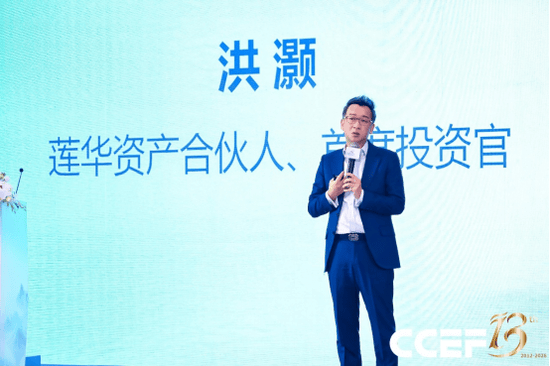
洪灝:2026年将为投资者带来“改运逆命”的机会
对冲研投· 2026-01-12 12:22
Core Viewpoint - The article discusses the outlook for 2026, emphasizing that the Federal Reserve is likely to continue lowering interest rates, which could lead to a significant market bubble and opportunities for investors [5][6]. Group 1: Federal Reserve and Economic Conditions - The Federal Reserve is expected to continue lowering interest rates in January, driven by tightening short-term liquidity and rising repo rates exceeding the benchmark rate [5][9][10]. - The Fed's balance sheet has shrunk from a peak of $9.1 trillion to just over $6 trillion, impacting the economy, particularly low-income groups, despite rising S&P 500 earnings [10][12]. - The article highlights that the U.S. forward inflation expectations are unlikely to decrease, which could weaken the dollar's credibility and drive up precious metal prices [14][17]. Group 2: Precious Metals Outlook - Gold is currently viewed as a fair valuation at around $4,500 per ounce, serving as an anchor for all valuations in a new credit system [18][22]. - The article suggests that silver has not yet reached its peak, with a potential upward trajectory as indicated by its long-term "cup and handle" pattern [23][26]. - The global liquidity conditions are improving, which historically leads to asset price increases, particularly for precious metals [28][31]. Group 3: Market Cycles and Investment Opportunities - The article posits that 2026 may be at the peak of a long-term market cycle, presenting opportunities for significant asset price increases, including in industrial metals and new asset classes like cryptocurrencies [32][36]. - The current environment is characterized by abundant liquidity, which is favorable for risk investments, and the market sentiment is showing signs of recovery [37][39]. - The article concludes that the trends initiated at the end of last year, including the rise of industrial commodities, gold, silver, and Chinese tech stocks, are expected to continue into this year [45].

洪灝:2026年正是逆命改运时,市场正处在35年大周期顶峰,各种曾被遗忘的资产开始疯涨,会诞生一个伟大的泡沫
华尔街见闻· 2026-01-12 10:32
Core Viewpoint - The market is expected to experience significant changes by 2026, with a high probability of a major bubble forming due to abundant liquidity and ongoing interest rate cuts by the Federal Reserve [12][81]. Group 1: Interest Rate and Inflation - A continued interest rate cut in January is highly likely, which could lead to a surge in precious metals as the credibility of the US dollar diminishes [3][32]. - The Federal Reserve's balance sheet has decreased from approximately $9.1 trillion to just over $6 trillion, indicating a significant contraction of about $3 trillion [17][18]. - The tight liquidity in the short-term market is evident, as shown by the low usage of repurchase agreements and rising repurchase rates [21][22]. Group 2: Gold and Silver Market Analysis - Gold has formed a classic "cup and handle" pattern since 2011, with a 99% probability of price increase following such patterns [3][36]. - The fair value of gold is estimated to be around $4,500, indicating it is currently in a reasonable valuation range [4][38]. - Silver has also formed a 60-year giant cup and handle pattern, suggesting that its price has not yet reached its peak, with expectations of further increases [6][48]. Group 3: Market Cycles and Predictions - The current market is at the peak of a 35-year cycle, with significant events such as bubbles and the resurgence of forgotten assets expected to occur [9][74]. - The year 2026 is anticipated to be a pivotal moment for investors, with the potential for a major bubble to emerge as liquidity conditions remain favorable [11][81]. - Historical patterns suggest that each cycle lasts approximately 17 years, with the last low point occurring in 2009, indicating that the market is currently at a critical juncture [68][73]. Group 4: Global Liquidity and Asset Prices - Global liquidity is on the rise, which is expected to lead to higher returns for gold and silver in the coming months [57][60]. - The relationship between liquidity conditions and asset prices indicates that as liquidity improves, asset prices, particularly for silver, will likely follow suit [58][60]. - The correlation between gold and stock market movements has been noted, with instances of both moving in the same direction, a rare occurrence last seen during the Plaza Accord [61][67].

全球流动性系列二:价格锚的预警与协同验证
China Post Securities· 2026-01-12 06:19
Group 1: Global Liquidity Overview - Current global liquidity is characterized by "overall easing, internal differentiation, and emerging forward signals" [49] - Major developed economies have shifted from synchronized tightening to differentiated policies, with the Federal Reserve leading a rate-cutting cycle [2] - The VIX index and other risk sentiment indicators remain low, indicating a supportive environment for market risk appetite [2] Group 2: Price Dimension Indicators - The core indicator system for global liquidity in the price dimension includes three categories: benchmark interest rates, market financing costs, and risk pricing/asset price indicators [1] - The TED spread for USD is at 0.04762%, indicating a low historical level of market financing costs and a relatively ample liquidity environment [25] - The EUR TED spread is at 0.02%, also reflecting a low historical level and indicating ample liquidity in the Eurozone [28] - The JPY TED spread is at 0.41640%, indicating a relatively high historical level and a tightening liquidity environment in Japan [32] Group 3: Future Outlook - Global liquidity is expected to remain accommodative in the first half of 2026, benefiting international pricing of commodities [4] - The report emphasizes the importance of combining price signals with quantity information for more accurate investment decisions and policy responses [51]
洪灏:当前全球主要央行均进入扩表周期,流动性充沛叠加周期顶峰效应,大概率将催生一轮“伟大的泡沫”
Sou Hu Cai Jing· 2026-01-11 13:09
Core Viewpoint - The presentation discusses the outlook for 2026, emphasizing the implications of the Federal Reserve's monetary policy and its effects on the U.S. economy and global markets [3]. Group 1: Federal Reserve and Economic Impact - The Federal Reserve's balance sheet has decreased from a peak of $9.1 trillion in 2022 to just over $6 trillion, resulting in a $3 trillion reduction [3]. - As the Fed's balance sheet shrinks, new job growth in the U.S. continues to decline, significantly impacting low-income groups [3]. - The tightening of short-term liquidity has led to a significant rise in repo rates, affecting various financial market operations, including hedge fund arbitrage costs [3]. Group 2: U.S.-China Relations and Inflation - China's current account surplus continues to reach new highs, with strong export performance that constrains the downward potential of U.S. long-term inflation expectations [4]. - The U.S. yield curve is expected to steepen, with long-term rates remaining high due to persistent inflation expectations, while short-term rates decline as the Fed cuts rates [4]. - If U.S. long-term inflation expectations remain uncontrolled, further Fed rate cuts could weaken the dollar's credibility and drive up precious metal prices [4]. Group 3: Precious Metals Outlook - Gold is projected to have a fair value between $4,300 and $4,500, based on a "cup and handle" technical pattern, indicating a high probability of price increase [5]. - Silver has formed a textbook "cup and handle" pattern over 60 years, suggesting significant upside potential, with prices expected to rise alongside gold [6]. - Global liquidity is on the rise, aligning with the Fed's easing policies, which supports the bullish outlook for both gold and silver [7]. Group 4: Investment Strategies and Market Cycles - The historical relationship between gold and the S&P 500 indicates that gold often serves as a safe-haven asset, with both assets sometimes moving in tandem [8]. - The S&P 500 is currently at a cyclical peak, with historical patterns suggesting that this phase may lead to asset bubbles, particularly in neglected assets and new asset classes like cryptocurrencies [9]. - The current global liquidity environment, combined with the peak of the market cycle, is likely to create a "great bubble," presenting significant investment opportunities [9].
市场分析:电网资源行业领涨,A股小幅上行
Zhongyuan Securities· 2026-01-07 09:05
Market Overview - On January 7, the A-share market experienced slight fluctuations, with the Shanghai Composite Index facing resistance around 4097 points[2] - The total trading volume for both markets reached 28,818 billion yuan, above the median of the past three years[3] - The Shanghai Composite Index closed at 4,085.77 points, up 0.05%, while the Shenzhen Component Index rose 0.06% to 14,030.56 points[7] Sector Performance - Strong performers included coal, non-ferrous metals, electric grid equipment, and power equipment sectors[3] - Weaker sectors included shipbuilding, securities, jewelry, and education[3] - The average price-to-earnings (P/E) ratios for the Shanghai Composite and ChiNext indices were 16.76 times and 51.81 times, respectively, above the median levels of the past three years[3] Investment Outlook - The market is expected to maintain a slight upward trend, supported by improved corporate earnings structures and favorable monetary policies[3] - Investors are advised to focus on sectors such as coal, non-ferrous metals, electric grid equipment, and power equipment for short-term opportunities[3] - Anticipated continued easing of monetary policy and expectations of a prolonged interest rate cut cycle by the Federal Reserve may enhance market liquidity[3] Risks - Potential risks include unexpected overseas economic downturns, domestic policy changes, and macroeconomic disturbances[4]