AI投资

Search documents
碳酸锂期货大涨超3%,盛新锂能获百亿长单!有色50ETF(159652)爆量上涨!有色年内涨幅领跑大市,2026年将如何演绎?
Xin Lang Cai Jing· 2025-11-20 05:38
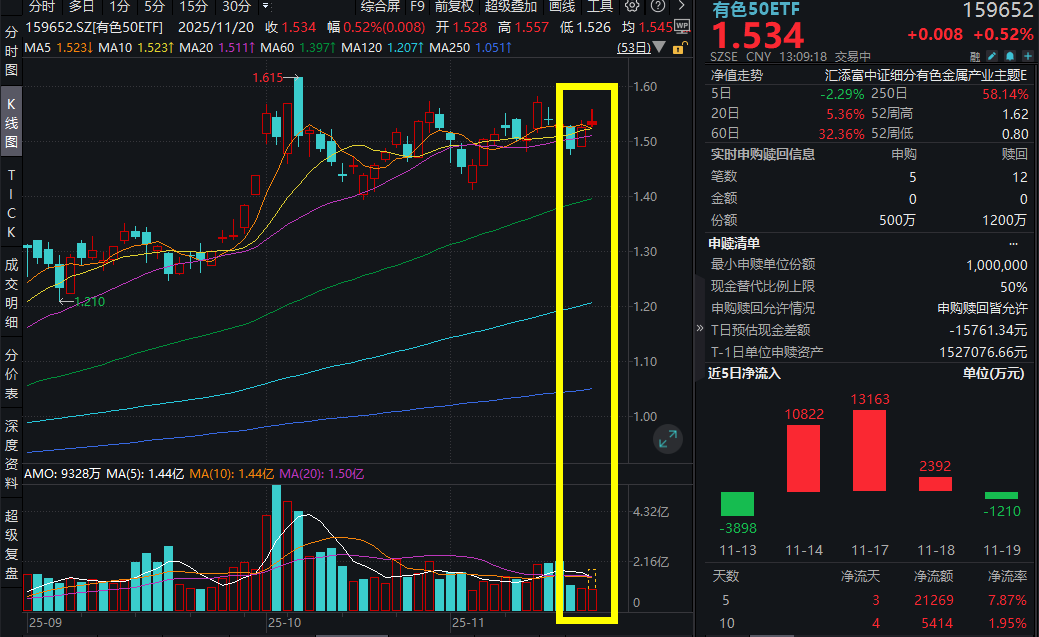
Group 1: Market Overview - The A-share market showed slight recovery on November 20, with the non-ferrous sector opening high and fluctuating, as evidenced by the significant trading volume of the Non-Ferrous 50 ETF (159652) which rose by 0.52% and reached a trading volume of over 90 million yuan [1] - The Non-Ferrous 50 ETF index components mostly surged, with Zhongkuang Resources rising over 5%, while other stocks like Northern Rare Earth and Huayou Cobalt also saw gains exceeding 1% [3] Group 2: Lithium Market Dynamics - On November 19, lithium carbonate futures prices broke through 100,000 yuan/ton, indicating a clear recovery in spot lithium carbonate prices. Ganfeng Lithium's chairman stated that if demand growth exceeds 30% to 40% next year, prices could potentially exceed 150,000 yuan/ton or even 200,000 yuan/ton due to supply constraints [2] Group 3: Supply Chain and Pricing Trends - The supply chain for non-ferrous metals is facing disruptions, with several large mines experiencing operational issues, which highlights the vulnerability of global non-ferrous resource supply [6] - The copper market is expected to see average prices reach 4.55 USD per pound by 2026 due to supply concerns stemming from accidents at major mines [5] Group 4: Investment Opportunities in Non-Ferrous Metals - The non-ferrous metals sector has outperformed other industries this year, with a year-to-date increase of 79% for the CITIC non-ferrous metals index, significantly leading other sectors [5] - The Non-Ferrous 50 ETF (159652) is highlighted for its high "gold-copper content" of 46%, making it a leading choice among similar investment products [12] Group 5: Future Outlook and Strategic Considerations - The geopolitical landscape and resource security concerns are expected to drive demand for strategic commodities, with a notable increase in green demand for copper and aluminum anticipated by 2030 [8] - The ongoing industrialization in emerging economies and the reshaping of trade patterns are likely to provide new growth opportunities for commodity demand, particularly in countries involved in the Belt and Road Initiative [9]





2026年大宗商品分析与展望
2025-11-20 02:16
Summary of Key Points from the Conference Call Industry Overview - The conference call focuses on the commodity market outlook for 2026, highlighting the expected improvement in domestic demand for various commodities, particularly electrolytic aluminum and steel, due to the easing of the US-China trade war and supportive policies from the "14th Five-Year Plan" [1][2]. Core Insights and Arguments - **Commodity Market Outlook**: The overall outlook for the commodity market in 2026 is optimistic, especially for domestic demand varieties. The easing of the US-China trade war and policy support from the "14th Five-Year Plan" are expected to significantly enhance risk appetite for commodities and economic optimism [2][6]. - **Gold and Precious Metals**: Despite a potential decline in safe-haven demand for gold due to the easing trade tensions, gold prices are expected to continue rising. The attractiveness of gold-related stocks may surpass that of gold itself, as prolonged high prices benefit corporate earnings and valuation adjustments [3][4][26]. - **Strategic Metals**: Resource nationalism remains a concern, with strategic metals like nickel, tin, and cobalt being viewed positively despite poor performance in 2025. The price potential for these metals in 2026 is still considered significant [5][22]. - **Copper and Aluminum Dynamics**: The outlook for copper is optimistic due to structural demand, supported by AI investments, while aluminum's performance is hindered by relaxed supply controls. The US holds 40%-50% of global copper inventory, leading to tight supply in other regions [6][15][18]. - **Economic Indicators**: The US economy is projected to show resilience despite a global slowdown, with AI investments and increased fiscal spending being key drivers. However, high interest rates continue to negatively impact traditional industries [6][7][12]. Additional Important Insights - **Investment Strategies**: The call emphasizes the need for scenario analysis in investment strategies, particularly in a volatile economic environment. The potential for economic recovery and the impact of AI investments are critical factors to monitor [10][11][28]. - **Market Dynamics**: The imbalance in copper consumption and inventory in the US creates unique market dynamics, with potential for arbitrage opportunities between COMEX and LME prices. The future price trajectory will depend on economic recovery and inventory management [15][18]. - **Central Bank Gold Purchases**: Central bank purchases of gold are expected to remain a significant support factor for gold prices, even if the dollar's decline in 2026 is less pronounced than in 2025 [26]. - **Long-term Trends**: The call suggests that the trends observed from 2023 to 2025 are likely to continue into 2026, with traditional industries potentially performing better while sectors that thrived in recent years may face adjustments [27][28]. - **Recycling and Supply Issues**: The supply of recycled copper remains tight, particularly in China, which could support prices in the coming years [22]. This summary encapsulates the key points discussed in the conference call regarding the commodity market outlook for 2026, focusing on the dynamics of various metals, economic indicators, and investment strategies.
AI泡沫的“核心争议”:GPU真的能“用”6年吗?
华尔街见闻· 2025-11-19 23:45
Core Viewpoint - The article discusses the debate surrounding the economic lifespan of GPUs, which is crucial for understanding the profitability of major tech companies and the validity of current AI valuations. Bernstein's report suggests a depreciation period of 6 years for GPUs, arguing that this is economically reasonable, while critics like Michael Burry claim the actual lifespan is only 2-3 years, warning of potential accounting manipulation to inflate profits [1][11]. Group 1: Economic Viability of GPU Depreciation - Bernstein analysts argue that a 6-year depreciation period for GPUs is justified, as the cash costs of operating older GPUs are significantly lower than their rental prices [2][4]. - The report highlights that even 5-year-old NVIDIA A100 chips can still yield "comfortable profits," indicating that the depreciation policies of major cloud service providers are fair and not merely for financial embellishment [2][4]. - The analysis shows that the contribution profit margin for A100 chips can reach up to 70%, with operational costs being substantially lower than rental income, providing strong economic incentives for extending GPU usage [4][5]. Group 2: Market Demand and Old GPUs - The current market environment supports the value of older GPUs, as there is overwhelming demand for computing power, with AI labs willing to pay for any available capacity, even for outdated models [6][7]. - Industry analysts note that the A100's computing capacity remains nearly fully booked, suggesting that as long as demand stays strong, older hardware will continue to hold value [8]. Group 3: Depreciation Policies of Tech Giants - Google has a depreciation period of six years for its servers and network equipment, while Microsoft ranges from two to six years, and Meta plans to extend some assets to 5.5 years starting January 2025 [9][10]. - Notably, Amazon has reduced the expected lifespan of some servers and network equipment from six years to five years, reflecting differing views within the industry on hardware iteration speed [10]. Group 4: Criticism and Concerns - Michael Burry warns that tech giants are artificially inflating profits by extending the effective lifespan of assets, predicting that this accounting practice could lead to a profit inflation of $176 billion from 2026 to 2028 [11][12]. - Burry specifically points out that companies like Oracle and Meta could see their profits overstated by 26.9% and 20.8%, respectively, due to these practices [12]. - Previous warnings from Bank of America and Morgan Stanley indicate that the market may be underestimating the true scale of AI investments and the potential surge in future depreciation costs, which could reveal a lower actual profitability for tech giants than expected [14][15].







周四,决定全球市场命运的财报来了!
Hua Er Jie Jian Wen· 2025-11-19 08:07
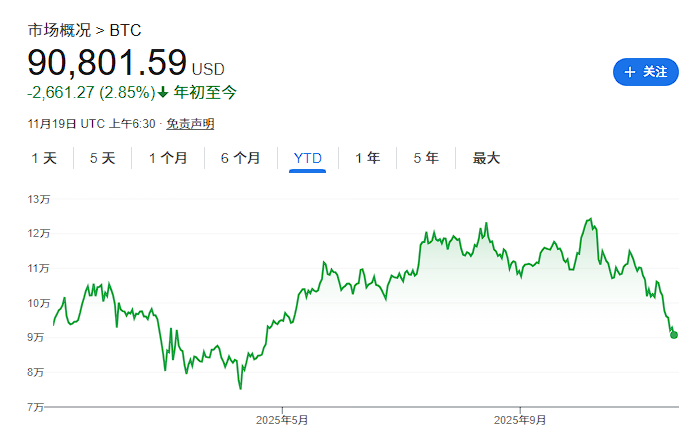
全球市场正陷入一场危险的集体焦虑,而唯一能打破这种僵局的恐怕只有英伟达。这家市值4.5万亿美元的芯片巨头将于美东时间周三 (北京时间周四凌晨)美股盘后公布三季度财报,这份财报将决定全球市场在今年最后几周的走向。 眼下,市场的紧张情绪正在蔓延:从比特币到科技股,从黄金到国债,从私募市场到企业债券,几乎所有资产类别都遭遇抛售压力。在 这样的背景下,投资者将目光聚焦在英伟达身上,这既是希望也是无奈。这家公司的业绩将直接反映科技巨头们数千亿美元AI投资的真 实回报。 目前,华尔街分析师普遍看好英伟达即将公布的财报,预计净利润和营收将双双增长超过50%。 分析人士指出,如果投资者满意英伟达的三季度业绩和四季度指引,多头将推动市场迎来乐观收官;如果不满意,市场可能面临更深的 调整。正如华尔街人士所言,"这是一份英伟达走向如何,市场就走向如何的报告。" 值得注意的是,在市场高度集中风险下,英伟达作为标普500指数最大权重股和AI交易的中心,其业绩表现的重要性前所未有。但是有 市场人士指出,集中度风险在市场上行时令人兴奋,但在下行时可能变成噩梦。 英伟达:当前市场唯一的救赎者? 一种更为阴郁的情绪正在市场蔓延,而只有英伟达能 ...
申万宏源证券晨会报告-20251119
Shenwan Hongyuan Securities· 2025-11-19 00:45
Group 1: Computer Industry Investment Strategy - The year 2025 marks the beginning of domestic computing power industrialization, with significant advancements in domestic AI chips and server architecture, enhancing overall computing performance [10] - The gap between Chinese and American large models is narrowing, with expectations of further convergence and potential surpassing in certain areas by 2026 [10] - The software industry is entering an optimal layout window as AI revenue for many companies exceeds 10%, indicating a technological revolution [10] - Investment focus areas include Deep Research, AI programming, multi-modal applications, and industry-specific agents [10] Group 2: Real Estate Industry Investment Strategy - The real estate market is expected to structurally bottom out, with five major opportunities identified, including stabilization of residents' balance sheets and improved housing affordability [12][18] - The policy direction will focus on stabilizing demand and promoting high-quality development, which will benefit real estate companies [18] - Predictions for 2025-2026 include a decline in sales volume and prices, but core cities are expected to stabilize sooner due to healthier supply-demand relationships [18] Group 3: Pharmaceutical Industry Investment Strategy - Chinese pharmaceutical companies are increasingly leading global multi-center clinical trials, with a growing number of new drugs successfully commercialized overseas [15] - The shift from "fast following" to "innovation leading" in drug development positions Chinese companies to redefine the global pharmaceutical landscape [15] - Investment directions include biotech transitioning to biopharma and the revaluation of traditional pharmaceutical companies during their innovation transformation [15]
大而美”东风起+AI投资独舞:大摩解码2026年美国经济“金发姑娘式软着陆
Zhi Tong Cai Jing· 2025-11-18 06:48
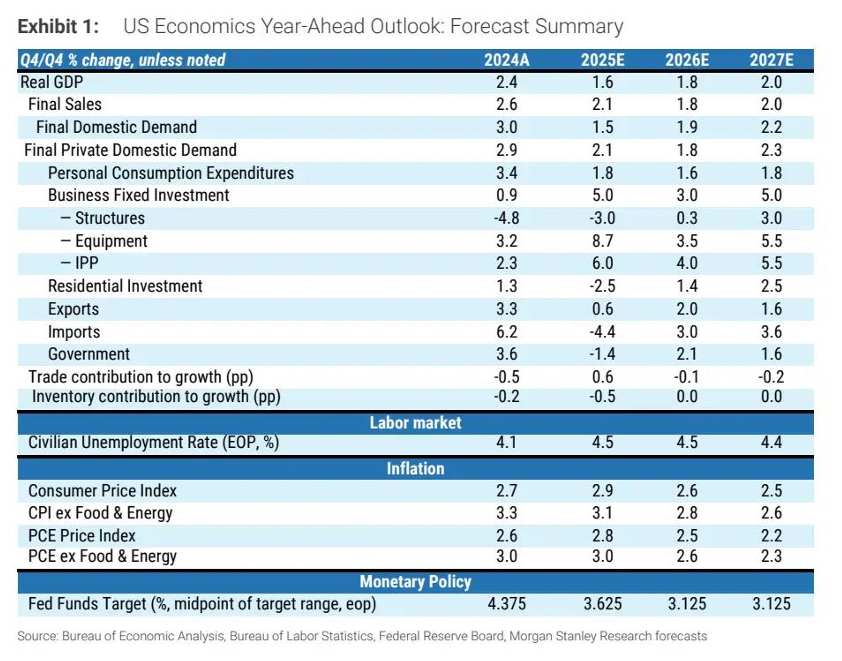
Core Viewpoint - Morgan Stanley's latest report indicates that the OBBBA tax reform, effective from 2026, will significantly boost economic growth, alongside the temporary inflation effects from Trump's tariffs dissipating, leading to a "Goldilocks" economic environment in the U.S. by 2026 [1][3] Economic Growth Projections - The macro analysis team at Morgan Stanley forecasts U.S. real GDP growth of 1.6% in 2025, 1.8% in 2026, and 2.0% in 2027, suggesting a gradual return to a "Goldilocks" scenario where growth is moderate and inflation is stable [1][2][3] Consumer Spending and Inflation - Consumer spending is expected to slow down in 2026 but not collapse, with inflation gradually receding and interest rates declining, which will support spending among lower-income groups [5][8] - The anticipated inflation effects from tariffs are expected to fade in the second half of 2026, allowing for increased consumer spending as the Federal Reserve implements preventive rate cuts [8][11] Investment Trends - AI-related investments are projected to contribute positively to GDP growth, while non-AI investments are expected to recover slowly from a previous drag on growth [11][12] - Significant AI investments by major tech companies like Microsoft and Google are expected to contribute approximately 0.4 percentage points to U.S. GDP growth annually from 2026 to 2027 [11][12] Stock Market Outlook - Morgan Stanley defines 2026 as the "Year of Risk Reboot," with a focus on strong corporate earnings driven by fiscal and monetary stimulus, projecting the S&P 500 index to rise to 7800 points [4] Trade and Net Exports - The role of net exports in GDP growth is expected to be minimal, with a slight increase in export growth projected at around 2% in 2026, influenced by ongoing trade uncertainties and the gradual fading of tariff impacts [17]
“大而美”东风起+AI投资独舞:大摩解码2026年美国经济“金发姑娘式软着陆”
智通财经网· 2025-11-18 06:39
Core Viewpoint - Morgan Stanley's latest report indicates that the OBBBA tax reform, effective from 2026, combined with the temporary inflation effects from Trump's tariffs and the ongoing AI infrastructure investments by tech giants like Microsoft and Google, will lead to a "Goldilocks" economic environment in the U.S. by 2026, characterized by moderate growth and stable inflation [1][2][3] Economic Growth Projections - The U.S. real GDP is expected to grow by 1.6% in 2025, 1.8% in 2026, and 2% in 2027, suggesting a gradual transition to a "Goldilocks" scenario [1][3] - The economic data from early 2025 shows a combination of rising consumer spending and adjusted GDP forecasts, enhancing the probability of a "Goldilocks" macroeconomic environment [2] Policy Impact - 2025 will be a pivotal year for the implementation of Trump's tax and fiscal policies, with a shift in focus from policy disruptions to how businesses and households adjust their spending under the OBBBA framework [3] - Morgan Stanley anticipates a series of interest rate cuts in 2025 and 2026, with the federal funds rate expected to stabilize around 3.0–3.25% [3] Stock Market Outlook - 2026 is defined as the "Year of Risk Reboot," where the focus will shift from macroeconomic factors to microeconomic fundamentals, driven by fiscal and monetary stimuli alongside an unprecedented AI investment cycle [4] - The S&P 500 index is projected to rise to 7800 points, up from 6672.41 points, due to strong corporate earnings growth [4] Consumer Spending Dynamics - Consumer spending is expected to slow in the first half of 2026 due to tariff impacts but will begin to recover in the latter half, supported by the OBBBA tax cuts and fiscal spending [5][8] - The inflation effects from tariffs are predicted to dissipate, allowing for increased consumer spending, particularly among lower-income groups [8] AI Investment Contributions - AI-related investments are expected to contribute approximately 0.4 percentage points to U.S. GDP growth annually from 2026 to 2027, accounting for about 20% of overall GDP growth [12] - Non-AI investments are projected to transition from being a drag on GDP growth to making a slow recovery contribution by 2026-2027 [11] Public Investment Support - The OBBBA and previous infrastructure legislation are expected to provide stable support for public investment, contributing positively to overall investment growth in 2026 [13] Net Exports Outlook - Net exports are not expected to significantly contribute to GDP growth, with an anticipated growth rate of around 2% in 2026, influenced by ongoing trade uncertainties and the gradual decline of tariff impacts [17]
11月18日热门路演速递 | 华泰、中金、瑞银把脉投资主线,小米、拼多多业绩会揭晓答案
Wind万得· 2025-11-18 05:48
Group 1 - The core viewpoint of the article emphasizes the potential validation of the AI investment boom and the impact of global fiscal expansion combined with monetary policy on the market, as well as the transition of domestic economic drivers and the possibility of substantial improvement in corporate profits next year [2] Group 2 - The article discusses the increasing divergence between new and old economies in China and the US, highlighting that the bull markets in stocks and bonds are not mutually exclusive. It notes that with continued global fiscal policy easing, monetary policy is expected to follow suit, and China's trade surplus and fiscal deficit are at record highs, providing support for the economy and stock market [4] Group 3 - The focus is on three core drivers for China's power equipment sector: increased exports, accelerated capital expenditure in nuclear power, and technological upgrades, along with the transformation of electricity consumption structures driven by AI data centers [6] Group 4 - The article raises questions about whether Xiaomi's automotive segment will be the highlight of its financial report, the impact of the SU7's sales on profit margins, and how the mobile business will maintain growth amidst intense price competition, as well as the new directions for its automotive and AIoT strategies for the coming year [8] Group 5 - The article highlights Pinduoduo's strategy for "high-quality development" and questions whether its domestic e-commerce growth can continue to outpace the industry, the financial pressure from Temu's rapid expansion, and how the company will navigate the increasingly complex international environment [10]


大摩重磅展望:2026年是“风险重启之年”,美股盈利走强+AI投资周期共振,标普500或升至7800点!
Sou Hu Cai Jing· 2025-11-17 11:33
Core Viewpoint - Morgan Stanley's 2026 Global Strategy Outlook predicts a strong year for risk assets driven by a unique combination of fiscal, monetary, and regulatory policies, alongside robust corporate earnings growth, with the S&P 500 expected to lead global markets [1][4]. Policy Environment - The report highlights a rare "policy triumvirate" where fiscal policy, monetary policy, and regulatory easing will work in a pro-cyclical manner, creating a favorable environment for risk assets [4][5]. - Specific fiscal measures include the anticipated passage of the "One Big Beautiful Bill Act (OBBBA)" which is expected to reduce corporate taxes by $129 billion in 2026-27 [4]. - The Federal Reserve is projected to cut interest rates by 50 basis points in the first half of 2026 to stabilize the macroeconomic environment [4]. - Regulatory easing is expected to prioritize the energy and financial sectors [4]. AI Investment - AI-related capital expenditures are identified as a key growth driver, with a projected total of nearly $3 trillion in data center-related capital spending, of which less than 20% has been deployed so far [7]. - There is a significant financing gap of up to $1.5 trillion that will need to be filled through various credit channels [7][9]. Market Predictions - The S&P 500 index target for the end of 2026 is raised to 7,800, reflecting a 15% increase from current levels, supported by strong earnings growth and AI-driven efficiency improvements [1][10]. - The report forecasts S&P 500 earnings per share (EPS) to grow by 12% in 2025 and 17% in 2026, driven by improved corporate pricing power and a stable interest rate environment [9][10]. Credit Market Outlook - The credit market is expected to see significant differentiation, with high-yield bonds likely outperforming investment-grade bonds due to increased demand from AI-related financing [22]. - Investment-grade corporate bond issuance is projected to increase by 60%, primarily driven by AI and data center financing needs [22]. Commodity Preferences - In the commodities sector, Morgan Stanley favors metals over energy, with gold being the top choice, setting a target price of $4,500 per ounce, indicating a potential upside of about 9% [3][23]. - The report anticipates challenges in copper supply due to mining disruptions, predicting a shortfall of 600,000 tons by 2026 [26]. Global Market Insights - The outlook for the Japanese market is positive, with a target for the TOPIX index set at 3,600, benefiting from inflation recovery and corporate governance reforms [13]. - European markets face structural challenges, with growth primarily driven by valuation expansion rather than earnings improvement [18].

特朗普最新签署,事关“对等关税”!美股巨震,桥水3个月狂抛65%英伟达股票!金价大跳水,比特币暴跌,还降息吗?美联储吵翻
Mei Ri Jing Ji Xin Wen· 2025-11-15 01:37
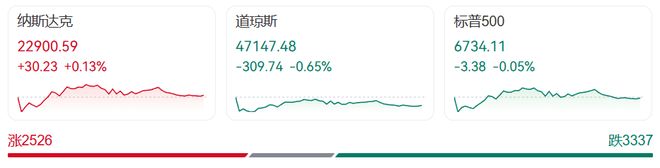
当地时间11月14日,美股三大指数开盘后集体跳水。不过,纳指与标普500指数跌幅迅速收窄,其中纳 指翻红,而道指跌幅仍较大。 截至收盘,美股三大指数涨跌不一,道琼斯指数跌0.65%,标普500指数跌0.05%,纳斯达克综合指数涨 0.13%。 当地时间周五(11月14日),全球最大对冲基金之一桥水向美国证券交易委员会(SEC)提交了截至 2025年第三季度末的持仓情况报告,即13F表格。 文件显示,截至2025年9月30日,桥水整体持仓规模 桥水抛售65%英伟达股票 金价暴跌,油价大涨 个股方面,甲骨文涨超2%,微软、英伟达涨超1%,奈飞跌超3%,英特尔、亚马逊跌超1%。值得注意 的是,开盘时英伟达一度跌超3%,特斯拉一度跌超4%。 为255亿美元,较二季度末的248亿美元有所增加。原本排在第三大持仓的英伟达跌至第六。数据显示, 桥水三季度减持了近472万股,这也让英伟达登上了桥水的"Top Sells"榜单。 截至三季度末,桥水持有 251万股英伟达,数量相较于二季度末的723万股降低65.3%。 此前,孙正义的软银集团已宣布清仓所有英伟达股票,套现58.3亿美元。值得注意的是,英伟达创始人 黄仁勋自己也在 ...