贸易摩擦

Search documents
股市,大变脸!发生了什么?
券商中国· 2025-10-10 03:24
Core Viewpoint - The article highlights a significant decline in technology and AI-related stocks, with the market experiencing a shift towards dividend and brokerage stocks, indicating a potential change in market dynamics and investor sentiment [1][3][4]. Market Performance - On October 10, early trading saw a collective drop in AI and new energy stocks, with the ChiNext Index falling over 3% and the STAR Market Index dropping more than 4%. The average stock price in A-shares declined by over 1%, while the A50 index fell by more than 1.5% [1][3]. - Conversely, the dividend sector saw a rise, with the dividend index increasing by over 1% and brokerage stocks rising by 1.4%, indicating a rotation of funds from high-growth sectors to more stable investments [3][4]. Reasons for Market Shift - Analysts attribute the market adjustment to three main factors: 1. Increased uncertainty in the market regarding the AI bubble and ongoing trade tensions [4]. 2. High valuations triggering financing rules, leading to a shift in funds from overvalued stocks to undervalued ones. For instance, the STAR Market Index's P/E ratio exceeded 196 times, while the dividend index stood at 7.53 times [4]. 3. A strong US dollar index, which recently surpassed 99, negatively impacting equity assets [4][5]. Future Market Outlook - Analysts suggest that for a sustained bull market, corporate earnings must keep pace with stock prices. The recent market surge was seen as a reaction to favorable events during the holiday period, but a correction is anticipated following such a spike [7]. - Key macroeconomic themes to watch in October include potential US government shutdowns, policy adjustments from Japan's new prime minister, significant meetings in China, and shifts in trade dynamics and AI industry development [7]. Market Style Changes - Historical patterns indicate that once a bull market is established, dominant styles can prevail for 2-3 years, with past bull markets showing style rotations. However, the current rapid pace of asset revaluation due to advanced networking may lead to quicker and more volatile style changes [8].


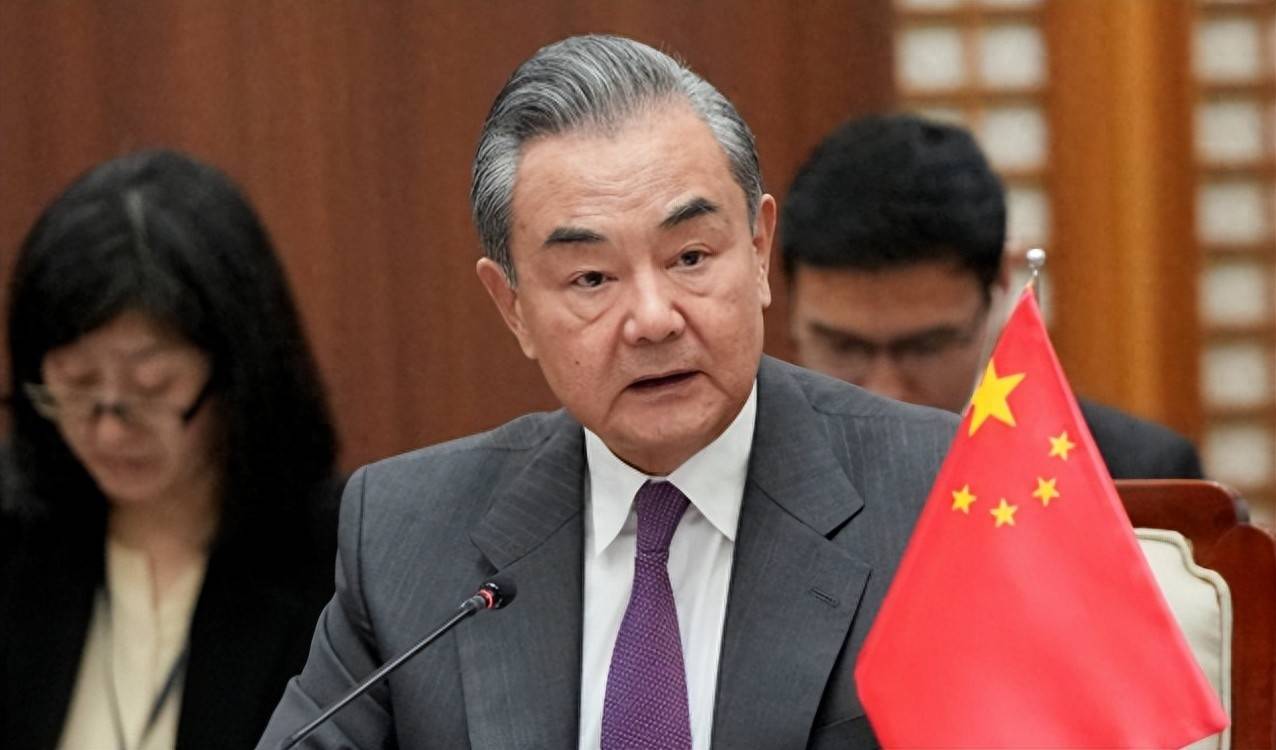
王毅刚到欧洲,不到24小时,欧盟计划对华加税,中方反制来得很快
Sou Hu Cai Jing· 2025-10-09 14:26
Group 1 - The EU's recent decision to significantly increase tariffs on steel imports is perceived as a targeted action against China, despite not explicitly naming it [4][10][22] - The EU's steel industry struggles are attributed more to internal issues such as high energy costs and outdated production lines rather than foreign competition [5][20] - The timing of the EU's tariff announcement, shortly after Trump's global tariff declarations, suggests a political motive rather than purely economic considerations [8][10][22] Group 2 - China's immediate response to the EU's tariffs was to implement export controls on rare earth materials, which are crucial for various modern industries [10][11][15] - The EU relies heavily on China for rare earth imports, and any restrictions could severely impact its industrial capabilities, particularly in the electric vehicle and renewable energy sectors [11][20] - The ongoing trade tensions reflect a critical juncture in China-EU relations, with the EU's actions potentially undermining its own industrial interests while trying to align with U.S. policies [22][24] Group 3 - The EU's approach to trade with China is characterized by a struggle between wanting to assert strategic autonomy and the influence of U.S. policy directions [10][24] - The economic interdependence between China and the EU is significant, with daily trade amounts reaching $2 billion, indicating that any trade disruptions could have widespread consequences [17][20] - The current trade disputes may ultimately harm the EU's industrial reputation and economic stability, as retaliatory measures from China could lead to production halts in key sectors [20][22]
美媒:贝森特指责东方市场在关税博弈中居然还手?还敢将美国豆农置于不利境地
Sou Hu Cai Jing· 2025-10-09 10:35
Core Viewpoint - The recent criticism by the U.S. Treasury Secretary regarding a country's countermeasures in trade disputes is seen as a one-sided interpretation of the situation, following the U.S. government's unilateral actions that initiated the trade conflict [1]. Group 1: Historical Context - The soybean trade between the U.S. and the country in question had previously shown positive interaction, especially after the country joined the WTO in 2001, leading to a significant increase in U.S. soybean exports, which reached 32 million tons in 2016, accounting for over 60% of the country's total imports [3]. - Since the current U.S. administration took office in 2016, there have been multiple tariff increases aimed at achieving "trade balance," disrupting the stability of global supply chains [3]. Group 2: Response to U.S. Actions - In response to the U.S.'s unilateral actions, the country began imposing tariffs on U.S. soybeans in stages starting from July 2018, with an initial 25% increase followed by an additional 10% in September, adjusting its countermeasures according to the U.S.'s escalating tariff policies [5]. - The countermeasures taken by the country are characterized as a necessary response to the U.S.'s disruptive actions, aligning with international trade rules [5]. Group 3: Call for Dialogue - The global trade environment should be a platform for mutual benefit rather than a tool for unilateral pressure, and the international community is expected to recognize who disrupted the balance and caused the current situation [7]. - The U.S. is urged to acknowledge the reality of the situation, cease unreasonable accusations, and return to dialogue as a means to resolve differences [7].

阿根廷发布新规,122吨高粱运往中国后,美国这一次拦不住了!
Sou Hu Cai Jing· 2025-10-09 04:33
Core Viewpoint - Argentina's recent agricultural policy changes, particularly its cooperation with China, are causing increasing pressure on the United States, which may need to reconsider its trade policies towards China to maintain competitiveness in the global agricultural market [4][9]. Group 1: Argentina's Agricultural Policy Changes - On September 22, Argentina announced the temporary cancellation of multiple agricultural export tariffs, including those on soybeans, aiming to recover approximately $7 billion in export revenue [4]. - Following the announcement of the "zero tariff" policy, Argentina received around 1.3 million tons of soybean orders from China, while the U.S. did not receive similar orders, leading to dissatisfaction from the U.S. government [4][5]. - Argentina's decision to cancel the "zero tariff" policy was influenced by a pre-set deadline to achieve a $7 billion export target, which it was on track to meet shortly after the policy announcement [3][4]. Group 2: U.S. Response and Concerns - The U.S. Treasury Secretary expressed concerns that Argentina's actions were undermining U.S. market share, especially as the U.S. had prepared a $20 billion aid package to assist Argentina [4][7]. - U.S. officials have criticized Argentina for its increasing reliance on China and have urged it to abandon its currency swap agreement with China [3][4]. - The U.S. agricultural sector is at risk of losing its competitive edge in the Chinese market, which was previously dominated by U.S. farmers before the imposition of tariffs [5][7]. Group 3: Future Implications - Argentina is set to enhance its sorghum export standards to meet international market demands, particularly from China, where it has established a significant market presence [5]. - The ongoing cooperation between Argentina and China in agricultural exports is seen as a more stable and less conditional path compared to U.S. assistance, which may lead to a shift in global agricultural trade dynamics [7][9]. - The U.S. may need to rethink its approach to trade relations with China, especially in agriculture, to avoid further erosion of its market position [9].

美国公布对中国造船、运营船收取港口费细则
Sou Hu Cai Jing· 2025-10-07 18:16
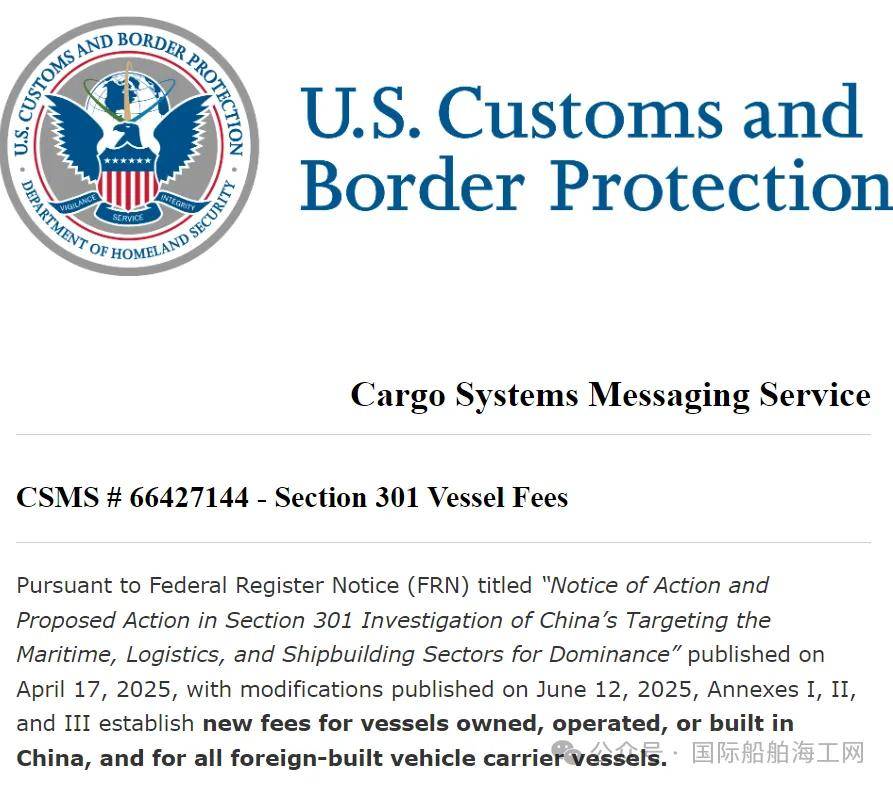
Core Points - The U.S. Customs and Border Protection (CBP) announced new port fees for vessels owned or operated by Chinese entities, effective from October 14, 2025 [1][5] - The fees include $50 per net ton for vessels arriving at U.S. ports owned or operated by Chinese entities, $18 per net ton or $120 per container for vessels built in China, and $14 per net ton for car carriers [1][5] - The responsibility for payment lies with the vessel operators, who must initiate the payment process at least three business days before arrival [5][6] Payment Process - Payments must be made through the U.S. Treasury's secure Pay.gov platform and cannot be paid at the port of entry [6] - The payment form requires detailed information about the vessel and operator, and confirmation of payment must be provided to avoid delays in unloading or customs clearance [5][6] Industry Impact - The new fees are seen as detrimental to globalization and free trade, with various stakeholders, including U.S. shippers and shipping companies, expressing opposition during hearings [6] - In response, China is preparing to amend its international shipping regulations to counteract these measures, including potential retaliatory actions against vessels from countries imposing discriminatory measures [7]
美国大豆再遇贸易寒冬!特朗普喊话中国,财政部10月7日祭出纾困大招
Sou Hu Cai Jing· 2025-10-07 03:26
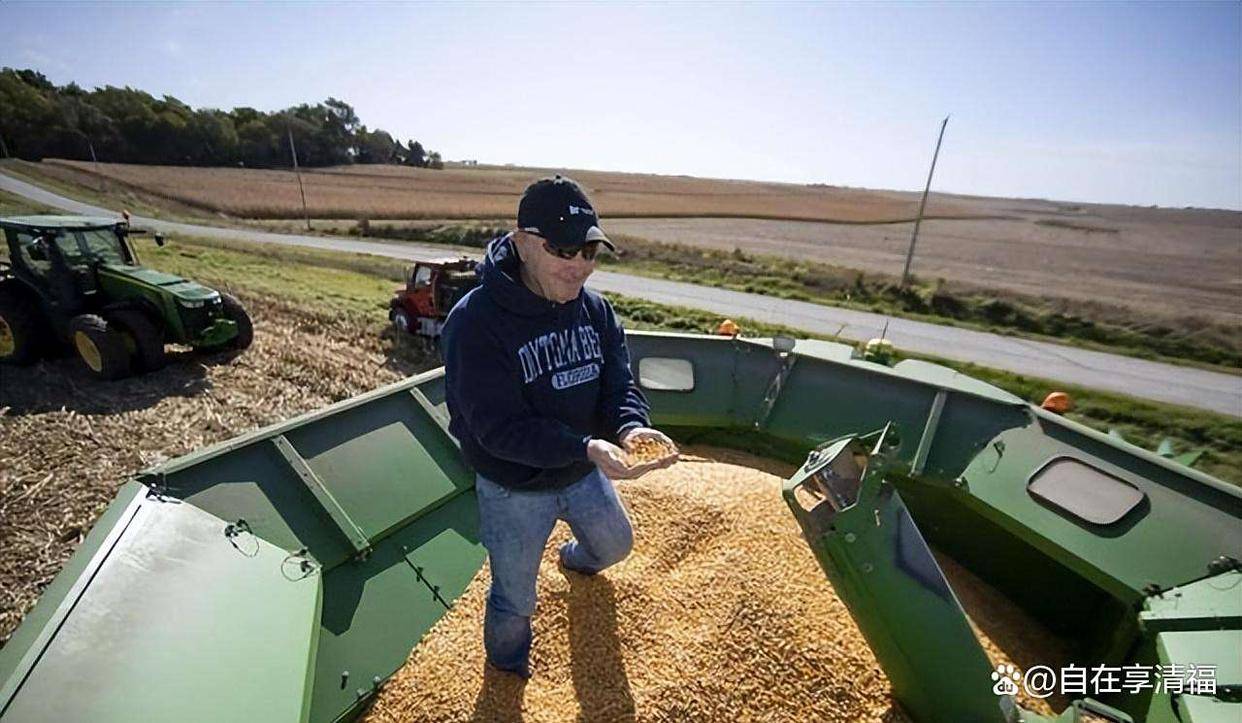
Core Viewpoint - The Midwest soybean farmers are facing a paradox of high yields but low prices due to reduced demand from China, which has significant political implications for the U.S. administration [1][3][11]. Political Pressure and Economic Support - President Trump has publicly blamed China for not purchasing U.S. soybeans, indicating that this issue is politically sensitive as the Midwest is a key voter base [3][5]. - Treasury Secretary Scott Bentsen emphasized that the U.S. government will soon announce substantial support for farmers, particularly soybean producers, reminiscent of the 2018 relief plan [5][10]. Market Dynamics and Export Trends - U.S. soybean exports to China have plummeted by over 70% in the first nine months of the year, with projections indicating that exports could be nearly zero by 2025 [8][11]. - The high tariffs imposed on U.S. soybeans have made them less competitive compared to South American soybeans, leading to a shift in purchasing patterns [7][12]. Replacement Suppliers - Brazil and Argentina have capitalized on the reduced U.S. market share, with improved logistics and established supply chains making them more attractive to Chinese buyers [9][14]. - A leaked message indicated that China has placed significant orders for Argentine soybeans, further complicating the situation for U.S. farmers [9][15]. Historical Context and Future Implications - The current situation mirrors the 2018 trade tensions, where high tariffs led to similar outcomes of reduced prices and increased inventory for U.S. farmers [11][17]. - The U.S. agricultural sector's heavy reliance on Chinese demand is highlighted, as alternative markets like the EU and Japan cannot fill the gap left by China [10][16]. Negotiation Strategies - The U.S. administration is using agricultural purchases as leverage in trade negotiations, while also preparing for potential shortfalls in orders from China [15][16]. - The dynamics of the global supply chain are shifting, with China diversifying its sources to mitigate risks associated with U.S. tariffs [14][17].
中方一单不签,反加税75%,加拿大已经慌了!两队人马火速抵京请求转机!
Sou Hu Cai Jing· 2025-10-05 18:47
Core Viewpoint - The trade conflict between Canada and China has escalated rapidly, significantly impacting Canadian agricultural exports, particularly canola, with a 75% tariff imposed by China, leading to severe financial distress for farmers and related industries [2][5][8]. Group 1: Trade Impact - Canada had planned to export canola worth CAD 5 billion to China in 2024, with 80% being unprocessed seeds, but the imposition of tariffs has caused a drastic drop in prices, with some farmers experiencing a 30% decrease in purchase prices [3][5]. - The trade restrictions have led to a significant loss of the largest customer for Canadian agricultural products, resulting in widespread layoffs in grain trading companies and financial strain on logistics firms [5][9]. Group 2: Industry Response - Farmers are facing urgent financial pressures, with many having to sell equipment and even personal assets to manage debts, as the storage costs for unsold canola continue to rise [7][11]. - The agricultural sector is experiencing a ripple effect, with other industries such as seafood and pork also facing additional tariffs of 25%, leading to increased costs and consumer complaints about rising prices [5][8]. Group 3: Diplomatic Efforts - Canadian officials, including the Foreign Minister, are attempting to negotiate with China to resolve the trade issues, but face significant political resistance domestically regarding concessions on tariffs [7][12]. - The potential for cooperation on climate technology and other sectors is being explored, but skepticism remains about whether these discussions can lead to immediate relief for the agricultural sector [10][12]. Group 4: Market Dynamics - The shift in Chinese purchasing to suppliers in Australia and Russia has left Canadian farmers with limited options, as they struggle to compete with lower prices from these countries [11][15]. - The overall sentiment in the Canadian agricultural community is one of urgency and despair, as farmers are primarily focused on immediate survival rather than broader geopolitical issues [15].
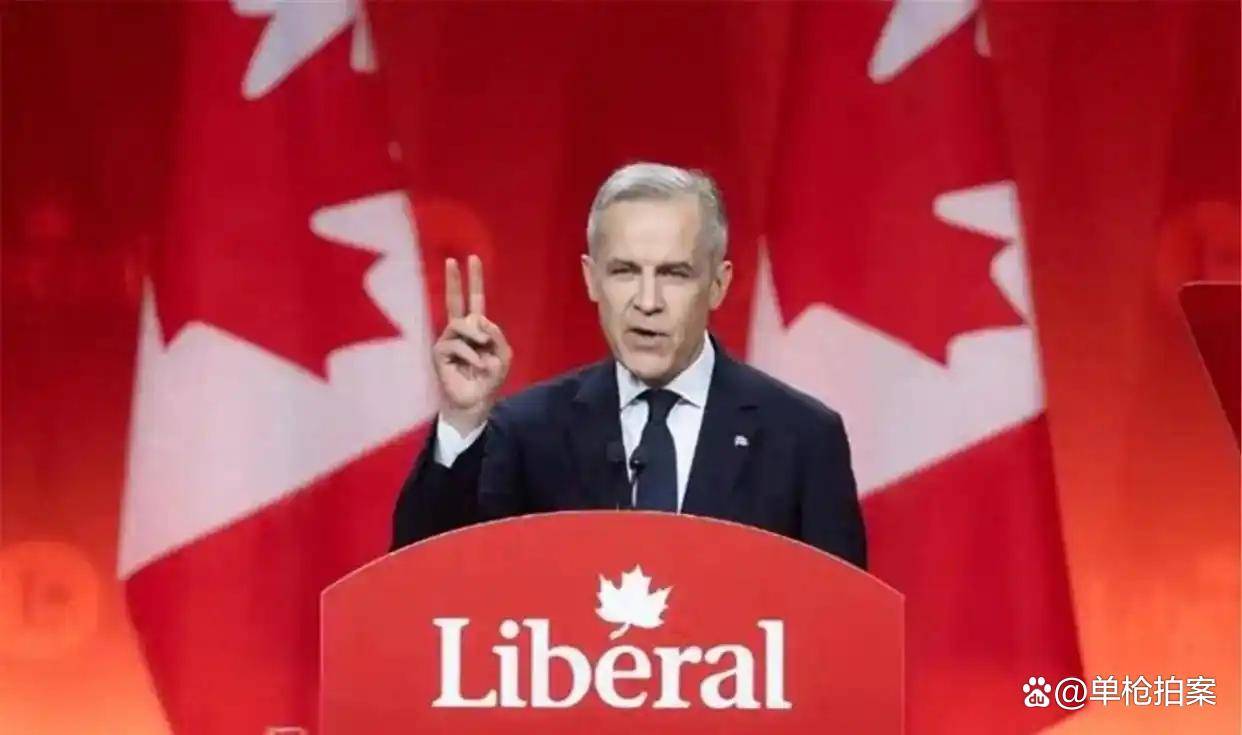
扛不住了?加拿大外长将访华,想劝中方收回成命,卡尼表态不简单
Sou Hu Cai Jing· 2025-10-03 05:13
Group 1 - Canadian Foreign Minister Anand plans to visit China in the coming weeks to discuss trade issues, particularly the hope of lifting Chinese tariffs on Canadian goods [1][7] - Canada has imposed a 100% tariff on Chinese electric vehicles and a 25% tariff on Chinese steel, prompting China to retaliate with tariffs on Canadian canola and other products [1][5] - The trade friction between Canada and China began after U.S. National Security Advisor Sullivan's visit to China, which influenced Canada to impose tariffs to align with U.S. interests [5][8] Group 2 - The Canadian government faces domestic pressure, especially from Western provinces, to lift tariffs on Chinese electric vehicles due to the impact on the canola industry [7][8] - Anand's visit aims to address bilateral trade conflicts and explore cooperation in areas where both countries can work together [7][8] - To restore trade relations, Canada must remove unreasonable tariffs on Chinese products and adjust its stance on core Chinese interests, particularly regarding South China Sea and Taiwan issues [8]

墨西哥配合美国想对中国加税,中方报复措施先到了:瞄准农产品
Sou Hu Cai Jing· 2025-10-02 21:23
Core Viewpoint - The Mexican government's proposal to significantly increase import tariffs on Chinese goods has prompted China to initiate a trade barrier investigation against Mexico, indicating escalating trade tensions between the two countries and highlighting the influence of U.S. pressure on Mexico's trade policies [1][3][21]. Group 1: Tariff Proposal Details - On September 9, Mexico's President submitted a tariff reform proposal to Congress, aiming to raise import tariffs on approximately 1,371 product categories from 10% to 50%, affecting imports worth $52 billion, which constitutes 8.6% of Mexico's total imports [3]. - The proposal specifically targets the automotive sector, with tariffs on light vehicles increasing from 20% to 50% and on auto parts from 10% to 50%, as China is Mexico's largest source of automotive exports [3][4]. - The Mexican government stated that the purpose of the tariff increase is to promote local production and improve trade balance, while also considering alignment with U.S. trade policies [3]. Group 2: China's Response - On September 25, China announced a dual response involving a trade barrier investigation covering all 1,371 product categories proposed for tariff increases, assessing compliance with WTO principles and bilateral agreements [7][9]. - The investigation aims to determine if Mexico's unilateral tariff actions harm Chinese enterprises and affect the business environment in Mexico [7]. - Additionally, China initiated an anti-dumping investigation into pecans imported from Mexico, highlighting the significant increase in Mexican pecan exports to China [11]. Group 3: Impact on Agricultural Trade - Mexico is a major supplier of agricultural products to China, with pecans, avocados, and sorghum being key exports, accounting for significant portions of China's imports [12][13]. - In 2024, Mexico's avocado exports to China are projected to reach $1.23 billion, representing 32% of China's total avocado imports, while sorghum exports are expected to be $870 million [12]. - The Mexican agricultural sector is concerned about the potential impact of China's anti-dumping measures, with estimates suggesting significant financial losses for farmers if tariffs are imposed [15]. Group 4: Industry Reactions - The Mexican automotive industry supports the tariff proposal, citing a decline in market share due to increasing Chinese automotive exports [19]. - Conversely, the agricultural sector is voicing concerns, with representatives urging the government to exclude agricultural products from the tariff increases, fearing adverse effects on their livelihoods [19]. - International media has noted that Mexico's tariff proposal appears to be driven by U.S. pressure, while China's response targets vulnerable sectors of the Mexican economy [21].


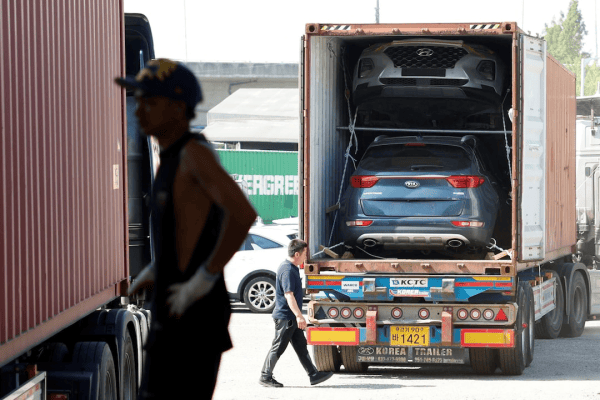
二手车出口,正成为缓解美国关税的“良药”?
Sou Hu Cai Jing· 2025-09-30 11:03
Core Viewpoint - South Korea is leveraging its booming used car export business to mitigate the impact of U.S. tariffs on new car exports, with significant growth in this sector contributing to overall automotive export figures [1][3]. Group 1: Impact of U.S. Tariffs - The U.S. imposed a 25% tariff on imported cars, which has severely affected global automotive industries, particularly those closely tied to the U.S. market, including South Korea [3]. - Despite reaching an agreement to reduce tariffs to 15%, South Korea's automotive exports to the U.S. have declined for six consecutive months due to ongoing negotiations and uncertainties [3][6]. - In August, South Korea's automotive export value reached $5.5 billion, a 9% year-on-year increase, marking the highest monthly export figure on record [3]. Group 2: Growth of Used Car Exports - Used car exports now account for 25% of South Korea's total automotive exports, with a 13% share of export value [6]. - In August, used car export value surged by 35% to $710 million, driven by record-high sales [3][6]. - The majority of South Korea's used cars are exported to the Middle East, Central Asia, and Russia, with sales to the Middle East surpassing new car sales [6]. Group 3: Challenges and Future Prospects - The South Korean used car export industry faces challenges such as inadequate export infrastructure, which may hinder growth [8]. - The government is considering policy interventions to support the used car export sector, recognizing its importance as a major export product [8]. - Despite challenges, projections indicate that South Korea's used car export volume and value are expected to reach new highs this year [8].