
避险情绪

Search documents
白银首破100美元重要关口,后市还会再涨吗?
Hua Er Jie Jian Wen· 2026-01-25 23:38
Group 1: Market Overview - The global metal market has entered a new phase of price increases, with gold and silver achieving their largest weekly gains since 2020, maintaining a cumulative rise since the beginning of 2026 [1] - Silver futures and spot prices have historically surpassed the $100 mark for the first time [1] - Gold has reached a new intraday high for the fifth consecutive trading day, approaching the $5000 mark, while copper has rebounded to over $13,000 [6][19] Group 2: Factors Driving Price Increases - The surge in metal prices is driven by multiple factors, including a weakening dollar, significant capital outflows from currencies and sovereign bonds, and geopolitical tensions, particularly comments from former President Trump regarding military movements towards Iran [6][10] - The ongoing geopolitical instability and criticism of the Federal Reserve have heightened risk aversion among investors, leading to increased demand for safe-haven assets like gold and silver [10][17] Group 3: Institutional Outlook - Major financial institutions are bullish on precious metals, with JPMorgan forecasting gold prices to reach $5000 by Q4 2026 and Citigroup raising its short-term silver price target to $100 [7][18] - UBS anticipates that silver still has about 25% upside potential, although it warns of potential volatility throughout the year [7][11] Group 4: Silver Market Dynamics - Silver has outperformed gold in 2025, with prices rising nearly 150% compared to gold's over 60% increase, reflecting a shift in investor interest [8][10] - Analysts suggest that the $100 mark for silver is a psychological barrier, with strong industrial demand, particularly from the solar sector, contributing to price increases [10][12] Group 5: Copper and Other Industrial Metals - Copper prices have rebounded due to supply disruptions and a weaker dollar, with LME copper trading above $13,000 per ton [19][22] - The recent price increases in copper are attributed to labor strikes affecting production and easing trade tensions between the U.S. and Europe [22][23]

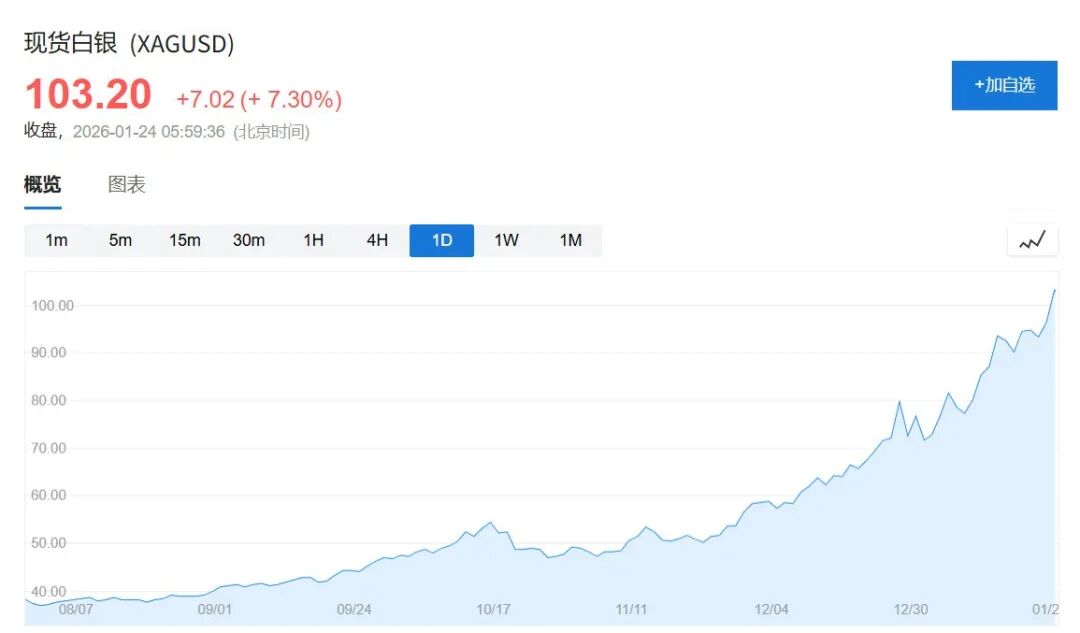
避险资金大举涌入黄金与白银市场 白银盘中首次突破100美元/盎司
Mei Ri Jing Ji Xin Wen· 2026-01-25 12:50
1月23日,全球贵金属市场迎来历史性时刻。伦敦现货白银价格盘中首次突破100美元/盎司整数关口, 创历史新高,伦敦现货黄金同步刷新历史高点,逼近5000美元/盎司关口。 黄金分析师蒋舒在1月24日受访时对《每日经济新闻》记者分析称,白银连创新高的核心原因是跟随贵 金属牛市趋势。自2019年起,贵金属市场整体进入牛市,而从历次牛市规律来看,非黄金贵金属——如 银、铂、钯,在牛市后半段往往会出现价格飙升,与黄金形成明显涨幅差距,这是白银上涨的长期趋势 性因素。 在其看来,白银近期超预期连创新高,直接源于"特朗普2.0政策"带来的多重不确定性,从美联储独立 性、格陵兰岛相关分歧到市场担忧欧洲抛售美元资产,各类风险事件叠加,持续诱发强烈避险情绪,推 动资金涌入白银等贵金属及资源类商品,长期趋势与中短期因素共同促成当前行情。 多位贵金属分析师在接受记者采访时表示,此次白银价格飙升,紧跟当前贵金属牛市节奏,而美联储降 息预期升温与格陵兰岛问题引来的避险情绪发酵,正是支撑这波行情的核心因素。 站上100美元/盎司关口,白银还会涨吗?在分析师看来,100美元/盎司是一个所谓的"心理价位"。摩根 大通研究报告更是认为,白银市场 ...
白银卖疯铜条禁售 谁在让它们接棒黄金"狂飙"?
Xin Lang Cai Jing· 2026-01-25 12:06
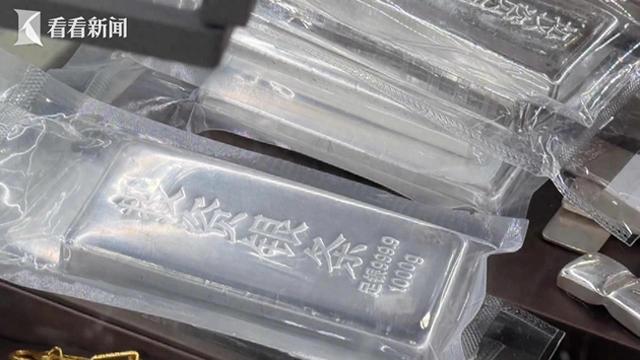
Group 1 - International silver prices have reached a historic milestone, with London spot silver prices surpassing $100 per ounce for the first time, marking a year-to-date increase of nearly 45% [1] - The surge in silver prices has led to a significant increase in demand for physical silver products, such as silver bars and coins, with some retail stores experiencing stock shortages [3][5] - The price of a 30-gram panda silver coin has risen from approximately 300 yuan to over 820 yuan, indicating a substantial increase in consumer interest and purchasing behavior [5] Group 2 - The current market dynamics show that silver prices have outperformed gold prices, with the international silver price increasing by nearly 148% from early last year to the end of December, and an additional 45% increase this year [14] - The "gold-silver ratio" has narrowed to about 50, suggesting that silver prices are entering a strong phase, as a ratio below 50 typically indicates undervaluation of silver [16] - Analysts attribute the recent surge in silver prices to geopolitical tensions and speculative investments, with liquidity and market sentiment playing a significant role in driving prices higher [18] Group 3 - Retail outlets are experiencing a boom in silver sales, with some stores reporting that they cannot keep up with the demand, leading to a notable increase in processing and production activities [7][11] - The price of silver jewelry has also increased significantly, with retail prices rising over threefold compared to last year, highlighting the growing interest in silver as an investment [11] - The potential imposition of tariffs on silver by the U.S. has created supply tightness in the international market, making the outcome of these tariff discussions a critical factor for future silver price movements [20]
有色金属周报:避险情绪发酵,贵金属价格冲高-20260125
Ping An Securities· 2026-01-25 11:49
Investment Rating - The industry investment rating is "Outperform the Market" (maintained) [1][58]. Core Viewpoints - Precious Metals - Gold: The price of precious metals has surged due to heightened risk aversion, with the COMEX gold futures contract reaching $4983.1 per ounce, an increase of 8.3% month-on-month. The SPDR Gold ETF saw a 0.1% increase to 1087 tons. Factors such as the U.S. imposing tariffs on European countries opposing its claim over Greenland and potential sales of U.S. Treasury bonds by Europe have contributed to this trend. The weakening dollar credit is expected to continue, supporting the upward trend in gold prices [4]. - Industrial Metals: There is optimism regarding the upward trend in industrial metal prices, particularly copper, aluminum, and tin, driven by tightening supply and increasing demand [5]. Summary by Sections 1. Precious Metals - Gold: As of January 23, the COMEX gold futures price reached $4983.1 per ounce, reflecting an 8.3% increase. The SPDR Gold ETF holdings increased by 0.1% to 1087 tons. The ongoing U.S. debt issues and central bank gold purchases are expected to support gold prices in the long term [4]. 2. Industrial Metals - Copper: As of January 23, the SHFE copper futures price rose by 0.57% to 101340 yuan per ton. Domestic copper social inventory was 330,200 tons, while LME copper inventory was 171,700 tons. The tightening supply expectations and the anticipated Fed rate cuts are expected to drive copper prices higher [6]. - Aluminum: The SHFE aluminum futures price increased by 1.5% to 24290 yuan per ton. Domestic aluminum social inventory was 743,000 tons. The market is expected to see stable prices with a tightening supply-demand balance [6]. - Tin: The SHFE tin futures price rose by 6% to 429,600 yuan per ton. Domestic social inventory was 10,678 tons. Supply concerns due to geopolitical issues and increasing demand from AI technology are expected to keep tin prices elevated [6]. 3. Investment Recommendations - The report suggests focusing on the following sectors: - Gold: Continued uncertainty in overseas macro conditions supports gold's safe-haven attributes. Recommended stock: Chifeng Jilong Gold Mining. - Copper: Domestic demand recovery and tightening supply are expected to support copper prices. Recommended stock: Luoyang Molybdenum. - Aluminum: The strong supply-demand dynamics are expected to drive aluminum prices higher. Recommended stock: Tianshan Aluminum [7][55].
避险情绪降温,累库速度放缓:铝行业周报-20260125
Guohai Securities· 2026-01-25 08:32
Investment Rating - The report maintains a "Recommended" rating for the aluminum industry [1] Core Views - The report indicates a decrease in risk aversion and a slowdown in inventory accumulation, suggesting a more favorable macroeconomic environment for the aluminum sector [6][10] - The aluminum price is expected to remain volatile at high levels, with a long-term outlook indicating limited supply growth against a backdrop of increasing demand [10] Summary by Sections 1. Prices - As of January 23, 2026, the LME three-month aluminum closing price was $3173.5 per ton, up $39.5 from the previous week, marking a 1.3% week-on-week increase and a 20.6% year-on-year increase [22] - The Shanghai aluminum active contract closing price was 24290.0 CNY per ton, up 365.0 CNY from the previous week, reflecting a 1.5% week-on-week increase and a 19.6% year-on-year increase [22] - The average price of A00 aluminum in Changjiang was 24130.0 CNY per ton, up 130.0 CNY week-on-week, representing a 0.5% increase and a 19.5% year-on-year increase [22] 2. Production - In December 2025, the production of electrolytic aluminum was 378.1 million tons, a month-on-month increase of 14.4 million tons and a year-on-year increase of 5.5% [55] - The production of alumina in December 2025 was 752.0 million tons, up 8.0 million tons month-on-month and up 2.5% year-on-year [55] 3. Inventory - As of January 22, 2026, the inventory of electrolytic aluminum ingots in major domestic consumption areas was 743,000 tons, with a week-on-week increase of 7,000 tons, indicating a slight slowdown in inventory accumulation [7] - The report notes that the overall inventory levels have not peaked, suggesting ongoing supply-demand imbalances in the market [7] 4. Key Companies and Earnings Forecast - Key companies highlighted include China Hongqiao, Tianshan Aluminum, Shenhuo Co., China Aluminum, and Yunnan Aluminum, all rated as "Buy" with projected earnings per share (EPS) growth for 2026 [5] - China Hongqiao's stock price was 32.16 CNY with an EPS forecast of 2.77 CNY for 2026, reflecting a price-to-earnings (PE) ratio of 11.6 [5] 5. Demand - The report indicates that downstream demand remains subdued, with only essential purchases being made due to high aluminum prices and a seasonal demand lull [7] - The overall operating rate for aluminum processing was recorded at 60.9%, showing a slight increase but indicating mixed performance across different segments [7]




避险情绪持续升温,金银引领商品价格大涨
Guolian Minsheng Securities· 2026-01-25 08:29
Investment Rating - The report maintains a "Buy" rating for all key companies listed, including Zijin Mining, Luoyang Molybdenum, and Huayou Cobalt, among others [2]. Core Insights - The report highlights a significant increase in commodity prices, particularly in precious metals like gold and silver, driven by rising geopolitical tensions and inflation concerns [8][67]. - Industrial metals are expected to see price stability due to improved domestic demand and production adjustments, despite some fluctuations in inventory levels [21][24]. - The energy metals sector, particularly cobalt and nickel, is facing supply constraints, which may lead to price increases in the near future [83]. Industry and Company Performance - The SW Nonferrous Index rose by 6.03% during the week of January 19-23, with precious metals like gold and silver increasing by 8.30% and 14.80%, respectively [8]. - Key companies such as Zijin Mining and Luoyang Molybdenum are projected to have strong earnings growth, with EPS estimates for 2024 at 1.21 and 0.63 yuan, respectively [2]. - The report recommends several companies for investment, including Shengtu Mining, China Nonferrous Mining, and Western Mining, based on their strong market positions and growth potential [8]. Base Metals - Aluminum prices are expected to remain under pressure due to high inventory levels, with LME aluminum prices recorded at $3,174 per ton, reflecting a 1.44% increase [13][24]. - Copper prices are influenced by macroeconomic factors, with current prices at $13,128.5 per ton, showing a 2.50% increase [13][38]. - Zinc prices have shown volatility, with LME zinc prices at $3,246.5 per ton, reflecting a 1.17% increase, driven by supply disruptions [43][44]. Precious Metals - Gold and silver prices have surged due to heightened geopolitical risks, with gold trading at approximately 4,983.10 USD per ounce, an increase of 8.30% [15][67]. - The report emphasizes the long-term bullish outlook for gold prices, supported by central bank purchases and weakening dollar credit [67]. Energy Metals - Cobalt prices are expected to rise due to ongoing supply shortages, with current prices around 432,500 yuan per ton [83]. - Nickel prices are projected to remain high due to production cuts in Indonesia, with current prices at 148,010 yuan per ton [55].




白银行业迎来双轮驱动 白银走势显现积极信号
Jin Tou Wang· 2026-01-25 03:04
Group 1 - The silver market reached a historical high due to geopolitical tensions and economic uncertainties, indicating a significant decline in confidence towards U.S. assets, with funds flowing into precious metals for safety [1] - Investment demand and strong industrial consumption are competing for dwindling physical supply, creating a "perfect storm" that benefits silver [1] - The global demand for silver in the photovoltaic manufacturing sector has surged, with annual demand exceeding 5,000 tons, accounting for one-sixth of global silver production [1] Group 2 - The World Silver Association reports that due to surging demand from sectors like photovoltaics, AI, and electric vehicles, global industrial silver demand will continue to grow over the next five years, with industrial silver expected to make up 60% of total silver demand by 2025 [1] - Silver inventories in the London market have recently dropped to a 10-year low, indicating a structural deficit in the global silver market for five consecutive years, leading to rapidly depleting physical stocks [1] - The silver industry is experiencing a dual drive from its financial attributes and explosive industrial demand, resulting in a volatile upward trend in silver prices [1] Group 3 - Silver prices reached a key resistance level of $98.00, marking a historical high and demonstrating strong bullish momentum and buyer dominance [3] - The short-term outlook remains bullish, supported by a dynamic support line and positive signals from the relative strength index, suggesting a potential for further upward movement [3] - A breakout above the $98.00 resistance could lead to a rise towards the next resistance at $102.00, with a trading range expected between $94.00 support and $102.00 resistance [3]
基金研究周报:回暖!混合型基金募集规模创近4年新高(1.19-1.23)
Wind万得· 2026-01-24 22:24
Market Overview - The A-share market exhibited a structurally differentiated pattern last week, with the Shanghai Composite Index closing at 4136.16 points, up 0.84% for the week, while the CSI 300 and SSE 50 fell by 0.62% and 1.54% respectively [1] - The small and mid-cap growth style performed strongly, with the CSI 500 and CSI 1000 rising by 4.34% and 2.89% respectively [1] - The ChiNext Index declined by 0.34%, indicating internal differentiation within the growth sector [1] - The CSI Dividend Index increased by 2.15%, showing some defensive characteristics [1] Industry Performance - Most sectors in the Wind first-level industry index rose, benefiting from policy expectations and cyclical recovery, with materials and real estate leading with increases of 6.36% and 5.09% respectively [12] - The financial sector lagged with a decline of 2.05% due to pressure from the interest rate environment [12] - Overall, the market remained volatile, with funds rotating towards cyclical sectors [12] Fund Issuance - A total of 42 new funds were established last week, including 16 equity funds and 15 mixed funds, raising 22.8 billion units, marking a near four-year high [16] - The total issuance volume reached 44.454 billion units [16] Fund Performance - The Wind All-Fund Index rose by 0.90% last week, with the ordinary equity fund index up 1.45% and the equity-mixed fund index up 1.65% [7] - The bond fund index saw a slight increase of 0.27%, indicating that equity funds significantly outperformed bond funds [7] Global Market Overview - The three major U.S. stock indices experienced slight declines, with the Dow Jones down 0.53%, the S&P 500 down 0.35%, and the Nasdaq down 0.06% [3] - European indices saw deeper declines, with the German DAX down 1.57%, the French CAC 40 down 1.40%, and the UK FTSE 100 down 0.90%, reflecting increased risk aversion in Europe [3] - In Asia, the South Korean Composite Index surged by 3.08%, while the Hang Seng Index and Nikkei 225 saw slight declines [3] Commodity Market - The commodity market showed strong performance, with natural gas soaring by 64.35%, gold rising by 8.44%, and silver increasing by 16.63% [3] - The CRB Commodity Index rose by 3.37%, indicating a surge in demand for energy and safe-haven assets [3] Bond Market - The bond market sentiment was positive, with the CSI Convertible Bond Index rising by 2.92% [14] - The 10-year and 30-year government bond futures saw slight increases of 0.12% and 1.02% respectively, supported by the central bank's increased MLF and reverse repo net injections [14]
2026年01月24日,黄金新价格,冲破1500元后还该买吗?
Sou Hu Cai Jing· 2026-01-24 17:39
Core Viewpoint - The recent surge in gold prices, reaching approximately $4970 per ounce, is driven by multiple factors including geopolitical tensions, central bank purchases, and market expectations regarding the U.S. dollar and interest rates [1][4][8]. Price Levels - Current international gold price is around $4970 per ounce, nearing the psychological barrier of $5000; domestic gold jewelry prices have surpassed 1500 yuan per gram [1][8]. Main Reasons for Price Increase - 1. Geopolitical tensions and heightened risk aversion among investors [4][8]. - 2. Continuous gold purchases by global central banks to diversify foreign exchange reserves [4][8]. - 3. Market expectations of potential interest rate cuts by the Federal Reserve, influencing the U.S. dollar [4][8]. - 4. Increased investment enthusiasm and rising silver prices, with silver surpassing $100 per ounce [4][8]. Consumer and Investment Considerations - For consumers, it is advisable to compare prices and consider brands with lower premiums, such as Cai Bai, especially for essential purchases [6][8]. - For investors, caution is advised as gold jewelry is not suitable for investment due to high labor costs and brand premiums; alternatives like paper gold, gold ETFs, or bank investment bars should be considered [6][8]. - The market sentiment is bullish, with some institutions projecting gold prices could reach $5400 per ounce by the end of 2026, but the risk of a price correction exists [6][8].
20260124周报:贵金属价格创历史新高,基本面推动锂价上涨-20260124
Huafu Securities· 2026-01-24 15:31
风险提示 新能源金属:电动车及储能需求不及预期;基本金属:中国消费 修复不及预期;贵金属:美联储降息不及预期。 强于大市(维持评级) 有色金属 2026 年 01 月 24 日 行 业 研 究 有色金属 20260124 周报:贵金属价格创历史新高,基本面 推动锂价上涨 投资要点: 行 业 定 期 报 告 贵金属:美债遭遇抛售,贵金属加速上涨。本周贵金属再度加速上涨, 突破历史新高,其中COMEX黄金接近5000美元/盎司,COMEX白银突破100 美元/盎司大关。1月20日,全球债市遭遇集体抛售,美债和日债领跌,日 债收益率历史性突破4%关口,为三十余年首次。欧洲多国宣布抛售美债, 10年期美国国债收益率攀升引发市场避险情绪并导致对于贵金属的配置需 求激增。丹麦表示将在月底前清仓所持全部1亿美国国债,引发多国连锁反 应。短期而言,美联储降息预期摇摆,整体呈现易涨难跌格局;中长期而 言,全球关税政策和地缘政治的不确定性背景下,避险和滞涨交易仍是黄 金交易的核心,长期配置价值不改。个股:黄金关注招金灵宝万国紫金黄 金,A股关注紫金、中金、赤峰及西金等;H股关注潼关、山金、招矿及集 海等。银铂钯均为黄金的贝塔,个 ...