
春季行情

Search documents
陈果:春季行情演化论与内需机会探讨
Xin Lang Cai Jing· 2025-12-21 13:25
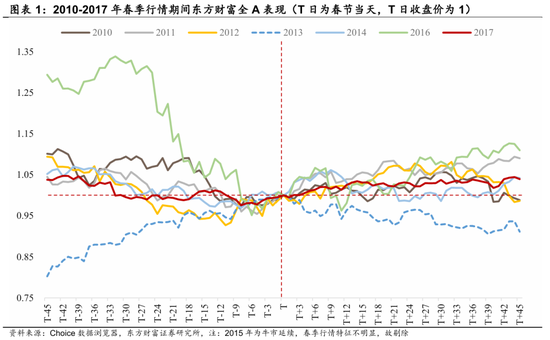
炒股就看金麒麟分析师研报,权威,专业,及时,全面,助您挖掘潜力主题机会! 来源:陈果投资策略 摘要 上周周报我们提示美债利率呈现上升迹象,日本央行加息在即,需留意外部扰动,从本周市场表现来 看,A股有扰动,但增量资金抢跑春季行情意愿也较强烈,结构上内需板块尤其是非耐用品消费明显占 优。我们认为,春季行情经历长时间高胜率演绎,已经从日历效应迈过抢跑博弈,进入反身性阶段,后 续除可能的1月业绩预告扰动外,利空因素能见度不高,可顺应抢跑,逢低布局。结构上具备足够赔率 吸引力且胜率在上升的内需板块重视程度上移,重点关注:保险、券商、有色、AI算力/半导体、零售/ 美护/社服/乳品、航空、新能源、创新药等。 春季行情演化论 随着市场参与者结构变化、信息传播速度加快、投资者学习效应增强、经济新旧动能转换,春季行情经 历了深刻的演化,可以划分为三个阶段:第一阶段,2017年及以前,日历效应阶段。行情发酵于春节 后,依赖政策驱动和流动性回流;第二阶段,2018-2023年,抢跑博弈阶段。行情启动时点明显前移至 12月,源于学习效应与市场参与结构变化;第三阶段,2024-2025年,反身性阶段。"抢跑"消耗增量资 金,遇利空易 ...

春季行情开启中,聚焦成长
Huajin Securities· 2025-12-20 07:18
Market Concerns and Spring Market Outlook - The current market is concerned about the economic resilience in the medium to long term, with stock prices already reflecting pessimistic expectations sufficiently. November economic data showed a decline in retail sales and investment growth, but an increase in export growth, indicating structural recovery in consumption [7][12][16] - The impact of the Bank of Japan's interest rate hike on A-shares is limited. Historical data shows that the negative impact on US stocks is greater and more persistent than on A-shares. A-shares have historically shown resilience following such rate hikes [16][18] Spring Market Potential - The core factors influencing the initiation of the spring market include policies, external events, liquidity, and valuation sentiment. Historical patterns indicate that A-shares often experience adjustments before the spring market begins, with 15 out of 16 past spring markets showing some form of adjustment prior to initiation [24][26] - There is a possibility of a short-term spring market opening, with A-shares maintaining a slow bull trend. Short-term policies are expected to remain positive, and external risks are limited, with potential for further policy support to stimulate consumption [33][34] Industry Allocation - The technology growth sector is expected to maintain its advantage in the short term, with a shift in style being difficult due to high valuations and sentiment. Current valuations in technology sectors remain neutral to high, and liquidity may continue to ease [33][41] - There are potential allocation opportunities in certain consumer sectors supported by policy, particularly as the year-end approaches. The technology growth and some cyclical sectors may benefit from the Bank of Japan's interest rate hike [33][34][41] - Current sentiment and PEG ratios in sectors such as pharmaceuticals, media, and electric equipment are low, indicating potential for growth. A balanced allocation strategy is recommended across technology growth, cyclical, and consumer sectors [33][41]
成长板块回调现布局机会,创业板ETF(159915)本周资金净流入超25亿元
Sou Hu Cai Jing· 2025-12-19 10:46
Group 1 - The core viewpoint of the article indicates that despite a decline in various indices, there is significant capital inflow into related ETFs, suggesting a potential opportunity for investment in the growth sectors of the market [1][4]. - The ChiNext Mid-Cap 200 Index fell by 1.3%, the ChiNext Growth Index decreased by 2.2%, and the overall ChiNext Index dropped by 2.3% during the week [1][3]. - The ChiNext ETF (159915) saw a net inflow of over 2.5 billion yuan in the first four trading days of the week, indicating strong investor interest [1][4]. Group 2 - The strategic emerging industries, particularly in the power equipment, communication, and electronics sectors, account for nearly 60% of the ChiNext Mid-Cap 200 Index [4]. - The ChiNext Mid-Cap 200 Index is composed of 200 stocks with medium market capitalization and good liquidity, reflecting the overall performance of representative companies in the ChiNext market [4]. - The ChiNext Growth Index consists of 50 stocks that exhibit strong growth characteristics and good liquidity, with the power equipment, pharmaceutical, and communication sectors making up about 60% of this index [4]. Group 3 - The rolling price-to-earnings (P/E) ratio for the ChiNext Index is 39.7 times, while the ChiNext Mid-Cap 200 Index has a P/E ratio of 100.4 times, and the ChiNext Growth Index stands at 39.5 times [3][5]. - The rolling P/E ratio indicates the valuation of the indices, with lower ratios suggesting relative affordability compared to historical levels [5]. - The ChiNext Index has shown a cumulative increase of 45.8% year-to-date, while the ChiNext Mid-Cap 200 Index has risen by 23.9%, and the ChiNext Growth Index has increased by 65.1% [7].


A股昨日呈现沪强深弱格局 商业航天、AI医疗引领结构性行情
Shang Hai Zheng Quan Bao· 2025-12-18 18:24
Group 1: Commercial Aerospace Sector - The commercial aerospace sector has seen a resurgence, with multiple stocks such as Shengyang Technology and Xingchen Technology experiencing significant gains, including a 30% increase for Xingchen Technology and a 20% increase for Wanlong Optoelectronics [3] - Xingchen Technology has reported successful delivery and validation of some products in the commercial aerospace supply chain, with plans to initiate multiple production batches by 2026 to meet the growing launch demands from private aerospace companies [3] - The National Space Administration has issued a plan to promote high-quality development in the commercial aerospace sector, which includes encouraging investment in the aerospace industry chain and establishing a national commercial aerospace development fund [3] Group 2: AI Medical Sector - The AI medical sector has shown strong performance, with stocks like Jiahe Meikang and Meinian Health reaching their daily limit, indicating robust investor interest [5] - The collaboration between HeFu China and Zhejiang University to create an AI-assisted clinical diagnosis system highlights the ongoing innovation and investment in AI healthcare solutions [5] Group 3: Market Outlook - Analysts suggest that the current period is a crucial window for positioning in the upcoming spring market, with a focus on sectors like AI that show clear growth trends [6] - Historical patterns indicate that the spring market typically begins between December and April, with potential for early initiation if market conditions improve [6] - The 2026 investment strategy suggests a gradual upward trend in the stock market, driven by rising investor confidence in national governance [7]

资金,放量涌入!
Xin Lang Cai Jing· 2025-12-18 13:08
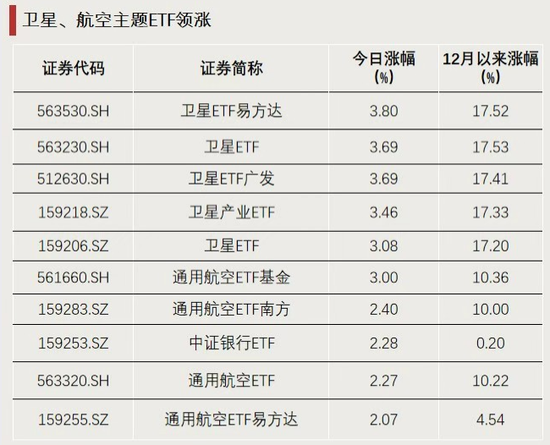
12月18日,A股三大指数涨跌不一。全市场1300余只ETF约三成收涨。卫星、航空主题ETF领涨,单日 涨幅前十的ETF中,相关主题产品占9只,涨幅均超2%。 02 炒股就看金麒麟分析师研报,权威,专业,及时,全面,助您挖掘潜力主题机会! 科创债ETF今日成交活跃,占据ETF市场成交额前二十榜单的"半壁江山"。多只产品场内成交额较昨日 明显放量,更有产品今日成交额创基金上市以来新高。据Wind数据统计,全市场24只科创债ETF今天成 交额合计超过1400亿元,较昨日放量超150亿元。 01 资金流向方面,前一交易日(12月17日),ETF市场资金爆量涌入,全天净流入额超270亿元,创12月 以来最高单日净流入额,较12月16日增超80%。其中,A500ETF吸金势头尤盛,全天净流入金额超过 110亿元,是12月16日的3倍,多只相关产品单日净流入金额居市场前十。 卫星航空主题ETF领涨 12月18日,在ETF整体跌多涨少的形势下,卫星航空主题ETF逆势上涨,"刷屏"涨幅榜前十。涨幅前五 的卫星主题ETF,盘中交易价格一度均创下基金上市以来新高,截至收盘,涨幅均超3%;12月以来涨 幅均超17%,也成为12月以 ...
摩根大通刘鸣镝:2026年中国股市有望迎“春季行情”
Zheng Quan Ri Bao Wang· 2025-12-18 07:57
Core Viewpoint - The market is expected to experience a "spring market" driven by earnings growth in 2026, supported by policies aimed at reducing competition, advancements in AI infrastructure, and a recovering consumer market [1][2]. Market Short-term Style Shift - Morgan Stanley's China stock strategy team has shifted its outlook to positive for MSCI China and CSI 300 indices since January 9, 2023, predicting that the upward trend may continue until 2026 [2]. - A style shift from growth and momentum sectors to value, defensive, and high-dividend sectors is recommended, likely lasting until the end of this year and early next year [2]. - The MSCI China, CSI 300, and MSCI Hong Kong indices are projected to reach 100 points, 5200 points, and 16000 points respectively by 2026, representing potential increases of approximately 22%, 13.5%, and 17.8% [2]. Earnings Growth as Market Driver - Stable growth in earnings per share (EPS) is identified as the core driver for sustained market growth [3]. - The proportion of companies in the MSCI China index with upward earnings revisions has significantly increased since May [3]. - The current net profit margin of Chinese listed companies (excluding the financial sector) is relatively low in the Asia-Pacific region, but the return on equity (ROE) remains strong [3]. Foreign Investment Trends - Foreign long-term funds have increased their holdings in the Chinese stock market, with a 100 basis point rise in the holdings of global active funds by the end of October [4]. - Four key investment themes for 2026 are identified: "anti-involution," AI, overseas expansion, and consumption, with real estate as a potential theme [4][5]. Sector-Specific Insights - The "anti-involution" theme focuses on sectors with strong growth prospects, such as batteries and photovoltaics, as well as macro-sensitive sectors like steel and cement [5]. - Companies with overseas operations are expected to gain more attention from global investors due to their balanced business models [5]. - The essential consumer sector in MSCI China is currently undervalued, with a price-to-earnings ratio below 20, indicating significant potential for valuation recovery [5]. AI Sector Analysis - The assessment of whether the AI sector is in a bubble depends on valuation levels, with recent corrections observed in semiconductor hardware valuations [6]. - The focus is on energy storage companies within AI infrastructure, which are currently in a recovery phase [6]. - The technology sector's performance in the fourth quarter is crucial for sustaining high expectations, with long-term growth dependent on companies improving quality and profitability [6].

市场午后全面反攻,科技方向领涨,A500ETF易方达(159361)盘中净申购超4亿份
Mei Ri Jing Ji Xin Wen· 2025-12-17 06:37
中证A500指数由各行业市值较大、流动性较好的500只股票组成,覆盖93个中证三级行业中的91个,其 中信息技术、医药卫生等新兴产业权重较高,兼顾"核心资产"与"新质生产力";创业板指数则由创业板 中市值大、流动性好的100只股票组成,战略性新兴产业占比超90%,通信设备等AI硬件产业链占比约 30%。 今日午后,大盘强劲拉升,通信设备、固态电池等科技方向领涨,银行、券商、保险等大金融板块集体 走强,贵金属、能源金属延续涨势,截至13:58,中证A500指数上涨1.8%,创业板指数上涨2.7%,相关 产品交投活跃,A500ETF易方达(159361)盘中成交额突破50亿元,净申购超4亿份,创业板ETF (159915)成交额也超30亿元。 A500ETF易方达(159361)、创业板ETF(159915)分别跟踪以上指数,且均实行ETF中最低一档 0.15%/年的管理费率,可助力投资者低成本布局春季行情。 国泰海通证券表示,保收益降仓位已经步入尾声,岁末年初的再配置与机构资金回流有望改善市场流动 性和活跃成交,跨年攻势已经开始。考虑到前期股指的大幅调整、总量政策加码与增量入市环境,当下 是布局春季行情的重要窗 ...
有色“超级周期”再升温!有色龙头ETF(159876)午后强攻大涨3.5%
Sou Hu Cai Jing· 2025-12-17 06:09
Group 1 - The core viewpoint of the articles highlights the strong performance of the non-ferrous metal sector, particularly the non-ferrous metal leader ETF (159876), which has seen significant inflows and price increases, indicating positive market sentiment towards the sector [1][2] - The non-ferrous metal leader ETF (159876) attracted 10.13 million yuan in a single day and has accumulated 198 million yuan over the past 20 days, reflecting investor confidence in the future performance of the non-ferrous metal sector [1] - Citic Securities believes that as long as the Federal Reserve remains in a rate-cutting cycle, there will be upward momentum for non-ferrous metal prices, with a potential super cycle for industrial metals like copper and aluminum on the horizon [1] Group 2 - The non-ferrous metal leader ETF (159876) and its linked fund (017140) cover a wide range of metals including copper, aluminum, gold, rare earths, and lithium, providing a diversified investment option compared to single metal investments [2] - As of December 16, the non-ferrous metal leader ETF (159876) had a latest scale of 840 million yuan, making it the largest ETF tracking the same index among three similar products in the market [2]
资金涌入,持续加仓!
Zhong Guo Zheng Quan Bao· 2025-12-16 14:08
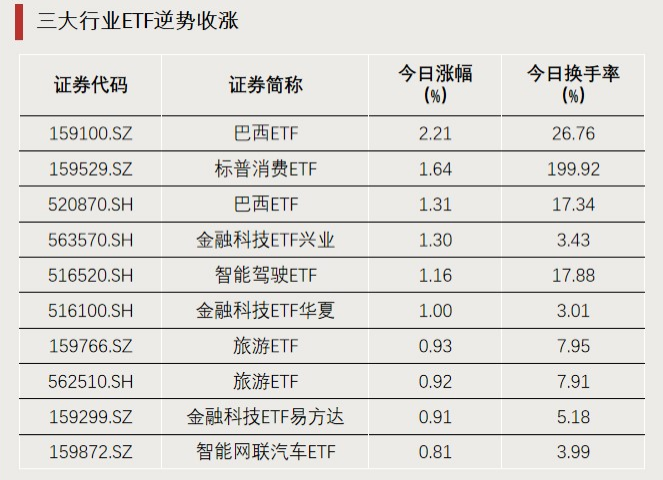
Market Overview - On December 16, A-shares and Hong Kong stocks experienced a pullback, with only about 50 out of over 1300 ETFs closing higher, and 6 of these ETFs rising by 1% or more. Financial technology, tourism, and automotive sector ETFs showed relative resilience [1] - In the cross-border ETF segment, two Brazilian ETFs and one S&P Consumer ETF led the market in terms of gains [1] ETF Performance - Notably, several ETFs that rose against the market trend saw significant increases in trading volume. The S&P Consumer ETF (159529) had a turnover rate of 199.92%, with a trading volume nearing 2 billion yuan, four times that of the previous day. The Smart Driving ETF (516520) also saw its trading volume increase to approximately seven times that of the previous day [2] - On December 16, financial technology, tourism, and automotive sector ETFs performed well, with multiple products ranking among the top gainers. The financial technology ETFs linked to the CSI Financial Technology Index saw over half of their constituent stocks close in the green, with notable gains from companies like Chuangshi Technology (300941) and Cuiwei Co. (603123) [4] Fund Flows - On December 15, despite the market pullback, ETFs experienced a net inflow of approximately 6.7 billion yuan, with broad-based ETFs attracting significant capital. Several ETFs linked to the CSI A500 Index ranked among the top for net inflows, with three A500 ETFs collectively receiving over 13.5 billion yuan in net inflows over the past five trading days [3][9] - The A500 ETF from Southern Fund (159352) led with a net inflow of 3.915 billion yuan on December 15, significantly outpacing other products [11] Sector-Specific Insights - The gold stock ETFs faced a sharp decline on December 16, with the largest drop exceeding 4%. Six out of the top ten ETFs with the largest declines were gold-related, reflecting a cautious market sentiment ahead of key economic data releases [7] - The CSI A500 Index has over 280 public funds linked to it, with more than 80 asset management firms involved, totaling over 240 billion yuan in assets. Over 80% of this is held in ETF products, with 40 ETFs exceeding 210 billion yuan in total assets [10] Upcoming Products - On December 19, Huatai-PB Fund will launch the Sci-Tech Entrepreneurship Artificial Intelligence ETF, adding to the growing list of innovative ETF products in the market [13]
长城基金汪立:布局春季行情,关注三大方向
Xin Lang Cai Jing· 2025-12-16 11:22
Group 1: Market Trends - The market continues to favor technology growth, while cyclical and consumer sectors are experiencing a pullback. AI-related optical modules and chips are gaining strength, alongside significant increases in controllable nuclear fusion and data center electricity, as well as heightened interest in smart grids and green energy consumption. Commercial aerospace remains highly active, while sectors like carbon black, phosphorus chemicals, methanol, real estate, and home textiles are lagging behind [1][6]. Group 2: Macroeconomic Analysis - The Central Economic Work Conference in China outlined five new understandings and eight key tasks to stabilize and promote economic growth. The focus is on a more proactive fiscal policy, leading investment recovery, and addressing real estate inventory issues. The conference emphasized the need for incremental policies based on changing circumstances [2][7]. - In November, China's core CPI rose to 0.7% year-on-year, while PPI fell to -2.2%. CPI was driven by food prices, consumer subsidies, and rising gold prices, while international oil price declines pressured PPI. The M1-M2 gap widened significantly, but M1 may stabilize marginally in the future. Exports in dollar terms grew by 5.9%, and imports increased by 1.9% [2][7]. Group 3: U.S. Federal Reserve Actions - The Federal Reserve announced a 25 basis point cut in the federal funds rate, bringing it to a target range of 3.50% to 3.75%. This decision aligns with expectations but reflects increasing internal divisions. The Fed's outlook on the U.S. economy and inflation has become more optimistic, and there may be further rate cuts anticipated due to a weakening labor market and upcoming leadership changes [3][8]. Group 4: Investment Strategy - A cross-year investment strategy is beginning, with expectations for policy adjustments to support market liquidity and activity. Historical patterns suggest that the spring market rally typically occurs from December to April, with large-cap stocks leading the way. Current market conditions may present a significant opportunity for positioning ahead of the spring rally [4][9]. - The investment outlook favors technology, financial services, and consumer sectors. Specific areas of interest include AI advancements, capital market reforms, and cyclical stocks that have seen valuation adjustments after three years of decline. Target sectors include internet, media, computing, and manufacturing with global competitive advantages, as well as low-priced consumer stocks and cyclical industries like non-ferrous metals and chemicals [5][10].