供给侧结构性改革

Search documents
供给侧改革持续深化 去产能与产业升级同步推进
Zheng Quan Shi Bao· 2025-07-09 18:21
Core Viewpoint - The supply-side structural reform in China is making significant progress in the first half of 2025, with notable achievements in capacity reduction and industrial upgrading across various sectors [1][2]. Group 1: Supply-Side Structural Reform - The photovoltaic industry is showing initial success in capacity reduction, with the futures market for polysilicon strengthening due to favorable policies and production cut expectations [2]. - Steel companies are actively transitioning from low-cost homogeneous competition to high-end differentiated competition, eliminating outdated capacity and optimizing resource allocation [2]. - Heavy machinery companies are leveraging new technologies like artificial intelligence to optimize production processes and shift towards precision manufacturing [3]. Group 2: Industry Transformation and Innovation - The automotive industry has not yet undergone large-scale capacity reduction, but competitive pressures are accelerating the transition towards electrification and intelligence, with leading companies increasing R&D investment [3]. - The current "anti-involution" policies aim to guide industries towards technological upgrades for capacity optimization, with traditional industries deepening the integration of "artificial intelligence+" and promoting the application of 5G and industrial internet across all processes [3]. - New strategic emerging industries, such as information technology, biomanufacturing, and commercial aerospace, are continuously growing alongside traditional industries' proactive measures to upgrade [3][4]. Group 3: New Consumption Trends - In the consumer sector, new supply in cultural tourism, represented by immersive performances, smart scenic spots, and trendy cultural products, is experiencing explosive growth [5]. - The government has initiated measures to cultivate new growth points in cultural and tourism consumption, promoting new consumption scenarios and significantly boosting local tourism, accommodation, and dining industries [5][6].


公募费改两周年记:头部“卷”指数,中小机构忙“降本”
Bei Jing Shang Bao· 2025-07-09 15:17
Core Insights - The public fund industry in China is undergoing significant transformation due to the fee reduction reform initiated by the China Securities Regulatory Commission (CSRC) in July 2023, which has led to a shift in focus from active to passive fund management [1][3][8] - The reform has resulted in a notable decline in management fees, particularly affecting small and medium-sized fund management companies, which are struggling to maintain profitability [6][10] - The emergence of new fund models, such as floating fee rate funds, aims to align the interests of fund managers and investors more closely, enhancing the overall investment experience [9][11] Group 1: Fee Reduction Impact - The fee reduction reform has set a cap on management fees for active equity funds at 1.2% and custody fees at 0.2%, effective from July 7, 2023, impacting both new and existing funds [3][4] - As a result of the reform, the issuance of equity index funds has surged, with new issuance reaching 1,880.59 billion yuan in the first half of 2023, marking a significant shift towards passive investment strategies [4][5] - The competitive landscape for ETFs has intensified, with many large public funds focusing on passive products to drive revenue growth amid declining management fees [5][10] Group 2: Challenges for Small and Medium-sized Firms - Small and medium-sized public funds are facing severe challenges, with over 56% of fund managers reporting a decline in management fee income, some experiencing drops exceeding 50% [6][7] - These firms are focusing on improving product performance rather than expanding their offerings, as they struggle to compete for market share and access to distribution channels [7][10] - The pressure to reduce costs has led to cuts in marketing and operational expenses, impacting the overall growth potential of these smaller firms [8][10] Group 3: Strategic Adaptations - The industry is witnessing a structural reform aimed at enhancing the quality of fund offerings, with a focus on consolidating resources towards leading products [8][10] - Fund managers are increasingly investing in research and development capabilities to improve performance and attract investors, despite the pressure on fees [10][11] - The introduction of floating fee rate funds is seen as a way to better align the interests of fund managers with those of investors, potentially improving investor satisfaction and retention [9][11]

提振消费政策持续显效,6月CPI转涨
2 1 Shi Ji Jing Ji Bao Dao· 2025-07-09 11:35
Group 1: CPI Analysis - In June, the national CPI increased by 0.1% year-on-year, marking a shift from four consecutive months of decline, primarily driven by a rebound in industrial consumer goods prices [1][3] - The core CPI rose by 0.7%, reaching a 14-month high, indicating the effectiveness of policies aimed at stabilizing growth and boosting consumption [1][4] - The CPI's month-on-month decline was 0.1%, with urban areas also experiencing a 0.1% decrease, while rural areas remained stable [4] Group 2: PPI Analysis - The national PPI decreased by 3.6% year-on-year and 0.4% month-on-month, with the year-on-year decline widening by 0.3 percentage points compared to the previous month [1][5] - Industrial producer purchase prices fell by 4.3% year-on-year and 0.7% month-on-month, with a 2.8% decline in the first half of the year compared to the same period last year [4][5] - The PPI's decline is expected to persist due to insufficient industrial demand, but improvements in supply-demand relationships and macroeconomic policies may stabilize prices [5][7] Group 3: Policy Implications - The government aims for a GDP growth of around 5% and a CPI increase of about 2% this year, indicating potential for further fiscal and monetary policy support to stimulate demand and improve price performance [4][7] - Policies targeting the reduction of "involutionary competition" are anticipated to enhance supply-demand structures, supporting price increases in various sectors [7] - Supply-side structural reforms are expected to alleviate overcapacity issues, potentially boosting industrial prices and improving corporate profitability [7]
锚定特色持续深耕
Jing Ji Ri Bao· 2025-07-07 22:19
Core Insights - The tropical crop industry is a strategic and essential sector in China, with an annual production exceeding 40 million tons and a trade value surpassing 200 billion yuan [1][2] - The industry plays a significant role in ensuring resource security, supporting rural revitalization, and meeting diverse food demands, showcasing vast potential for high-quality international cooperation [1][2] Industry Development - The tropical crop industry is focusing on "specialized, refined, distinctive, and innovative" development, with a strong emphasis on high-quality growth driven by national policies and market demand [2] - Crop variety optimization is ongoing, with key products like natural rubber, lychee, and mango being concentrated in advantageous regions, leading to the establishment of over 20 specialty agricultural product zones [2] - Technological advancements have reached a world-class level, with significant breakthroughs in seed breeding and efficient cultivation, resulting in the establishment of 365 standardized production demonstration parks [2] Economic Impact - The tropical crop industry has seen an average annual growth of nearly 10% in output value over the past five years, contributing over 30% to income growth for farmers in key production areas [2] - International cooperation in trade, technology, and talent exchange is deepening, with steady development in the trade of tropical crop products [2] Future Directions - The 2025 Central Document No. 1 emphasizes the need to stabilize and improve the production quality of natural rubber and develop rural specialty industries, guiding the future development of the tropical crop industry [3] - Key strategies include enhancing seed quality, promoting green development, strengthening industry structures, and preserving cultural heritage related to tropical crops [3]
钢铁行业反内卷的路径
Changjiang Securities· 2025-07-06 23:30
Investment Rating - The investment rating for the steel industry is Neutral, maintained [9] Core Insights - The report highlights a strong expectation for short-term production cuts as a "stopgap" measure against industry overcapacity, with a neutral assumption of a 30 million ton year-on-year reduction in crude steel production in 2025, potentially leading to a 229 CNY/ton increase in rebar prices and an 86 CNY/ton rise in profit per ton [2][7] - The report emphasizes the gradual advancement of medium-term capacity reduction, with the "2025 Steel Industry Normative Conditions" clarifying standards for "compliant capacity," indicating that about 20% of capacity, primarily from small private enterprises, may face exit pressure starting in 2026 [2][7] - Recent market sentiment has improved, with a slight increase in demand, as evidenced by a 0.68% week-on-week rise in average daily sales of construction steel to 106,800 tons [4][5] - The report notes a decrease in average daily pig iron production to 2.4085 million tons, reflecting a 1.44 million ton day-on-day drop, and a year-on-year decline of 4.09% in total steel production [4][5] Summary by Sections Section 1: Market Dynamics - The central financial committee's meeting has sparked optimism regarding supply-side optimization in the steel market, leading to a recovery in steel prices [4] - The report indicates that the total inventory of steel has decreased slightly, with a year-on-year decline of 30.61% for long products and 15.96% for sheet products [5] Section 2: Policy Implications - The report discusses the significance of the "anti-involution" policy, which aims to address overcapacity in the steel industry, suggesting that administrative measures could stabilize steel prices and improve profitability [6][30] - The report anticipates that the "anti-involution" policy could lead to a significant transformation in the industry, comparable to previous supply-side reforms [6][30] Section 3: Investment Opportunities - The report identifies four main investment lines: 1. Companies benefiting from cost reductions due to new capacities in iron ore and coke, such as Nanjing Steel and Baosteel [30] 2. Companies with low price-to-book ratios that may see significant performance and valuation recovery, such as New Steel and Fangda Special Steel [30] 3. Mergers and acquisitions under the state-owned enterprise reform initiative, which could enhance asset quality and valuation [31] 4. High-quality processing leaders and resource companies, particularly those in specialized fields or benefiting from macroeconomic recovery [31]
“反内卷”行情能否成为新主线?
Huaan Securities· 2025-07-06 11:47
策略研究 周度报告 "反内卷"行情能否成为新主线? [Table_RptDate] 报告日期: 2025-07-06 [Table_Author] 分析师:郑小霞 执业证书号:S0010520080007 电话:13391921291 邮箱:zhengxx@hazq.com 分析师:刘超 执业证书号:S0010520090001 电话:13269985073 邮箱:liuchao@hazq.com 分析师:张运智 执业证书号:S0010523070001 电话:13699270398 邮箱:zhangyz@hazq.com 分析师:任思雨 执业证书号:S0010523070003 电话:18501373409 邮箱:rensy@hazq.com 分析师:陈博 执业证书号:S0010525070002 电话:18811134382 邮箱:chenbo@hazq.com 相关报告 1.策略月报《扰动在前,提升在后 — 2025 年 7 月 A 股市场研判及配置机 会》2025-06-29 2.中期策略《积聚向上突破的力量 — 2025 年 A 股中期投资策略》2025-06- 22 主要观点 ⚫ 短期存在外部风险 ...
鸿路钢构(002541):“反内卷”下若钢价上涨,鸿路钢构业绩弹性有多大?
GOLDEN SUN SECURITIES· 2025-07-06 09:35
Investment Rating - The investment rating for the company is "Buy (Maintain)" [5] Core Views - The report suggests that under the "anti-involution" policy, steel prices are expected to stabilize and recover, which will benefit Honglu Steel Structure as a leading player in steel structure processing. The government has emphasized the need for supply-side structural reforms, and recent policies aim to eliminate low-price competition and promote product quality [1][14]. - Historical data indicates a strong positive correlation between steel prices and the profitability and stock price of Honglu Steel Structure. The company's gross margin tends to decline faster than procurement costs during periods of falling steel prices, while it improves more rapidly during price increases [2][19]. - The report estimates that for every 1% fluctuation in annual steel prices, the net profit per ton for Honglu Steel Structure changes by approximately 5 yuan. A 10% increase in steel prices could lead to a 46% growth in the company's net profit for 2024 [3][24]. Summary by Sections Company Overview - Honglu Steel Structure is positioned to benefit from the anticipated stabilization and recovery of steel prices due to supply-side reforms and the "anti-involution" policy [1][14]. Financial Performance - The company’s inventory of steel materials is valued at 4.7 billion yuan as of the end of 2024, which could be revalued positively if steel prices rise [1][19]. - The report forecasts the company's net profit for 2025-2027 to be 8.7 billion, 10.4 billion, and 12.5 billion yuan respectively, with year-on-year growth rates of 13%, 20%, and 20% [9][28]. Market Dynamics - The report highlights that the steel industry has been facing supply-demand imbalances, with crude steel production remaining around 1 billion tons since 2021, while apparent consumption has been declining [1][14]. - The government has prioritized the reduction of crude steel production and the restructuring of the steel industry as part of traditional industry upgrades [1][14]. Operational Efficiency - The company has invested in nearly 2,000 welding robots by the end of 2024, with plans to expand this to 6,000 robots, potentially saving 400 million yuan annually [4][27]. - The deployment of welding robots is expected to enhance production efficiency and reduce costs significantly, contributing to the company's profitability [4][27]. Valuation - The current market valuation corresponds to a price-to-earnings (P/E) ratio of 5.1 times based on projected net profit of 2.4 billion yuan for 2024, indicating that the stock is undervalued [9][28].

刘元春、张军、连平、陆挺最新发声!
Sou Hu Cai Jing· 2025-07-06 07:38
Group 1 - The 2025 China Macroeconomic Mid-Year Forum highlighted the need for a balance between short-term demand stabilization and long-term reforms to address the prominent supply-demand imbalance in the economy [1] - The report suggests accelerating the construction of a unified national market to foster a differentiated and healthy competitive environment, avoiding resource waste and inefficient allocation [1] - Experts at the forum emphasized the importance of high-quality economic development and proposed various strategies to enhance domestic demand and manage competition [1][2] Group 2 - Liu Yuanchun pointed out that traditional macroeconomic research models are inadequate for guiding current economic development due to the profound changes in the global landscape [3] - He advocated for a new approach that focuses on the microeconomic foundations of government, enterprises, and households, while also emphasizing the importance of the "new three drivers" of economic growth: basic research, industrial upgrading, and financial innovation [5] - Liu also stressed the need for macroeconomic governance to address "involution" competition, which has led to a decline in corporate profit margins despite falling costs [6] Group 3 - Zhang Jun highlighted the urgency of boosting domestic demand as both an immediate and long-term strategy, emphasizing the need for stable markets, expectations, and investment [10] - He proposed reforms in income distribution and social security systems to ensure steady growth in residents' consumption, including improving wage mechanisms and establishing a unified basic social security system [10][11] - Zhang also noted the importance of continuing supply-side structural reforms to enhance supply quality, which is essential for promoting demand-side reforms [11] Group 4 - Lian Ping discussed the complex interplay of structural opportunities and challenges facing the Chinese economy in the second half of the year, influenced by both certain certainties and uncertainties in the external environment [13][15] - He emphasized the need for China to maintain strategic determination and leverage its economic resilience and innovation capabilities to navigate external complexities [15] Group 5 - Lu Ting indicated that while the first half of 2025 showed decent economic performance, significant downward pressure on growth and deflation risks are expected in the second half [17] - He identified challenges such as a severe export outlook, ongoing issues in the real estate market, and potential declines in investment and production due to capacity adjustments [19] - Lu suggested a multi-faceted policy approach to address these challenges, including reforms in the real estate sector and improvements in social security to support consumption [19]
在"反内卷去产能"政策背景下,哪个大宗商品发展潜力最大?
对冲研投· 2025-07-04 11:19
Core Viewpoint - The recent Central Financial Committee meeting emphasized the need to regulate low-price disorderly competition among enterprises, guide companies to improve product quality, and promote the orderly exit of outdated production capacity. This policy signal has led to a noticeable recovery in the sentiment of the bulk commodity market, with some investors anticipating market benefits similar to those from the supply-side structural reforms of 2016 [3][4]. Policy Impact Analysis - Different periods may have varying policy focuses, necessitating an in-depth analysis of the core impact range of policies. Attention should be directed towards industries with severe overcapacity, widespread losses, high proportions of outdated capacity, and strong policy constraints [4]. - Industries such as polysilicon, industrial silicon, and PVC currently exhibit persistently low profit levels, aligning with the main objectives of policy regulation. The sustainability of profit improvement in these industries hinges on the enforcement strength of policies and the effectiveness of actual capacity clearance [4][5]. Historical Context - The aluminum industry serves as an example where strong policy constraints successfully led to sustained profit improvements during the last capacity reduction phase. Historical experience indicates that there is a certain lag between policy issuance and market rebound, ultimately relying on strict enforcement to achieve profit redistribution within the industry chain [4]. Current Industry Status - Leading companies in industries like polysilicon are beginning to formulate capacity optimization plans. However, due to differences in company nature, interest conflicts, and market constraints, the realization of substantial capacity clearance in the industry will require more time for validation [5]. Profit and Capacity Overview - A summary of key indicators for various bulk commodities, including profit levels, capacity concentration, and the nature of enterprises, has been compiled for reference [6]. - For example, the profit margins and capacity concentration for several commodities are as follows: - PVC: -13% profit margin, 40% capacity concentration, state-owned enterprises [9] - Polysilicon: -13.5% profit margin, 82.23% capacity concentration, private enterprises [10] - Urea: 20% profit margin, 28% capacity concentration, state-owned enterprises [9] - Copper products show varying profit margins, with electrolytic copper at 0.31% and lithium battery copper foil at 26.07% [10].

各行各业掀起“反内卷”热潮,A500ETF基金(512050)上涨近1%
Sou Hu Cai Jing· 2025-07-04 05:46
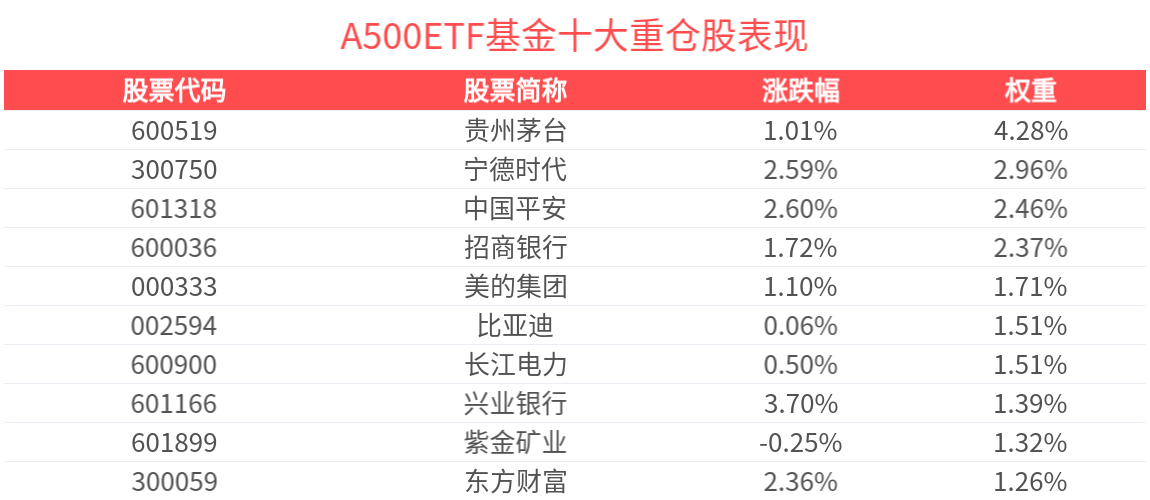
Group 1 - The core viewpoint of the articles highlights a recent trend of "anti-involution" across various industries, including photovoltaic, new energy vehicles, steel, cement, and chemicals, driven by central government initiatives to address disordered price competition and declining industry profits [1] - The China Securities report indicates that the current comprehensive rectification of involution focuses on emerging downstream industries and platform enterprises, aiming to eliminate unfair competition, local protectionism, and misaligned performance incentives [1] - The approach differs from the supply-side structural reforms of 2016, emphasizing a dual approach to compel inefficient production capacities to exit the market, thereby promoting sustainable industry development and high-quality growth [1] Group 2 - The A500 ETF closely tracks the CSI A500 Index, which selects 500 securities with larger market capitalization and better liquidity from various industries to reflect the overall performance of representative listed companies [2] - As of June 30, 2025, the top ten weighted stocks in the CSI A500 Index include Kweichow Moutai, CATL, Ping An Insurance, China Merchants Bank, Industrial Bank, Yangtze Power, Midea Group, Zijin Mining, BYD, and Eastmoney, collectively accounting for 20.67% of the index [2] - The A500 ETF fund and its related index funds are designed to provide investors with exposure to the performance of the CSI A500 Index [4]