智能化

Search documents
培优育厚产业“硬家底”
Xin Lang Cai Jing· 2026-01-08 20:05
Core Viewpoint - The development of the economy relies on the foundation of the real economy, with a focus on building a modern industrial system that reflects the unique advantages of Inner Mongolia as a priority for high-quality development and national modernization efforts [1] Group 1: Industrial Upgrade - Industrial upgrading is fundamentally a process of reshaping the industrial ecosystem and optimizing resource allocation through reform [1] - Emphasis on leveraging existing strengths and enhancing traditional industries such as energy, chemicals, metallurgy, equipment manufacturing, and strategic resources through smart, green, and integrated approaches [1] - The agricultural, pastoral, and cultural tourism resources in Inner Mongolia have the potential to develop into significant industries, requiring improvements in quality and brand creation [1] Group 2: Expanding New Industries - The key to expanding new industries lies in embracing reform to strengthen emerging industries and cultivate future industries [2] - There is a need to align with trends in green low-carbon technologies and the rapid iteration of artificial intelligence, focusing on growing sectors like new energy, new materials, and green computing [2] - Inner Mongolia's rich application scenarios in low-altitude economy, autonomous driving, and artificial intelligence are crucial for seizing future development opportunities [2] Group 3: Future Outlook - By taking advantage of strengths, addressing weaknesses, and enhancing efficiency, Inner Mongolia is poised to achieve significant industrial transformation and the emergence of new driving forces [3]
二十年铸就“中国调味品之都” 阳江打造全球调味品产业新高地
Sou Hu Cai Jing· 2026-01-08 17:32
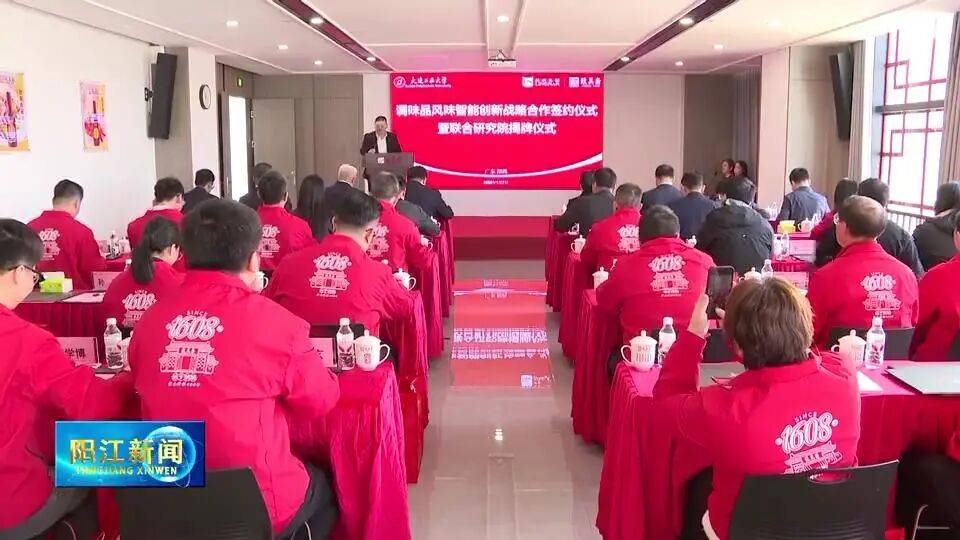
Core Viewpoint - Yangxi County has transformed from barren land into a "golden production area" for the national condiment industry, with significant production capacity and innovation capabilities [8][10]. Industry Development - Yangxi has established an industrial park with 131 enterprises, achieving an annual production capacity of 4 million tons of condiments, accounting for approximately 20% of the national total and about 16% of global capacity [10]. - The region benefits from unique natural conditions, including ample sunlight, selenium-rich soil, and abundant marine biological resources, which are advantageous for condiment production [10][14]. Strategic Collaborations - The establishment of the "Flavor Intelligent Innovation Joint Research Institute" by Zhuhai Zhai and Dalian University of Technology aims to promote the high-end, intelligent, and healthy transformation of the condiment industry [4][6]. - The collaboration with national research platforms is a key initiative for Lingnan Group to enhance innovation in the food industry [4]. Technological Innovation - The integration of traditional brewing techniques with intelligent control systems is being pursued at the Zhuhai Zhai base, aligning with health consumption trends through the development of "zero-additive" soy sauce products [18]. - The local government and industrial park are providing favorable policies and innovative measures to support production and reduce costs for condiment enterprises [14][16]. Future Goals - Yangxi aims to create a health food industry cluster with an annual output value exceeding 30 billion yuan, expanding into prepared dishes and food testing, while also developing wellness foods [18]. - The region is transitioning from a "manufacturing base" to an "innovation source," leveraging its industrial capabilities and cultural resources for sustainable growth [18].

振芯科技三名董事抛出增持计划 传递“稳发展”信号
Zhong Guo Jin Rong Xin Xi Wang· 2026-01-08 12:24
Core Viewpoint - The management team of Zhenxin Technology demonstrates confidence in the company's future development through stock buybacks and strategic planning, particularly in the context of the "14th Five-Year Plan" focusing on "AI + hardware empowerment" [1][2][6]. Group 1: Stock Buyback and Management Confidence - Zhenxin Technology announced that its directors plan to increase their holdings in the company by investing between RMB 5.1 million and RMB 10.2 million within six months [1]. - The management's decision to buy shares reflects their confidence in the company's strategic direction and governance capabilities, especially following a court ruling regarding the company's control structure [5][6]. Group 2: Strategic Focus and Development Plans - The company aims to focus on "AI + hardware empowerment" during the "14th Five-Year Plan" period, targeting rapid growth in sectors such as integrated circuits, high-end chips, and intelligent applications [2]. - Zhenxin Technology has transitioned from a hardware supplier to a provider of comprehensive intelligent systems and services, launching several leading products in communication, satellite applications, and autonomous platforms [2]. Group 3: Technological Foundation and Market Position - Over its 22 years, Zhenxin Technology has built a robust product matrix in RF communication, Beidou navigation, and video image processing, ensuring high reliability in complex environments [3]. - The company reported a revenue of over RMB 240 million from its integrated circuit business in the first half of 2025, marking a 30% increase year-on-year [3]. - In the Beidou navigation sector, the company achieved over RMB 170 million in revenue, a 73% increase compared to the previous year [3]. Group 4: Research and Development Investment - Zhenxin Technology places a strong emphasis on innovation, with 63% of its workforce dedicated to R&D, and has seen a compound annual growth rate of 20% in R&D expenses since 2019 [4]. - In the first three quarters of 2025, the company reported revenues of RMB 736 million, a year-on-year increase of 30.56%, and a net profit of RMB 92.78 million, up 30.79% [4].

德赛西威股东的“进”与“退”:44亿元定增吸引21家机构投资者,本土大股东却相继减持
Mei Ri Jing Ji Xin Wen· 2026-01-08 11:25
Group 1 - The company, Desay SV, is facing a dual situation of a 4.4 billion yuan private placement plan while its major shareholders are planning to reduce their stakes, with the second largest shareholder having already reduced their holdings multiple times in 2023 [1][2] - The first major shareholder, Guangdong Desay Group, plans to reduce its holdings by up to 7.106 million shares, which is approximately 1.19% of the company's total share capital [1] - Desay Group's last significant reduction in holdings occurred during its restructuring in 2020, and this marks the first time it plans to reduce its stake in the secondary market since the company's listing in 2017 [2] Group 2 - The private placement will issue approximately 41.89 million shares at a price of 105 yuan per share, raising around 4.4 billion yuan for projects including the construction of an automotive electronics base and the development of intelligent automotive electronic systems [3] - Desay SV is also planning to issue H-shares and list on the Hong Kong Stock Exchange as part of its internationalization strategy, which aims to accelerate overseas business expansion [3] - The company has reported that its overseas sales revenue as a percentage of total revenue has remained relatively stable from 2022 to the first half of 2025, indicating a slow pace of international growth [3] Group 3 - Desay SV has secured new project orders from major international automotive companies like Toyota, and its production facilities in Germany are operational while a factory in Spain is expected to be completed by the end of 2025 [4] - The company aims to penetrate key overseas markets such as Europe, Japan, and Southeast Asia, with a focus on establishing its capabilities in the intelligent sector [4] Group 4 - The automotive industry is increasingly prioritizing smart technology, with intelligent cockpits becoming a core factor influencing consumer purchasing decisions, as highlighted by industry reports [6] - A significant percentage of potential car buyers (71%) express interest in features like "smart interactive seating," indicating a shift in consumer preferences towards advanced technological features in vehicles [6] - Desay SV faces competition not only from traditional automotive giants like Bosch and Continental but also from tech companies such as Huawei and Xiaomi, which are entering the cockpit ecosystem with their own operating systems [6]
聚焦“宜居”需求,日照市出台住宅品质提升设计导则
Qi Lu Wan Bao· 2026-01-08 10:13
Core Viewpoint - Rizhao City has officially issued the "Rizhao Residential Quality Improvement Design Guidelines (Trial)" which will be implemented for all new residential projects starting January 1, 2026, marking a significant step towards enhancing residential quality from mere availability to improved living standards [1] Group 1: Guidelines Overview - The guidelines consist of 11 chapters and 124 articles, reflecting the governance philosophy of responding to public needs and incorporating feedback from industry associations, relevant departments, enterprises, and experts [1] - The guidelines cover a comprehensive technical specification system across various fields including architecture, structure, plumbing, electrical systems, heating, accessibility, smart technology, outdoor facilities, landscaping, and construction [1] Group 2: Comfort and Safety Enhancements - The guidelines establish strict requirements for sound insulation, specifying that residential units near highways and railways must achieve a sound insulation rating of at least 35dB for living spaces, with partition walls constructed of at least 200mm thick concrete or equivalent soundproofing [2] - Residential units with underfloor heating and centralized air conditioning must have a minimum ceiling height of 3.15m to ensure spatial comfort [2] Group 3: Green and Smart Construction - The guidelines mandate that at least 50% of materials used in high-quality residential buildings must be green, encouraging compliance with three-star green building standards and ultra-low energy consumption certifications [3] - Smart features include contactless access systems at entrances, monitoring devices for elevators, and a comprehensive smart community service platform integrating various functionalities [3] Group 4: Accessibility and Human-Centric Design - The guidelines emphasize accessibility, requiring the installation of tactile paving and barrier-free entrances in community green spaces, as well as ensuring adequate space and safety features in residential units for elderly residents [3] - Specific design elements include a minimum width of 1.30m for indoor walkways and the installation of support handles in bathrooms, catering to the needs of older adults [3] Group 5: Implementation and Monitoring - To ensure effective implementation of the guidelines, the Rizhao Housing and Urban-Rural Development Bureau will enhance training and supervision throughout the planning, design, construction, and acceptance processes [4] - The guidelines will be integrated into a high-quality residential evaluation index system, serving as a critical basis for project assessments and promoting a transition from mere housing to desirable living environments [4]
【联合发布】重点新车上市预告(2026年1月)
乘联分会· 2026-01-08 08:38
Core Viewpoint - The article highlights the upcoming launch of four significant new vehicles in January 2026, covering various market segments and emphasizing trends in electrification, cost-effectiveness, and intelligent features [1][8]. Group 1: New Vehicle Launches - The four new vehicles set to launch are the Xiaopeng P7+ Range Extender, Wuling Xingguang 560, GAC Honda Fit, and Audi Q5L [1]. - Xiaopeng P7+ Range Extender is a mid-to-large range-extended electric sedan priced between 170,000 to 200,000 yuan, featuring a length of 5071mm and a low drag coefficient of 0.23 [2][4]. - Wuling Xingguang 560 is a compact SUV with a starting price of 59,800 to 98,800 yuan, offering fuel, plug-in hybrid, and pure electric options, designed for spaciousness and versatility [5][6]. - GAC Honda Fit is a major facelift model with a price range of 60,000 to 80,000 yuan, focusing on urban commuting and high cost-performance, featuring a new design and upgraded smart configurations [6][7]. - Audi Q5L is a mid-size luxury SUV set to launch at a price between 313,000 to 385,000 yuan, featuring advanced intelligent driving systems and a spacious interior [8]. Group 2: Vehicle Specifications and Features - Xiaopeng P7+ is equipped with a 1.5T four-cylinder range extender and a 49.2kWh lithium iron phosphate battery, offering a pure electric range of 430km and a combined range of 1550km [3][4]. - Wuling Xingguang 560 features a 1.5T engine with a maximum power of 130kW and a torque of 290N·m, with a fuel consumption of 7L/100km for the gasoline version [5][6]. - GAC Honda Fit maintains a 1.5L naturally aspirated engine with a maximum power of 91kW and a fuel consumption of approximately 5.6L/100km [6][7]. - Audi Q5L is powered by the latest EA888 Evo5 2.0TFSI engine, offering two power outputs of 150kW and 200kW, and features a quattro all-wheel-drive system [8]. Group 3: Market Trends - The new vehicle launches reflect a deeper penetration of electrification, enhanced cost-performance, and more precise scenario-based positioning in the automotive market [8].

车市2025丨年销量分化加剧:谁在领跑?谁已掉队?
Bei Ke Cai Jing· 2026-01-08 06:01
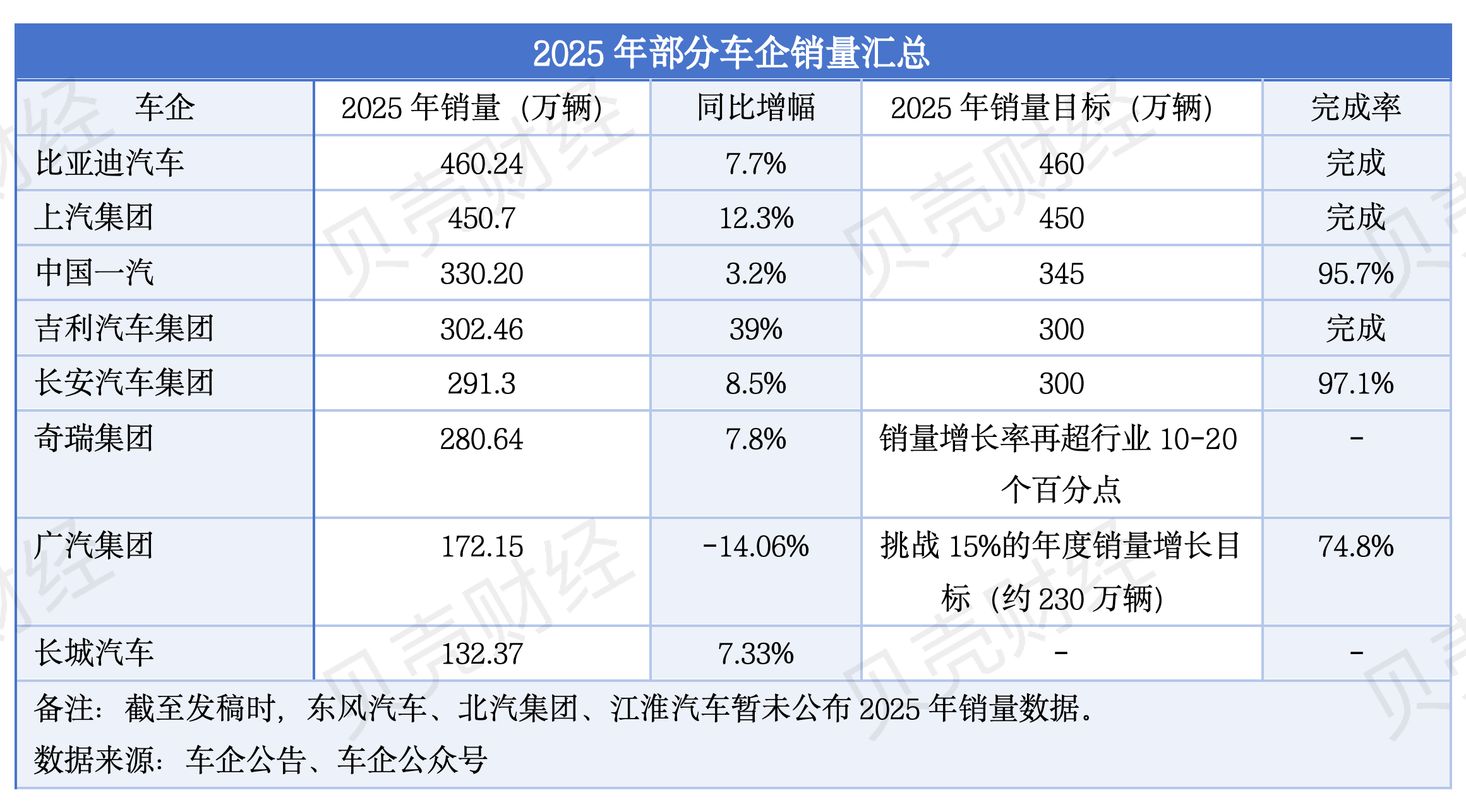
Core Viewpoint - The Chinese automotive market in 2025 is characterized by "overall growth with internal differentiation," as the transition to new energy continues and competition intensifies [1] Group 1: Sales Performance of Major Automotive Groups - Among the automotive groups that have reported 2025 sales, seven achieved positive growth, with four groups exceeding 3 million units in annual sales, solidifying the leading position [2][6] - BYD sold 4.6024 million vehicles in 2025, a year-on-year increase of 7.7%, achieving its annual target [7] - SAIC followed closely with approximately 4.507 million vehicles sold, a 12.3% increase year-on-year, also meeting its annual target [8] - Geely's total sales reached 3.0246 million units, a 39% year-on-year increase, exceeding its target and setting a historical high [9] - Changan and FAW were close to their targets, achieving 95.7% and 97.1% of their goals, respectively [10] Group 2: New Forces in the Automotive Market - The new energy vehicle segment is experiencing significant differentiation, with 400,000 units becoming a critical threshold for scale [3] - Among the new forces, Leap Motor, Seres, Xiaopeng, Xiaomi, and Li Auto crossed this threshold, creating a gap with subsequent tiers [3] - Three out of eleven new energy vehicle companies met their sales targets, with Leap Motor, Xiaopeng, and Xiaomi being the notable achievers [12] Group 3: Competitive Landscape and Future Outlook - The automotive market is entering a phase of stock competition, where the competition extends beyond product and sales to include technology iteration speed, ecosystem building, and operational efficiency [4] - The consensus for 2026 is that competition will intensify, with traditional companies focusing on high-end and intelligent vehicles while new forces seek differentiation through rapid technological advancements [5][22] - The shift in the automotive export landscape indicates that new energy vehicles have become the core growth engine, replacing traditional fuel vehicles [21] Group 4: Overseas Market Performance - The overseas market is becoming a key growth area, with Chery, SAIC, and BYD forming a "million-unit club" in overseas sales [18] - Chery led with over 1.344 million vehicles exported, while BYD achieved a 145% year-on-year increase in overseas sales, surpassing 1 million units for the first time [19][20]



无锡老板卖两轮车,暴赚29亿多
2 1 Shi Ji Jing Ji Bao Dao· 2026-01-08 05:53
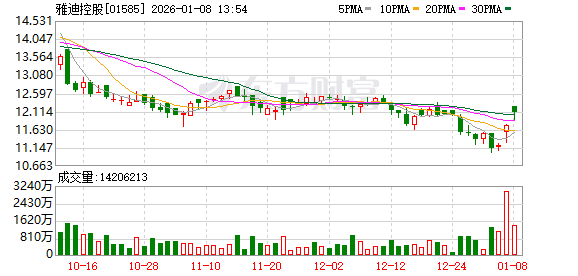
Core Viewpoint - Yadea Holdings is experiencing a significant rebound in business, with projected net profit for 2025 expected to reach at least 2.9 billion yuan, a substantial increase from 1.27 billion yuan in the previous year, driven by increased electric two-wheeler sales and optimized product structure [2][3]. Group 1: Financial Performance - In the first half of 2025, Yadea sold a total of 8.7935 million electric scooters and bicycles, an increase of approximately 2.4 million units compared to the same period last year, resulting in a main business revenue of 19.186 billion yuan, a surge of about 33.1% [4]. - The company faced a profit decline in 2024 due to decreased sales and lower inventory prices, but has since turned around to achieve a new profit peak [3]. Group 2: Strategic Initiatives - Yadea has adopted a youth-oriented strategy, launching the "Modern Series" specifically for female riders, emphasizing retro and luxury aesthetics, and introducing the "Crown T35" model inspired by robotics to attract young riders seeking stylish design and performance [5]. - The company has also engaged Wang Hedi as a brand ambassador since the end of 2024, which has significantly contributed to enhancing brand awareness and engagement [5]. Group 3: Regulatory and Market Environment - The favorable policy environment, including trade-in programs, new national standards, and the "white list" policy, has benefited leading two-wheeler companies [4]. - Yadea has issued an apology for design oversights in its "Maodou" series, addressing issues such as child safety and storage space, and has launched 68 models compliant with new national standards to cater to various daily commuting scenarios [6]. Group 4: Expansion and Innovation - Yadea is strengthening its focus on smart technology and international expansion, having established a presence in 100 countries and set up ten major smart production and research bases in regions including China, Vietnam, Indonesia, and Thailand [9]. - The company showcased its new electric motorcycle flagship at the Milan International Two-Wheeler Exhibition, featuring a long-range version with a range of 170 kilometers, specifically targeting European users [10]. - Yadea has introduced a comprehensive energy replenishment ecosystem covering various scenarios, including 24-hour self-service battery swap stations and solar energy systems, along with a rapid charging solution [10].

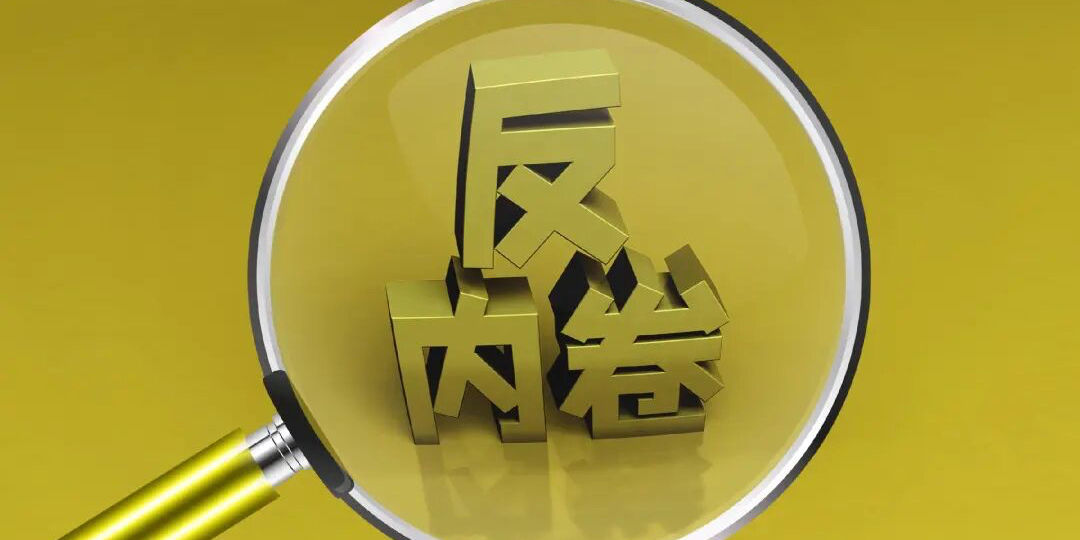
拆解车企2026新年致辞:反内卷、求质量成为集体共识
Jing Ji Guan Cha Wang· 2026-01-08 05:19
Core Insights - The automotive industry is undergoing a collective reflection on the competitive landscape, with major companies advocating against "involution" and promoting fair competition for healthy industry development [2][3] - There is a consensus that excessive price competition erodes profits and stifles innovation, prompting leading companies to shift focus from short-term market share to long-term competitiveness [2][3] - Emphasis on safety has become a key topic in the industry, with companies like Chery and GAC highlighting their commitment to exceeding safety standards and enhancing consumer trust [3][4] Group 1: Involution and Competition - Major automotive companies are calling for an end to "involution" in competition, focusing on technology, quality, brand, and user experience rather than just cost and price [2] - Geely's chairman reflects on the importance of moving away from low-price competition, marking a pivotal shift in the company's development [2] - The industry recognizes that internal competition leads to mutual deprivation in a stagnant market, hindering long-term strategic positioning [2] Group 2: Safety and Quality - Safety has emerged as a critical focus, with companies like Chery establishing stringent quality standards and receiving accolades for their commitment to safety [3][4] - GAC emphasizes that safety is a non-negotiable baseline, introducing comprehensive safety policies to address potential risks associated with electric vehicles [4][5] - Geely has expanded its safety vision to include data and software security, reflecting a broader understanding of safety beyond physical vehicle parameters [5] Group 3: Openness and Collaboration - The competitive landscape is evolving from direct confrontations among automakers to collaborative relationships across the supply chain [7][8] - Companies like SAIC and GAC are actively forming partnerships with tech firms and other industries to build a more integrated ecosystem [7][8] - Chery's initiative to create an open innovation platform with global universities illustrates a shift towards collaborative technological advancement [9] Group 4: Intelligence and Electrification - The consensus among automakers is that electrification is a prerequisite, while intelligence will determine competitive positioning in the future [11] - Companies are investing in advanced technologies, with NIO and Geely leading in the development of smart driving systems and integrated software solutions [11] - The automotive sector is transitioning towards becoming intelligent nodes within a broader digital ecosystem, enhancing user experience and connectivity [12] Group 5: Global Expansion - The trend of "going global" is increasingly seen as a critical factor for the future of automotive companies, with many emphasizing the need for a structured approach to international markets [13][14] - BYD and Dongfeng are accelerating their global strategies, focusing on localizing production and services to build sustainable competitive advantages [14][15] - The shift from mere product export to a comprehensive value chain approach is becoming essential for establishing a strong presence in overseas markets [15]
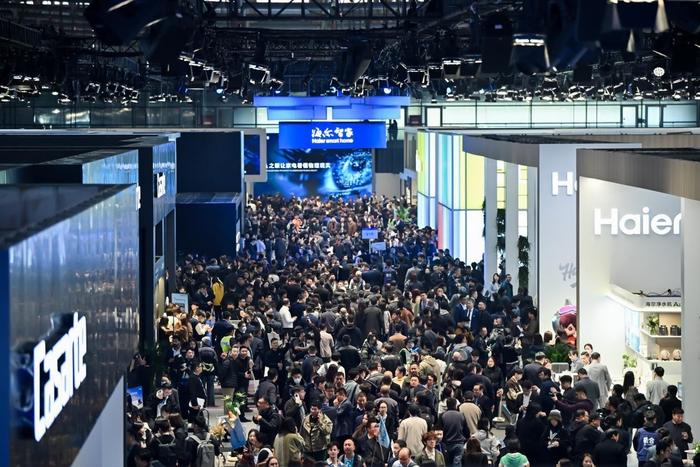
报告:海尔连续17年居全球大型家用电器品牌零售量第一
Ren Min Wang· 2026-01-08 03:24
Core Insights - Haier has maintained its position as the world's leading brand in large home appliances for 17 consecutive years, with a global market share increase from 6.3% to 12.1% since 2009, demonstrating robust growth and resilience [1] - The company's growth is attributed to its smart home strategy, transitioning from merely selling appliances to providing a platform service ecosystem that enhances user experience through software-defined scenarios [1] Group 1: Strategic Framework - Haier's success is a result of its user-centric "126" strategy, which includes one innovative channel (smart home), two major platforms (customer platform and user lifecycle platform), and six capabilities (globalization, high-end, digitalization, intelligence, ecology, and greenness) [2] - The globalization aspect focuses on enhancing capabilities across sales, marketing, service, logistics, procurement, R&D, and manufacturing, allowing for localized product adaptations based on regional needs [2] Group 2: High-End and Digital Transformation - The high-end strategy emphasizes leadership through technological innovation, with products like the "Lazy Three-Tub Washing Machine" achieving significant sales milestones shortly after launch [5] - Digital transformation aims for "extreme efficiency," enhancing user experience through a fully digitized process that allows for synchronized delivery and installation, significantly reducing delivery times [5][6] Group 3: Intelligent and Ecological Innovations - Haier's approach to intelligence involves moving from product intelligence to scenario intelligence, integrating AI capabilities into home appliances for enhanced user interaction and automation [6] - The ecological strategy connects over 66 million resources to provide comprehensive services across various life scenarios, extending smart living from home to travel [6] Group 4: Commitment to Sustainability - Haier integrates ESG principles into its governance, offering green products that exceed energy efficiency standards, with commitments to achieve global carbon neutrality by 2050 [6]