
美联储货币政策

Search documents
关税、中美关系、美联储、人工智能,这场中美学者的对话亮点满满!
Sou Hu Cai Jing· 2025-10-27 07:43
Core Viewpoint - The dialogue between Huang Yiping and former U.S. Treasury Secretary Robert Rubin at the 2025 Bund Summit highlighted concerns over U.S. tariffs, employment, inflation, and the challenges of artificial intelligence, reflecting differing perspectives on U.S. economic policies and their global implications [3][4][6]. Group 1: U.S. Tariffs and Economic Policy - Rubin criticized the U.S. tariffs as a misguided policy that undermines economic efficiency and raises prices, with a Goldman Sachs study indicating that approximately 82% of the tariff costs will be borne by Americans [4][5]. - He emphasized that the "America First" policy should align with an open trade system, arguing that globalization has historically benefited the U.S. economy, and current job losses are due to ineffective policy responses to trade liberalization [3][4]. - Rubin described tariffs as a regressive tax that disproportionately affects the poor, making them undesirable from both economic growth and social equity perspectives [5]. Group 2: U.S. Economic Outlook and Monetary Policy - Despite acknowledging the challenges posed by the Trump administration's policies, Rubin expressed long-term optimism about the U.S. economy, highlighting the need for reforms to address the unsustainable debt trajectory [6]. - He suggested eliminating the debt ceiling to prevent crises, while cautioning that this does not resolve the underlying issues of fiscal sustainability [6]. - Rubin noted that Federal Reserve Chairman Jerome Powell has successfully maintained the independence of the Fed amid political pressures, although he refrained from predicting future monetary policy actions [6]. Group 3: Artificial Intelligence and International Cooperation - The discussion on artificial intelligence underscored its potential to impact economic development, national security, and social structures, with Rubin advocating for international cooperation, particularly between the U.S. and China, to address governance challenges [7]. - Huang pointed out the contradictions in U.S. policy, where attempts to limit China's technological advancements coexist with a desire to access the Chinese market, leading to unintended consequences [7]. - Rubin warned that the current U.S. policy direction is heavily influenced by individual decision-makers, increasing uncertainty and unpredictability in both domestic and international contexts [8].


中美双方达成基本共识:申万期货早间评论-20251027
申银万国期货研究· 2025-10-27 00:48
Group 1: Core Views - The article highlights the basic consensus reached between China and the U.S. during recent trade talks, focusing on key economic issues such as maritime logistics, tariff extensions, and agricultural trade [1][6] - U.S. inflation data shows a year-on-year increase of 3% in September, indicating a potential impact on economic policies and market expectations [1] Group 2: Key Commodities - Copper prices have slightly decreased, with tight supply conditions and fluctuating demand from various sectors, including power generation and automotive [2][19] - Gold and silver have experienced a pullback due to easing geopolitical tensions and market expectations regarding U.S. interest rate cuts, while central banks continue to accumulate gold as a safe-haven asset [2][18] Group 3: Stock Indices - U.S. stock indices rose following positive developments in U.S.-China tariff negotiations, with significant gains in technology sectors and overall market liquidity expected to remain favorable [3][10] - The recent Chinese Communist Party meeting emphasized technological self-reliance, which may influence market trends and investment strategies in the upcoming quarter [3][10] Group 4: Industry News - China's National Energy Administration reported a 17.5% year-on-year increase in total installed power generation capacity as of September, with solar and wind power showing significant growth [7] - The article discusses the impact of U.S. sanctions on Russian oil companies, which may affect global oil supply dynamics and pricing [12]

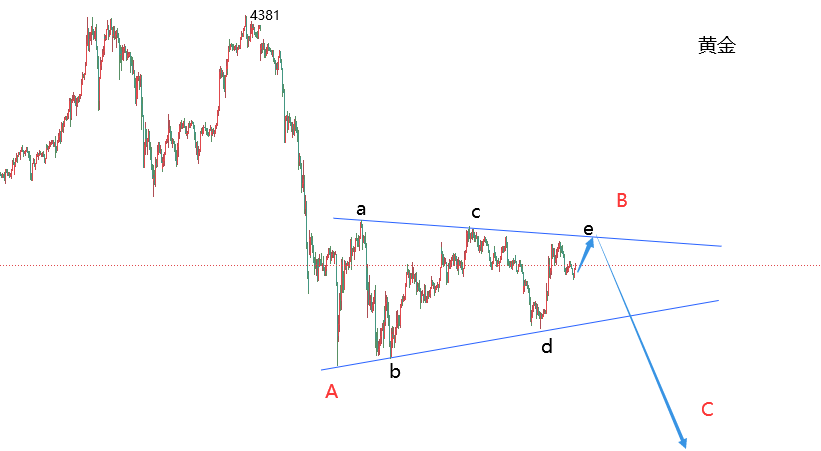
江沐洋:10.26金价反弹短期仍看跌,下周黄金走势操作思路
Sou Hu Cai Jing· 2025-10-25 23:49
Group 1 - The core viewpoint of the articles indicates that gold prices experienced a rebound after weaker-than-expected U.S. Consumer Price Index (CPI) data, but overall, the market is in a downtrend, ending a nine-week rally [1] - The expectation of a 25 basis point interest rate cut by the Federal Reserve during the upcoming monetary policy meeting on October 29-30 is reinforced by the weak inflation data [1] - Market sentiment has improved due to hopes of easing U.S.-China trade tensions, with confirmation that President Trump will meet with Chinese President Xi Jinping during the APEC summit on October 30 [1] Group 2 - Technically, gold shows initial signs of consolidation after a strong rebound, with a bearish short-term outlook as prices are currently below the 21, 50, and 100-period simple moving averages (SMA) on the 4-hour chart [1] - The wave structure indicates an ABC corrective pattern, with the current phase likely to unfold into a C-wave downward after confirming the high point of the B-wave [1] - On the 1-hour chart, gold is in a bottom consolidation phase after forming a double top at 4380, with resistance levels identified at 4160-4185 and support at around 4004 [3]
氧化铝周报:宏观情绪改善,期价止跌震荡-20251025
Wu Kuang Qi Huo· 2025-10-25 13:26
1. Report Industry Investment Rating No relevant content provided. 2. Core Viewpoints of the Report - The price of alumina futures stopped falling and fluctuated due to the easing of Sino - US relations and the expectation of the Fed's loose monetary policy. The spot price continued to decline under the pressure of continuous inventory accumulation. Although the alumina smelting capacity surplus pattern is difficult to change in the short term, the expectation of the Fed's loose monetary policy and the approaching of the current price to most manufacturers' cost - lines may lead to an increase in production cut expectations. It is recommended to wait and see in the short term. The reference operating range of the domestic main contract AO2601 is 2700 - 3000 yuan/ton, and attention should be paid to supply - side policies, Guinea's ore policies, and the Fed's monetary policy [11][12][13]. 3. Summary According to the Directory 3.1. Weekly Assessment - **Futures price**: As of 3 p.m. on October 24, the alumina index rose 0.43% to 2821 yuan/ton this week, with positions increasing by 36,000 lots to 494,000 lots. The basis: the spot price in Shandong was 2800 yuan/ton, with a premium of 1 yuan/ton over the 11 - contract. The spread between the first and third contracts was - 42 yuan/ton [11]. - **Spot price**: This week, the spot prices of alumina in various regions continued to decline. The prices in Guangxi, Guizhou, Henan, Shandong, Shanxi, and Xinjiang decreased by 35 yuan/ton, 40 yuan/ton, 15 yuan/ton, 15 yuan/ton, 15 yuan/ton, and 0 yuan/ton respectively [11][21]. - **Inventory**: The total social inventory of alumina increased by 51,000 tons to 4.69 million tons this week. The inventory in electrolytic aluminum plants, alumina plants, in - transit inventory, and port inventory increased by 53,000 tons, 10,000 tons, decreased by 28,000 tons, and increased by 16,000 tons respectively. The alumina warehouse receipts on the SHFE totaled 221,300 tons, unchanged from last week; the delivery warehouse inventory was 239,600 tons, also unchanged from last week [11][68][71]. 3.2. Spot and Futures Prices - **Spot price**: The spot prices of alumina in various regions continued to decline due to continuous inventory accumulation [21]. - **Futures price and basis**: The alumina futures price stopped falling and fluctuated. The basis in Shandong was a premium of 1 yuan/ton over the 11 - contract, and the spread between the first and third contracts was - 42 yuan/ton [24]. - **Bauxite price**: The bauxite prices in various regions remained unchanged this week. The CIF price of Guinea decreased by 0.5 dollars/ton to 72.5 dollars/ton, and that of Australia remained at 69 dollars/ton. After the rainy season in Guinea, the ore shipment increased, and the alumina enterprises' willingness to lower prices increased. With high port inventory, the ore price is expected to decline [27]. 3.3. Supply - side - **Bauxite production**: In September 2025, China's bauxite production was 4.88 million tons, a year - on - year decrease of 2.3% and a month - on - month decrease of 3%. The cumulative production in the first nine months was 45.74 million tons, a year - on - year increase of 3.28% [31]. - **Bauxite import**: In September 2025, China imported 15.88 million tons of bauxite, a year - on - year increase of 37.45% and a month - on - month decrease of 19.77%. The cumulative import in the first nine months was 157.64 million tons, a year - on - year increase of 31.97% [33]. - **Bauxite inventory**: In September, China's bauxite inventory decreased by 1.04 million tons to 52.27 million tons, still at a high level in the past five years. In key regions, the bauxite inventory in Shanxi decreased by 230,000 tons, and that in Henan decreased by 80,000 tons [40]. - **Alumina production**: In September 2025, China's alumina production was 7.746 million tons, a year - on - year increase of 12.69% and a month - on - month decrease of 1.68%. The cumulative production in the first nine months was 66.84 million tons, a year - on - year increase of 9.82%. As of October 24, the weekly production was 1.862 million tons, an increase of 1,000 tons from last week [42][43]. - **Alumina plant profit**: The alumina plant profit was under pressure due to the decline in the spot price. On October 24, the production profit in Guangxi was 275 yuan/ton. In Shandong, the profit using Australian ore and Guinea ore was - 15 yuan/ton and 65 yuan/ton respectively. Inland alumina plants using overseas ore in Shanxi and Henan had turned slightly into losses [46]. - **Alumina import and export**: In September 2025, the net export of alumina was 186,400 tons, maintaining a net export situation. The import volume decreased from 94,000 tons last month to 60,000 tons, and the export volume increased from 180,500 tons to 246,400 tons. The cumulative net export in the first nine months was 1.4512 million tons. As of October 24, the FOB price in Australia decreased by 6 dollars/ton to 314 dollars/ton, and the import profit and loss was 21 yuan/ton [48][50]. - **Overseas alumina production**: In September 2025, the overseas alumina production was 5.24 million tons, a year - on - year increase of 6.66% and a month - on - month decrease of 2.62%. The cumulative production in the first nine months was 46.5 million tons, a year - on - year increase of 3.06% [52]. 3.4. Demand - side - **Electrolytic aluminum production**: In September 2025, China's electrolytic aluminum production was 3.68 million tons, a year - on - year increase of 2.73% and a month - on - month decrease of 2.86%. The cumulative production in the first nine months was 33.07 million tons, a year - on - year increase of 2.73% [57]. - **Electrolytic aluminum operation**: In September 2025, the operating capacity of electrolytic aluminum was 44.56 million tons, an increase of 160,000 tons from last month. The operating rate increased by 0.35 percentage points to 97.47% [60]. 3.5. Supply - demand Balance The alumina supply - demand balance table shows the supply and demand situation from January to December 2025, including the supply - demand difference, total demand, total supply, net export, export volume, import volume, demand for electrolytic aluminum, electrolytic aluminum production, electrolytic aluminum operating capacity, alumina production, and alumina operating capacity [63]. 3.6. Inventory - **Social inventory**: The total social inventory of alumina increased by 51,000 tons to 4.69 million tons this week, with different changes in various types of inventory [68]. - **SHFE inventory**: The alumina warehouse receipts on the SHFE totaled 221,300 tons, unchanged from last week; the delivery warehouse inventory was 239,600 tons, also unchanged from last week [71].
美国CPI点评(25.9)暨宏观周报(第25期):美国核心通胀回落,未来将走向何方?-20251025
Huafu Securities· 2025-10-25 09:46
Inflation Data - In September, the US CPI rose by 0.1 percentage points to 3.0%, marking the highest level since the beginning of the year[2] - Core CPI fell slightly by 0.1 percentage points to 3.0%, which was below market expectations[2][3] - The month-on-month increase in core CPI was 0.23%, a decrease of 0.12 percentage points from August[3] Economic Factors - The increase in durable goods prices was 0.32% month-on-month, indicating ongoing effects from tariffs imposed earlier this year[3] - Labor market cooling and a weak real estate market contributed to the decline in inflation, with core non-durable goods and core services rising by 0.08% and 0.24%, respectively[3][4] - Despite a 25 basis point rate cut by the Federal Reserve in September, long-term interest rates remained high, limiting the rebound in core CPI[3][4] Future Outlook - The potential for a rebound in core CPI exists in the first half of next year due to the recovery of key factors and base effects[4][16] - The upcoming fiscal expansion may boost manufacturing investment and create jobs, impacting inflation dynamics positively[4][16] - The US dollar index may gain momentum from economic cycles and monetary easing in developed economies[4][16]
美国9月CPI同比上涨3.0%
Sou Hu Cai Jing· 2025-10-25 01:12
Core Insights - The U.S. Consumer Price Index (CPI) for September increased by 3.0% year-on-year and 0.3% month-on-month, indicating persistent inflationary pressures [1] - Core CPI, excluding volatile food and energy prices, also rose by 3.0% year-on-year and 0.2% month-on-month, suggesting underlying inflation remains a concern [1] - Energy prices were a significant driver of the CPI increase, with the energy price index rising by 1.5% month-on-month, and gasoline prices up by 4.1% for the second consecutive month [1] Inflation Trends - The food price index increased by 3.1%, the energy price index by 3.7%, and the housing price index by 3.6% year-on-year in September, reflecting broad-based inflationary trends [1] - Despite overall manageable inflation, the data indicates a warming trend in prices, influenced by the Trump administration's tariff policies on domestic consumption [1] Federal Reserve Implications - The slight uptick in inflation and growing concerns over weak employment provide the Federal Reserve with clear room to consider interest rate cuts in the remaining monetary policy meetings of the year [1][2]
炒黄金注意了!美联储这个动作一现金价必降,2011年教训历历在目
Sou Hu Cai Jing· 2025-10-24 18:18
Core Viewpoint - The recent sharp decline in gold prices, dropping over 6% in a single day to below $4100 per ounce, has caught investors off guard, especially those who believed in a continuous upward trend in gold prices [1][5][10] Historical Context - Gold investment has historically been volatile, with significant price drops occurring four times in the past two decades, with declines of 22%, 20%, 45%, and 33% [3][4] - The most notable decline occurred between 2011 and 2015, where gold prices fell from a peak of $1920 per ounce to $1050, a drop of nearly 45% [3][4] Market Dynamics - The recent price drop is attributed to a shift in the Federal Reserve's monetary policy, which has historically impacted gold prices negatively [5][13] - The end of the second round of quantitative easing in 2011 led to a significant rise in the dollar index, which diminished gold's appeal as a safe-haven asset [5][13] Opportunity Cost - Gold is considered a zero-yield asset, and its attractiveness is heavily influenced by opportunity costs. When the Federal Reserve maintains low interest rates, gold is more appealing, but rising rates diminish its allure [6][16] Geopolitical Factors - The belief that geopolitical tensions, such as the Russia-Ukraine conflict, would bolster gold prices was challenged as aggressive rate hikes by the Federal Reserve led to a significant drop in gold prices from $2078 to $1618, a decline of 22% [7][13] Recent Market Reactions - The volatility in international gold prices has directly affected domestic gold jewelry markets, with major brands in China significantly lowering their gold prices in response to the international market fluctuations [10][12] Investor Behavior - Investors often fall into the trap of "chasing highs and cutting losses," particularly during periods of extreme optimism, which can lead to significant financial losses [14][15] - The phenomenon of "Chinese mothers" buying gold at high prices in 2013 serves as a cautionary tale about the risks associated with gold investment [15][16] Key Signals to Watch - Investors are advised to closely monitor signals from the Federal Reserve, including interest rate changes and economic indicators, as these are critical in predicting gold price movements [17][18]

黄金大跌,下一轮行情盯紧央行动作
市值风云· 2025-10-24 10:09
Core Viewpoint - The article discusses the recent volatility in gold prices, highlighting a significant drop after reaching a historical peak, and explores the implications for the gold market and other metals like aluminum, silver, and copper [3][5][19]. Gold Market Analysis - Gold prices reached a historical high of $4,381 per ounce before experiencing a sharp decline of over 6%, dropping below $4,100, marking the most severe drop since 2013 [3][5]. - The current gold cycle began in Q4 2022, confirmed in 2023, and is now in a major upward phase [6]. - The Federal Reserve's aggressive interest rate hikes from March to November 2022 significantly impacted gold prices, with a series of rate increases culminating in a peak rate of 5.50% in July 2023 [9][10]. - Despite the Fed's rate hikes, gold prices began to recover after hitting a low in September 2022, with a notable increase in 2023 driven by geopolitical tensions and rising demand for safe-haven assets [11][12]. Central Bank Purchases - Central banks have significantly increased gold purchases, with net purchases reaching 1,082 tons in 2022 and 1,037 tons in 2023, indicating a structural change in the gold market [13][14]. - The trend of central banks buying gold is expected to continue, with projections for 2024 showing net purchases of 1,044.6 tons [13][18]. - The cautious approach of central banks in recent months suggests a strategic wait-and-see attitude regarding future gold price movements [15][18]. Other Metals to Watch - Silver and copper prices have also surged in 2023, with silver prices increasing by over 70% and copper prices reaching a near one-year high of $10,700 per ton [19]. - In contrast, aluminum prices have not performed as well, with annual growth rates of -6.38% in 2022 and only modest increases in subsequent years [21]. - The demand for aluminum is expected to grow, particularly in the automotive sector, with predictions of a supply shortage starting in 2028, which could lead to a price increase of 50%-60% [21].

广发期货《有色》日报-20251024
Guang Fa Qi Huo· 2025-10-24 02:45
1. Report Industry Investment Ratings - Not mentioned in the provided content 2. Report Core Views Copper - Copper prices strengthened due to improved market risk appetite after China and the US agreed to conduct economic and trade consultations. In the short - term, China - US talks boosted market sentiment, the Fed may stop shrinking its balance sheet, and the COMEX - LME spread widened. Fundamentally, tight copper ore supply supports prices, and high copper prices moderately suppress downstream demand. The terminal demand has strong resilience. The main contract is expected to be supported at 84000 - 85000 [1]. Aluminum - The alumina market remains weak, with supply pressure and weak demand. The futures price is expected to continue to be under pressure, with the main contract oscillating between 2750 - 2950 yuan/ton. Aluminum prices showed a strong - oscillating trend. With stable supply, resilient demand, and declining inventory, the short - term Shanghai aluminum is expected to maintain a high - level oscillation, with the main contract in the range of 20700 - 21300 yuan/ton [3]. Aluminum Alloy - Casting aluminum alloy followed the aluminum price and showed a strong - oscillating trend. Cost support is prominent, but high inventory and policy uncertainty restrict price increases. The short - term ADC12 price is expected to maintain a strong - oscillating pattern, with the main contract in the range of 20200 - 20800 yuan/ton [4]. Zinc - Due to concerns about the LME zinc market squeeze and China - US economic and trade consultations, the Shanghai zinc price rebounded. The supply is loose, and the demand is not outstanding. The short - term price may rise due to macro - drivers but will likely oscillate without a clear inflection point in the supply - loose logic, with the main contract in the range of 21800 - 22800 [8]. Tin - Tin supply is tight, and demand is weak. The tin price continues to oscillate at a high level. If the supply in Myanmar recovers smoothly in the fourth quarter, the tin price may weaken; otherwise, it is expected to continue to run strongly [10]. Nickel - The nickel market is in a state of high - level oscillation. Macro - factors are temporarily stable, and the cost has support, but inventory accumulation restricts the upside space. The main contract is expected to oscillate in the range of 120000 - 126000 [12]. Stainless Steel - The stainless - steel market showed a low - level upward repair. Macro - factors may bring policy expectations. The supply pressure is increasing, and demand improvement is not obvious. The short - term market is expected to oscillate weakly, with the main contract in the range of 12600 - 13000 [14]. Lithium Carbonate - The lithium carbonate market showed a significant upward trend. The supply - demand gap exists in the peak season, and demand is optimistic. The short - term market is expected to run strongly, with the main contract in the range of 76000 - 82000 yuan/ton [16]. 3. Summary by Relevant Catalogs Copper Price and Basis - SMM 1 electrolytic copper price rose to 85490 yuan/ton, up 0.63% [1]. - The refined - scrap price difference increased by 7.02% to 3366 yuan/ton [1]. Fundamental Data - In September, electrolytic copper production decreased by 4.31% to 112.10 million tons, and imports increased by 26.50% to 33.43 million tons [1]. Aluminum Price and Spread - SMM A00 aluminum price rose to 21040 yuan/ton, up 0.29% [3]. - Alumina prices in various regions showed a downward trend [3]. Fundamental Data - In September, alumina production decreased by 1.74% to 760.37 million tons, and electrolytic aluminum production decreased by 3.16% to 361.48 million tons [3]. Aluminum Alloy Price and Spread - SMM aluminum alloy ADC12 price rose to 21200 yuan/ton, up 0.47% [4]. Fundamental Data - In September, the production of recycled aluminum alloy ingots increased by 7.48% to 66.10 million tons, and the production of primary aluminum alloy ingots increased by 4.43% to 28.30 million tons [4]. Zinc Price and Spread - SMM 0 zinc ingot price rose to 22100 yuan/ton, up 0.91% [8]. Fundamental Data - In September, refined zinc production decreased by 4.17% to 60.01 million tons, and imports decreased by 11.61% to 2.27 million tons [8]. Tin Spot Price and Basis - SMM 1 tin price decreased to 280000 yuan/ton, down 0.36% [10]. Fundamental Data - In September, tin ore imports decreased by 15.13% to 8714, and SMM refined tin production decreased by 31.71% to 10510 [10]. Nickel Price and Basis - SMM 1 electrolytic nickel price rose to 122150 yuan/ton, up 0.04% [12]. Fundamental Data - China's refined nickel production increased by 1.26% to 32200 in September, and imports decreased by 3.00% to 17010 [12]. Stainless Steel Price and Basis - The price of 304/2B (Wuxi Hongwang 2.0 coil) remained at 13000 yuan/ton [14]. Fundamental Data - In September, China's 300 - series stainless - steel crude - steel production (43 companies) increased by 0.38% to 182.17 million tons, and Indonesia's production increased by 0.36% to 42.35 million tons [14]. Lithium Carbonate Price and Basis - SMM battery - grade lithium carbonate average price rose to 74800 yuan/ton, up 0.61% [16]. Fundamental Data - In September, lithium carbonate production increased by 2.37% to 87260, and demand increased by 12.28% to 116801 [16].
文字早评:宏观金融类-20251024
Wu Kuang Qi Huo· 2025-10-24 02:25
Report Summary 1. Investment Ratings The provided content does not mention any industry investment ratings. 2. Core Views - The stock market has seen rapid rotation of hot sectors recently, with reduced risk appetite and short - term uncertainty, but the long - term policy support for the capital market remains unchanged, suggesting a long - term strategy of buying on dips [4]. - The bond market may face short - term risk preference decline, which is conducive to its repair. In the fourth quarter, it is necessary to focus on the fundamentals and institutional allocation power. The overall situation may be volatile, and it may repair if the stock market cools down and the allocation power increases [7]. - For precious metals, the Fed's monetary policy is in the early stage of the easing cycle. It is recommended to maintain a long - position strategy, buying on dips [9]. - In the non - ferrous metals market, most metal prices are expected to be strong due to factors such as trade negotiation sentiment improvement and supply - side constraints [12][14]. - In the black building materials market, steel prices may be weak in the short term but have long - term upward potential. Iron ore prices will oscillate due to the tug - of - war between weak reality and macro expectations [33][36]. - In the energy and chemical market, different products have different trends. For example, rubber prices may turn neutral, and crude oil prices are recommended to be observed in the short term [54][56]. - In the agricultural products market, the prices of various products such as hogs, eggs, and grains are affected by supply and demand factors, and corresponding trading strategies are proposed [79][81]. 3. Summary by Category Macro - financial - **Stock Index** - **Market Information**: The Fourth Plenary Session of the 20th Central Committee put forward the main goals for economic and social development during the "15th Five - Year Plan" period. There will be economic and trade consultations between China and the US. The R & D of new - generation batteries is being promoted [2]. - **Strategy**: Short - term uncertainty exists, but long - term buying on dips is recommended [4]. - **Treasury Bond** - **Market Information**: Bond prices declined on Thursday. There will be China - US economic and trade consultations, and the central government held a symposium on the "15th Five - Year Plan" for central enterprises. The central bank conducted reverse repurchase operations with a net withdrawal of funds [5][6]. - **Strategy**: The short - term risk preference decline is beneficial to the bond market repair. The fourth - quarter situation may be volatile, and attention should be paid to the stock - bond seesaw effect [7]. - **Precious Metals** - **Market Information**: Gold and silver prices rose. The US will release September CPI data, and it is expected that the data may be lower than expected, which will support precious metal prices [8]. - **Strategy**: Maintain a long - position strategy and buy on dips [9]. Non - ferrous Metals - **Copper** - **Market Information**: Copper prices rose. LME copper inventory increased, while domestic warehouse receipts decreased. The import of copper spot was at a loss [11]. - **Strategy**: Due to potential supply tightening and improved trade negotiation sentiment, copper prices may remain strong [12]. - **Aluminum** - **Market Information**: Aluminum prices continued to rise. Domestic aluminum ingot and aluminum rod inventories decreased, and the external LME aluminum inventory also decreased [13]. - **Strategy**: With the easing of trade tensions and low domestic inventory, aluminum prices may rise further [14]. - **Zinc** - **Market Information**: Zinc prices rose. Domestic zinc ingot inventory increased, and overseas registered zinc warehouse receipts were at a low level [15]. - **Strategy**: The domestic zinc concentrate inventory decreased, and the overseas market had structural risks. Zinc prices are expected to be strong in the short term [17]. - **Lead** - **Market Information**: Lead prices rose. The lead ore port inventory increased, and the lead ingot social inventory decreased [18]. - **Strategy**: With the improvement of downstream demand and the reduction of inventory, lead prices are expected to be strong in the short term [18]. - **Nickel** - **Market Information**: Nickel prices fluctuated narrowly. The cost of nickel ore was stable, and the price of nickel iron was weak [19]. - **Strategy**: In the short term, it is recommended to wait and see, and consider buying on dips if the price drops significantly [20][21]. - **Tin** - **Market Information**: Tin prices declined slightly. The supply of tin ore was tight, and the demand from traditional industries was weak [22]. - **Strategy**: In the short term, tin prices may remain high and volatile, and it is recommended to wait and see [22]. - **Carbonate Lithium** - **Market Information**: The price of carbonate lithium rose, and the inventory decreased [23]. - **Strategy**: The downstream demand is strong, and the price may face pressure from supply recovery and hedging. It is necessary to pay attention to market changes [24]. - **Alumina** - **Market Information**: The price of alumina rose slightly. The overseas price decreased, and the inventory increased [25]. - **Strategy**: The ore price may be under pressure after the rainy season, and the production capacity of alumina is excessive. It is recommended to wait and see in the short term [26]. - **Stainless Steel** - **Market Information**: The price of stainless steel rose. The social inventory decreased slightly [27]. - **Strategy**: The market confidence has recovered, and the subsequent trend depends on the release of downstream demand [28]. - **Cast Aluminum Alloy** - **Market Information**: The price of cast aluminum alloy rebounded, and the inventory increased [29]. - **Strategy**: The cost supports the price, but the high warehouse receipts limit the upward space [30]. Black Building Materials - **Steel** - **Market Information**: The prices of rebar and hot - rolled coil fluctuated slightly. The inventory of rebar decreased, and the inventory of hot - rolled coil decreased marginally [32]. - **Strategy**: In the short term, steel prices are weak, but in the long term, they may rise due to the loosening of the macro environment [33]. - **Iron Ore** - **Market Information**: Iron ore prices rose. The overseas shipment increased, and the iron water output decreased [34][35]. - **Strategy**: The demand for iron ore is weakening, and the inventory is increasing. The price will oscillate due to the influence of macro expectations [36]. - **Glass and Soda Ash** - **Market Information**: Glass prices rose, and the inventory increased. Soda ash prices rose slightly, and the inventory also increased [37][38]. - **Strategy**: Glass prices are expected to be weak in the short term, and soda ash prices will continue to oscillate weakly [37][38]. - **Manganese Silicon and Ferrosilicon** - **Market Information**: The prices of manganese silicon and ferrosilicon rose slightly. The spot prices were higher than the futures prices [39]. - **Strategy**: The impact of trade frictions may ease. It is recommended to look for opportunities to rebound in the black sector [42][43]. - **Industrial Silicon and Polysilicon** - **Market Information**: Industrial silicon prices rose, and polysilicon prices also rose. The supply of industrial silicon increased, and the polysilicon supply may decrease in the future [44][47]. - **Strategy**: Industrial silicon prices will oscillate, and polysilicon prices will be affected by supply and policy expectations [45][48]. Energy and Chemical - **Rubber** - **Market Information**: Rubber prices rose due to typhoon and stock market factors. The demand is in a seasonal off - season [50]. - **Strategy**: It is recommended to gradually exit short - term long positions and adopt a neutral strategy [54]. - **Crude Oil** - **Market Information**: Crude oil and refined oil prices rose. The US crude oil inventory decreased, and the SPR inventory increased [55]. - **Strategy**: In the short term, it is recommended to wait and see and test OPEC's export price - support intention [56]. - **Methanol** - **Market Information**: Methanol prices rose. The port inventory increased slowly, and the domestic start - up rate decreased [57][58]. - **Strategy**: It is recommended to wait and see due to potential supply disturbances and high port inventory [58]. - **Urea** - **Market Information**: Urea prices rose slightly. The supply increased, and the demand also increased [59][60]. - **Strategy**: It is recommended to wait and see or look for long - position opportunities at low prices [60]. - **Pure Benzene and Styrene** - **Market Information**: Pure benzene prices decreased, and styrene prices increased. The supply of pure benzene was abundant, and the demand for styrene increased [61]. - **Strategy**: The price of styrene may stop falling in the short term due to inventory reduction and seasonal demand [62]. - **PVC** - **Market Information**: PVC prices rose. The production was high, and the demand was weak [63]. - **Strategy**: The supply is strong and the demand is weak. It is recommended to short on rallies in the medium term [64][65]. - **Ethylene Glycol** - **Market Information**: Ethylene glycol prices rose. The supply was high, and the inventory increased [66]. - **Strategy**: It is recommended to short on rallies due to expected inventory accumulation [67]. - **PTA** - **Market Information**: PTA prices rose. The supply increased slightly, and the demand remained stable [68]. - **Strategy**: It is recommended to wait and see due to weak processing fees and uncertain terminal demand [69]. - **Para - xylene** - **Market Information**: PX prices rose. The load was high, and the downstream demand was weak [70][71]. - **Strategy**: It is recommended to wait and see as there is no obvious driving force and it mainly follows the crude oil trend [72]. - **Polyethylene (PE)** - **Market Information**: PE prices rose. The inventory decreased, and the demand increased seasonally [73]. - **Strategy**: PE prices may remain low and oscillate due to high - level warehouse receipts and cost factors [74]. - **Polypropylene (PP)** - **Market Information**: PP prices rose. The supply pressure was high, and the demand rebounded seasonally [75]. - **Strategy**: The overall inventory pressure is high, and the cost supply surplus suppresses the price [76]. Agricultural Products - **Hogs** - **Market Information**: Hog prices fluctuated. The supply and demand were in a stalemate [78]. - **Strategy**: In the short term, hog prices may be strong, but in the medium term, it is recommended to short on rallies [79]. - **Eggs** - **Market Information**: Egg prices were stable with slight increases. The supply was normal, and the demand was average [80]. - **Strategy**: The spot price may have limited upward space, and it is recommended to wait and see [81]. - **Soybean Meal and Rapeseed Meal** - **Market Information**: Soybean meal prices rose. The domestic soybean inventory was high, and the import of US soybeans was uncertain [82]. - **Strategy**: In the short term, there is support, but in the medium term, it is recommended to short on rallies due to the expected abundant supply [84]. - **Oils and Fats** - **Market Information**: Oil prices fell. The palm oil production in Malaysia and Indonesia was high, and the supply pressure was large [85]. - **Strategy**: It is recommended to wait and see for a clearer production signal [86]. - **Sugar** - **Market Information**: Sugar prices rebounded. The production in Brazil is expected to increase, and the prices of domestic processing factories decreased [87]. - **Strategy**: It is recommended to short on rallies in the fourth quarter as the overall supply is expected to increase [89]. - **Cotton** - **Market Information**: Cotton prices rebounded. The new cotton purchase price increased, but the demand was weak [90]. - **Strategy**: The upward space of cotton prices is limited due to weak fundamentals [91].